


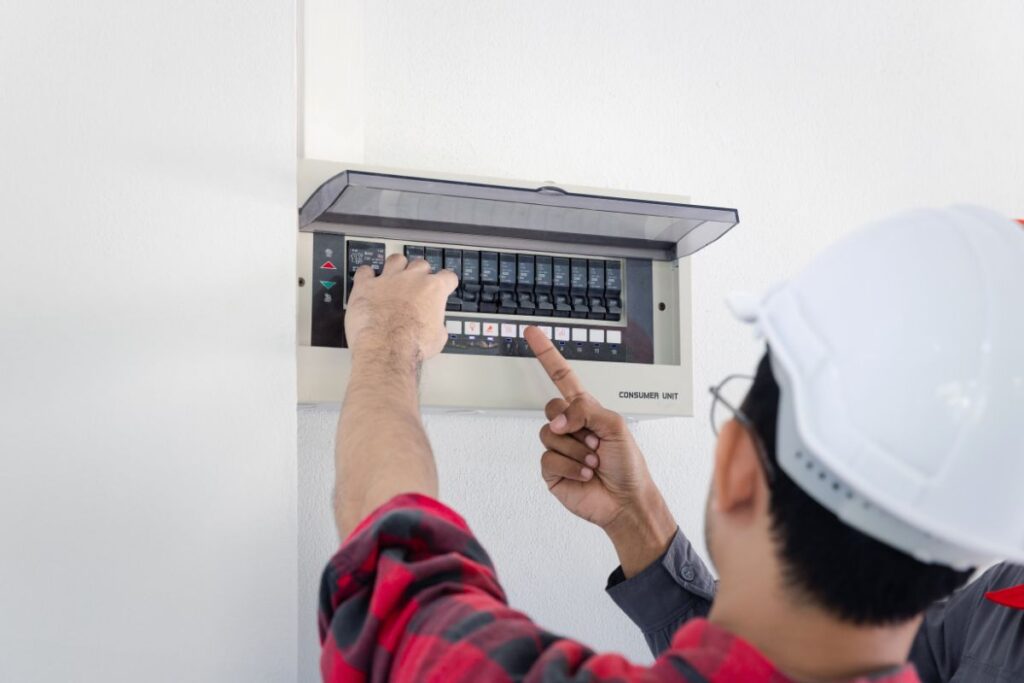
Usman Ahmed Zafar, founder of emergency electrical support firm Grip Electric, highlights the importance of thorough investigation after a Portsmouth call-out involving persistent RCD tripping led to the discovery of a fault on a ring main
A customer in Portsmouth reported RCD tripping even when everything was unplugged. For an electrical contractor, that description is useful information to carry into an investigation. It is also a reminder to keep the customer’s account of the symptoms separate from the cause identified on site. Unplugging appliances had not resolved this customer’s problem, and the installation needed professional attention.
Grip Electric’s engineer found a short-circuited wire on the ring main. The damaged wire was subsequently replaced at a separately booked return visit. Those are the central facts of this example: a recurring symptom, an identified wiring fault, and a permanent repair completed through a further appointment.
The case illustrates why an initial fault-finding visit and a remedial booking should be explained as distinct stages. A request for help usually begins with what the customer can observe: a device trips, power disappears, or part of the property no longer works. That description establishes the problem needing attention. It does not, by itself, establish the work required to repair it.
For contractors, the communication opportunity is to make the next stage understandable. Explain what the investigation has established, describe the proposed repair, and make clear whether the work can be completed during the current attendance or needs another booking. The arrangement should be specific to the actual job. A return visit should not come as an unexplained change to what the customer expected.
‘A short case need not contain dramatic claims’, Grip Electric founder advises
The Portsmouth example should also be described within the limits of the available information. The account supplied for this article identifies the reported symptom, the damaged ring-main wire and the separately booked replacement. It does not include final test readings or a detailed record of the first attendance. Those details are therefore not reconstructed here. A useful case study should distinguish documented events from broader advice about managing similar work.
For other electrical businesses, the practical lesson is to keep the explanation grounded in the customer’s problem and the findings from that property. Avoid promising a particular repair before the cause is established. Where another visit is required, explain its purpose, agree the scope and quotation, and give the customer a clear understanding of what happens next.
A short case need not contain dramatic claims to be useful. Here, the value lies in a clear sequence: persistent RCD tripping was reported, a wiring fault was found, and the damaged wire was replaced at a separate appointment. Keeping that sequence clear supports an honest discussion of fault finding and remedial work. It also keeps the published account proportionate to the evidence available from this particular job.
Usman Ahmed Zafar is founder of Grip Electric


