2 November 2026
Product of the Month: Amari Floodlight range by Aurora Lighting
 
23 November 2026
Advanced acquires communications specialist Baldwin Boxall
 
23 November 2026
Trades face 'skills squeeze' as apprenticeship demand soars
 
20 November 2026
Ovia: Delivering performance and flexibility across every sector
 
20 November 2026
Exclusive: how to prepare a building for future technology
 

Latest News


Smart Energy Training adds electrical apprentices to portfolio
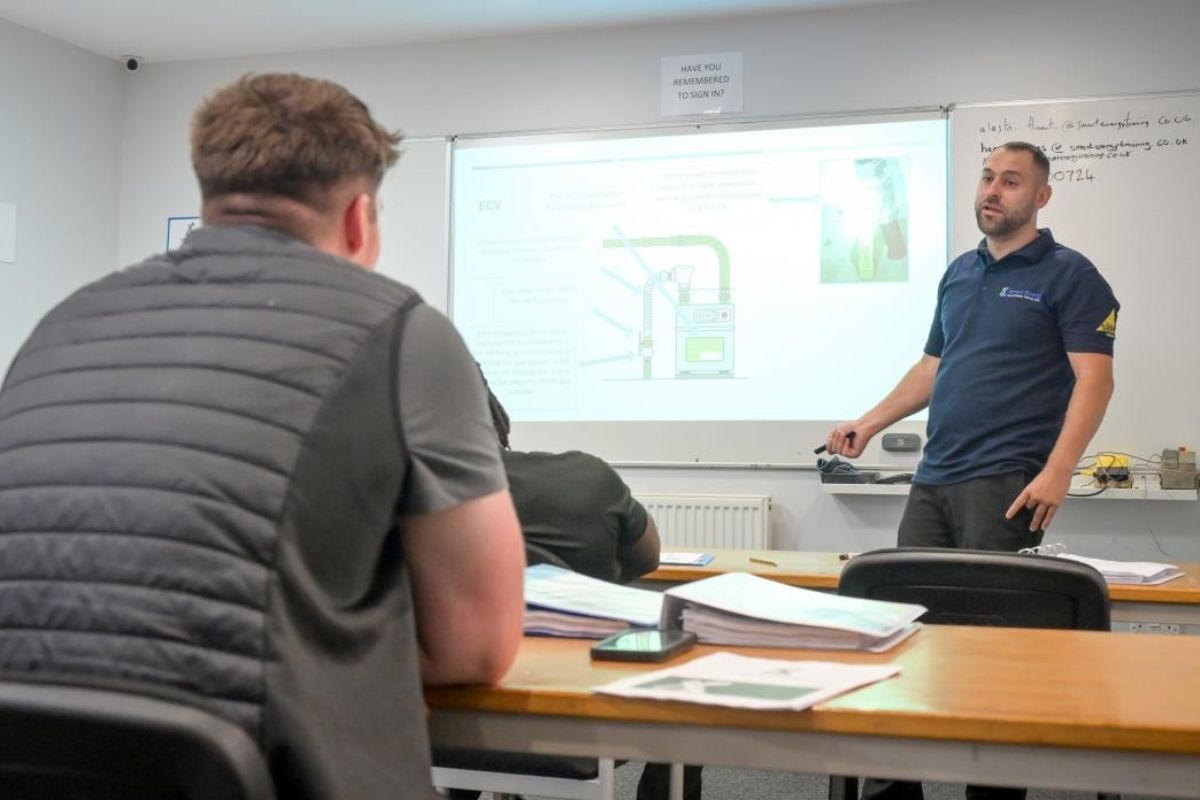
Smart Energy Training has added electrical apprenticeships and short courses to its education offering in a bid to stimulate the UK electrical contracting workforce The training provider, which is known for its gas and renewable energy provision, is offering the Level 3 Electrician Apprenticeship at its Northampton, Ashbourne, Nottingham and Redditch centres, with Cleckheaton to follow from February 2027. Planned electrical short courses at selected centres include Safe Isolation of Low Voltage Installations, Overview 5357, periodic testing, Level 3 LCL 18th Edition Wiring Regulations and Level 3 18th Edition Wiring Regulations. For those looking for a career change, Electrical Managed Learning Programmes will also be available from February 2027 across several Smart Energy Training centres. It comes after Skills England estimated the UK will need an additional 12,000 electricians by 2030, yet analysis by the ECA (Electrical Contractors’ Association) showed there has been a 5.5% drop in electrical apprenticeship starts. Smart Energy Training expansion 'increases opportunities' Shaun Newton, Senior Electrical Trainer at Smart Energy Training, says: “We’re delighted to be bringing electrical provision to Smart Energy Training, increasing the opportunities available to people who either want to upskill or embark on a brand new career, while providing the apprentices employers need. “We have an excellent reputation for our gas and renewable energy programmes and will maintain those high standards with our electrical programmes. A key part of that will be restricting class sizes to a maximum of 12. From what I’ve seen and heard, college class sizes have crept up to around 26 learners. “Restricting our class sizes will ensure we can deliver on our goal of being an electrical centre of excellence rather than just a training provider. It’s very much quality over quantity. There is a significant shortage of trained electricians across the country and this will help to address that need.” Earlier this week, a major report by former minister Alan Milburn proposing widespread changes to help get young people who are not in education, employment or training (Neet) into work across the UK was published. Chris Claydon, CEO of JTL Training, welcomed the review but warned "more needs to be done". For more from Smart Energy Training, click here.

UK Power Networks awards £4m energy flexibility contracts
UK Power Networks’ Distribution System Operator (DSO) has awarded energy flexibility contracts worth up to £4 million through an industry-first tender Fourteen providers, including two new joiners and companies such as electricity suppliers and aggregators, secured long-term contracts for 29.4MW (twenty-nine point four megawatts) of flexible capacity across 59 locations in London, the South East and East of England, enough to power 19,600 homes. Around 15,000 electric vehicle chargers feature among the contracted assets, giving customers a direct role in preparing the network for net zero. The DSO has become the first in Britain to award flexibility contracts extending into the 2028–2033 electricity distribution regulatory period. Alex Howard, Head of Flexibility Markets at UK Power Networks, says, “Flexibility is a significant part of our business plan. Flexibility Providers have asked for more visibility of long-term opportunities, so we’ve extended our tender horizon and plan to keep looking further ahead in future rounds. “As the market develops, we want to keep learning from providers and exploring what works for them, so more people can benefit from flexibility and help us to efficiently operate the distribution network.” UK Power Networks scheme 'a welcome step' Stuart Fenner, Business and Wholesale Infrastructure Services Director at EDF, adds, “Longer-term contracts give energy partners like EDF greater confidence to invest in flexibility services and help customers see a clearer commercial opportunity from their flexible assets. "UK Power Networks’ approach is a welcome step towards making flexibility a more enduring part of how we manage our electricity networks. At EDF, our role as an energy partner is to help customers unlock the value of assets such as EV chargers, supporting their local network and the transition to a low-carbon energy system.” For more from UK Power Networks, click here.

Metpro eyes data centre growth with 75% labour-saving potential
Cable containment manufacturer Metpro Group is targeting the growing data centre market with a new specialist conduit system designed to simplify installation and deliver labour savings of up to 75% It comes as the Government announces new measures to support data centre development, including plans to accelerate grid connections and planning for strategically important projects. By linking priority access to infrastructure with local employment, environmental standards and other community benefits, the initiative could help unlock further investment and development across the sector, the company says. As demand for data centre capacity grows, contractors face increasing pressure to deliver complex projects efficiently, safely and cost-effectively. Metpro's Clean Room Conlok has been developed to address some of these challenges, combining the installation benefits of a fast fix steel conduit system with a dedicated clean room finish. The system provides a potential alternative to stainless steel in suitable applications, helping contractors reduce labour requirements, improve on-site safety and simplify installation without compromising the specific requirements of controlled environments, such as the risk of zinc whiskers. 'Delivering projects efficiently will be critical', says Metpro specification lead Paul Hopps, Specification Sales Director at Metpro, says: “The data centre sector is an important growth market for the electrical industry, and with the Government looking at ways to accelerate strategically important projects, there could be further opportunities for contractors and suppliers as new developments progress. “Delivering these projects efficiently will be critical. Contractors are working in increasingly specialised environments, often under pressure to meet demanding timescales while maintaining high standards of safety and quality. That creates a real need for products that can simplify installation without compromising performance." The conduit tube is manufactured from clean-room-ready material, while boxes and accessories feature a highly specialised protective coating designed for controlled environments. For more from Metpro Group, click here.

Exclusive: 5 reasons contractors struggle to turn work into profit
Jamie Simpson, Founder of Profitable Contractor Blueprint, identifies five common mistakes holding back the profit and growth of UK trades and contracting businesses Across the UK, thousands of trades and contracting businesses appear to be thriving. Their vans are on the road, their social media pages showcase impressive projects, and they're winning plenty of work. Yet behind the scenes, many owners struggle to maintain healthy cash flow, generate consistent profits or even pay themselves properly. Having bought, grown and sold my own companies, as well as advising more than 50 trades and contracting businesses across the UK, I've seen the same problems time and time again. One of the biggest lessons I've learned is that being a good tradesperson and being a good business owner are two completely different skills. Most owners started on the tools, but few were taught how to price jobs, manage cash flow or understand their numbers. Here are five common problems we encounter when auditing contracting businesses: 1. Profit doesn't mean there's money in the bank A company can report healthy profits while its owner struggles to pay themselves. Money is often tied up in unpaid invoices, materials and work in progress, while wages, suppliers and HMRC still need paying. Many owners manage their finances by checking their banking app rather than understanding what's coming in and going out. A thirteen-week cash flow forecast provides visibility over expected payments, upcoming commitments and potential shortfalls. Because even a profitable business can go bust if it runs out of cash. 2. Your pricing could be costing you a fortune in profit Many contractors calculate labour and materials before adding a percentage for profit. But what about office staff, vehicles, insurance, software, equipment and premises? If these costs aren't properly accounted for, a contractor can win plenty of work while making very little money. We recently worked with a contracting company in the South West that had a strong reputation and plenty of work but was achieving single-digit profit margins. After introducing consistent pricing, financial reporting and cash flow management systems, its average profit margin per job increased from 8% to 22% within three months. The business didn't double its turnover or employ more people. It simply became more profitable from the work it was already winning. 3. Not all work is good work Imagine two customers each generating £100,000 in annual revenue. One pays promptly, accepts reasonable prices and provides repeat business. The other takes ninety days to pay, disputes invoices and demands constant management attention. Both generate the same turnover, but their impact on profitability and cash flow is completely different. Contractors need to understand which customers generate the strongest margins, how quickly they pay and whether the business depends too heavily on a handful of clients. The objective shouldn't simply be to win more work. It should be to win better work. 4. Relying entirely on word of mouth makes growth unpredictable Word of mouth is fantastic, but relying on it exclusively means having little control over when enquiries arrive or whether they're profitable. Contractors should develop repeatable processes for attracting the customers they actually want. That might involve search engine optimisation (SEO), paid advertising or a consistent social media strategy. It's equally important to understand what acquiring those customers costs. More enquiries aren't necessarily better if the resulting jobs aren't profitable. The goal is multiple reliable sources of good-quality work, rather than simply keeping everyone busy. 5. You can't improve a business if you don't know the numbers Imagine watching a football match without knowing the score. You'd have no idea whether you were winning, losing or what needed to change. Yet many owners effectively run their businesses this way. They know how much work is booked and roughly what's in the bank, but often can't tell you their net profit margin, overhead recovery or forecast cash position. Every contracting company should have reliable monthly financial information, clear targets and meaningful key performance indicators (KPIs). When an owner tells me they want to grow to £2 million in turnover, my next question is usually, why? Will it increase their income, create a more valuable business or give them more freedom? Or simply introduce more employees, overheads and stress? Growth for the sake of growth isn't necessarily progress. Many contractors are closer to improving their financial position than they realise. They don't necessarily need more vans, employees or longer working hours. They need to understand their numbers, price correctly, improve payment terms, attract better customers and build systems that make the business less dependent on them. Financial management, pricing, marketing and leadership are all skills that can be learned. Before chasing your next £100,000 in turnover, understand how much profit your existing work generates and where your cash is going. Because the goal shouldn't be to be busy for the sake of being busy. It should be to build a company that gives you and your family the lifestyle you want, through consistent profitability, sustainable growth and systems that allow others to run the day-to-day operations without you having to do everything yourself. Jamie Simpson is a UK business investor and founder of Profitable Contractor Blueprint For more Industry Insight, click here.

TRT Lighting welcomes community to Redditch factory
TRT Lighting has welcomed two community groups to its Redditch HQ as part of its ongoing commitment to local engagement The UK lighting manufacturer recently hosted pupils from Matchborough First School Academy and members of Arrow Valley Community Group (AVCG) to its factory, giving visitors a behind-the-scenes look at the people, processes and products involved in British manufacturing. The first visit took place as part of National Manufacturing Day, with 18 Year 4 pupils, aged eight and nine, making the journey from nearby Matchborough First School Academy. The children took part in a series of activities, including making a battery using a lemon, a 'Guess the Job' challenge and a guided factory tour, providing a hands-on introduction to engineering and manufacturing. TRT Lighting to continue opening doors to local community TRT's second community visit saw 17 members of the AVCG visit its Redditch facility where they enjoyed a guided tour and an introduction to the company's lighting products, manufacturing operations and the people behind them. Kirsty Conley, Sales and Marketing Coordinator for TRT Lighting, says, "We really enjoy welcoming visitors to our factory and sharing what we do. It's particularly rewarding to see the enthusiasm of the children from Matchborough First School Academy, and we're delighted that their visit is becoming an annual tradition. "It was equally lovely to welcome members of Arrow Valley Community Group, especially knowing that last year's school visit inspired them to get in touch. Both groups brought plenty of curiosity and questions, and it's a great reminder of the value of opening our doors to the community. We'd like to thank everyone who joined us, and AVCG for their kind donation to Dementia UK." For more from TRT Lighting, click here.

'Milburn Review is a start, but more support is needed', says JTL
The chief executive of JTL Training has welcomed the Milburn Review on tackling youth unemployment and expanding opportunities for apprenticeships, but warned that more support is needed to encourage businesses to employ 18-to-24-year-olds Chris Claydon's comments come following the publication of From a Welfare State to a Working State, a major report by former minister Alan Milburn which proposes widespread changes to help get young people who are not in education, employment or training (Neet) into work across the UK. He says, "The Milburn Review is right to put apprenticeships at the heart of its plan for young people. One in eight young people are not in education, employment or training, and apprenticeship starts among 16-to-24-year-olds have fallen by around 40% in the last decade." Since 2018, Claydon adds, the electrical workforce has shrunk by over 26%. "Young people need routes into work, and the electrical and plumbing trades in particular need young people if we are to meet net zero and housing targets and develop the essential infrastructure needed for the country’s growth. "Apprenticeships are the gold standard route into these trades, and increasing total annual under-25 apprenticeship starts from around 172,000 to around 270,000 over the next decade would go a long  way towards meeting young people and employer needs." Milburn Review: support must go further He continues: “Three in four of our employer partners are small and medium-sized businesses, so the new Opportunity Guarantee will only work if it works for them. The proposed £2,500 for employers taking on a young person, and £2,000 for the training provider, recognise that both carry the cost of training, which we welcome. “However, the only way to get more young people into work is to support employers to take them on. There must be greater acknowledgement that for employers, particularly SMEs, taking on young learners for a demanding four-year apprenticeship is not without risks. The new support set out is a start, but it is critical that more is introduced. "As mayors take on a greater role in brokering apprenticeships, it is essential that they also make sure young people are matched with high-quality providers, and that the providers are able to take them on.” For more from JTL Training, click here.

Heat pump installations more than double across England
Heat pump installations in existing homes have more than doubled across England over the last five years, according to new analysis from Redrow According to the housebuilder, the figure has risen from 16,981 in 2021 to 35,097 in 2025. The South East recorded the highest number of installations during the period at 23,135, followed by the South West, at 23,097.  But despite the uptake, less than half (43%) of homeowners have heard of air source heat pumps, while just 39% are aware of ground source heat pumps. Awareness drops further for water source heat pumps (23%) and exhaust air heat pumps (11%). Meanwhile, more than three quarters (77%) of homeowners are not confident they understand how a heat pump works. Oliver Novakovic, Technical and Innovation Director at Barratt Redrow, has spent the past four years researching heat pumps alongside scientists at The University of Salford’s Energy House 2.0. He says: “Combined with high levels of insulation and smart home design, heat pumps are helping to create homes that are comfortable, energy efficient and ready for the future. “Modern heat pumps can be carefully integrated into landscaping and garden layouts while maintaining performance and maintenance access. There are heat pumps that fit into cupboards and we are looking at other less used areas to install heat pumps such as roofs.” Heat pump uncertainty extends beyond how they work Uncertainty extends beyond how heat pumps work, as homeowners are also unclear about how to use them most effectively. Almost three quarters (73%) of homeowners said they were not confident that they could use a heat pump effectively to heat their home during winter. When used effectively, air source heat pumps can cost as little as £1.84 on a typical winter day to heat a home and can be more efficient than traditional gas boilers because they keep a more constant temperature, rather than relying on spikes of heat. Novakovic adds: “The most common method of heating homes in the UK is currently gas boilers, which are designed to reach temperatures of up to 70 °C quickly and be used for short periods of time that fit around lifestyles, usually morning and evening heating. “During the winter condition tests at the Energy House 2.0 climate chamber, the electrified heating systems did not perform well when used in the same way that consumers with gas boilers would use heating. Instead, consumers with heat pumps would need to adjust to using them in a more constant way to get the best heat at the most efficient cost.” For more from Redrow, click here.

Electrical industry 'must never take shortest path to safety'
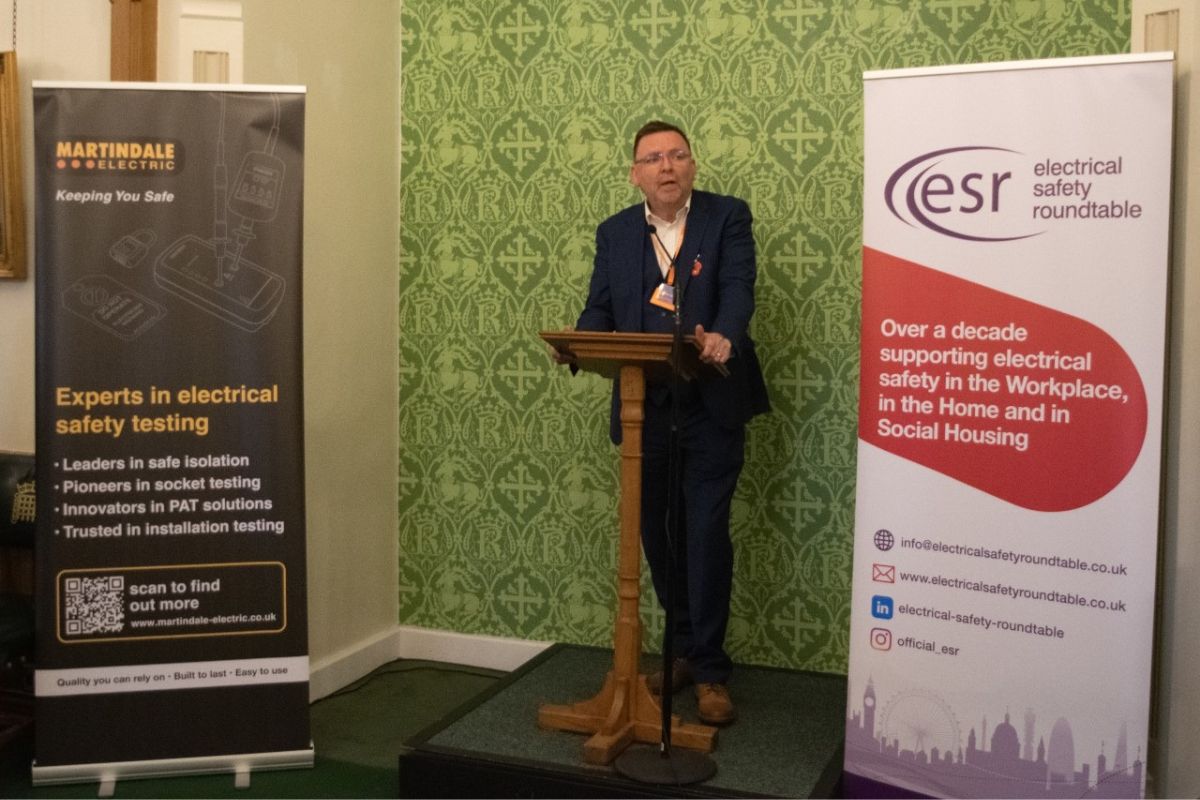
Martindale Electric has highlighted the importance of "consistently" putting electrical safety knowledge into practice as the industry grows Speaking during the Electrical Safety Roundtable (ESR) Above and Beyond Awards 2026 Parliamentary Reception, Martindale Finance Director Philip Parkinson shared findings from the electrical test equipment manufacturer's recent Electrical Safety in the Workplace Survey. Of the 475 electrical professionals who responded, 86% had personally experienced an electrical incident at work, while 78% had experienced a near miss. Almost two thirds, 64%, had witnessed an incident involving another electrician. “Confidence is valuable. Experience is valuable. But neither is a safety procedure. And neither gives us a second chance. Electrical current will always look for the shortest path to earth. Our responsibility is to make sure that, when it comes to safety, we never look for the shortest path ourselves,” he said. In relation to safe isolation, more than 86% described themselves as very familiar with safe-isolation procedures, only 55% said they always followed the full procedure before starting work. ESR Awards recognise 'practical action' across electrical industry Held in the Churchill Room at the Houses of Parliament on 10 November, the ESR Above and Beyond Awards recognised individuals and organisations whose commitment, leadership and practical action are helping to improve electrical safety across the industry. The event also heard from ESR board member and NAPIT Managing Director Steve Melton and Steve Yemm MP. Parkison added: “The people we recognise today are doing exactly what progress requires. They are not simply accepting the way things have always been done. They are asking better questions. They are finding better ways to work. And they are making this industry safer. “We may come from different organisations, but we share the same responsibility: to make sure that people go to work safely, and that they come home safely. Because no job, no deadline and no shortcut is worth somebody not making it home.” For more from Martindale Electric, click here.

Collingwood Lighting raises £6,000 for Children in Need
Collingwood Lighting has helped support this year's Children in Need drive by raising  £6,000 for the charity The company made a donation to the organisation for every product the team sold on 13 November. Rob Peake, Collingwood Lighting sales director says: “We want people to enjoy working for us and have some fun while raising money for such a great cause. "And we would like to thank to all the contractors and wholesalers who placed an order on the day and helped us make our target.” Children in Need is the BBC's UK charity dedicated to supporting disadvantaged children and young people across the country. Established in 1980, the organisation has raised more than £1 billion as of 2023 through its fundraising efforts. The charity's flagship event is an annual television broadcast. This year's show raised almost £40 million, with the figure expected to increase with additional donations to come. Collingwood helps boost Children in Need appeal Earlier this year, Collingwood Lighting supported the first phase of an LED lighting refurbishment for Northampton Saints Rugby by supplying new fittings for the team's Barwell Stand at its home stadium. The project covered spectator seating, corporate hospitality areas, corridors, staff facilities, toilets, and other public spaces. According to the club, the initial installation is expected to reduce carbon emissions by almost 15 tonnes annually and cut running costs by up to £9,000 per year. Across the entire stadium, projected carbon savings are estimated to reach around 60 tonnes each year. For more from Collingwood Lighting, click here. 

A-ONE LED spotlights new low-glare DL98B Plus
The DL98B Plus from A-ONE LED is a low-glare, fire-rated COB downlight for commercial and residential interiors A recessed 50° COB lens delivers UGR below 19 and colour rendering above Ra 90. Power is selectable at 5W or 7W, with standard colour temperatures of 2700K, 3000K, 4000K and 6000K. An isolated TRIAC driver supports leading-edge and trailing-edge dimming. Rated IP65 below the ceiling and IP20 above, it is insulation-coverable and fits a 68–80 mm cut-out with a 45 mm recessed depth. Interchangeable fixed or tiltable bezels come in round or square shapes, in white, black, polished chrome and brushed nickel. Fire-rated for 30, 60 and 90 minutes. A-ONE LED, founded in 2008 in Dongguan, China, is an OEM/ODM manufacturer with a 6,000 m² factory, 150 staff and a monthly capacity of 200,000–300,000 pieces. It holds ISO 9001, ISO 14001, SMETA and BSCI certifications and offers a five-year warranty. For more from A-ONE LED, click here. This article is sponsored by A-ONE LED.