2 November 2026
Product of the Month: Amari Floodlight range by Aurora Lighting
 
10 November 2026
Openreach partners with Allstar to boost EV charging options
 
10 November 2026
VCHRGD appoints Craig Summers as Head of Partnerships
 
9 November 2026
UK Power Networks helps nine veterans secure energy sector jobs
 
9 November 2026
Exclusive: why getting project planning right from the outset matters
 

Latest News


Schneider Electric announces new training programme
Schneider Electric has announced the launch of its Schneider Electric Training programme in the UK and Ireland (UK&I). Schneider Electric’s vision in the UK&I is to create a best-in-class approach to training, unifying specialist academies, courses, and digital campuses into a holistic offering named Schneider Electric Training. The move is in response to the chronic skills gap in engineering and the vital role that training plays in addressing the growing complexities associated with digital transformation. The extensive programme covers everything from AI, the automation of machinery and equipment, to innovations in power and energy management, and safety standards and regulations. Schneider Electric Training will provide customers, partners, and engineers with a single point of access to the vast array of training options and resources available, covering Schneider Electric solutions, industry focused courses, and professional accreditations. It will be delivered via several specialist academies for in-person courses and a digital campus offering on-demand courses for Continuing Professional Development (CPD) via the mySchneider portal. Two academies are already up and running, with three more due to be launched by the end of the year. The Safety Academy in Telford offers a range of Schneider Electric and professional training courses to ensure the safe operation of electrical equipment and site safety, including Competent Person certification and City & Guilds assured Authorised Person training. The Automation Academy in Coventry offers a comprehensive curriculum covering Schneider Electric’s automation portfolio. It is designed to take students from basic product understanding through to advanced programming of both legacy and current technology, including Programmable Logic Controllers (PLC), Variable Speed Drives (VSD), Human Machine Interfaces (HMI), Motion Control and Robotics. David Pownall, VP Services at Schneider Electric UK and Ireland, comments, “Organisations are becoming more dependent on their electrical backbone to support operations, digital transformation, automation, and manufacturing. Electrical engineers and their specialist expertise are critical to the installation, safety, and maintenance of this electrical infrastructure. “There is an urgent need to build skills to embrace new technologies, drive modernisation, improve performance, reduce downtime, and comply with changing safety regulations. Not only that, but training is critical to career enhancement and a key foundation of a positive employee experience, attracting and retaining people when we’re facing a significant skills gap crisis. “Smarter engineers, equipped with the skills needed today and a clear development path to build expertise for the future, make for smarter businesses.” For more from Schneider Electric, click here.

Five tips for electricians handling a business crisis
With recent research showing that more than a quarter of tradespeople are looking for second jobs to help them survive, it's understandable that for many UK electricians, there simply isn't a budget leftover for PR and marketing activities. Despite this, electricians can potentially face issues that could evolve into a PR nightmare - such as issues with wiring causing a client serious harm, for instance - but it's how electricians handle these incidents that can make or break their reputation as a business; especially those who are in the early stages of building their career. To help, experts at money.co.uk business insurance have offered tips on minimising the risk of a PR crisis and dealing with one effectively. Its advice is as follows: Electricians have the potential to cause serious damage to a customer’s home if they make a mistake when wiring and create a fire hazard. A legal claim of this kind has the potential to close down a business in this sector. To avoid this: • Thoroughly vet all employees’ qualifications and training and provide them with a list of safety checks to complete before leaving the job • Make sure they carry proper protective equipment and know what to do if anything goes wrong • Check your business insurance policy for any T&Cs you need to be aware of to ensure you’re covered in the event of an incident How to handle a PR crisis: Remove the risk As soon as you’re made aware of an issue, if possible, you should remove the risk element. This could mean removing a post from the business’ social media page if it’s caused a legal issue, or stopping selling a certain product or offering a certain service if it’s putting customers at risk. Acting fast means there’s less risk of the issue escalating by being seen by more people or causing more harm and complaints. Communicate with the customer If the incident relates to a customer, engaging with that disgruntled customer quickly and empathetically can go a long way in resolving the situation and prevent it from spiralling into a bigger issue. Showing genuine compassion, offering an apology, and explaining how you plan to rectify the situation can help to rebuild your relationship with the customer and protect your business's reputation as one that cares about its customers. Prepare a statement If the incident is already public knowledge (for example, due to a poor online review) or you have a duty of care to make it public knowledge (such as if other customers could be at risk), then you’ll need to prepare a statement. Posting a statement on your brand’s website or social media pages can allow you to address the issue - as well as any public backlash - head-on. Showing transparency and commitment to rectifying the situation can help to build trust in your business and prevent alienating customers. Talk to your insurer If the crisis has the potential to escalate to legal proceedings, you’ll want to speak to your business insurance provider and check the terms of your policy. You may need to claim on your insurance to cover legal costs, be it a legal infringement or being sued by a customer. Your insurer can advise you on how to handle the process and obtain the necessary funds without risking your business’s financial standing. Take the learnings After making it through a crisis and the fallout, you’ll no doubt want to move on and forget it happened. But one of the most important parts of crisis management is taking learnings from these incidents to avoid the same thing happening again, or to deal with it faster and more effectively next time. Make sure to keep a log of any incidents and the learnings, and update your crisis management strategy accordingly.

Wrexham Council signs partnership for installation of EVCPs
Wrexham County Borough Council has signed a partnership with Costelloes EV Group to oversee the operation, maintenance and installation of electric vehicle charge points (EVCPs) on council-owned land. This long-term, fully funded partnership aims to expand the network of chargers across the county at a lower cost and enhance service quality. Costelloes, based in Ellesmere Port, specialises in providing comprehensive solutions including solar, battery storage, and EV charging. The agreement will facilitate the expansion of the current network of EVCPs, enable quicker and more cost-effective rollouts, improve customer service and experience, and ensure a professional and efficient service. This initiative is part of the Council’s efforts to decarbonise transport across the county borough, leveraging available funding opportunities. Over the next year, the Council plans to install over 45 smaller EVCP units and two EVCP mobility hubs, supported by a £758,654 contribution from the Welsh Government’s Ultra Low Emissions Vehicle Transformation Fund for 2024/25. Cllr David A. Bithell, Deputy Leader and Climate Champion, expresses his enthusiasm for the partnership, stating, “We’re delighted to sign the innovative partnership with Costelloes EV Group, to help us expand and improve upon our network of EVCPs. We want to support our residents to move towards using electric vehicles by providing them with more high-quality, well-maintained charge points across Wrexham, and securing an agreement with an industry specialist will help us to deliver that.” David Costelloe, Managing Director of Costelloes EV Group, adds, “We’re thrilled to be appointed to deliver Wrexham County Borough Council’s electric vehicle charging infrastructure, installing and operating a full range of EVCPs, as a first step in our partnership to deliver decarbonisation solutions across the county. With over 30 years of experience in the electrical industry, our team is dedicated to staying at the forefront of new developments and technologies. We take pride in providing exceptional service and support to our customers, ensuring that their needs are met with the highest level of professionalism and expertise.”

New metal cable cleats available from Unicrimp
Unicrimp’s growing Q-Fire portfolio of fire-rated cable accessory products now includes a range of metal cable cleats. Meeting the BS 7671 (18th Edition) requirements, they are designed to prevent cables from premature collapse during a fire which, in turn, helps keep the public safe. The 18th Edition of the Wiring Regulations stipulate that cable support systems must be constructed with materials that will withstand premature collapse caused by direct exposure to heat. There are no applications excluded – trunking, conduit and cabling fixed to surfaces of the building or attached to cable support systems must all have fire-resistant supports in place. Unicrimp’s fire-rated black Metal Cable Cleats are available in 14 different size options suitable for cable sizes from 5mm up to 50mm. The key feature of the product is an oval fixing hole which allows for cable diameter tolerances. To install the metal cable cleat, the electrician just needs to bend the cleat around the cable and fix in place to the designated wall. For more from Unicrimp, click here.

CU Phosco introduces PhosLink Adjustable Power Connector
CU Phosco, the largest family-owned UK designer and manufacturer of outdoor lighting solutions, has announced the launch of a new product, the PhosLink Adjustable Power Connector. Designed for the versatile CU Phosco E95X luminaire range, PhosLink offers an unprecedented level of power adjustability and efficiency for outdoor lighting applications. The PhosLink series includes two variants – PhosLink1 and PhosLink2 – each engineered to provide nine distinct power settings. This flexibility empowers customers to tailor the power output of their luminaires to suit specific project requirements, directly on-site or within their depots. As a result, customers can benefit from more streamlined stock management with the flexibility to adjust the lumen output as necessary either in the workshop or on site, and greater adaptability in their inventory holdings. Key features of PhosLink: • Customisable power settings: Both PhosLink1 and PhosLink2 allow users to adjust power outputs in increments of 100mA. PhosLink1 supports settings ranging from 200mA to 1000mA, while PhosLink2 ranges from 250mA to 1050mA • On-site flexibility: Each luminaire is initially set to the lowest output, allowing for easy adjustments to higher settings as required. This enables customers to achieve the desired wattage without the need for additional installation procedures • Energy efficiency: PhosLink ensures direct, economical, and targeted lumen output, making it ideal for energy-conscious lighting schemes • Ease of installation: Designed to be user-friendly, the PhosLink connector simplifies the process of adjusting wattage. By simply repositioning a link wire and pressing the connector button, users can select the appropriate setting with ease • Optics compatibility: Standard optics options include P4 for residential roads and R2 for footpaths, with additional optics available upon request • International Dark-Sky Association approved: Initially designed with DarkSky accredited E95x range, compliant when using a colour temperature of 3000K or below, at zero-degree tilt. CU Phosco's commitment to innovation is exemplified in the development of PhosLink, which aligns with the company’s dedication to providing cutting-edge, energy-efficient lighting solutions. The PhosLink Adjustable Power Connector is set to transform how outdoor lighting systems are managed and optimised, offering unparalleled adaptability and convenience. “The introduction of PhosLink represents a significant advancement in our E95X product offerings, providing customers with a versatile and efficient solution to manage their outdoor lighting needs on-site,” says Matt Murray, Sales and Marketing Director at CU Phosco. “We are excited to bring this innovative product to market, continuing our tradition of excellence in design and sustainability.” For more from CU Phosco, click here.

School heating system harnesses heat from thermal spring
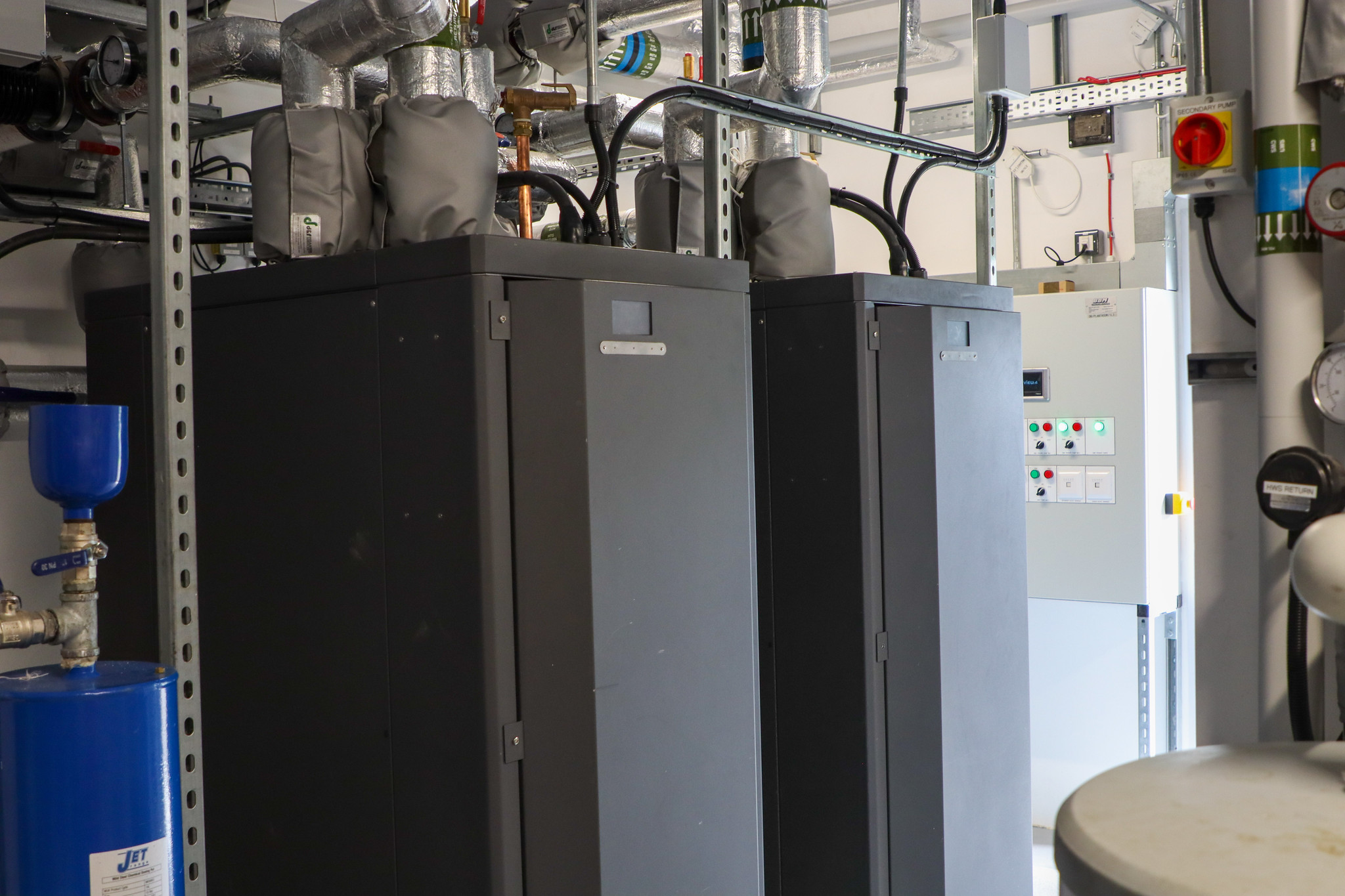
A primary school and bowls pavilion in a South Wales village have switched to clean, renewable heating in an innovative way that cannot be replicated anywhere else in Wales. Ffynnon Taf Primary School and the Pavilion at Taff’s Well Bowling Club in Taff’s Well, Wales, have had a bold new heating system installed by Kensa, a UK-based ground source heat pump specialist, that uses naturally occurring heat from the only thermal spring in Wales – the historic Taff’s Well Spring. This unique water source heat pump system harnesses natural heat from the warm spring water, which emerges from deep beneath the earth at around 21°C, to provide the two council-owned properties with low-carbon heating and hot water. Using the innovative clean heating method instead of gas is expected to cut the school and pavilion’s carbon emissions linked to heating by close to 80%. It also demonstrated a way of using Kensa’s ground source heat pumps without drilling vertical boreholes to access heat energy stored in the ground. The bold idea of using the Taff's Well thermal spring to heat buildings was initially proposed by the Friends of Taff’s Well community group, who were looking at other ways the historic spring could benefit the local community. This project follows other retrofit renewable heating installations completed in non-domestic buildings by Kensa. Using ground source heat pump technology, the UK’s leading manufacturer and solutions provider has futureproofed heating and lowered carbon emissions caused by heat in multiple UK schools and council properties. The unique installation also highlights the versatility of Kensa’s ground source heat pump systems and forms part of Rhondda Cynon Taf Borough Council’s ambitious plans to decarbonise by 2030. How the system works Kensa’s ground source heat pumps, found in thousands of UK properties, are usually set up to source energy from the ground to provide heating and hot water. The one-of-a-kind installation at Taff’s Well pumps warm water from the spring and passes it through a nearby heat exchanger, which is connected to Kensa’s ground source heat pumps housed inside the school and pavilion. In this highly energy-efficient system, heat energy stored in the warm spring water is absorbed and converted by the heat pumps into usable energy for the school and pavilion’s heating and hot water systems. While in the system, the water is confined to its own pipework, mostly hidden under the ground and out of sight, and doesn’t encounter any other substances to ensure there’s no issue of contamination or pollution. To keep the connecting pipework hidden and to avoid above-ground damage, Kensa horizontally drilled hundreds of metres between the well, the school, and the pavilion. After passing through the system, the clean water is emptied back into the well’s overflow, feeding into the River Taff. This is the only system installed by Cornwall-based Kensa that uses a natural thermal spring as a heat source. On Tuesday 16 July, Kensa’s Dr Stuart Gadsden visited the site, along with representatives from Rhondda Cynon Taf County Borough Council, to demonstrate to pupils from the Ffynon Taf Primary School’s Eco Committee how their new low-carbon heating and hot water system works. Dr Stuart Gadsden, Kensa Contracting Commercial Director, says, “This is an incredibly unique system and really demonstrates how versatile Kensa’s ground source heat pumps are. It was great to show the pupils how their exciting new heating system works and how it will reduce their carbon footprint. “Kensa has a proven track record of delivering the high efficiencies of ground source heat pump technology for numerous UK schools and local authorities, providing them with a futureproofed low-carbon heating system. “Using the historic Taff’s Well thermal spring as a renewable heat source is a brilliant example of how bold ideas can lead to something that benefits future generations. It’s something the whole community can be proud of, and we were pleased to play our part in making it happen.” Ffynnon Taf Primary School Headteacher, Kathryn Price, notes, “We are very excited about how Taff’s Well Thermal Spring has been utilised for the whole school community. Our Eco Committee thoroughly enjoyed learning more about the heat pump system and how this helps to reduce the school’s carbon footprint. We will continue to celebrate the success of the thermal spring installation in our community for many years to come.” Jon Arroyo, Energy and Carbon Reduction Manager at Rhondda Cynon Taf County Borough Council, adds, “We have an ambition to decarbonise the Council by 2030 and we understand there is no one solution to decarbonise our heating systems, so it is important that we look at what heat resources are around or under us. As a Council, we see our role in exploring alternative solutions to help steer our businesses and residents in their journey towards a net zero future.” For more from Kensa, click here.

Two thirds of Brits unconfident about house building targets
Close to two thirds of British residents are not confident that the new Government can meet its targets for homebuilding during the next five years. According to new data from MyBuilder.com, 57% of people are not confident that government targets for house building will be met. In the age range of over 55s, this jumps to 72% stating that they are not confident that these aims will be achieved. Geographically there are some variations in the levels of confidence of British people in the house building targets. Bristol has the least confidence, with 70% of those surveyed believing the goals would not be met, while Londoners had more confidence, with less than half (48%) stating that they did not think the Government would achieve its goals. The list below shows the percentage of respondents in each geographical who are not confident that the government will meet its house building targets: • Southampton 68% • Nottingham 67% • Brighton 65% • Birmingham 63% • Norwich 61% • Manchester 59% • Wales 57% • Scotland 57% • Liverpool 56% • Leeds 55% • Newcastle 55% Professionals from MyBuilder.com have pointed out that the current skills shortage in construction and the skilled trades could make this new target problematic. Government policy around house building targets in the UK has been inconsistent over the past 15 years, with 16 housing ministers since 2010. Despite repeated pledges to build more homes by successive governments, no targets have been met in the last 20 years. Meanwhile, the housing shortage continues to grow, with an estimated shortfall of over four million homes across Britain. The newly-elected government has stated that it has a target of building 1.5 million houses by 2029. While experts at MyBuilder.com welcome this ambitious target, it raised concerns around how realistic this is, taking into account the skills shortage within the building industry. According to recent research from the UK Trade Skills Index (2023), the UK is facing its largest ever deficit of skills tradespeople in history. The industry will need to recruit close to a million new apprentices in the next 10 years just to stay afloat - and that’s without an increase in house building targets. The Skills Index also found that the UK has seen a worrying rise of skills shortages across construction – from 29% in Q1 2021, to 55% in Q4 2021. Widespread shortages exist particularly among plumbers, bricklayers, carpenters, and electricians. Andy Simms from MyBuilder.com (pictured above), says that the government must do all it can to encourage young people into trades to address the skills shortages. He comments, “It’s great to see that the new government is keen to prioritise house building when there is such a problem in this area. “Government incentives helped the UK see a spike in trades apprenticeships, but in 2021 nearly half of this apprenticeship levy was unspent. The government must work with the education system to promote the trades as a career path, or we will be facing bigger shortages than ever at a time when house building needs to be a priority for the British people.”

JTL calls on employers to ‘Energise their business’
JTL, a leading apprenticeship provider in the building services engineering sector, has launched a new campaign appealing directly to employers and calling on them to energise their business by taking on an apprentice. JTL works with over 3,800 businesses and trains more apprentices than anyone else in the building services engineering sector, currently training around 8,000 learners in electrotechnical engineering and plumbing - key skills that are contributing to the UK’s transition to net zero and future workforce. With a growing number of training centres across the country, JTL can provide tailored training in renewable technologies and ensures access to the latest academic criteria. Each training centre boasts state-of-the-art learning environments and resources required for each apprenticeship standard. This enables the delivery of high-quality training in response to industry demand. Employers working with JTL apprentices have told of the benefits they bring to their business as talented and highly motivated team members; as well as the value of a smooth and efficient process in hiring an apprentice. Government funding may be available to assist employers when recruiting an apprentice and cover the expenses related to qualification training with JTL. Hayley Tabberer, Employer Campaign Manager at JTL, says, “This is an exciting time for the industry, as innovative technologies are transforming our daily lives and increasing the demand for both commercial and domestic installations. The apprenticeship standards focus on a greener future, making it invaluable to bring an apprentice into your business who is trained to these practices from the start, ensuring sustainable growth.” Supporting employers directly, JTL provides a dedicated training officer to manage the apprenticeship process from the initial appointment through to completion, and all JTL apprentices are supported with learning resources and provided with a free toolkit for their workplace. The campaign, running across all digital channels, also raises awareness about updated academic standards to better reflect business and industry’s needs, and changes to government funding rules which mean apprenticeships within small businesses are fully funded for anyone up to the age of 21. Employers are encouraged to find out further information to maximise the potential of apprentices for their business by visiting JTL’s dedicated employer webpage. For more from JTL, click here.

Unicrimp offers All-Round Banding range
Unicrimp, part of the Scolmore Group of companies, offers a comprehensive range of products in its growing Q-Fire fire-rated collection, including All Round Banding products. The All Round Banding range provides users with an expanded choice of fixing solutions, suitable across a range of applications and environments – helping installers to satisfy the latest IET Wiring Regulations. The pre-punched steel banding is highly versatile and has multipurpose uses – to secure cables, pipes, ducts and conduits. It is easy to cut and bend and the pre-punched holes allow for easy fixing using nail, screws, or bolts. The All Round Banding range comprises a choice of a non-coated galvanised steel finish in 12mm and 17mm widths, LSF coated options in black (12mm and 17mm widths), plus red and white colour choices (available in 12mm widths). They are all supplied boxed in a 10 metre coil size. For more from Unicrimp, click here.

New lighting brings Newport Railway bridge to life
A new pedestrian and cycle bridge has been built at Newport station in Wales, forming a vital crossing over the Great Western Mainline Railway. The bridge has been introduced to encourage active travel and improve connectivity for local residents and commuters. Designed by renowned architectural practice, Grimshaw, with additional engineering support from Arup, the 230m bridge is divided into several distinct parts, including two dark grey steel sections that span the railway lines plus stairs and a lightweight step-free ramp on each side. The whole structure has been unified with continuous orange flooring to create a bold statement and a unique identity. Lighting was a key aspect of the bridge's construction, with a particular focus on safety, security, and accessibility. The design called for a discreet handrail solution to illuminate the floor deck while also supporting users with limited mobility. Additional lighting was also specified to enhance the surrounding public spaces. Leading M&E consultant, Vitec, was appointed to oversee the lighting and approached DW Windsor to fulfil key elements of the scheme's design. To satisfy the brief, DW Windsor supplied products from its award-winning Garda illuminated handrail range, adapted to suit the project's unique requirements. For the ramps and stairs, nearly 500m of seamless stainless-steel handrail was installed, fitted with 300mm Garda Classic asymmetric modules. Special attention was paid to how the handrail attached to the balustrade fins, which had pre-drilled holes, meaning a lot of coordination between all parties was needed to ensure everything fitted together on site without modification. For the main bridge deck, where handrails could not be used for safety reasons, an alternative approach was required. To overcome this challenge, DW Windsor developed a bespoke solution, integrating Garda LED modules directly into the two parapet structures slotted between the vertical ribs. Additional lighting was also supplied for the central section between these structures where, again, handrails could not be used. Here, the designers came up with an innovative solution to vertically mount recessed Ligman Lightalk luminaires between the balustrade fins. To achieve the required light levels, 3000K LED modules were spaced at approximately 2m across the whole structure. This provided a consistent appearance and ensured the scheme delivered an average maintained illuminance of 30 lux and a minimum uniformity of 0.5 to comply with British Standards. Discussing the installation, David Anstee, Technical Manager at DW Windsor, says, "This was a very large project, requiring a lot of coordination, particularly for the handrail, which had hundreds of touch points. Additionally, the power supplies needed to be in one location, meaning a lot of planning was needed to calculate circuit loads and voltage drop to ensure the lighting would operate as intended. This included planning all of the cable routing and ducting which had to be built into the bridge structure." In addition to the bridge lighting, the brief specified that lighting should be integrated into the hard landscaping beneath each ramp, which has been styled into amphitheatre-like areas. To support this, DW Windsor supplied sections of its Vaio linear system, which were recessed horizontally into the granite seating around the perimeter. This offered a point of focus for users while also providing low-level lighting to guide people into the space. Additional Ligman uplighters were also installed into the planters to illuminate the ramp soffits and vertical supports, enhancing the general ambience of the space while having minimal impact on the surrounding areas. Shaun Davies, Project Engineer at Vitec, comments, “The Newport Station bridge provides residents and visitors to the area with a safer, more accessible link over the mainline railway. With its distinctive design and discreet lighting scheme, the new bridge has helped to transform a neglected area into a vibrant public space.” For more from DW Windsor, click here.