2 November 2026
Product of the Month: Amari Floodlight range by Aurora Lighting
 
11 November 2026
Energy, AI and smart buildings: register now for EMEX 2026
 
11 November 2026
Solar and batteries could cut electricity costs by 40%, data finds
 
11 November 2026
EIC confirmed as ECN Awards 2026 charity partner
 
11 November 2026
Acrospire to support Green Frog's European expansion
 

Latest News


JIB Skills Development Fund celebrates 70 years
The Joint Industry Board (JIB) is celebrating the 70th anniversary of its Skills Development Fund (SDF) by urging members to take advantage of the many opportunities to raise their skill levels and enter new and emerging markets. With the move towards net zero and need for low carbon technologies within the built environment, the JIB Skills Development Fund is providing a much-needed boost for skills and training by providing up to 75% of the costs of relevant upskilling qualifications. Originally established as the Further Education Fund, it was rebranded in 2015 as the Skills Development Fund and over the years the JIB has been working to raise the level of awareness of the Fund with the aim of promoting a higher standard of technical knowledge and craftsmanship across the electrotechnical industry. The SDF helps people improve their skill set in a number of ways, such as providing grants to JIB member companies to train their workforce and become more competitive in an ever-evolving marketplace. The Fund is also open to those who have been made redundant and may be able to provide grants to help increase the skills of those unemployed to re-enter the workforce. Just in the last five years, record levels of applications and support have seen 150 people provided with over £100,000 in grant funding to progress their education and careers in the electrotechnical industry. Another benefit for industry provided by the SDF is the JIB Apprentice Exchange Programme. The JIB arranges exchanges between the New York JIB, USA, and Electrogroup Training, Brisbane, Australia, with apprentices travelling between the countries to report back on what work is like for an electrician. These exchanges have been very successful since their inception, with the SDF covering the cost of flights, accommodation, wages and associated costs. The latest winner, Matthew Pickering, of NG Bailey, will spend six weeks living and working as an electrician in Brisbane, Australia, later this year. Jay Parmar, CEO of the JIB, explains, “It’s imperative for JIB member companies that they remain competitive in a rapidly changing sector and the Skills Development Fund is committed to continuing its support for upskilling the workforce and career progression. JIB members have in previous years reported back to us a wish to see more support for training and upskilling and I am therefore pleased to see the charity providing financial support across a wide range of technologies and skills that will allow JIB member companies and their employees to continue to thrive in the future.”

UK Power Networks spearheads smart transformer trial
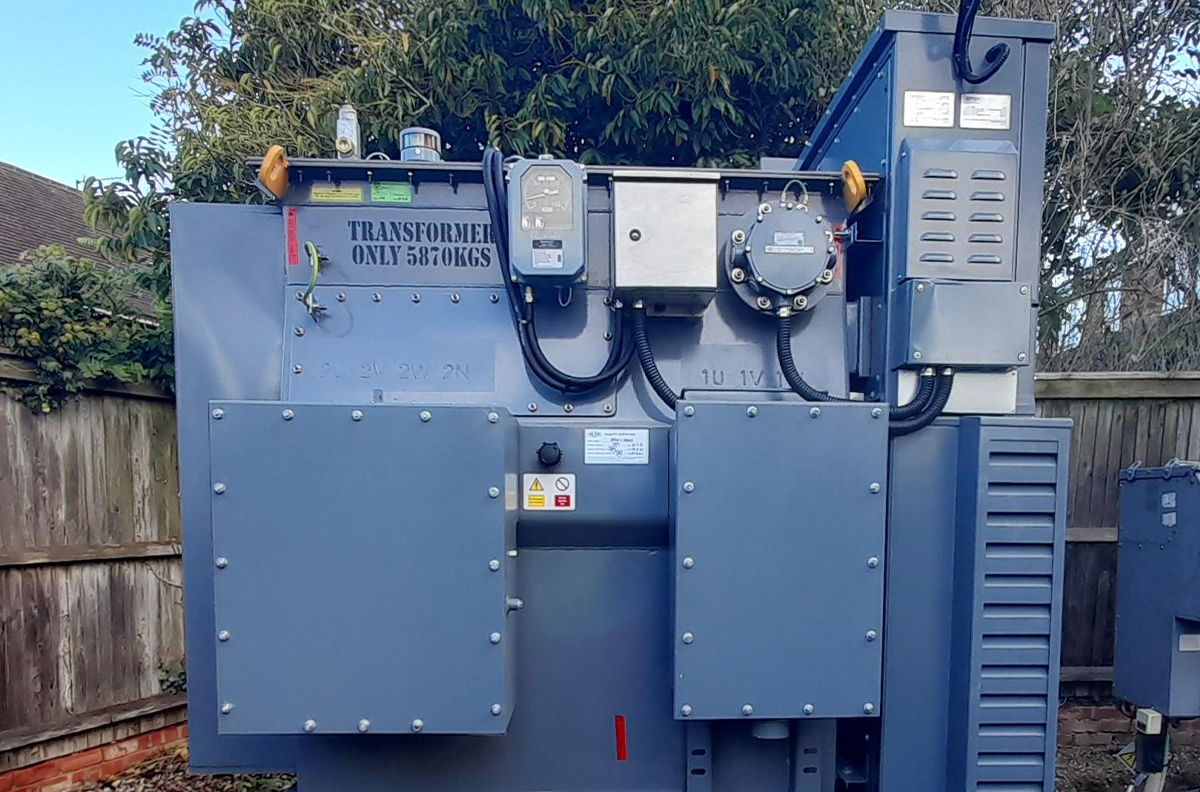
A smart transformer trial is set to provide unparalleled network insights to help maintain reliable power supplies in the south of England. UK Power Network’s Project Stratus will see smart electricity transformers installed within existing substations at Uckfield and New Romney in East Sussex which, if successful, will provide live data on electricity usage and demand. This will help the company increase network resilience and lay the groundwork for a low carbon future. Using power electronic technologies, the smart transformers can flexibly adapt to make sure power is directed when and where it is needed, balancing load on the network, and protecting against multiple kinds of potential faults. Ian Cameron, Director of Customer Service and Innovation at UK Power Networks, says, “In a world of electric vehicles and decarbonised heating, this enhanced visibility and control of our network will allow us to efficiently manage the existing network infrastructure which was never designed for this increased load. “Whether it is by redirecting power flows, or by managing energy capacity, smart transformer technology would give us world-class oversight and flexibility long into the future, allowing for the integration of more low carbon technologies as efficiently as possible.” “Project Stratus is just one of the ways we are improving network reliability, helping keep the lights on for over 20 million homes and businesses. It could give us world-leading visibility of our low voltage network in east Sussex, allowing us to react to potential network faults before they can affect the local power supply.” With greater visibility of the low voltage network, UK Power Networks will be able to release more energy on the network during times of peak electricity demand. Stratus’ optimisation algorithm can also meet the changing needs of customers at different points of the day, without disrupting their energy supply. The introduction of the technology could enable future markets to support the network and could provide a reliable power source for the next generation of emergency service vehicles proactively tackling the challenges of a low-carbon future. The trial is being run alongside digital energy platform Amp X, who are offering customers up to £90 to participate. By installing smart plugs in their homes, the project will also capture data to better understand the benefits and create a road map for how the technology could be rolled out nationally. Irene Di Martino, Head of Amp X says, “Working together with UK Power Networks to deliver this trailblazing project is an exciting step forward in delivering net zero. Innovation and data driven work will be the driving force behind developing a more dynamic network that can meet the changing needs of society. We hope that with our technologies and support, this project can show how to help communities decarbonise faster and more affordably.”

CEF brings ATEX solutions to Hazardex Live! 2023
CEF will be showcasing ATEX solutions at Hazardex Live! 2023. Hazardex Live! is designed to help those who work in process safety stay up-to-date with best practice and the latest research. During the two-day event which takes place in Harrogate on 1-2 March, CEF will be sharing details of its ATEX solutions - products designed to be used safely in explosive atmospheres. Chaz McDonald, Category Manager - ATEX and other members of CEF’s National Accounts team will be on hand to talk to people working in hazardous area operations about their personalised service to deliver ATEX solutions to multiple site locations and to a network of remote engineers. He says, “We want to let businesses know that CEF can supply ATEX solutions for a wide range of different industries. With our investment in stock and our branch network, we truly believe that we offer a service they can trust and rely on, wherever they need it.” CEF are investing £1 million in stock of ATEX and UKEX approved products including lighting, termination and cable management, switches and sockets, heating and ventilation, and cable barriers. These products are approved for use in a number of environments where there is a great risk of explosion, including oil and gas, pharmaceutical, petrochemical, water treatment and sewage, automotive and food, drink and distillery industries. Thanks to CEF’s extensive national network of over 390 branches and online orders available for next day delivery, it can offer unlimited access to the products, expertise, technical know-how and pricing consistency for any project whatever it is and wherever it may be.

Five tips to get your business ready for summer
With spring in the air, Fergus has released five simple tips for trade business owners to get their company ready to bloom this summer. Whatever your trade, getting your business ready for a profitable 12 week run through June, July and August can mean the difference between a good and a great year. Summer can be a very busy time for some trades, but not for others. For instance, the plumbing and heating sector often experiences a quiet period before the cold weather and ‘heating season’ returns in autumn. However, by following the same ideas, even those trades who suffer from a seasonal lull can still maximise the time to prepare their businesses to prosper. “Spring is a great time to remove any old, outdated systems that aren’t working for you anymore and look to make some actionable steps that will set your business up for success,” says James Chillman, UK Country Manager for Fergus. “By making some changes now, at the very least you will be ready to take a holiday and enjoy the important things in life, knowing your business is in good shape going into the middle of 2023.” Review your business performance To grow and maintain your business successfully, you need to know which areas you can improve upon. Reviewing your business’ performance allows you to gauge your achievements and milestones. At the same time, check your customer satisfaction levels. Collect any feedback and see where you’re kicking goals, and where there may be room for improvement. Review your client list: how many new customers did you get? If your client list isn’t growing, it may indicate that you need a new marketing strategy. Set your business goals for summer Setting a goal brings everything into perspective. It’s a way to assess where you are right now and where you want to be by autumn. Your business goals for summer can be as simple as having a specific number of clients on your books or identifying the amount of profit you want to make. Your goal may be as simple as switching off completely - plan for that now and make it happen. Schedule jobs and plan efficiently Trying to juggle too many jobs at once and with no visibility across each team member’s movements throughout the day and every member of the team running an individual calendar can mean scheduling conflicts easily occur. If you are also unsure which materials are in stock, on backorder or with a supplier, you have yourself quite the headache. By using a centralised scheduling system such as Fergus, you can take complete control of your schedule by assigning tasks to team members or clients, matching calendars with individual projects, viewing the progress of a job in real time, and breaking big jobs down into separate tasks. With this visibility across the whole team, you can maximise working time and profit. Dust off your website Tradespeople often rely solely on referrals and word of mouth. However, a website is still vital in this day and age and can be a brilliant ‘shop window’. It can drum up more customers and adds another layer of credibility to your business. If you’re a small business and don’t have a website or haven’t updated it in years, now’s the time to revise it. Maybe you’ve updated your brand logo or perhaps you offer more services than what is currently listed on your webpage. Use a service like Wix.com or GoDaddy to help you. Touch base with customers It is important to plan your holiday time, after all you work to live, not the other way around. Plan to get in touch with your clients to let them know of your holiday operating hours and when you’ll be back on deck. This is a good opportunity to take the time to thank them and to cement these relationships. Explain who to call instead or provide them with a call-back form/waitlist on your website where they can leave their details for you to get back to them once you return to work. If you have business management software, set up an out-of-office automated text and email to let your existing customers know that you’ll be away and will be back on ‘X’ date.

From buyer to supplier for new Niglon recruit
A UK-based electrical supplier has boosted its sales team with the recruitment of a new north east representative. Niglon’s Connor Corbett will be looking after current wholesalers in the region, as well as sharing information about the company’s offering, consisting of more than 4,500 products, with new customers. He says, “I’ve worked in electrical wholesale for the last 10 years and have always used Niglon through that time - I’ve seen the company growing during those years so when the opportunity came up to join the firm when the Niglon Academy was announced, it was something I was really keen to do. “Everyone in the team has been great, and the wholesalers have been so welcoming when I’ve visited them. Every day is different and I’m enjoying the challenge!” Connor, a recently married dad-of-one and Liverpool FC fan, started his career in a wholesale warehouse, progressing to the trade counter before becoming a sales account manager at his previous firm. His aim within the north east is to work closely with current wholesalers and develop relationships with new wholesalers too. Niglon’s Operations Director Oliver Hinley says, “Connor is a great addition to the team, and is already building up great relationships with our wholesalers in the north east - his familiarity with this aspect of the electrical industry makes him a great asset to the company. “Connor is the first recruit to the Niglon Academy, an initiative designed to provide mentoring and on-the-job training for anyone looking to progress their career, regardless of their previous experience. This means he's working closely with our National Sales Manager, Ben Adams, and other key members of the team. “We look forward to seeing how Connor progresses going forward, and we’re thrilled he decided to join us, having already built up knowledge about Niglon products within his previous jobs.”

Boiler Upgrade Scheme outrage
The Energy and Utilities Alliance (EUA) has called for the Boiler Upgrade Scheme (BUS) to end, likening it to a ‘sick dog that needs to be put down.’ EUA’s Chief Executive, Mike Foster, made this call following another poor take up of subsidised heat pumps in January, and after Parliament was told that any underspend on the scheme cannot be rolled forward to the following year, but will instead be clawed back by the Treasury. Mike says, “This policy has always been flawed. Part subsidising a heat pump installation with a £5,000 bung leaves the remaining costs, average of an extra £8,000, to be met by the consumer. Only the well-off need apply, which in the middle of a cost-of-living crisis with fuel poverty levels rocketing, is entirely the wrong priority. “With energy bills set to climb by another 20% in April, pumping money into the hands of those who wish to go green, rather than helping those who are forced to choose between heating and eating, is immoral. “The idea that subsidising 30,000 UK heat pumps would drive down the cost of a global product, with 2 million sold across the EU last year, is frankly for the birds. Subsidies like this tend to drive up costs - it is technology that slashes them. “The BUS is failing to meet its targets, falling way short. It should be paying out 2,500 vouchers a month, in January it paid out just 920. And because the money is tied up in the scheme, it can’t be used to fund sensible measures like insulation that permanently reduce bills and carbon emissions. Insulation can also be targeted at the least well-off, making it a fairer policy too. “BUS is like a sick dog, it is best for everyone concerned if it is put down. And when they are ready to consider alternatives, we are more than happy to help devise a scheme that actually works and delivers lower bills and carbon emission reductions.”

Devondale launches its first renewables hub
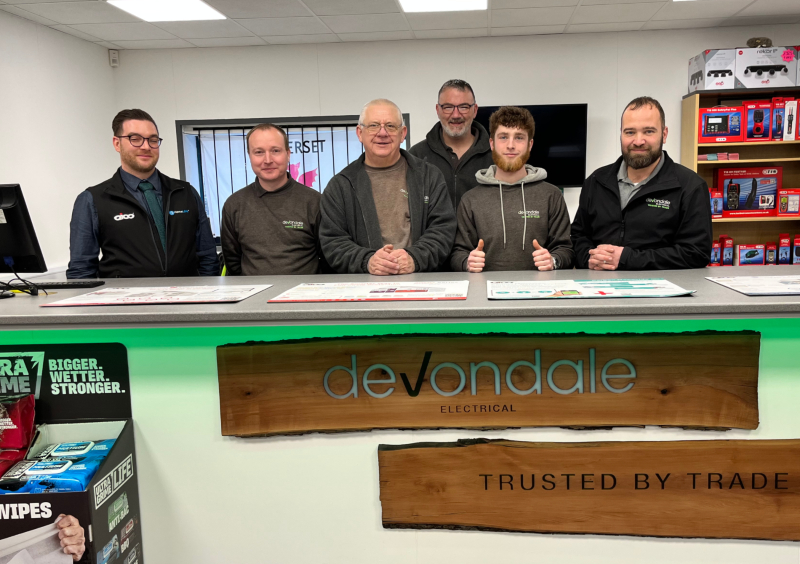
Devondale is delighted to have launched the company’s first renewables hub at its Glastonbury branch. The new hub provides a range of solar panels, mounting kits, grid hybrid inverters, battery storage solutions and accessories from leading brands, including Solax and K2 Systems, which are suitable for installation on domestic and commercial properties. A renewables specialist is available to assist customers with designing solutions and provide product training. In addition to increasing the size of the branch by installing the hub, Devondale’s Glastonbury depot has established a new trade counter, employed additional staff members, and invested in a vehicle to deliver its renewables product range to customers throughout the south west. The branch is also holding a fun darts competition once a month, giving customers the chance to win prizes, and will be introducing Pie Friday. These types of events allow the Glastonbury team to interact with customers and build relationships. Samm Patey, Branch Manager at Devondale in Glastonbury, comments, “As homeowners, businesses and developers have become more environmentally conscious, the demand for sustainable and low-carbon solutions has increased. We are therefore continually updating and developing the range of products we supply to ensure we are meeting our customers’ requirements and providing them with choice. “The hub is something brand new for Devondale and shows how committed the company is to supplying cutting-edge products that minimise its effect on the environment, and allow for the harnessing of renewable energy. Although located at our Glastonbury branch, we can supply our renewables product range to trade customers, and those completing projects in their own homes, who are located across the region.”

The traits that customers most value in tradespeople
New research has revealed the qualities that customers most value in UK tradespeople, with professionalism topping the list. ElectricalDirect has partnered with My Local Toolbox to analyse over 10,000 online trade reviews and identify the most commonly referenced positive attributes. Professionalism is praised the most often, with more than two in five (42%) customer comments complimenting tradespeople for this trait. Quality of work (34%) is second, ahead of punctuality (13%). However, when it comes to electricians in particular, customers really appreciate workers arriving on time, and punctuality is talked about even more than the quality of the work. Across all trades, customers rank electricians as number one for perceived value, third best at returning messages and in the top five for arriving on time. The traits that Brits most value in electricians are: Professionalism Arriving on time Great work Being friendly Efficiency Helpfulness Tidiness Reliability Cleanliness Being reasonably priced To help tradespeople who are looking to increase their online presence, ElectricalDirect also spoke to the PR and marketing experts at Jaywing, to share their top marketing tips. Register for local listings services “Sites like Google My Business, Bing Places and Apple Maps are hugely influential, so it’s important to have an account that features your up-to-date company information. Create a business profile and then add your working hours, address, service area and contact details. If people search for trade services in your area, your business will then be more likely to appear.” Collect and promote case studies “Customers are heavily influenced by image-led content, so remember to photograph your best jobs to visually display your services. Before and after images are good for showing the impact you can have, and these can be used both on your website and social media channels to spread awareness.” Actively seek reviews “One in nine tradespeople say that they are heavily reliant on review websites for their business, and the importance of positive feedback cannot be overstated. Trust is critical in this industry, with customers wanting to know they can feel safe with tradespeople in their homes, and be confident that the job will be done well. “Ensure you continuously ask clients to leave comments on sites such as Google My Business to create positive associations for your company, and draw people to your services.” Be visible in your local community “If possible, you need to be visible both off and online, and that involves getting your name out in your local community. Offline marketing can take many forms, from putting up posters in supermarkets or on noticeboards, to dropping leaflets in people’s letterboxes. It’s also worth investing in a vehicle wrap, and buying a sign that you can leave outside properties where you’re working.”

CEDIA reimagines annual awards programme
CEDIA has announced the opening of the 2023 CEDIA Smart Home Awards (formerly the CEDIA Awards). The new title aligns with CEDIA’s mission to increase awareness of CEDIA and the industry among consumers and allied trades. Additional changes to the programme include a new Health, Sustainability or Wellness Project category and redefined level definitions in the Best Integrated Home category based on CEDIA’s market research. The Best Integrated Home category now includes: Mass market integration: a project in a home with a value near the average sales price for the area. Mid-market integration: a project in a home with a value well above the average sales price for the area, but not considered part of the luxury market. Luxury integration: a project in a home located within a private development or estate in the most desirable areas. Uber luxury integration: a project in a home located within a rare collection of the area’s most elite. These new and expanded categories join 10 others in the Home Technology Integrator Project portion of the CEDIA Smart Home Awards. The Manufacturer Product Awards are also accepting submissions for Best New Product (hardware or software) and Product Hall of Fame. The CEDIA Smart Home Awards will continue to recognise the industry’s most active volunteers and leaders through the Volunteer of the Year Awards, CEDIA Fellows and the Lifetime Achievement Award. “The CEDIA Smart Home Awards are truly a mark of excellence in our industry,” says CEDIA Global President and CEO, Daryl Friedman. “As we consider the future of this programme, we also want their recognisability to extend far beyond our own community. The CEDIA Smart Home Awards name provides a clear explanation for allied trades and the general public, while establishing CEDIA and our award winners as leaders in the space.” The CEDIA Smart Home Awards are now accepting submissions for the Home Technology Integrator Project Awards until 21 April. CEDIA members who completed projects between March 2021 and the project deadline will be considered. Manufacturers may submit their hardware and software products for the Manufacturer Product Awards until 19 May.

Signify appoints Nico van der Merwe as CEO for the UK and Ireland
Signify has appointed Nico van der Merwe as Chief Executive Officer for Signify UK and Ireland, starting 1 February 2023. Nico joins Signify from Schneider Electric, where he spent 15 years in various roles, most recently as Vice President for Home and Distribution, UK and Ireland. Nico has two decades of experience in international business and leading strategic business transformations. He started his career in Sub-Saharan Africa, where he worked in sales, marketing and general management roles, before taking the position of Vice President Channel Development - Europe, based in France. Throughout his international career, Nico has demonstrated a track record of developing and implementing new business models and delivering sustainable results. “I’m excited to join Signify as CEO of the UK and Ireland, and I look forward to working with the teams further to drive our lighting innovations in this dynamic market.” says Nico. “Signify is a company with a rich heritage, a powerful product portfolio, a talented team, and a strong leadership position in sustainability. I am sure we are well positioned to further grow the business and industry while continuing to make a positive impact on society and the environment through our innovations. The UK and Ireland have exciting opportunities in the market for us and our customers.’’ Based in Guildford, Nico will report to Maria Letizia Mariani, CCO of Signify.