2 November 2026
Product of the Month: Amari Floodlight range by Aurora Lighting
 
10 November 2026
Openreach partners with Allstar to boost EV charging options
 
10 November 2026
VCHRGD appoints Craig Summers as Head of Partnerships
 
9 November 2026
UK Power Networks helps nine veterans secure energy sector jobs
 
9 November 2026
Exclusive: why getting project planning right from the outset matters
 

Latest News


CU Phosco delivers high mast lighting for Farnborough Airport
CU Phosco, a UK designer and manufacturer of exterior lighting equipment, in collaboration with ATG Airports, a manufacturer and installation projects company for airfield ground lighting, has successfully installed a high mast lighting system at Farnborough Airport. This project, part of Farnborough Airport's commitment to maintaining high operational standards and sustainability, involved the installation of 13 high masts equipped with FL800D luminaires. The lighting system aims to ensure good visibility on the new apron and to support the airport's sustainability milestones. Farnborough Airport, the birthplace of British aviation and Europe's number one business aviation airport, has long been a symbol of excellence in aviation infrastructure. It handles around 31,000 aircraft movements annually. With the opening of Domus III last year, a 175,000 ft² hangar facility, Farnborough Airport continues to demonstrate progression in aviation innovation and sustainability. The Domus III project was overseen by McLaughlin and Harvey as the Principal Contractor. CU Phosco, acting as a sub-contractor, was responsible for designing and delivering a comprehensive high mast lighting system that met the specified standards. The company has also been involved in various projects at the airport for several years. The project was designed to support Farnborough Airport's environmental goals, minimising energy consumption while using more energy-efficient lighting, and follows a series of milestones in recent years at the airport. In 2024, Farnborough Airport was awarded Level 4+ carbon accreditation status by the Airport Carbon Accreditation (ACA) scheme, one of only five UK airports and the only business aviation airport to achieve the recognition. Last year, Farnborough Airport also completed one of the largest light-weight solar installations in the South East, enabling the airport to generate 25% of its own power. For the airport's new apron, a total of 13 high masts, manufactured at CU Phosco's Bradford facility, were equipped with 50 FL800D luminaires. Each high mast features CU Phosco's Raise and Lower System, which seeks to enable safe and efficient maintenance without the need to close large areas of the apron. This system lowers the luminaire carriage to ground level in one operation, aiming to reduce disruption to airport operations and enhance safety. The FL800D luminaires are equipped with Samsung CSP LEDs and the AeroFlow Cooling System. This combination of optics and construction was chosen so that the lighting system meets the stringent requirements set by the Civil Aviation Authority (CAA) and Farnborough Airport. Gary Stone, Project Manager at ATG Airports, comments, "The high mast lighting system installation was seamless thanks to CU Phosco's robust design and efficient team. The quality of the finish and ease of maintenance provide a safe and reliable lighting solution that aligns perfectly with Farnborough Airport's high standards." Stephanie Bishop, Head of Infrastructure at Farnborough Airport, adds, “CU Phosco is a well-known and reputable supplier at Farnborough Airport, consistently delivering high-quality products for several years. Recently, they played a crucial role in the Domus III project, managed by Principal Contractors McLaughlin and Harvey, by providing 13 high mast lights of exceptional quality.” For more from CU Phosco, click here.

Baxi reacts to Government's Spending Review
Following the Government’s Spending Review, Jeff House, Director of External Affairs and Policy at Baxi, a heating and hot water systems manufacturer, comments on the key points of interest for the heating industry:   “It is great news to see confirmation of the full £13.2 billion funding earmarked for the Warm Homes Plan, which will see vital investment in the rollout of heat pumps and other measures to improve efficiency in homes, lower bills, and reduce emissions from heat. The industry remains committed to playing its part in the decarbonisation of buildings and homes, and Baxi will continue to prioritise delivering the solutions, training, and support services to help heating engineers and their customers make the switch.   “Whilst we await the full detail of the Warm Homes Plan later this year, we understand that the headline funding figure will support an extension and increase of the Boiler Upgrade Scheme out to 2030, additional funding for the Warm Homes Social Housing Fund, and significant funding to deliver heat network schemes.   “Making a success of delivering low carbon heating and hot water into the future means developing the skilled workforce capable of meeting demand. We know a key part of this is encouraging the next generation of engineers and installers into the industry, so it is promising to see £1.2 billion of investment in the wider skills system to support over one million young people into high-quality training and apprenticeships. We await with interest the upcoming strategy for Post-16 Education & Skills to provide more detail.   “Our last annual Skills Survey found, much like in previous years, some reticence to take up heat pump training from those installers nearing retirement – a demographic that makes up a significant proportion of the workforce. A perceived lack of practical training, complex government incentives, and lack of consumer demand were the key barriers cited by respondents. As newly-qualified installers enter the industry, we expect to see more embrace the latest technologies. The government and industry, however, must collaborate further to address these barriers to training and make a career in heating more attractive to build the workforce needed to make a success of the energy transition.   “The government has continued its focus on prioritising funding for affordable and social housing through the £39 billion earmarked to support the sector with reaching housebuilding targets over the next 10 years. The funding for local authorities, private developers, and housing associations joins the £2 billion for the development of 18,000 new affordable homes announced in March – half of which is allocated for social housing – and the existing 'Warm Homes: Social Housing Fund' already in place to retrofit existing social housing and improve energy efficiency.   “With our expertise and experience in partnering with the education sector on delivering efficient heating and hot water, it is promising to see the government commitment to the Schools Rebuilding Programme, providing around £2.4 billion per year over the next four years, to rebuild over 500 schools. A further increase in annual maintenance investment will see additional funding to improve the condition of the school estate.   “There are, however, wider challenges in this space that must be addressed to support contractors, specifiers and school estates managers with delivering efficient, low-carbon heat. Research presented in our recent report, Decarbonising heat in schools: challenges and opportunities, uncovered that while the majority of schools strongly support heating decarbonisation, more than a third of UK schools continued to grapple with key challenges in achieving it.   “The survey of 200 state school estates managers, consultant engineers, and M&E contractors uncovered that technical difficulty and electrical capacity requirements were the top barriers to installing low carbon heating. The study also showed a slight preference for hybrid heat pump systems over standalone heat pump solutions. 80% of engineers and contractors surveyed stated they would be likely to recommend a hybrid system, while 93% of estate managers confirmed that they would likely consider installing a hybrid heating system.   “As part of the report, and now as part of our response to the latest wave of funding, Baxi is calling for four clear steps that we believe the Government must take to ramp up the decarbonisation of schools: 1. Include heating system upgrades for schools within existing public sector support schemes. 2. Include hybrid heating systems more openly within existing support schemes. 3. Address the imbalance in price between gas and electricity. 4. Address the skills gap to help deliver clean energy projects.   “These steps will be vital to remove any barriers preventing the installation of hybrid heating systems within public buildings, while also making the best use of funding available to deliver schools that are both efficient and fit for the future.”   For more from Baxi, click here.

Vent-Axia champions cleaner indoor air on Clean Air Day
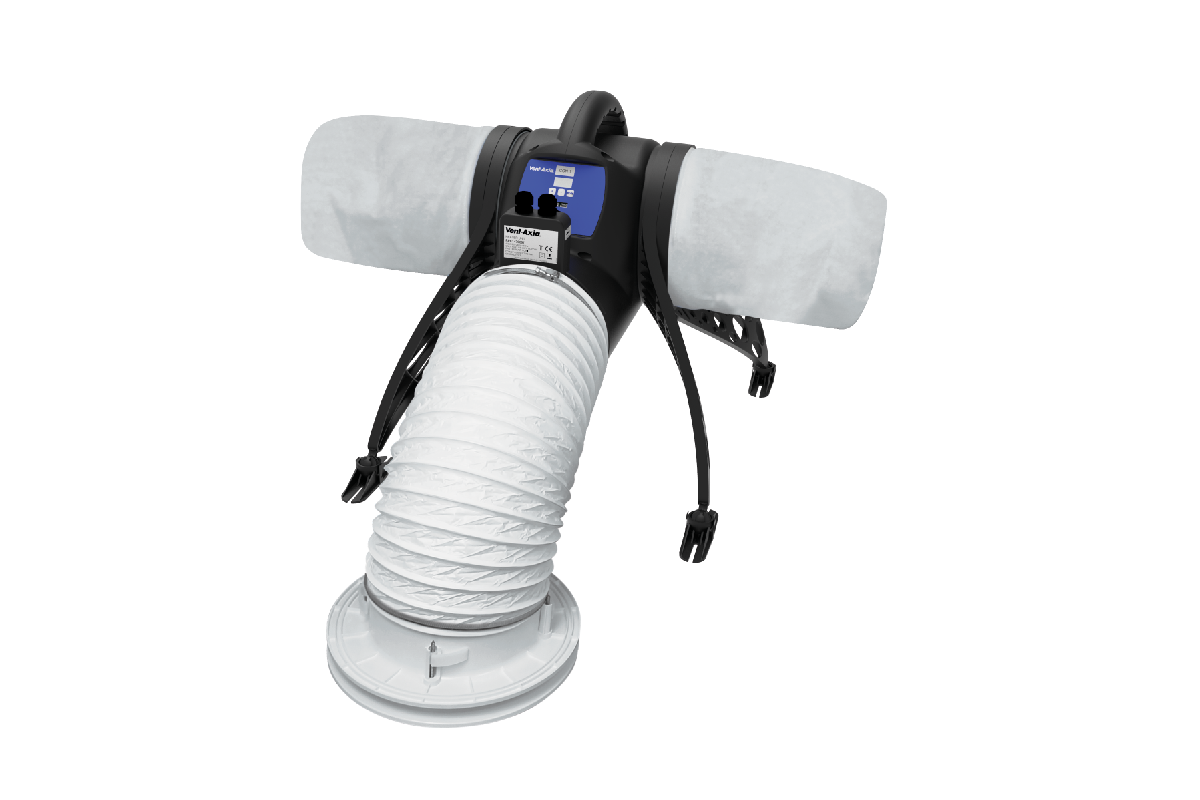
British ventilation manufacturer Vent-Axia is supporting Clean Air Day today (Thursday, 19 June 2025). This year’s campaign highlights how air pollution affects us from before our first breath until our last, and encourages people to understand the health risks as well as urge MPs to support stronger air quality laws in the UK so we can all breathe cleaner air and live healthier lives. Clean Air Day is the UK’s largest air pollution campaign, led by Global Action Plan, a UK environmental charity, with the support of Health Equals. The campaign aims to raise public understanding of the harmful effects of air pollution, inspiring the public to take action to clean up the air. Awareness of the importance of good indoor air quality (IAQ) has grown significantly since the pandemic, but concern has deepened in recent years following the death of 2-year-old Awaab Ishak, caused by a mouldy home. As a result, from October, Awaab’s Law, part of the Social Housing (Regulation) Act, is set to impose strict legal requirements on social landlords to investigate and resolve mould issues. Consequently, households are becoming more aware of the risks associated with poor IAQ and condensation and mould. But IAQ issues affect more than just social homes. Research from the University of Birmingham recently found that people may be exposed to unhealthy levels of airborne pollutants inside their homes, even if outdoor air quality is good. The research found significant differences in particulate matter (PM) levels between three houses that were studied over a two-week period, with one home exceeding the World Health Organisation (WHO) 24-hour PM2.5 limit on nine days. Factors that influenced particle levels in the study included household location, ventilation, and occupancy, illustrating the complexity of indoor air quality. As well as PM2.5, indoor air can contain over 900 chemicals, particulates, biological materials, viruses, and bacteria. Each of us breathes 9,000 litres of air a day, so poor IAQ can affect the health of everyone in the home. Even naturally occurring CO2 can have an impact on our health, with high levels of 2,000-5,000 PPM causing headaches, sleepiness, poor concentration, increased heart rate, and slight nausea. “At Vent-Axia, we are committed to tackling indoor air pollution and helping people create healthier homes; we are therefore supporting Clean Air Day since we know how air pollution affects us from before our first breath until our last,” says Katie Mairs, Channel Marketing Manager at Vent-Axia. “This Clean Air Day we are therefore encouraging households to take three main actions: Reduce the number of pollutants introduced into the air, dilute the pollutants in the air by ensuring there is adequate ventilation introducing fresh clean air, and purify by adding an air purifier to remove the remaining pollutants from the air.” It is vital to combat air pollution to protect health and wellbeing. By making some simple changes, households can protect themselves and others by ventilating and purifying their home to improve the air they breathe. For more from Vent-Axia, click here.

Toolstation launches bucket hat for Macmillan Cancer Support
Ahead of Glastonbury, Toolstation has launched a bucket hat for tradespeople and DIYers. The limited-edition merch from the UK supplier of tools, accessories, and building supplies will see proceeds from the sale going to its charity partner, Macmillan Cancer Support. Fitting for on-site days and sunny jobs, the design — which includes Toolstation’s distinctive blue and yellow colour scheme, with its logo stitched in the middle — aims to 'definitely maybe' keep the sun off your head. Retailing at £9.98, £1 from every sale will go directly to Macmillan Cancer Support where the funds will allow the charity to continue to provide support to those affected by cancer across the UK. 2025 marks the fifth year of support for Macmillan Cancer Support by Toolstation. The retailer has raised a total of £3 million for the charity. Hannah Phillips, Category Manager for Workwear at Toolstation, comments, “With Glastonbury and the Oasis Reunion Tour just around the corner, the Toolstation Bucket Hat is definitely maybe this year’s must-have fashion accessory for sparkies, chippies, and DIY warriors. It means our customers can protect themselves from the sun, and help a great cause at the same time.” For more from Toolstation, click here.

Data reveals another record month for small-scale renewables
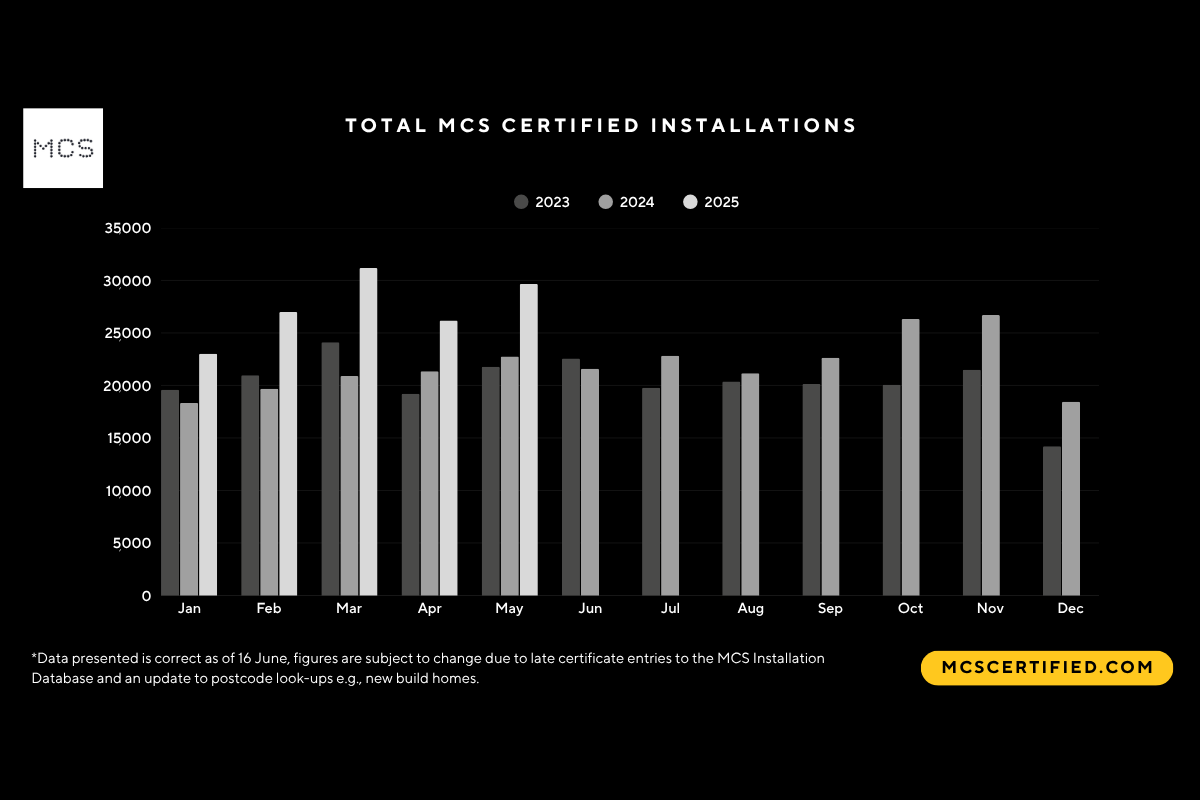
MCS, the UK's Microgeneration Certification Scheme, which provides quality assurance and certification for renewable energy technologies and installers, has released its latest data showing that there has been another record month for certified small-scale renewables. Reacting to this news, Ian Rippin, CEO at MCS, comments, “Last month was the best May for small-scale renewables in MCS history, with almost 30,000 certified installations across the UK, following on from the best April on record. “Figures from the MCS Data Dashboard show that there were over 5,100 certified heat pump installations in May, as consumers continue to make the transition to low-carbon heating, driven by initiatives such as the Boiler Upgrade Scheme (BUS). We also reached the milestone of 300,000 all-time heat pump installations last month. “Solar PV saw over 21,100 certified installations in May - a 30% increase on May 2024 - taking us past 100,000 total installations in the year so far. May 2025 was also the best month on record for battery storage, beating the previous record set in March this year, with almost 3,400 certified installations. This is a 112% increase on May 2024. “It's great to see us reaching crucial milestones in 2025 in the small-scale renewables sector, a positive sign that consumer confidence in home-grown energy is continuing to grow. While this momentum continues and we look to transition to the redeveloped MCS, our priority is to ensure that installations are delivered to a high standard and that consumers have the best possible experience when investing in renewable energy.” For more from MCS, click here.

JTL celebrates talent at 2025 National Apprenticeship Awards
JTL, a UK apprenticeship provider in the building services engineering sector, has announced the winners of its 2025 National Apprenticeship Awards at a ceremony held at the Royal Armouries Museum in Leeds, where top apprentices, employers, tutors, and training officers from across England and Wales were recognised for their exceptional contributions. The event celebrated the remarkable achievements apprentices, employers, and training staff from across England and Wales, highlighting their contributions to the future of the building services industry - from electrical and plumbing excellence to mentorship and employer partnership. Taking home the top accolade of JTL National Apprentice of the Year was Stephanie Hitch, a plumbing apprentice from Redditch, who completed her training while employed by Arcus FM. Stephanie impressed judges with her technical ability, dedication, and inspirational progress, and is now a qualified professional making her mark in the industry. Other apprentice winners included: • Daniel Brown from Brentwood, winner of the Paul McNaughton Electrical Apprentice of the Year Award, who completed his apprenticeship with T-Clarke and earned top recognition for his technical performance and professionalism. • Kit Swerdlow of West Bridgford, named MES (Mechanical Engineering Services) Apprentice of the Year, recognised for excellence in plumbing while undertaking his apprenticeship with PHD Plumbing. • Dominic Walton from Retford, who received the inaugural Rising Star of the Year award, reflecting his early career promise and passion for renewable energy technologies while working with Wright Renewable Heating. JTL also introduced two new categories to spotlight behind-the-scenes excellence: • Wayne Bailey, based at JTL’s Carlisle training centre, was named Tutor of the Year for his inspiring mentorship and learner support across the North West. • Pablo Parra, based in South Yorkshire, received the inaugural Training Officer of the Year award for his dedicated work in guiding apprentices and collaborating closely with employers. The ceremony additionally recognised the crucial role employers play in apprenticeship success, awarding Employer Recognition Awards to a diverse group of partners: • J & R Electrical (Halifax) • Chris Bowker • Lowe & Oliver • Cromer Electrical • Cardinal Electrical • Quartzelec (Wrexham) These businesses, according to JTL, have demonstrated exceptional commitment to nurturing emerging talent and supporting apprentices in both technical development and professional growth. Chris Claydon, Chief Executive of JTL, comments, “Our awards showcase the extraordinary talent and dedication found throughout the apprenticeship journey - from learners achieving personal and professional milestones, to the training teams and employers who support them every step of the way. This year’s winners are shaping the future of the sector, and we’re proud to celebrate their success.” For more from JTL, click here.

‘Generation E’ to drive the switch to EVs
According to a survey from CTEK, a Swedish manufacturer specialising in battery chargers, drivers in their 30s look set to spearhead the switch to electric vehicles (EVs) in the UK. The survey of more than 1,000 UK drivers by Find Out Now has revealed 30 to 39 year-olds are the generation most primed to buy EVs and ditch petrol and diesel cars first. The survey found almost two thirds (61%) of drivers currently in their 30s foresee they will be driving an EV in the year 2035, when they will be in their 40s. Only one in six (17%) thirty-somethings think they will still be driving an ICE (purely petrol or diesel) vehicle in a decade’s time. The rest don’t know. Even by 2030, a majority (59%) of what CTEK is terming ‘Generation E’ will be driving a Battery Electric Vehicle (BEV) or a hybrid. Just over a fifth (21%) think they will be driving an ICE car. Including all age groups of drivers, 2030 could see 45% driving an EV, outnumbering the 34% who imagine they will be powered by the diesel or petrol in an ICE vehicle. The ICE drivers fall to a quarter (25%) by 2035. Daniel Forsberg, Marketing Manager EVSE at CTEK, comments, “We’re calling UK drivers in their 30s ‘Generation E’ because they are leading the way in practically every question we asked in our nationally representative survey. “We suspect there are several factors at play in this. People in their 30s are likely to have both the financial means to be able to choose electric, and the environmental and climate awareness to want to do so. Not far behind them are the 18 to 29 year-olds, who are the second age group most set to go EV. “In contrast, it is the older generations aged 55 and above who are least likely to switch, in spite of probably being financially able to do so. They are, we suspect, more wedded to fossil fuels after decades of driving ICE cars.” Whilst many current EV drivers are set to still be driving the same kind of cars (BEV, PHEV, and self-charging hybrid) in 2030 and 2035, the notable shifts the survey predicts include 43% of PHEV drivers going fully electric by 2030 and 57% of them by 2035. Almost one in three (28%) of self-charging hybrid drivers will by driving a BEV by 2030 and 39% by 2035. Current BEV drivers are most likely to be driving a BEV in 2030 (88%). Current PHEV and self-charging hybrid drivers are almost universally likely to shun purely ICE vehicles when they next buy a car – just one in 25 (4%) see themselves being powered purely by petrol or diesel. CTEK also tasked Find Out Now with asking drivers likely to buy a used car next what kind of vehicle they think they will choose. More than a third (35%) said an EV, made up of one in ten (10%) each saying a BEV or a Plug-in Hybrid Electric (PHEV) and 15% saying a hybrid that cannot be plugged in. The majority (64%) of drivers buying used think they will be opting for a used ICE car. Daniel continues, “The used car picture for BEVs and other EVs is evolving rapidly as the first big wave of electric cars enters the second-hand market. Our survey shows there is a demand there, and again it is ‘Generation E’ in their 30s who lead the way with almost half (48%) thinking they will buy a used EV. “Overall the survey results point to a rapidly approaching future of mass adoption of electric mobility, especially by the younger generations. This suggests millions more EVs on UK roads in just a few years, begging the question: where will they all charge? The roll-out of public charging must accelerate to keep pace with the huge demand our survey results suggest will emerge.” For more from CTEK, click here.

'Partnerships are helping to meet new building legislation'
According to cable supplier AEI Cables, early collaboration between supply chain partners is helping to meet the demands of rigorous new legislation. The company is seeing positive feedback to its guidance for closer working to meet the requirements of the Building Safety Act 2022. The Act makes new stringent requirements for higher-risk buildings, which are those deemed to be of at least 18 metres in height - or at least seven storeys - containing at least two residential units. Stuart Dover, General Manager of AEI Cables, says, “We believe in early collaboration on our own projects, and the feedback we are receiving suggests that close working between all parties in the supply chain is helping to meet the requirements of this new legislation.” The Building Safety Act 2022 identifies a common Golden Thread which requires a comprehensive record to be kept of all safety-related information throughout the lifecycle of a building, emphasising the need for clear communication between all parties. Under the Act, the Building Safety Regulator will oversee the safety and performance of all buildings, as well as having a special focus on high-rise buildings. It will promote competence and organisational capability within the sector, including building control professionals and tradespeople. AEI Cables has also been highlighting the importance of collaboration to help meet the demand for Category 3 Control fire performance cables, which are identified under the revised British Standard BS8519: 2020 Code of Practice. These cables reduce harmful smoke, toxic gases, and flame spread in the event of a real fire. The systems powered by these cables – including smoke and heat extraction systems – assist fire services in firefighting, as well as a safe evacuation in the case of life safety. The guidance for Category 3 Control fire performance cables applies to evacuation alarms for the disabled in care homes, emergency voice communications systems, and voice alarm systems in relevant buildings including tall buildings, office spaces, hospitals, shopping centres, and stadia. AEI Cables’ Firetec Enhanced cabling has been approved and certified by LPCB to BS8519 (Annex B), Category 3 Control in addition to Category 2 Control. The BS Code of Practice under BS8519 contains six categories of cables, three for power cables and three for control cables, each covering survival times of 30, 60, or 120 minutes. All AEI Cables’ products are supplied with approvals from independent bodies including BASEC and LPCB. It also holds approvals from organisations including Lloyds, the MoD, Network Rail, and LUL, working to international standards around the world. For more from AEI Cables, click here.

'EU’s shift on climate targets echoes industry reality'
According to a report from Aggreko, a British multinational temporary power generation and temperature control company, the European Union’s move to consider more flexible climate targets reflects a broader shift already underway, as highlighted in earlier research showing businesses adjusting net zero plans in response to rising energy costs. According to EU diplomats, the European Commission is set to propose a new bloc-wide climate target to cut net greenhouse gas emissions by 90% from 1990 levels, while allowing flexibility for domestic industries and use of international carbon credits. This shift mirrors recent findings from Aggreko’s surveying of CEOs across Europe, which revealed that high energy costs are prompting many businesses to reassess their decarbonisation timelines to ensure a commercially viable transition. The company’s recent report, Rebalancing the Energy Transition, based on a survey of 400 CEOs across the UK, Germany, France, and Italy, found that 95% of large businesses have already adjusted their net zero strategies in response to energy supply and pricing pressures. These findings suggest the EU’s proposed shift reflects what is already happening on the ground in energy-intensive sectors subject to rising costs and grid issues. “The EU’s shift towards more flexible climate targets recognises the need for practical pathways to net zero that we’re seeing across industry,” says Robert Wells, Aggreko’s Europe President. “Our research shows that while the intention to invest in the energy transition remains strong, companies are evolving their strategies to ensure operational resilience while also driving environmental progress.” According to Aggreko’s research, while 12% of CEOs currently rank the speed of decarbonisation as their top priority, the vast majority remain committed to climate action. Approximately 80% plan to increase investment in energy transition initiatives over the next year, demonstrating that businesses are still committed to sustainable practices, even as they navigate cost and competitiveness challenges. With this in mind, Aggreko is urging businesses to look beyond timelines and focus on practical, scalable solutions that can reduce emissions while improving energy resilience. Central to this is the role of decentralised energy systems and supply chain collaboration, which Rebalancing the Energy Transition identifies as key to reducing energy costs and accelerating progress toward net zero. “In a volatile energy market, decentralised and flexible power solutions have moved from optional to essential,” Robert adds. “By working with supply chain partners to deploy renewable technologies and alternative power agreements, businesses can reduce emissions and costs simultaneously.” Aggreko’s sustainability framework, Energising Change, aims to support this approach by helping sectors such as manufacturing, construction, data centres, utilities, and petrochemicals to implement decentralised energy solutions that are both commercially and environmentally sustainable. Robert concludes, “The EU’s evolving stance is a recognition of the complex and multifaceted priorities businesses face. Our report provides a roadmap for navigating these challenges, showing that with the right strategies, it is possible to stay competitive and committed to climate goals. I would encourage all stakeholders involved in energy equipment procurement to seek it out and read it.” For more from Aggreko, click here.

Whitecroft Lighting enhances energy efficiency across DWP estate
UK lighting manufacturer Whitecroft Lighting has delivered a smart lighting upgrade for the Department for Work & Pensions (DWP), reducing energy consumption across its UK-wide estate. The project has delivered efficiencies for the government department, the largest of its kind in the country, reducing lighting energy consumption by around 80% across 129 modernised sites. In partnership with facilities management provider, Mitie, Whitecroft Lighting replaced outdated lighting systems with modern LED luminaires and smart building technology. Whitecroft’s sensor-driven lighting system, Organic Response, was central to the project. Its daylight harvesting system automatically adjusts lighting levels based on natural light availability. By monitoring lighting levels, Organic Response aims to maximise the value of natural light and drive up carbon and cost efficiency. Whitecroft’s systems play a role in the DWP’s 45% carbon reduction target, aligning with the UK government’s wider Public Sector Decarbonisation Scheme, aimed at helping the public sector drive efficiency and reduce carbon emissions. With over 54,300 individual lighting products installed, such as luminaires, seniors, and nodes, the DWP upgrade is one of the biggest projects in its 80-year history. All 129 sites were completed within a two-year time frame and, to minimise disruption to DWP staff and visitors, Whitecroft was assigned specific timeslots for out-of-hours installation. Mark Brunt, Regional Sales Manager at Whitecroft Lighting, says, “When Mitie approached us, we knew we had to deliver a solution that made a real impact on the DWP’s carbon reduction targets. Swapping thousands of outdated lights for LEDs instantly cut energy use by 50% and, with Organic Response, we pushed efficiency even further, achieving up to 80% savings. “We also future-proofed the DWP estate lighting, ensuring it's ready for the next generation of smart building upgrades and can quickly integrate cloud-based technology, heat mapping, and other smart asset management controls. “This project has been a great opportunity to show how cutting-edge lighting technology can drive real efficiency in the public sector and support the government’s push for smarter, more sustainable buildings.” Based in Greater Manchester, Whitecroft Lighting designs and manufactures all its commercial lighting solutions in the UK. For more from Whitecroft Lighting, click here.