2 November 2026
Product of the Month: Amari Floodlight range by Aurora Lighting
 
10 November 2026
Openreach partners with Allstar to boost EV charging options
 
10 November 2026
VCHRGD appoints Craig Summers as Head of Partnerships
 
9 November 2026
UK Power Networks helps nine veterans secure energy sector jobs
 
9 November 2026
Exclusive: why getting project planning right from the outset matters
 

Latest News


Electrical engineering firm celebrates 25th anniversary
Coming as Goole-based engineering specialist, Salko UK, celebrates 25 years of business, the mechanical and electrical solutions provider has announced it has been awarded the entire mechanical scope of work to create a new, open-cycle gas turbine (OCGT) at a project in Immingham, adding to an existing portfolio of 16 clients built over the last quarter of a century. Over the last 12 months, the firm employed 161 people nationwide across its projects and is predicted to grow a further 20 percent by the end of the year. Founded by Chairman Dean Murphy and headed up by Managing Director Steve Mason, the family-business currently employs 20 full time staff at its dedicated HQ, as well as site-based specialists including site supervisors, pipefitters, electricians, quality engineers, riggers, and construction managers. Dean Murphy, Chairman of Salko UK, says, “I’m incredibly proud to be celebrating a quarter of a century of Salko UK. We’re a flagship East Yorkshire based business that operates heavily in our home patch right across the Humber, Yorkshire, and the North East whilst maintaining a strong presence on projects across the UK and Ireland. “As we look ahead to the next 25 years, we’ll be continuing our work to provide solutions for our varied roster of clients, leading the way when it comes to innovation and priding ourselves on our dynamic, customer-led service. “With a background in electrical contracting, I set up Salko UK in 2000, working from a multi-occupancy office complex located on the site of the former Goole shipyard, and it’s been a pleasure to see it grow and develop into a business consistently going from strength-to-strength. "Now working from our bespoke 3.5-acre site within the village of Spaldington, we have also developed our own fabrication and workshop facilities. The business has continued to deliver ambitious expansion plans, with industry targets widening and covering the nuclear sector alongside our continued growth in Europe and the Middle East.” Salko UK has a longstanding heritage, with its operations dating back to first working on Hatfield Colliery - one of the last operational coal mines in the United Kingdom. The company’s initial engagement in power generation began with the provision of a single mechanical fitter, working alongside the client’s in-house team. Today, Salko UK delivers integrated electrical, mechanical, and Balance of Plant (BOP) teams, reflecting its growth. Steve Mason, Managing Director at Salko UK, adds, “As the Humber region gears up for the 2030 vision for industrial decarbonisation, we’re keen to support renewable energy facilitation as a key service we excel at. "We’re incredibly excited about the pivotal change that will take place in the next decade. As a business that has flourished in the sector for 25 years we bring a wealth of knowledge and experience to the projects taking place, particularly the energy project in Immingham supporting new build energy.”

New data suggests heat pumps are winning over customers
Octopus Energy, one of the UK’s largest heat pump installers, has today revealed data showing their customers prefer heat pumps to their old gas boilers. This data comes from the company's own survey of 1,700 Octopus Energy heat pump customers, with polling undertaken from September 2023 to May 2025. Among those surveyed, 94% said their heat pumps are as comfortable or more comfortable than their previous gas boilers, while 85% said they cost the same or less to run. It comes as the UK government scraps previous planning rules that slowed down heat pump adoption, which has been viewed as some as a major step in making green home heating easier and cheaper for households across the country. Previously, 41% of heat pump installations required planning permission due to a rule requiring units to be at least one metre from neighbouring properties – adding an average £347 in costs and up to 8 weeks of delays, according to Octopus Energy's data analysis of 1,388 heat pump customers who had paid deposits and completed survey works (with data taken from March 2025). While today’s planning update will make a big difference, one major hurdle remains: existing noise regulations. According to that same data analysis, around a third (35%) of installations still face delays because heat pumps must be quieter than 37dB at the nearest neighbour’s home – about the same volume as birdsong. This is especially important as, according to the data recorded from Octopus Energy's survey, 86% of households report that their heat pumps are as quiet or quieter than their noisy, gas-guzzling counterparts. Raising the noise limit by just 1dB would halve the number of homes needing to go through planning, speeding up the transition to cleaner heating for many more homes. Rebecca Dibb-Simkin, Chief Product Officer at Octopus Energy, says, “It’s great that the government has finally tackled one of the biggest hurdles to wider heat pump adoption, making it easier and cheaper for thousands more people to make the switch to green heating. “Our customers tell us loud and clear that heat pumps are quiet, cosy, and affordable – and the data backs them up. But we’re still asking them to jump through hoops because of old-fashioned noise rules, even though heat pumps are quieter than fridges and sit outside. “If we fix that last hurdle, we can get even more heat pumps into homes – cutting carbon, cutting costs, and cutting our reliance on gas for good.” Octopus is ramping up its heat pump installations, with over 50,000 new enquiries in the last three months. For more from Octopus Energy, click here.

Skilled, Scottish contractors heading south to replace foreign workers
Scotland’s largest trade association, SELECT, has warned that the UK Government’s new immigration proposals could cause an exodus of industry professionals to England and leave the sector with a skills gap. SELECT says the proposals to raise the qualification standards for foreign workers is likely to see a significant number abandoning the UK and returning home, with Scottish construction workers flooding south to fill the resulting shortage south of the border. SELECT Managing Director Alan Wilson raised the concerns with First Minister John Swinney during a meeting of Scottish business leaders last week, during which he relayed apprehensions from across the construction sector. Alan says, “Raising the thresholds for skilled workers may seem on the face of it to be a laudable aim, but it is likely to be detrimental to recruitment in the major UK population areas and that means workers will be sucked in from places like Scotland. In areas such as London, it’s estimated that 50% of the workforce are from abroad, so if they leave, Scottish workers are likely to flood south to take up highly-paid jobs, leaving the domestic construction sector in crisis. “This could leave Scotland bereft of skills, with no opportunity to top up from abroad, and could lead to the worst of all possible worlds just as we need these skills to fulfil our transition to a net zero economy. This ticking time bomb could leave Scotland without enough skilled workers to build the country we need, which is why we had to bring it to the attention of government at the highest level.” The UK Government published its white paper policy document, Restoring control over the immigration system, on 12 May, proposing changes to make it harder to move to and settle in the UK, with a view to reducing immigration. Under the proposals, Labour is proposing to raise the threshold for skilled workers from Regulated Qualifications Framework 3 (RQF3) – equivalent to Scottish Highers – to RQF6, which is degree level. Alan’s warning comes after a new report by Aberdeen & Grampian Chamber of Commerce shows the UK is losing the skills and supply chain needed to deliver net zero, with a growing share of energy sector jobs, investment, and innovation shifting abroad. The 41st Energy Transition Survey of more than 100 firms shows that two-thirds expect to increase their headcount overseas in the next five years, with almost half saying staff were already leaving the UK to work in other energy regions. Alan – who chairs the Construction Industry Collective Voice – also pointed out that architecture schools in Scotland, who often rely on fees from abroad, may have to shut down if students choose not to study there as a result of post-qualification uncertainty. He adds, “The uncertainty the proposals contain will be particularly acute for both graduate visa holders completing their training and employers, who may see no reward in investing in graduates from abroad qualifying in Scotland. “Similarly, students may not choose to study architecture in Scotland because of the uncertainties [surrounding] post-qualification employment. This could have significant knock-on effects for architecture schools who rely on foreign students fees to make the courses viable. “The worst-case scenario is due to an absence of fees from abroad we can't sustain our own architecture schools, nor have options to attract [and] retain talent from abroad.” For more from SELECT, click here.

Ideal Heating awarded skills funding
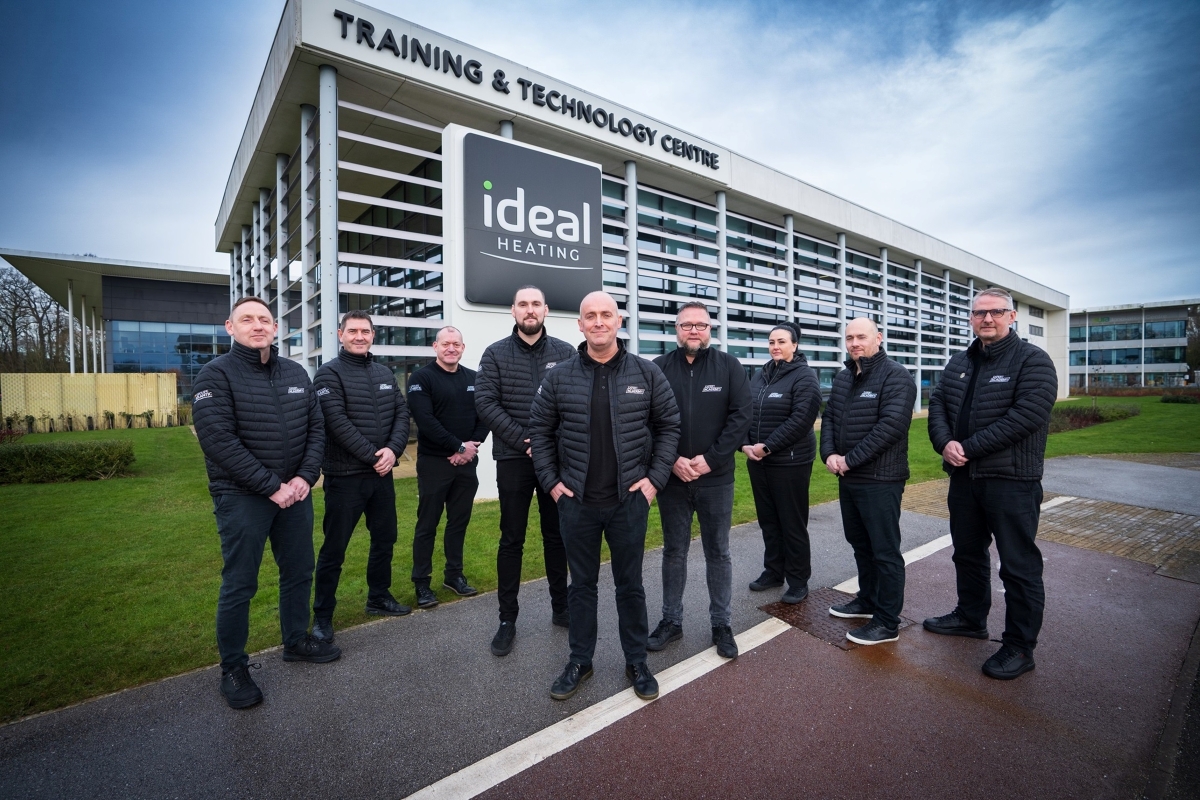
Ideal Heating, a UK manufacturer of boilers and heat pumps, has received close to £1 million in funding to extend the training it provides to support the transition from boilers to heat pumps. The Skills Bootcamp funding will enable Ideal Heating to deliver additional courses to installers through its Expert Academy training arm. The funding, allocated by Hull City Council, should also enhance Hull-based Ideal Heating’s system design service as it helps new-build developers make a transition to heat pumps. Heat pump system design is more complex than the installation of gas boilers. For example, a heat pump installed in southern England will be specified and commissioned differently to one in Scotland, with climate and the surrounding environment both important factors to consider. Designing, specifying, and commissioning heat pumps correctly is also critical to ensure they perform in the most efficient way possible. Initially, 20 Ideal Heating colleagues will undertake heat pump system design training, as the company continues to contribute to the UK heating industry’s drive to decarbonise and accelerate the adoption of heat pumps. Ideal Heating’s Training and Design Services Director, Andrew Johnson, says, “We’re committed to supporting installers and developers to thrive in the growing heat pumps market. This Skills Bootcamp funding will enable us to re-train more installers to work with heat pumps and also enhance our heat pump system design capabilities. It will support our work to upskill heating engineers and to provide a comprehensive service to developers, enabling them to make a successful switch to low-carbon solutions.” Skills Bootcamp funding has previously supported Ideal Heating’s Expert Academy training arm in its mission to retrain thousands of installers to work with heat pumps. The funding is allocated to local authorities from the Department for Education to help bridge regional skills gaps, boost productivity, and drive growth. Expert Academy trained around 3,000 installers through in-person courses in 2024 and expanded its UK footprint to 30 training facilities during the year. This in-person provision is also supported by 'Expert Academy On Demand', Ideal Heating’s digital learning platform. In March, Hull City Council received its highest ever amount of Skills Bootcamp funding, with £10 million available in the 2025-26 financial year for businesses to deliver training to upskill existing, new, or prospective staff. Cllr Linda Tock, Portfolio Holder for Hull Training at Hull City Council, comments, “This allocation of Skills Bootcamp funding will help to extend the council’s good working relationship with Ideal Heating. We have already seen how successful Ideal Heating has been to retrain thousands of installers and it is pleasing that the council has been able to support it further. Ideal Heating is a great example of why the Skills Bootcamps Hull and East Yorkshire scheme has been so successful and long may it continue.” Ideal Heating plans to start delivering the heat pump system design training to its own team members from this summer, with the aim for this to be completed by later in the year. Once its own teams have been trained, Ideal Heating plans to offer courses in heat pump system design as part of its extensive external training provision. For more from Ideal Heating, click here.

Braintree Council receives solar installation from RenEnergy
RenEnergy, an international renewable energy business, has supported Braintree Council with a large-scale 407KW solar panel installation in Essex as part of the authority’s drive to increase efficiency and reduce emissions from its buildings. Expected to produce over 399MWh of energy annually, the company installed 983 solar panels on the Witham Leisure Centre, including solar carports and roof arrays. Before getting started with the task, the council faced a few initial hurdles. Firstly, the project needed to be delivered before the Sport England Funding deadline at the end of March 2025 and in line with its requirements for funding. Secondly, as the rooftop and carport solutions were installed at the same time, there were various logistical, resource, and health and safety considerations. The scale of the project also meant that numerous local contractors were working on-site together, so clear communication and quick decision-making was necessary. Now, the leisure centre avoids an estimated 59,415kg of CO2 emissions each year and aims to be operating at a 34.7% self-sufficiency level. The extra supply of clean energy also means the centre can reduce operational costs on the site with better efficiency and lower emissions from energy. There may also be the chance to add EV chargers outdoors to support the current Labour government’s target of having 300,000 charge points across the UK by the end of the decade. The task has come at a time when numerous local authorities across the UK are navigating renewable energy rollout in line with their sustainability goals. These targets are increasingly important with the current backdrop of the UK’s net zero drive and ambitious goals laid out in the Clean Power 2030 strategy. Mark Wilson, Sustainability Manager at Braintree District Council, says, “We are beyond impressed with the work RenEnergy UK has done to install these solar panels for us. Right now, lots of local councils up and down the country are looking for sustainability solutions and we’ve shown that stakeholders investing in this has immense benefits for everyone.” Damian Baker, Managing Director of RenEnergy UK, states, “As a company, we’ve seen an increase in the number of businesses and local authorities asking us to help them make their workplaces more sustainable. “It’s great to see more companies starting to take notice of how seemingly small things can make a huge difference. We were able to maximise less space by using rooftop and carport arrays, both of which haven’t disrupted the daily operations of the leisure centre. It’s more than possible to reach environmental targets without reducing the operational efficiency of the buildings we work on.”

Energetics completes low-carbon heat network for Cruden Homes
Energetics, part of the Last Mile group of multi-utility infrastructure companies, has announced it has completed and energised a low-carbon ground source heat network at a residential development in Barnton, near Edinburgh. The Avenue, Barnton, consists of 48 luxury homes designed for retirement living. Cruden Homes, the developer, received a NextGeneration Project Gold award in recognition of the scheme’s environmental credentials. Energetics installed a ground source heat network that intends to result in 80% lower carbon emissions than traditional gas-fired heating, and 54% lower emissions than air-source technology. The heat network takes its heat from an array of 18 vertical boreholes. A network of pipes, manifolds, and valves then distribute that ambient heat from the boreholes to heat pump units that provide space and water heating to each home. Although Cruden Homes wanted to move away from gas with a low-carbon heating solution, they were concerned about the upfront cost of installing a heat network. Energetics supported the development by providing a finance model to fund the capital cost of the heat network build. Last Mile will own, operate, and maintain the heat network. Kirsty Henderson, Head of Design and Sustainability at Cruden Homes, says, “Energetics assigned a dedicated team to coordinate the design and build process to ensure that all electricity, water, and heat network services were completed in line with our construction schedules. The team’s professional guidance was invaluable in helping us to meet our sustainability goals.” “As developers are increasingly searching for alternatives to gas for home heating, the award-winning Barnton development showcases the economic and sustainability benefits of ground source heat networks,” comments Lisa Gunn, Associate Director of Sales at Energetics. “We look forward to working with Cruden Homes on future developments.”

New Ovia catalogue showcases innovative lighting solutions
Ovia, a lighting brand that is part of the Scolmore Group of companies, has launched Issue 6 of its lighting catalogue. The new catalogue introduces a range of approximately 930 product lines, catering to diverse sectors including domestic, commercial, industrial, utility, amenity, emergency lighting, and flood lighting. Issue 6 introduces several new additions to the Ovia portfolio, including: · Berula: A linear batten, multicurrent LED luminaire with 120lm/W, CCT, and power-switchable features. · Inceptor Trofa: CCT switchable LED panel offering enhanced lumens and efficacy (3200-3300lm and 106-110lm/W). · Inceptor U-Lite: A new, non-corrosive, power-switchable linear LED luminaire featuring 160lm/W and CCT. · E-Lite: Power-switchable linear batten LED luminaires with CCT. · Inceptor Slate Backlit UGR: LED backlit panels offering 140lm/W, with power-switchable and CCT options available. Sustainability is a factor in Ovia’s Inceptor Pro Range, designed with time saving installation features for contractors. These products prioritise energy efficiency and durability. For more from Ovia, click here.

New look and new premises for Batt Cables
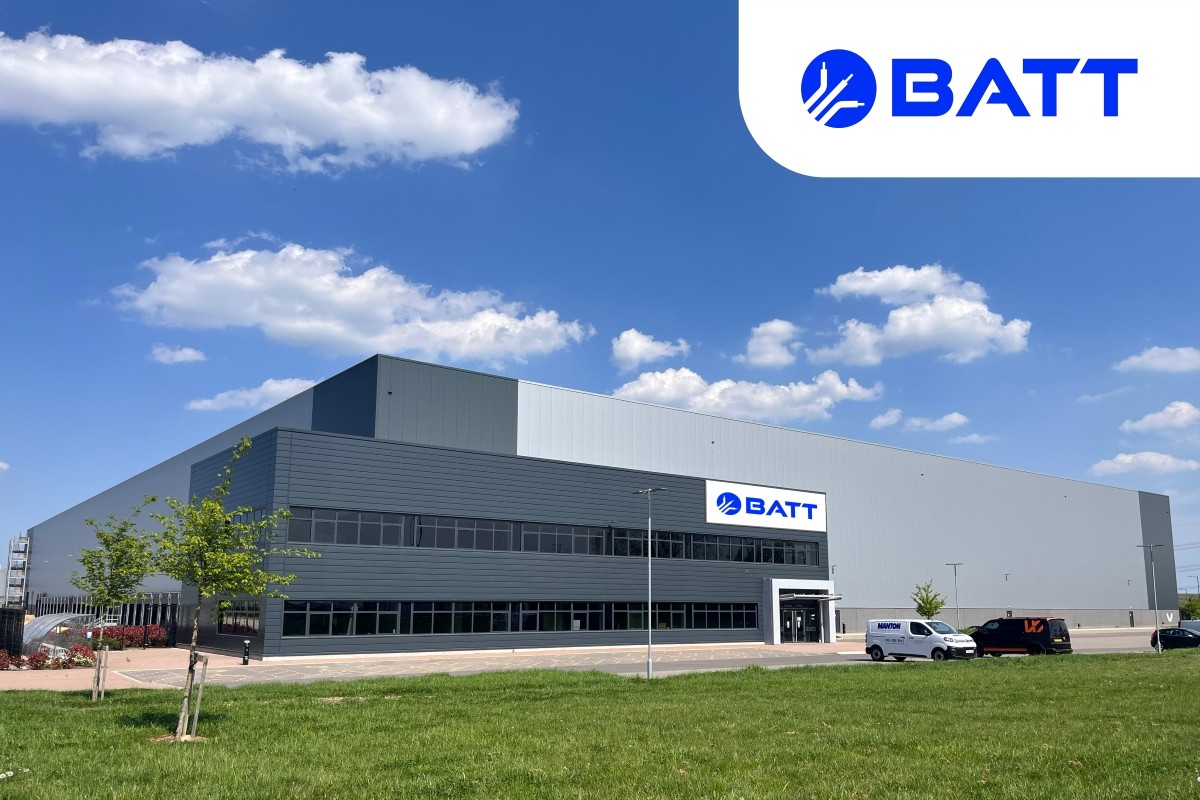
A cables distributor, Batt Cables, has announced a new brand identity and new premises acquisition as part of its long-term growth strategy. Batt is a long-established cables distributor in the UK, with operations across Europe and in the USA. Following the business’s recent change of ownership and a review process, Batt has developed a new strategy which is now being rolled out by the new leadership team. The new vision statement of intent is "to be the go-to choice for cable solutions." Visually, the new logo includes a blue circle icon with three cable 'stripes'. The new branding will be visible on a new 250,000 ft² logistics centre in South Yorkshire. The new-build premises adds to the existing Batt warehouse facilities in Kent, Bristol, Manchester, and Edinburgh, and will create additional supply chain capacity. The new warehouse location allows access to the M1, M18, and M62 motorways for transportation in North and South directions. The facility will become operational in a phased introduction programme over the next few months. Rob Barclay, CEO of Batt Cables, comments, "We are on an exciting growth journey here at Batt. Our new brand vision and brand identity symbolise this revitalisation of the business. The significant investment we’re making in the brand new state-of-the-art warehouse facility demonstrates our commitment to continuously improving customer service, and represents a major milestone on our journey."

Signify unveils ‘negawatts’ white paper with Climate Group
Signify, a global leader in lighting, and Climate Group, an international non-profit organisation aiming to accelerate climate action, are urging world leaders to leverage 'negawatts', the energy savings unlocked through efficiency, whilst adding more megawatts to the grid. The white paper cites the LED transition in lighting as a tangible path to reduce global energy demand and greenhouse gas (GHG) emissions. By 2030, a switch from conventional to energy-efficient LED lighting could save 1,402 TWh of electricity annually, equivalent to €600 billion per year in unrealised savings. This amount of electricity could: Run 300 million heat pumps Power 349.5 million homes Match the electricity consumed by 14 million hyperscale data centres Alice Steenland, Signify’s Chief Strategy and Sustainability Officer, says, "At COP28, governments pledged to double energy efficiency improvements and triple renewable capacity by 2030. With Artificial Intelligence now expected to double electricity demand by then, it has become urgent to unlock negawatts through energy efficiency. Lighting remains a powerful but overlooked solution; by simply upgrading outdated systems to LED, we can rapidly cut energy use and emissions." Despite advances in lighting technologies, at least half of the global lighting stock still relies on outdated, inefficient systems, and lighting alone accounts for 2% of greenhouse gas (GHG) emissions. Published today, the white paper "Unlocking negawatts: The role of lighting in energy security and decarbonisation" emphasises that switching all homes, businesses, and cities to LED lighting could cut these emissions in half. Alice adds, "Signify has already reduced absolute emissions by 60% since 2019, and we're committed to working together with non-profit organisations like Climate Group, governments, and business leaders to accelerate the transition away from legacy lighting systems and toward smarter, more efficient solutions. Notably, we’re calling on governments to set bold energy efficiency targets at COP30 and accelerate the shift to smarter, low-carbon lighting." With less than six months until COP30, only 10% of countries have submitted their updated Nationally Determined Contributions (NDCs), of which over one-quarter (28%) do not have energy efficiency measures as part of their plans. The white paper calls on governments, cities, and businesses to act with concrete guidance on effective interventions to harness negawatts. Helen Clarkson, CEO at Climate Group, comments, "The enormous potential of energy efficiency is underscored by Climate Group’s corporate EP100 members. Combined, EP100 members have to date reduced emissions by 450 million metric tons of CO₂e, more than the annual emissions of Brazil in 2023. Signify has also been at the forefront of our energy efficiency work through Climate Group’s Renovation Revolution initiative, which seeks to increase renovation rates in Europe's commercial and public buildings. In the coming years, global electricity demand is expected to rise by an average of 3.4% annually and as this white paper explains, facing up to this challenge requires collective action. With commitment and innovation, we can achieve meaningful progress for the planet and future generations." For more from Signify, click here.

TRILUX supports flexible learning spaces in nursery rollout
N Family Club, a leader in early years education, has partnered with TRILUX, a manufacturer of professional lighting systems, to deliver a lighting solution for their expanding network of nurseries. Working closely with N Family Club and M&E consultants Plenarius Design, TRILUX has designed an energy-efficient scheme that seeks to enhance both indoor and outdoor spaces. N Family Club approaches early years education by designing environments that feel like a home-from-home for families and educators. When it came to lighting, the nurseries needed solutions that matched their stated vision: elegant, adaptable, and energy-efficient. TRILUX worked directly with N Family Club and M&E consultants Plenarius Design to deliver the project, designing flexible lighting schemes tailored to each nursery location's unique character while aiming to maintain a consistent experience across all sites. Peter Spencer, N Family Club, comments, "TRILUX offered exactly what we needed, with a range of high-quality fittings that meet both our aesthetic design standards and operational requirements. They have been proactive from the outset in helping find solutions to address the specific demands of each project and supporting our design and construction teams in providing expert knowledge and advice to ensure we achieve the best possible results." Working closely with the client and contractors, TRILUX supplied all fittings onsite with the intent to ensure a streamlined process from specification to installation. The lighting design was centred around the idea of creating a high-end look and feel while supporting the nurseries' flexible learning environments. Thanks to the range of optical systems in E-Line Pro, each area could be individually tailored, offering glare control and a high colour rendering index of Ra >90. Indoor lighting was zoned to match learning activities, from focused tasks in classrooms to playful spaces like the Atelier art rooms. Meanwhile, the external lighting was intended to ensure outdoor learning areas remained accessible and welcoming in all seasons. Mike Cheeseman, Plenarius Design, M&E Consultants, says, "TRILUX's expertise in education lighting was invaluable. Their understanding of how light influences learning environments helped us achieve exactly what the client wanted – outstanding spaces that support both child development and operational efficiency." Leatherhead was one of the key sites under this rollout. The lighting toolbox includes: • E-Line Pro/Finea continuous-row system – flexible optics for multiple applications • SNS compact LED downlights – for visual comfort and low glare • Siella G8 recessed luminaires – for bright, UGR<19 glare free spaces • Olisq – decorative wall luminaires for circulation and breakout areas • Oleveon Fit – surface mounted luminaires for back of house • Emergency Lighting variants • External lighting – including Combial floodlights, 8841 bollards, and Skeo Curv for car parks and outdoor play spaces For more from TRILUX, click here.