


For many electrical contractors, working in confined spaces is simply part of the job. Whether carrying out maintenance in cable vaults, installing equipment in plant rooms or accessing underground service tunnels and chambers, these environments are encountered across a wide range of projects. Civil Safety provides some important guidance.
However, familiarity can sometimes lead to complacency.
Confined spaces present hazards that may not be immediately obvious and even experienced contractors can underestimate the risks if work is not properly planned. The consequences can be severe, particularly if a hazardous atmosphere develops or an emergency occurs in a location where escape is difficult.
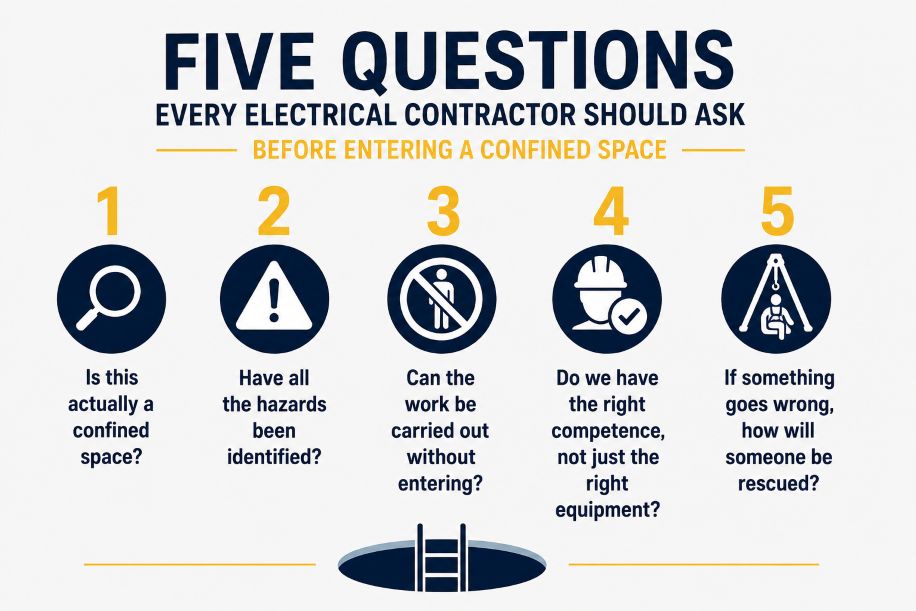
Before anyone enters a confined space, asking the right questions can help ensure work is carried out safely, legally and efficiently.
- Is this actually a confined space?
Not every enclosed area is a confined space under the Confined Spaces Regulations 1997, but neither is every confined space obvious.
The Regulations define a confined space as one that is substantially enclosed and where there is a reasonably foreseeable risk of serious injury from hazardous substances or conditions, such as a lack of oxygen, toxic gases, fire, flooding or excessive heat.
Electrical contractors may encounter confined spaces in locations such as:
• Cable vaults
• Underground service tunnels
• Utility chambers
• Valve pits
• Pumping stations
• Certain plant rooms
• Ducts and crawl spaces
Understanding whether the Regulations apply is the first step towards implementing appropriate control measures. It also requires competent judgement, which is why ensuring those planning and supervising the work have the necessary knowledge is so important.
- Have all the hazards been identified?
Every confined space is different and the risks can change depending on the work being carried out.
Before entry, a suitable and sufficient risk assessment should consider not only the environment itself but also any hazards introduced by the task.
For electrical contractors, this could include:
• Oxygen deficiency or oxygen enrichment
• Toxic gases or vapours
• Fire or explosion risks
• Live electrical equipment
• Hot works
• Restricted access and egress
• Flooding or water ingress
• Poor visibility or communication
It’s also important to understand that conditions can change during the course of the work. A space that appears safe when first entered may become hazardous if fumes build up, ventilation changes or another activity nearby affects the atmosphere.
Recognising these risks requires more than simply completing a checklist. Those involved need to understand how hazards develop and how different risks can interact.
Real-world scenario
An electrical contractor enters an underground cable chamber to carry out routine maintenance. Initial gas monitoring confirms the atmosphere is safe and work begins.
Part way through the task, nearby hot works introduce fumes into the chamber through connecting ductwork. Thanks to continuous monitoring of the atmosphere, the change is detected quickly. Work is stopped immediately, the chamber is evacuated and the area is made safe before anyone is harmed.
Without ongoing monitoring or a clear emergency procedure, the situation could have developed very differently.
The lesson? A confined space that appears safe when work begins may not remain safe throughout the task. Risk assessments, monitoring and rescue arrangements should take account of changing conditions, not just the initial environment.
- Can the work be carried out without entering the confined space?
The Confined Spaces Regulations place a clear emphasis on avoiding entry wherever reasonably practicable.
Before planning access, consider whether the work could instead be completed using alternative methods, such as:
• Remote monitoring equipment
• CCTV inspections
• Extension tools
• Isolation from outside the space
• Alternative maintenance techniques
Eliminating the need for entry removes the risks associated with working inside the confined space altogether.
Where entry cannot be avoided, it should only take place after appropriate control measures have been implemented.
- Do we have the right competence, not just the right equipment?
Having the correct equipment available is only one part of working safely in a confined space.
Gas monitors, escape breathing apparatus, ventilation equipment and rescue systems are only effective if those using them understand how they operate, recognise their limitations and know what action to take if conditions change.
Similarly, supervisors need the competence to assess whether planned control measures remain suitable throughout the work and whether it is safe for the task to continue.
Training should not be viewed simply as a compliance exercise. Appropriate confined space training helps workers understand the risks they may encounter, use equipment correctly, follow safe systems of work and respond appropriately in an emergency.
Regular refresher training can also help ensure knowledge remains current, particularly where confined space work is only undertaken occasionally.
- If something goes wrong, how will someone be rescued?
One of the most common misconceptions is that calling the emergency services is, in itself, a rescue plan.
In reality, rescue arrangements should be considered before work begins and be appropriate for the specific confined space and the risks involved.
A rescue plan should consider:
• How an injured or unconscious person would be reached
• How they would be removed safely
• The equipment required
• Communication arrangements
• The roles and responsibilities of everyone involved
• How emergency services would be supported if required
Just as importantly, everyone involved should understand the rescue arrangements before entry takes place.
Regular practical exercises and emergency drills help ensure rescue plans can be implemented effectively if the worst happens. In an emergency, there is rarely time to work out what should have been done.
Safe Entry Starts Before Anyone Goes Inside
Confined space work should never become routine simply because it is carried out regularly.
By asking these five questions before work begins, electrical contractors can ensure that risks are properly assessed, appropriate control measures are in place and emergency arrangements have been considered.
Furthermore, the process highlights whether everyone involved has the knowledge and competence needed to carry out the work safely.
Investing time in planning, maintaining competence through appropriate training and ensuring suitable rescue arrangements are in place not only helps organisations meet their legal duties but also reduces the likelihood of incidents, protects those carrying out the work and helps ensure projects are completed safely the first time.