2 November 2026
Product of the Month: Amari Floodlight range by Aurora Lighting
 
23 November 2026
Advanced acquires communications specialist Baldwin Boxall
 
23 November 2026
Trades face 'skills squeeze' as apprenticeship demand soars
 
20 November 2026
Ovia: Delivering performance and flexibility across every sector
 
20 November 2026
Exclusive: how to prepare a building for future technology
 

Latest News


Central London flats fitted with Kensa heat pumps
An Edwardian-era social housing estate in Chelsea, central London, is the latest ‘complex to decarbonise’ building to get the renewable heating treatment, successfully dispelling myths about whether heat pumps can work for old and existing buildings. The Sutton Dwellings estate, built in 1913, has seen 81 flats across four blocks fitted with Kensa’s British-made ground source heat pumps, making these the oldest blocks of social housing flats in the UK so far to be heated using a networked heat pump solution. This unique project is part of an extensive regeneration of the estate by housing provider Clarion Housing, which started in 2019. In this phase, each new, modern social home has received highly energy-efficient heating and hot water via its own compact ground source heat pump, that will keep energy bills low for residents while producing zero carbon emissions at the point of use. Like traditional gas boilers, the heat pumps are small enough to be housed inside a cupboard in each flat. However, unlike gas, renewable heat energy used by the heat pump is sourced from the ground via the 27 boreholes drilled deep beneath the estate’s tight, urban footprint. This method ensures there’s no visible impact on the historic property’s traditional red-brick exterior and allows residents to fully enjoy the landscaped outside spaces around each block. Installing networked heat pumps for Sutton Dwellings showcases one of the solutions to decarbonise existing buildings in the UK, 80% of which are expected to still be standing in 2050. It also busts commonly held myths about heat pumps, proving that: • Ground source heat pumps can work for almost any property type, including older buildings and those with limited outdoor space • Multi-unit dwellings are perfectly suitable for ground source heat pumps, with Kensa’s Shoebox fitting inside a cupboard – much like a traditional gas boiler • Dense urban environments pose no issue for ground source heat pump installations • Heat pumps can be installed without impacting a property’s historical architecture and external features • Ground source heat pumps require no outdoor storage space, leaving residents to fully enjoy gardens and outside spaces without compromise • Expected annual heating costs of around £300 for a one-bed flat to just over £700 for a four-bed flat in the estate demonstrate the affordability of heat pumps for consumers Installing Kensa’s networked heat pump system marks the third age of heating for the historic flat blocks, which has transitioned from coal fireplaces to gas heating, and now renewable energy. It’s also an example of how history and modern solutions can work seamlessly in tandem, offering a pathway to retrofit the UK’s other ‘complex to decarbonise’ buildings and homes currently heated using fossil fuels. Regenerating the 100 year-old buildings highlights how heat decarbonisation solutions can work for the UK’s existing properties, potentially saving others from future demolition. It also follows other major social housing retrofit projects completed by Kensa, including the installation of Shoebox heat pumps in 273 flats across multiple 1960s tower blocks in Thurrock, and over 400 flats across eight tower blocks owned by Enfield Council. Stuart Gadsden, Commercial Director at Kensa, says, “Often you see claims heat pumps don’t work, that they aren’t suitable for older buildings, and that there isn’t enough space to install ground source heat pumps in cities. This project is proof you can do all these, and more. “This was an ambitious project, but at Kensa, we’re always searching for the next innovation, the next solution that can improve people's lives and be the answer to decarbonising heat in the millions of UK buildings that need it. Hopefully, this project can serve as a blueprint for other social housing providers with properties that need decarbonising. “While this can be seen as a great myth-busting project for renewable heating, particularly ground source heat pumps, the most important outcome will be the benefits felt by residents. With our systems they will be getting low cost, low carbon heating and hot water, allowing them to keep their whole homes warm.” Paul Quinn, Director of Regeneration at Clarion Housing Group, adds, “Kensa’s contribution to the regeneration of the historic Sutton Dwellings in Chelsea, one of the UK's first examples of social housing and an incredibly important site for Clarion, has been invaluable. We initially faced considerable challenges in realising our low-carbon, fossil fuel-free ambitions for these densely packed, heritage buildings, but Kensa’s ground source heat pump technology provided the ideal solution. They worked closely with the main contractor and residents to ensure a smooth process, with minimal disruption and their professionalism throughout was exceptional.” John Bromley, Managing Director of Clean Energy & Climate Strategy (Private Markets), Legal & General, concludes, “We see a huge opportunity in the global transition to a low carbon economy – particularly in private markets, where Legal & General invests in companies and infrastructure with significant growth potential in the medium to long term. Combining analysis of energy systems with infrastructure and property development expertise led to our equity investment in Kensa: to provide a high-efficiency, scalable heating and cooling solution for homes and businesses. “I’m delighted to support Kensa as they successfully deploy this technology across varied and complex tenures and locations, including new developments and retrofits like Sutton Dwellings. Supporting the roll-out of reliable, efficient energy solutions is crucial to improving the standard of our built environment and occupier experiences whilst also decarbonising UK properties at scale.” For more from Kensa, click here.

Signify’s Interact system awarded cyber security assurance
Signify today announced that its Interact cloud-based wireless lighting system has been awarded the DEKRA IEC 62443-3-3 security certification. This certification is a mark of confidence that the Interact system and services are private and secure against ever-evolving information security threats. This certification confirms the resilience of the Interact system and is the latest step in Signify’s ongoing efforts in cyber security assurance. Signify was among the first lighting companies to certify its development lifecycle process against IEC 62443-4-1, the international standard for security of industrial control systems and operational technology. Signify’s cloud solutions are also certified against ISO 27001, a reputed international standard for information security. The Interact system, which includes a network of wireless connected luminaires and devices, is centrally managed and controlled through a cloud-based software suite called Interact building manager. With Interact building manager, users can easily manage, monitor and maintain their lighting, resulting in a better place to work, improved staff efficiency, and maximum energy savings. Greg Nelson, Executive Vice President - Systems & Services at Signify, says, “In today's interconnected digital world, it is critical that all companies build trust with partners and customers. Attaining this DEKRA certification demonstrates our commitment to the highest level of cyber security within our automation and control systems. “Third-party validation that we meet established security standards for confidentiality, integrity and the availability of our systems is hugely important. Not only does this accreditation demonstrate our compliance with regulatory requirements and industry best practices, it also reinforces our continued focus and leadership in cyber security excellence.” IEC-62443-3-3 focuses on the principle of a secure Industrial Automated Control Systems (IACS) and other parts of the standard series. Certification is awarded based on tests against seven pillars: • Access control - only authorised users can access the system • Use control - only authorised actions can be performed in the system • System integrity - the system and its data are protected from unauthorised changes • Data confidentiality - sensitive data is safeguarded from unauthorised access and disclosure • Restricted data flow - data can only flow between controlled system components, preventing unauthorised access or information leaks • Timely response to events - detects and responds to a cyber security threat • Resource availability - ensures that system resources remain available and functional during a cyber security incident. “IEC certification is a mark of excellence in a digital landscape where safety and cyber security are of fundamental importance,” says Bram Holtus, CEO of DEKRA Certification B.V. “We were proud to certify Signify’s development lifecycle process against IEC 62443-4-1 as early as 2020 and to complement this certification with a DEKRA Seal, which demonstrates that Signify undergoes annual audits by DEKRA, ensuring continuous compliance with process requirements. “The fact that Signify’s Interact cloud-based wireless lighting system has now been awarded a DEKRA IEC 62443-3-3 certificate is truly impressive, as they are among the first in the world to meet the particularly high demands of this certification scheme.” For more from Signify, click here.

Schneider to boost energy efficiency at University of Nottingham
Schneider Electric, an expert in the digital transformation of energy management and automation, has expanded its relationship with the University of Nottingham as it looks to improve its operational and energy efficiency. Working with Schneider Electric, the top 20 UK university is adopting a digital-first, AI-powered approach to manage its buildings estate, the fifth largest in the UK’s higher education sector. Schneider Electric has deployed its state-of-the-art Connected Services Hub (CSH) to provide 24/7 remote monitoring of the electrical equipment installed onsite. The CSH uses AI-powered digital analytics to deliver real-time, comprehensive insights into estate operations, ensuring preventative or remedial action is acted upon quickly. It does this by directly integrating urgent actions into the onsite engineers’ work schedules. It also identifies energy conservation measures, producing regular reports that offer guidance to the university’s in-house estates team on how to optimise their time and resources more effectively. In addition, Schneider Electric also provides a team of experienced engineers onsite, delivering preventative and condition-based fault remediation, and support and training for the university’s estates team to boost their skills. Gavin Scott, Head of Sustainability at University of Nottingham, explains, “Our challenge is how to optimise our building systems to minimise energy consumption and improve operations given we have a very small team responsible for a large physical estate. Embracing digital technology is helping us work towards our goals. Leveraging AI for analysis is like having thousands of eyes scrutinising the estate, significantly boosting what my team and I can deliver. “Over the years, our relationship with Schneider Electric has evolved into a true partnership. The team at Schneider Electric know our campus inside out and access to its expertise and experience has been invaluable on our journey towards improved.” Kas Mohammad, Schneider Electric’s VP, Digital Energy for the UK & Ireland, adds, “The University of Nottingham is a prime example of an institution striving to improve and create a more sustainable campus for students and staff. It is using state-of-the-art technology and expert services to boost productivity, efficiency, and sustainability in its bid to hit its decarbonisation targets. For more from Schneider Electric, click here.

Compliance Group joins forces with Electrical Test Midlands
Compliance Group, a provider of integrated safety and regulatory compliance services across electrical, fire, and water sectors, has joined forces with Electrical Test Midlands (ETM), a specialist in electrical testing and compliance with over two decades of expertise. This latest move marks Compliance Group’s second addition to its electrical testing division this year after Intersafe joined the Group back in April, underpinning the organisation's commitment to comprehensive service delivery and specialised expertise across all three of it verticals. Established in 2001, ETM delivers high-quality electrical compliance services across the UK. The company’s offerings, spanning fixed wire testing, portable appliance testing (PAT), and emergency lighting installation, have cemented its reputation for precision, efficiency, and client-focused service. Phil Campion, Managing Director of Compliance Group Electrical, comments, “ETM brings an exceptional level of technical skill, a commitment to customer service, as well as shared values of responsibility and sustainability. We are excited to welcome them into Compliance Group’s Electrical Division and further strengthen our position in the electrical safety and testing space and offer more comprehensive services to our clients across multiple sectors.” In a joint statement, Richard and Nadine Jones, Founders of ETM, add, “Joining Compliance Group is an incredibly exciting step for us and for our clients. Our commitment to safety, client service, and sustainable practices will continue to grow and evolve with Compliance Group’s support.” This merger underscores Compliance Group’s commitment to sustainable growth through strategic partnerships with quality-focused businesses in the fire, water, and electrical compliance sectors. Compliance Group’s unique, decentralised operating model supports local expertise within each division, while central resources fuel innovation and expansion, helping ensure the highest service standards.

Aico launches Case Management system to support landlords
Aico, the home life safety specialist, has announced the launch of its HomeLINK Case Management (HCM) system, an advanced tool designed to address landlords’ biggest challenges in maintaining safe and compliant homes. HCM provides landlords with a comprehensive, intuitive tool to manage issues like damp and mould, with plans to expand into fire and carbon monoxide compliance and decarbonisation in future updates. HomeLINK is a provider of smart property management solutions, dedicated to helping landlords create healthier, safer living environments through advanced technology and data-driven insights. HomeLINK products are trusted by landlords across the UK, supporting their efforts to stay compliant, enhance tenant satisfaction, and achieve sustainability goals. Informed by feedback from customers and recent industry legislation, Aico created HCM to help property managers meet compliance requirements and streamline complex processes. This launch is timely, as landlords are facing increasing regulatory pressures to maintain safer, healthier living environments for residents. HCM’s development reflects five big challenges identified from customer insights and feedback following Aico’s recent events: ‘Building a Safer Future Together’ and ‘Social Housing Professionals Network Roadshow’. These challenges include identifying and managing cases, analysing data, recording actions and interventions, and communicating with residents - all areas where HCM is set to make a transformative impact. “HCM is a direct response to the needs and concerns of landlords, delivering a robust solution that not only makes compliance easier but also promotes proactive management and tenant satisfaction,” says Chris Jones, CEO, HomeLINK. Aico’s HomeLINK Case Management System helps landlords address each stage of case management with greater ease and effectiveness: • Identify: HCM empowers landlords to identify potential property issues quickly. By using data insights and resident surveys, landlords can proactively detect and assess problems, enabling faster, more targeted responses. • Manage: HCM allows landlords to manage their entire property portfolio without requiring pre-installed hardware, although optional device installation can provide deeper insights. Cases are easily created and assigned to team members, with task management features that ensure issues are tracked and resolved from start to finish. • Analyse: With powerful new data visualisations, landlords gain unique insights into property conditions, including comparisons with portfolio and national averages. HCM also enables landlords to overlay interventions, such as upgrades to insulation or heating, to see whether these efforts improve outcomes over time. • Record: HCM’s comprehensive record-keeping captures every detail of case management, from maintenance updates to resident feedback, ensuring full transparency and compliance. Additionally, a complete audit trail for each case guarantees accurate record-keeping and supports regulatory requirements. • Communicate: Landlords can now communicate directly with residents through the HomeLINK Resident app, keeping them informed and engaged. The platform allows landlords to request surveys and up-to-date photos of issues, with tools to track changes over time, improving tenant satisfaction. HCM will be available to all existing HomeLINK customers as an integrated extension of the current portal, allowing them to manage cases with ease and reliability. This seamless integration provides landlords with a unified, comprehensive solution for managing compliance, improving tenant experiences, and maintaining high standards across their portfolios. For more from Aico, click here.

Solivus delivers solar installation at Farnborough Airport
Solivus, a provider of lightweight solar installations for commercial applications, has designed and delivered a £2m solar installation to Farnborough Airport, taking it one step closer to its commitment to reach net zero emissions by 2030. In its ongoing efforts to be a sustainability showcase for other airports around the world, Farnborough Airport has a clear strategy in place to reach net zero by 2030, which is ahead of the industry standard. As part of this, the airport sought to reduce electricity and gas usage and invest in onsite renewable production. However, the path to self-generation proved less than straightforward. Foremost, due to operational and environmental restrictions on land use, the installation of ground-mounted solar at scale was not possible, making rooftop solar the only option. At the same time, the architectural curves of the airport building were not conducive to fitting traditional rigid solar panels while - in common with 40% of commercial buildings like aircraft hangars - the rooftops were unable to support the associated weight. The solution to overcoming these challenges and installing the desired solar was provided through partnering with lightweight solar technology pioneer, Solivus. Offering a competitive performance without the bulk, Solivus’ lightweight solar solution provides a practical, efficient, and cost-effective option for commercial rooftops, allowing large premises to harness solar energy while minimising structural concerns and installation complexities. Furthermore, Solivus’ lightweight solar solution can be used on a wide variety of roof surfaces, and is typically installed with no penetration of the roof itself, and with much lower glare characteristics compared to conventional solar panels. Now complete, the installation - which commenced works in January 2024 - has seen over 4,000 lightweight solar panels installed on hangars one and two, the terminal, the control tower, and the airport’s 169-room hotel, the Aviator Hampshire. Constituting one of the largest rooftop solar installations in the region, the works will enable up to 25% of the airport’s annual electricity needs to be met, as well as enabling its growing operational fleet of electric vehicles to be charged using self-generated electricity. With approximately 75% of solar energy generated to be used on-site, the remaining 25% will be sold back to the energy supplier, thus making the financial case for solar even more attractive. In total, the installation will deliver over 1,700 kWp of installed capacity, generating over 1.2 GWh of clean energy every year while taking Farnborough Airport a major leap forward in its bold target of achieving carbon neutrality by 2030. The PV installation is expected to generate over 36 GWh of energy in its lifetime and offset more than 5,000 tonnes of CO2e in that time. Importantly, the project, which was planned, delivered and executed as a complete solution by Solivus, and was meticulously phased to minimise disruption for the busy airport. For more from Solivus, click here.

The importance of Awaab’s Law for social housing landlords
The tragic death of Awaab Ishak shocked the nation and led to the implementation of Awaab’s Law. Awaab was just two years old when he died in December 2020 as a direct result of exposure to mould in the social home that his family rented. His parents raised concerns about their living conditions multiple times, yet the landlord failed to act and even placed blame on the family for their living conditions. Awaab’s Law, which was introduced in the Social Housing Regulation Act 2023, requires landlords to investigate and fix reported health hazards within specified timeframes. The new rules will form part of social housing tenancy agreements so that tenants can hold social housing providers to account if they fail to provide a decent home. The campaign for Awaab’s Law, launched by his parents, means that tenants can no longer be dismissed and will have the law on their side when landlords fail to act. New requirements for private and social housing landlords under Awaab’s Law Social landlords must investigate 29 potential hazards, as defined by HHSRS, in 14 calendar days. During the same timeframe, and within 48 hours of investigation completion, they must provide a written summary. This summary must include a timeline for repair and a schedule of works, which is then issued to the resident(s). If the hazard poses significant risks to the health and safety of the resident, repair works must begin within seven calendar days of the written summary being issued. These repair works must be completed in a reasonable time, with the consideration of the resident’s needs. Any emergency repairs must take place as soon as practicable and, in any event, within 24 hours. If a significant risk is found, and the property cannot be made safe within these time limits, alternative accommodation must be arranged for the occupant(s). The timeline for completion of such works should reflect the nature of the problem and tenants’ needs, for example, repairing heating systems must be treated more urgently during colder weather. Records for all attempts to comply with the proposals must be kept, including records of correspondence with the resident(s) and any contractors. How landlords can meet damp and mould requirements To ensure landlords are compliant with Awaab’s Law, scheduled property inspections and regular communication with the tenant(s) should be in place to ensure living conditions meet expectations and areas for improvement are identified. Damp and mould related issues should be addressed promptly, and landlords and tenants should be educated on the behaviours which positively and negatively impact dampness and mould in the home. Landlords should also be transparent with residents if the issue is in fact structural, and should take accountability if this is the case. A remote monitoring platform can be used to help monitor conditions within the home and identify any areas which need to be improved. This way, issues can be identified early on, and appropriate actions can be taken in a timelier manner. How Aico products support compliance with Awaab’s Law Aico’s Ei1000G Gateway is the hub of its HomeLINK Connected Home Solution. The Gateway works with connected fire and carbon monoxide (CO) alarms, and HomeLINK Environmental Sensors, to gather real-time data on fire safety compliance and environmental risk factors. HomeLINK Environmental Sensors work in conjunction with the Gateway to monitor temperature, humidity and indoor air quality – giving insight into issues such as damp and mould, fuel poverty, void risk, energy efficiency and compliance. Implementing such technology gives landlords a platform to improve compliance whilst creating safer homes for residents. With the HomeLINK Portal, landlords can streamline their operations by having access to the necessary insights for early intervention, saving time and reducing call-out costs. The HomeLINK App for Residents syncs with the information on the portal but simplifies it in a way tenants can easily understand. Once downloaded, the app can send alarm testing reminders and provide suggestions on improving the home’s conditions, such as opening or closing windows. The importance of complying with Awaab’s Law in the rented sector It is crucial to comply with Awaab’s Law to safeguard the well-being of residents and maintain the quality of landlords’ housing stock. Failure to do so could result in legal action, as this law is being implemented imminently because of Awaab’s death. Read more about the HomeLINK Connected Home Solution: aico.co.uk/homelink/

Octopus Energy surpasses $2 billion offshore wind investment
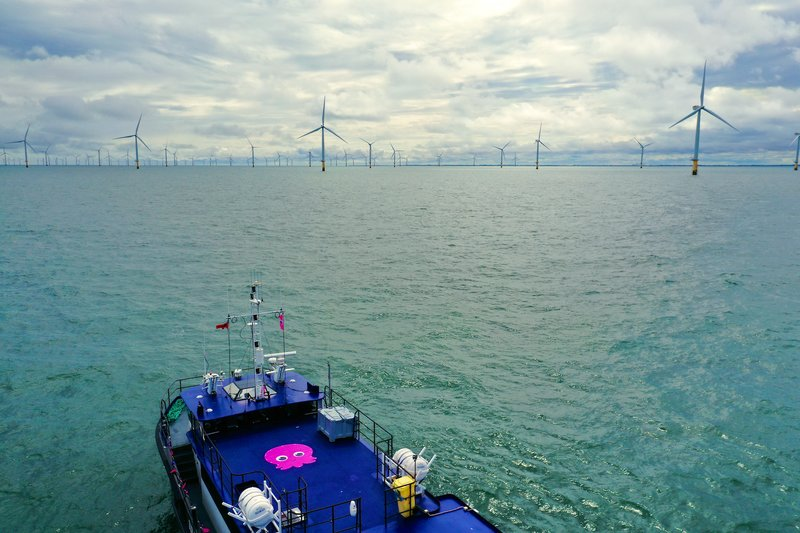
Octopus Energy’s generation arm has surpassed $2 billion of offshore wind investments in the last two years, as it accelerates the roll-out of offshore wind globally. The announcement was made at COP29 in Baku, Azerbaijan, and marks the latest milestone in Octopus’ plans to unleash $20 billion into offshore wind worldwide by 2030. Last year, the company launched its landmark Offshore Wind Fund, Vector, aiming to scale this technology which has seen energy prices plummet over time. Through Vector, Octopus invested in Ocergy – a tech disruptor in the floating offshore wind space. Ocergy is set to make building floating wind farms cheaper and faster than ever before, helping to unlock the vast potential of wind energy in deep seas. Octopus has backed operational and construction projects, as well as developers creating new offshore wind energy and companies expediting this vital energy source’s supply chain. The company entered the offshore wind farm market in 2022 and now holds stakes in six offshore wind farms in three countries around Europe. This includes one of the world’s largest wind farms, Hornsea One, as well as Lincs and Walney Extension in Britain, two in the Netherlands with turbines as tall as London’s 'Gherkin' building, and one in Germany. Offshore wind is already playing a major role in energy systems across the globe, with governments worldwide setting ambitious expansion targets. The UK is the world’s second largest offshore wind market, with plans to quadruple capacity by 2030. Alongside investments into wind farms, Octopus has also been driving innovations in the sector. Last year it launched its first offshore ‘Fan Club’ – a tariff that offers people living close to one of its offshore wind farms cheaper rates when it’s windy, saving customers hundreds of pounds a year on their energy bills. Zoisa North-Bond, CEO of Octopus Energy Generation, says, “We’re strong believers in wind power’s massive role as a cornerstone of energy systems globally. Our ability to invest over $2 billion into offshore wind in just two years is the start. Wind can create a greener and cheaper energy system for people around the world. We’re now geared up to unleash billions more into offshore wind projects worldwide.” For more from Octopus Energy, click here.

HiKOKI launches new Multi Volt Battery
HiKOKI Power Tools has launched the BSL3640MVT Multi Volt Battery, its latest battery innovation. The new 8.0Ah battery, which charges in just 40 minutes, uses Tabless cell technology, which means increased power, faster charging times and longer runtimes to meet the needs of professionals tackling both light and heavy-duty applications. Designed to power both 36V and 18V HiKOKI power tools, the BSL3640MVT delivers up to 2,160W of power – 50% more than its predecessors – so it is ideal for demanding tasks like sawing, drilling, cutting and grinding, regardless of whether its heavy-duty construction projects or smaller, more intricate jobs. The 8.0Ah Multi Volt BSL3640MVT uses tabless cell technology which significantly reduces internal resistance and heat. Traditional batteries use two tabs as current paths which can create a bottleneck. Instead of two current paths, the battery has countless current paths. This improves power output and allows for longer runtimes, even under extreme conditions. It also reduces the build-up of heat so the battery remains cool during use and experiences less wear and tear. The quick charging time is another key benefit. When paired with the UC36YSL2 charger, the battery fully charges in just 40 minutes, minimising downtime on job sites. This means less waiting and more productivity for those who rely on their tools to get the job done efficiently. The BSL3640MVT is built to withstand tough job site conditions. It has an impact-resistant design and a rubber over-moulded base so even if dropped or accidentally bashed, this battery will continue to do its job. HiKOKI's new BSL3640MVT Multi Volt Battery is a great battery upgrade for anyone who wants quick charging, extended runtimes and long life from their power tools. Whether you’re tackling heavy-duty applications or quick fixes, this battery ensures you’ll have the power and runtime you need to get the job done right. For more from HiKOKI, click here.

Carhartt hoodies for use on and off site
Whether it's working on a tough job site or relaxing at the weekend, Carhartt’s range of hoodies are cosy, comfortable and designed to last. Made from a blend of cotton and polyester fleece, each hoodie offers soft, easy-wearing warmth with the toughness Carhartt is renowned for. The men’s range includes the Loose Fit Sweatshirt (K121), which is a versatile choice for any occasion. Available in subtle colours like Heather Grey and New Navy, this midweight fleece hoodie has an attached three-piece hood with an adjustable drawcord for a snug fit and two lower front hand warmer pockets to keep people's hands warm whatever the weather. For the gloomy, damp days ahead, the Midweight Logo Graphic Sweatshirt (105944) is equipped with Carhartt’s Rain Defender technology, a durable water-repellent finish that causes rain to bead up and roll off, keeping people dry and comfortable in light rain. The Women’s Relaxed Fit Promo Graphic Sweatshirt (105996) also features Carhartt’s Rain Defender technology to keep people dry. Made from a midweight cotton blend, this hoodie provides the right balance of warmth and comfort to keep contractors focused on the job at hand. The relaxed fit sits closer to the body than Carhartt’s loose fit but still offers room to move, with a 'Script Logo' graphic print on the left sleeve. For a little extra versatility, the Women’s Relaxed Fit Full Zip Sweatshirt (102788) combines the soft feel of a favourite hoodie with the warmth and durability of a jacket. Made from heavyweight fleece with a kangaroo front pocket, this hoodie is ideal for layering up on colder days. Whether contractors are scaling ladders, swinging hammers or lounging on the sofa, Carhartt’s range of hoodies are built for all-day cosy comfort. Practical, comfortable and tough, Carhartt’s hoodies can prove the perfect addition to any workwear wardrobe. For more from Carhartt, click here.