2 November 2026
Product of the Month: Amari Floodlight range by Aurora Lighting
 
23 November 2026
Advanced acquires communications specialist Baldwin Boxall
 
23 November 2026
Trades face 'skills squeeze' as apprenticeship demand soars
 
20 November 2026
Ovia: Delivering performance and flexibility across every sector
 
20 November 2026
Exclusive: how to prepare a building for future technology
 

Latest News


Digital tools key to navigating challenges for UK tradespeople
ToolTime, a provider of job management software for tradespeople, has published research into the use of digital tools by small and micro UK trade businesses. The findings reveal that 88% of tradespeople (91% of electricians) consider digital and software tools to be important for successful operation, with 89% using them to help with day-to-day business operations. Of the tradespeople using digital tools and software day-to-day, 39% use them to save time on admin for business growth, 36% to compensate for shortfalls in skilled workers, and 34% to strike a better work-life balance or spend more time on their trade. These figures were similar for electricians, although using digital and software tools to achieve a better work-life balance was on a par with saving time for business growth (both 36%), while making up for the shortfall in skilled workers ranked second (33%). Being able to spend more time on their trade, achieving more efficient backend processes and better organisation also featured highly. The challenges driving tech adoption The rising cost of supplies emerged as the number one challenge for 29% for tradespeople (32% amongst electricians), and was particularly significant for one-person and micro businesses of less than five people. “Rising costs make finding ways to maintain profitability, manage costs and ensure prompt invoice payments critical elements of small business management,” comments ToolTime CEO and Co-Founder, Marius Stäcker. “Investing in digital and software tools offers tradespeople the opportunity to create a resilient business model by streamlining and optimising operations for greater efficiency, enabling them to focus on increased revenue generation and profitability even with limited resources and in the face of higher operational costs.” Roofing company, ZafBuild, points to the use of the ToolTime business management platform to grow profit by 20%. Meanwhile, home emergency services business, Generational Homes, reports savings of four to six hours every day, helping them to complete an additional 20-25 jobs every week to bring in additional revenue. Social media, messaging platforms such as WhatsApp, and mobile apps for time tracking, job sheets, and scheduling were the top three digital tools named by the 1,000 tradespeople surveyed. Social media was also named as the most commonly used tool by electricians, with messaging platforms such as WhatsApp, accounting specific and job management software representing the other top digital tools. The utilisation of these tools and platforms reflects some of the other major challenges identified by UK trades, such as managing time and jobs (23%), managing a team (22%), keeping up with customer communications (21%), talent and skilled worker shortages (21%) and marketing the business (20%). For electricians specifically, marketing the business was the biggest challenge next to rising costs (25%), closely followed by being asked for ‘freebies’ or ‘mates’ rates’ (23%). Managing time and jobs and stress or burnout due to overwork also followed closely (22%). Marius continues, "As tradespeople face rising supply costs and a shortage of skilled workers, digital solutions are becoming essential to survive and thrive in this environment. Technology is rapidly filling the gaps created by challenges like time constraints and labour shortages, allowing businesses to operate more efficiently than ever before." How business management software drives professionalism 23% of electricians use job management software, compared to 20% of tradespeople overall. The top three greatest perceived benefits of use for electricians were business growth potential, better team management and making the business more attractive to young or skilled workers, all chosen by 35%. Time savings and better customer communications were the second highest ranked benefits, while better business operations oversight and a more professional image followed, named by 26% of respondents. The top named benefits of job and field management software by tradespeople overall were better oversight of business operations (37%), time savings or better customer communications (36%), and business growth potential (32%). Lewis Sweenie, ToolTime's UK Account Executive, comments, "The link between professionalism and business growth chimes with what we hear from customers. Neat and tidy digital processes will generally win business over crumpled paper and pen in today's digital society. "The need to spend less time on business admin also strikes a chord. Business owners often represent their company's information bank, meaning they can never switch off. The ability to centralise key business information and relinquish that control offers the key to business growth." Marius concludes, "Business management software and mobile apps are not just streamlining admin and communication - they drive business growth, improve work-life balance, and enhance professionalism. Our mission is to empower tradespeople with the right tools to optimise resources, win more customers, and spend more time on generating income, not handling admin."

BGEN expands presence in Barrow-in-Furness
BGEN, one of the UK’s largest engineering companies specialising in mechanical, electrical, instrumentation, control and automation, has expanded its presence in Barrow-in-Furness. The company has opened a second office in the town as the business eyes growth opportunities with BAE Systems, as well as supporting customers across industries including energy, manufacturing and nuclear. “We’re expanding our operations in Barrow-in-Furness to help service a number of client requests,” says Glyn Shawcross (pictured above), Engineering and Design Director at BGEN. “As we expand in the area, we have a firm commitment to recruit locally, and we will also expand our support of schools, colleges and community initiatives.” The new office, located on Trinity Enterprise Centre in Barrow, will be dedicated to engineering, design and project management, and will add to the skills set of the existing office which specialises in electrical, installation and instrumentation works. Businesses in the area will now be able to access advice and support on every aspect of the project cycle, including engineering, design, project controls, planning, procurement, risk management, construction methodology, health and safety, quality, environment and sustainability. The expanded presence in the area will also see BGEN extend its support of schools, colleges and community initiatives in the area. Already a proud sponsor of Barrow Raiders, which includes being the main commercial sponsor of the club’s Raiders Girls side – an initiative that encourages young women aged 5-16 to get into the sport – the business is actively looking at sponsorship opportunities with other local sports clubs in the area. BGEN is also looking to partner with important local initiatives such as charities and food banks as the company looks to deliver an effective ESG plan in the area. This plan will also include linking with schools and colleges to help future generations understand the crucial role of engineering in the world, and to help attract more people into the profession. For more from BGEN, click here.

NAPIT discusses importance of skilled workers
Brett Forster, Head of Training at NAPIT, discusses the importance of heat pumps, the green skills gap and the transition to net zero. Decarbonisation is high on the agenda as the new government continues its journey to reach net zero targets. The first-ever Heat Pump Week, held between 23-29 September, aims to unite the heat pump community and engage the government in highlighting the importance of heat pumps in the energy transition. Low-carbon technologies are key to driving this transition. Through grants such as the Boiler Upgrade Scheme, key policies, and the commitment to ‘get Britain building again’, the government must have energy efficiency at its focus. According to data from the Heat Pump Association, UK heat pump annual sales have seen huge growth over the years. In 2019, there were 24,591 heat pump sales in the UK, and in 2023, this figure hit 60,244. As the demand for heat pumps accelerates, sufficiently skilled installers in the renewable electrical and microgeneration trades will be required. This allows new opportunities for the renewable-led skilled workforce to develop and grow. NAPIT and its members will play a crucial role in ensuring that there are competent and qualified installers to install heat pumps. Installers need to be supported with the skills and knowledge required to install a heat pump. As an accredited Microgeneration Certification Scheme provider, low-carbon heat pump training is available across the four NAPIT Training centres. It’s just as important that consumers are also supported and engaged with the transition to low-carbon heating. Property owners wanting to install low-carbon heating can find a NAPIT registered member that has the right correct training and certification to ensure a compliant install. NAPIT must continue to highlight the importance of filling the green skills gap to meet the demand for low-carbon technologies such as heat pumps, as we work towards a greener future. For more from NAPIT, click here.

Ansell introduces new Luna bulkhead
Extending its popular bulkhead range, Ansell Lighting has unveiled Luna, a new internal wall/ceiling bulkhead that delivers strong performance and durability across a wide range of applications. Highly efficient, Luna delivers 150lm/W and offers a choice of two selectable power outputs, 12W or 22W, for optimal brightness and energy savings. Luna’s sleek design complements a wide range of settings, and the choice of four clip-in bezel trims - white, chrome, satin chrome and black - allow it to blend seamlessly into any interior design scheme. CCT selectable between 3000K, 4000K and 5000K, Luna also offers users more choice in customising their lighting hues to meet individual needs. Designed with ease of installation in mind, Ansell’s new bulkhead features a clip in diffuser, bezel and gear tray for a tool-less assembly. Rated IP54, it provides reliable protection against dust and water spray making it suitable for various indoor environments. Mark Abbott, Managing Director at Ansell Lighting, says, “We designed Luna specifically to meet the growing demand for more versatile solutions in the bulkhead market. Luna is a highly efficient, durable, and adaptable lamp that offers customers high performance and real value for money. “Easy to install and adaptable to a range of environments, it is the perfect lighting solution for areas such as corridors and staircases in commercial, healthcare and educational settings.” For heightened functionality, Luna is also available with a range of advanced options. These include Self-Test Emergency, DALI Emergency, Microwave Sensor, Corridor Function, Digital Dimming and OCTO Smart Control. All models come with a five-year warranty. For more from Ansell Lighting, click here.

Surging demand puts EV charging infrastructure capacity at risk
Electric vehicle (EV) charge point operators (CPOs) should consider putting plans in place now to achieve higher technical standards and cater for a surge in demand, according to Legrand UK & Ireland. The call comes as the company publishes a white paper, Powering the zero emissions transition, examining the multifaceted challenges facing the sector this year following a huge rise in the take-up of EVs. Between January and March of 2024 alone, more than 1.72 million plug-in EVs were registered in the UK, topping the total number for 2023 of 1.56 million. CPOs are currently facing the challenge of equipping all charge points for use by the public with contactless payment ahead of a legislative change in November 2024. The Public Charge Point Regulations 2023 mandate that by November, all new and existing EV chargers 8kW and above for use by the public can accept contactless payments. At the moment, a sizeable proportion of charging points use app-based payment methods, meaning drivers need to be registered with several different CPOs to be able to use the full range of public charging facilities available to them. Among the issues explored in Legrand’s new white paper are the options open to CPOs to meet this deadline. Supply and load sharing, and equipment quality and interoperability, that will become increasingly important as the transition to EVs continues, are also explained. Compounding the challenges facing CPOs is the advent of new EV models with increasingly large battery capacities in response to consumer demand for greater range. As a result, lower capacity home charging points are expected to become less practical and, in turn, drive up demand for higher capacity public charging points. Paul Martin, Lead Marketing Manager for Power Distribution at Legrand, says, “It won’t be long until the majority of new cars in the UK are reliant on regular access to charge points. Coupled with the fact that a great many UK homes don’t have driveways – and therefore no easy spot for a home charger to be installed – it’s looking like public charge points are going to be powering a large proportion of the cars on our roads. “This transition to electric vehicles represents a seismic change in Britain’s driving landscape and it will require examining infrastructure and equipment to ensure that CPOs are ready for the logistical challenges, regulatory requirements, as well as business opportunities that lie ahead. To meet the requirements in time, planning needs to begin now. “With the rise of EVs well underway, CPOs must consider how they are going to approach the increased power supply needs and payment requirements in a way that best suits their businesses.” To find out more about the issues facing CPOs, download a free copy of Legrand’s white paper by clicking here. For more from Legrand, click here.

Electrical students celebrate success at BIG Awards
Student winners from across construction specialisms took centre stage at the annual Leeds College of Building BIG (Building Industry Greats) Awards. Host, Rich Williams - a TV and radio broadcaster - announced 49 award-winners at the ceremony held at Leeds United FC Centenary Pavilion, Elland Road, showcasing students and apprentices from the 2023/2024 academic year. CEO & Principal, Nikki Davis, welcomed guests to the drinks reception and dinner before students were recognised for their outstanding achievements. Awards were given for accomplishments such as academic attainment, perseverance, determination, or success at national trade competitions. The Plumbing/Electrical Multi-Skills Study Programme Student of the Year (sponsored by Plumbase) went to Tyler Blakely for his fantastic attitude to learning. Tutors said that his “hard work and dedication to the course is reflected in the work that Tyler produces regularly in the workshop.” The Sustainable Building Services Electrical Apprentice of the Year went to Thomas McKenna (pictured above, on the right), a mature student who stands out for his exceptional dedication, hard work, and positive influence on his peers. His tutors said Thomas “is diligent, committed, and always puts in extra hard work to master concepts", and that "he embodies the qualities of an outspoken apprentice and is very deserving of this award." More accolades than ever before were handed out, including 40 trophies and nine Institution of Civil Engineers (ICE) QUEST Technician Scholarships of up to £1,000 each. In total, 12 organisations supported the evening, including gold headline sponsor Marlborough Brickwork. Adult apprentice, Grant Dewhurst, won the Governors’ Award. Grant is retraining as a gas engineer after choosing a career change, sacrificing his salary to complete a two-year apprenticeship. He uses public transport to get to work and College, and despite living a considerable distance away, is always on time with an excellent attitude towards learning. Nikki Davis, CEO & Principal of Leeds College of Building, says, “Congratulations to all students and apprentices receiving awards. It’s wonderful to celebrate these incredible achievements, and I wish all winners every success going forward. Thanks also to our amazing staff who go above and beyond in nurturing the next generation of construction and built environment talent. “I would also like to thank our sponsors and emphasise how grateful we are for this unwavering support. These excellent links with the industry are vital for our students who benefit from bespoke training materials, specialist tools, and critical hands-on work experience opportunities provided by our partner employers.”

Jefferson Tools introduces versatile trolley range
Jefferson Tools, a supplier of high-quality tools and equipment for the building, electrical, automotive, and agricultural industries, has announced the launch of its latest product line - a range of robust trolleys designed to meet the diverse needs of professionals across various industries. Crafted with durability and utility in mind, these trolleys are designed to thrive in the demanding environments typical of busy workshops. Available in multiple configurations, they are ideal for an electrician's workspace, a mechanic's garage, a construction site, or even an agricultural shed. "The new trolley range signifies a major advancement in our mission to provide premium workshop solutions," says Darren Binns, National Sales Manager at Jefferson Tools. "We are setting a new benchmark for what professionals can expect from workshop mobility solutions. These trolleys are over-engineered by design, ensuring they excel even in the most challenging environments where other products might fail." Jefferson Tools' trolleys are built not only for durability, but also for ease of use. For instance, the three-level trolley’s compact design allows it to hold parts, power tools, and bulky equipment too large for a traditional tool chest, all while being easy to manoeuvre thanks to its side handle and lockable castor wheels. The three-level trolley measures 870 x 400 x 875mm and has a capacity of 150kg across three levels. The two-level workshop trolley adds a layer of security with its lockable drawer, ideal for storing sensitive tools. Its soft-close ball bearing runners ensure smooth operation, while its overall capacity of 194kg is distributed across two levels and a drawer. Another available option features a lockable sliding top, providing an additional work surface and two sliding drawers, each with a 15kg capacity. Its compact design (838 x 355 x 700mm, expanding to 1210mm when opened) offers a substantial 158kg capacity. The largest in this range, with its gas sprung lid and five latched drawers, sets a new standard for heavy-duty workshop trolleys. The gas sprung lid features a rear locking mechanism for added security, while the five drawers, lined with non-slip liners, and a robust base shelf provide ample storage for larger parts and tools. This model boasts an impressive overall capacity of 320kg, ensuring it can handle the most demanding tasks in any professional setting. The new range of Jefferson Tools workshop trolleys is now available for order. For more from Jefferson Tools, click here.

Enhance your smart home skills with KNX
Are you an electrician looking to stay ahead of the curve in the ever-evolving field of home automation and smart technology? Ivory Egg’s KNX Design & Specification Course offers a comprehensive learning experience tailored specifically for professionals like you. Why choose Ivory Egg’s KNX Design & Specification Course? Ivory Egg is a trusted name in the smart home technology industry, with nearly 20 years' experience in supporting electricians and KNX Integrators with their KNX projects. The company’s KNX courses have been developed to support professionals who are new to working with KNX and help you find your feet in an easy to access format, and at your own pace. This KNX Design & Specification Course will help you design and specify KNX systems efficiently and confidently. Course highlights This course is the instruction manual to understanding the KNX ecosystem, providing guidance on how the underlying KNX system is structured and installed, the functionality you can implement, and the products you will need. It provides foundational knowledge, explaining the systems that are being controlled to ensure that you have the best chance of delivering successful projects. The training modules include: KNX System Design KNX Keypads Lighting Control Lighting Design Shading Movement Detection Environmental Sensors KNX Radio Frequency (RF) Metering Central Management Devices, Third Party Systems and IP devices Who should enrol? This course is ideal for: Electricians new to KNX who want to expand their skill set and offer advanced solutions to their clients. Electricians or System Integrators who have KNX experience but want to refresh or deepen their understanding of KNX systems. This course is ideal for professionals who want to enhance their marketability and open up new opportunities in the growing field of smart home technology. Homeowners and businesses alike are seeking intelligent solutions that offer convenience, energy efficiency, and enhanced security. By gaining expertise in home and building automation with KNX, you position yourself as the expert who can help, ensuring you remain competitive in a dynamic industry. Enrol today As all Ivory Egg courses are 100% online and on demand you can start whenever you like. Simply add your chosen course(s) to your basket, checkout and then enjoy lifetime access to the course. Enroll on the KNX Design & Specification Course here. If you have questions about any of Ivory Egg’s courses and KNX Training then call 03333 079 100 or email training@ivoryegg.co.uk.

Light Forms provides illumination for Rough Trade Liverpool
Leading independent music retailer, Rough Trade, has expanded its national footprint by opening its sixth and largest UK location in Liverpool. The 6,500 square foot store, located on the city’s Hanover Street, provides a new addition to the Rough Trade offering with a dedicated venue space for exclusive live performances. The new store is set over two floors, with the brand’s record store and café on the ground floor, and the venue space - which has a capacity for 290 people - on the first floor. Architect, R2A, was tasked with creating the design for the new store, working closely with trusted supplier Light Forms to meet the brief for the striking lighting scheme. The aim was to create a cool but functional lighting design, providing a beautifully lit space with well-lit displays that also creates dramatic impact. The lighting effect was achieved by using a thoughtful mixture of track and spot lighting, utilising long linear feature tubes and perimeter RGBW lighting. A range of Light Forms fixtures were used to achieve this design, including Lightrod 80 cylindrical tubes to distribute even light all around for 360 degrees of illumination, Nova62 track spots which maintain a minimal design to blend seamlessly into the overall space, and LP1 Recessed Flat Trim and LP2.5 which provides minimal linear lighting in a discreet application. As the lighting needs to be suitable for retail, café and venue applications, Light Forms supplied a range of fixtures that are adaptable and flexible, to meet ever-changing needs within the space. The range of lighting layers harmoniously spotlights products on the shelves, drawing the customer’s eye to vinyl records and merchandise from independent artists and labels. The colour changing spotlights perfectly set the stage for the live performances, ensuring a dynamic display for all types of performers while maintaining an intimate atmosphere. Lawrence Montgomery, Managing Director at Rough Trade, says, “We have been so thrilled to expand Rough Trade into Liverpool, which is a fantastic city known for its musical heritage. The modern, minimalist design from R2A reflects our brand ethos and ensures that the space focuses purely on the music, while the dimmed and dramatic lighting from Light Forms has a powerful impact in setting the stage. The design allows the location to transform from a store into a premium music performance stage, meeting our aim of Rough Trade Liverpool becoming a central hub for music fans.” Paul Shoosmith, Director at Light Forms, adds, “Light Forms was excited to be part of such a ground-breaking project with Rough Trade, finding new ways to bring live music to Liverpool’s cultural scene. It was an interesting challenge for us to provide lighting solutions that met all the different needs and requirements of the space, and we are proud that our versatile and innovative luminaires were able to create a vibrant retail experience alongside an intimate performance space.” For more from Light Forms, click here.

Vent-Axia launches new range of fire airbricks
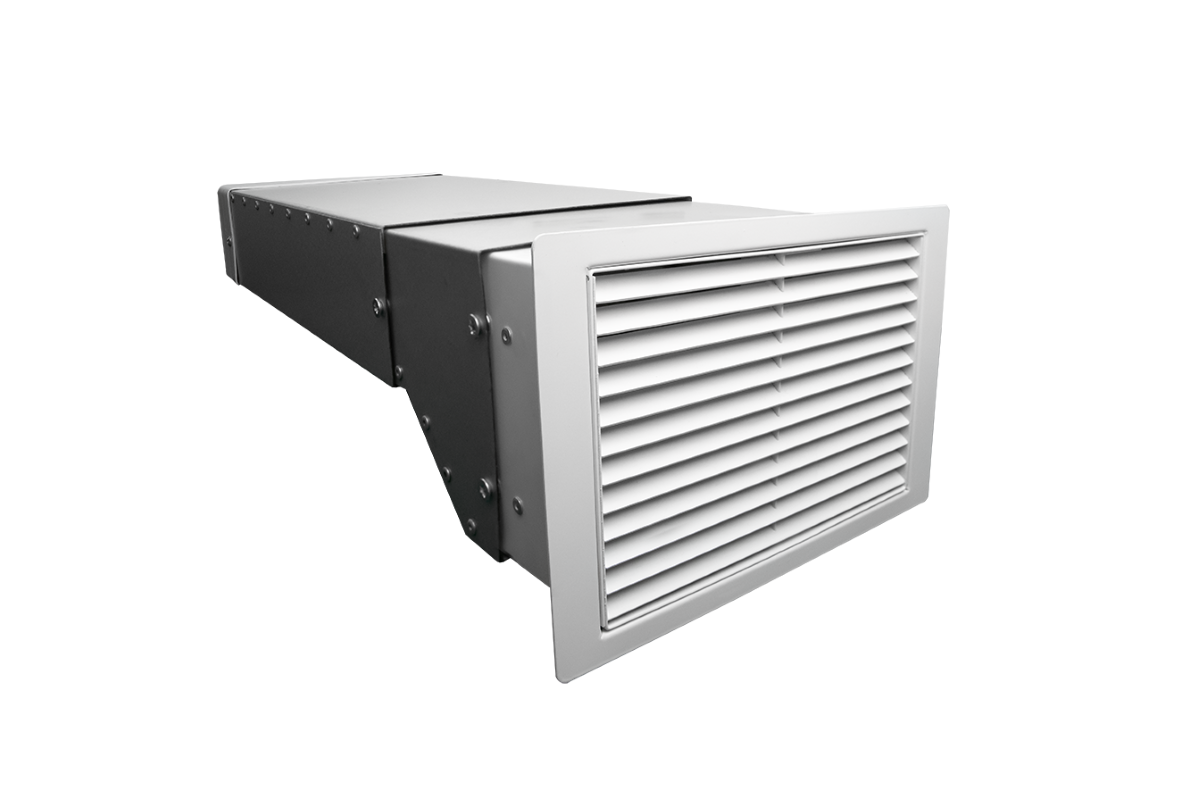
British ventilation manufacturer, Vent-Axia, has launched a new range of low-resistance, non-combustible metal fire airbricks. The new Pyrocheck Fire Airbricks are fully compliant with both Approved Document B (Fire Safety) of the Building Regulations and Building (Scotland) Technical Handbook 2019. Developed in-house, the Pyrocheck Fire Airbricks range features a low-resistance design to ensure high airflow and has been performance tested to BS EN 13141-2-2010. UK manufactured, the new class A1 fire metal ducting kits and fire airbricks comply with the requirements of the current Part B of the Building Regulations. This makes the Pyrocheck Fire Airbricks ideal for multi-storey developments which require all materials forming part of the external wall to be made from non-combustible materials, in line with Part B. Suitable for a wide range of residential applications, the Pyrocheck Fire Airbricks are designed for both 204 x 60 and 220 x 90 ducting with flanged and non-flanged grille options. Manufactured from robust 0.9mm electrogalvanised sheet steel, the airbricks meet fire class A1. Available in both double and single airbrick versions, the airbricks come in five RAL colours featuring a polyester powder coating which has been tested to EN13501-1 classification A2-s1,d0. The Pyrocheck Fire Airbrick range also includes a bezelled version for exterior cladding, render or composite. Steve Pearce, NBR Product Manager at Vent-Axia, says, “The Grenfell Tragedy highlighted the importance of fire safety measures which led to amendments to Part B of the Building Regulations. Fire ductwork improves the safe operation of ventilation systems by minimising the chance of fire spread. Vent-Axia has therefore designed and developed the new Pyrocheck Airbricks to meet Part B requirements for non-combustible materials.” Galvanised steel is considered fire class A1 since it remains robust at elevated temperatures and has a high melting point temperature of 1,450ºC to 1,520ºC. The robust Pyrocheck Airbricks are also corrosion resistant and have been salt spray tested to BS EN ISO 9227:2012. For more from Vent-Axia, click here.