2 November 2026
Product of the Month: Amari Floodlight range by Aurora Lighting
 
23 November 2026
Advanced acquires communications specialist Baldwin Boxall
 
23 November 2026
Trades face 'skills squeeze' as apprenticeship demand soars
 
20 November 2026
Ovia: Delivering performance and flexibility across every sector
 
20 November 2026
Exclusive: how to prepare a building for future technology
 

Latest News


£330m pension investment for clean energy transition
Workplace pension provider Smart Pension has announced an initial £330 million investment in two funds managed by Octopus Energy’s renewable arm, Octopus Energy Generation, to fast-track the UK’s transition to clean energy. This commitment supports companies like Kensa, a manufacturer of ground source heat pump technology, to generate sustainable growth for Smart’s 1.5 million pension savers. The move is part of a 15% allocation commitment to private markets within Smart Pension’s default fund, helping the UK to accelerate the transition to a net zero economy. Smart Pension will be investing 5% of its default fund into two funds managed by Octopus Energy Generation - Sky (Octopus Renewables Infrastructure SCSp) and OETF (Octopus Energy Transition Fund SCSp) - both carrying high sustainability ratings. This commitment aims to help finance a broad range of green energy projects, including the UK’s first investor-funded ground source heat pump network in South Wales, delivered by Kensa. The project intends to provide affordable renewable heating and hot water to 114 new homes at Parc Eirin and position ground source heat pump networks as an investable low-carbon utility. The homes will be part of the new generation of housing developments built without gas as the UK moves towards net zero. Octopus Energy Generation brings 15 years of experience and a £7 billion portfolio of over 270 wind, solar, and battery projects across 21 countries. As part of the investment, Smart Pension’s 1.5 million members will have access to a range of materials including case studies and carbon reporting to help them better understand how their pension savings are making a difference both financially and environmentally. Comments Rachel Reeves, Chancellor of the Exchequer, comments, “Our reforms are about unlocking investment to deliver higher returns for savers, drive growth, and create good jobs. This means more money in the pockets of working people, our Plan for Change in action. “That’s why I’m so excited about Smart Pension’s investment in the UK’s first commercially funded ground source heat pump network in South Wales, delivering returns, growth, and jobs.” Andrew Evans, Group CEO and co-founder of Smart, says, “As a leading workplace pension provider in the UK, we’re always looking for innovative ways to grow our members’ pensions and support the UK economy. "That’s why we’re so proud to be investing in Octopus Energy, a fantastic British tech company, who set up next door to us when we set up our first offices a decade ago. "By the end of next year, supported by innovative investments like this, we will have scaled and reached £10 billion AUM. “This collaboration will help deliver strong, long-term returns for UK retirement savers, and also will support efforts to lower household bills and reduce emissions for homeowners. "It’s a great example of how UK tech businesses can come together to tackle important challenges and create a positive impact.” James Lawrence, Director of Investment Proposition at Smart Pension, claims, "We are dedicated to providing strong, sustainable returns for our members while supporting the country in a sustainable way to reach a low-carbon economy. "Partnering with Octopus and Kensa allows us to invest in British infrastructure to deliver measurable environmental and social impact for years to come. "From renewable surplus power generation to support local leisure facilities to cutting-edge clean tech like heat pumps, these are the kinds of investments that not only align with our own ethical standards, but also help members feel a deeper connection to their pension savings.” Zoisa North-Bond, CEO at Octopus Energy Generation, adds, “This partnership shows how pension savings can literally power the future — turning contributions into green electrons that heat homes, replace gas boilers, and drive down energy bills. "It brings everything full circle: the very money people are saving for retirement is helping to build the smarter, carbon-free energy system they’ll rely on in years to come. "By teaming up with Smart Pension and innovators like Kensa, we’re proving that smart investment doesn’t just deliver long-term returns, it creates real, tangible change for communities and speeds up the UK’s journey to net zero.” Tamsin Lishman, CEO at Kensa, comments, “As pioneers in ground source heat pump technology, we are proud of our role in delivering the switch to better, more affordable heating and hot water, powered by ultra-efficient, ground source heat pumps designed and made here in the UK. "The Parc Eirin investment demonstrates the transformative role private funding will play in helping both housebuilders and homeowners transition to effective, low-carbon heat – the critical next frontier in the UK for carbon reduction, which currently contributes around 13% of national greenhouse gas emissions. “The investments made by Smart and Octopus Energy Generation are encouraging for the UK’s ever-growing renewables sector. They will support the UK’s Net Zero goals, generate growth, and provide more well-paid green sector jobs.” For more from Kensa, click here.

First graduates of Tridonic's Academy employed
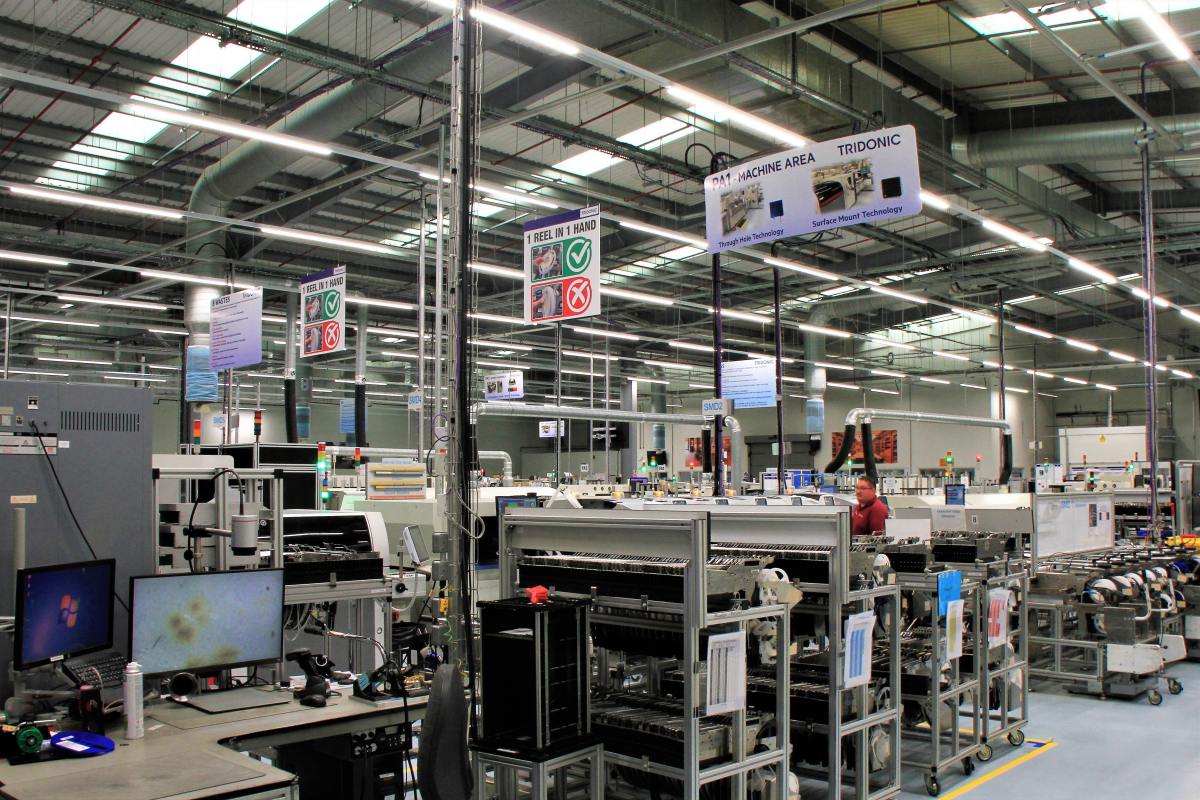
Tridonic, a supplier of lighting technology, has announced the recruitment of James Trudgill, a 21-year-old student and the first graduate of its Academy to join its Spennymoor team. Working in partnership with New College Durham, the education scheme is designed to deliver and develop skills across the electronics industry, with the objective of attracting young talent into manufacturing careers. Since September 2024, students have been able to access a Level 2 electronics course at New College. The 1st year course led by Tina Taylor, Ideas & Training Coordinator at Tridonic, is specifically an EAL Level 2 Diploma in Engineering Operations with a Mechanical and Electrical Bias. This has recently been confirmed as a 5-year programme, with trainers Joe Jameson and Alison Cox ready to teach 2nd year students from September 2025, aiming to provide students with the skills and knowledge necessary for a career in the engineering industry. The Academy was designed to bridge the gap between education and employment by offering students hands-on training in key manufacturing principles and skills, including hand soldering and NXT FUJI machine operation. Through the partnership, students like James have benefitted from first-hand experience of real-world engineering and manufacturing environments. This, according to the company, is vital component of Tridonic’s wider long-term workforce strategy. James Trudgill, Operator at Tridonic, shares his experience of the programme, stating, “It was very informative and very practical - in fact, it was my most enjoyable lesson of the day - and the trainer was excellent. "I felt I had everything I needed to help with my training; the soldering and machine training gave me the opportunity to prepare for the start of my new role. "Everyone at the Spennymoor facility has been very friendly and I can chat with all the operators. I’ve been made to feel relaxed.” Looking ahead, James is already setting goals for his future, continuing, “I want to work on my leadership skills through courses and guidance from staff. My first goal is to become a cell leader at Tridonic.” Ben Kennard, Manufacturing and Supply Chain Manager at Tridonic, adds, “We’re thrilled to see James thriving in his new role. "His success is a testament to the value of the Academy, and we look forward to welcoming more students into the programme over many years to come.” Tridonic says its Academy model allows it to tailor training to its specific needs, creating a pipeline of "skilled, motivated, and well-prepared candidates" in the North East of England. For more from Tridonic, click here.

Metrel launches new PAT tester
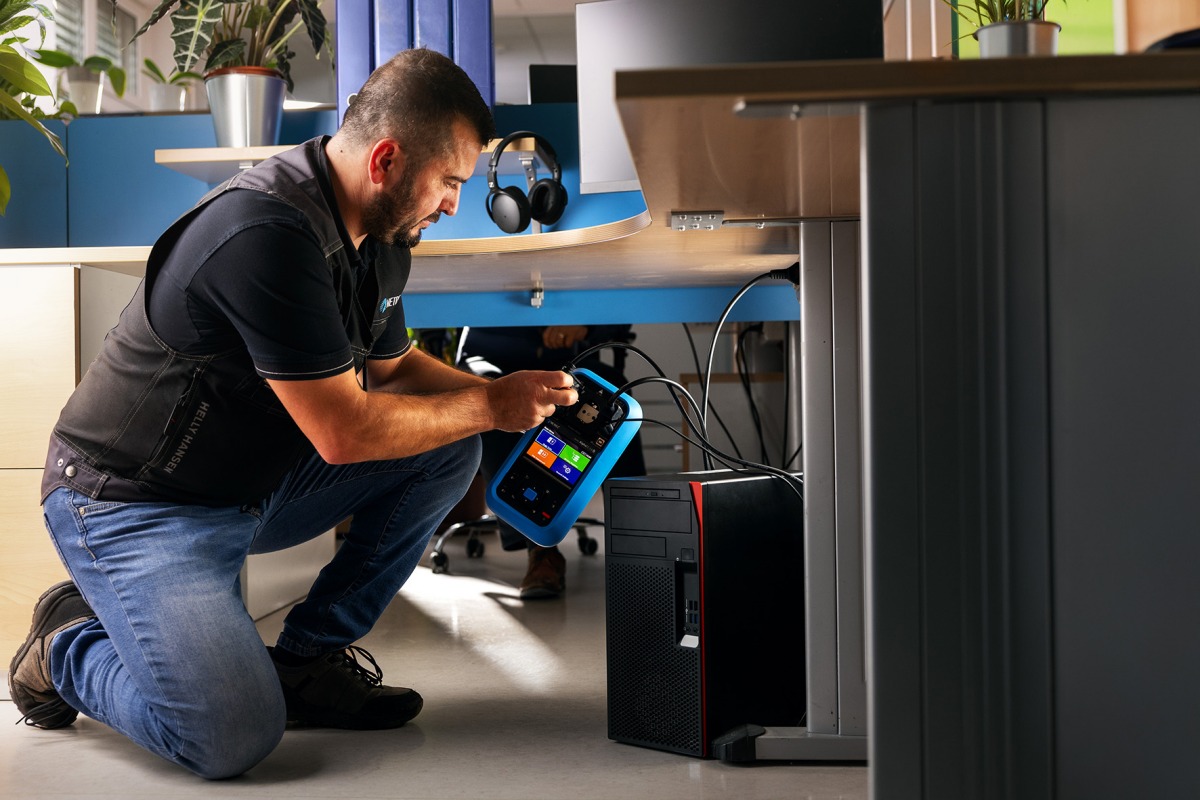
Metrel UK, a manufacturer of test and measurement equipment for the electrical industry, has released a new portable appliance testing (PAT) unit, the MI3340 AlphaEE XA. The product has been designed for use across a range of electrical testing applications, including electric vehicle supply equipment (EVSE) diagnostics, portable RCD testing, and testing devices with floating inputs (such as Comms equipment). It is also 3-phase capable. The Li-ion-powered tester has the option of touchscreen or push button controls, and the operating system should be familiar to those used to the range of Metrel touchscreen test devices. Results can be saved in the on-board memory, which can be used to drive the testing protocol if desired. Designed to be easy to hold one-handed, the MI3340 brings different tests to the table such as socket testing and standby power, offering power factor and harmonic distortion. The interface has been developed for ease of use and quick familiarisation, aimed at supporting faster job completion and certification. For more from Metrel, click here.

JTL apprentice helps deliver DIY SOS build
A JTL apprentice from Preston has played a hands-on role in transforming a Lancashire home for BBC One’s DIY SOS, helping a local family welcome their teenage son home for the first time in three years. Joe Bibby, who is in the second year of his electrical apprenticeship with JTL and his employer, Progress Housing, was among a team of tradespeople and volunteers who worked to adapt a house in Freckleton for a young boy recovering from major surgery. The extensive renovations were needed to ensure the home met the boy’s complex medical needs. The episode, filmed earlier this month, is part of the long-running DIY SOS series in which local communities, suppliers, and contractors come together to support families through life-changing home renovations. Joe was able to attend the ‘big reveal’ for the programme and see the real impact of the project for Daniel Flemen and his family. Joe undertakes his apprenticeship at JTL’s Preston training centre, supported by the Independent Training Provider’s specialist delivery team and his Training Officer, Liam Tyrer. The Freckleton build comes shortly after the official opening of JTL’s new £1.4 million Preston Training Centre, which supports over 190 apprentices a year across the electrical and plumbing sectors. The project also reflects JTL’s focus on preparing apprentices for high-impact, real-world environments. JTL claims, "With access to hands-on training, industry expertise, and personalised support, learners like Joe are equipped not just for the workplace, but for projects that have a genuine social impact. "His involvement demonstrates the calibre of apprentices emerging from JTL’s national training network and the role they play in supporting essential work across communities." Joe comments, “Being part of this project was a real eye-opener. It’s not every day you get the chance to use your apprenticeship to help change someone’s life. "Working alongside experienced tradespeople on such a meaningful build showed me just how far I’ve come and how much of a difference we can make in this job. "I’m grateful to both JTL and Progress Housing for supporting me and giving me the skills and confidence to get involved.” Chris Claydon, Chief Executive at JTL, adds, “Joe’s involvement shows what apprenticeships are all about: learning a trade, building confidence, and making a meaningful contribution. "Stories like this remind us why investment in apprenticeships matters, for individuals and for society.” For more from JTL, click here.

Thorn launches College 2 luminaire
Thorn Lighting, a manufacturer and supplier of outdoor and indoor luminaires and integrated controls, has introduced College 2, a new luminaire developed to support the changing requirements of educational spaces. The product builds on the design of its predecessor and includes updated features to enhance visual comfort, energy efficiency, and ease of installation. Product overview The College 2 luminaire incorporates a low-glare (UGR <19) diffused light distribution and provides 14% upward light, improving illumination for tasks, spaces, and facial visibility. It meets the IP44 standard for ingress protection, making it suitable for science laboratories, workshops, and other such environments. The design allows for "straightforward" installation with seven mounting options available, including surface, wire suspension, continuous-run, and BESA box compatibility. The unit is intended to replace legacy College fluorescent or early LED models on a one-for-one basis. Functionality can be expanded through DALI-2, Bluetooth, emergency lighting, and sensor-based control options. Use cases and technical detail The luminaire is specifically designed for use in classrooms, lecture theatres, and libraries, but is also suited to offices, meeting rooms, and healthcare settings where visual clarity and user comfort are essential. College 2 integrates a single LED light engine, a Bi-Lens Primary optic, and a Quad Linear prismatic diffuser, resulting in uniform light distribution. Manufacturing and performance College 2 is manufactured at Thorn Lighting’s facility in Spennymoor, County Durham. It is engineered for a long service life of 100,000 hours (L80) and features a patent-pending hinged gear tray for easier maintenance. Luminous efficacy reaches up to 145 lm/W, supporting reduced energy use in day-to-day operation. Comment David Williamson, Senior Product Manager for Indoor Luminaires at Thorn Lighting, claims, “With College 2, Thorn Lighting reaffirms its leadership in delivering innovative, reliable, and sustainable lighting. "This next-generation luminaire has been completely reimagined with advanced optics and a market-leading specification—designed and developed entirely in-house. "It’s a clear reflection of our commitment to enhancing educational spaces and supporting the future of learning.” For more from Thorn, click here.

'Electricity networks face growing risk from extreme weather'
The increased frequency of abnormal weather events such as intense heatwaves, more violent storms, and heavy rainfall presents a growing risk to countries’ electricity distribution networks, threatening customers’ power supplies. That’s according to VisNet from EA Technology, a specialist energy management and grid-edge intelligence firm. As the UK and all of Europe once again experiences record high temperatures and the risk of severe thunderstorms this summer, distribution network operators (DNOs) should expect significant rises in the number of so-called “pre-faults,” a split-second spike in current caused by a breakdown of insulation on the line. An analysis David Clements, Data Analytics Manager at EA Technology, explains the issue in the following terms: “We know from conversations with electricity operators in continental Europe that in the days following extreme heat, networks can experience very significant spikes in pre-fault numbers. “The underlying causes of pre-faults during extremely hot weather is still uncertain and needs further investigation. They could be the result of underground distribution cables expanding when the temperature rises, which then warps the cable or causes its insulation to crack. “We’ve not yet seen the same scale of increased pre-faults in the UK that operators in mainland Europe have to deal with. For now, numbers are noticeably lower than what has happened following heatwaves on the continent, which are typically much hotter than a British heatwave. “But based on current climate trends, it's only a matter of time before the UK experiences the similar intense heatwaves as the rest of Europe. There is a window of opportunity for operators in the UK to prepare for this eventuality. “By identifying pre-faults more quickly, operators get in front of the problem and make the necessary repairs before the pre-fault gets worse and leads to a full outage. “Operators taking pre-emptive action in anticipation of possible disruption isn’t a new development. "In 2016, French operator EDF drafted extra repair crews into Paris during a heatwave in the city, in anticipation of needing to deal with a surge in faults in the distribution network due to the higher-than-normal temperatures. “EDF correctly predicted that the number of faults would rise above expected levels once the heatwave subsided, temperatures dropped, and the cables cooled down.” But it’s not only extreme heat that can disrupt energy operators’ underground distribution cables. Pre-fault data collected by VisNet from low-voltage networks across the UK between last October and March of this year shows that four of the five major winter storms that the UK experienced during this time period caused a significant rise in pre-fault events. The pre-faults that occurred during each storm were caused by rain that permeated into the ground and made its way via cracks in cable casings into the electrical wires inside. In particular, what stands out from the VisNet data is that the largest spike in pre-fault events took place over a three-day period from 4 to 6 January. This was not due to a storm but instead because of three days of sustained precipitation – specifically, extensive snowfall in northern England and southern Scotland, plus heavy rainfall in central England and Wales. This three-day period of sustained bad weather led to a surge in pre-faults on the UK’s electricity distribution networks. David continues, “The data from the UK’s 2024/25 storm season clearly shows a one-off event like a storm causes a rise in pre-fault levels - but nowhere near to the same extent as sustained rainfall. "Storms are more violent and inflict physical damage, but rain can also seriously disrupt electricity supplies if operators overlook their distribution network. “Fault-finding used to be slow and laborious, and customers would be off supply while you were doing it. But an operator who knows more precisely where to look for a pre-fault along a particular cable saves significant time and effort in locating and then fixing it. "As a result, the operator avoids penalties from the regulator for customer minutes lost. “The effects of climate change means that more extreme weather events are now increasingly commonplace in the UK and elsewhere - not only intense heatwaves, but also storms, bouts of heavy rain, and flash flooding. “By using in-depth monitoring systems to identify pre-faults earlier, operators get in front of the problem and proactively address pre-faults caused by extreme weather conditions. "They can mitigate - or entirely prevent - full outages before they occur to ensure people’s lights stay on in even the most challenging of conditions.”

BG launches smoke & heat combo alarm
British General (BG), a reliable safety solutions company, has introduced the Combination Smoke & Heat Alarm, a purpose-built device designed to protect homes in critical areas such as attics and lofts, especially where PV inverters are installed. Developed with installer convenience and designed for end-user peace of mind, this alarm offers dual detection and advanced functionality through its wireless RF remote capability. Paired with the BG SDMREM Remote (sold separately), users can test and silence alarms remotely, eliminating the need to access hard-to-reach areas such as loft spaces. This makes it an ideal solution for modern homes with solar energy systems or limited access zones. The unit features a sealed-in 10-year lithium backup battery, ensuring protection even during mains power outages, with no battery changes required throughout the product’s life. Designed to be hardwired into the mains supply, the alarm seamlessly interconnects with BG’s full range of smoke, heat, and CO alarms - delivering whole-home fire safety coverage. Installation is quick and hassle-free, thanks to colour-coded terminals, a pre-fitted dust cover, and clear wiring guidance, making it a favourite among contractors and installers. Fully compliant with BS 5446-2 and EN 14604 standards, and independently tested by TÜV, this alarm delivers certified safety and performance. It’s also backed by a 10-year warranty for total confidence. For distributors, housebuilders, and trade professionals, BG’s latest addition brings together reliable detection, remote control convenience, and effortless installation - setting a new benchmark in residential fire safety. For more from BG, click here.

Cable strippers from KNIPEX
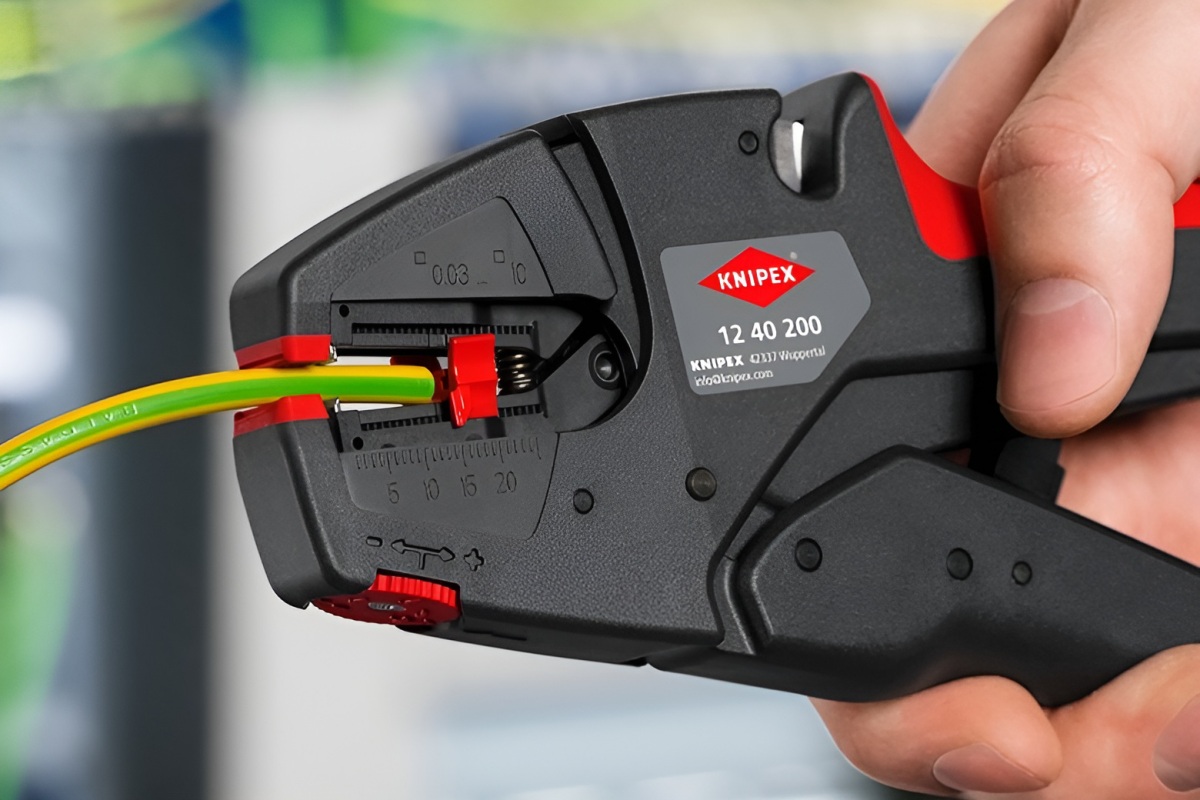
"Cable stripping can be a daily grind, but with the right tools, it doesn’t have to be," says David Barnes, Sales and Marketing Manager at KNIPEX, a German manufacturer of professional hand tools. Cable stripping is one of those jobs that gets done dozens of times a day, but if your tool isn’t up to the task, it quickly becomes frustrating. Whether you’re working in a tight corner, prepping long cable runs, or juggling different conductor types, the right stripper makes all the difference. That’s where two longstanding tools from KNIPEX come into their own. The EvoStrip and ComStrip are already well known in the trade. First released over 20 years ago, they’ve seen steady improvements over the years and the latest versions are designed to deliver even better comfort, accuracy, and durability. One for the all-rounders If you need a no-fuss, dependable stripper for everyday work, the ComStrip is a great fit. It handles solid, multi-stranded, and finely stranded conductors from 0.2 to 6 mm² and doesn’t need manual adjustments to get going. It includes a handy built-in cable cutter for up to 2.5 mm² and has an adjustable length stop from 6 to 18 mm to help keep every strip neat and consistent. The tool’s slimline head is ideal for confined spaces while its two-component handle with soft grip keeps you comfortable on longer tasks. The lightweight body is made from tough, glass fibre reinforced plastic, giving it the kind of resilience you need on site. And when the blades do eventually wear out, they can be replaced quickly and affordably. Stepping it up For those who regularly tackle a wide range of insulation types and conductor sizes, the EvoStrip brings extra firepower. With automatic size adaptation and a stripping range from 0.03 to 10 mm², it’s perfect for installers working across domestic, commercial, and solar jobs. The cutting depth can be fine-tuned using the adjustment wheel and it handles even difficult insulation materials reliably. A top-mounted cable cutter improves visibility for precise work and its comfortable two-component handle is built to reduce strain on your hands – especially useful on repetitive prep jobs. For solar or industrial applications, the tether point is another bonus, offering added security when working at height. A generous stripping length range of 5 to 22 mm (up to 25 mm without the stop) gives installers plenty of flexibility too. Both tools are clearly built with long-term use in mind. They’re quiet, smooth in operation, and designed to stand up to regular, demanding use. Spare blades and accessories are available, and both strippers are lightweight and ergonomic enough for everyday work. Whether you’re wiring a consumer unit or connecting PV panels, these updated KNIPEX strippers offer practical solutions with the kind of comfort and consistency that makes a real difference over the course of the day. For more information on KNIPEX's new products, visit the company's website. For more from KNIPEX, click here.

Chancellor visits Kensa, championing green growth
The Chancellor of the Exchequer, Rachel Reeves, visited Truro-based ground source heat pump manufacturer Kensa to hear from Cornish businesses driving green growth and investment. She also took part in a roundtable to discuss their role in Britain’s energy transition. During the visit, the Chancellor met with Kensa representatives and heard about the company’s approach to clean heat and its investment expansion plans for the next five years. These include ramping up production and installation of heat pumps to 25,000 a year, growing its Cornish and wider UK workforce to 450 and creating hundreds more jobs in its UK supply chains. As part of the discussion, Kensa welcomed the "positive policies" announced by the government in recent weeks, including a move to clean heating in new build homes, which Kensa is supporting through its partnership with GTC. Also discussed were the commitment of £13.2 billion for the Warm Homes Plan and a plan to grow heat pump manufacturing as part of the Industrial Strategy. Kensa also made clear that the next five years were "crucial for securing investment in UK heat pump manufacturing." The sector, it says, is "essential for delivering the full scale of opportunities presented by the energy transition and the upgrade of UK home heating." Kensa stressed the need to maintain the stability and policy momentum established so far on energy, giving heat pump manufacturers the market confidence needed to invest. These discussions were followed by a roundtable at Kensa’s factory, where its heat pumps are made. Attendees included the Chancellor; Kensa’s CEO, Tamsin Lishman; and representatives from Cornwall-based businesses with an active role in the green transition. The companies represented included Geothermal Engineering, Celtic Sea Power, Eden Geothermal, Cornish Metals, and Naked Solar - with local MPs, Perran Moon and Jayne Kirkham; Cornwall Chamber of Commerce; and the National Wealth Fund also in attendance. Discussions from the roundtable focused on Cornwall's role in green growth, with a particular focus on the potential of geothermal heat and power, including Cornwall’s own natural resources. The Chancellor also heard about the economic potential from floating offshore wind, creating new industrial growth. The Chancellor was reportedly extremely keen to see how best to use the resources of the National Wealth Fund, the British Business Bank, and UK Export Finance to underpin industrial growth in Cornwall and help it reach its full potential. The Chancellor’s visit follows Energy Secretary Ed Miliband’s visit last year, where he joined local MPs Perran Moon and Jayne Kirkham. Tamsin Lishman, Kensa CEO, comments, “Kensa sits at the heart of the government’s plans for green industrial growth, a proud Cornish manufacturer of ground source heat pumps and a nationwide installer of heat networks. "Kensa has bold ambitions to invest and expand its workforce and operations over the next five years, making sure it fully plays its role in the delivery of green jobs and growth. “I have been buoyed by the recent government announcements on the Future Homes Standard, major funding commitments for the Warm Homes Plan, and a clear plan to bolster heat pump manufacturing as part of the new Industrial Strategy. "This is the policy platform we need for growth in Kensa and in Cornwall, and we look forward to working with the government to deliver it.” Rachel Reeves, Chancellor of the Exchequer, adds, "It was fantastic to visit Kensa today and hear their ambitious expansion plans first-hand. Companies like Kensa are crucial to transforming Britain into a clean energy superpower. “Meeting with local energy leaders to discuss Cornwall’s role in green growth demonstrated exactly what our Plan for Change is about. "We are backing British innovation, supporting homegrown energy, and putting money back in working people’s pockets through cheaper, cleaner energy.” For more from Kensa, click here.
Used electric van sales double as price drops
Marketcheck, a source of data on the UK used car market, has today published figures on trends within the used E-vans sector. Over a period of two years (between June 2023 and June 2025), Marketcheck found that sales have doubled and the average last listed price has fallen by almost a third. In June 2023, 218 used EV vans were sold across the UK. By June 2025, this rose by 166.51%, more than doubling to 581. Marketcheck also found a significant decrease in the cost of a used E-van. Last month, the average last listed price for a used E-van in the UK was £17,560.42. This is a 28.14% decrease (£6,875.19) when compared with the last listed price in June 2023, when the average used E-van cost £24,435.61. The analysis conducted by Marketcheck shows that the cost of a used E-van appears to have reached its market level. In the first half of the analysis (between June 2023 and June 2024), the average last listed price fell by £5,344.24, a 21.87% decrease. Between June 2024 and June 2025, the price decrease was less steep, falling by 8.02% (£1,530.95). In 2025, the average last listed price fluctuated from a high of £18,103.78 to a low of £17,380.95, indicating that the cost has plateaued. Alastair Campbell, Marketcheck UK, comments, “The used electric van market has undergone a major transformation over the past two years. "With average prices down by nearly a third and sales more than doubling, it’s clear that these vehicles are now a far more accessible option for businesses and sole traders looking to make the switch to electric. "Our analysis suggests the market has now reached a stable pricing point, with values holding relatively steady throughout 2025. "As demand continues to grow and prices level out, used E-vans are increasingly becoming a practical and cost-effective solution for fleets and commercial users alike.”