2 November 2026
Product of the Month: Amari Floodlight range by Aurora Lighting
 
26 November 2026
Thorn scores second Highland football lighting installation
 
26 November 2026
Segen pens exclusive distribution contract with M-Rack
 
25 November 2026
Scolmore helps rejuvenate Tamworth Cancer Support Centre
 
25 November 2026
Leicester apprentice crowned 2026 SkillELECTRIC champion
 

Latest News


ISD solutions provides firewall at the new UK vaccines centre
Installation of ISD Solutions firewalls at the new Vaccines Manufacturing and Innovation Centre (VMIC). Fire safety construction specialists ISD Solutions are delivering a fast-track firewall element at the UK’s new Vaccines Manufacturing and Innovation Centre (VMIC) at Harwell in Oxfordshire. The firewall division of the Gloucester firm was recently contracted to provide the two-storey building with almost 5,000m2 of extensive certified fireproof separation walls. VMIC was established to provide the UK’s first strategic vaccine development and advanced manufacturing capability. It has taken a leading role in advising Government teams on vaccines manufacturing in response to Covid-19. Once operationally ready, the 7,400m2 facility, at the Harwell Science and Innovation Campus, will have capacity to manufacture up to 70 million doses of a pandemic vaccine within a six  month timeframe. Demand for the site accelerated when the pandemic started, construction was backed by UK Government and Prime Minister Boris Johnson visited the site in September. It was around this time that ISD was selected through a tender process as the supplier of the fireproofing elements of the building. The VMIC facility is due to open in summer 2021, a year ahead of schedule. Brett Harrington, Manager of ISD Solutions’ Firewall Division, says: “The VMIC facility is a vital weapon in the UK’s fight against coronavirus and, as such, security and safety is crucial. “This was an exciting opportunity to be involved in a project of such importance. The compressed timelines have added to the challenge but we have sufficient resources in house and quickly mobilised our design and project management teams. Working with our supply chain we were able to support the synchronisation of material ordering and delivery, even while the design phase was ongoing.” “We are all proud to have played a role in the nation’s future recovery from the pandemic.” During the past 12 months ISD Solutions has doubled down on its in-house fire expertise, part of its strategy to provide specialist services required by the market. Both Mr Harrington and managing director Adrian Smith becoming among the first worldwide to have passed the new Level 3 Certificate in Passive Fire Protection from the Institution of Fire Engineers (IFE). The qualifications put ISD Solutions as one of a select group of UK construction contractors to be at the pinnacle of fire safety expertise. “Our expertise is becoming more widely recognised and, combined with our relationships with product suppliers, this makes ISD a reliable provider for such urgent work,” comments Mr Harrington. “Our clients receive surety in our installations, which are designed and installed to LPS 1500/1531 standards from the BRE, with a third party backed certificate of conformity.” Glencar Construction is the main contractor at VMIC in Harwell and began on-site ground works in early April, with the base build ready for access for fit-out a few weeks ago. Eddie McGillycuddy, Managing Director of Glencar Construction explains: “Glencar is pleased to collaborate with stakeholders including ISD Solutions to deliver this critical project. We have made an accelerated start and reduced our construction programme with the support of our partners, making this project an excellent example of all that is good about our industry.” Chris Lucas, Chief Operating Officer at VMIC says: “The programme acceleration to allow VMIC to open its doors in 2021, a year ahead of schedule, has been made possible by an extraordinary level of cooperation by all concerned. “We have focussed on collaboration to deliver this critical resource both in the battle against pandemic viruses and the rejuvenation of the vaccines industry in the UK.”

Health and Safety Expert, Arco advises on this weather
With shorter days and bad weather, workers are spending more of their day working in dangerous conditions. Freezing temperatures, heavy rain and strong winds can hamper decision-making and performance, causing irrational and unsafe behaviour that aggravates the risk of existing hazards. Arco, the UK’s leading health and safety expert, wants individuals and business owners to understand how worker safety can be compromised and more importantly - restored. Studies show that accidents may increase by up to 35% when people experience excessive cold while working. Thermal comfort is key to worker productivity and maintaining a consistent body temperature is essential. Wearing three layers, a base layer, mid-layer and outer layer, is the perfect way to ensure outdoor clothing is suitable for the winter. These layers should include: A breathable base layer that sits next to the skin and wicks away moisture, keeping the body warm and dry The mid layer, known as the ‘insulating layer’ should provide warmth. This layer should be fitted to allow minimum air movement, which ensures that maximum heat is retained, while still letting perspiration escape from the base layer An outer layer to shield against wind, rain and abrasion People who spend time working outdoors should be prepared to not only ensure that they are warm in winter, but that they can be seen as well. Ill-equipped employees are at a highly increased risk of being victim to a workplace injury if they are not noticeable. Every year there are over 2,500 RIDDOR incidents involving transport in the workplace and being struck by a vehicle is one of the most common causes of fatal workplace accidents. Hi-vis clothing attracts the attention of vehicle operators, gives them more time to react and reduces the risk of people being hit. It is therefore essential that employers ensure workers are supplied with EN compliant and role-suitable hi-visibility clothing. The higher risk the environment, the more hi-vis clothing is required. Hi-vis should be suitable for the job, comfortable for the wearer and it shouldn’t interfere with other PPE. Genuine hi-vis has two features which aid discernibility: fluorescent material providing day-time visibility, and retro-reflective tape which reflects light directly back toward light sources. Whilst dark weather conditions seem the most natural time to wear hi-vis, it should be worn in all light conditions to ensure workers are protected. The EN standard for hi-vis clothing is EN 20471, which sets the minimum standards of visual performance and durability needed for high visibility clothing worn in the workplace. The standard is based on a series of tests including colour fastness, colour measurement, dimensional stability, reflective tape testing and garment assessment, all of which affect whether hi-vis offers the highest possible level of protection (class 3), or low level protection (class 1). Arco also warns that it’s crucial to review the condition of hi-vis clothing regularly, to ensure it remains fit for purpose. Arco has released an Expert Guide to help employers get the best results from their garments because thoroughly waterproof clothing means less downtime, less sick leave and the job gets done no matter what the weather.

Nexans to supply nuclear rated cables to bring carbon-free electricity to six million UK homes
Nexans is supplying a variety of custom-designed, nuclear-rated cables for the Hinkley Point C site, including medium voltage and low voltage power, control and instrumentation cables for pumps, valves, safety systems, power supplies and control room monitoring. They will be installed inside and outside of the nuclear containment area. It is vital that the cables continue to perform safely and reliably under the demanding environmental conditions corresponding to normal, accidental and/or post-accidental plant operating conditions. Oliver Dervout, Nexans Market Segment Director for Power Generation says: “We are very excited to be involved in this ground-breaking project for the UK’s nuclear power program. We have already gained considerable experience as a supplier of nuclear-qualified cables for EPR projects worldwide, such as Flamanville (FA3) in France and Taishan in China. Winning the contract for Hinkley Point C confirms our  solid reputation in the nuclear segment. The key to our success is the ability to combine technical expertise, high level products and extensive industrial design and manufacturing capability.” To satisfy the most rigorous safety standards, Nexans ENERGEN NUC halogen-free cables that comply with the Euroclass requirements for reaction to fire have been specified. They will be manufactured at the Nexans factory in Mehun-sur-Yèvre, France.

CICV forum asks industry to reveal their Christmas wish list for 2021
Cooperation and collaboration, greater worker welfare and a top-to-bottom revolution of the construction sector are all top of the Christmas wish-list for members of the Construction Industry Coronavirus (CICV) Forum. With a year of massive and unprecedented upheaval drawing to a close, the unique collective asked its 100-plus members to reveal their greatest wishes for 2021 – with the answers as varied as the body itself. While the pandemic undoubtedly brought a staggering level of challenges, it also ushered in a new era of cooperation which saw the group of more than 70 organisations pull together to help Scotland’s building sector get safely back to work. And as the Forum released a round-up of its accomplishments and achievements in 2020, many members said their biggest wish is for this teamwork and togetherness to continue. Alan Wilson, CICV Forum Chair and Managing Director of electrical trade association SELECT, says: “It’s been amazing to see so many different groups and individuals working in a collaborative way with the sole aim of helping the construction industry recover from the current crisis. My wish is that this spirit of collaboration continues in whatever landscape we face in 2021 and beyond.” Vaughan Hart, Managing Director of the Scottish Building Federation, comments: “The way that sections of our industry, not renowned for sharing resources and information, have come together has shown that we do have the potential to improve things for whole construction sector. My wish is that we don’t revert to the ‘old normality’ once this crisis is over.” Gordon Nelson, Scotland Director of the Federation of Master Builders, echoes his sentiment, saying: “As we all know, necessity is the mother of invention, and the Forum was born out of necessity when the pandemic first struck. Ever since, we’ve seen unprecedented levels of cooperation and my wish is that this becomes the norm in 2021 and beyond.” David Logue, Partner at Gardiner & Theobald LLP, wishes: “Like others on the Forum, my wish is that productive partnerships continue into 2021. Only by working together can we make real changes to the construction industry that will benefit not just the firms and individuals that work in our sector but also our clients and customers.” Fiona Harper, The Secretary of the Scottish Joint Industry Board, adds: “My wish for 2021 is the same as every year – collaboration, collaboration and more collaboration. Now more than ever, we need everyone to recognise that we’re in this together and we’ll only recover and rebuild by cooperating closely.” For other members of the Forum, their wish-list included the health of both the industry itself and the thousands of professionals who work across it. John McKinney, Secretary of the NFRC, the Stone Federation and the Scottish Contractors Group, says: “The most important thing is coming out of the pandemic with the least possible number of deaths. I hope the industry takes the time to look at how it operates to ensure that any further instances don’t have the same impact. In future, it’s vital that all parts of the sector are resilient enough to ensure we can continue business as usual.” Fiona Hodgson, Chief Executive of the Scottish and Northern Ireland Plumbing Employers’ Federation (SNIPEF), comments: “I would like to see our industry recover from the pandemic with a plentiful supply of work and, with the push towards low-carbon technologies, there are certainly huge opportunities for plumbing and heating businesses.” Other Forum members, such as Len Bunton, construction consultant and host of the Forum’s recent commercial webinars, hoped that the pandemic would bring about real change in the industry itself. He says: “What has become evident is that the sector needs massive change and a top-to-bottom overhaul. My concerns are that we just go back to the old ways, so my Christmas wish is for the emergence of people with enormous energy who will be relentless in seeking to change the old order.” Iain McIlwee, Chief Executive of the Finishes and Interiors Sector, continues the theme, saying: “All I want for Christmas is for construction to put the ‘r’ in evolution, admit the process is broken and commit to be different in 2021. We only need a small reset to start thinking ‘us’ instead of ‘me’, front load, plan and programme to engage expertise early and stop looking for ways to pay late. If enough do it, we’ll deliver the roadmap to recovery. The alternative is an unthinkable regression to ‘normal’ – and who wants to be normal?” Peter Walker, Director of Health, Safety & Training at the British Constructional Steelwork Association, agrees, saying: “We need a new breed of leadership that is prepared to make the industry open, honest and transparent. This may seem to be too basic to have any significant impact on a longstanding problem but if all those involved at every level are fairly treated and rewarded then we’ll have a construction industry that will be world class.” Ian Honeyman, Commercial Director of the Scottish Building Federation, had a specific request from Santa, saying: “My wish is that, when amendments to standard forms of contract are made which significantly change the intended risk profile, these amendments should be identified and the procuring body should state the reason for them, together with their impact on the tendering party. This would provide greater clarity for everyone.” The final word went to Grahame Barn, Chief Executive of CECA Scotland, who concludes: “I dream of being able to again enjoy my winter treat of a few home brewed pints with friends at the Moulin Inn near Pitlochry. In between slavering nonsense and eating good food in front of a roaring fire, I’ll toast the achievements of everyone who worked collaboratively under the banner of the CICV Forum to protect our industry during this awful pandemic.” Made up of more than 70 trade associations, professional services bodies and companies, the CICV Forum has maintained a steady supply of information and practical advice to the sector as well as carrying out surveys, producing animations and posters, hosting webinars and making appeals to Government Ministers. Iain Mason, Chair of the Forum’s Communications Sub-Group and Director of Communications at SELECT, says: “It is perhaps unsurprising that, given the quite remarkable success of the Forum’s inclusive and collaborative approach, many of its members are keen for it to continue more widely than ever across the sector. “The Forum has demonstrated just what can be achieved by working together, rather than against each other. Whatever the coming year brings, the Forum’s achievements show that our industry can emerge from this crisis robust, resilient and, hopefully, fully recovered.”

Residents urged to 'be winter ready'
Coronavirus has changed many people’s circumstances this year, with the pandemic hitting some households in multiple ways - including enduring impacts on health and wealth. This is why the public should be 'winter ready'. Power cuts are rare these days, but for some, dealing with such an inconvenience at this difficult time, could be more worrying due to their personal circumstances, especially in winter. So UK Power Networks is urging residents to help spread the word about its free Priority Services Register so those eligible can receive free extra help during a power cut. The company wants to make sure that it can provide extra support in such circumstances, plus give people peace of mind that help will be there if needed. Staff can also put people in touch with experts offering advice on energy bills and energy saving tips, and people can even sign up on a temporary basis - such as after a bereavement, divorce, redundancy or hospital stay. UK Power Networks has improved the reliability of its local energy networks to 99.9% through significant investment, and on average, people now experience a power cut once in nearly three years compared to once every 18 months in 2010/11. However, some extreme conditions can damage cables and cause power cuts. That’s why UK Power Networks has collaborated with other utilities and the Energy Networks Association to launch the Be Winter Ready campaign. Giulia Privitera, social sustainability strategy and programme manager at UK Power Networks, says: “This winter the free services provided through our Priority Services Register will be more important than ever, and I would urge everyone to check if they or their friends and family are eligible to sign up. “The register also allows us to support people who may need extra help for a short period of time, for example if they are recovering from medical treatment. If your circumstances have changed due to Covid-19, you might be eligible for priority support this winter. “We are working with other utilities too, so that together we can provide our customers in vulnerable circumstances the best support and make a real difference during emergency situations.” To Be Winter Ready: Store the free emergency number 105 in your phone – in a power cut dial 105 for help and information. There are over 20 other ways to reach us too including twitter and whatsapp. Sign up to the Priority Service Register – To sign up for the Register please see ukpowernetworks.co.uk/priority, ring 105, or email psr@ukpowernetworks.co.uk. Those eligible include pensioners, anyone disabled or chronically sick, or with a long-term medical condition, with a child under five, with a hearing or visual impairment or additional communication needs. Plus people experiencing redundancy, recent bereavement or recovery from medical treatment may be able to register for a temporary period. Prepare your home – keep a torch and the 105 number handy Be aware – watch the weather forecast and, if you have a power cut please check on your neighbours and stay safe The company people pay their water bills to also offers free additional support to customers that need it, so it's a good idea to register with them too.

Survey: Signs of recovery despite looming uncertainty
More than two out of five businesses (43%) expect their turnover to fall by the end of Q4 2020, according to a new engineering services sector survey. The same survey also revealed that just under one in three businesses (30%) say they are not clear about the forthcoming business implications of Brexit. However, the survey highlights a significant shift towards recovery compared to Q2, when almost two thirds (60%) of businesses reported a drop in turnover during the first half of the year: nearly two thirds (64%) of businesses reported the same or increased turnover in Q3, with only one third (35%) reporting a decrease. Rob Driscoll, ECA director of legal and business says: “The engineering services sector typically feels the impact of economic downturns later than the rest of the economy, but the shockwave of coronavirus in Q2 was unprecedented for both demand and supply within the sector. We will likely be on the road to recovery for a while longer." “However, it is encouraging to see that, although there is much work to be done in the final sprint towards the Brexit transition deadline, the industry has shown great resilience and signs of recovery in the second half of a very tough year. This bodes well for 2021 which will reveal the true impact of Brexit, bear the financial impact of COVID-19 at year end, the culmination of claims and the challenges of changes to VAT, CIS and IR35.” Alan Wilson, Managing Director of SELECT, says: “These findings show that businesses are still understandably cautious about the recovery that lies ahead, and that finance continues to be an issue. Businesses have been forced to invest in new and unexpected areas to ensure ongoing protection against the impact of COVID-19 and will continue to spend this money well into 2021." “At the same time, productivity in many jobs remains low compared to pre-COVID rates, so it is vitally important to ensure that a proper pipeline of work is established to keep businesses running effectively. Payment is equally important, and it’s crucial that all monies owed are paid on time to help keep businesses trading.” Fiona Hodgson, Chief Executive of SNIPEF comments: “While the latest survey shows some positive news with most members having a successful Q3 in terms of turnover, there is a concern that this might change in the upcoming months. This along with rising costs and payment delays may prove to be a challenging time for members. As there is still confusion of how Brexit will affect businesses, we are urging members to be as prepared as they can be for any changes. We will continue to monitor the position and keep members updated.” Employment of agency workers and subcontractors rose for the first time since late 2019, with just under a fifth (17%) reporting increased use of agency workers or subcontractors – almost double the figure reported in Q2. Engineering services businesses continue to feel mounting cost pressures, with over half (51%) of survey respondents reporting an increase in material costs in Q3 compared to Q2. Looking ahead to 2021, three quarters (75%) of respondents expect the cost of electrical and electronic products to either stay the same or rise after the Brexit transition deadline of 31 December 2020. Getting paid on time continues to be a challenge for businesses. Despite public sector rules mandating payment within 30 days, less than half (41%) of direct contracts and just 27% of indirect contracts in the public sector were paid during this period.

GDPR rules still apply after January 1st- what small business' should know
Some uncertainty remains with businesses who deal with the EU on the provision relating to data after the end of the transition period on 31st December. The UK government stance is that GDPR is and will remain engrained in UK law during the transition period and into 2021. The EU is conducting a data adequacy assessment of the UK and if the EU grants positive adequacy decisions by 1 January 2021, it would mean that personal data can flow freely as it does now, without any action by organisations. With only weeks to go, the EU has yet to decide as to whether they accept that the UK’s data protection regime is still adequate. At this stage nothing much is changing, but it is essential - especially for small businesses - that they ensure their data protection procedures, and data transferring are up to date and compliant. For small businesses who have moved from a physical location to an ecommerce solution, they may not realise that some procedures when sharing customer data are not compliant with even UK data laws. James Tilbury, Managing Director at leading IT support company, ILUX comments: “We have been following all updates from the UK government for our clients and have been waiting to see how the EU will respond with their opinions on our current data standards. This will decide whether this will affect how we share data from 1st January 2021 and whether additional requirements will be put in place. But this is only for those who share data with EU countries. In the UK, things will not be changing and GDPR law remains ingrained in our data procedures.” As well as sharing customer data, businesses need to make sure that their cyber security is up to date. Cyber threats are not exclusive to larger companies and a data breach can be costly for a small business. James explains: “Earlier this year our research with homeworkers highlighted that 1 in 10 home workers did not feel that they were GDPR compliant working from home. A quarter also said that they felt their systems were inadequate to do their job. Having the adequate cyber defence software and hardware is essential, but more importantly it needs to be regularly updated to ensure if protects against the most recent threats. Employee training on best practice and familiarisation on the signs of an attack are also essential activities that should be undertaken on a regular basis. If a small business is unsure, it is always advisable to speak to a professional to understand the requirements of the business, and make sure this is communicated to all staff handling company equipment and information.”

Briggs & Forrester to make significant carbon saving
Briggs & Forrester have taken the next step in their journey to becoming a more sustainable business, reducing their environmental impact by switching to a green fleet provider, lowering the carbon footprint of the Group and employees. Lex Autolease have been selected as Briggs & Forrester’s partner of choice to provide a fully comprehensive service covering new company car and van ordering. By offering only Electric Vehicles, Plug-In Hybrid and traditional Hybrid vehicles to employees, this will significantly lower the Group’s Carbon Footprint. Briggs & Forrester are now able to offer the 'best available mix of manufacturers and vehicles to provide improved running costs and the added benefit of lower carbon emissions'. Dan Faulkner, Corporate Business Development Manager, Lex Autolease says : “We’ve seen many businesses explore the option of adding EVs to their policies in recent years – a move that will help reduce carbon footprint while also achieving significant cost reductions. The government’s recent announcement to bring forward the ban on ICE vehicles will no doubt fuel the switch for many. “2030 will come around particularly quickly for businesses with large fleets of traditionally-fuelled cars and vans. Briggs & Forrester were ahead of the game, and we’ve been able to work with them to develop a solution that ensures their drivers have access to green vehicles that suit their needs.” The CO2 emissions information of the vehicles on offer to Briggs & Forrester employees are provided in line with the recent focus of Worldwide Harmonised Light Vehicle Test Procedure (WLTP).  The Group will be making an initial saving of 1,702 tonnes of carbon per annum, which will improve year on year as the existing fleet is converted to electric, plug-in hybrid and traditional hybrid vehicles. Paul Burton, Group CEO comments: “We are proud to have partnered with Lex Autolease to offer our staff a wide range of electric and hybrid vehicles that will help to reduce our environmental impact. We have been working to improve our company fleet for some time and are proud that we have been able to launch this year. We have installed charging points at our head office with the aim to roll this out to our 10 regional offices across the UK.”

Launch of UK's first coordinated system to boost renewable energy
The South Coast Regional Development Programme is a collaboration between National Grid Electricity System Operator (ESO), National Grid Electricity Transmission (ET) and UK Power Networks. UK Power Networks is the first distribution network operator to use the system, which will be rolled out across other participating networks in 2021. The South Coast has one of the most dynamic electricity networks in Europe, with significant amounts of renewable energy generation, a nuclear power station and interconnecting cables to Europe. This makes managing electricity flows a complex challenge for transmission and distribution companies. The new system will directly connect the local network operator’s control room with the control room at the national system operator, giving them more visibility and control to keep the system balanced. The roll-out of the system will enable up to 600MW of distributed energy resources (DER) to be connected in the region, based on the scenarios originally considered in the Regional Development Plan’s design phase. Julian Leslie, head of networks at National Grid ESO, says, “The delivery of the first phase of this project is a significant step forward in coordinating the planning and operation between the ESO and DNOs. As we move towards net zero, it’s critical that we can all make best use of the zero carbon resources connected to electricity networks and joined-up functionality, as demonstrated through this project, will be vital to achieving that goal.” Building on this work, UK Power Networks and National Grid ESO are now developing the next stage of their Regional Development Programme in the South East. This will involve putting in place new commercial and technical arrangements to incentivise electricity generators to further support the national transmission system. UK Power Networks and National Grid ESO have been working alongside other networks through the Energy Network Association’s Open Networks project, to enable the solution they have developed to be rolled out nationwide. Randolph Brazier, director of innovation and electricity systems, at Energy Networks Association, which represents the UK and Ireland’s energy networks businesses concludes: “Smart technologies are challenging the traditional way we generate, consume and manage electricity. This collaboration between UK Power Networks and National Grid ESO will enable better planning and operation of the electricity networks. Network operators are focused on supporting the Prime Minister’s vision for climate action so this is an important step forward in the sort of collaboration that will be required to deliver the net zero energy system the public need.”

New occupational qualification structure for network infrastructure industry
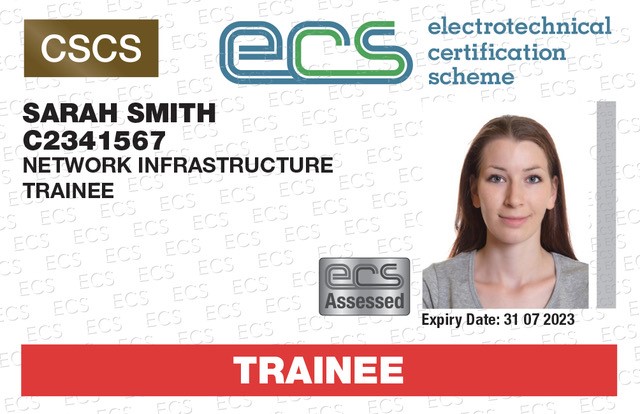
The Network Infrastructure industry’s new Occupational Qualification Structure leading to Electrotechnical Certification Scheme (ECS) Card recognition comes into play on 1 January 2021. From this date onwards, all new (initial) applications must comply with the Structure, and there are cards already available that recognise all levels of Network Infrastructure occupations, including Network Infrastructure Assistant, which includes the requirement for a Network Infrastructure Assessment, and Network Infrastructure Installer Gold Card. From 1 July 2021 all card renewals will also need to meet the requirements of the new Occupational Qualification Structure. The new Structure has been developed by an industry wide working group formed of the Electrical Contractors’ Association (ECA), the Joint Industry Board (JIB), SELECT, CNet Training and a large group of employers, and follows the launch of the Network Cable Installer Apprenticeship Standard. Setting the benchmark for new entrants to the market at Level 3, it crucially addresses the need to recognise professionals currently in the workforce that already benefit from hands-on experience, previous education and training and industry recognised qualifications. Jay Parmar, Chief Executive of the JIB, says: “The new pathway clarifies the differences in education, training and experience for those already in the industry, and sets out a route for those entering the network cabling infrastructure industry. The JIB is delighted to have been involved in what we believe will mark a significant upturn in professionalism and competency in the Network Infrastructure industry.” Martin Smith, International Lead – Network Infrastructure at CNet Training, comments: “The introduction of the Network Cable Installer Apprenticeship means that the long-awaited defined educational routes for both new starters and existing workforces are now in place. A formidable collective effort has gone into this new card Structure and its introduction will help to deliver the necessary skills and qualifications to lead the Network Infrastructure industry into a new era.”