2 November 2026
Product of the Month: Amari Floodlight range by Aurora Lighting
 
24 November 2026
JTL celebrates opening of new Tyneside training centre
 
24 November 2026
LiGHT 26 welcomes record number of visitors to fifth event
 
23 November 2026
Advanced acquires communications specialist Baldwin Boxall
 
23 November 2026
Trades face 'skills squeeze' as apprenticeship demand soars
 

Latest News


Charge point funding boosts need for skilled installers
George White MIET, Senior Consultant (EV Charging and Building Services) at Bureau Veritas, discusses the recent influx of funding for zero emission vehicles. George highlights the distinct need for compliant and competent charge point installers and the maintenance to support this mass roll-out. As the Office for Zero Emission Vehicles continues to deliver on its Local Electric Vehicle (LEVI) fund to support local councils to install EV charge points (EVCPs), more than £185 million has been made available to support 44 additional councils across the UK, which can choose where is best to install charge points in their local area. With such an increase in spending and commitment to the UK’s EVCP infrastructure, it’s vital that safety and risk reduction are prioritised in the installation and ongoing maintenance of these charging units. Installation For charge point installers, competence and compliance are key. An EVCP is an extremely large and high-powered piece of kit and should be treated as such when it comes to safety. Not only do they supply a significant amount of power (rapid chargers supply a minimum of 25kW), they also aren’t being handled by specialist electricians, but by any member of the public who drives an electric vehicle. Electrical installers must also ensure they keep atop of updates to regulations. The most recent updates to the 18th Edition IET Wiring Regulations Amendment 1: (2020) state that residual current devices (RCDs) must be fitted within an EV charging point and tested every six months. An RCD provides additional protection for users safeguarding against electric shock; they connect to the live conductors within the device and will cut off the power if an electrical fault is detected. This works to prevent fatal electric shocks for charge point users and potentially protect against electrical fires. Charge point installation also requires a surge protection device (SPD) to be fitted to guard against overvoltage. Without this fitted as part of an EVCP, the charger could suffer damage from a power surge – and the risks to cars connected to a charge point during an overvoltage is very costly too. Maintenance As well as the proper installation of EV charge points, this mass roll-out of local public EVCPs by the government also increases the requirement to maintain them. Damage to cables and charging equipment caused by wear and tear, weather damage, as well as user error and collisions with charge points, can all increase the safety risks of a charge point to its user. Like any fixed electrical installation, duty holders – in this case, local councils – are required under the Electricity at Work Regulations 1989 to ensure the safety of EVCPs, including maintaining electric vehicle systems to limit the danger to users. Whilst the industry average for inspecting an EVCP is every three years, George always recommends to clients that to reduce potential risk and harm to the user, EVCPs should be tested every year – particularly as they are still a fairly new piece of equipment and the rate at which they are installed continues at rapid pace. The benefits of annual inspections far outweigh the potential risks caused by faulty or damaged equipment. What can Bureau Veritas offer? Bureau Veritas is an independent authority able to support the transition to EVs. Its Electric Technical Services team can offer consultancy around design and technology feasibility, specification, programme management, regulatory compliance and testing and inspection of the final installed charge point. Bureau Veritas recently supported Bawtry Town Council to launch a tender process for contractors to install charging stations in the town. With no technical expertise or understanding of its own, the Council commissioned Bureau Veritas’ electrical specialists to provide ongoing impartial and independent consultancy throughout the selection process to ensure effective specification and installation.

Knightsbridge unveils market’s most powerful USB socket
Delivering faster and more efficient charging for modern devices, the 13A SP Switched Socket with Dual USB-C (65W Dual Fastcharge) from Knightsbridge is claimed to be the UK market’s most powerful dual socket featuring USB charging. The socket features fast charging dual USB-C outputs that can deliver up to 65W total power. Users can charge two devices simultaneously at 45W and 18W, or power a single device at the full 65W without any need for bulky adaptors. Rather than split power between ports, the 65W Dual Fastcharge model ensures optimal performance even when charging multiple devices. Supporting USB-PD (Power Delivery) and PPS (Programmable Power Supply) protocols, it provides universal compatibility with smartphones, tablets and laptops. At the core of the socket’s performance is GaN (Gallium Nitride) technology which achieves over 94% efficiency while reducing energy loss and heat. This makes this product an energy-conscious choice without compromising on device charging speed or reliability. Designed with a single pole switch, outboard rocker and twin earthing points, the socket combines functionality and style. Its retrofit- and installation-friendly design simplifies upgrades without extensive rewiring. With Over Voltage Category III suitability and ErP standby power consumption of just 0.1W, it offers versatility and energy efficiency. To complement a wide variety of settings, the 13A SP Switched Socket is available in four styles: raised edge square, raised edge round, curved edge and screwless designs. Each option blends seamlessly with different interior aesthetics, ensuring the socket suits both modern and traditional environments.  Built with premium-grade metals for durability, the socket includes advanced safety features such as overheat and overload protection, ensuring peace of mind for users. It is an ideal solution for domestic and commercial spaces, offering high-speed, reliable power delivery without compromising on safety or design. This latest innovation exemplifies Knightsbridge’s commitment to continuous improvement. By integrating advanced technology and enhanced performance into every product, it remain remains at the forefront of the wiring accessories and lighting sector.

AI-powered home energy storage line-up unveiled
UK-based cleantech business, Wondrwall, has developed a new AI-powered renewable energy system for homes that it believes is "game-changing". The new all-in-one integrated battery and solar inverter, combined with the Intelligent EV charger, allows users to benefit from 100% of the renewable energy the home generates, significantly reducing bills. The all-in-one battery and solar inverter technology has a long-life and is scalable to a capacity of over 25kWh. Due to the modular design, installation times are halved improving the commercial economics of the new hardware. The accompanying intelligent EV charger, at little over the size of an A5 notepad, is compact, untethered and available in 7kWh and 22kWh options. Fully integrated with Wondrwall HEMS, the charger is tariff-aware and allows uses to not only charge with free solar energy but also negatively priced electricity for users on certain time-of-use tariffs. For ease-of-use, charging is handled through one consistent UI in the Wondrwall app and additional security features include innovative fingerprint-enabled technology. Wondrwall states that the unveiling of these products marks a "significant milestone" for the sector. Representing the next generation of residential energy storage, the all-in-one battery and intelligent EV charger - when combined with Wondrwall Energy Service Contracts (ESC) - can be installed in most UK new builds, alongside in-roof mounted solar PV, with zero upfront cost to housebuilders. Mark Lufkin, Chief Product Officer of Wondrwall, says, “The integrated battery and solar inverter, and the intelligent EV charger, are set to shake up the residential energy storage market. “When paired with Wondrwall’s market-leading HEMS solution, these new products are truly at the cutting-edge of residential energy storage. They offer safe, high-power charging, longer battery life, a modular design for easy expansion and quick installation. Both units are IP rated for external installation and to protect from dust and rain. “With our AI-powered air source heat pump unveiled just last month redefining what the industry perceives to be possible for low carbon heating efficiency, we believe these next two products represent the next generation of residential energy storage. It’s an exciting time for us at Wondrwall and we are delighted to be able to present these products for the first time.” Wondrwall’s proprietary Home Energy Management System (HEMS) is able to utilise 20,000 separate data points, including weather forecasts, to anticipate needs and reduce costs automatically. The system also has the ability to charge cars and home batteries when prices are at their lowest or even negatively priced. The flipside is also true, with Wondrwall’s system automatically selling electricity back to the grid for the highest possible price when users have a surplus. In December, Wondrwall unveiled its ‘game-changing’ AI-powered air source heat pump (click here for our original story on this development), which seeks to redefine what is possible in terms of low carbon energy efficiency. Daniel Burton, Wondrwall Founder and Group CEO, comments, “The launch of this new range of AI-powered, energy storage and intelligent charging devices not only represents the increased value Wondrwall offers the housebuilding industry and new home buyers; but it is also a clear demonstration of the businesses commitment to driving innovation forward and delivering the products and services required to achieve deep and meaningful climate impact.” For more from Wondrwall, click here.

Installation of consumer units
Consumer units are common to almost every premises. For such a commonplace piece of equipment, there remain many areas of concern with their installation. In this  article, Jake Green, Head of Technical Engagement with Scolmore Group, considers some of the factors to be considered for both surface-mounted and recessed consumer units. All consumer units are, by definition, a distribution board suitable for operation by ordinary persons. The standard to which all consumer units conform is BS EN 61439-3, and this standard applies to any consumer unit whether it is surface-mounted or buried within the fabric of the building. Beyond the requirements of BS EN 61439-3 there are additional requirements to be considered in BS 7671 and Building Regulations. Requirement B3 of Approved Document B1 (Domestic) covers the internal fire spread of structures. The intention of B3 is, amongst other things, to ensure that load-bearing structure withstands the effects of fire without the loss of stability, that openings in fire-separating elements are protected to maintain continuity of the fire separation, and there is inhibition of the unseen spread of fire and smoke in cavities. Regulation 527.1.1 (Precautions within a fire-segregated compartment) in BS 7671 requires that the, ‘…risk of spread of fire shall be minimised by the selection of appropriate materials and erection in accordance with Section 527.’ Furthermore, in domestic premises, Regulation 421.1.201 requires consumer units conforming to BS EN 61439-3, and similar switchgear assemblies, to either have their enclosure manufactured from non-combustible material or enclosed in a cabinet or enclosure constructed of non-combustible material. It is because of this regulation that consumer units in the UK are made of steel. The installation of both surface-mounted and recessed consumer units must take account of these requirements. Cable entry for surface-mounted consumer unit Cables entering a surface-mounted consumer unit either from the top or bottom do not breach any requirements found in the Building Regulations. However, Regulation 416.2.2 does require that the horizontal top surface of a readily accessible barrier or enclosure has a degree of protection of IPXXD or IP4X. All other live parts must be behind enclosures or barriers providing at least IPXXB or IP2X (416.2.1). Surface-mounted consumer units do not need to be ‘sealed’, typically with the use of intumescent seals. Cables entering from the rear of a brick/block-built wall require no sealing against fire spread from within the consumer unit as no fire risk exists. However, an installer having cables entering the rear of a surface-mounted consumer unit installed on a stud wall is likely to have caused a significant breach of the building fabric. Whilst a stud wall is unlikely to be load-bearing, it may be acting as a fire barrier. Where such a breach is within a stud wall, and a fire barrier has been breached, the building fabric may no longer inhibit the spread of fire to the degree necessary and an intumescent seal may need to be considered for the rear entry knockout. Cable entry for recessed consumer unit As with a surface mounted consumer unit installed on a brick/block load-bearing wall, a recessed consumer unit requires no sealing other than that required by Regulation 416.2.1 (IPXXB/IP2X). This is because all cables entering the consumer unit are buried within a wall which is inherently fire-resisting, and so no additional precautions are required. Where a recessed consumer unit is installed within a stud wall which acts as a fire barrier, care should be taken to ensure that the consumer is sealed against the spread of fire. Whilst the risk of fire is small, the consequences of such a fire could be grave and so additional precautions should be taken. Conclusion There is no uniform approach to the installation of a consumer unit. Care should be taken to meet the requirements of the Building Regulations, as well as the relevant parts of BS 7671. This article was published in the January 2025 issue of Electrical Contracting News.

Hanwha Vision launches Wisenet Access Control System
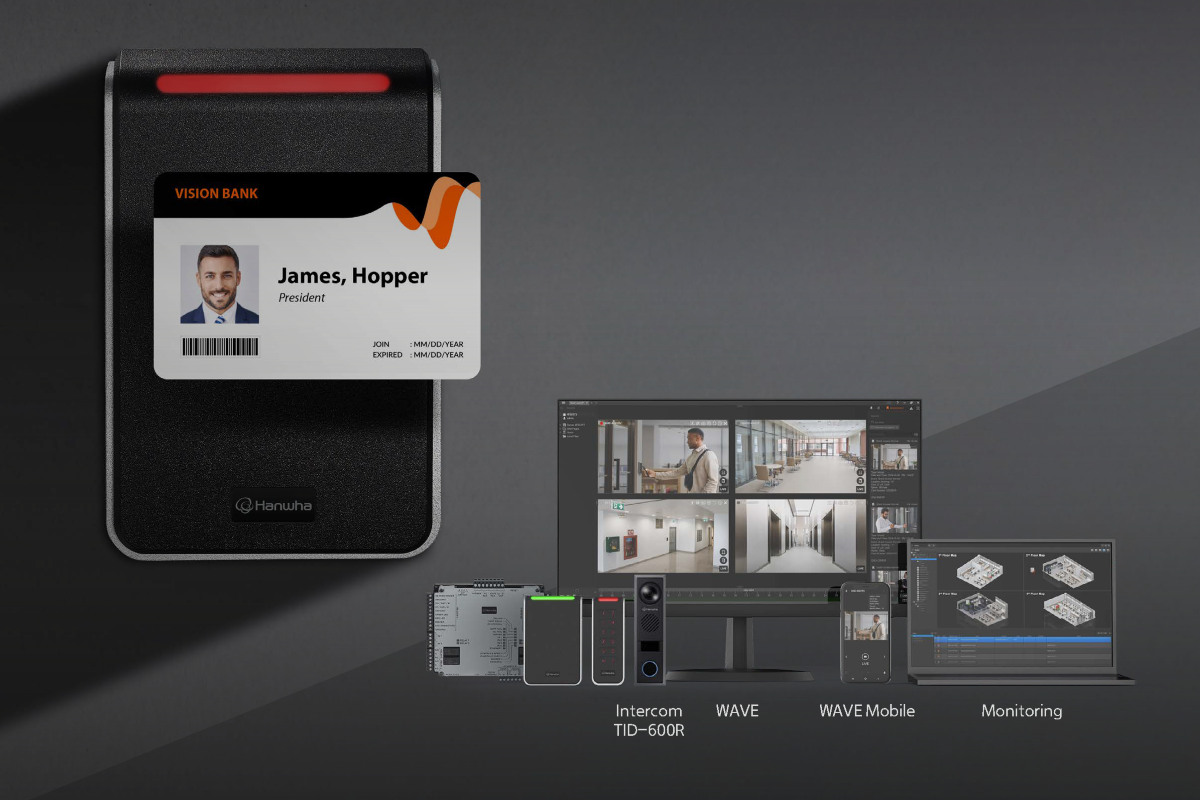
Hanwha Vision, a global vision expert, has unveiled its Wisenet Access Control System - a product designed to meet the diverse access management needs of small-to-large enterprises and buildings, while seamlessly integrating video surveillance monitoring, for a complete security system. The system comprises intelligent door controllers, readers, alongside a powerful software suite, to bolster business operations. Unifying access and video surveillance The Wisenet Access Control System integrates with Hanwha Vision’s Wisenet Wave and SSM video management systems, delivering a unified solution for real-time access control and video monitoring. • Real-time monitoring and control: Operators can effectively manage access points remotely via the WAVE interface or the mobile app, while simultaneously viewing live video feeds to improve situational awareness. An intuitive interface in Wave offers remote relay output control, door access and the ability to clear door forced alarms each with a single click of an icon. • Event overlays for instant verification: When an individual accesses a site, WAVE overlays crucial information - such as a person’s access time and location - onto the video feed. • Bookmarking for critical events: The bookmark feature allows operators to save significant events; for example, a forced door or unauthorised access, for further investigation. Access control for enhanced security The solution offers a robust set of features that provide building managers and companies with peace of mind that their sites are secure. • Comprehensive door management: During emergency situations or security incidents, operators can remotely lock, unlock, and reset forced door alarms to keep staff and visitors safe. • Flexibility and convenience: Operators can control third-party conventional products, including electric gates, sprinklers, lighting, for further convenience and flexibility. • Interlocking door management: Designed for high-security environments, such as banks and control rooms, the Wisenet Access Control System can manage two connected doors, ensuring that when one door is open, the other remains locked. • Anti-pass back security: The system prevents unauthorised access by ensuring users cannot share access cards to gain entry through the same point. • Lift access control: The solution supports access control for up to 128 floors, making it ideal for large buildings in which managing entry points is crucial for security. Improving situational awareness through reporting The Wisenet Access Control System optimises operational efficiency and improves situational awareness through instantaneous updates to the user interface of access activity, as well as powerful reporting features. • Mustering reports for safety: During fire or evacuation events, users can utilise mustering reports to determine if there are still people remaining in the building. • Real-time event notifications: Operators receive email alerts for alarms or critical access control events, improving response times and overall situational awareness. • Dual-person access: The solution allows for dual-person authentication, where entry is only granted when more than one authorised person is present with valid credentials. This is ideal for securing environments that require dual verification for access. The Wisenet Access Control System offers a tiered licensing structure designed to scale with business growth. The lite version includes six doors, while the standard licence supports up to 32 doors. For larger facilities, the professional licence manages up to 256 doors, and the enterprise licence offers unlimited door control, ensuring flexibility and scalability for businesses of all sizes. The solution supports Open Supervised Device Protocol (OSDP) for readers, biometric solutions and mobile access, to offer modern, secure access methods tailored to businesses’ specific needs. Furthermore, it is easy to configure and set up, allowing managers to quickly implement the solution. The Wisenet Access Control System from Hanwha Vision offers a unified system for access control and video surveillance. With an easy-to-configure setup and scalable licensing options, the system is designed to meet the needs of businesses of all sizes, to enhance security, boost operational efficiency and improve situational awareness. For more from Hanwha Vision, click here.

MCS certifies new wind turbine product
MCS (Microgeneration Certification Scheme), the UK’s quality mark for renewable energy technologies, has welcomed its first certified small wind product in more than four years. Ryse Energy’s G-11 wind turbine, certified through product certification body, the British Board of Agrément (BBA), has become the only MCS certified wind product currently on the Scheme. With applications in agriculture, as well as commercial and community energy projects worldwide, the G-11 includes features such as a low noise output, remote data-logging and control features, and robust safety measures. Achieving MCS product certification can help to assure suppliers, installers, regulators and consumers that a product and its manufacturing process meet rigorous standards for safety and performance, in line with UK regulations. Richard Caldow, Managing Director/CEO Europe and Americas at Ryse Energy, says, “Obtaining MCS product certification for the G-11 wind turbine further emphasises not only our commitment to MCS standards and quality, but also highlights the track record of the product in the marketplace. This certification will allow our customers to access the Smart Export Guarantee Scheme, therefore providing confidence and a guaranteed, government-backed income from their wind turbine investment. “Interestingly, more than half of our new enquiries are from customers looking to combine wind with their solar PV system to provide year-round energy security. Both technologies complement each other – with solar typically excelling in summer, and wind energy covering the darker, winter months. It highlights wind’s important role in the decarbonisation of the UK by harnessing the infinite free resource, and it is this combination of multiple renewable energy sources that we believe is the future of microgeneration.” Katy Roberts, Sales & Marketing Director at the BBA, adds, “The BBA is proud to provide MCS certification for a range of renewable technologies. As with all BBA product certification, the Ryse Energy wind turbine and its manufacturing process underwent a rigorous assessment to demonstrate that it meets the appropriate standards of performance required by current regulations. Congratulations to Ryse Energy on their achievement.” According to data from the MCS Data Dashboard, there have been over 5,000 certified small wind installations across the UK since records began in 2008, with 11 installers certified to install the technology. Alex Hughes, Head of Scheme at MCS, comments, “The certification of the G-11 will help to boost confidence in small wind and increase installation numbers across the UK. “We’re pleased to have a certified wind product on our Scheme and look forward to seeing the role it plays in strengthening confidence in small wind as a reliable renewable technology. It’s been a challenging few years for small wind, so we hope that this certified product can lead to a new wave of growth in the UK. “While small wind uptake remains relatively low, the MCS technical Working Groups are proactively updating our Standards to support future growth in the sector. Recently, we published updates to The Wind Product Standard (MCS 006), The Wind Installation Standard (MIS 3003), and The System Performance Estimate Standard (MCS 033).” For more from MCS, click here.

Zumtobel introduces explosion-proof high-bay luminaire
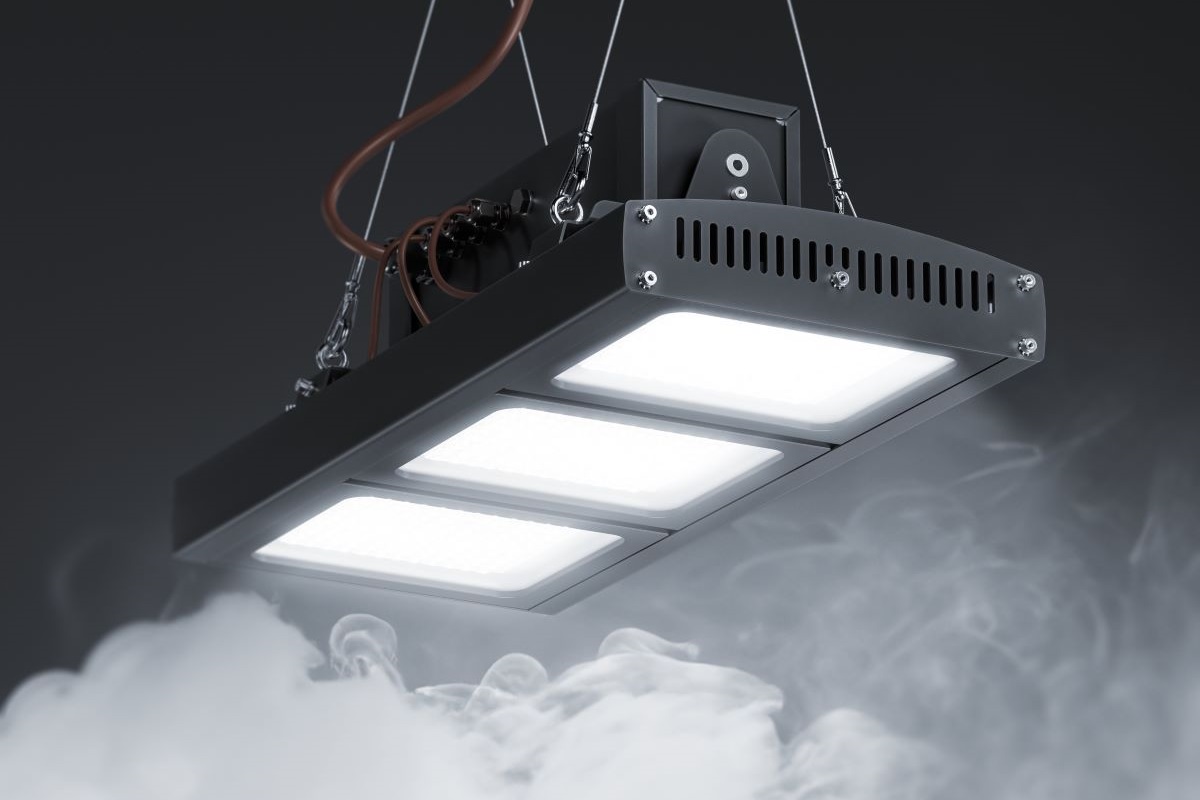
In industrial environments where explosive gases or dust pose a risk (ATEX Zone 2/21), lighting must meet high safety requirements in two ways. Firstly, luminaires must be robust and certified for use in the Ex Zone. Secondly, they must ensure good visibility with high-quality light, thus enabling safe navigation. Zumtobel is able to fulfil these requirements courtesy of EXDURA, its new high-bay luminaire. EXDURA was specially developed for extra-large industrial halls with high ceilings, where safety and uniform light distribution play a key role. The high-bay luminaire is optimised for heights of up to 15 metres and, with a high luminous efficacy of up to 41,500 lumens at up to 179 lumens/watt, also illuminates large areas uniformly and efficiently with a colour rendering index of CRI+80. The ATEX luminaire, therefore, reliably provides natural-looking light in warehouses, production facilities and energy plants. With its high-quality aluminium housing, tempered safety glass cover and excellent heat dissipation, EXDURA is designed for robustness and durability. The high-bay luminaire’s extreme resilience is reflected in its IK10 impact resistance rating and IP66 protection rating, which ensures high resistance to dust ingress and even powerful water jets. Extreme ambient temperatures from -40°C to 70°C are no problem, Zumtobel states, and even after 100,000 operating hours, the high-bay luminaire can still deliver 80% of its light output. With its higher protection level, EXDURA complements the EXTONA damp-proof luminaire, which is also explosion-proof. As an all-rounder for harsh environments with up to four luminaire modules, different light distributions, and lumen packages, EXDURA can be tailored to the specific needs of the industrial operation. The optional bracket for mounting on the ceiling or on a wall provides additional flexibility. This extra feature allows EXDURA to be swivelled by up to 180 degrees in 30-degree increments. On request, a dimmable electronic ballast is available as part of the standard equipment so that EXDURA can be controlled via DALI. For more from Zumtobel, click here.

Save the date: ECN Awards 2025
The ECN Awards 2025 will take place on 27 November 2025 at the Heart of England Conference and Events Centre in Coventry, following glowing feedback from previous attendees.   Widely regarded as the electrical industry’s event of the year, the awards provide a unique opportunity to reconnect with colleagues, forge new connections, and celebrate the sector’s top achievements in a spectacular setting. The electrical contracting industry continues to lead in innovation, striving for improvements in safety, efficiency, and sustainability across all sectors. The ECN Awards 2025 honour these remarkable efforts and accomplishments, showcasing the very best the industry has to offer. Located in the heart of the country, the Heart of England venue is easily accessible via the M1, M40, and M6 motorways, as well as by rail. On-site accommodation is available, with additional options nearby - early booking is recommended. Attendees can look forward to an unforgettable evening filled with excellent food, drinks, entertainment, and a lively after-party. "The ECN Awards are a fantastic celebration of the innovation, excellence, and hard work within our industry. Events like this bring the community together to recognise achievements that inspire us all to raise the bar. Congratulations to the organisers for hosting such a memorable and well-executed evening - it’s a highlight of the calendar." Elliott Rothon, Marketing Manager, WISKA UK Details on how to enter will be shared soon. For any inquiries, please contact Carly or Kelly. Mark your calendars and get ready to celebrate the brightest stars of the electrical industry! Check out the photos from last year's event here.

UK installs first smart substation for next-gen power technology
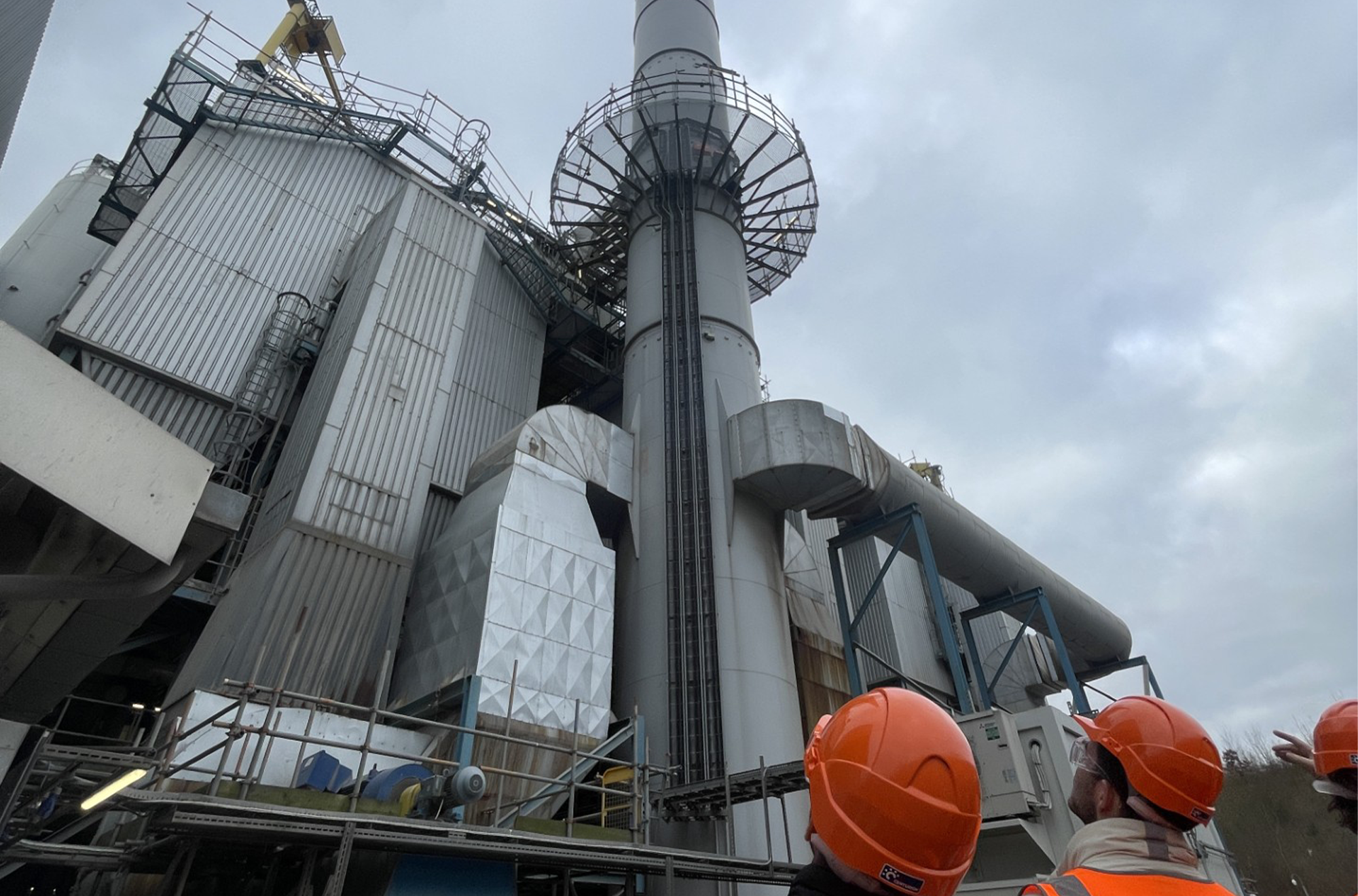
The UK’s first smart electricity substation has been installed in Kent, enabling communication with other sites to direct power where it’s needed most during peak times. UK Power Networks’ Maidstone substation is the first in a series to be equipped to communicate, in an advanced way, to other sites which could allow more distributed generators to connect to the network across the South East of England. UK Power Networks’ innovative Constellation trial is installing powerful computers in existing substations to better analyse power flows, and redirect energy to optimise infrastructure and cater for future needs.  The next-generation digital substations will use AI and machine learning to allow more energy to be safely released onto the network, and help accelerate the UK’s transition to net zero carbon emissions. If the trial is successful, in future, strategically positioned smart substations could allow network operators to dynamically shift the settings, freeing up to 50% of additional capacity when it is safe to do so. Allington Energy from Waste has become the first distributed generator to connect to the new system, with a dedicated smart substation installed at its Maidstone site. A further five smart substations are set to be installed throughout the South East of England as part of the ongoing trial. While these digital solutions are already live on the Constellation platform, UK Power Networks will continue to develop and trial new solutions, unlocking a range of solutions that could easily be introduced onto the platform in future. Luca Grella, Head of Innovation at UK Power Networks says, “This is a groundbreaking innovation for our network, and the first of a series of smart substations which could make a real difference for our customers and the environment. “Enhancing the service provided to our energy-generating customers, and making our network more resilient in the process, will go a long way to preparing our network for a decarbonised future, and will allow more renewable energy resources to connect.” Juergen Schaper, Operations Director (Energy Division) at FCC Environment which owns and operates Allington Energy From Waste says, “As one of the UK’s leading waste and resource businesses, we focus our efforts on generating heat and power from waste that cannot be recycled. Supplying that power to an ever more resilient network via this new smart substation is a positive step forward as we too prepare to support the decarbonisation efforts of the UK.”

Unlocking the potential of Human Centric Lighting
Paul Jones, Sales Director UK & Ireland at B.E.G. UK, looks at the benefits of implementing Human Centric Lighting and what can we expect from this technology over the coming year. The benefits of implementing Human Centric Lighting (HCL) are wide and varied, depending on how and why they are used in buildings. HCL has been proven to help synchronise the body’s internal clock with natural daylight, leading to better sleep quality and overall well-being. Adjusting light intensity and colour temperature throughout the day in offices or classrooms, for example, supports healthier sleep patterns. Light has a significant impact on mood, so HCL is also good for mood regulation. Exposure to bright, blue-enriched light during the day has been shown to reduce feelings of fatigue, increase focus and enhance productivity. Conversely, dimming lights with a warm hue at night can promote a sense of relaxation and help people wind down before sleep. By providing light that mimics daylight, especially in workplaces, schools and healthcare settings, HCL has been shown to boost concentration, reduce errors and improve performance, particularly in environments where people need to stay alert or work long hours. In educational settings, HCL can help students focus better and improve memory retention by aligning light with their natural biological rhythms. Similar benefits are seen in office environments, where proper lighting enhances focus and decision-making. There are also health benefits associated with HCL. Traditional artificial lighting can lead to eye strain, headaches and discomfort, particularly in high-stress environments. HCL’s dynamic light can reduce the negative effects of glare and constant exposure to harsh lighting. In workplaces or even home environments, the right lighting can promote relaxation, reduce stress, and alleviate symptoms of Seasonal Affective Disorder (SAD), which is linked to reduced exposure to natural light in winter months. Many HCL systems are integrated with smart controls that adjust the lighting automatically based on time of day or occupancy. This can lead to energy savings by reducing unnecessary lighting and adjusting brightness and temperature based on need. Energy-efficient lighting solutions like LEDs, which are often used in HCL systems, consume less power, which in turn also reduces the environmental footprint. The technology behind HCL has been evolving rapidly, and there will be continued advancements in the coming years. The next iteration of HCL systems will likely feature more advanced integration with smart home ecosystems, enabling users to customise lighting settings through voice assistants, smartphones or automated schedules. These systems will not only adapt to the time of day but could also factor in user preferences, activities or health data. As AI and machine learning evolve, HCL systems will become more adaptive and personalised. These systems may learn user behaviour, adapting light colour and intensity not just according to time, but also based on factors like productivity levels, room occupancy and even health metrics like sleep patterns and stress levels. HCL could integrate with wearable devices (like fitness trackers) to assess how users are feeling and adjust lighting accordingly for optimal performance or relaxation. Healthcare is another key area where HCL will make significant strides. For example, in hospitals HCL could improve patient recovery rates by providing optimal lighting for rest and healing. In care homes, it can help elderly individuals with cognitive disorders, such as Alzheimer’s, by supporting better sleep and orientation. More businesses will adopt HCL in offices, especially with the growing recognition of the impact of the workplace environment on employee well-being. Expect to see more corporate spaces incorporating dynamic lighting that adapts throughout the day to improve mood, reduce stress and enhance cognitive function. HCL may begin to incorporate more biometric feedback, potentially using sensors to monitor individual responses to lighting, such as changes in heart rate, skin temperature or even facial expressions. Over time, this data will be used to refine lighting systems, making them even more responsive to an individual’s needs. As environmental consciousness grows, expect more HCL systems to use sustainable materials and more energy-efficient technologies. We might see solar-powered lighting options, biodegradable components and lighting systems that adapt to both energy needs and the environment. This article was published in the January 2025 issue of Electrical Contracting News.