2 November 2026
Product of the Month: Amari Floodlight range by Aurora Lighting
 
24 November 2026
JTL celebrates opening of new Tyneside training centre
 
24 November 2026
LiGHT 26 welcomes record number of visitors to fifth event
 
23 November 2026
Advanced acquires communications specialist Baldwin Boxall
 
23 November 2026
Trades face 'skills squeeze' as apprenticeship demand soars
 

Latest News


New kit trialled to keep power supplies reliable
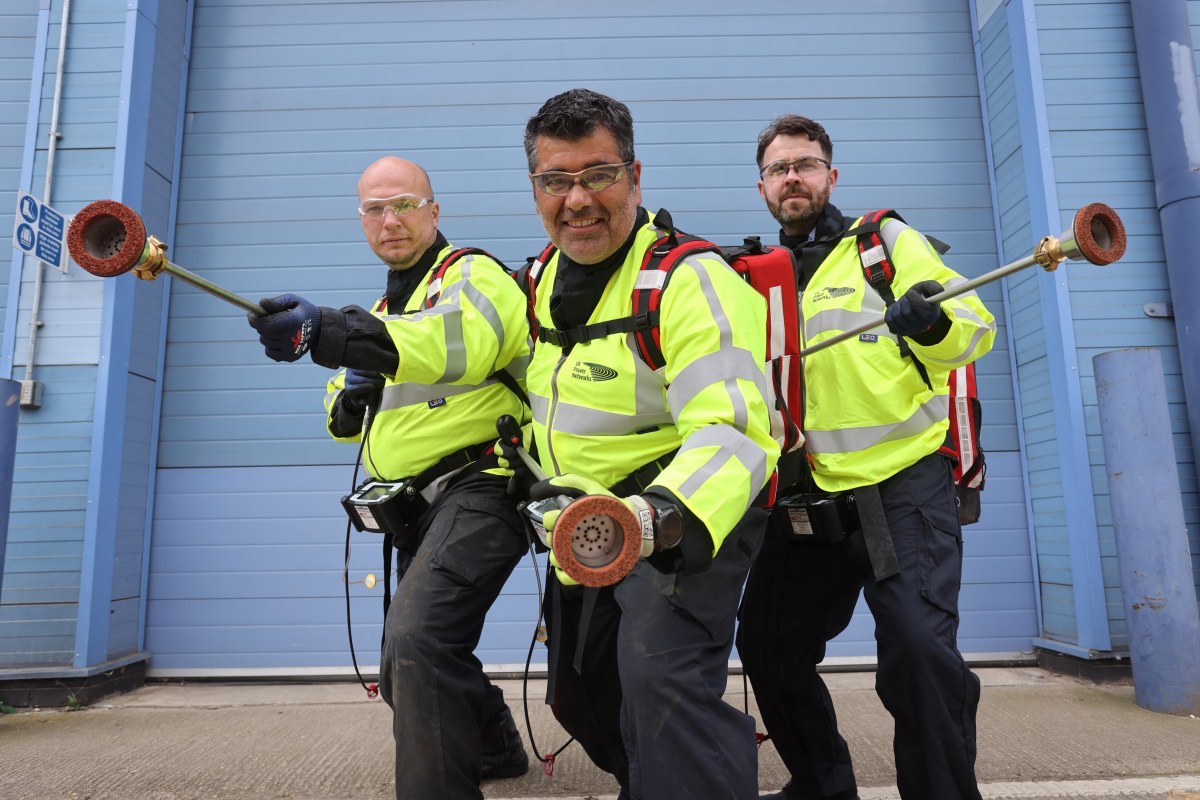
Wearing new backpacks and carrying wands, Surrey power engineers are on the hunt to find and fix the source of power cuts – sometimes before they even happen. The new Fault Sniffer 2 device from Megger - which was put to the test by distribution network operator UK Power Networks in Croydon, Guildford, and Kingston - was found to be a success. As a result, there are now more than 60 devices in use across London, the South East, and the East of England. The equipment sucks in and detects even the smallest traces of imperceptible gas which escapes when a cable develops a fault. It can also tell the difference between that and natural or bio gases. Dylin da Silva, Lead Field Engineer, explains, “It’s a backpack with pipes running to the handle which sucks up the gas from hidden cable faults below ground, which cause power cuts. “This is another potential tool in our extensive arsenal to maintain safe and reliable electricity supplies for local homes and businesses. "The trial explored how the ‘sniffer’ could help us find and fix faults fast, [as well as] reduce noise and disruption from roadworks and be cost-efficient.” Traditional techniques to find underground cable faults include using a hammer-drill to make small holes in the pavement at regular intervals, then inserting a sniffer probe to find gas released by a fault. It is claimed the equipment can give accurate fault locations from readings as low as 10 parts per million for the type of gas released by a cable fault. UK Power Networks, which distributes power supplies across the South East, London, and the East of England, operates more than 144,000km of underground cables. The company says it is always exploring new and innovative ways to ensure safe and reliable power supplies for the 20 million people it serves. The equipment is used proactively to try to intercept power cuts before they occur, as well as quickly tracking down faults which have caused power cuts. Kerry Burdett, Megger’s UK Territory Manager for Cable Fault Location, Testing, and Diagnostics, says, “This innovative product has proved to be very successful finding underground cable faults quickly and accurately. "Not having to drill into the ground means some of these faults can even be found during the night without disturbing residents. The product has been a huge success across Europe in helping to get the power back on efficiently.” The trial was funded by Surrey Lane Rental Fund. Matt Furniss, Cabinet Member for Highways, Transport, and Economic Growth at Surrey County Council, comments, “Surrey is one of only four highway authorities in England to operate a Lane Rental Scheme. "Since its inception in April 2021, the Surrey Lane Rental Scheme has proven to be a valuable asset in managing roadworks and minimising disruption across the county’s busiest roads, with £5.481 million generated from the scheme to fund a range of local road improvements. “We were pleased to support UK Power Networks with the development of Fault Sniffer 2 which will minimise disruption to residents in Surrey and elsewhere in the country.” For more from UK Power Networks, click here.

Upskilling route for Domestic Electricians in development
Domestic Electricians who have qualified via the Domestic Electrician apprenticeship or Experienced Worker Assessment will soon have a new training route to broaden their skillset and become recognised as an Installation/Maintenance Electrician. The Electrotechnical Skills Partnership (TESP), a not-for-profit organisation that provides skills training and development programmes for the electrotechnical industry, is currently working with awarding organisations and NET on a process that will involve Domestic Electricians completing a series of bridging units covering knowledge and practical assessments, involving robust workplace experience to develop occupational competence across the full scope of installation and maintenance activity, before undertaking a NET end assessment of competence. It will not be a shortcut to becoming an industry-recognised Installation/Maintenance Electrician, neither in time, scope of work, nor quality, and it will be fully mapped to ensure parity of standards and content. TESP will oversee the process to ensure eligibility checks and rigour at all stages. Access to this upskilling route will only be available to those who have qualified to the industry standard through the Domestic Electrician apprenticeship in England or the Domestic Electrician Experienced Worker Assessment. “Domestic Electricians are now rightly recognised as industry professionals in their own right with a dedicated occupational standard, apprenticeship programme, and aligned experienced worker assessment route,” says Ruth Devine MBE, TESP Chair. “This bridging process will provide a progression pathway for those with the opportunity to undertake a broader scope of work, following a robust, tailored upskilling route benchmarked against the same standard as the Installation and Maintenance Electrician apprenticeship.” There will be industry consultation on this new bridging process during the last quarter of 2025, with delivery planned from early 2026. For more from TESP, click here.

'Developers must explain net zero benefits better'
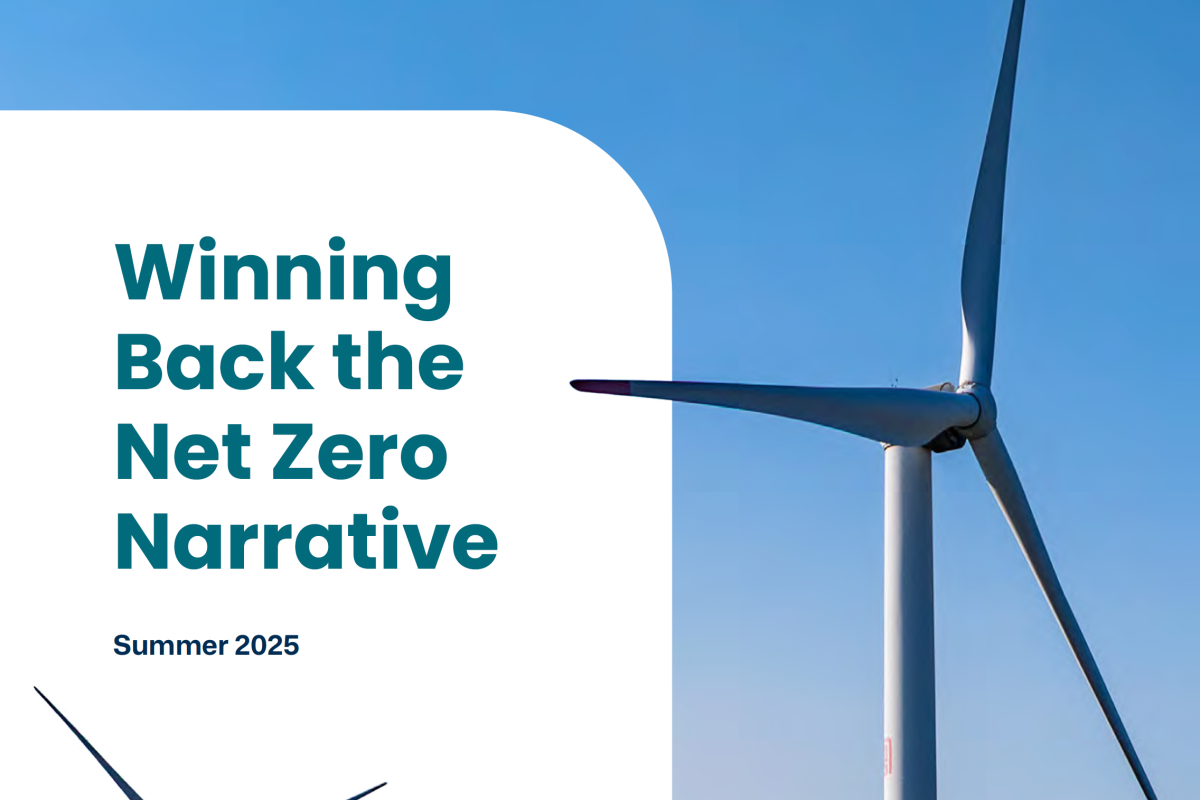
Almost a quarter of the UK public reportedly struggle with the concept of 'net zero,' and nearly three-quarters hold no strong opinion on projects that support net zero but disrupt daily life. This is according to a new report by Copper Consultancy and Keele University, which spells out the major opportunities – and risks – facing those seeking public support on net zero projects. The new report – Winning Back the Net Zero Narrative – calls for a shift in how developers communicate about net zero projects, shifting to an emphasis on highlighting local benefits and tangible impacts and being more transparent about potential disruption. The report draws on a nationally representative survey of over 1,500 adults in Great Britain, carried out in Spring 2025 by BMG Research. The findings highlight a significant knowledge gap, with just 53% of respondents correctly identifying the definition of ‘net zero,’ and one in four (24%) admitting they had no understanding of the concept. Meanwhile, 73% of people expressed they only somewhat approved or disapproved – or held no strong opinion / didn’t know – in relation to net zero projects that will impact people’s day-to-day lives. Just over one in four people held a ‘strong’ view either way, with 18% strongly supporting such projects and 9% strongly opposing. This helps explain why nearly half (47%) of respondents struggle to connect net zero ambitions with their everyday lives. Messaging which only focuses on national climate goals may fail to resonate with large sections of the public. Despite polarised debate in the media, the report finds widespread apathy towards net zero. This indifference means a large risk exists, with the potential for misinformation or a lack of understanding of what net zero means could sway public opinion on net zero projects. To address this, the report highlights several recommendations for building local support. Building out the public argument for such projects simply past the benefits to the green transition is vital. Prioritising messaging around how such projects benefit local communities directly, especially in ways which aren’t immediately obvious – such as improving wellbeing – are critical. Martin McCrink, Managing Director at Copper Consultancy, argues, “Net zero is critically important but the delivery of it does not yet enjoy universal support – but there is support for investment in our infrastructure. "Large swathes of the population have no strong view on net zero. It’s a positive in the sense people can still be won over, but it also spells danger on the risks of misinformation. “Developers have a golden opportunity to reframe discussion on projects which deliver net zero by focusing on the range of reasons investment is needed - and the benefits it will bring - as well as the impacts, mitigations, government objectives, and targets.” More broadly, the report suggests that rooting projects in key national issues – such as economic development – will help make the case even stronger for net zero projects. Alongside this, developers must explain how broad outcomes around net zero will positively impact people’s day-to-day lives, as well as proactively engaging with the ‘climate disengaged’ cohort to wade off potential misinformation or detraction of projects due to disruption.

Marshall-Tufflex releases new Meter Box Hockey Sticks
Marshall-Tufflex, a UK manufacturer of cable management products, has introduced a new range of Meter Box Hockey Sticks, designed to provide a secure and durable method for routing electrical cables from the cable duct to the meter box. Manufactured from PVC-U, the new Meter Box Hockey Sticks would be suitable for both internal and external use and are compatible with most domestic electric meter boxes. The product is available in two sizes - 38mm and 44mm - and each unit measures 1,450mm in length. Marshall-Tufflex’s latest addition to its cable management portfolio is manufactured to BS EN 61386-1 and BS EN 61386-21 standards, ensuring compliance with industry requirements and aiming to provide reliable performance across a wide range of domestic electrical installations. Martin Russell, Group Product Manager at Marshall-Tufflex, says, “High-quality and reliable Meter Box Hockey Sticks are the latest addition to our extensive range of cable management products. "It means electrical contractors can now select more from us to get the job done. Our growing portfolio features metal trunking, cable ladders, cable trays, wire basket systems, and so much more.” The new range is now available to the UK electrical market. For more from Marshall-Tufflex, click here.

TRILUX, Sweco deliver circular lighting upgrade in Maidenhead
TRILUX, a manufacturer of professional lighting systems, has partnered with Sweco UK to deliver a circular lighting upgrade at the consultancy's Maidenhead office. With the intention of bringing a more sustainable, energy-efficient, and visually comfortable lighting solution to the space, the project involved upgrading old fluorescent luminaires installed in multi-service chilled beams on the first floor. A circular collaboration The collaboration was, according to TRILUX, underpinned by shared values around climate responsibility, circularity, and the creation of better environments. Both Sweco and TRILUX say they are committed to the United Nations Sustainable Development Goals and see the transition to a circular economy as key to addressing climate and resource challenges. This shared ambition shaped the project’s approach, particularly in minimising waste through the luminaire refurbishment. TRILUX’s approach to circular economy enabled Sweco to retain and upgrade many of the existing luminaires, avoiding unnecessary waste and delivering carbon savings compared to a full luminaire replacement. Designing with sustainability in mind A successful mock-up helped secure the project, with TRILUX presenting a customised trial luminaire that it claims "modernised the appearance and performance of the original fittings." Outdated louvres were replaced with micro-prismatic diffusers, aiming to enhance glare control and visual comfort while preserving the architectural integrity of the space. Conor O'Donoghue, Operations Director at Sweco UK, comments, “This project demonstrates the impact of thoughtful design and strong collaboration. "At Sweco, we aim to lead by example when it comes to sustainability. By reusing and refurbishing rather than replacing, we not only minimised waste but improved the quality of the office lighting for our team. "TRILUX supported us every step of the way, ensuring the results met both our operational needs and circular economy objectives.” A blueprint for future projects The refurbishment, according to the company, marks a milestone in TRILUX’s mission to support clients in making the shift towards a circular economy. For more from TRILUX, click here.

'UK’s rooftop solar success depends on smarter grid'
The Government’s plans to mandate rooftop solar panels for all new-build homes under the upcoming Future Homes Standard have been widely welcomed as a step forward for achieving the UK’s net zero goals. However, while the benefits to consumers and the climate are clear, Ben Taylor, Net Zero Consultancy Team Lead at EA Technology - a provider of electrical asset management technologies for utility networks - points out the long-term implications of an increase in large-scale rooftop solar deployment across the UK on last mile electricity distribution grids. In particular, Taylor warns that without proper monitoring and modelling of distribution grids, these benefits could come at a cost. He explains, “Rooftop solar can play a vital role in decarbonising the UK’s energy system. However, we need to also ensure that our local last mile electricity networks, particularly low voltage infrastructure, can manage the volume and variability of solar generation that new homes could soon produce. “If small groups of houses are built without upgrades to local infrastructure, there’s a real risk of voltage issues. Electric vehicle charge points, for instance, are extremely sensitive to voltage. High levels of solar export could trigger a spiral effect where voltage keeps rising, causing devices to trip or fail altogether. “A key part of the solution lies in active monitoring, forecasting, and responsive grid management. Accurate, in-depth visibility of what’s happening in real time on last mile distribution networks will help operators and enable them to take a proactive approach to planning for the future. “This includes modelling how energy will be used within different demographics, installing smart transformers that can adjust voltages dynamically, and putting the right upgrades in place before the pressure builds. “Beyond the technical concerns, the issue of fairness must also be considered. As rooftop solar becomes more common in new housing developments, there is a risk that lower-income households, particularly those in flats or older properties, could be left behind. “People who can afford to buy new homes will benefit from lower energy bills. But if they’re also contributing less to the shared costs of maintaining the network, everyone else could end up paying more. Unfortunately, this means there’s a real possibility of deepening social divides in access to affordable clean energy.” Taylor also points to emerging commercial models, such as smart local energy systems (SLES), which could help manage decentralised energy more efficiently at a local level. But he warned that collaboration and forward planning are essential. “If we get it right, we could enable things like micro-balancing of local grids, battery sharing, and new service providers to help manage the flow of energy. But that will only work if everyone involved, including developers and regulators, are aligned from the start.” “We’re continuing to explore these challenges through forecasting future network investment and identifying where action is most urgently needed. The UK is pushing forward with solar adoption, and rightly so, but it’s clear that infrastructure investment, fairness, and flexibility will be just as important in this transition.” For more from EA Technology, click here.

4,300+ UK jobs now demand building performance skills
According to new research from Uswitch, a comparison and switching service, the UK’s shift to clean home energy is accelerating and it’s opening the door to thousands of green job opportunities. Energy Performance Certificate (EPC) data shows a 145% rise in the proportion of homes listing a heat pump as their main heating source since 2020, alongside a 129% increase in homes with solar panels and a 36% rise in wind turbine installations. This rapid uptake of low-carbon technologies is fuelling demand for skilled workers who can install, maintain and optimise these systems. From solar and heat pump engineers to retrofit assessors and building performance experts, the technologies appearing on EPCs today are directly linked to some of the fastest-growing careers in the UK’s green economy. Job search data reflects this growing interest. Online searches for heat pump engineer roles have risen by 29% in the past year, with similar growth seen in thermal insulation engineer (28%) and solar panel installer (11%) searches. Strategic green roles are also on the rise: sustainability analyst searches are up 30% and sustainability manager searches are up 23%. Employers are actively recruiting to meet this demand. More than 4,300 UK job adverts mention “building performance,” while “energy management” (2,430) and “clean technology” (2,427) appear in thousands more. Leadership and compliance skills are also in high demand, with over 1,000 listings each for terms like sustainable development (1,320), environmental compliance (1,197), and sustainable business (1,405). Salaries for green roles are often competitive, reflecting the technical expertise required. HVAC technicians top the chart at £41,358, followed by thermal insulation engineers (£39,536) and solar and wind engineers (£39,447). Even newer roles like retrofit assessor (£38,216) and sustainability consultant (£36,789) offer attractive earning potential. Heat pump installer roles, a key entry route into the sector, average £24,300. Ben Gallizzi, Energy Expert at Uswitch, comments, “The way we heat and power our homes is evolving, bringing new opportunities in green jobs and skills. “From heat pump engineers to sustainability analysts, there’s growing demand for people who can help make homes cleaner and more efficient. And with solar, wind, and insulation tech becoming more mainstream, now’s the time to plug into a career that powers real change. “It’s also important to remember that making green savings doesn’t always mean installing new technology, simple changes in how we use energy or switching to greener tariffs can make a real difference.”

Signify named FIFA 'Preferred Provider for Floodlights'
Signify, a Dutch multinational lighting corporation, has been selected as a 'Preferred Provider for Floodlights' by the global governing body of association football, FIFA. As a FIFA Preferred Provider (FPP), Signify satisfies a range of technical, product, production, and system performance criteria. The company will also work with the FIFA Quality Programme to support ongoing research and development in the field of sports floodlighting, with the aim of advancing future technical standards. Signify’s stadium lighting systems are designed to enhance the match experience for players, spectators, and broadcast audiences. High-quality floodlighting plays a role in supporting technologies such as video assistant referee (VAR) systems, goal-line technology, and optical tracking systems. In addition to core functionality, Signify’s systems can be used to provide lighting effects for fan engagement before, during, and after matches, such as synchronised light shows at major events. Through its Preferred Provider status, Signify offers access to a portfolio of lighting technologies, including: • Arenavision LED gen3.5 – A pitch-lighting system offering high light quality, thermal management, and a long service life. It is compatible with Signify’s Interact Sports Professional lighting management system, enabling remote control and scheduling. The system complies with international broadcasting standards for all sports. • OptiVision LED gen3.5 – A floodlighting system for both simple and complex sporting venues. It aims to provide uniform lighting while minimising spill light. When paired with control systems, it can reportedly deliver energy savings of up to 65%. Both systems can be centrally managed across an entire stadium, including the pitch, exterior façades, and hospitality areas, helping venue operators improve overall efficiency. Signify floodlighting has already been deployed at several high-profile venues, including Stadion Feijenoord in Rotterdam, where a new Arenavision system was installed. “This recognition from FIFA, which is responsible for some of the world’s most prestigious and watched sports events, is an important milestone for Signify and a reflection of our leadership in sports lighting,” claims Niels Geven, International Director for Sports and Arenas at Signify. “High-quality illumination is hugely important in modern-day sport, especially top-flight football. It’s vital for both player performance, officiating and broadcasting purposes, and an essential part of the match-day fan experience.” Signify has more than 60 years of experience in sports lighting. It is also the official lighting partner of the Mercedes-AMG Petronas Formula One team. For more from Signify, click here.

UK Power Networks 'turning light into insight'
Solar panels soak up the sun and power thousands of homes, but the scale of the energy they produce has remained hidden behind customers’ smart meters. Now, distribution network operator UK Power Networks is using AI to shine a light on the scale of clean energy generated. Every day, thousands of homes and businesses generate solar energy that never gets formally measured because it happens behind customers’ smart meters. This makes it harder for grid operators to predict energy flows accurately - important for planning upgrades to the network and buying flexibility at the right time, especially on sunny days when solar output surges. To tackle the challenge of making rooftop solar more visible, the ‘AI for Visibility and Forecasting of Renewable Generation’ project, developed in partnership with Open Climate Fix (OCF), uses machine learning to estimate rooftop solar capacity not captured by the grid. The project combines data from UK Power Networks’ Open Data Portal with OCF’s open-source code. By uncovering this 'invisible' energy generated, the project aims to help grid operators make better forecasts and decisions, ensuring money is only being spent where it’s needed and that space is created for low-carbon technologies to connect. The AI-driven project analyses historical weather and satellite data alongside UK Power Networks’ substation measurements to estimate how much solar power is being generated in real time. Uniquely, the model maps rooftop solar generation without relying on imagery. These insights feed into a forecasting model that predicts how much unmetered solar energy will be produced at each primary substation. By the end of 2023, the UK had 20 gigawatts of solar power installed, including 4.2GW on homes. Total solar capacity is expected to grow to 90GW by 2035 — enough to power up to 5 million households. Home solar alone could save people around £2.65 billion a year on energy bills. To ensure Distribution Network Operators (DNOs) have the capacity to support these steps towards net zero, they need to know where solar is being installed and how much power it’s generating. Using AI, UK Power Networks says it can now estimate rooftop solar generation much more accurately than traditional methods. Luca Grella, Head of Innovation, says, “This project is about shining a light on the solar power we can’t currently see. "By using AI to estimate and forecast rooftop solar generation, we’re unlocking a clearer, smarter view of the electricity system — one that helps us plan better, reduce costs, and accelerate the journey to net zero. "We’re excited to uncover what’s been hidden and put that clean energy to work for everyone.” Dan Travers, Co-founder of Open Climate Fix, adds, “We believe that modern technology can provide transformative solutions that will enable a more efficient and cost-effective electricity grid. "Our collaboration with UK Power Networks is the perfect example of how the UK can harness AI to create tools that proactively support the transition to net zero. "We’re thrilled to be partnering with UK Power Networks on this innovation project and look forward to delivering work that will have a direct impact for consumers.” For more from UK Power Networks, click here.

Discover KQ Loadcentre 3-phase distribution boards
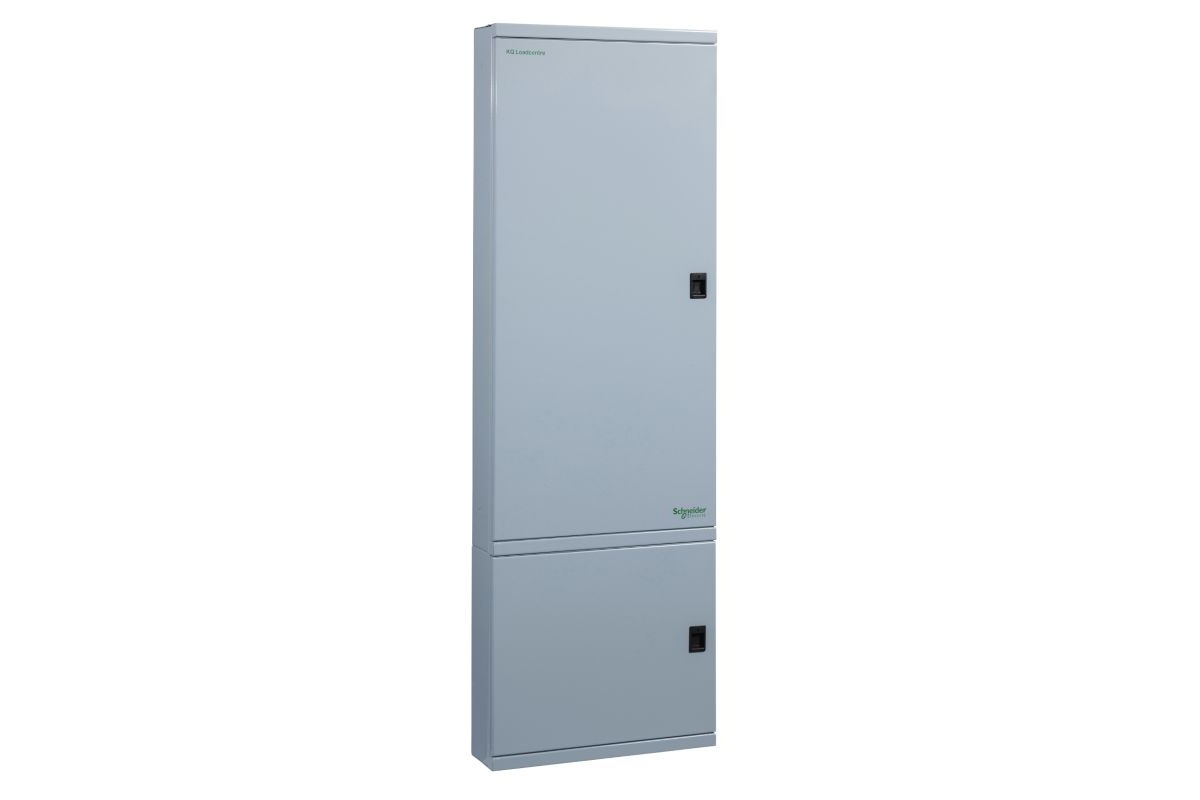
KQ Loadcentre 3-phase distribution boards, available from Schneider Electric, are engineered to deliver performance, reliability, and speed. Designed with modern installations in mind, these boards combine advanced safety features, installer-friendly design, and dependable quality, making them the go-to choice for contractors who demand excellence. These boards are packed with advanced features that streamline installation and ensure long-term dependability. When it comes to electrical distribution, KQ Loadcentre 3-phase distribution boards are engineered to deliver unmatched performance and efficiency. Advanced features for KQ IP2X Encapsulated Busbar System: Safety and efficiency go hand in hand. The IP2X-rated busbar system ensures enhanced protection against accidental contact, making installations safer and more compliant. Plug-On Technology: Say goodbye to time-consuming installations. The innovative plug-on feature allows for rapid fitting of MCBs and RCBOs, cutting installation time by up to 50%. Built for contractors KQuick availability: Deadlines matter, and that’s why these distribution boards are always in stock and ready to ship, helping you avoid delays and keep your projects on schedule. Budget-friendly quality: These cost-effective solutions help you stay within budget while maintaining high standards - which is perfect for keeping your project on budget and on spec. Reliable and industry compliant: Every KQ board is manufactured to meet rigorous industry standards, ensuring your installations are both safe and reliable. Installer-friendly design: Designed with the installer in mind, the boards feature high-quality components and intuitive layouts that make installation faster and easier. Why choose KQ? When your project demands reliability, speed, and value, with a commitment to excellence and a focus on contractor needs, KQ Loadcentre 3-phase distribution boards are engineered to deliver unmatched performance and efficiency. KQ is your partner in power distribution. For more from Schneider Electric, click here.