2 November 2026
Product of the Month: Amari Floodlight range by Aurora Lighting
 
23 November 2026
Advanced acquires communications specialist Baldwin Boxall
 
23 November 2026
Trades face 'skills squeeze' as apprenticeship demand soars
 
20 November 2026
Ovia: Delivering performance and flexibility across every sector
 
20 November 2026
Exclusive: how to prepare a building for future technology
 

Latest News


Scolmore appoints new Area Sales Manager
Scolmore has announced the expansion of its sales team with the most recent appointment of Andy Taylor as the new Area Sales Manager for the Berkshire, Sussex, and Surrey regions. Andy brings a wealth of knowledge and experience to his new role, having worked as a branch manager for several leading electrical wholesalers. Scolmore says that his years of managerial expertise and relationship-building will be key assets as he joins the Click team. He will focus on maintaining and nurturing strong relationships with key customers, as well as identifying new market opportunities, potential customers and key accounts for sales expansion. Andy will also be responsible for driving the demand for the extensive Click wiring accessories range, and will ensure that wholesalers are equipped to supply the growing demand. Through proactive promotion, Andy will be enhancing Scolmore’s market presence and will work to broaden product reach, as well as drive increased sales within his network. For more from Scolmore, click here.

EAL launches new sustainability qualification
EAL has introduced a new qualification designed to equip future engineers with essential skills in sustainable practices. The EAL Level 2 Award in Sustainable Engineering offers learners a comprehensive understanding of sustainable engineering principles, preparing them to excel in a green economy that increasingly values eco-friendly innovation. As industries worldwide shift towards greener practices, there’s a rising demand for engineers with expertise in sustainability. This qualification provides foundational knowledge in sustainable practices, aiming to empower students as leaders in sustainable technology and green solutions. By integrating this award into their programmes, institutions can align their curriculum with modern environmental and engineering standards, ensuring that students are equipped with the skills and knowledge needed to drive sustainable innovation. The qualification consists of one unit and is suitable for learners aged 16-18 and those 19 and older. It covers the importance of sustainability, the application of sustainable design principles to engineering projects, and the responsibilities associated with being an engineer. Regulated at Level 2, it is supported by employers in the engineering sector and is intended for new entrants to the field as well as adults who have recently started their careers or wish to secure a job in the industry.

ECA responds to Budget
Following the latest Budget - which was presented by the Chancellor, Rachel Reeves, on 30 October 2024 - Andrew Eldred, ECA's Chief Operating Officer, issued the following statement: "ECA welcomes the Chancellor’s commitment to invest in industry, housing and electric transport; along with her commitment to refocus levy funding away from Masters’ degrees towards trade apprenticeships, as announced earlier this year. These steps align with our call for a skills system that delivers on the practical needs of integrating green technologies for net zero. "However, this budget lacks crucial detail on how it will support skills access for smaller firms, which make up 99% of the electrical contracting sector. These businesses will now also carry the higher burden of Employer National Insurance and higher apprentice costs. "As outlined in our Charter to Recharge Electrical Skills, a system responsive to local and future demand is essential, as is industry’s role in shaping pathways and qualifications that lead directly to employability. Robust support for green skills is critical to preparing a workforce that can meet the demands of the net zero transition, and we urge government collaboration with industry to close regional gaps and build a strong, skilled talent pipeline." For more from ECA, click here.

ECN's Lighting Supplement OUT NOW!
The 2024 Lighting Supplement is out now and available to read here. In this supplement, Tamlite considers the issue of Dark Sky lighting, which restores the nighttime environment and protects communities from the harmful effects of light pollution. In the article, the company considers what the term ‘Dark Sky’ means for electrical contractors and installers. And with darker nights drawing in, Shyel Stark from Luceco says that electrical contractors should be prepared so that they can make the most of this seasonal opportunity. A range of new lighting products are showcased in this issue, including Hispec’s new versatile lighting range; B.E.G.’s new plug and play sensor for slatted ceilings; the Tenax Pro Series from Knightsbridge; and Hochiki Europe looks at how systems such as its FIREscape Nepto are transforming the emergency lighting landscape. Ovia’s Mike Collins, looks at the DALI protocol, described as the largest wired digital open protocol in the world for lighting, and provides a comparison between DALI and 1-10V. Also in this issue: NVC Lighting reflects on the brand’s recent successes in the world of sustainability while looking forward to the new year; Recolight looks back at October’s Circular Lighting Live; TLW revolutionises kitchen, bedroom and bathroom installation with digital tools; Gewiss considers at what makes ‘good’ lighting design; INTALITE UK gives an overview of what the company can offer to electrical contractors; and Integral LED examines how its Evofire has redefined fire-rated downlights.

November issue OUT NOW!
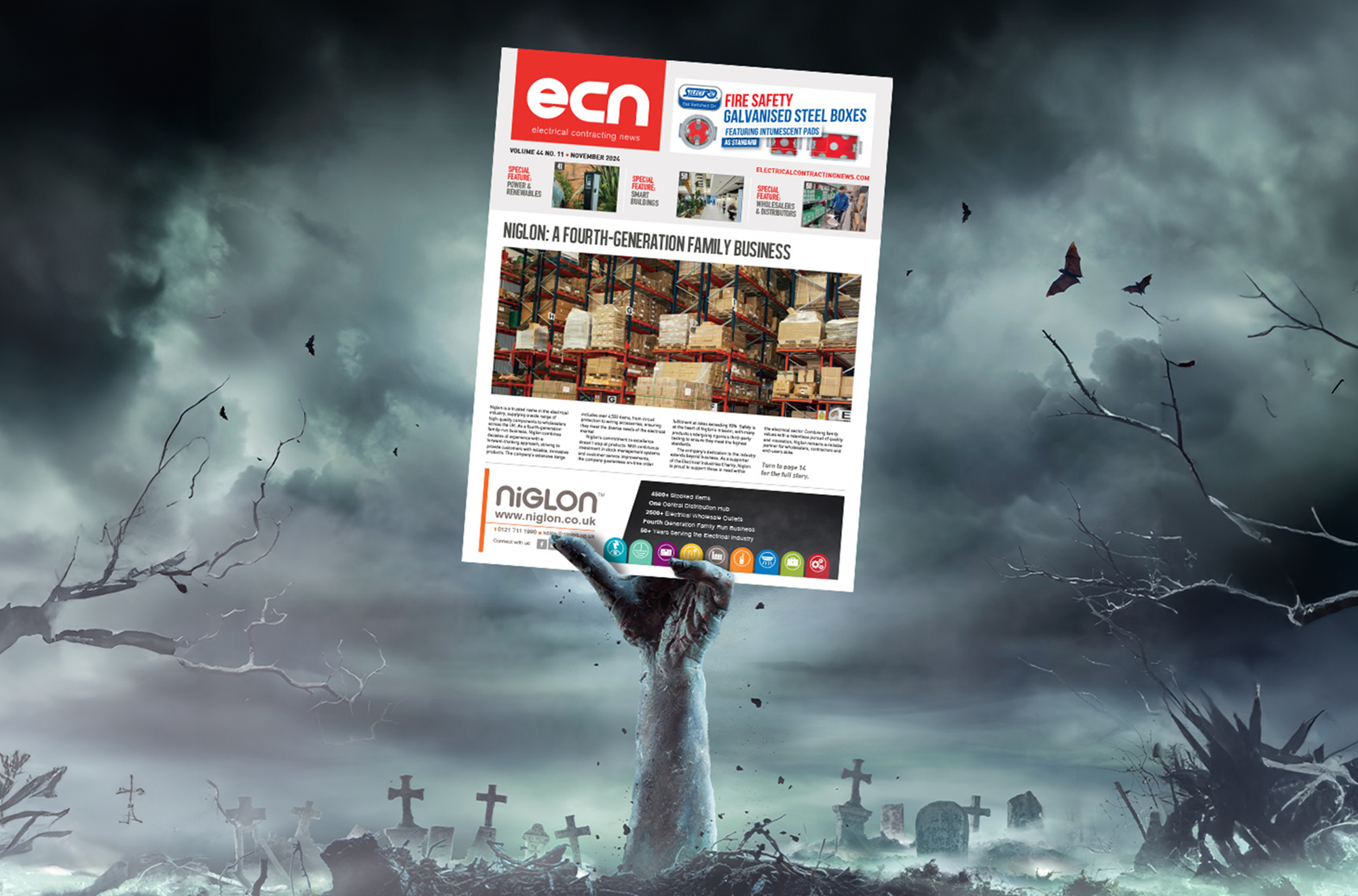
No tricks, only treats coming out of Electrical Contracting News HQ today - the latest issue is OUT NOW!  The wickedly wonderful features in this issue are Cables & Connections; Power & Renewables; SmartBuildings; and Wholesalers & Distributors, plus we bring you the latest industry news and updates. This month's interview is with the devilishly dapper Darren Crannis and you could also win a monster prize in our competition, courtesy of ESP. Read the November issue here.

Schneider provides update on sustainability programme
Schneider Electric has announced the latest results of its Schneider Sustainability Impact (SSI) programme and its financial results for the third quarter of 2024. Recently recognised as the World’s Most Sustainable Company by TIME and Statista, Schneider Electric’s SSI programme monitors and measures the company’s progress across a range of transformative Environmental, Social and Governance (ESG) targets set for 2025. By tracking its sustainability performance and publishing quarterly results, Schneider Electric keeps the momentum for its 11 global and local ambitions and maintains its corporate social responsibility goals. At the end of the quarter, the overall Schneider Electric Sustainability Impact (SSI) score came in at 7.29 out of 10, which is well on track to reach the 2024 end-year target of 7.40, with two major milestones reached: • Schneider surpassed its goal of providing access to green and reliable energy to 50 million people more than one year before its end-2025 target. This was achieved through projects where Schneider’s solar power solutions were installed on public facilities across Africa and India. For example, in Kenya, Nigeria, and India, new hybrid solar solutions were added to health clinics attended by roughly 2 million people, and in India, over 700 schools were powered by clean energy benefitting around 120,000 students. Schneider is now focused on further ramping up these efforts so that by 2030, cumulatively, 100 million people will have gained access to green electricity since the start of the programme in 2009. • Schneider also crossed a key threshold in its efforts to foster learning, upskilling, and development for all generations having now trained over 763,000 people in energy management. For example, Schneider Electric and its Foundation recently collaborated with Enactus, enabling university students from 10 countries to develop entrepreneurial solutions that address social issues related to the energy transition. Furthermore, Schneider made considerable strides in halving the carbon impact of its top suppliers through its Zero Carbon Project, resulting in a 36% reduction of its operational CO2 emissions. This was facilitated by several renewable energy workshops held in the USA, Europe, and China, as well as over 20 specialised webinars aimed at supporting suppliers in their decarbonisation endeavours. “Our achievements this quarter showcase the scale of our impact, with local projects playing a pivotal role in achieving our ambitious goals,” says Xavier Denoly, Schneider Electric’s Senior Vice-President of Sustainable Development. “Despite these great results, our work is far from over. We must further intensify our global decarbonisation efforts to mitigate the effects of climate change, benefiting people and planet.” Find more details about the results and the latest impactful initiatives in the Q3 2024 report of Schneider’s Sustainability Impact programme, including the progress dashboard: Other key recognitions and awards achieved during the quarter: • Recognised as Industry Leader in S&P Global’s Corporate Sustainability Assessment for the third consecutive year • Received the RE100 Changemaker Award from the Climate Group at Climate Week NYC, in recognition of a ground-breaking tax credit transfer renewable energy project in Texas (USA) • Named as a Leader in Verdantix’s Green Quadrant: Building Decarbonisation Consulting • Ranked with the highest Social Benchmark score in its industry by World Benchmarking Alliance, underlining sustained efforts to act ethically and provide and promote decent work and human rights • Recognised for the 'Digital Upskilling for All' programme by Brandon Hall Group’s prestigious Gold Award for Learning and Development For more from Schneider Electric, click here.

Article: Driving innovation in modular support systems
Meeting modern challenges and driving innovation demands a future-thinking attitude, says Carl Jones, President, Cable Management & Protection at Atkore, as the company celebrates its 100th birthday this year. In this article he explores the current landscape for secondary support systems and outlines how the use of prefabricated and pre-integrated designs is a key benefit in reducing complexity and ensuring faster project delivery. In recent years, there has been a significant shift in the procurement and specification of metal support systems and channel products. Where once framing components may have been selected to meet a one-time demand, or procured routinely based on installer preference, today’s customers are demanding a complete engineered solution. This requires suppliers to look beyond the manufacture of individual system components, to integrated solutions which include design, off-site fabrication, on-site assembly and ongoing service support. Adapting to post-COVID-19 industry demands, the booming digital and semiconductor industries, alongside rapidly expanding EV infrastructure, are driving significant growth. Additionally, the residential housing sector continues to build at pace to meet government targets, indirectly fuelling demand – all emphasising the need for resilient, scalable solutions to meet these evolving needs. Cost certainty Traditionally, the installation of support systems involves multiple suppliers, contractors and tradespeople, each adding their own costs and timeframes to a project, which can lead to significant variability in both budget and schedule. Industry needs to seek every advantage to reduce on-site delays. The result sees customers moving to single source supply models, where a sole manufacturer can now handle the entire process - from pre-fabrication to on-site integration. This consolidation reduces the number of parties involved, cutting supply times and eliminating the multiple markups that inflate costs. As a result, costs become more predictable and project managers can more easily adjust their budgets and resources. Speed of installation Time is money, and when it comes to on-site installation, customers need suppliers to meet tight project deadlines, seamlessly. With modern support systems, component parts are prefabricated off-site, meaning on-site labour can be reduced, which often represents a significant proportion of the overall project budget. Compared to traditional stick-build methods, the cost savings can soon add up – helping minimise the number of different trades on site. Space constraints Space is often at a premium and every square foot of a building must be used efficiently. The installation of traditional support systems can be particularly challenging in these environments, as it often requires large amounts of on-site storage and the potential for disruption to ongoing operations. A key benefit of modular systems is their ability to be prefabricated off-site. In the context of a data centre, for example, this means that support systems for cables, pipes and equipment can be built in a factory setting, where conditions are controlled and standardised. These prefabricated components can then be delivered to the site just in time for installation, reducing the need for on-site storage and minimising the amount of space required for construction activities. Additionally, the modular nature of these systems allows for greater flexibility in design and installation. Components can be customised to fit the specific needs of the facility, ensuring that the support system is optimised for the available space. Quality and compliance Gone are the days where industry can simply fit and forget.  Today the traceability of materials and components is crucial for customers and an area of real concern. Put simply, the failure of a single component can have catastrophic consequences and industry cannot afford the risk. With traditional construction methods, the supply chain can be long and complex, involving multiple parties. This complexity can make it difficult to track the origin of materials and ensure that all components meet the necessary standards. In contrast, modular framing systems, when managed by a single manufacturer, offer a much clearer and more direct supply chain. At Atkore Unistrut, for example, every component can be traced back to its source, providing full transparency and allowing for easier compliance with industry regulations. By ensuring that every part of the support system is accounted for and meets the required specifications, modular systems reduce the risk of failures and enhance the overall reliability of the facility. For more from Atkore, click here.

NAPIT issues response to Budget
NAPIT has welcomed measures announced in the Budget on housing and clean energy, but has called for greater clarity around what technology will need to be installed in those new homes. Frank Bertie, Managing Director of NAPIT (pictured above), takes up the story: “We have over 20,000 members working across the electrical, heating, plumbing, ventilation, microgeneration and building fabric trades across the UK domestic, commercial and industrial markets. “Any moves to encourage house building and the take up of low carbon technologies is good for our members, while offering economic benefits and helping with the transition to net zero. We are also pleased to see the government’s commitment to improving building safety and accelerating the remediation of unsafe housing in response to the Grenfell Tower fire. “The Warm Homes Plan will transform homes across the country, making them cleaner and cheaper to run - from installing new insulation to rolling out solar and heat pumps. These are important first steps which will hopefully create opportunities for our skilled members. “However, more clarity is needed around some of the initiatives, particularly on if and when the Government will introduce the Future Homes Standards which will mandate what low carbon technologies are installed in those new homes. “If the Government is serious about meeting its target to build 1.5 million new homes, it seems to make total sense to install solar panels, heat pumps and EV chargers when they are built instead of retrofitting them at a later date adding additional costs and inconvenience to householders.” For more from NAPIT, click here.

Ayça Donaghy appointed to board of LightingEurope
The Lighting Industry Association (LIA) has announced the appointment of Ayça Donaghy, its CEO, to the board of LightingEurope. With over 15 years of experience in the electrotechnical sector along with an Executive MBA from London Business School, Ayça has shown exceptional leadership at The LIA. Her initiatives have focused on sustainability and addressing skills gaps within the industry, coupled with her continued advocacy for comprehensive regulations in the UK. Ayça was also recently recognised in the '40under40' competition, highlighting her impactful contributions and strong communication skills within the industry. Ayça's appointment to the Board of LightingEurope benefits LIA members in many ways, the company states. With her experience and voice on a broad platform, LIA members will gain a strong advocate for their interests, particularly in shaping regulations that impact the sector, and this involvement opens up new networking opportunities for member organisations with key stakeholders across Europe. “We are thrilled to welcome Ayça to our Board," says Elena Scaroni, Secretary General of LightingEurope. "She will bring strong value to our mission with her commitment to innovation and the skills gap." Ayça comments, “I am honoured to join the Board of LightingEurope and to represent The Lighting Industry Association in this role. Together, we can drive innovation and tackle the pressing challenges our industry faces, particularly in alignment with Europe and sustainability. I look forward to collaborating with my fellow board members to advance our shared mission." For more from The LIA, click here.

CEF announces launch of Swarm Hub:One
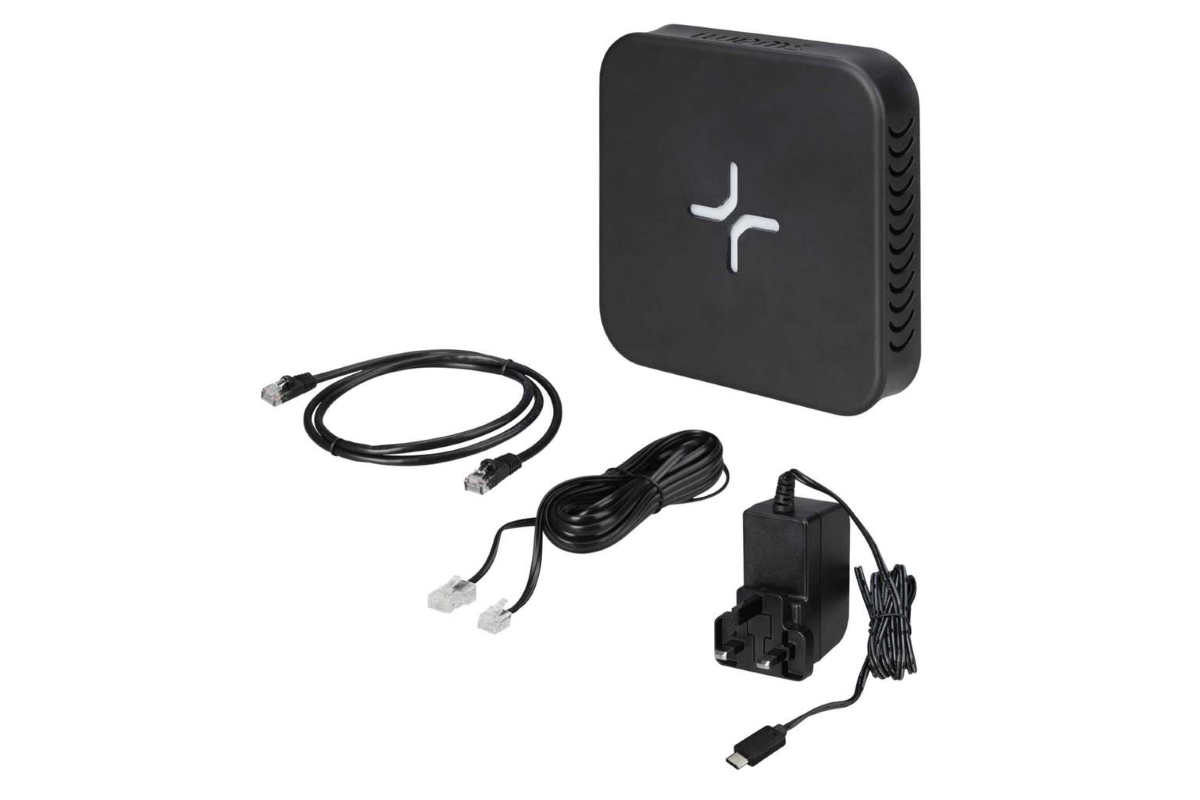
CEF has announced the exclusive UK launch of the Swarm Hub:One, an AI-powered smart energy management system designed to revolutionise energy management in domestic homes. Available from November, Hub:One will be sold exclusively at CEF's website and via its branches across the UK. The Swarm Hub:One serves as an innovative and central control system for home energy management. Using AI-driven energy schedules, it optimises the performance of renewable devices by aligning advanced forecast data with energy tariff data to help customers maximise savings and efficiency. Hub:One also provides advanced solar intelligence, tailoring energy consumption to the homeowner’s specific needs and lifestyle for peak efficiency. By offering Swarm Hub:One, CEF offers electricians a powerful tool that sets them apart in an increasingly competitive market. The Swarm Hub:One boosts both the savings and earning potential of existing solar and battery systems. It dramatically reduces client payback periods for new installations by up to 26%, while earning homeowners a saving of approximately £350 per year. Mike Gadd, CEF Renewables Division Director, says, "Installers are empowered to help homeowners achieve real savings quickly and give them visibility of this through an easy-to-use app. We’re delighted that we are the first distributor in the UK to offer SWARM, allowing system efficiency to be maximised, improve tariff optimisation and saving money – accelerating the benefit renewable energy can offer.” One of the standout features of Hub:One is its streamlined installation. Installers can have the system up and running in just 30 minutes, making it one of the most easily configured energy management tools available. This ease of setup, combined with its user-friendly interface, makes Swarm Hub:One an attractive option for installers, providing a seamless experience that is simple to sell, install, and support. In 2025, Swarm Hub:One will connect to Swarm’s Virtual Power Plant (VPP), a platform that allows homeowners to sell surplus energy back to the grid at premium rates. By pooling energy to meet the grid's flexibility needs, homeowners will have the opportunity to generate additional income by selling their excess energy back to the grid. Anthony Piggott, Founder and CEO of Swarm Energy, adds, “Our partnership with CEF represents a major milestone for Swarm. With CEF’s vast network and industry expertise, it is the perfect partner to help bring this transformative technology to installers. This collaboration ensures installers access our advanced energy management device easily, positioning them as leaders in a rapidly growing market, backed by CEF’s knowledge and expertise. “Together, we are leading the future of energy management, helping installers unlock greater value for their clients while embracing the shift to smarter, more sustainable energy solutions.” Swarm Hub: One will be available exclusively at CEF for £495. For more from CEF, click here.