2 November 2026
Product of the Month: Amari Floodlight range by Aurora Lighting
 
20 November 2026
Ovia: Delivering performance and flexibility across every sector
 
20 November 2026
Exclusive: how to prepare a building for future technology
 
20 November 2026
Smart Energy Training adds electrical apprentices to portfolio
 
19 November 2026
UK Power Networks awards £4m energy flexibility contracts
 

Latest News


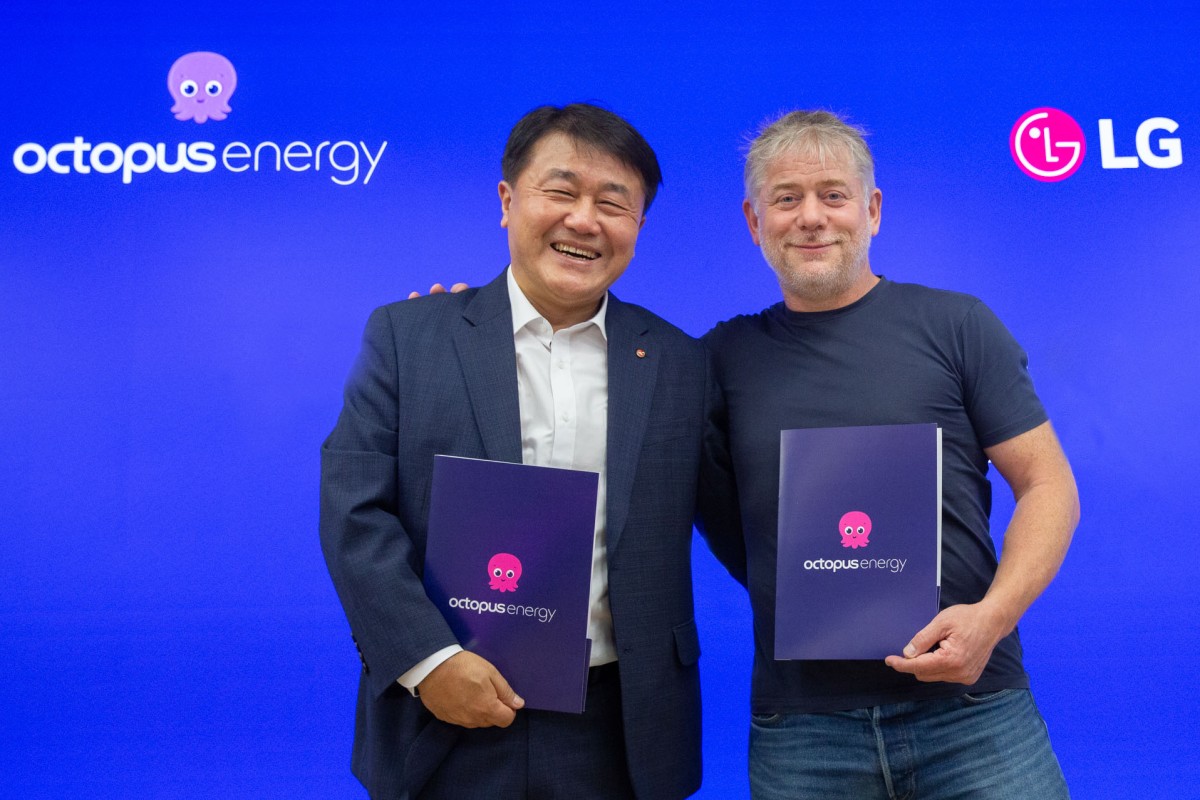
Octopus Energy and LG partner on heat pumps
Octopus Energy, the UK’s largest energy supplier, has announced a partnership with South Korean electronics manufacturer LG Electronics to expand the use of heat pumps and air conditioning systems across Europe. The agreement will see LG’s heating and cooling technology integrated with Octopus’s Kraken platform, which can automatically run devices when energy is cheapest and has a low carbon footprint. The companies say this will help households reduce energy costs and cut reliance on fossil fuels. Heat pumps and climate targets Heating is responsible for around 20% of Europe’s carbon emissions. Governments are promoting heat pumps as a replacement for gas boilers, with the UK aiming for 600,000 installations per year by 2028. Octopus Energy is one of Europe’s largest heat pump installers and has invested more than £50 million in factories, training centres, and research and development. The partnership will launch in the UK and Germany before expanding into other European markets. Over time, it will also cover a wider range of household appliances. Industry comments “Heat pumps are the lynchpin of clean, affordable heating, and LG makes some of the best on the market,” says Greg Jackson, founder and CEO of Octopus Energy. “By plugging them and their air conditioning units into our Kraken tech, we can make them even cheaper to run, giving households an easy way to cut their bills while helping the planet.” Thomas Yoon, President of LG’s Overseas Sales & Marketing Company, adds, “This partnership with Octopus Energy Group represents a significant milestone in our European growth strategy. "We will continue to explore new opportunities that create differentiated customer value and secure sustainable growth drivers in the global market.” For more from Octopus Energy, click here.

ITCAB improves efficiency with Fluke's tools
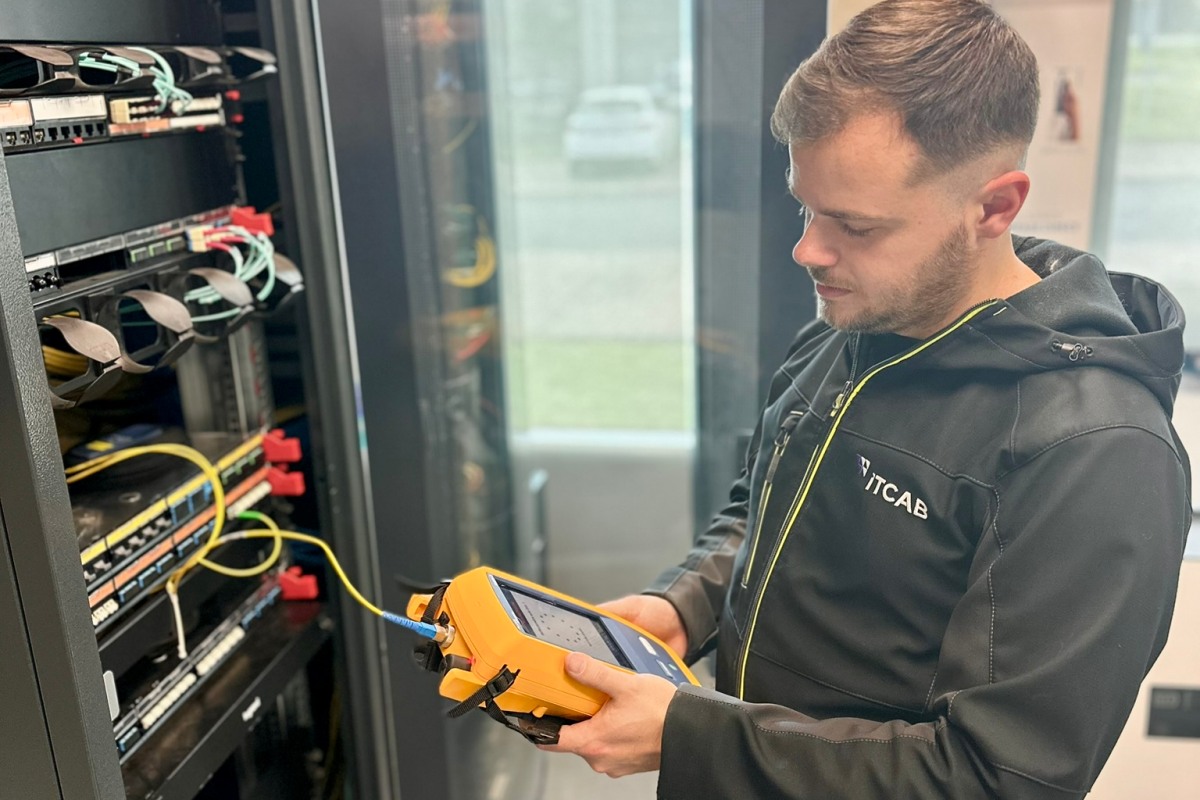
French cabling company ITCAB has reported time savings on large-scale projects through the use of network certification and troubleshooting tools manufacturer Fluke Networks’ testing and certification equipment. Founded in 2022, ITCAB designs and installs low-voltage cabling - including copper and fibre optic systems - across sectors such as defence, healthcare, data centres, and logistics. With installations subject to strict regulatory standards, the company requires tools that ensure compliance, precision, and durability from the outset. Tools in use To support its work, ITCAB uses four Fluke Networks devices: • DSX-5000 CableAnalyzer — for testing RJ45 twisted pair infrastructures, allowing technicians to carry out field measurements and identify potential compliance issues early • OptiFiber Pro reflectometer — for fibre optic networks, offering automated configuration, expert mode, and detailed event mapping • CertiFiber Pro photometer — for certifying fibre optic networks across data centres, LANs, WANs, and telecom systems • MultiFiber Pro — for high-density fibre optic trunk infrastructures with MTP connectors The company also uses LinkWare reporting software to manage diagnostic data, carry out searches, and generate reports for both technical teams and customers. Time savings reported Using this equipment, ITCAB estimates an average saving of 15–30 seconds per test. On projects requiring up to 10,000 tests, this equates to around 10 days of technician time saved. “It’s extremely efficient," says Corentin Cunat, founder and Co-CEO of ITCAB. "Being able to make the right decisions at the right time can really speed up our work. “If we had chosen other products, we would have had many more tasks to manage, which would have slowed down the whole process and increased costs.” Nigel Hedges, Application and Technical Specialist at Fluke Networks, adds, “With rising demand for bandwidth and the constant evolution of technology, efficient testing, certification, and troubleshooting tools have a measurable impact on productivity and customer trust. "Our equipment provides visibility across copper, fibre, and active networks, helping teams streamline workflows and simplify compliance.” ITCAB says it plans to expand its testing fleet to meet increasing customer demand and to maintain compliance with evolving industry regulations. For more from Fluke Networks, click here.

Milwaukee launches new compact drilling tools
Milwaukee, a US manufacturer of heavy-duty power tools and accessories, has expanded its compact drilling and driving range with the launch of three new brushless tools: a percussion drill, a drill driver, and an impact driver. The new models are smaller and lighter than previous versions, designed to boost productivity for professionals working in tight or overhead spaces. Target users include HVAC engineers, MRO technicians, service trades, and carpenters. Compact size, higher performance The brushless motors reportedly deliver faster application speeds and higher torque compared with brushed models, allowing users to complete common drilling and fastening tasks more quickly. • Drill driver – 137mm length, 40Nm torque • Percussion drill – 142mm length, 40Nm torque • Impact driver – 109mm length, 124Nm torque According to the company, all three tools are engineered for a strong power-to-size ratio, making them suitable for demanding tasks in confined environments. Part of the M12 system The new tools are compatible with the Milwaukee M12 battery platform. The system is designed to allow professionals to work a full day on a single battery system, with a focus on durability and trade-specific performance. Milwaukee says the launch underlines its commitment to improving job-site productivity by providing compact, high-performance tools tailored to professional needs. For more from Milwaukee, click here.

Rolec, Connekt secure funding to expand UK EV charging
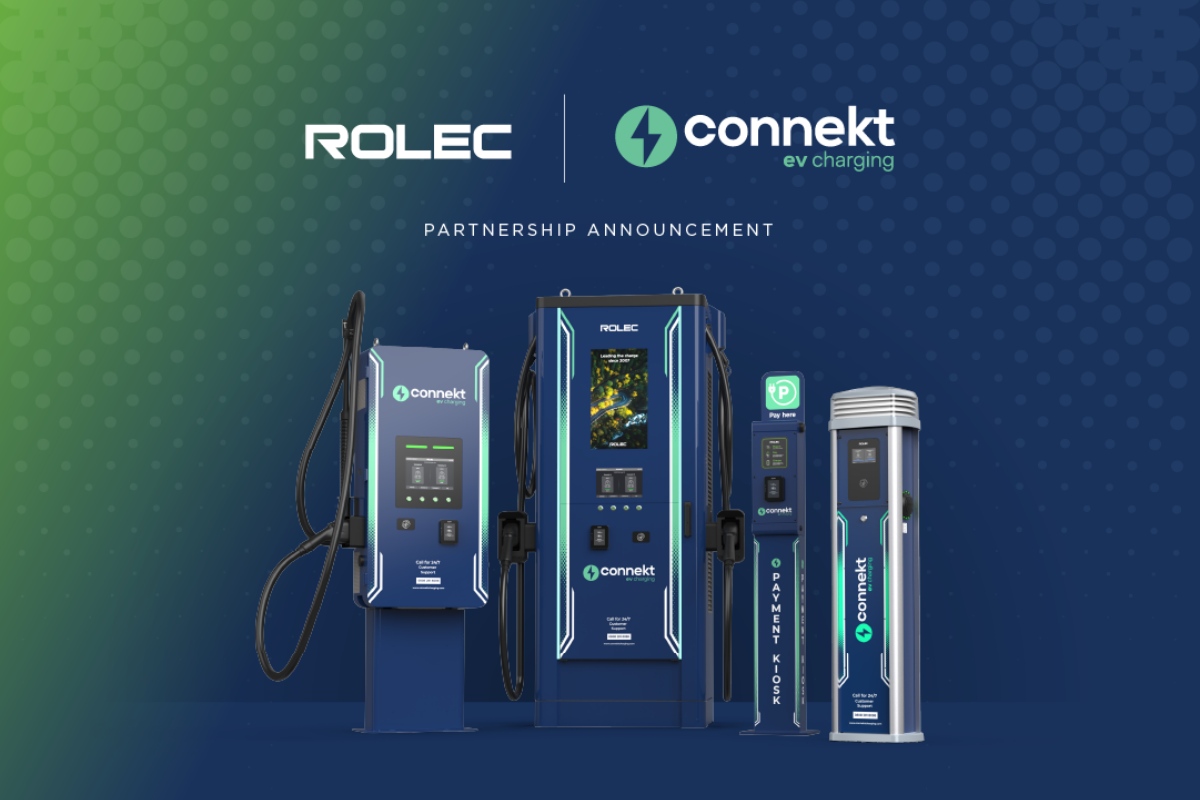
Rolec, a UK manufacturer of EV charging points, and Connekt, a commercial EV charging installer, have announced plans to accelerate deployment of destination electric vehicle (EV) charging infrastructure across the UK, backed by multi-million-pound funding from the GF1 Growth Fund. The companies say the partnership is aimed at addressing one of the most underserved parts of the UK EV market. Of an estimated 70,000 potential sites for destination charging, fewer than 1% currently have charge points installed. Partnership approach Connekt, a Scotland-based EV charging funder, will provide financial support and site assessments, while Rolec will deliver UK-manufactured charging hardware and manage installation through its network of installers. The partnership is targeting locations such as hotels, universities, marinas, and leisure sites. Johnny Manning, founder of Connekt, says, “At Connekt, we see a real synergy with Rolec. Over the past three to four years, we’ve been on an incredible journey building the foundations of a leading charge point operator. "Rolec has been on a parallel journey, and they’ve emerged as one of the true market leaders in the EV charging industry. "Together, we’re bringing something unique to the market with our funded solutions, giving Rolec clients an opportunity to unlock EV charging infrastructure in a way that is both commercially viable and future-proof.” Darren North, National Sales Manager at Rolec, adds, “We are thrilled to be partnering with such a forward-thinking company to take on a major rollout of electric vehicle infrastructure across the UK. "By working closely with the Connekt team, we will be able to bring our combined expertise to a sector with immense potential.” Early progress The companies say installations are already under way, with several charging networks deployed and more sites scheduled for rollout in the coming year. For more from Rolec, click here.

Kew, Schneider establish partnership of sustainability
Schneider Electric, a company concerned with the digital transformation of energy management and automation, has announced a partnership with Royal Botanic Gardens (RBG), Kew. As Kew’s official Energy Sustainability Partner, Schneider Electric will play a core role in helping the world-famous botanic gardens meet its goal to become climate positive by 2030. As a UNESCO World Heritage site with a sizeable footprint, Grade 1 and 2 listed buildings, and high visitor numbers, Kew Gardens faces unique challenges in achieving its sustainability plans and targets. The partnership will see Schneider Electric take a hands-on role, advising Kew on how to develop and deliver its sustainability plan – which includes transitioning away from fossil fuels, reducing carbon emissions, and optimising energy use across its historic and complex estate at both Kew Gardens and Wakehurst, Kew’s wild botanic garden based in Sussex. As part of the agreement, Schneider Electric will provide a dedicated energy optimisation engineer, located onsite and on long-term secondment to Kew, helping to: · Support Kew in evaluating the impact, cost, and priority of energy efficiency, controls, and monitoring projects · Identify, assess, and implement energy-saving opportunities within Kew’s Building Management Systems (BMS) and Heating Ventilation and Air Conditioning (HVAC) plant · Explore available solutions – such as cost-effective electricity use, battery storage, and microgrid opportunities – at both Kew Gardens and Wakehurst The partnership’s projects will begin in earnest with the arrival of Schneider Electric’s consultant on site at Kew Gardens in September. [embed]https://www.youtube.com/watch?v=m9w-CWU3XeA[/embed] Rachel Purdon, Head of Sustainability at RBG, Kew, comments, “We are proud of our commitment to urgently tackling the dual climate and biodiversity crises through everything that we do at Kew. "Our partnership with Schneider Electric marks a major step forward in our sustainability journey. Working together, we can accelerate progress towards our ambitious goals, including becoming climate positive in less than five years. "With Kew’s unique combination of historic buildings, globally irreplaceable collections, and role of inspiring diverse audiences to connect with nature, we face complex and wide-ranging challenges. "Schneider Electric’s expertise and hands-on support will be invaluable; it will help us deliver real, measurable decarbonisation progress across our sites.” Kelly Becker, President of Schneider Electric UK and Ireland, Belgium, and Netherlands, adds, “Both of our organisations are impact makers, united in our vision for a more sustainable planet. "By combining our climate positive partnership, expertise, and energy management and automation solutions, we’re able to take real action to realise a more sustainable future at RBG, Kew. “We also have deep experience with helping organisations like Kew advance their energy resiliency, a growing priority across businesses, utilities, and communities worldwide. "In Kew’s case, maintaining a consistent energy supply is essential to protecting the world’s largest and most diverse botanical and mycological collections for humanity and we’re honoured to be a part of the solution.” For more from Schneider Electric, click here.

ECN September issue out now!
The September issue of ECN is OUT NOW and packed with insights and information on the topics you care about. To read the issue in full, click here. From the Editor Welcome to the September issue of ECN. With the quieter summer months in the rear-view mirror and autumn creeping in, we’re excited to be gearing up for a whole raft of exhibitions coming our way during the month of September – not least Solar & Storage Live, which we're covering in depth in our full show preview. With a record number of renewables being installed in the first six months of 2025 according to MCS, and the Future Homes Standard set to mandate solar panels and low carbon heating in new build homes from 2027, a new wave of opportunities are opening up for electrical contractors. Those with solar expertise will surely be able to diversify their services, boost revenue, and future-proof their business, and it will be fascinating seeing how this unfolds, and what other opportunities this leads to, in the weeks and months ahead. Head to our dedicated Power/Renewables/Solar feature for more. The countdown to the ECN Awards is well and truly on, and we are now less than three months away from this year’s ceremony being held on 27 November. With entries for the awards closing imminently, we’d urge you to get your submissions in as soon as possible – as our expert panel of judges will soon be weighing up the merits of each of the submissions to determine this year’s worthy winners. A limited number of tickets for the ECN Awards are also still available, so grab yours while you still have the chance – and head to electricalcontractingnews.com/awards for all the information you need. In addition to the usual blend of news, views and commentaries we’re serving up in this month’s issue, other highlights include intriguing details on how the climate crisis may lead to a heightened level of repair work for all tradespeople, information on how you can take on the Pu Luong Trek in Vietnam with the Electrical Industries Charity, an opportunity to win a £200 One4All voucher courtesy of Ovia, and more. Enjoy the issue! Simon

Test before touch – it’s not just PEN faults!
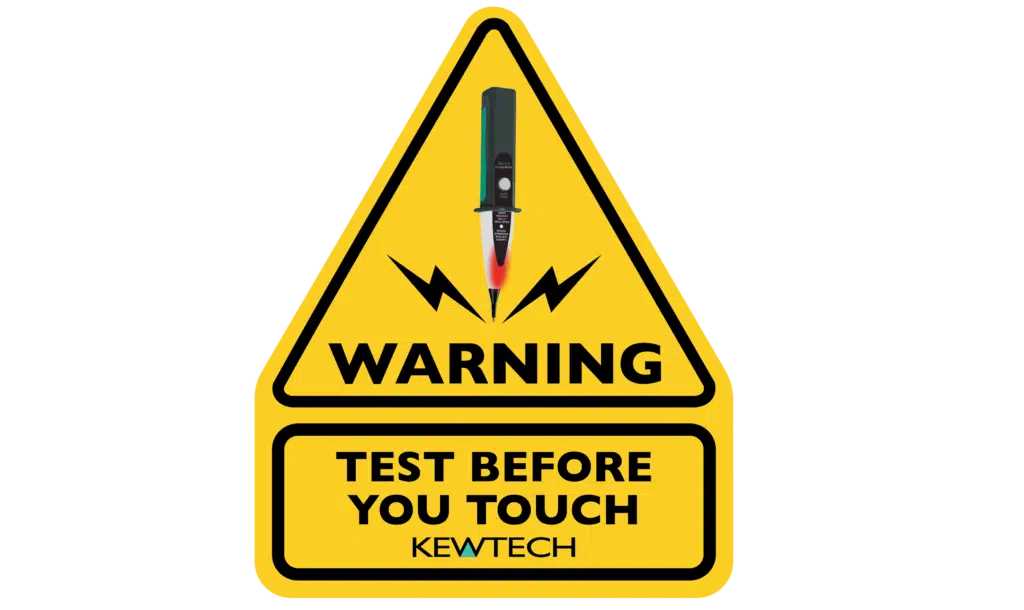
In recent years, there has been increasing concern in the industry regarding PEN faults - a specific type of network fault with potentially lethal consequences. While the rise in PEN faults is being acknowledged and investigated, it’s important to note that these are not the only way that hazardous situations, including Touch Voltage and Diverted Current flow, are created. In particular, there has been an increasing number of incidents where engineers have come into contact with live metallic parts (e.g., metal casings or equipment) during installation or maintenance activities. These contacts can and have led to fatalities. Touch Voltages and Diverted Currents Touch Voltages: This occurs when there is a fault in the system that results in no return path for current (i.e., due to a broken or disconnected earth or neutral, combined with other faulty wiring). As a result, metallic parts (such as a distribution board, boilers or control panel) that are connected to the electrical earth could be raised to a dangerous potential. Diverted Current: This is a more complex fault, where the current may flow through unintended paths (e.g., through earth or neutral conductors). Even though the circuit might appear to be functioning normally, diverted current can present serious dangers. Let’s have a look at a couple of potential scenarios you may come across… Scenario One: The fault is hidden, and the current appears to be flowing correctly in the system, as everything is working, but when measured, it is found that the current is flowing through earth conductors. This can be detected only by measuring multiple points across the earthing and neutral conductors in the installation, (current will always follow the path of least resistance). If not detected, disconnecting cables could break the return path and present a touch voltage hazard. Scenario Two: When we isolate a circuit and prove it dead, everything should measure as being at zero potential; however, where we have multiple cables under terminals within that isolated circuit, we may also have current still flowing through the return path or via the neutral, either through cross circuits or faulty wiring. If proper checks are not performed, engineers could potentially break these return paths when disconnecting cables, creating dangerous touch voltages in the system. Prevention Tip: Use a clamp meter to check current flow, especially when multiple cables are connected to the same terminal. This can help prevent introducing a new hazard when disconnecting cables. Kewtech’s KT5 open jaw current and voltage tester is an ideal safe isolation tool equipping you with non-contact voltage indication, single and two pole voltage indication and current measurement all-in-one. Issues with Current Safe Isolation Procedures: The current safe isolation procedures in place often do not specifically account for or test for touch voltages and diverted current. Even though the best industry practices for safe isolation and proving dead are followed, these two specific hazards are often overlooked. The proving dead process usually involves opening enclosures or testing electrical terminals to confirm that the equipment is not live. However, this step can be potentially lethal if there is already a touch voltage present. Test Before Touch – The Missing Step: The concept of ‘Test Before Touch’ is well-established and often taught to engineers. However, it’s usually focused on high-voltage equipment, and not before entering or touching low-voltage equipment like distribution boards, control panels, pipework, and appliance casings (e.g., boilers or motor casings). In practice, engineers may not always adhere to this guideline, especially when handling parts of the installation that seem to be disconnected or “dead.” They may neglect to check if there is a touch voltage or diverted current present. Testing Equipment for Hazard Detection: Non-contact voltage indicators (such as the KEWSTICK DUO) and single-pole voltage detectors Kewtech’s KT1700) are often used as tools to check for the presence of dangerous voltages, though these only give us an indication that a lethal voltage may be present. Crucially, in the case of a PEN fault or similar, all conductors may be at the same potential, so when measured using a two-pole BS EN  61243-3 voltage indicator, these tools might not effectively identify the risk. In such a scenario, a single-pole device would at least give us that potentially life-saving indication. Will our industry adapt? Industry guidance on safe isolation and proving dead circuits do not typically account for checking for these hidden hazards, as part of the safe isolation process. There is the urgent need therefore to improve safety standards and include testing protocols specifically for touch voltages and diverted current, as part of the standard safe isolation protocol. It is critical that electricians and engineers are equipped with the correct tools designed to detect these issues. The need for a BS EN 61243-3 voltage indicator and proving unit should be accompanied by a single pole detection device and an amp meter as a minimum. With this, it is essential that training programs ensure they are updated to include awareness of these risks and proper techniques to mitigate them. Summary The industry’s focus on PEN faults is undoubtedly important, however, it shouldn’t overshadow the fact that deadly electrical hazards like touch voltages and diverted current are present in many installations without PEN faults. These types of faults are often not checked during routine isolation procedures, leaving engineers at risk. By updating safety protocols, ensuring proper training, and using the right test equipment, these risks can be minimised, leading to safer practices in the field. And remember… Test Before Touch! Andrew Griffiths, GCS Doncaster, in conjunction with Kewtech For more from Kewtech, click here.

Lighting the way to a sustainable future
Phil Brown, Product and Marketing Director at NVC Lighting, discusses the benefits of embracing more sustainable business operations and the impact this can have when electrical contractors are tendering for contract work. As the UK's building and construction industry doubles down on sustainability targets, electrical contractors and engineers have a pivotal role to play - not just in helping clients meet environmental goals, but in transforming their own operations to stand out in an increasingly competitive tendering environment. The shift toward sustainability isn't just good for the planet - it’s also a smart business move. One of the most effective ways electrical contractors can contribute to greener building practices - while saving clients serious money - is through the installation of energy-efficient lighting. LED technology remains one of the most accessible and impactful solutions available today. By switching to LED lighting, commercial properties can cut energy consumption by up to 90%, translating into immediate cost savings and a quick return on investment. But the benefits don’t stop there. LEDs boast long operational lifespans, significantly reducing maintenance demands and replacement costs over time. For electrical contractors bidding on projects, offering LED lighting solutions, particularly when supported by robust performance and energy data, will position you as a future-focused partner capable of delivering both sustainability and bottom-line value. Beyond commercial LED lighting products, smart lighting systems also offer a powerful next step in sustainable electrical design. Controls such as occupancy sensors, daylight harvesting, and programmable dimmers help reduce unnecessary energy use, enhancing both efficiency and user experience. Layered lighting schemes - different zones or lighting 'scenes' that are used for different times or functions - can help further optimise energy use. These solutions ensure energy is consumed only when and where it’s needed, minimising waste while improving flexibility and comfort. Electrical contractors who understand how to work with facility managers and building performance teams to implement intelligent lighting systems will not only help projects achieve their environmental targets, but also gain a competitive edge in tenders, especially where sustainable building accreditations, like BREEAM, are part of the project scope. As the role of electricians evolves alongside smarter buildings and greener standards, keeping skills current is essential. Contractors looking to stay ahead should build competency in control protocols like DALI, Bluetooth and Zigbee, which are critical for integrating lighting with broader building management systems. In addition, a strong grasp of life cycle assessment (LCA) tools, Environmental Product Declarations (EPDs), and RoHS/REACH compliance ensures electricians can support clients in making informed decisions based on long-term environmental performance, not just upfront costs. Familiarity with eco-friendly materials, modular system design, and circular economy principles also plays into the growing demand for low-impact, adaptable electrical solutions. Contractors who bring these skills to the table signal to clients that they're ready to meet - and lead - the green building transition. Despite the opportunities, many lighting projects fall short of their sustainability potential due to a familiar issue: poor early-stage integration. One of the most common oversights in electrical projects is failing to align lighting design with a building’s overall performance objectives at the outset. The result of this can lead to over-specifying light levels, leading to unnecessary energy consumption, excess fittings, and underused lighting control systems. By engaging early and thinking long-term, contractors can create lighting solutions that are both high-performing and resource-efficient. This proactive approach doesn’t just benefit the building - it adds value to your role, showcasing your strategic thinking and strengthening your bid in any competitive tender. Being a sustainable electrician isn’t just about meeting compliance standards or ticking a CSR box. It’s about delivering smarter solutions, lowering lifetime costs, and building trust with increasingly sustainability-conscious clients. Contractors who embrace these principles and design philosophies now will future-proof their businesses, appeal to a broader client base, and open the door to higher-value contract opportunities - especially in public sector work where sustainability is no longer optional. As a leading supplier of commercial LED lighting solutions, NVC Lighting’s commitment to sustainability sits at the heart of our business. Through responsible recycling, sustainable packaging and proactive carbon management, we strive to create a greener future in all facets of our operations, including an extensive range of energy efficient and high-performance solutions. Certified by Carbon Neutral Britain and recognised by EcoVadis for sustainable practices, NVC Lighting has a net zero target of 2025, already achieving a 43% reduction in CO2 since 2022. For more from NVC Lighting, click here.

KNIPEX launches Twistor16 crimping tool
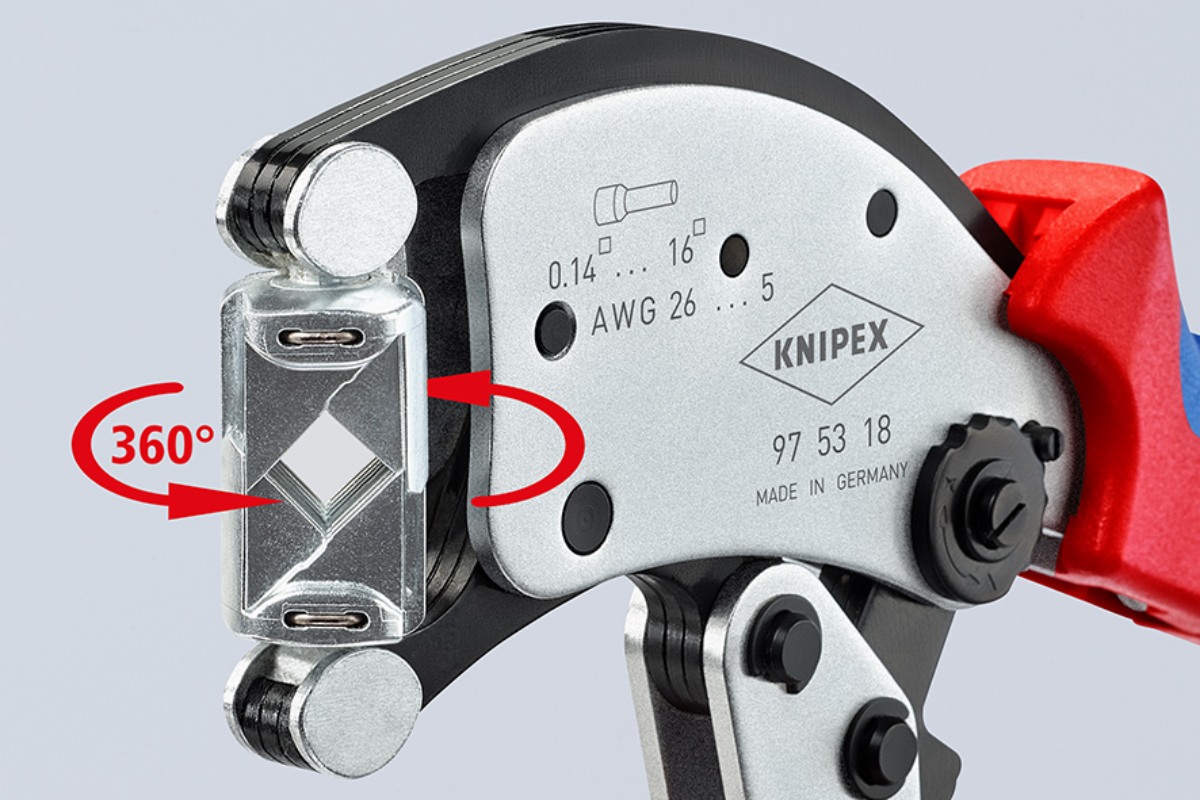
KNIPEX, a German manufacturer of professional hand tools, has introduced the Twistor16, a crimping tool designed for use in confined or hard-to-reach spaces. The tool features a 360-degree rotatable crimping die that locks into eight positions, allowing wire ferrules to be crimped from multiple angles without compromising on pressure or accuracy. Features and functionality The Twistor16 handles wire ferrules from 0.14 to 16mm² without the need for manual adjustment. Its square crimp profile automatically adapts to different cross-sections, and twin ferrules up to 2 x 6mm² can also be processed. An open crimp zone makes it possible to work with extra-long ferrules, accessible from both sides, and a slim crimp head enables easier access between conductors and inside cabinets. The tool uses a toggle lever mechanism to increase force transmission and reduce strain, while maintaining consistent crimping pressure. The pressure is factory pre-set but can be readjusted if required. [embed]https://www.youtube.com/watch?v=4qyqlqX_QT8[/embed] Weighing 478g, the Twistor16 is compact and designed for daily trade use, particularly in installations where space is restricted or access is awkward. For more from KNIPEX, click here.

Carhartt expands Rain Defender workwear range
American workwear company Carhartt has introduced its Rain Defender range of clothing and accessories, designed to provide water resistance for tradespeople and outdoor workers. The products use durable water repellent (DWR) technology to cause water to bead on the surface, offering protection against light rain without the weight of traditional waterproof clothing. The Rain Defender line includes sweatshirts, jackets, vests, and accessories, all intended to remain lightweight and breathable while withstanding daily use. Product features The Rain Defender Loose Fit Heavyweight Quarter-Zip Sweatshirt combines fleece material with a water-repellent finish. It includes a mock neck for warmth and a concealed security pocket inside the handwarmer pocket. For colder conditions, the Super Dux Relaxed Fit Insulated Traditional Coat features a nylon shell with Rain Defender, Rugged Flex for mobility, and Wind Fighter to reduce wind penetration. The coat includes quilt lining, a chin guard, and multiple pockets. The women’s Montana Relaxed Fit Insulated Jacket is made from Carstrong quilted nylon and includes synthetic insulation with a sherpa lining. It also features an adjustable drop-tail hem, storm flap, and secure pockets. Carhartt says the Rain Defender collection extends beyond outerwear, with options including vests, rucksacks, and tool belts. For more from Carhartt, click here.