2 November 2026
Product of the Month: Amari Floodlight range by Aurora Lighting
 
20 November 2026
Ovia: Delivering performance and flexibility across every sector
 
20 November 2026
Exclusive: how to prepare a building for future technology
 
20 November 2026
Smart Energy Training adds electrical apprentices to portfolio
 
19 November 2026
UK Power Networks awards £4m energy flexibility contracts
 

Latest News


The missing piece to achieving airtightness
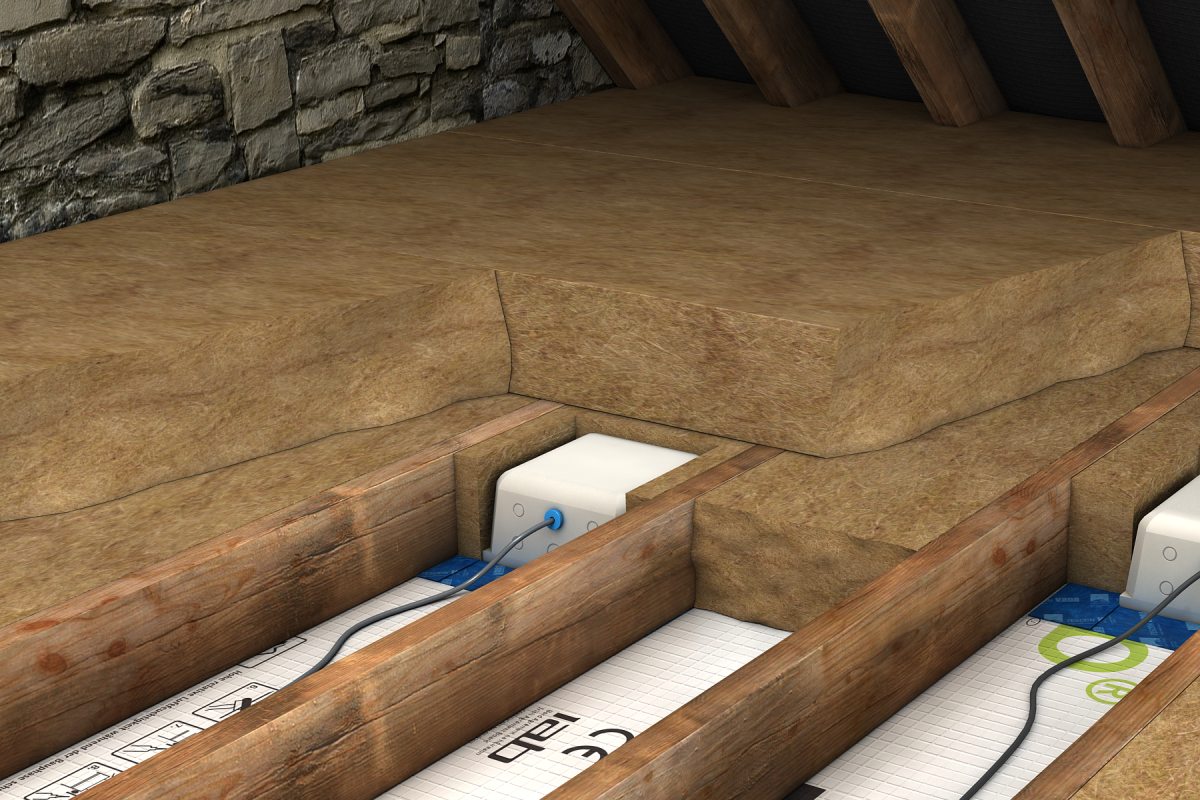
Neil Turner, Technical Sales Manager at Ecological Building Systems, an importer and supplier of eco-friendly building products, explores the challenge of unintended air leakage in homes and highlights a key consideration for electricians working to improve airtightness: “Airtightness is achieved by sealing a building to prevent uncontrolled air leakage. This plays a vital role in reducing heat loss, improving occupant comfort, maintaining indoor air quality, and protecting the building fabric. "Uncontrolled airflow through gaps and holes can compromise these benefits. It leads to significant energy losses, higher heating and cooling costs, and can also allow moisture to enter the structure. This often results in condensation and mould growth, causing health risks and compromising the integrity of the building fabric. "A particularly vulnerable area for air leakage is where services are installed, such as light fittings, ventilation ducts, external sockets, or telecom points. These openings can breach the airtightness layer unless gaps are carefully sealed during installation to maintain the continuity of the air barrier. "As a result, there is growing interest in using downlight protectors as a practical way to prevent air leakage. "Downlight protectors, also known as downlight covers, make it possible to apply continuous insulation over and around a light fitting, which improves the effectiveness of insulation and thus helps meet building regulations. They are designed to reduce air leakage at the point of installation, maintain an airtight seal, and reduce the loss of energy. "In addition, downlight protectors reduce the amount of warm air leaking between rooms. As light fittings can create gaps in the ceiling, this can allow air to escape or infiltrate from other spaces (such as attics or adjacent rooms). If not properly sealed, these junctions may also introduce a cold bridge, a point where a colder surface meets warmer, moisture-laden indoor air, increasing the risk of condensation. "Well-designed downlight protectors prevent this from happening by sealing these gaps, reducing air leakage, and improving indoor air quality. They also eliminate the transfer of dust, allergens, and pollutants between different areas of the building. How do downlight protectors support airtightness? "A solution that is gaining increasing popularity among electricians is the use of Optime Downlight Protectors. "These airtight protectors are specifically designed to form a reliable seal around downlights, preventing air leakage and helping to maintain energy efficiency. "Optime Downlight Protectors help to address any issue of air leakage and therefore minimise condensation risk in ceiling spaces, supporting a drier and healthier indoor environment. "Our Optime range comes in a variety of sizes to suit different types of membranes and insulation depths. Each protector also includes pre-formed entry points to guide cable placement, simplifying the sealing process and ensuring compatibility with airtightness tapes and grommets. This attention to detail helps ensure a consistent and reliable airtight seal across the ceiling plane. "To further enhance the continuity of the thermal layer, Optime Downlight Protectors can be fully covered with insulation. This helps to maximise thermal performance and minimise heat loss, contributing to lower energy usage. "When selecting downlight protectors, it is important to choose those which offer ease of installation, therefore saving time and labour costs on each project. It is also advisable to choose downlight protectors which can be fixed directly to an airtight membrane or layer for added reassurance. "In addition, these protectors should be able to be used in conjunction with a range of airtight tapes and accessories to create a perfect seal. Passive House properties "In homes being built to Passive House standards, airtightness is a fundamental principle, as preserving the integrity of the thermal envelope is essential. "Downlight protectors help prevent unwanted air movement, supporting both energy efficiency and healthy indoor air quality. The construction industry is working alongside electricians, ventilation experts, and other tradespeople to ensure greater understanding of the need to retain airtightness. Final thoughts "Downlight protectors play an essential role in protecting a modern airtight building from issues with air leakage. The latest advanced downlight protectors, with their innovative features, address the challenges posed by airtightness, offering a solution that enhances energy efficiency and indoor comfort. "As the demand for energy efficient buildings continues to rise, these protectors become an increasingly important choice for electricians in the bid to achieve airtight buildings.”

Knightsbridge appoints new CEO
Knightsbridge, a UK manufacturer of wiring accessories and lighting, has announced the appointment of Dave Dawkins as its new Chief Executive Officer. Dave joins the business with over 30 years of industry experience, primarily in lighting manufacture, but also in rail infrastructure and distribution. His career spans senior roles in international markets and large organisations, with a track record in business development, strategic planning, and supply chain management. Commenting on his appointment, Dave says, “I’m absolutely delighted to join Knightsbridge as CEO. It’s a privilege to step into a company with such a strong reputation and I look forward to working with the talented and committed team behind its continued success. "The business is built on solid foundations and I’m excited by the opportunity to drive further growth.” Founded in 1998, Knightsbridge is a brand within the UK electrical sector, offering a range of wiring accessories, as well as interior, exterior, and commercial lighting products. For more from Knightsbridge, click here.

Moorcroft lit up with solar power
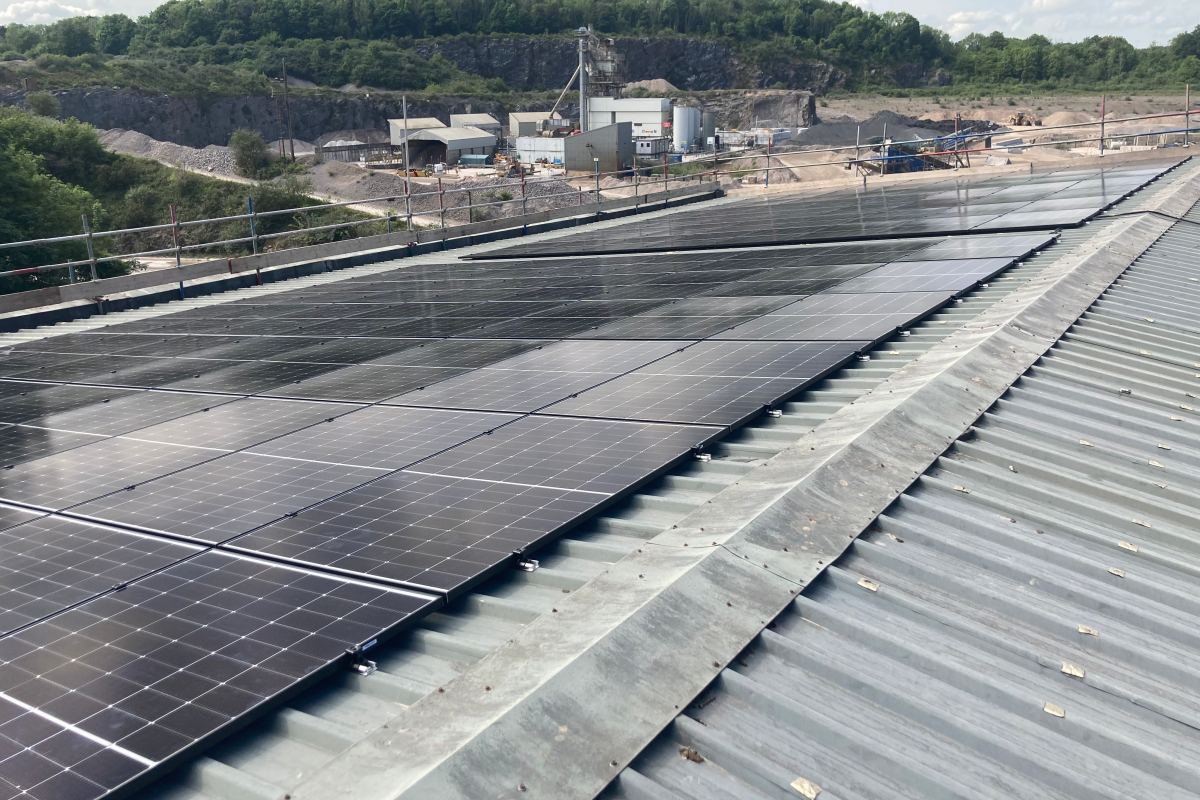
Solar panels have been introduced by manufacturer and supplier of construction materials Holcim UK at a Devon quarry to power part of its operations. The 208 panels have been installed on the rooftop of workshops at Holcim’s Moorcroft site in Plymouth. The site, which is home to a limestone quarry, asphalt, and ready-mix plants, is the latest location that the sustainable building company has brought solar to as part of its ongoing renewable energy rollout. The project, managed by Regenerco and with installation carried out by Aniron, will be able to generate more than 76,000 KWh of power per year, equating to 2% of the site’s annual power needs and resulting in a saving of 15.9 tonnes of CO2 emissions per year. The introduction of more renewable energy sources is a key part of the company’s net zero strategy which aims to achieve zero emissions before 2050. It follows on from rooftop installations at its Hulland Ward, Bardon Hill, and Callow sites in the last 12 months. Joanna Walker, Energy Manager at Holcim UK, says, “Our initial focus is on identifying suitable locations for roof mounted solar across our UK sites. “Moorcroft is a welcome addition to the scheme we have already successfully implemented and helps us continue to roll out renewable energy sources as part of our net zero strategy, helping us on our journey to zero emissions. “We have further schemes in the pipeline for the rest of the year including both rooftop and ground mounted initiatives.” Nigel Price, Director at Burton-based Regenerco, which developed the project installation, comments, “We are delighted to support Holcim UK with its ongoing clean electricity needs and welcome another successful installation at Callow.”

'Government must level playing field for solar uptake'
Renewable energy firm RenEnergy is urging the government to remove barriers to solar photovoltaic (PV) deployment in commercial leasehold properties, following the publication of a joint whitepaper with South Norfolk and Broadland District Council. Entitled Solar PV on Commercial Leasehold Properties, the whitepaper explores the legal, financial, and logistical challenges that have historically hindered solar adoption in leased commercial spaces. These are primarily centred around landlord permissions, asset maintenance responsibilities, and the upfront capital expenditure (CAPEX) required for installation. For commercial tenants, the main obstacle is likely to be obtaining permission from the landlord to progress with the installation of solar panels. For landlords, any reluctancy to grant the tenant with permission is likely to be the perception of risk, primarily the financial and administrative risk for maintaining the asset and/or risk of damage to the property. Damian Baker, Managing Director at RenEnergy, says, “The government should recognise that addressing these barriers would align with the UK’s Clean Power 2030 Action Plan which aims to unlock the solar generating capacity of the UK and achieve 45GW of installed solar PV by 2030. "Action needs to be taken such as encouraging or requiring property owners to include provisions in commercial leases that allow tenants to install solar panels, as well as providing grants to property owners to cover upfront remedial works that might be required. "These types of solutions would ensure that the benefits of solar PV are equally available across the commercial sector.” The paper also seeks to demonstrate that despite the perceived complexity and cost of installing solar panels on leasehold properties, there are numerous financing options available which can be adapted to suit the specific structure of different leasehold agreements, and which ultimately provide a benefit to all parties. These include landlord-owned, tenant-owned, or third-party ownership via power purchase agreements (PPAs). Authors Rhiannon Williams, Consultant at RenEnergy; Jim Howlett, Business Development Manager at RenEnergy; and David Davies, South Norfolk and Broadland District Council and the Greater Norwich Manufacturing Group, originally developed the whitepaper as part of a research campaign. The council wanted to understand the barriers local businesses face in adopting solar PV in order to help shape future support, funding, and workshops for local businesses. 34 businesses were surveyed, 47% of which rent their property. The findings highlight some of the key misconceptions that the whitepaper aims to address including: • 81% are concerned about high upfront costs • 56% are concerned by the requirement to obtain permission from their landlord • 56% are concerned about uncertainty on Return on Investment (ROI) • 56% felt there is a lack of financing options available for solar PV Damian continues, “I think the top line benefits of solar PV are well understood across industry: it can generate cheaper, greener energy. "Also, with ongoing reforms to EPC legislation in the non-domestic private rental sector, there’s a compelling case for the adoption of on-site renewables as to boost EPC ratings and ensure compliance. This not only supports sustainability but also has a knock-on effect for landlords commanding higher prices. "There’s clear opportunity for both tenants and landlords right now; they just need the right government support and flexible financing options to seize it.” For more from RenEnergy, click here.

Join EIC in conquering the Pu Luong Trek in Vietnam
In October 2026, the Electrical Industries Charity (EIC) will be undertaking the challenge of the Pu Luong Trek in Vietnam – all in the name of raising funds for those in need. Isolated from the world for years, Vietnam is slowly laying its war-torn past to rest and emerging as one of the most interesting and diverse destinations in Asia. EIC is asking the most adventurous of our industry to push themselves to the limit through the stunning and diverse Hoa Binh Province of Vietnam. This challenge gives you the opportunity to experience a country with traditional charm and rare beauty while testing your physical and mental limits – trekking on average 16-18km or 6-9 hours a day. The goal of this challenge is to raise £5,000 to go straight back into the industry. These funds will help the charity to continue offering support services to colleagues who need it the most. Want to join? For a registration fee of £600, you’ll get all of the following: • Return international flights from UK to Hanoi • Airport taxes and fuel surcharges • Airport transfers upon arrival and local transfers • Park fees • Full board (except lunch on day 2 and lunch and dinner on departure day) • A celebratory dinner at the end of the trip • Professional qualified local guides • Shared accommodation (hotel in Hanoi, dorm style in local village houses on trek) If you’re ready to join, you can sign up here. How else can you support the challenge? One of the most effective ways to support EIC's 'Challenge for a Cause' is by donating to its volunteers who are pushing themselves to the limit in order to help in the charity's mission to provide for those in our industry who are facing challenges. • Donate to Gordon McArthur here. • Donate to Matthew Wych MIET here. Contacts For further information, please contact the Electrical Industries Charity directly via its fundraising team. You can do this by calling 020 3696 1710 or by emailing at fundraising@electricalcharity.org. For more from the Electrical Industries Charity (EIC), click here.

NICEIC urges employers to support new electricians
With GCSE results day approaching, certification and training body NICEIC is highlighting the role employers can play in supporting the next generation of electricians. The organisation is encouraging businesses to consider apprenticeships as more young people weigh options beyond traditional academic routes. Apprenticeships provide a practical pathway into the trade and are increasingly important as demand grows for low-carbon technology, smart systems, and renewable energy. Apprenticeships and career opportunities Alex Robinson, Head of Training at NICEIC, says, “Being an electrician isn’t just a job; it’s an evolving, future-proof career with clear routes for progression. "The profession will continue to be right at the centre of many of the major technological and societal trends set to dominate the coming years, from clean energy and net zero to electrification. "Electrotechnical apprenticeships give young people the chance to gain recognised qualifications, develop practical skills, and join an industry that is vital to the UK’s future infrastructure needs.” One such apprentice is Ben Gillin, who originally planned to study sports science at university before deciding to pursue an apprenticeship. “Originally, I was all set to go to university to study sports science,” explains Ben. “But at the last minute, I realised full-time education just wasn’t for me. I wanted something practical, where I could learn on the job and still earn a wage.” He says the experience quickly confirmed he had made the right choice. “The work felt real, something I could get stuck into and keep building on,” he continues. “Now, I’m qualified, experienced, and part of an industry that’s changing fast.” Ben’s apprenticeship exposed him to a wide range of projects, from water systems to modifying control panels at an oil refinery. “Working on an oil refinery really changed my mindset. The safety standards, the attention to detail – it was like being thrown in at the deep end, but I learned so much,” he concludes. Ben also reached the national finals of SkillELECTRIC, a competition testing technical and problem-solving skills. He credits it with helping him build resilience, which he has found valuable early in his career. Electrical skills are already in high demand across the UK, a trend expected to increase as renewable energy targets expand and technology becomes further embedded in daily life. Alex Robinson, Head of Training at NICEIC, comments, “Apprenticeships offer a way to start earning immediately, gain recognised qualifications, and set yourself up for a long-term career. "Many electricians go on to run their own businesses or move into leadership and specialist roles, both in the UK and abroad.” As results day nears, NICEIC is urging employers to consider taking on apprentices and to make use of the support and resources available. For more from NICEIC, click here.

The Screwfix Top Tradesperson 2025 semi-finalists
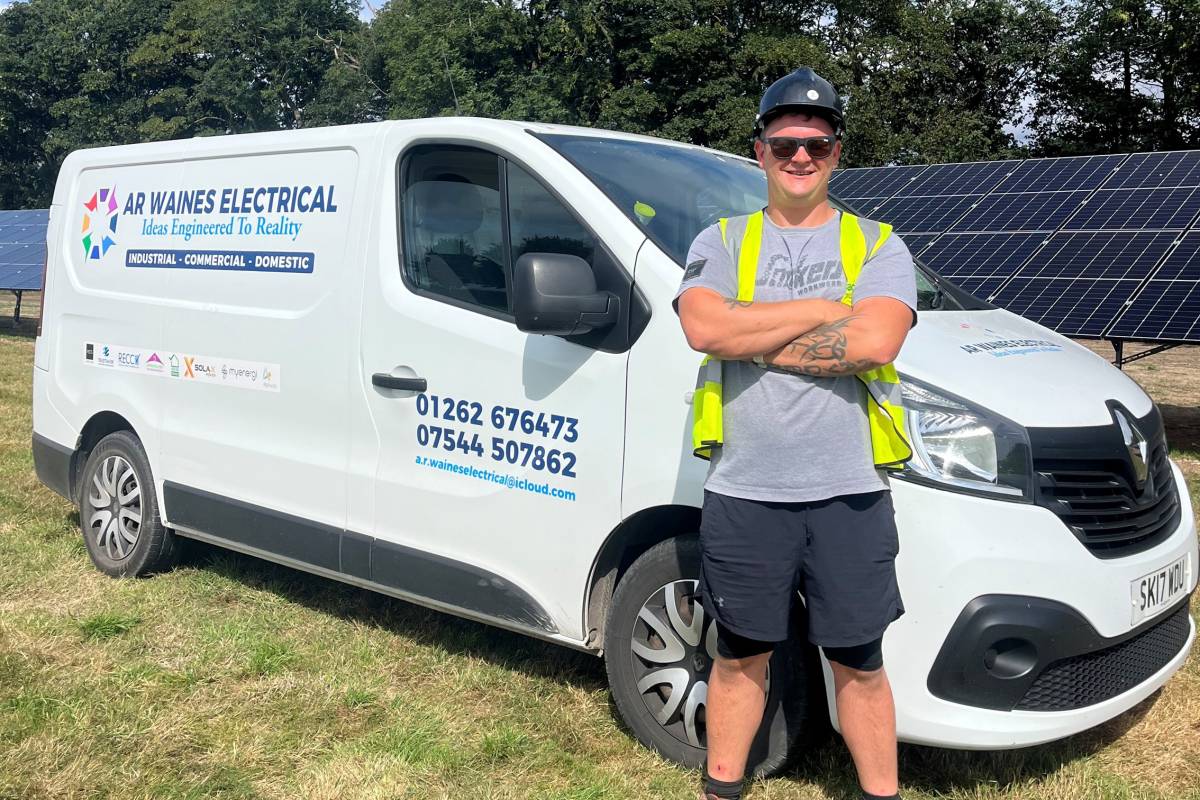
Six talented electricians have beaten off stiff competition to secure semi-final places in Screwfix’s search for the UK’s top tradesperson, which is now in its 16th year. The semi-final stage will see Andrew Clough from Stockton-on-Tees, Ashley Kanes from Bury, Ashley Waines from Bridlington, Beau Snow from Manchester, Jordan Green from Crawley, and Luke Freeman from Biggleswade compete against more than 30 other tradespeople, presenting their skills and stories to judges from Screwfix. The semi-finalists • Andrew, 44, who owns Clough Electrical Contractors, has worked as an electrician for 24 years. He set up his family business four years ago and works to support the local community and elderly customers. • Ashley Kanes, 36, who runs Pulse Electrix, has worked as an electrician for 15 years. He says he loves working in the trade and takes a great sense of pride from a job well done. • Ashley Waines, 38, who runs A R Waines Electricians, has worked as an electrician for 23 years. He gets the most job satisfaction from helping families cut their energy bills with the help of renewable technology, as well as bringing listed buildings back to life. • Beau, 35, runs Valkyrie Electricals and has worked as an electrician for 5 years. She says she is passionate about supporting others entering the industry and one day would like to employ a female apprentice. • Jordan, 26, who owns Greenwire Electrical, has been an electrician for 8 years. His main ambition for winning would be to use the platform to inspire the next generation of students coming through and to prove that the electrical trade is a worthwhile career path that can be very rewarding. • Luke, 24, who owns Freeman Electrical, has worked as an electrician for 7 years. Working for himself for just over a year, Luke says he still loves getting to see his own name on the side of his van as a reminder of just how far he’s come. The full list of semi-finalists will be whittled down to just ten before advancing to the national final at Screwfix Live in September. It will be at this event that, after being put through their paces by a panel of industry experts, one winner will be crowned Screwfix Top Tradesperson 2025 and take home a £20,000/€20,000 trade bundle of tools, tech, and training. A chance to join the Hall of Fame This year’s successful winner will join the likes of the current Top Tradesperson, plumber Mohammed Rahman, and 2023 winner Astrid Arnold in the growing Screwfix Hall of Fame. Jack Wallace, Marketing Director at Screwfix, comments, “​Now in its 16th year, our search for the UK and Ireland’s Top Tradesperson continues to highlight the exceptional talent within the trade industry. "This year’s entries have been truly inspiring, and I wish all semi-finalists the best of luck as they compete for this year’s title.” For more from Screwfix, click here.

Heat pump scheme to slash bills in Manchester
Residents at Lullington Close in Wythenshawe, Manchester, are set to benefit from lower bills and warmer homes this winter following the installation of a new networked heat pump system by Kensa, a British heat pump manufacturer and installer. The project, delivered for Wythenshawe Community Housing Group, has seen outdated electric night storage heaters in 19 one-bedroom social flats replaced with Kensa's Shoebox ground source heat pumps. The compact units, installed inside each home, should provide residents with lower-cost renewable heating and hot water. The heating retrofit project forms part of the social landlord's efforts to future-proof its homes and support its residents, installing low-carbon heating and making energy-efficiency improvements across its estate. The installation Seven boreholes were drilled around the flats to harness the renewable underground heat energy. A shared network of pipes connects these to the heat pumps, which are neatly tucked away inside a cupboard in each flat. The heat pumps are expected to last between 20 and 25 years, while the underground pipe network will collect heat energy for over 100 years. With all the infrastructure hidden underground and the heat pumps located inside the home, the scheme has been delivered with no more visual impact or disruption than installing gas. Looking to the future Replacing electric storage heaters, which are often costly to run, with modern ground source heat pumps aims to improve comfort and significantly reduce heating bills. The new system will be around 300% energy efficient, delivering over three units of heat for every unit of electricity used, making it three times as efficient as the previous system. In other projects where Kensa has replaced electric night storage heaters with networked heat pumps, residents have reportedly seen energy bills fall by as much as 50%. With nearly one in four UK homes that use electric heaters living in fuel poverty, the project hopes to deliver meaningful savings and improve residents' quality of life. The installation also comes as Greater Manchester Combined Authority allocates its Warm Homes Social Housing Fund to deliver energy efficiency and clean heat upgrades across its portfolio. Lullington Close offers a replicable model for delivering long-term improvements for residents across the city region. [embed]https://www.youtube.com/watch?v=kjC9i3Qe5zI[/embed] Stuart Gadsden, Commercial Director at Kensa, comments, "We're proud to be working with Wythenshawe Community Housing Group, helping deliver warmer, more efficient homes and lowering energy bills for its residents. "Replacing outdated and expensive night storage heaters with ground source heat pumps ensures affordable, reliable heating and hot water all year round, without residents worrying about high costs. "Each flat at Lullington Close is getting its own British-made Kensa Shoebox heat pump, providing all its heating and hot water needs. "These homes join thousands of others across the UK already benefitting from our networked heat pump system, showing how we can cut carbon, tackle fuel poverty, and strengthen the UK's energy security at scale, without leaving anyone behind." Victoria Marsh, Project Manager at Wythenshawe Community Housing Group, adds, "Kensa have been excellent in their engagement with residents at Lullington Close and in working collaboratively to deliver this scheme. "We're looking forward to reviewing the long-term savings from the new system and continuing our efforts to reduce Wythenshawe's carbon footprint." For more from Kensa, click here.

Domus Ventilation joins ADCAS
Domus Ventilation, a manufacturer of ventilation systems, has announced that it has become a corporate member of the Association of Ductwork Contractors and Allied Services (ADCAS). ADCAS is a dedicated organisation for ductwork contractors, allied suppliers, and manufacturers of equipment for ventilation and air conditioning. The association provides a platform for members to represent themselves to the wider construction industry, liaise with Government on key issues such as legislation, and share knowledge on important issues that members need to understand in their businesses. In line with Domus Ventilation’s reported objectives, ADCAS aims to promote better specification, design, and installation of ductwork, as well as support higher standards among membership through education and information on the latest legislation and technical developments. Paul Williams, Domus Ventilation Product Manager, comments, “Membership to ADCAS reflects our commitment to the highest standards in the ventilation industry, ensuring we deliver top-quality solutions that improve indoor air quality and energy efficiency. "We’re excited to continue working alongside leading professionals to shape a healthier, more sustainable future for all.” ADCAS is part of the Federation of Environmental Trade Associations, a UK trade body which represents the diverse interests of manufacturers, suppliers, installers, and contractors within the building services sector. For more from Domus Ventilation, click here.

Carhartt launches Occupational Work Boot range
American workwear company Carhartt has introduced its Greenfields Rugged Flex O2 Occupational Work Boot range, designed to improve safety and comfort for workers across a variety of industries. The boots are built to help prevent slips and falls while providing long-lasting support during extended shifts. Features for demanding work environments The Greenfields range is available in lace-up and Chelsea designs, with sizes for both men and women. Made from hydro-treated full grain leather, the boots feature a mesh lining for ventilation, Rugged Flex technology for ease of movement, and a removable footbed with heel energy absorption and moisture control. Each boot is fitted with a rubber Vibram sole that is oil resistant, heat resistant up to 300°C, and capable of providing heat insulation for 30 minutes at 150°C. A polyurethane midsole and lightweight stability shank offer additional balance and grip on uneven or slippery surfaces. Both designs meet the EN ISO 20347:2022 (O2) occupational footwear standard, making them suitable for sectors such as engineering, manufacturing, and warehousing. For more from Carhartt, click here.