2 November 2026
Product of the Month: Amari Floodlight range by Aurora Lighting
 
20 November 2026
Ovia: Delivering performance and flexibility across every sector
 
20 November 2026
Exclusive: how to prepare a building for future technology
 
20 November 2026
Smart Energy Training adds electrical apprentices to portfolio
 
19 November 2026
UK Power Networks awards £4m energy flexibility contracts
 

Latest News


Government urged to tackle vehicle theft
The CEO of a national construction charity is demanding the government gets tough on criminals who target tradespeople’s vehicles – often stealing thousands of pounds worth of tools and equipment – as it’s forcing small building businesses out of business because their insurance premiums are skyrocketing and they can’t afford to replace what has been stolen. The call comes from Gavin Crane, the head of Band of Builders (BoB), after his van – which is clearly marked as a charity vehicle – was broken into for the second time in a year. The incident occurred at Peterborough train station, directly under the gaze of CCTV cameras, and the station also houses an office for the British Transport Police. Gavin – from the charity that completes practical projects to help members of the UK construction industry and their families who are battling illness or injury – has said “enough is enough” and is challenging the government and industry bodies to do more to crack down on the epidemic of theft and vandalism targeting tradespeople across the country. “The UK construction industry can’t go on like this – it’s beyond crisis point,” he says. “Tradespeople face this threat every day. Their vehicles and tools are their livelihoods, and when they are stolen, the impact is devastating – not just on them, but also on the communities they serve.” Gavin is calling for immediate and decisive action, including: - Tougher penalties: Harsher consequences for those convicted of tool and vehicle theft. - Improved security at public spaces: Enhanced CCTV, better lighting and a visible police presence at crime hotspots like train stations. - A national task force: A dedicated body to address tradesperson-related theft, involving law enforcement, industry groups and local authorities. - Support for victims: A national fund to help tradespeople and organisations recover quickly after theft. - Public awareness campaigns: Highlighting the scale and impact of this issue to foster vigilance and support. Gavin continues, “Our van is more than just a vehicle – it’s a tool that enables us to deliver hope and help to those who need it most. To see it targeted again, at a location with a police presence, is both shocking and unacceptable. “This isn’t just a crime against a van; it’s a crime against the people we’re here to help – those people from the construction industry and their families who are facing hardship and are desperate for help. “Our latest project exemplifies this. It’s for a bricklayer in Leighton Buzzard who has been without heating or hot water for three years after his boiler was condemned at his home. He cannot afford to replace it, as he can no longer work because he has chronic obstructive pulmonary disease (COPD).” Band of Builders is urging the government, law enforcement agencies and key organisations to come together to develop a comprehensive strategy to address this growing crisis. The charity is also calling on the public to join the campaign and support efforts to protect the tradespeople who are the backbone of our communities. Gavin concludes, “Enough is enough. Tradespeople keep our country running – they build our homes, repair our infrastructure and support our everyday lives. It’s time we gave them the protection they deserve.” For more from Band of Builders, click here.

Job management software powering electrical contractors' success
Fergus job management software is transforming electrical contracting, helping businesses streamline operations, enhance client service and navigate the challenges of growth. West Wales-based K A Electrical found, as business grew, handling jobs and invoicing with paper and notes became unmanageable, leading to missed invoices and lost revenue. Founder Kieran Hughes turned to Fergus to bring everything into one place. The centralised dashboard gives an instant overview of job progress, invoicing and everything the team needed to follow up. The enquiries management tool, which directly links to the company's website and brings in new job requests automatically, has been particularly valuable, helping K A Electrical avoid errors and manage incoming work with ease. Automated tools like terms of trade attached to emails added a layer of professionalism, boosting customer confidence and legal protection. "At the start of every business, you try and juggle everything on bits of paper, notes, and pictures, and then realise you need something better," says Kieran. “Fergus has helped us keep everything in one place and keep track of the jobs and the job cards.” Rolling Renewables, a family-run business in Worcestershire, found admin also became overwhelming as the business expanded. Switching to Fergus revolutionised how it operated. Using the Fergus Go mobile app, installers can now access job details and documents directly from their phones, real-time communication ensures smooth coordination, and the scheduling feature allows Operations Manager Corey Revell to assign jobs effortlessly. "Documentation was a big issue," Corey recalls. "When you’ve got multiple installers, keeping track of what’s happening on the road, managing paperwork, and ensuring jobs remain profitable – it was overwhelming at times." The Fergus Go app changed all that. "When they get to the site, they just access the phone, they can go through all the docs – they’ve got everything they need." Cornwall-based Weidner Electrical provides a wide range of electrical services, but as its workload grew, managing everything with calendars and spreadsheets became chaotic. Reactive maintenance created a constant demand for accurate record-keeping, tracking materials was a perpetual challenge and VAT returns took weeks. Fergus provided the structure the company needed. “Fergus has made such a big difference – it’s saved us so much time and stress,” says owner Tristan. “When VAT return time came around, we’d be up till midnight for several nights, trying to get all the invoices on. Now, we can set aside an hour and get it done. VAT returns that used to take three weeks now take just a couple of days.”  Fergus isn’t just job management software; it’s a comprehensive solution tailored for trade businesses. By centralising operations and offering powerful tools, it helps contractors save time, increase profits and maintain control over their growing businesses. For contractors looking to expand their businesses while staying organised, Fergus is the ultimate job management partner. For more from Fergus, click here.

Five top tips to kick start the new year
With the new year underway, preparing your business for a smooth start to 2025 is of the utmost importance. From communicating office hours and emergency cover to budgeting and handling late payments, there’s plenty to organise - and Fergus, the all-in-one job management software, has provided five top tips to get your business sorted for the year ahead: 1. Get paid on time If you’re worried about cash flow, job management software (JMS) like Fergus can help you stay in control. With its quick and easy tools, users can create and send invoices in seconds and instantly see which clients have paid and which ones still owe. If an invoice isn't paid in 30 days, the system automatically sends a reminder to the customer, reducing the need for awkward conversations. Fergus has also added Tap to Pay to the Fergus Go app, so business owners can accept contactless payments through credit card, Apple Pay, Samsung Pay or Google Pay - with clients able to pay with just a quick tap at the job site. 2. Keep clients in the loop Avoid confusion by clearly communicating your office hours, holiday closures and emergency contacts. Via Fergus, users can send automated SMS messages to inform clients of their plans, ensuring they know who to contact and when they (or their business) will be back. It’s easier to enjoy holidays and time off knowing everything is under control. 3. Streamline admin Make life simpler by consolidating quotes, communications, job scheduling and invoicing into one system. Fergus centralises these tasks, cutting down on time-consuming admin and reducing the risk of errors. 4. Fill 2025’s order book Fergus’s new enquiry management feature makes handling new customer requests a breeze. With simple instructions for platforms like Wix and Squarespace, users can embed a custom enquiry form directly into their website. Enquiries are automatically tracked in a dedicated dashboard where users can monitor their progress at a glance. Users can also add enquiries manually, so whether it’s online submissions or phone and in-person requests, Fergus helps to ensure that no potential lead is missed. The feature also integrates seamlessly with the Fergus Go app, so users can manage enquiries from anywhere. 5. Consider switching JMS If your current job management software isn’t meeting your needs, consider a switch for 2025. Many business owners avoid switching providers because they worry it will be too disruptive or that the transition will be complicated. Fergus makes sure the migration process is smooth, as it handles all the data transfer and onboarding to make the switch quick and easy. The company's dedicated support team is on hand to guide customers through the process and to ensure their business can continue operating with minimal disruption. Getting ready for the new year doesn’t have to be overwhelming, and with Fergus’s intuitive platform and features, those using its job management software can ensure a smooth start to 2025. For more from Fergus, click here.

Carhartt classics for your winter workwear
Two new additions to the Carhartt Montana workwear range are here to keep you warm and comfortable as the winter weather kicks in, whether you're hard at work on-site or embracing outdoor adventures. Designed for durability, flexibility, and warmth, the Montana Rugged Flex Relaxed Fit Duck Insulated Jacket and Vest deliver rugged performance paired with essential protection for the colder months. The Montana Rugged Flex Insulated Jacket is tough, comfortable and locks in warmth, even on the chilliest days. Made from stretch soft duck canvas and incorporating Carhartt's Rugged Flex technology, this jacket lets you move easily and has a practical design that includes plenty of storage, with four exterior pockets and two internal ones, making it ideal for keeping tools, devices or essentials within easy reach. Rib-knit storm cuffs, bi-swing pleats and a drop-tail hem keep you comfortable all day, even when it’s freezing outside. If you like to layer up, the Montana Rugged Flex Relaxed Fit Duck Vest is the ultimate winter workwear companion. Made from the same durable stretch duck fabric and quilted nylon insulation as the jacket, the vest is sleeveless, providing unrestricted arm movement while keeping your core warm. A corduroy-lined collar and adjustable drop-tail hem add extra coverage and comfort, while multiple pockets, including interior secure compartments, ensure you stay organised no matter what the day holds. Both the jacket and vest combine Carhartt’s signature rugged construction with modern features that make them indispensable for tradespeople and outdoor enthusiasts alike. Designed for warmth, flexibility and all-day wear, the Montana Rugged Flex range ensures you're ready for anything this winter. For more from Carhartt, click here. 

SW Group invests in fleet of triple deck trailers
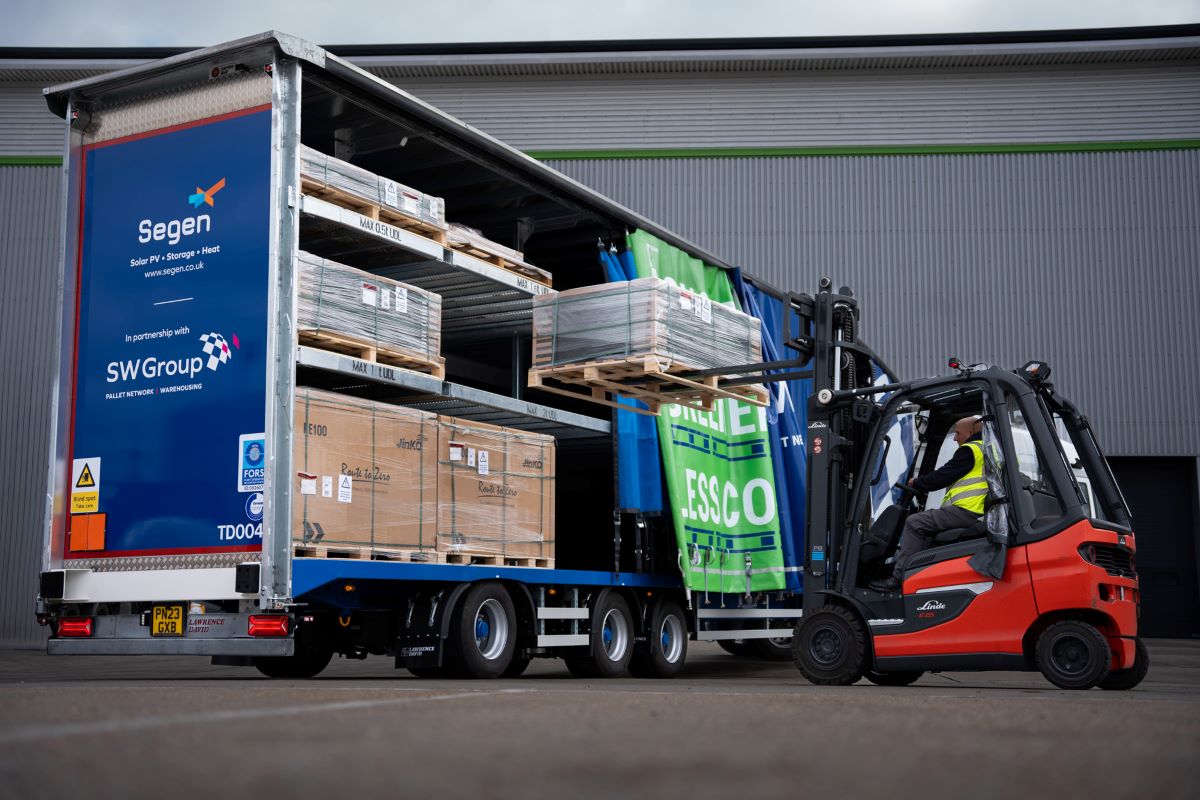
SW Group has announced that it has delivered into service four innovative triple deck 15m trailers for renewables distributor, Segen UK. The deal, which represents a £250,000 investment by SW Group, aims to improve cost efficiencies and contribute to a reduction in CO2 emissions, aligning with the long-term sustainability goals of both companies. The triple deck trailers, designed to transport solar panels and other renewables equipment, will operate from Segen's distribution warehouse in Medway, Kent, managed by Wincanton. Offering 60% more capacity than conventional double deck models, the new trailers will significantly reduce the number of trips needed for deliveries each year, resulting in an annual reduction in CO2 emissions of 280 tonnes. Solar panels have a large pallet footprint of up to 2.4m x 1.1m, but due to the fact that only eight panels are typically needed per home, the depth of each pallet is just 0.4m. Since the pallets cannot be stacked without risk of damage to the fragile panels, this results in wasted cubic space in conventional double deck trailers. Adding a third deck utilises this space, allowing the new trailers to accommodate up to 74 pallets - which is 28 more than a 13.8m double deck trailer, and 48 more than a single deck trailer. The triple deck trailers, which were custom built by Lawrence David in Peterborough, also feature a central 'crucifix' support structure for the lower decks, ensuring easy access and efficient loading of the solar panel pallets. “This announcement underscores SW Group’s continued commitment to optimising cost efficiencies and reducing carbon emissions - not just within our own operations, but also for our valued customers,” says Clive Oakley, Managing Director of SW Group. “Our long-standing partnership with Segen has always been centred on delivering high-efficiency, sustainable logistics solutions, and this new initiative takes our collaboration to the next level.” Mike Eaton, Operations Director – Warehouse and Logistics, Segen UK & Ireland, adds, “Segen is committed to improving distribution costs and efficiencies while moving towards a net zero business model. Central to this is our focus on reducing the environmental footprint of our entire distribution network, from manufacturer to consumer, and working closely with like-minded partners who share our sustainability goals. This investment by SW Group is a clear demonstration of how our enduring partnership continues to deliver value for both companies.”

NightSearcher introduces KangaStar Work Lights
NightSearcher, a provider of portable, rechargeable LED lighting and power products, has announced the launch of new KangaStar Work Lights, which are compatible with 18V batteries from 13 leading power tool brands. Available in two models, the KangaStar Work Lights deliver powerful illumination of up to 4,500 or 6,500 lumens, with a beam range of up to 60 metres. Ideal for construction sites, workshops, and outdoor environments, the lights offer four adjustable brightness modes (25%–100%) and up to 12 hours of runtime. Built with durable aluminium construction, IP65 waterproofing, a USB charging port, and tripod compatibility, the portable KangaStar Work Lights are designed for professionals seeking versatile, high-performance lighting. In November 2024, NightSearcher also published its 2024-25 product catalogue, which featured a new head torch and inspection light. For more on these innovative products, click here to see our original story. For more from NightSearcher, click here.

Heat pumps recommended by 85% of consumers
It has been revealed that 85% of participants in the Electrification of Heat Demonstration Project were likely to recommend a heat pump to a friend or family member - or had already - citing their reliability, easy-to-use nature, and low levels of noise. Funded by the Department for Energy Security and Net Zero (DESNZ) and led by Energy Systems Catapult with support from LCP Delta and Oxford Computer Consultants, the Electrification of Heat Demonstration Project sought to understand the technical and practical feasibility, and constraints of a mass rollout of heat pumps into British homes. A total of 742 heat pumps were installed by the delivery contractors – Warmworks (Scotland), E.ON (north-east England), and OVO Energy (south-east England, excluding London) – into a broad spectrum of housing types (41% detached, 43% semi-detached, 11% mid-terrace, and 6% flats) and ages (68% built pre-1980). Heat pumps were installed in homes with varying Energy Performance Certificate (EPC) ratings from A down to G. At least 53% of homes involved in the demonstration project had an energy efficiency rating of C or D before the heat pump installation. Four different heat pump types were installed: Low Temperature Air Source (LT ASHP) 41%, High Temperature Air Source (HT ASHP) 33%, Ground Source (GSHP) 5%, and Hybrid 20%. These heat pumps were monitored throughout the trial to assess their performance. The majority of heat pumps performed well, with efficiencies comparable to three times that of modern gas boilers. On the coldest days, when temperatures fell to as low as -6°C, only a marginal decline in system performance was observed. Energy Systems Catapult states that the project has demonstrated that the large-scale rollout of heat pumps is possible within the UK. The company believes that it has shown that heat pumps can be successfully installed in all the types of property which were tested by the project, and that it has also shown that they can operate with good efficiencies and provide positive consumer heating experiences. Richard Halsey, Innovation Director at Energy Systems Catapult, says, “The findings of the Electrification of Heat Demonstration Project are clear: when designed and installed well, heat pumps can be an effective low carbon heating solution, providing good consumer outcomes regardless of the property type or age. It is time to do away with the idea that they do not work in UK homes. This is simply untrue.” Energy Systems Catapult’s recently published Innovating to Net Zero 2024 report found that the electrification of heat could represent over 70% of total heat supply in 2050. To achieve such a rate of electrification, the barriers identified by the Demonstration Project will need to be overcome. Four common blockers and barriers to the mass rollout of heat pumps were identified by the project: Perceived impact of disruption Compared to the installation of a traditional gas boiler, the heat pump installation journey may be more complex for consumers. Physical and practical disruption was cited by some participants as being one of the main drawbacks of having a heat pump installed. Heat pump specifiers and installers need to develop innovative solutions to help customers navigate the heat pump installation journey and reduce the impact on householders. 2. Hard to decarbonise homes Several property types were identified as posing more of a challenge for the installation of a heat pump. Mid-terrace homes were impacted by space constraints, pre-1919 homes faced challenges owing to building fabric efficiency and heating capacity required, and post-2001 properties needed solutions that worked with microbore pipework. However, the project did install heat pumps across all property types and ages, indicating that such issues were not insurmountable. 3. Space and noise constraints A lack of external space and the perceived risk of noise pollution did pose a barrier to the installation of a heat pump. Permitted development rights required heat pumps to be installed one metre away from the property boundary or a neighbouring property to minimise the potential impact of noise on neighbours. This rule does not allow for the actual noise output of the heat pump. This could pose a challenge to installing heat pumps in densely populated areas. The Demonstration Project findings support the ongoing revision of such planning requirements. 4. Slow grid connection times There is a need to inform the Distribution Network Operator (DNO) of the intent to connect a heat pump to the electricity network. The time taken to process applications to connect a heat pump can vary and cause significant delays impacting the customer journey and time taken for installation. These delays may mean the difference between installing a heat pump and opting for an alternative heating technology. Richard Halsey continues, “The barriers to installing a heat pump are not insurmountable. The project points to a need for a bold reimagining of home heating market design to make it easier for consumers to make the switch to low carbon heating solutions. Barriers such as the ‘one metre rule’ are not based on tangible noise outputs, and so do little else but discourage some homeowners from making the switch to a heat pump. If we’re to transition away from natural gas boilers we need to be doing more to remove the barriers to uptake. “Innovation in heat pump technology has come a long way over the last decade. Heat pumps are more efficient than they’ve ever been, they’re reliable, they work in cold weather and are suitable for most housing types and ages. Where barriers remain, innovation can help tear these down to help make solutions accessible, desirable, and affordable.” The installation of a heat pump provided an incentive for some participants to make additional ‘green’ upgrades to their homes, including installing insulation and other energy efficiency measures such as installing solar panels and battery storage. To read the summary reports and access the datasets, click here. For more from Energy Systems Catapult, click here.

New apprentice pay rates come into effect
To address the impact of recent national minimum wage changes on apprentice rates of pay, ECA, SELECT and Unite the Union have collaborated to implement new apprentice rates of pay, coming into effect from 6 January 2025. This measure aims to ensure fairness and stability for apprentices throughout their apprenticeships and ECA, SELECT, and Unite the Union have collaborated to implement this solution. The electrical industry is facing a pressing need for skilled workers to support the low carbon transition, with an estimated requirement for 15,000 newly qualified electricians over the next five years. To meet this demand, the recruitment of at least 12,000 electrical apprentices annually is crucial, significantly higher than the current average of 8,000 per year. Ensuring fair pay is a critical element in attracting and retaining this talent pipeline. The agreed updated rates of pay for 2025 are as follows: National Standard Rates 2025: Stage 1: At Work Current, £6.44 | At Work New, £8.16 Stage 2: At Work Current, £9.09 | At Work New, £10.60 Stage 3: At Work Current, £13.02 | At Work New, £13.05 Stage 4: At Work Current, £13.99 | At Work New, £14.03 London Rates 2025 Stage 1: At Work Current, £7.21 | At Work New, £9.14 Stage 2: At Work Current, £10.21 | At Work New, £11.88 Stage 3: At Work Current, £14.58 | At Work New, £14.62 Stage 4: At Work Current, £15.69 | At Work New, £15.72 Part of this updated agreement is to remove the ‘At College’ rate of pay for England, Wales and Northern Ireland. This means there is one rate of pay which applies to all hours of work or as part of off the job learning during an apprenticeship. For clarity, this does not affect those apprentices employed in Scotland under the SJIB National Working Rules for whom the ‘At College’ rate remains for Stage 3 and 4. SJIB Rates and Differentials Stage 1: At Work New and At College New are both £8.16 Stage 2: At Work New and At College New are both £10.60 Stage 3: At Work New, £11.42 | At College New, £10.60 Stage 4: At Work New, £13.05 | At College New, £12.23 The agreement between ECA, SELECT, and Unite takes effect from Monday 6 January 2025 and retains the benefits of grading by encouraging apprenticeship completion and progression to electrician status, and the obtainment of a gold card in a structured way. This is set against the backdrop of upcoming pay negotiations for 2026 onwards, which will commence in in 2025. The updated JIB Handbook, which contains all updated rates for 2025, is being finalised and will be shared soon. For more from ECA, click here.

Tradespeople more knowledgeable on energy efficiency than ever
A new survey by Screwfix has found that UK tradespeople feel more confident in their energy efficiency knowledge than ever, helped by an 8% rise in training courses being completed in the last year. The survey also revealed that two thirds (66%) of all jobs conducted by the nation’s tradespeople over the past year have had an energy saving focus. Up from just over half (54%) in 2023 as more homeowners are motivated to make the switch to energy saving products, to help them save money on energy bills. With rising consumer demand for energy saving solutions, tradespeople are committing to further training so they can offer customers the best-informed advice and product choice. More than 600 tradespeople took part in the survey, with 25% of those completing in-person training and a further 15% completing training online that was focused on installing energy efficient products or renewable energy technology. As a result, 90% of tradespeople say they now feel ‘very knowledgeable/somewhat knowledgeable’ when it comes to advising customers on energy efficiency – compared to 84% in 2023. Earlier this year, Screwfix launched its Voice of the Trade report – which revealed that more than 75% of tradespeople felt upskilling would have a positive impact on their business. However, almost 40% were unable to upskill due to lack of time. The survey also revealed that tradespeople are being asked to undertake a range of energy saving jobs. Lighting continues to top the list at 54%, followed by the installation of new radiators (37%). In 2024, smart thermostat installation (33%) and central heating maintenance (29%) have overtaken loft insulation (23%) as the next most popular job. When asked which potential government-led incentives would encourage more homeowners to invest in energy efficient measures, 61% of tradespeople said energy efficiency grants for home improvements – the same as in 2023. The removal of VAT on labour also remained a popular choice, rising to 35% this year from 33% in 2023. To support tradespeople, Screwfix added the Green Star mark, making it easier to identify products that offer at least one sustainable feature. Green Star products, from energy saving lighting to smart thermostats, taps and TRVs, can all help to lower impact on the environment. This can range from being manufactured from recycled materials or designed to help homeowners reduce their energy bills. Jack Wallace, Marketing Director at Screwfix, says, “As energy price concerns continue to worry consumers across the UK, increasing numbers of tradespeople are responding by arming themselves with the training and knowledge needed to deliver an informed service for their customers. “With two-thirds of tradespeople saying that the jobs they take on are now focused on energy saving – a figure that has almost doubled in the past two years – it is clear that energy efficient solutions are fundamental to build business and deliver added value. “These findings also align to the findings of our Voice of the Trade report, which revealed that whilst tradespeople overwhelmingly saw the benefits of upskilling – they were being held back by lack of time and support. This is why we’re calling on the UK government to consider policy changes that support tradespeople upskilling, particularly in areas of sustainability and low carbon technology. “Screwfix has an important role to play in ensuring we offer unbeatable value for the innovative product solutions that tradespeople need, to help them get their energy efficiency jobs done quickly, affordably, and right first time. To help them, we’ve also invested in the number of products we offer with a Green Star badge, which has doubled to 3,000, making it easier than ever to choose a product that can make a difference.” For more from Screwfix, click here.

Product of the Month: The smart choice for modern comfort
In today’s age of technological innovation and sustainability, the Belize WiFi Electric Radiator stands out as a revolutionary product for electrical installers and homeowners alike. Seamlessly blending efficiency, connectivity and style, this cutting-edge radiator offers a glimpse into the future of smart heating solutions. Designed to deliver optimal comfort with minimal energy consumption, the Belize radiator boasts Fuzzy Logic Energy Control, a groundbreaking technology that maintains a stable temperature of 21°C while reducing energy use by up to 62%. This advanced system, tested in independent laboratories, ensures warmth without compromising on efficiency. Paired with Thermal Fluid Tech, which guarantees high thermal transfer and stable performance, Belize sets a new standard in energy-saving innovation. The radiator’s WiFi Direct Technology eliminates the need for additional gateways, enabling direct, seamless connection to the Rointe Connect app. From this platform, users can program 24/7 operations, monitor real-time energy consumption, and activate energy-saving modes - all from their smartphone. With integrated voice control compatibility for Alexa and Google Assistant, managing home heating has never been easier. Aesthetically, the Belize range impresses with sleek designs and sustainable craftsmanship, including a 100% recycled aluminium alloy body. It is available in two heights: the Belize (575mm) and the Belize Short (420mm). The Belize comes in classic white, while the Belize Short offers a choice of white or a striking black finish, ensuring a perfect match for modern interiors. What truly sets Belize apart is its AI Heating System, which learns from user habits to provide personalised comfort recommendations. This intelligent feature ensures not just a warm home, but a smarter, more efficient one. For electrical installers, the Belize radiator is more than a heating solution - it’s an opportunity to deliver cutting-edge technology that transforms spaces into havens of comfort and sustainability.