2 November 2026
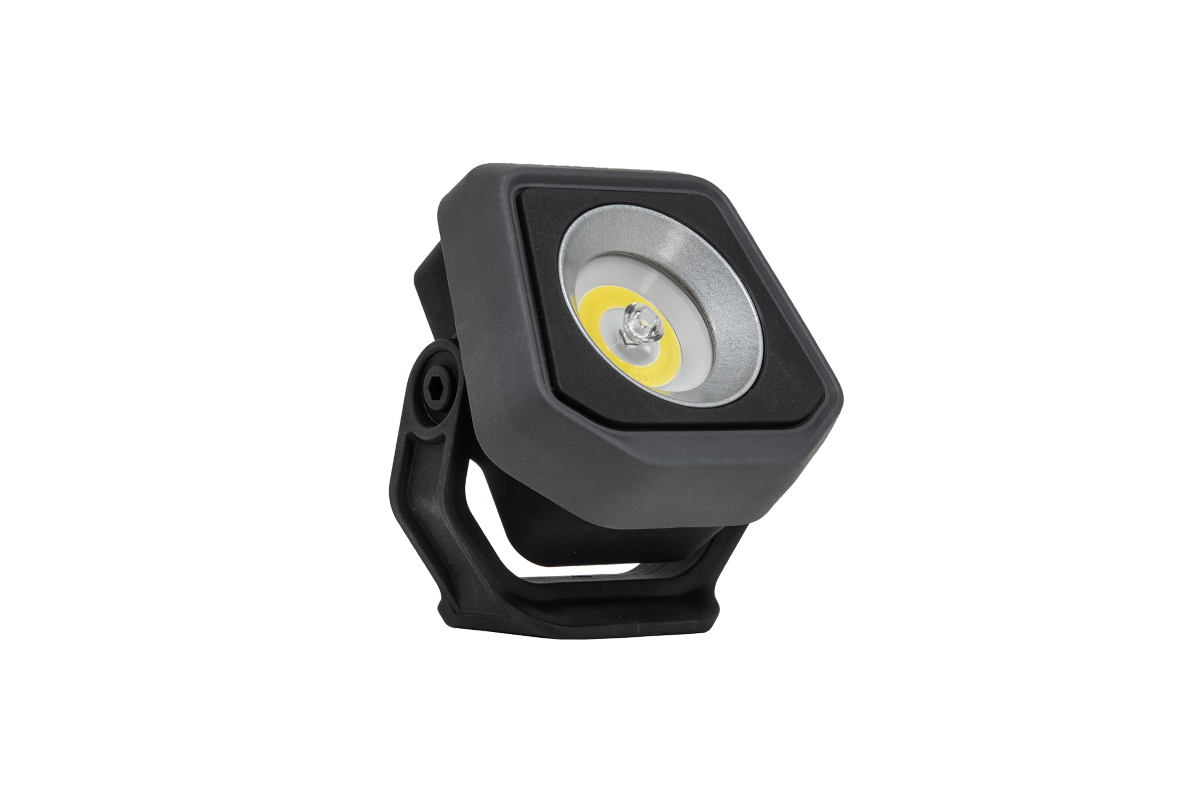
Product of the Month: Amari Floodlight range by Aurora Lighting
 
20 November 2026
Ovia: Delivering performance and flexibility across every sector
 
20 November 2026
Exclusive: how to prepare a building for future technology
 
20 November 2026
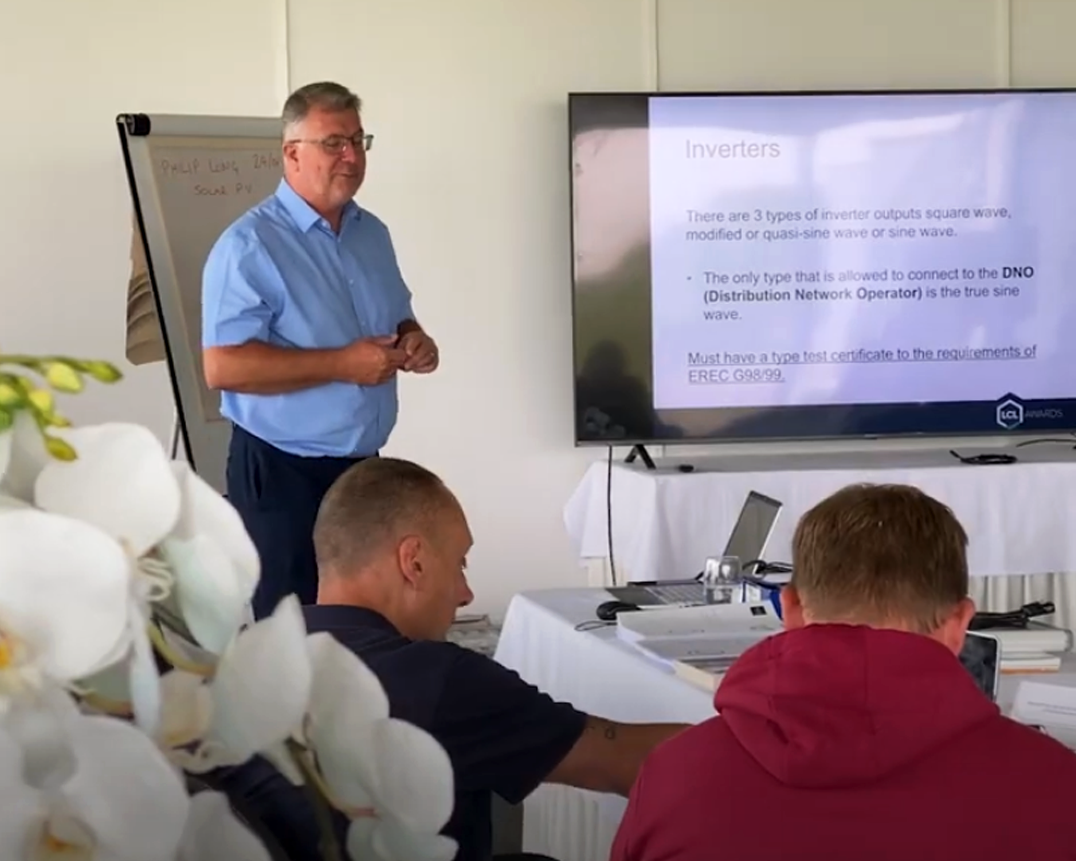
Smart Energy Training adds electrical apprentices to portfolio
 
19 November 2026
UK Power Networks awards £4m energy flexibility contracts
 

Latest News


EV charging costs: UK carrots and a Swedish stick
As countries aim to spread out electricity demand to limit peaks and decarbonise production, should EV drivers be threatened with a stick or rewarded with carrots? Daniel Forsberg, CTEK’s Marketing Manager EVSE explores. In the UK, there is currently a lot more carrot whilst in Sweden we are about to see a stick introduced. The result in Sweden, at least in the short term, could make so-called smart charging a degree dumber. First the good news. In the UK, EV drivers who charge at home are being tempted by an increasing number of smart energy tariffs from multiple electricity providers. Many such deals were pulled during the energy crisis, but they are increasingly back in play. Most are based on a simple premise – cheaper electricity overnight, when total demand is low. Some providers’ tariffs offer four, five, six or seven hours each night at prices as low as 7p (£0.07) per kWh. One provider offers 7p per kWh anytime, if it’s charging an EV. Another provider has a tracker tariff, where the cost can change every half hour depending on the wholesale price. If an EV driver schedules their charging carefully, with knowledge of how the wholesale price generally fluctuates at night, it could mean significant savings off their electricity bill. And yet another provider is offering 8,000 miles of free EV charging if a specific home charger is installed. Some providers have their own apps, for instance to tell the supplier how much charge you want and the supplier then decides when to provide that charge to make it cheapest and greenest. For EV drivers who cannot charge at home, smart charging is being introduced at some public charge points which can supply power at off-peak times and at off-peak prices. So, a whole bag of carrots for UK EV drivers. And also for everybody, thanks to the first trials of demand flexibility initiatives which provide discounts off bills for those who opt in to use less electricity during peak demand periods, typically early evening. Meanwhile, in Sweden, charging your EV at home at full speed was straightforward. Many used three-phase 16A (11kW) for charging. This allowed for quickly replenishing the car's battery overnight or when it best suited your driving patterns. Smart charging with scheduling, for when electricity prices were lowest, became popular. Now here comes the stick. Starting on 1 September, a new pricing model that includes a power tariff will be introduced in parts of Sweden. Some areas have already implemented this. This fee is based on the average amount of power used during each one-hour period – the so-called power peak. Instead of only paying for the total amount of electricity consumed, households must now also pay for how much electricity they use simultaneously. Power tariffs mean that you are financially penalised for high power peaks. For EV owners, this means that charging at high power (such as 11kW) can quickly lead to high costs. But by re-evaluating home charging, there is still a carrot of spreading out electricity consumption throughout the day to reduce power peaks and lower the power fee. One of the most effective strategies is to charge the EV at a lower power over a longer period. By charging with 4kW instead of 11kW, you can complete charging overnight without creating a power peak. (Why 4kW? That’s because 6A is normally the lowest an EV will accept, and three-phase 6A equals 4kW.) And you can also consider charging a little each night rather than doing all your charging on one or two nights a week. Looking ahead, both for the UK and Sweden, there is a need for new algorithms for smarter charging. New applications could consider the car's state of charge (SoC), how many kWh you need, slower charging power with a maximum kW, spot prices and other factors such as what time of day the car needs to be charged. This will require more sophisticated systems to optimise charging and keep simultaneous track of multiple variables. Home battery storage and solar panels can already help smooth and reduce demand. For more from CTEK, click here.

GTEC brings portable renewables training to the Isle of Man
GTEC, part of the United Living Group, has been working with Construction Isle of Man and the Manx government on a new project to bring MCS accredited renewables training to the Isle of Man (IOM). Prior to GTEC's involvement, there was no provision for this on the island. GTEC identified the lack of training for installers looking to make the move into renewables. This, coupled with IOM's ambitious net zero targets, gave GTEC the perfect opportunity to bring its courses direct to the IOM, saving heating engineers the trouble and expense of leaving the island to upskill. In its Climate Change Plan, the IOM government has committed to reaching net zero emissions by 2050 and has set two challenging interim targets: a 35% reduction by 2030 and a 45% reduction by 2035. It aims to decarbonise the island's electricity supply by 2030 and to generate an extra 30 megawatts of renewable electricity locally by 2026. The call for renewables, therefore, is great. Debbie Reeve, Chief Officer for Construction IOM, comments, "GTEC has built some great mobile rigs that it has brought to the island to train our heating engineers this summer. The first courses in Solar PV, Electrical Energy Storage Systems (EESS) and Air Source Heat Pump installation were delivered at the Comis Hotel at Mount Murray in late June, with more planned for July and later in the year. "Historically, many installers have been put off by the prospect of travelling over to the UK in search of renewables training, due to the additional cost of travel and accommodation; and for the employee, there's also the amount of time away from home. So the project, which is supported by CIOM and the Manx Government, has generated a lot of interest. We've already had a great uptake for the pilot courses. "And with the help of Government support, contractors taking up the training for their workforce can apply for financial assistance to help with the course fees. For more information go to gov.im and type in 'vocational training assistance scheme' for more details." Griff Thomas, MD for GTEC, adds, "The Isle of Man is a terrific place, and we're excited to be bringing renewables training to installers keen to support the island's drive towards a greener future. Our rigs will provide learners with excellent hands-on experience to back up the theoretical training we deliver our renewables courses. The location at Mount Murray is perfect to kick things off, but because the rigs are portable, there's the opportunity to deliver training at other locations in the future." For more from GTEC, click here.

Luceco launches Titan 'All in One' highbay LED range
Sustainable LED lighting expert, Luceco has launched the 'Titan All in One' - a brand new range of commercial highbay LEDs. Designed for ease of installation and offering strong flexibility, the new range offers not only colour and wattage choice, but also beam angle change - all in one unit without the need for added accessories. This is a first for the category, Luceco claims, making the Titan All In One range ideal for warehouses, factories, and any other similar industrial or commercial setting. Simon Shenton, Luceco’s Head of LED Product Development, explains, “Most highbay LED lights require a lens change or added accessory for beam angle flexibility, but the Titan All In One has a a unique and easy to use rotating lens beam angle adjustment. “This means that installers can purchase one fitting and adjust it to suit the end user’s needs on site, rather than having to spec and purchase multiple light fittings ahead of time - which is great for both convenience and time, and in terms of impressing clients. Sensor-ready for easy plug-and-play adjustability, Titan delivers uniquely adaptable lighting solutions as well as precise control, high efficiency and significant energy savings and lower operational costs. “Titan All In One is also good news for wholesalers and stockists for all the same reasons, plus the ability to reduce SKU count from 72 to four while offering customers all the same options in the most slick and contemporary format.” The Titan All In One can switch seamlessly between three wattage settings to meet the requirements of any project, providing flexibility and efficiency, and offers three customisable colour temperature settings to achieve the desired functionality and aesthetics for any environment. The innovative beam angle adjustment enables quick and precise changes between narrow and wide beam angles, ensuring optimal lighting for any environment, all without the need for additional accessories or tooling. With IK08 rating, Luceco’s Titan All In One is suitable for industrial, commercial, and high-traffic areas where durability is crucial, and its IP65 rating ensures suitability in a wide range of environments, including outdoor. It is backed by a robust five-year warranty. Commenting further on the new range, Simon adds, “We designed the range to be a leader of change – something genuinely unique in terms of practical and applicable innovation which enables our customers to steal a march on their competition. “With Luceco’s blue-chip backing and lifetime customer support package, this is not only a game-changer in terms of product benefits, but a great business driver for both our wholesaler and installer customers. “Traditionally it can be quite a convoluted process selecting the right combination of products in this sector, with so many options that wholesalers have had to carry large amounts of stock. Titan All In One is another example of how Luceco cuts through confusion and makes everyone’s lives better by designing easy to understand, easy to fit, and easy to sell product that delivers.” For more from Luceco, click here.

Robotics could help Danish electrician shortage, study finds
Electrical contractors in Denmark have a significant potential for overcoming labour shortages and improving the working environment using robot technology and automation, a new study by HowToRobot finds. As the country faces a growing shortage of skilled electricians, industry leaders are exploring a novel solution: automation and robotics. To map out the industry's automation potential, the trade union (Dansk El-Forbund) and employers’ association (TEKNIQ Arbejdsgiverne) commissioned an independent study by HowToRobot, a consultancy specialising in robotics and automation. The study reveals a promising potential for automation and robotics to address the pressing labour challenges facing the industry: - By 2030, Denmark is projected to face a shortfall of 6,700 electricians. - Implementing existing off-the-shelf automation technologies could address 14% of the expected electrician shortage by 2030, the study finds. - With the development of new, fully automated solutions, up to 70% of the expected shortage could potentially be addressed. "There is already a shortage of labour in the industry, and the green transition increases the need for electricians even further," says Maria Schougaard Berntsen, Deputy Director at TEKNIQ Arbejdsgiverne. "This study shows that automation could be a key part of the solution." The skilled labour shortage is experienced across many industries, but electrical contractors are particularly hard hit. 37% of electrical contracting companies experience 'production restrictions' due to a lack of labour – far more than the 24% for the general industry according to Statistics Denmark (data from May 2024). Electricians are also among the occupational groups in Denmark that companies have the hardest time recruiting. Just over a third of all advertised electrician positions end up with unsuccessful recruitment, according to the Danish Agency for Labor Market and Recruitment. "This increased demand puts additional pressure on the current electricians in the industry to work more with the risk of getting worn out faster," says Lars B. Sørensen, area manager at the union, Dansk El-Forbund. The hope among the companies participating in the project has been that they could find ways to free electricians from the heaviest, most monotonous, and repetitive tasks – thereby addressing the labour shortage. This goal has been successfully achieved, according to Mikkel Viager, one of the robot engineers from HowToRobot, who observed and analysed more than 50 electrical installation and maintenance tasks as part of the project. "We uncovered a wide range of existing, often semi-automatic, aids and solutions that can reduce the time electricians spend on many of their tasks," Mikkel says. "It was far more significant than we had dared to hope." During the project, 13 specific electrical tasks across renovation, maintenance, and new construction were identified as suitable for automation and optimisation with new or existing technology. In particular, the study found great potential in automating processes such as cable pulling behind ceilings and walls, hole drilling for electrical installations, measuring and marking, and channel cutting for wiring. "The analysis shows enormous potential. Automation can help ensure that a company can say yes to orders that they would otherwise have to decline due to staff shortages," says Maria Schougaard Berntsen. “This debunks the myth that robots are taking jobs from people.”

Octopus becomes Europe’s largest electric car charging platform
Octopus Energy’s electric vehicle (EV) charging platform has become Europe’s largest for consumers, with nearly 850,000 connected chargers. Octopus Electroverse’s ‘one card, one app’ model is designed to make charging on-the-go as easy as possible, and removes the need to download multiple apps to power up your car. Following the disruption of the UK market, Octopus Electroverse last year expanded its pioneering free-to-use app across Europe, and the platform is now integrated with 950 charge point brands, including InstaVolt, Osprey, IONITY, MFG, ChargePlace Scotland, Aral pulse, TotalEnergies, Powerdot and Free To X. European drivers can access these in 40 countries, with the app available in 20 languages, with 'one tap access' to around 80% of chargers in Europe’s public charging network. The popularity of the platform and features has skyrocketed, with Electroverse’s customer base almost tripling (up 180%) over the last 12 months. Features of the app include a map, route-planner and in-car support with Apple CarPlay and Android Auto. In the UK (and shortly to follow in Europe) there’s added simplicity as customers who are also with Octopus for their energy can add their public charging costs onto their monthly bill. Octopus Electroverse’s platform is also available for businesses with fleets of EVs. This has paid-for added features, an online platform and customisable reporting functions to simplify businesses’ electric fleet operations. Zoisa North-Bond of Octopus Electroverse says, “We created Electroverse with a clear mission: to make charging electric cars on-the-go as easy as possible. One card and one app – that’s all drivers need to access nearly 850,000 chargers. “Our customers love the slick experience and features we’ve rolled out over the years – but we won’t stop here. We’re nearing the one million mark and have become the largest consumer electric car charging platform in Europe – and we’re geared up to rapidly accelerate this worldwide.” This is the latest milestone as Octopus Energy Group speeds up the adoption of low carbon transport. Drivers can sign up to Octopus Electroverse on the website, or via the app which can be downloaded on Apple and Android. For more from Octopus Energy, click here.

C.K Tools launches new lighting products
C.K Tools has launched five new IP rated lighting products, including a brand new range, designed to shine a light onto a multitude of projects for trade professionals, industrial workers and keen DIYers alike. Firstly, the brand new Work Light range features three robust lights with supreme battery life, the latest charging technology and flexibility whether clipped, hung, or attached to any metal surface. Designed for working at both short and medium range, this new product portfolio will provide ample lighting to any work area, creating a well-lit and safe working environment. C.K Tools' Folding Work Light provides a powerful and reliable lighting source throughout a full working day (up to 8.5 hours per charge). It comes complete with a 360° folding design and ball-ended hanging hook with magnetic base, for flooding work areas both large and small with light – wherever it’s needed. With a handy pocket clip, the folding work light can be quickly converted for close-up work, as well as adapting the light source from 100 to 300 lumen, depending on the scenario. Its ergonomic and moulded design with a USB-C 3.7V 1500mAh rechargeable battery makes this an essential piece of kit. Meanwhile, the T9751 Mini Work Light 1000lm provides a versatile lighting solution with four modes to choose from – whether you need focused lighting for an up-close job or for lighting up an entire working area. This latest offering from C.K Tools features a flexible 180° folding design with magnetic base and a 3.7V 2600mAh Li-ion battery, lighting up work areas for up to 10 hours per charge, as well as being compatible with a tripod for maximum versatility. For larger work areas, C.K Tools' T9752 – Maxi Work Light 2000lm is a versatile addition to the range. It features a flexible 180° folding design with magnetic base as well as being tripod compatible and offering four lighting modes to choose from (including spotlight and flood lighting options from 500lm to 200). With a USB-C rechargeable Li-ion battery, the Maxi Work Light from C.K Tools provides a powerful and flexible lighting option for any job. Finally, C.K Tools is adding two new Head Lights to the range, which it says will be a gamechanger for close and complex work, allowing freedom of movement, and convenient hands-free targeted lighting to allow for full concentration on the task in hand. C.K Tools T9714USB – Magnetic Wide Angle Head Torch 150lm features a wide-angle lens and a powerful 3.7V USB-C rechargeable battery for up to nine hours runtime. Three modes provide varying degrees of light from 50 to 150lm. This versatile innovation from C.K Tools can even be detached from the headband and magnetically secured to metallic surfaces for a multi-use product catering to a range of scenarios. For professionals who need a more powerful head light, the C.K Tools T9615USB – Magnetic Dual Lens Headlight 500lm is available. Users can choose from wide or narrow beam lighting which can also be dimmed to suit any environment. With a USB-C rechargeable 3.7V Li-ion battery as well as being three times AAA battery powered, this latest offering from C.K Tools is sure to provide the optimum level of lighting required for any given situation. Not only that, but the user can detach the head light and secure to a range of metallic surfaces, due to a handy four-point magnetic base. Each of the new products in C.K Tools’ lighting range combine the best of LED technology in a robust and durable package. Designed in collaboration with tradesmen to tackle everyday issues at work, their clever design is the result of the rigorous product development and testing that C.K Tools is known for. Brinley Buckley Roberts, Head of Marketing at C.K Tools, says, “Visibility and safety go hand in hand in the workplace, so the importance of high quality, versatile and robust lighting on a work area cannot be overestimated. We’re confident that these latest product launches will be a welcome addition to tool kits up and down the country, helping to minimise accidents, enhance visibility and support a high quality of work. “The source and quality of light on a site is just as important as the tools being used on the job – if not more so. And with quality and durability always front of mind, our lighting range is up there with the very best – whether you need to light a small area or a whole work area.” For more from C.K Tools, click here.

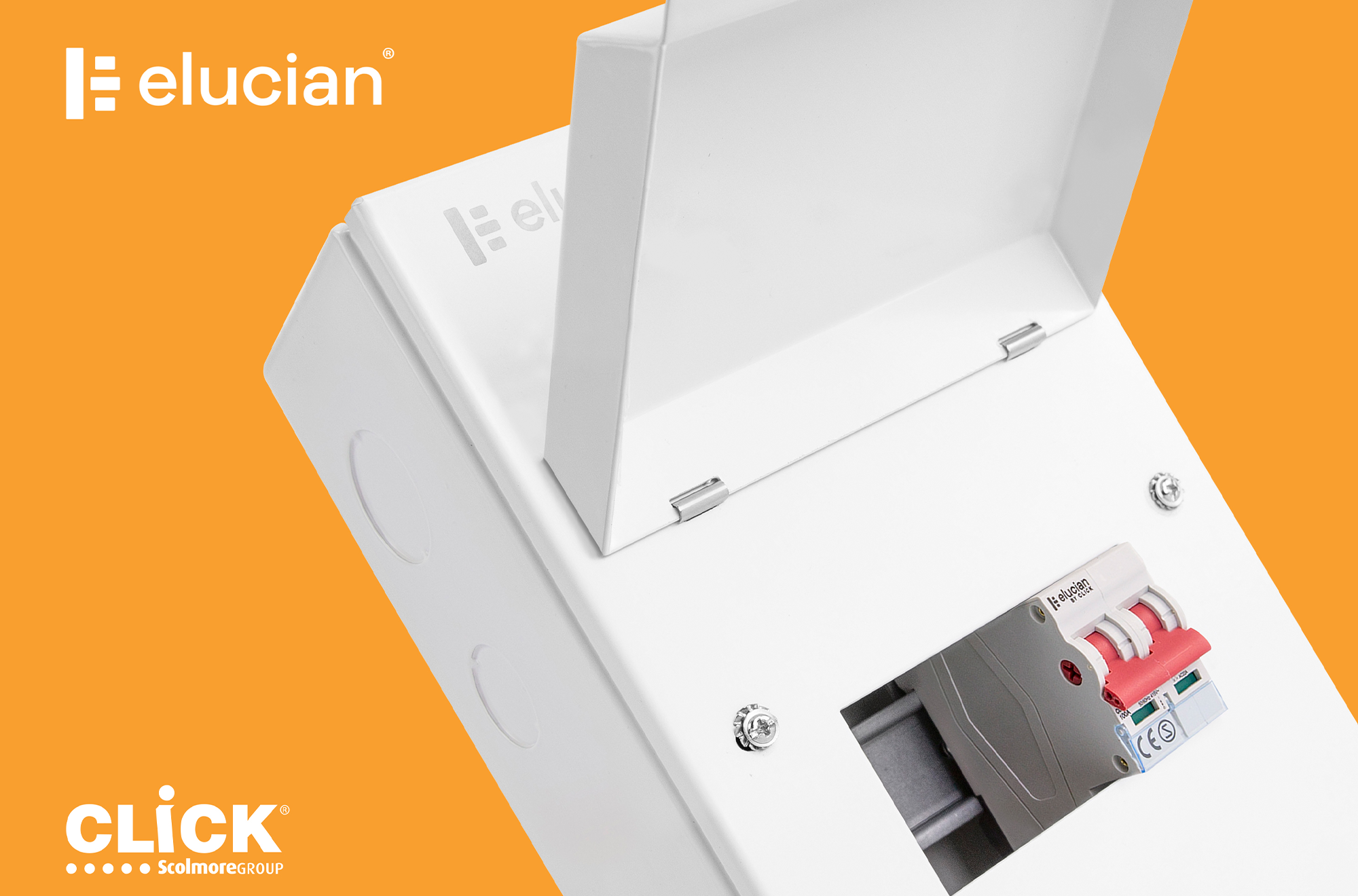
Elucian by Click offers a new Garage Unit with 100A Mains Switch
Click Scolmore continues to enhance its Elucian consumer unit range to meet the evolving needs of installers. The latest update includes the introduction of a new 5 Way Metal Garage Unit, now equipped with a robust 100A Mains Switch. This new unit is designed to provide improved functionality and reliability. To find out more about this new addition and explore other updates to Click Scolmore's garage units, click here. For more from Click Scolmore, click here.

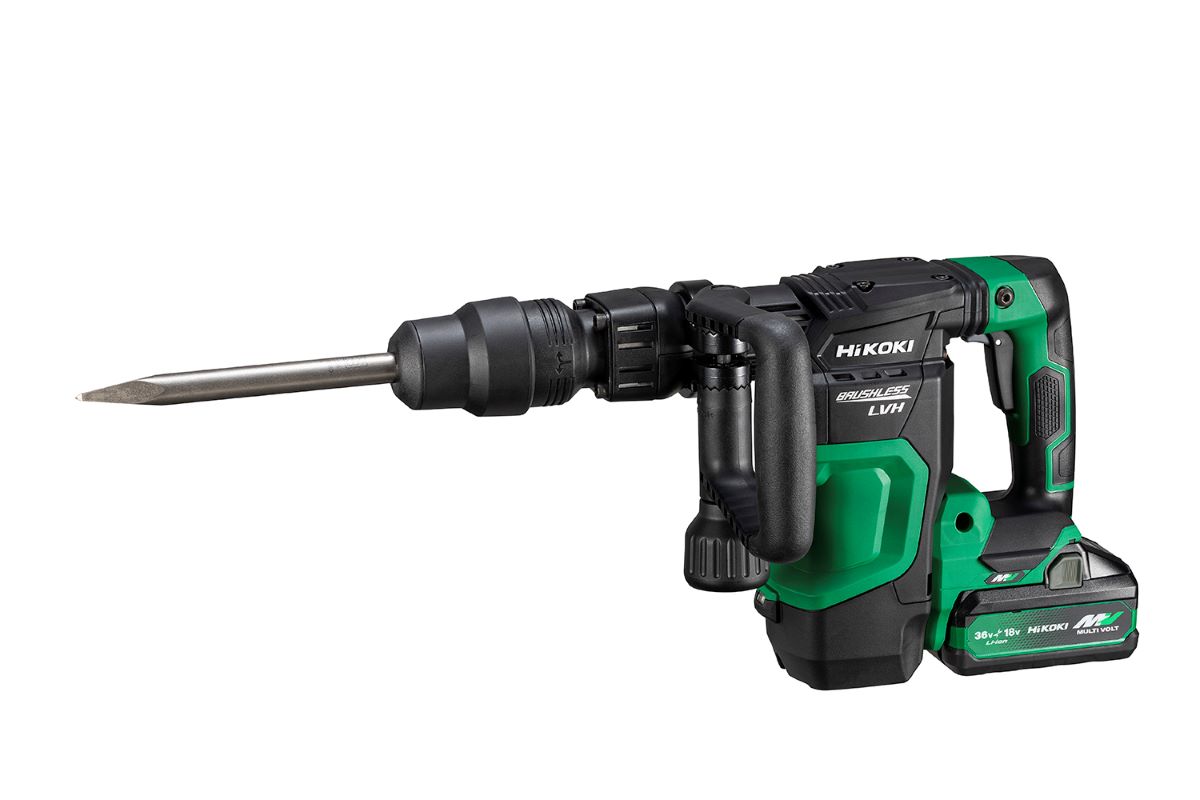
HiKOKI unveils new 36V SDS-Max Demolition Hammer
Compact, lightweight and ideal for heavy work, HiKOKI Power Tools has unveiled the new H3641DA 36V SDS-MAX Demolition Hammer. Designed for peak efficiency and versatility, the hammer is ideal for demanding construction tasks, offering the performance of corded models with the mobility of a cordless design. The H3641DA is small and light, making it easy to handle and manoeuvre in various work positions without compromising on power. Its ergonomic design makes it flexible and adaptable in a range of job scenarios, from breaking and carving through concrete surfaces to creating edges. Engineered to maximise productivity, especially in chipping tasks, the demolition hammer has four-speed control that adapts to a variety of tasks from delicate tile removal to intensive concrete crushing. Additionally, its low vibration handle minimises vibration, increasing comfort and control which, in turn, boosts overall efficiency and user satisfaction during prolonged use. The 36V demolition hammer featuring a brushless motor and SDS-Max bit shank, is a powerful yet compact tool, delivers 6.8J of impact energy and weighs just 4.9 kg. Measuring 427 x 248 mm, it’s designed for both power and precision. The H3641DA comes with accessories including a Side Handle and Bull Point (SDS-Max Shank), all neatly packed in a stackable case. This model is available in two versions: the Body Only (H3641DAW2Z) and the Kit (H3641DAJAZ). The Kit version is equipped with two BSL36B18X (36V/18V MultiVolt Li-ion Battery 4.0Ah/8.0Ah) batteries and a fast charger. For more HiKOKI, click here.

Enhanced ICEL Product Certification Scheme introduced
The LIA and ICEL have announced the launch of the newly enhanced ICEL Product Certification Scheme, which is believed to be a significant advancement in the organisations' ongoing commitment to excellence in emergency lighting. Developed by the Industry Committee for Emergency Lighting (ICEL), this updated scheme marks a crucial shift from an endorsed model to a certified one, offering even greater assurance of quality and safety in emergency lighting products. ICEL is dedicated to strengthening the emergency lighting industry by promoting the importance of high-quality products that meet stringent safety standards. ICEL represents the interests of the industry at the highest levels of UK, EU, and international legislation and standards. Their mission extends beyond industry support and are committed to safeguarding public safety and supporting members by ensuring that emergency lighting requirements are met with the highest standards of quality. The new scheme is designed to provide independent verification of emergency lighting products, offering a trusted mark of quality that end users can rely on. Products certified under the scheme, and bearing the ICEL Certification mark, have undergone a rigorous review process to ensure they meet the required standards. This process includes a thorough evaluation of products and supporting technical documentation to verify the claims made by manufacturers. This updated scheme covers a wide range of emergency lighting products, including luminaires, control gears, and batteries. The scheme has been developed to support UK lighting companies that manufacture or supply products for emergency lighting applications, recognising products that conform to the Low Voltage Directive and the UK Electrical Equipment (Safety) Regulations. For those already participating in the previous endorsed scheme, there will be a transitional period to ensure a smooth shift to the new certification requirements. The enhanced scheme has been brought up to date with new requirements and a broader scope, allowing all areas of the lighting industry to apply for certification. This improvement aims to instil confidence across the entire emergency lighting chain. One of the key updates to the scheme includes the requirement for manufacturers to provide photometric data, which will be reviewed by The LIA Laboratory and, where necessary, retested. This additional layer of scrutiny gives further confidence that the photometric claims made by manufacturers are accurate. Benefits of the scheme Verification of product claims provides end-users with the confidence they need when selecting emergency lighting products. This scheme is now available for anyone to download, expanding access beyond just ICEL members. The ICEL Product Certification Scheme complements the established standards of the ENEC mark and the BSI Kitemark by providing specialised assurance uniquely tailored for the emergency lighting sector. While these certifications already serve as the benchmarks for quality and safety, the ICEL Scheme offers an additional option. This targeted certification may be particularly beneficial for companies seeking a solution that better aligns with their specific needs within the emergency lighting industry. Alan Daniels, Chair of the ICEL Council, states, "The enhancements to the ICEL Product Certification Scheme reflect our dedication to advancing industry standards. The independent verification process ensures that every certified product meets the highest levels of safety and performance." Ayca Donaghy, CEO of The LIA, adds, "This scheme is a testament to our commitment to quality and compliance, one of the key priorities of The LIA President’s strategic focus for 2024. By setting a new standard for certification, we are helping to ensure that all stakeholders can have complete confidence in the products they use." The companies encourage all those in the emergency lighting sector to take advantage of this enhanced scheme and to join them in raising the benchmark for safety and quality in the lighting industry. For more from The LIA, click here.

Signify supports Council's sustainability initiative
Signify, a lighting specialist, is supporting Milton Keynes City Council in its long-term vision to create a world-leading, sustainable city. Signify was selected to upgrade 18,000 existing streetlights to LED, enabling the city to introduce innovation in terms of performance, quality of light, and connectivity to its lighting assets – and contribute to its climate action goals. The phased programme will be completed in 2024 and is expected save the council over 5 million kWh in energy usage, and £2 million in energy costs per year following completion (based on average and estimated prices 2021-2025); as LED lighting uses up to 70% less energy when compared to the existing HID lighting. The reduction in ongoing energy costs is expected to pay for the project in full within eight years. The LED upgrade will also increase visibility for motorists and pedestrians, and improve the quality of security camera footage, helping to improve the feeling of safety and deter criminal activity. In 2019, Milton Keynes City Council committed to becoming carbon neutral by 2030, and carbon negative by 2050 - steps of which are laid out in its Sustainability Strategy 2019-2050. It had already kicked off some climate action initiatives prior to this, as in 2014, Milton Keynes City Council started delivery of the programme to modernise and upgrade its public lighting stock to low-energy LED; to reduce energy costs and carbon emissions, extend the life of its assets, and reduce maintenance and associated costs. Then, in 2022, due to an 88% increase in energy prices, the council came under further revenue pressure for 2023/24, which led it to expand and accelerate the lighting upgrade programme to enable it to operate in the most cost-efficient manner. Signify was selected as the lighting partner of choice based on several parameters. The technical specification of the proposed lighting solutions, the projected operational and energy cost savings, as well as carbon emission reductions. Signify’s sustainability credentials as a responsible supplier also played a large part. Throughout February and March this year, and forming the main part of the rollout of the project, a combination of circa 18,000 Philips LumiStreet Gen2 and LumiStreet ECO LED lanterns were installed along roads and footpaths across the city - replacing the old, energy inefficient HID lanterns. The Philips LumiStreet ECO was designed to specifically meet the needs of the UK market, and this project sees the first large roll-out across a city. In addition, in December 2023, 1,800 Philips TownTune urban decorative LED luminaires were installed to improve the lighting across car parks, pedestrian walkways, and cycle paths. For the installation, the council chose Philips luminaires in combination with Telensa’s cloud-based Central Monitoring System (CMS) that provides a fully functioning, controllable street lighting asset management system, capable of driving further energy savings. Commenting on the LED upgrade, Cabinet Member for the Public Realm, Cllr Jennifer Wilson-Marklew, says, “This has been a significant project that will really help us to lower our energy consumption and tackle climate change in Milton Keynes. MK City Council is committed to moving towards our target of net zero by 2030 and being carbon negative by 2050. Reducing our streetlight energy consumption is a big part of that process." Milton Keynes City Councils’ service provider, Ringway, was responsible for the installation and management of the project. It also undertakes the management and maintenance of the largest portfolio of highways service contracts in the UK. Jonathan Watt from Ringway comments, “Upgrading to LED technology helps reduce the carbon footprint of public lighting, while also saving on energy and maintenance costs year on year. The lights are more efficient, can be targeted precisely where needed, and last much longer than conventional lanterns. What’s great is the connectivity that’s enabled with LED – they are programmable, meaning they can be switched on only when needed, which extends the lifetime, and reduces the need for maintenance.’’ For more from Signify, click here.