2 November 2026
Product of the Month: Amari Floodlight range by Aurora Lighting
 
10 November 2026
Openreach partners with Allstar to boost EV charging options
 
10 November 2026
VCHRGD appoints Craig Summers as Head of Partnerships
 
9 November 2026
UK Power Networks helps nine veterans secure energy sector jobs
 
9 November 2026
Exclusive: why getting project planning right from the outset matters
 

Latest News


Heat pumps are more efficient than boilers, research shows
Kensa, a ground source heat pump manufacturer and provider of networked heat pump solutions, has welcomed new government-backed research confirming ground source heat pumps are the most efficient form of heating, and significantly more efficient than gas boilers. The In-Situ Heat Pump Performance report, which examined heat pump performance, shows that ground source heat pumps are, on average, 324% efficient; while air source heat pumps are, on average, 265% efficient. Meanwhile, the Energy System’s Catapult has recently published its Electrification of Heat Report, which shows that air source heat pumps are, on average, 281% efficient. These efficiencies compare with an average 82.5% efficiency of gas boilers found by a previous government-backed study. Kensa says that this new data highlights the superior efficiencies of heat pumps and demonstrates the major energy and carbon savings they offer over other heating technologies. Even with major disparities between electricity and gas prices, the efficiencies of heat pumps detailed in the reports also mean ground source heat pumps can provide notable energy bill savings when switching from gas and other traditional heating technologies. The Electrification of Heat Report also highlights the high-performance levels of ground source heat pumps even at sub-zero temperatures in the depths of winter. This illustrates the important role ground source can play in managing grid capacity issues as heat pumps are installed in millions of homes across the UK. Tamsin Lishman, Kensa CEO, comments, “This new research shows beyond doubt that heat pumps are the most efficient way of heating homes - three to four times more efficient than gas boilers. As a manufacturer and installer of ground source heat pumps, it’s pleasing to see real-world data confirming the technology is the most efficient heating technology available; and 40% more efficient than even air source heat pumps. “Importantly, the report shows ground source heat pumps perform well even when temperatures drop below zero, meaning reduced electricity demand and less pressure on the grid. This is a critical finding for how we achieve the mass roll-out of heat pumps, with millions of homes poised to switch to electrified heating. “However, even with these efficiencies, today’s energy prices still mean it’s only slightly cheaper to run a heat pump than a gas boiler in a typical British home. At a time when we need to be weening ourselves off fossil fuels, it doesn’t make sense that electricity is still four times the price of gas. It’s critical the government acts now to remove the levies artificially pushing up the price of electricity. “Combine the continually improving efficiencies of heat pumps with lower power prices, and we’ll see the significant real-world savings consumers can make by switching to low-carbon heating. With this, and ending the installation of gas boilers in new homes, the government can normalise heat pumps in UK homes and kick start the transition to clean affordable heat.” For more from Kensa, click here.

Engineering firm donates to foodbank to tackle food poverty
BGEN, one of the UK’s largest engineering companies specialising in mechanical, electrical, instrumentation, control and automation, has donated much-needed food to boost supplies at the Barrow Foodbank. The business, which has just opened a second office at Trinity Enterprise Centre in Barrow, gathered dozens of tins and packets of food – the equivalent of 550 meals – before delivering them to the foodbank at Abbey Road Baptist Church. It is the first local community programme that the firm has supported since opening its second office in the town last month. BGEN’s new office is dedicated to engineering, design and project management and complements the skills set of the existing office, which specialises in electrical, installation and instrumentation works. Matthew Burden, Project Manager at Barrow Foodbank, says, “A sharp rise in the price of food and bills has led to increasing demand for our services, with our warehouse food stocks dropping from 35 to just five tonnes as a result of the cost-of-living crisis. “That’s why our work here is so important – every item donated to our foodbank makes a big difference to those facing food poverty. As the weather gets colder, the food we are able to provide to people becomes even more important, and this contribution from BGEN is vital and much appreciated.” Glyn Shawcross, Engineering and Design Director at BGEN, adds, “We’re very keen to support the community that we are a part of and to make a positive contribution to local people who need help through these difficult times. This donation of food has had an immediate and meaningful impact on those most in need in our community.” As it expands its operations in Barrow-in-Furness, BGEN has committed to recruit locally and build links with sports teams, charities and community initiatives. This business also plans to engage with local schools and colleges to help youngsters to understand the importance of engineering and inspire future talent into a career in the profession. For more from BGEN, click here.  

NICEIC looks back on 2024 highlights of The Wire
NICEIC, the certification and training body for the electrical industry, is reflecting on a successful year for its webinar series, The Wire. The Wire, which is free to NICEIC-certified businesses and their employees, has provided technical insights and continuing professional development (CPD) opportunities to industry professionals throughout 2024. Webinars have covered a diverse range of topics, from regulatory updates to practical technical advice, led by NICEIC experts, with a number of episodes featuring contributions from industry partners including Electrical Safety First (ESF) and Electrical Contractors’ Association (ECA). This year, The Wire has delivered over 17 hours of high-quality CPD content, reaching over 59,000 viewers, live and on demand. This year’s most watched live broadcasts included: • Top tips for completing certificates and reports: electrical installation condition reports (EICR) and Top tips for completing certificates and reports: electrical installations and minor works • Best Practice Guide 10 explained: electrical safety standards in the private rented sector hosted with ESF • Safe isolation hosted with ESF and ECA • Electrical fundamentals: understanding the adiabatic equation. Meanwhile, the most popular webinars on demand were: • Amendment 3 (2024) BS 7671:2018 Wiring regulations • Safe isolation hosted with ESF and ECA • Electrical Installation Condition Report coding clinic hosted with ESF • Best Practice Guide 10 explained: electrical safety standards in the private rented sector hosted with ESF. Sam Donaghy, NICEIC Head of Technical Advice and Practice, comments, “The Wire has once again proven to be a valuable resource for NICEIC-certified businesses and the wider electrical industry. We are pleased to have shared over 17 hours of technical CPD content this year via The Wire alongside the other forms of learning we provide. “We are delighted that this series has connected with the audience so well and look forward to delivering more informative and engaging webinars in 2025.” For more from NICEIC, click here.

ISE returns to Barcelona for 2025
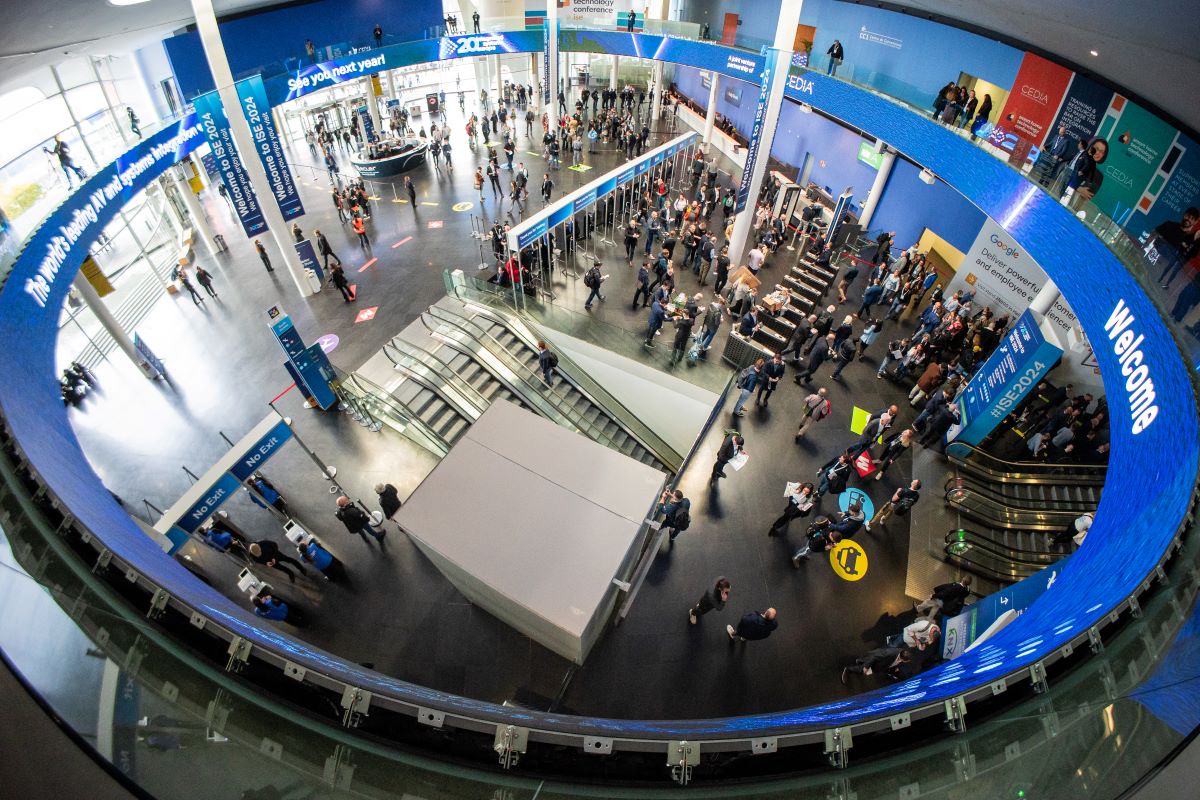
ISE, the world-renowned annual tech show for the systems integration and audiovisual industry, returns to Fira de Barcelona Gran Via from 4-7 February 2025, inviting visitors to open their eyes and ears to the sights and sounds of tomorrow. This year’s event offers inspiration and advancements for the smart buildings' community, from cutting-edge building automation to next-level audiovisual experiences. Registration is open for this unmissable event, providing ground-breaking technologies, fresh ideas, and invaluable opportunities for professionals across the audiovisual world. Whether it’s for a skyscraper or a retailer, hospital or multi-dwelling unit, or even your own office or home, exhibitors at ISE showcase a range of smart building solutions including access control, energy management, building control, smart lighting and shading, public address, digital signage, wayfinding, unified communications, video security, cabling, audio-video entertainment, smart workplace, and Internet of Things. While much of this technology will be on show in the designated Technology Zone known as Residential & Smart Building, some exhibitors prefer to show in Multi-Technology halls or in another dedicated area, such as Unified Communications or Digital Signage. Tickets to ISE 2025 grant visitors access to an unparalleled four-day experience. For the first time, explore eight expansive halls, including the newly added Hall 8.1. Dive into seven distinct Technology Zones and discover the latest innovations at Innovation Park, where start-ups showcase their ground-breaking ideas on the Pitching Stage. Visit the Discovery Zone to meet new ISE exhibitors and experience the expanded Audio Demo Rooms and Outdoor Sound Experience. Attend insightful Keynote Lectures and participate in ISE’s new Tracks programme, featuring sessions on industry megatrends like AI, audio, cyber security, retail, and sustainability. To provide greater flexibility, ISE now offers a Day Pass, allowing visitors to access all Summits and Track sessions taking place on a single day. Additionally, the AVIXA Congreso, featuring sessions in Spanish, is free to attend. There are several special events at ISE 2025 that require advance booking. The content programme, curated by AVIXA, CEDIA and ISE, offers a multitude of opportunities. These include the six Summits, the European Latin American AV Forum, and CEDIA Workshops. The Smart Building Summit returns on the first day of the show, Tuesday 4 February, to dive into the digital transformation of buildings. Here, industry leaders will explore how IT and operational technologies are converging to create smarter, more efficient buildings. Attendees can expect discussions on best practices, along with real-world case studies that highlight successful implementations of these technologies. The Smart Home Technology Conference will run throughout the show, with CEDIA exploring a variety of topics, including technical installation and design, business excellence, and future trends in home technology integration. Key themes such as AI and cyber security will be central to the programme, with attendees having the opportunity to participate in a wide range of expert-led workshops and courses each day. The Smart Home Technology Stage will also be running throughout the show. With dozens of free sessions, this stage provides a wealth of valuable insights, engaging discussions, and ample opportunities for learning and networking. The topics covered will range across technology, design, business, people, and the future, offering a comprehensive overview of the smart home industry. It's the perfect place to gain a well-rounded perspective and build meaningful connections. Opening keynote Attendees will be inspired by the Opening Keynote presented by AI Futurist Brian Solis, who will explore the potential of AI in the pro AV and systems integration industry. Solis’ keynote address is set to be an essential destination for attendees eager to discover why now is the time for business leaders to rethink their organisations for an AI-defined future. Creative keynote On Wednesday 5 February, Italian digital artist, Quayola, will give the Creative Keynote presentation. He will be providing fascinating insights into his ground-breaking projects, including the mesmerising ‘Arborescent’ projection mapping experience on Casa Batlló, which takes place on 1 and 2 February as the next edition of ISE kicks off in Barcelona. Register now ISE 2025 is far more than just a tech show - it’s a platform for collaboration and progress. Whether you’re looking to establish new partnerships, explore investment opportunities, or exchange ideas, ISE 2025 provides the ideal environment to connect. By attending, you’ll be at the forefront of innovation, gaining access to tools, knowledge, and contacts that will drive your business and personal growth. Don’t miss the opportunity to be part of this transformative experience. Register now and join ISE 2025 as it transforms Barcelona into a hub of innovation and inspiration. Readers of Electrical Contracting News can register for free using the code “ecnewsmag” at https://www.iseurope.org.

Recolight welcomes new code of practice for lighting remanufacture
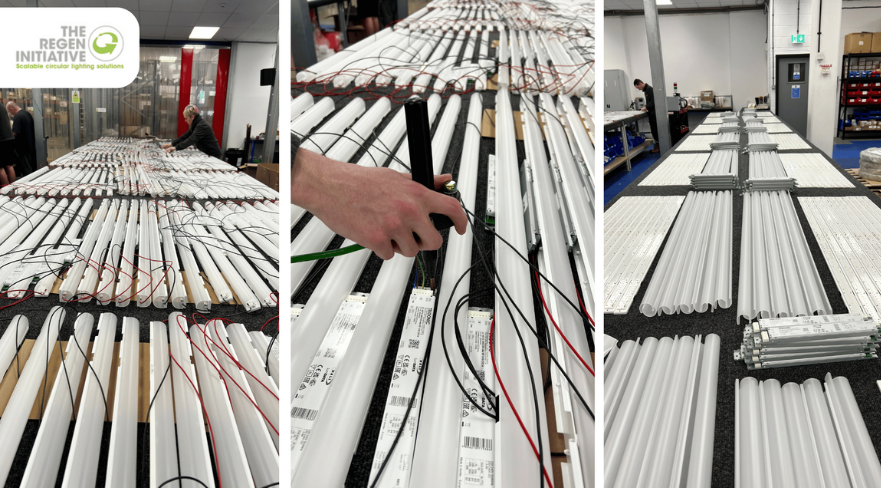
Recolight has welcomed the publication of the new code of practice for the remanufacture of lighting equipment, published by BSI this month. The new publication is numbered BS8887:221 2024 and is now available from BSI. The document provides a structured approach to the assessment of used luminaires and components, defining a scope of works, electrical and mechanical remanufacture, component selection, markings and instructions, and testing/validation. Commenting on the news, Recolight CEO, Nigel Harvey, says, “The specification is a major step forward, helping to normalise the remanufacture of lighting equipment. First and foremost, it should give confidence to specifiers, end users, and producers that luminaires remanufactured in accordance with the requirements are compliant and fit for purpose. “This code of practice has been developed thanks to the hard work and dedication of the drafting committee. Particular thanks go to the Committee Chairman Tom Ruddle, formerly Remanufacturing Engineer at Egg Lighting. He was instrumental in keeping the team, and the project, firmly on track.” The specification was developed over some two years, including representatives from lighting manufacturers, luminaire designers, lighting designers, the Lighting Industry Association, and Recolight. Remanufacture is a vital way in which producers and end users can better embrace a circular economy, by keeping products (or parts of products) in service for longer. It is the logical application of the 'Reduce, Reuse, Recycle' hierarchy to the lighting industry. Typical embodied carbon savings from remanufactured products are 50-80% compared to new products, with similar levels of waste avoidance. An increasing number of UK lighting companies are now engaging in remanufacture. One of the most common approaches is to retrofit fluorescent luminaires with LED light sources, thus retaining the body of the luminaire. Such remanufacturing operations can either take place in a producer’s factory, or can also take place at a customer site. It is important to note that BS8887 is not a safety standard, and compliance with it does not eliminate the need to apply safety and other standards. Recolight has developed a one-day training workshop that can help UK lighting manufacturers understand the opportunities and technical requirements of the remanufacture of luminaires. For more from Recolight, click here.

SELECT Technical Director discusses electrical sector myths
As SELECT, Scotland’s largest construction trade association, prepares to celebrate its 125th anniversary next year, it has taken to the airwaves to debunk some of the most common myths and misconceptions about electricians and the electrical sector. Bob Cairney, Director of Technical Services at the body, was a recent guest on The Electrical Show on Fix Radio, during which he spelled out some of the issues which face the industry to presenters Thomas Nagy and Paul Meenan. Asked about some of the myths he’d had to dispel over the course of his career, Bob told listeners to the UK-wide station, “I can think of one in particular - certification. It’s an area which is generally misunderstood both by contractors and their clients. “Customer complaints can sometimes arise where certification of electrical installations is withheld by members in lieu of final payment. “We try to ‘enlighten’ our members that this should not happen, as compliance with standards actually involves issuance of the certificates as necessary verification.” During his appearance on the national DAB station – which has a weekly reach of 450,000 listeners – Bob also discussed the uncomfortable truth that anyone can be an electrician without proper training and qualification. Bob told listeners, “Believe it or not, anyone can set up in business as an electrician or electrical contractor in the UK and carry out work in people’s homes without having completed an electrical installation apprenticeship or having any relevant qualifications. “You can’t do this if you want to shoe a horse as a farrier, or act as a nightclub bouncer or even a street sweeper. These activities are all regulated and their title is protected, but that is not the case with an electrician for some reason. “At SELECT, we’ve been campaigning on the issue of protection of title for nearly 10 years and there is a great deal of cross-party support in the Scottish Parliament. Everyone we speak to is shocked that electricians aren’t regulated – if you’ll pardon the pun.” Asked about other antiquated understandings about the trade, Bob said, “Well, the days when an electrician could complete an apprenticeship and not do any further update training are now long gone. “The IET Wiring Regulations, BS 7671, are continually evolving and there are always new products appearing on the market. So now, more than ever, electricians need to keep up and have knowledge of all this. They can’t afford to stand still.” Quizzed on how well-read electricians were in terms of keeping up to date, Bob said: “There’s always room for improvement, but most electricians, and particularly SELECT members, are well aware of the constant change that exists in the industry. “I suppose it’s all about communication, collaboration and co-operation in the sector; we all face the same issues and so we should be willing to share information across the board. “A good example of that is the recent conversation around neutral current diversion (NCD). I don’t know if you know that SELECT has issued guidance and developed a range of resources about NCD which we are happy to share with the rest of the industry.” SELECT has been campaigning for regulation for years alongside the Scottish Electrical Charitable Training Trust (SECTT) and Scottish Joint Industry Board (SJIB) and has created a Wall of Support to show the depth of backing from individuals and organisations. As well as more than a third of MSPs, other bodies that have contributed a brick to the Wall of Support include Unite the Union, Electrical Safety First, The Royal Institution of Chartered Surveyors, Scottish Association of Landlords and Energy Saving Trust. To listen to Bob on the broadcast, click here. For more from SELECT, click here.

NAPIT supports Ending Shock Silence report
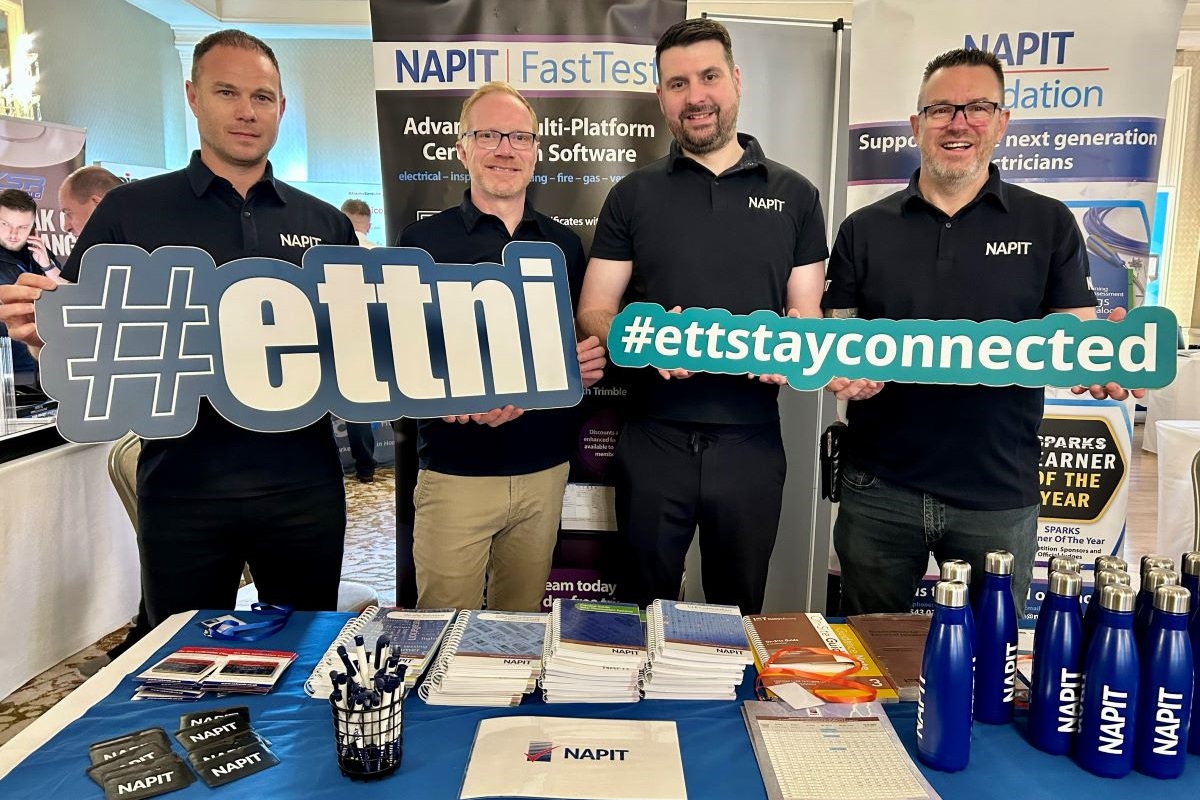
NAPIT has announced that it supports the Electrical Training Trust (ETT) and welcomes its recommendations in the alarming Ending Shock Silence report on electrical shocks in the workplace. The report is based on findings from the Electric Shock Survey, a recent study conducted by ETT to understand the frequency and culture of reporting electric shocks at work. It summarises the findings of a survey completed by almost 350 electrical workers from across Northern Ireland, with 80% revealing they have experienced an electric shock at work and 40% reporting at least three shocks in their careers to date. It’s a huge concern that of those who have experienced an electric shock, 89% sustained an injury and almost all (95%) required time off work. This statistic highlights the severity and impact that such incidents can have on a person’s life and livelihood. Despite the frequency of electric shock incidents, almost three-quarters were not reported to employers. This trend of underreporting has been termed ‘shock silence’ by the charity, with the survey finding company culture, ineffective reporting procedures, and time pressures as the three most common reasons staff failed to report an electric shock at work. Respondents expressed an alarming sentiment that ‘quick jabs’ or ‘small shocks’ are not very serious, and in many ways have come to be viewed as part of the job. We must change this mindset, which is dangerous and potentially life-threatening – not only for electrical workers but for clients and the wider public. The report includes a number of recommendations regarding health, safety and workplace culture, electrical safety equipment and procedures, education, training and awareness and apprenticeship development. These include ensuring electrical safety equipment is both readily available and affordable, creating an environment where safety concerns are respected and valued by all team members and standardising electrical safety and electric shock prevention training across all apprenticeship programmes and apprentice training providers. NAPIT backs these proposals and looks forward to being a part the industry-supported action plan to develop these recommendations. Frank Bertie, Managing Director at NAPIT, says, “The findings of the Electrical Shock Survey are unsettling. It is crucial that more is done to address ‘Shock Silence’ and prevent injuries and in some cases fatalities. “The recommendations [focus on] electrical safety equipment and procedure, education training and awareness, apprenticeship development and industry collaboration. To help take action on this, NAPIT will take part in the industry-led working group. “The research demonstrates how critical it is that change is made within industry and highlights how vital it is that proper safety procedures are implemented. “This report conducted by the ETT is a vital piece of industry research. We want to urge NAPIT members, other stakeholders and organisations to support this report and its recommendations. “We look forward to working with the ETT and other stakeholders in the industry-led working group to develop an action plan to reduce the number of electric shock incidents.” For more from NAPIT, click here.

Acrospire lighting to preserve Bath's heritage
Acrospire, a British LED lighting manufacturer, has collaborated with Volker Highways and Bath & North East Somerset Council to upgrade the lighting infrastructure along London Road, a historic artery in Bath. Recognising the need to preserve the area’s Victorian charm while enhancing energy efficiency, the project replaced inefficient SON and SOX lamps with LED technology. Acrospire’s solution, the Holburne Heritage Lanterns, not only met the technical requirements but also blended seamlessly with Bath’s architectural heritage. Bath’s status as a UNESCO World Heritage Site underscored the importance of preserving its architectural integrity, particularly when attempting to modernise the city’s lighting. Bath & North East Somerset Council collaborated with Spiers and Major to devise a lighting strategy that specified using light not only to create an appropriate ambience after dark but also to help define the city’s overall character and distinguish between different areas. This approach was applied to a recent heritage lighting LED upgrade project along London Road. Stephen Burrell, Principal Engineer Street Lighting, Highways Maintenance & Drainage, Environmental Services, Bath & North East Somerset Council, comments, “We had finished the upgrade of our functional street lighting, which was quite straightforward. However, when it came to our heritage lanterns, every location was different, effectively making each project bespoke. We have about 400- 500 heritage luminaires across the region, and the upgrade from the designs to the installation at each site has been unique.” Acrospire developed new heritage lanterns specifically for the London Road project, replacing the existing SON and SOX lamps with LED while retaining a classical Victorian appearance. The new heritage lantern, named Holburne, takes its name from the Holburne Museum, where the core of the present-day collection was established by Sir Thomas William Holburne. Crafted with meticulous attention to detail and using locally sourced materials, these lanterns embody the elegance of Bath’s architectural heritage. Available in two sizes, small and large, the Holburne lanterns boast a warm 3000K colour temperature and precision optics to maintain the area’s classical charm while directing light where needed. The upgrade to LED technology resulted in energy savings while paying homage to Bath’s cherished heritage status. By introducing the Holburne heritage lanterns along London Road, the project improved energy efficiency and contributed to the continued celebration of Bath’s architectural characters and legacy. Stephen continues “As cities strive to balance progress with heritage conservation, initiatives like this serve as good examples of sustainable urban development. With every project unique, what helps is working with a manufacturer like Acrospire, which is always there to help, make suggestions and problem solve for each location.” For more from Acrospire, click here.

Tradespeople to work overtime this festive season, study shows
Work demands will impact the opportunity for 86% of tradespeople to spend time with friends and family this festive season, according to new research from Direct Line business insurance. While late December is traditionally a time for family and relaxation, it’s a hectic time for many tradespeople, with more than a quarter (29%) reporting they will not be able to see their loved ones at all during this time due to work commitments. A further 37% will not be able to spend as much time with loved ones as they would have liked, and 19% know work will impact their time off but are trying to limit this as much as possible. Despite 87% of tradespeople working during the festive period, just half (50%) will charge an increased rate. As well as many working over the festive period, four in five (82%) tradespeople will also be working overtime in early December to ensure projects are completed on time, with 73% also considering working weekends. One in seven (15%) tradespeople started working overtime earlier in the year to reduce the urgency to finish jobs in December. Reasons for working overtime range from pressure from clients to complete jobs ahead of the festive period (36%), wanting to finish all work before taking a well-earned break (34%), and an opportunity to earn extra income (30%). Mark Summerville, Product Manager at Direct Line business insurance, comments, “Tradespeople consistently go above and beyond to support their clients, and this dedication is especially evident during the festive season. Many are working overtime and sacrificing time with loved ones to ‘save Christmas’ for countless households and businesses by ensuring projects are completed on time.” For more from Direct Line, click here.

Luceco provides lighting design for Glasgow offices
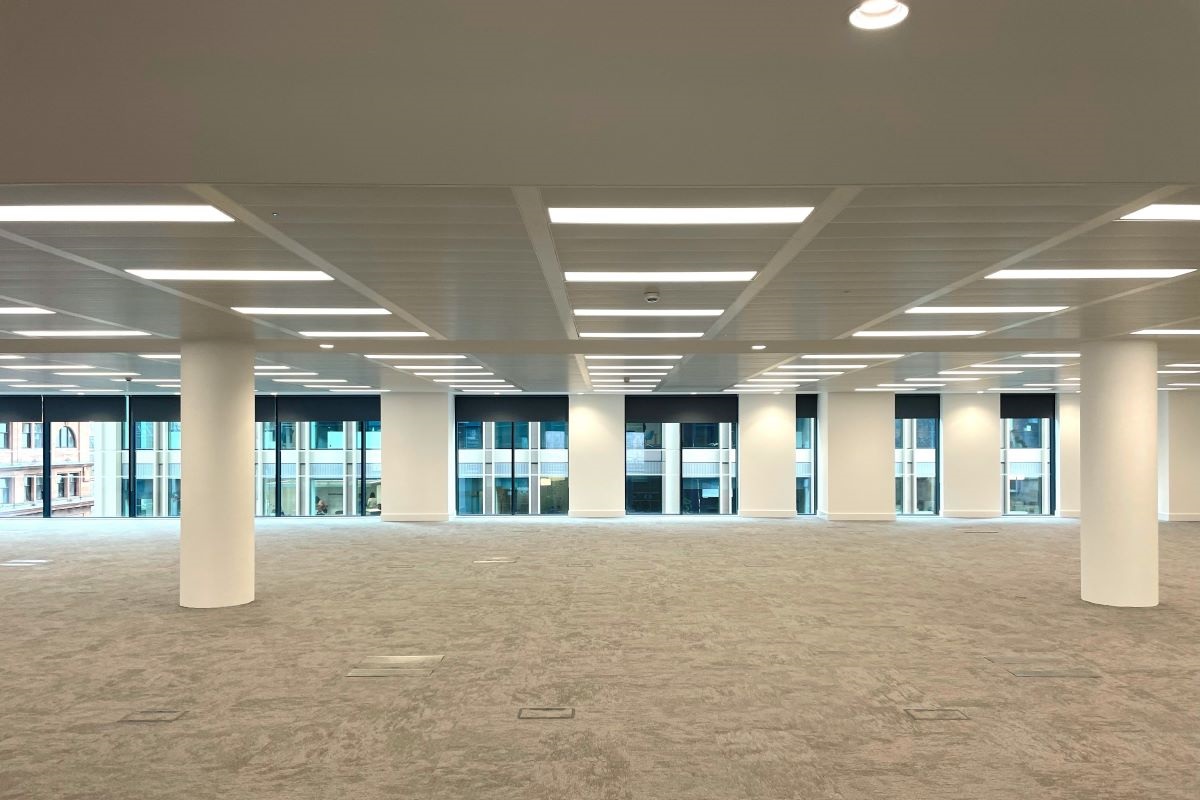
After previously completing work on a different floor of 2 West Regent Street in Glasgow, Luceco partnered with local contractors, Electrical Solutions (Scotland), to provide a lighting design that met the brief of the consultant’s lighting requirements. The biggest challenge that had to be faced was the unconventional luminaire cut-out size, which measured 1200 x 300mm. Chris Bryant, Group Managing Director of Electrical Solutions (Scotland) explains, “We needed to provide a cost-effective lighting solution to fit into a non-standard suspended ceiling, that resulted in a comfortable, well-lit commercial working space while also reducing future running costs. “We had worked with Luceco on a previous floor in this building, so we knew that they would be able to help us find a solution.” To fit the non-standard ceiling requirement, Grahame Scott, Luceco’s Project Manager, suggested using Luceco’s LuxPanel Extra lighting, a recessed panel fitting from the commercial range. The LuxPanel Extra is a slimline backlit LED panel with TPa rated diffusers, long-life drivers, and IP65 protected options. Backlit LED panels mount the modules to the back of the panel’s body, allowing for direct downward distribution from the modules themselves. Due to the direct light, there is no requirement for an LGP. This allows a backlit panel to offer increased performance in terms of lumen per watt and balanced light distribution. Installation is achieved easily and efficiently with a plug and play ENEC approved loop in-out driver and rear safety wire suspension points. Grahame Scott, Project Manager at Luceco, comments, “We re-engineered our LuxPanel Extra luminaires to appropriately fit the Armstrong SAS330 ceiling they needed to fit in to. We then used our Platinum Downlighters around the perimeter of the space to compliment the lighting design and achieve the best look for the office space in West Regent Street.” For more from Luceco, click here.