2 November 2026
Product of the Month: Amari Floodlight range by Aurora Lighting
 
10 November 2026
Openreach partners with Allstar to boost EV charging options
 
10 November 2026
VCHRGD appoints Craig Summers as Head of Partnerships
 
9 November 2026
UK Power Networks helps nine veterans secure energy sector jobs
 
9 November 2026
Exclusive: why getting project planning right from the outset matters
 

Latest News


Schneider provides update on sustainability programme
Schneider Electric has announced the latest results of its Schneider Sustainability Impact (SSI) programme and its financial results for the third quarter of 2024. Recently recognised as the World’s Most Sustainable Company by TIME and Statista, Schneider Electric’s SSI programme monitors and measures the company’s progress across a range of transformative Environmental, Social and Governance (ESG) targets set for 2025. By tracking its sustainability performance and publishing quarterly results, Schneider Electric keeps the momentum for its 11 global and local ambitions and maintains its corporate social responsibility goals. At the end of the quarter, the overall Schneider Electric Sustainability Impact (SSI) score came in at 7.29 out of 10, which is well on track to reach the 2024 end-year target of 7.40, with two major milestones reached: • Schneider surpassed its goal of providing access to green and reliable energy to 50 million people more than one year before its end-2025 target. This was achieved through projects where Schneider’s solar power solutions were installed on public facilities across Africa and India. For example, in Kenya, Nigeria, and India, new hybrid solar solutions were added to health clinics attended by roughly 2 million people, and in India, over 700 schools were powered by clean energy benefitting around 120,000 students. Schneider is now focused on further ramping up these efforts so that by 2030, cumulatively, 100 million people will have gained access to green electricity since the start of the programme in 2009. • Schneider also crossed a key threshold in its efforts to foster learning, upskilling, and development for all generations having now trained over 763,000 people in energy management. For example, Schneider Electric and its Foundation recently collaborated with Enactus, enabling university students from 10 countries to develop entrepreneurial solutions that address social issues related to the energy transition. Furthermore, Schneider made considerable strides in halving the carbon impact of its top suppliers through its Zero Carbon Project, resulting in a 36% reduction of its operational CO2 emissions. This was facilitated by several renewable energy workshops held in the USA, Europe, and China, as well as over 20 specialised webinars aimed at supporting suppliers in their decarbonisation endeavours. “Our achievements this quarter showcase the scale of our impact, with local projects playing a pivotal role in achieving our ambitious goals,” says Xavier Denoly, Schneider Electric’s Senior Vice-President of Sustainable Development. “Despite these great results, our work is far from over. We must further intensify our global decarbonisation efforts to mitigate the effects of climate change, benefiting people and planet.” Find more details about the results and the latest impactful initiatives in the Q3 2024 report of Schneider’s Sustainability Impact programme, including the progress dashboard: Other key recognitions and awards achieved during the quarter: • Recognised as Industry Leader in S&P Global’s Corporate Sustainability Assessment for the third consecutive year • Received the RE100 Changemaker Award from the Climate Group at Climate Week NYC, in recognition of a ground-breaking tax credit transfer renewable energy project in Texas (USA) • Named as a Leader in Verdantix’s Green Quadrant: Building Decarbonisation Consulting • Ranked with the highest Social Benchmark score in its industry by World Benchmarking Alliance, underlining sustained efforts to act ethically and provide and promote decent work and human rights • Recognised for the 'Digital Upskilling for All' programme by Brandon Hall Group’s prestigious Gold Award for Learning and Development For more from Schneider Electric, click here.

Article: Driving innovation in modular support systems
Meeting modern challenges and driving innovation demands a future-thinking attitude, says Carl Jones, President, Cable Management & Protection at Atkore, as the company celebrates its 100th birthday this year. In this article he explores the current landscape for secondary support systems and outlines how the use of prefabricated and pre-integrated designs is a key benefit in reducing complexity and ensuring faster project delivery. In recent years, there has been a significant shift in the procurement and specification of metal support systems and channel products. Where once framing components may have been selected to meet a one-time demand, or procured routinely based on installer preference, today’s customers are demanding a complete engineered solution. This requires suppliers to look beyond the manufacture of individual system components, to integrated solutions which include design, off-site fabrication, on-site assembly and ongoing service support. Adapting to post-COVID-19 industry demands, the booming digital and semiconductor industries, alongside rapidly expanding EV infrastructure, are driving significant growth. Additionally, the residential housing sector continues to build at pace to meet government targets, indirectly fuelling demand – all emphasising the need for resilient, scalable solutions to meet these evolving needs. Cost certainty Traditionally, the installation of support systems involves multiple suppliers, contractors and tradespeople, each adding their own costs and timeframes to a project, which can lead to significant variability in both budget and schedule. Industry needs to seek every advantage to reduce on-site delays. The result sees customers moving to single source supply models, where a sole manufacturer can now handle the entire process - from pre-fabrication to on-site integration. This consolidation reduces the number of parties involved, cutting supply times and eliminating the multiple markups that inflate costs. As a result, costs become more predictable and project managers can more easily adjust their budgets and resources. Speed of installation Time is money, and when it comes to on-site installation, customers need suppliers to meet tight project deadlines, seamlessly. With modern support systems, component parts are prefabricated off-site, meaning on-site labour can be reduced, which often represents a significant proportion of the overall project budget. Compared to traditional stick-build methods, the cost savings can soon add up – helping minimise the number of different trades on site. Space constraints Space is often at a premium and every square foot of a building must be used efficiently. The installation of traditional support systems can be particularly challenging in these environments, as it often requires large amounts of on-site storage and the potential for disruption to ongoing operations. A key benefit of modular systems is their ability to be prefabricated off-site. In the context of a data centre, for example, this means that support systems for cables, pipes and equipment can be built in a factory setting, where conditions are controlled and standardised. These prefabricated components can then be delivered to the site just in time for installation, reducing the need for on-site storage and minimising the amount of space required for construction activities. Additionally, the modular nature of these systems allows for greater flexibility in design and installation. Components can be customised to fit the specific needs of the facility, ensuring that the support system is optimised for the available space. Quality and compliance Gone are the days where industry can simply fit and forget.  Today the traceability of materials and components is crucial for customers and an area of real concern. Put simply, the failure of a single component can have catastrophic consequences and industry cannot afford the risk. With traditional construction methods, the supply chain can be long and complex, involving multiple parties. This complexity can make it difficult to track the origin of materials and ensure that all components meet the necessary standards. In contrast, modular framing systems, when managed by a single manufacturer, offer a much clearer and more direct supply chain. At Atkore Unistrut, for example, every component can be traced back to its source, providing full transparency and allowing for easier compliance with industry regulations. By ensuring that every part of the support system is accounted for and meets the required specifications, modular systems reduce the risk of failures and enhance the overall reliability of the facility. For more from Atkore, click here.

NAPIT issues response to Budget
NAPIT has welcomed measures announced in the Budget on housing and clean energy, but has called for greater clarity around what technology will need to be installed in those new homes. Frank Bertie, Managing Director of NAPIT (pictured above), takes up the story: “We have over 20,000 members working across the electrical, heating, plumbing, ventilation, microgeneration and building fabric trades across the UK domestic, commercial and industrial markets. “Any moves to encourage house building and the take up of low carbon technologies is good for our members, while offering economic benefits and helping with the transition to net zero. We are also pleased to see the government’s commitment to improving building safety and accelerating the remediation of unsafe housing in response to the Grenfell Tower fire. “The Warm Homes Plan will transform homes across the country, making them cleaner and cheaper to run - from installing new insulation to rolling out solar and heat pumps. These are important first steps which will hopefully create opportunities for our skilled members. “However, more clarity is needed around some of the initiatives, particularly on if and when the Government will introduce the Future Homes Standards which will mandate what low carbon technologies are installed in those new homes. “If the Government is serious about meeting its target to build 1.5 million new homes, it seems to make total sense to install solar panels, heat pumps and EV chargers when they are built instead of retrofitting them at a later date adding additional costs and inconvenience to householders.” For more from NAPIT, click here.

Ayça Donaghy appointed to board of LightingEurope
The Lighting Industry Association (LIA) has announced the appointment of Ayça Donaghy, its CEO, to the board of LightingEurope. With over 15 years of experience in the electrotechnical sector along with an Executive MBA from London Business School, Ayça has shown exceptional leadership at The LIA. Her initiatives have focused on sustainability and addressing skills gaps within the industry, coupled with her continued advocacy for comprehensive regulations in the UK. Ayça was also recently recognised in the '40under40' competition, highlighting her impactful contributions and strong communication skills within the industry. Ayça's appointment to the Board of LightingEurope benefits LIA members in many ways, the company states. With her experience and voice on a broad platform, LIA members will gain a strong advocate for their interests, particularly in shaping regulations that impact the sector, and this involvement opens up new networking opportunities for member organisations with key stakeholders across Europe. “We are thrilled to welcome Ayça to our Board," says Elena Scaroni, Secretary General of LightingEurope. "She will bring strong value to our mission with her commitment to innovation and the skills gap." Ayça comments, “I am honoured to join the Board of LightingEurope and to represent The Lighting Industry Association in this role. Together, we can drive innovation and tackle the pressing challenges our industry faces, particularly in alignment with Europe and sustainability. I look forward to collaborating with my fellow board members to advance our shared mission." For more from The LIA, click here.

CEF announces launch of Swarm Hub:One
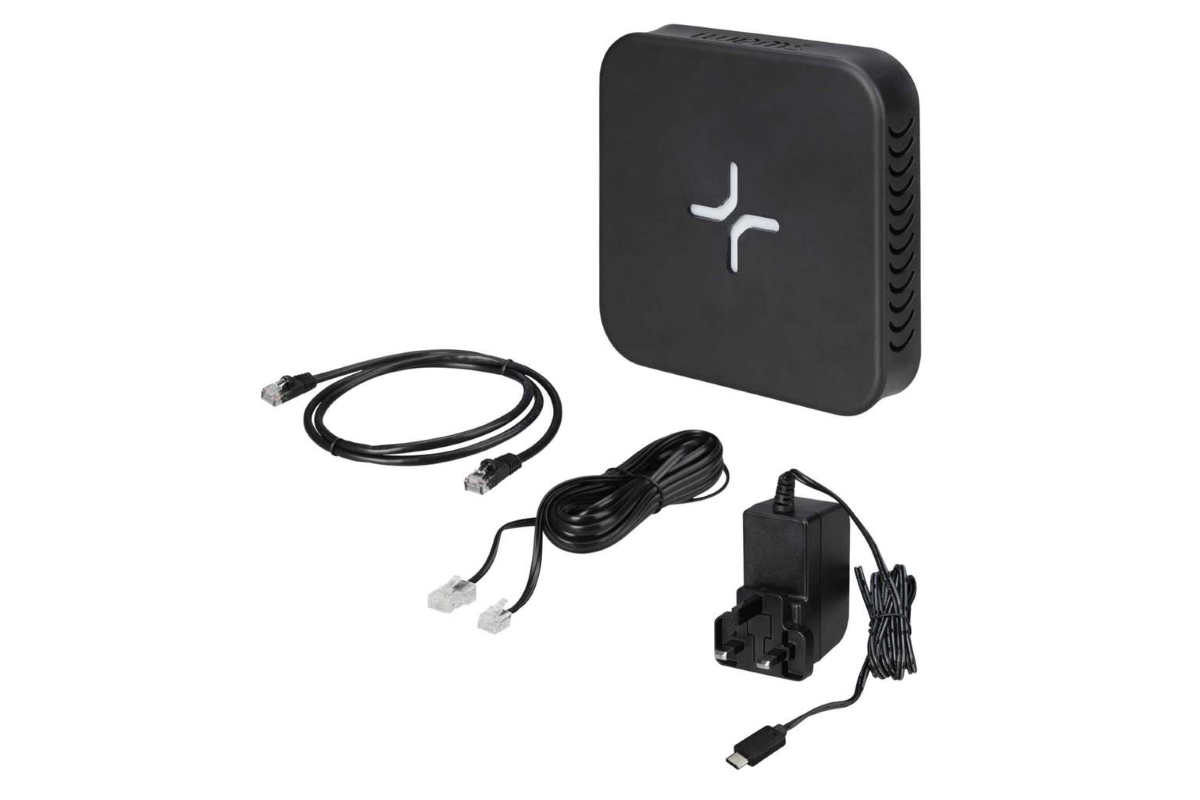
CEF has announced the exclusive UK launch of the Swarm Hub:One, an AI-powered smart energy management system designed to revolutionise energy management in domestic homes. Available from November, Hub:One will be sold exclusively at CEF's website and via its branches across the UK. The Swarm Hub:One serves as an innovative and central control system for home energy management. Using AI-driven energy schedules, it optimises the performance of renewable devices by aligning advanced forecast data with energy tariff data to help customers maximise savings and efficiency. Hub:One also provides advanced solar intelligence, tailoring energy consumption to the homeowner’s specific needs and lifestyle for peak efficiency. By offering Swarm Hub:One, CEF offers electricians a powerful tool that sets them apart in an increasingly competitive market. The Swarm Hub:One boosts both the savings and earning potential of existing solar and battery systems. It dramatically reduces client payback periods for new installations by up to 26%, while earning homeowners a saving of approximately £350 per year. Mike Gadd, CEF Renewables Division Director, says, "Installers are empowered to help homeowners achieve real savings quickly and give them visibility of this through an easy-to-use app. We’re delighted that we are the first distributor in the UK to offer SWARM, allowing system efficiency to be maximised, improve tariff optimisation and saving money – accelerating the benefit renewable energy can offer.” One of the standout features of Hub:One is its streamlined installation. Installers can have the system up and running in just 30 minutes, making it one of the most easily configured energy management tools available. This ease of setup, combined with its user-friendly interface, makes Swarm Hub:One an attractive option for installers, providing a seamless experience that is simple to sell, install, and support. In 2025, Swarm Hub:One will connect to Swarm’s Virtual Power Plant (VPP), a platform that allows homeowners to sell surplus energy back to the grid at premium rates. By pooling energy to meet the grid's flexibility needs, homeowners will have the opportunity to generate additional income by selling their excess energy back to the grid. Anthony Piggott, Founder and CEO of Swarm Energy, adds, “Our partnership with CEF represents a major milestone for Swarm. With CEF’s vast network and industry expertise, it is the perfect partner to help bring this transformative technology to installers. This collaboration ensures installers access our advanced energy management device easily, positioning them as leaders in a rapidly growing market, backed by CEF’s knowledge and expertise. “Together, we are leading the future of energy management, helping installers unlock greater value for their clients while embracing the shift to smarter, more sustainable energy solutions.” Swarm Hub: One will be available exclusively at CEF for £495. For more from CEF, click here.

M Group Services completes deal to acquire BGEN
M Group Services has completed the acquisition of BGEN and its subsidiaries, one of the UK’s largest independent technical engineering solutions businesses with a strong position in regulated end markets including power and energy, water, pharmaceutical and industrial sectors. BGEN offers specialist Mechanical, Electrical, Instrumentation, Control, and Automation (MEICA) capabilities which support clients in building new assets and optimising existing assets, which play a crucial role in reducing carbon footprints to meet net zero targets. This latest acquisition will enable M Group Services to rapidly advance its technical engineering solutions offering in its existing core markets in the energy, water, telecom and transport sectors, as well as expanding into new markets served by BGEN. It also further enhances M Group Services’ comprehensive platform of value-added infrastructure services expertise. Through its nationwide network of offices and almost 1,500 employees, BGEN provides its multidisciplinary offering to a range of clients including National Grid, Thames Water, Scottish Water, and Anglian Water, which also have long-term partnerships with M Group Services. M Group Services is committed to investing in BGEN, focusing on the growth and development of its workforce, training programmes, and skill enhancement to further expand its platform capabilities. Andrew Findlay, M Group Services’ Chief Executive, says, “BGEN is a business with a long trading heritage and an excellent reputation and culture that aligns with our own. “In line with our strategy, the acquisition of BGEN significantly enhances the technical engineering capability of M Group Services, significantly deepening our ability to provide expert solutions for our existing clients and broad range of new clients, for today and in the future. “Together we are even better placed to support the energy transition to net zero, leading the way in maintaining and enhancing essential infrastructure that is continually adapting to a rapidly changing world. I am very pleased to welcome the BGEN team to the M Group Services family.” Robin Whitehead, Chief Executive of BGEN, says, “Joining M Group Services represents the most significant step in our trading history to date and an exciting opportunity for our people, clients and partners alike. “Our focus remains on bringing excellence to engineering, helping to keep businesses, industries and economies moving forward with a safety-first approach. Our joint expertise will provide a wealth of specialist engineering services across multiple sectors, help us to deliver even more effectively for our clients and achieve our own growth ambitions.” Dominic Murphy, Managing Partner and Co-Head of the UK team at CVC, private equity owners of M Group Services, adds, “We are delighted the M Group Services team has secured this transformational deal with BGEN as part of its ambitious growth strategy. It is the first since CVC completed the transaction to buy M Group Services, earlier this year.” BGEN is the second acquisition made by M Group Services this year. For more from M Group Services, click here.

ESR announces support for e-bike safety campaign
The Electrical Safety Roundtable (ESR), a leading industry forum, has declared that it is supporting the Government's new safety campaign concerning the dangers of buying unsafe e-bikes and e-scooters. It is pleased to see the Department for Business and Trade take action with the new campaign, ‘Buy Safe, Be Safe’, which was launched on 24 October. While e-bikes and e-scooters can be a quick, cheap and greener alternative method of travel, a key concern is consumers buying unregulated and unsafe products bought online such as faulty lithium-ion batteries. Buying unsafe products online can pose a significant danger to consumers and risk of causing a fire. The campaign addresses these concerns by urging consumers to buy safe e-bikes and e-scooters and avoid rogue online sellers. It’s encouraging consumers to only buy safe products from reputable sellers, only replace items with products recommended by the manufacturer and to seek professional help when converting or repairing e-bikes and e-scooters. It comes after the new Product Regulation and Metrology Bill was published on 4 September. The Bill addresses product regulations in the UK, consumer safety and helping to further grow the economy. It will allow the UK to respond to modern challenges, such as the fire risk associated with such products as e-bikes and lithium-ion batteries. It most recently had its second reading in the House of Lords on 8 October. The ESR says that it is encouraging to see significant steps being taken by the Government to address the risk and dangers of buying unsafe e-bikes, e-scooters and components - and it is urging its participants to support the campaign and share resources with consumers to raise awareness of the risks associated with buying unsafe products online. If you own an e-bike or e-scooter, or are thinking about buying one, the ESR says that you should follow the steps below so you can enjoy these products safely and reduce the risk of fires: Step 1: Buying an e-bike or e-scooter • Do your research: Buy your e-bike or e-scooter from trusted sellers and look at reviews first. Products sold to UK consumers must meet UK safety laws: check whether the seller provides information about how they comply. • Compliance marks: Look for the UKCA or CE mark on e-bikes and e-scooters which is required by UK product safety regulations. Step 2: Looking after your e-bike or e-scooter • Follow the instructions and guidelines: Follow the manufacturer’s instructions for storage, charging, and maintenance. If instructions are missing, check the manufacturer’s website for guidance. Always follow the safety and usage instructions provided. • Charge safely: Charge your battery in a safe location that does not block fire escape routes or exits. Do not cover the charger or battery. Charge when you are awake and present, not when you are asleep or away from home. Unplug once the battery is fully charged. • Check compatibility: Make sure your charger is suitable for your battery, as not all e-bike or e-scooter batteries and chargers are safe when used together. Connecting the wrong charger to a battery can pose serious fire risks. Step 3: Making changes to your e-bike or e-scooter • Converting a bike to an e-bike: Only use a competent professional to convert a pedal bike to an e-bike. • Use manufacturer recommended replacement parts: Only use manufacturer recommended e-bike and e-scooter replacement parts, chargers, and batteries. • Repairs: If you need to repair your e-bike or e-scooter, always get a professional to carry out the work. • Don’t tamper with the battery: Never attempt to modify or tamper with your battery. For more from The Electrical Safety Roundtable, click here.

Metrel introduces new electrical installation safety tester
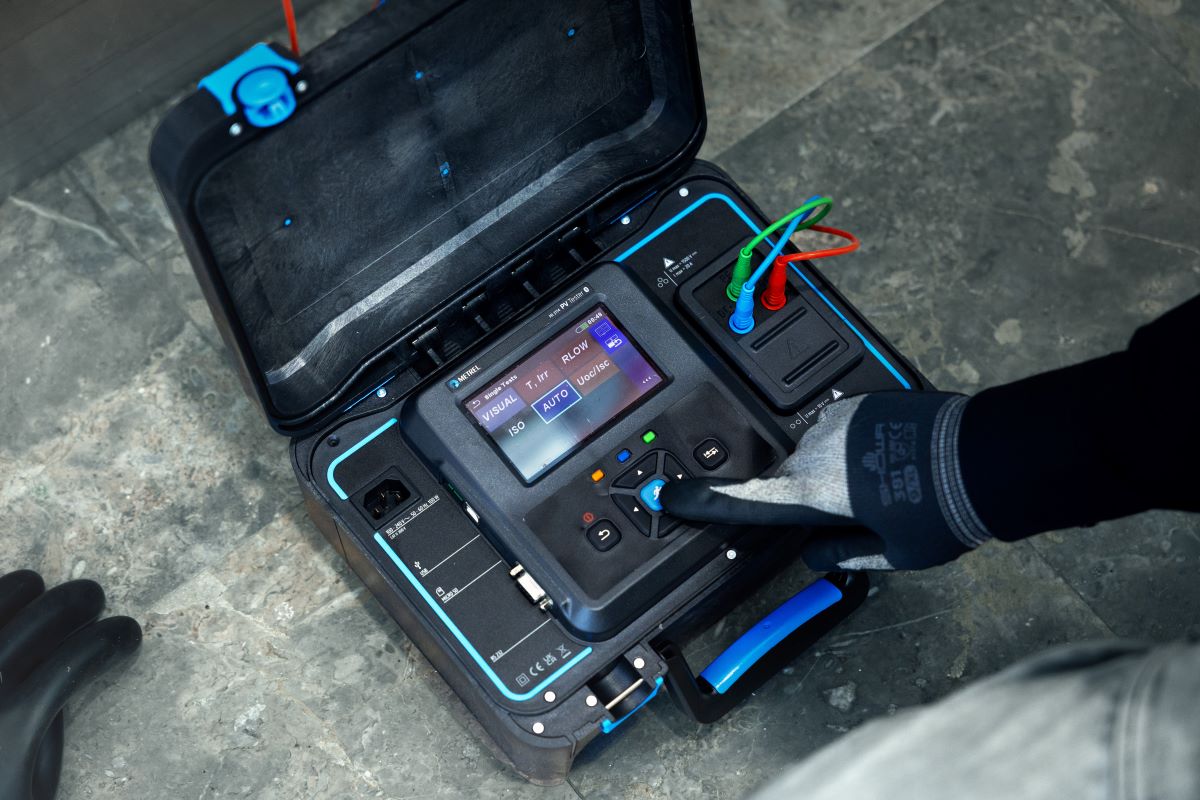
Metrel, a manufacturer of test and measurement equipment for the electrical industry, has launched the MI 3114 PV Tester, a multifunctional electrical installation safety tester for testing PV systems with a maximum system voltage of up to 1500V and a maximum short circuit current of 40A. The tester comes with an array of versatile accessories for comprehensive testing, including a remote unit for measuring irradiation and cell temperature (of photovoltaic modules). Key features include: • Testing PV strings in parallel with a 40A current (50% faster testing) • Measurements of insulation in 1500 V PV systems in a single instrument • An auto test function for IEC/EN 62446 category 1 tests • Wireless (Wi-Fi) remote unit for measuring (and logging of) irradiation and cell temperature of PV modules • Calculation of STC values and comparison with nominal data • PV modules database handler • Correction of previously wrongly entered parameters of an already executed measurement or a group of measurements For more from Metrel, click here.

Legrand invests in UK manufacturing with new facility
Legrand UK & Ireland has announced the opening of a new electronics manufacturing hub in Northumberland next year, bringing 200 jobs to the local area and launching the latest electronics manufacturing centre of excellence for the Legrand Group in Europe. The new site in Cramlington will be home, among other, to Legrand’s CP Electronics lighting controls and Legrand Care brands, offering the global specialist of electrical and digital infrastructures a facility in an area close to the clean energy sector and associated skills base. The purpose-built site is designed to optimise processes, capability, efficiency and sustainability. It will be home to new manufacturing technologies, with increased digitisation of the manufacturing process and will boast a wide range of sustainable features, including solar PV. Planning permission has been granted for the 3,717m² facility, which will also feature a 1,580m² service yard and 107 car parking spaces on land at Crossland Park, Cramlington. It is expected that the new facility will be completed by April 2025. Legrand’s mission is to improve lives by transforming the spaces where people live, work and meet, with electrical and digital infrastructures and connected solutions that are simple, innovative and sustainable. This new facility will not only help us to better deliver this for our clients, but it will also improve the experience for our people who will work in a safe, diverse and inclusive environment designed to be more comfortable and sustainable. Pascal Stutz, CEO, Legrand UK & Ireland, says, “The opening of our new Cramlington facility underscores our confidence in the UK’s manufacturing sector and particularly in the skilled workforce in the North East. “Legrand has been a proud UK manufacturer for more than 40 years. During this time, the company has grown its expertise to become a trusted partner to contractors, specifiers, wholesalers, installers, facilities managers and building occupants, through our extensive catalogue of products, training opportunities and support services. Indeed, we are already proud members of the Made in Britain organisation, demonstrating our commitment to quality and UK manufacturing. “Our investment in this state-of-the-art facility underscores our ongoing commitment to UK manufacturing.” Tim Witty, Development Director at UK Land Estates, adds, “This is an incredibly exciting project, and we are delighted to welcome Legrand to the region. “We constantly invest in our portfolio, and Legrand’s new state of the art base on Nelson Park Industrial Estate delivers the highest possible energy efficiency standards as well as offering space for the global business to grow and flourish here in the North East.” Additionally, Legrand is also looking to further develop its presence in the London area, with plans to also establish a state-of-the-art research and development centre and testing laboratory. This second new facility will also house a Training Academy and the operations support teams. It will be conveniently located to welcome guests and will provide cutting-edge tools and collaborative spaces, fostering innovation and accelerating the creation of advanced solutions. Legrand says that this strategic investment underscores its commitment to continue driving technological advancements and delivering value to its customers. For more from Legrand, click here.

Knightsbridge Tenax now offers 48 bulkhead options
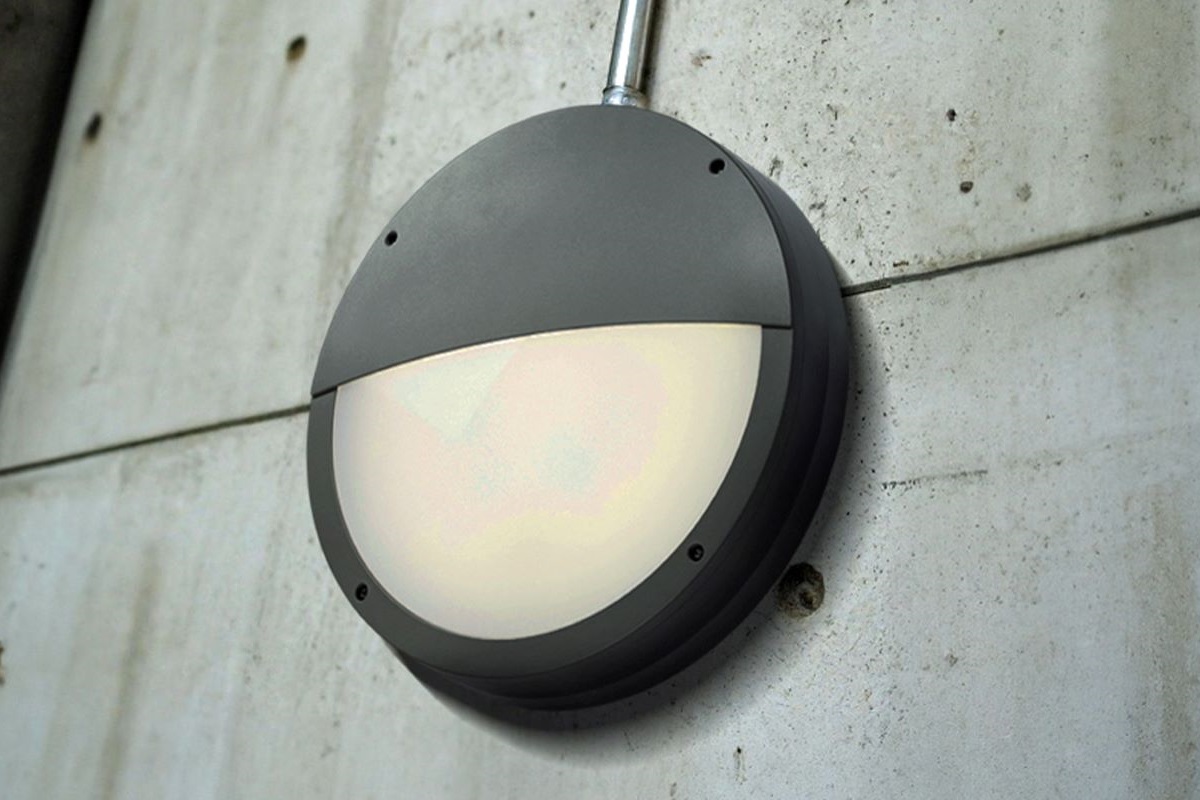
The Tenax range of polycarbonate bulkheads from Knightsbridge – one of the UK’s leading manufacturers of wiring accessories and lighting – has just got tougher and more versatile with the introduction of the Tenax Pro Series and two more gear trays. The modular design and wide range of options enable the Tenax Pro to be tailored to any situation without requiring an extensive inventory – and there are up to 48 different combinations out of the base choices of cases and gear trays. The casing can be square or round, black or grey, standard or anti-vandal eyelid design and there is a choice of eight gear trays: standard, emergency, self-test, microwave, emergency microwave, self-test microwave and the two latest additions, which are equipped with daylight sensors. The standard LED gear tray delivers luminosity ranging from 1,200lm at 10W to 2,100lm at 20W, ensuring adequate illumination while maintaining energy efficiency. The emergency LED gear tray goes further by incorporating a three-hour emergency backup powered by a lithium (LiFeP04) battery, ensuring continued operation during power outages. Also fitted with a photocell to detect natural light, the standard and emergency LED gear trays save energy by cutting out when not needed. Available in three colour temperatures — 3000K, 4000K, and 5700K — and wattages of 10W, 15W, and 20W, these gear trays cut complexity by combining triple wattage and colour adjustments into a single gear tray. Installation is designed to be simple too, thanks to push-fit terminals. By offering a choice of six casings and eight gear trays, Knightsbridge enables customers to streamline their inventory and installation processes, providing a mix-and-match approach that reduces the need to stock a wide variety of components. Covered by a five-year warranty, the Tenax Pro series is IP66 rated for dust and water and IK10 for impact and guarded by stainless steel tamper-proof screws so each unit is secure and durable. BESA box compatible, the casings have multiple 20mm conduit entries for easy installation. For more from Knightsbridge, click here.