2 November 2026
Product of the Month: Amari Floodlight range by Aurora Lighting
 
10 November 2026
Openreach partners with Allstar to boost EV charging options
 
10 November 2026
VCHRGD appoints Craig Summers as Head of Partnerships
 
9 November 2026
UK Power Networks helps nine veterans secure energy sector jobs
 
9 November 2026
Exclusive: why getting project planning right from the outset matters
 

Latest News


Gripple unveils enhanced multi-purpose hanger
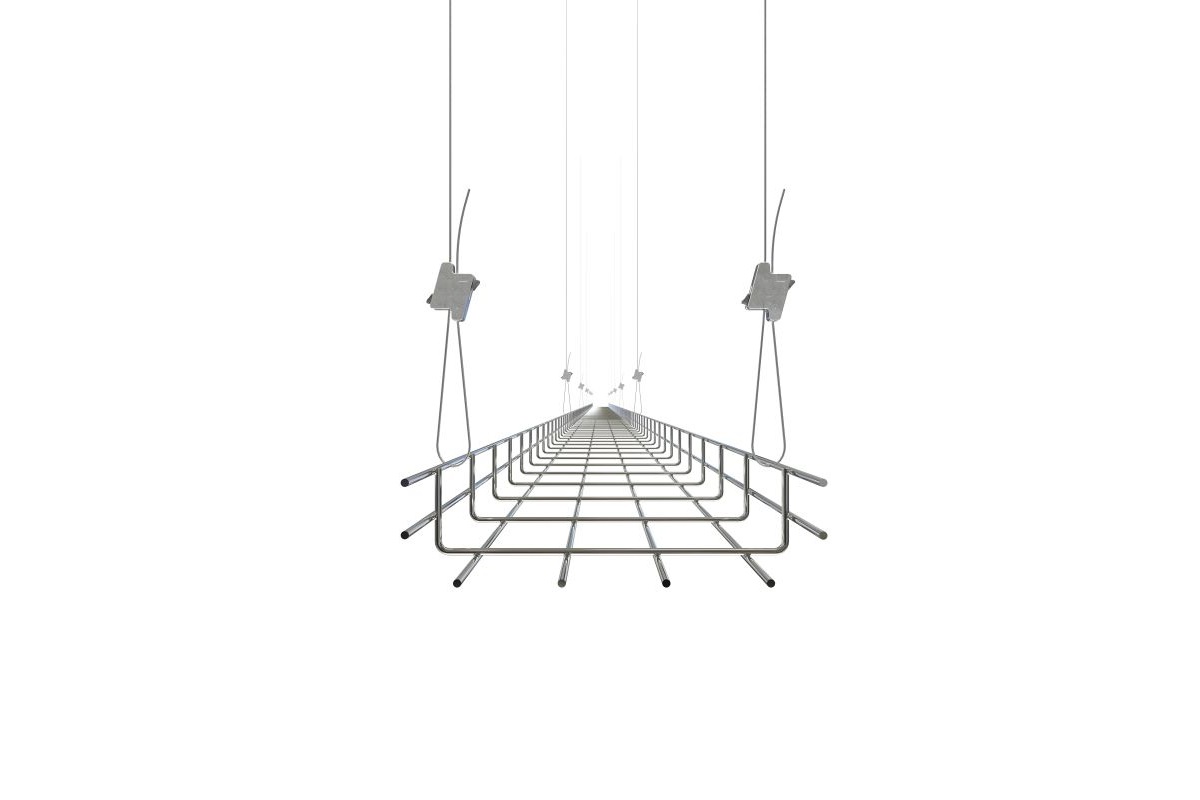
Designed to make the suspension of building services simpler and more efficient than ever before, Gripple, a manufacturer of wire joiners and tensioners, has unveiled a brand new version of its B-LOCK suspension hanger. Designed with user convenience in mind, the B-LOCK hanger features wire entry markers for easy insertion, whilst the strong internal mechanisms deliver heightened security. Side release buttons also ensure easy adjustment. Drastically faster to install than traditional rod supports, the B-LOCK hanger’s versatile design accommodates both light and heavyweight installations up to 70kg, making it ideal for mechanical, electrical, lighting and acoustic applications. Ben Wilde, Product Manager at Gripple, says, “We are always keen to improve our products to better support the needs of our customers. The new B-LOCK hanger is testament to this, enhancing the speed and ease of installation, as well as the performance capabilities of the product itself. “By listening to our users and incorporating their feedback, we have developed a solution that not only meets their needs, but also maintains the high standards of quality and reliability that Gripple is known for. By choosing a Gripple product, users can be assured that each component has been through a process entirely built and owned by Gripple – from our own die casting, injection moulding process and steel pressing – our end-to-end manufacturing process results in greater efficiencies, better quality and ultimately, improved customer satisfaction.” In addition to product improvements, existing B-LOCK users will also notice a number of innovative updates to the product’s packaging. In alignment with the organisation’s B-CORP certification, Gripple has focused on ensuring the packaging is more sustainable and environmentally friendly. The new packaging is made from 60% recycled content and all cardboard packaging is fully recyclable, ensuring a reduced environmental footprint and supporting the company’s commitment to sustainability and corporate responsibility. The B-LOCK Combo Packs have had a complete re-design, making them more user friendly. Hangers are fully contained on one side of the box with wire conveniently stored on the other; while an integrated dispenser ensures neat use and efficient dispensing. The size of the Combo Packs has also been addressed to ensure that they are easier to move around site, with dedicated thumb areas added allowing for good grip - even with gloves on. B-LOCK hangers can be purchased in quantities of 10, 30, 50 and 100 units, whilst wire reels are sold individually. Wire is available in diameters of 1.5mm, 2mm and 2.5mm across lengths of 50m, 100m and 150m. Combo Packs of hangers and wire give added convenience, providing a comprehensive offering for a variety of different construction projects. For more from Gripple, click here.

Omron launches high power PCB relay
Omron Electronic Components Europe has launched a new high power PCB relay for use in AC wallboxes for Mode 3 AC EV charging stations. Omron states that the G9KC relay provides the lowest contact resistance available on the market, and that it produces significantly less load terminal heat rise when in operation compared to equivalent devices. This opens up new opportunities for designers and manufacturers of EV chargers to create systems that can charge faster and more efficiently, with a higher reliability and expected lifetime. As electric vehicles grow in popularity, demand for dependable and high-speed EV supply equipment (EVSE) or EV chargers is also rapidly increasing. Improved charging speeds can be achieved by using higher charging currents; however, this requires the use of higher rated electronic components, resulting in the generation of more heat inside the wallbox enclosure. Higher temperatures within the wallbox can significantly affect charging performance and efficiency and can cause temporary limitations on charging power. Furthermore, increased heat cycles and heat levels can also cause components to wear prematurely and fail. Balancing the increasing amounts of heat dissipated by higher power components, with the desire to reduce overall system footprint, is therefore a major challenge for designers of EV charging infrastructure. Omron’s G9KC relay utilises an optimised structure which includes a mechanically coupled, double break contact design for demanding AC wallbox and pedestal charger designs for use in home, workplace, commercial and industrial settings. Designed and developed to high Japanese standards, its aim is to offer an improvement in energy efficiency while reducing heat dissipation. As a result, G9KC contributes effectively towards the overall reduction in operating temperature in a typical 22 kW (max 32 A/Phase) wallbox. This not only facilitates faster, more efficient charging, but also unlocks new possibilities for wallbox designers to develop more compact and robust designs. The relay’s four-pole structure means that a single device can replace larger multi-pole contactors and combinations of one and two pole, reducing the footprint required. With a guaranteed initial contact resistance of less than 6 mΩ it has the potential to contribute less as a hotspot while improving charging efficiency and performance. The G9KC’s lower operating temperature reduces the likelihood in the number of charge cycles reaching charging current throttling thresholds, while also contributing to improved reliability and longevity of the relays themselves, as well as surrounding components. Unlike contactors, the G9KC can be mounted on a printed circuit board (PCB), which can help to facilitate smaller and lighter designs in a variety of products including EVSE/ Chargers, UPS, Grid Interactive and commercial and industrial inverters and converters. G9KC has been approved by safety standard certification authorities of UL/C-UL, TUV and CQC, and has been designed to meet the requirements of IEC 62955 - Residual direct current detecting device (short circuit capability), and IEC 61851-1 - Electric vehicle conductive charging systems, alongside a wide range of other relay safety applicable standards. For more from Omron, click here.

Copeland Group celebrates its 50th anniversary
Copeland Group, a building services company founded by an electrical engineer, is celebrating its 50th anniversary and looking to the future following a management buy-out. The company was started by the late Tony Copeland and his wife Annice in a mid-terrace house in Stamford Street, Ashton-under-Lyne, with the single aim of providing quality workmanship and client satisfaction as a small electrical contracting company. Over the five decades since, it has forged an impressive reputation for the quality of its work and staff - many of whom started out with the business as apprentices - and the company has become one of the UK’s foremost providers of mechanical and electrical (M&E) building services. The company has a vast range of clients that it works with, both directly and with main contractors, such as the NHS and local authorities as well as private health providers, financial institutions and private developers, among others. Contracts have ranged from projects at public buildings such as hospital, schools and libraries to sports centres, listed buildings, retail establishments and numerous banks. The MBO announcement in the spring follows the sad passing of Founder, Tony, in September 2023. The restructured board of directors includes Managing Director, Mark Middleton, who is joined by Commercial Director, Aaron Brierley, and Tony’s daughter, Alex Copeland-Anthony, who is Financial Director. They are working alongside Tony’s widow, Annice, who remains a director and shareholder. Alex comments, “We’re starting as a new team, and we want to continue to build on the success of the business and do my Dad proud - and I think we’re already working together brilliantly. “Dad always put an emphasis on looking after the employees. He would have sleepless nights over wanting to keep everyone employed and for the business to do well, because there were so many people depending on it. “He established ways of working that were the reserve of huge corporate structures because that’s what he had learned through his early career; he brought that with him and used it as a template for how he wanted to run his business. We’ve still got those systems in place today to a large degree, which does improve the quality of what you’re doing because you’re doing it systematically.” The firm started out re-wiring houses for Tameside and Salford Councils before landing a contract to work on the X-ray department at the Manchester Royal Infirmary (MRI), where its teams completed various projects almost continuously for more than 20 years. As the business grew and contracts multiplied – including its first measured term contract (MTC) with the NHS at Wythenshawe Hospital, where it still works today – it meant a move to larger premises and the establishment of the group’s current headquarters at Nile Street in Ashton under Lyne, Lancashire, in 1984. MD Mark Middleton, who started with the group as an apprentice electrician in 1986, says, “Tony was very accomplished - an exceptional electrical engineer; he knew almost everything, and it was him who set the standard for quality. “You can also attribute our success to a vast array of other things – in addition to the established team of loyal staff, we’ve got a great apprenticeship scheme with most of the apprentices staying on when they’re out of their time. It’s a great company to work for, family oriented, and out on site with our clients, we are renowned for quality and never letting clients down.” The group aims to offer four to six apprenticeships to school leavers aged up to 18 each year, and so far, approximately 160 trainees have gone through the scheme. Apprentices combine work and day-release at Oldham College and when they emerge as a qualified electrician, they generally go on to a full-time job and are encouraged to progress within the business. Mark adds, “We’re very proud of the apprenticeship scheme. I came through it, as did our Commercial Director, Aaron, and Paul Ogden, one of our Contracts Managers. It gives people a great opportunity to enter a key industry.” The group now has a team of around 100 people working for it, with the vast majority of them based out on site.

EV-compatible outdoor consumer units from Luceco
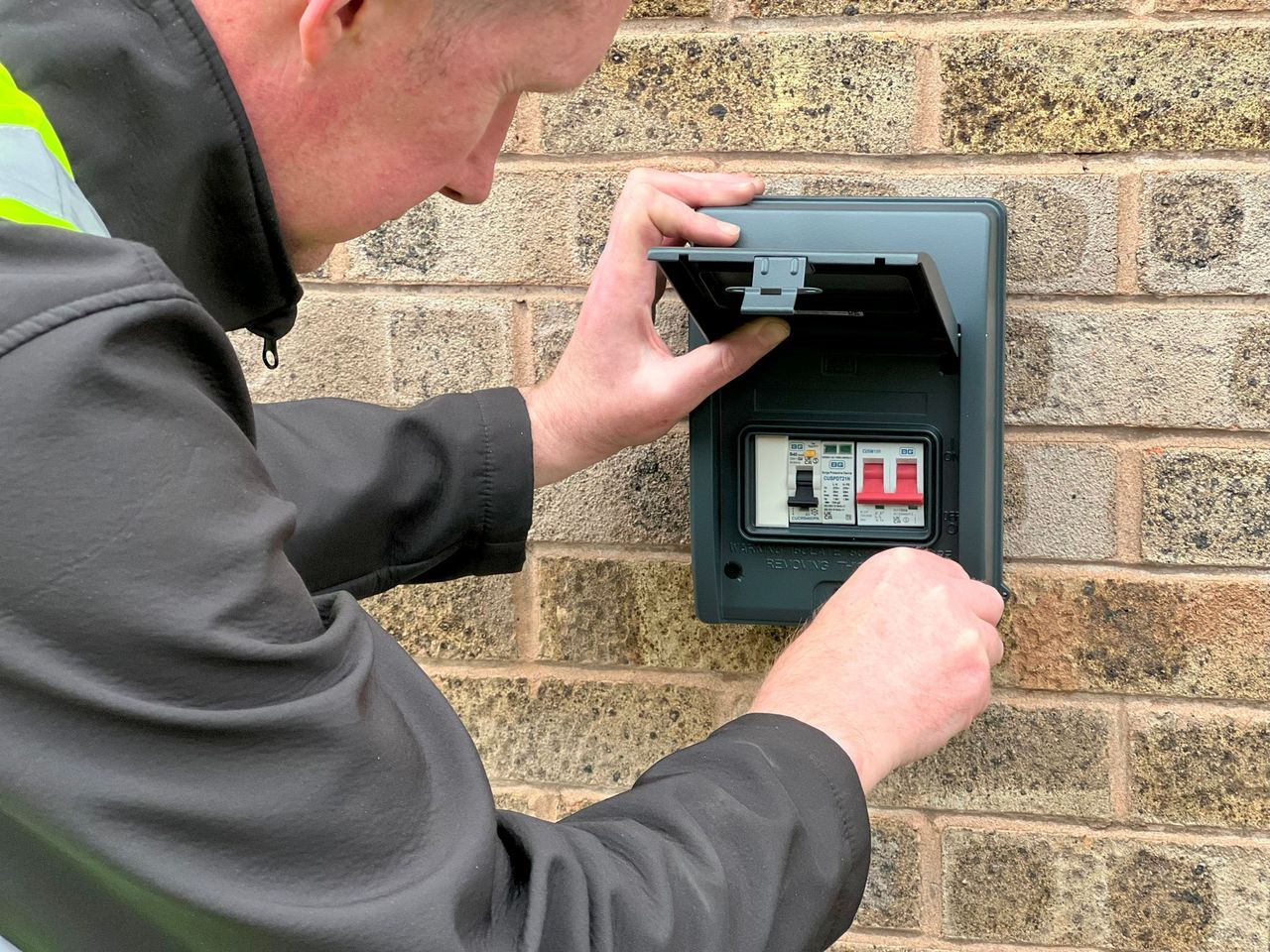
Luceco, a designer, supplier and manufacturer of LED lighting products, says that with the increasing consumer demand for safe, sustainable and reliable outdoor lighting and electrical power - which is especially important given the rise of electric vehicle (EV) charging - then now might be the ideal time for electrical contractors to consider its outdoor IP65 consumer units, branded BG Sync EV. Designed for quick and easy installation, these products are for professional-only fits in an expanding consumer market, where installers can help guide end-user choice. Fully compliant to IP65 external standards, the BG consumer units are ideal for security lights, pond accessories, garden decorative and drive lighting, outdoor DIY, and gardening appliances - as well as EV charging points. Backed by Luceco’s technical services team which is just a call away, the company believes its offering offers electrical contractors an ideal "fit and forget" opportunity. Rated IP65 (Ingress Protection) as defined by BSEN60529:1992+A2:2013 (Degrees of protection provided by enclosure), the BG outdoor consumer unit from Luceco has a lockable front cover to prevent unauthorised access to the electrical safety devices protecting the circuits. The IP65 enclosure also provides protection against dust and water jets, making the unit safe from accidental proximity of a garden hose or jet washer. There is also an IP20 version for indoor use. IP65 products are available in smart anthracite black and white, and IP20 in white. A Luceco spokesperson says, “BG Sync EV Outdoor Consumer Units are already the market leader based on being first to market with leading innovation, through to excellent product quality and consistently proven performance in the field over several years. “Equally important is that not only are they tried and tested favourites with installers, but they are also backed by a technical support desk, so if the installer has any questions, a technical expert is quickly available. “These consumer units are not only an easy choice for installation but also provide a problem-free result for the end-user.” Available from all major electrical wholesalers, packaging and product information make clear that these products are suitable for professional installation only. The Luceco Group, which includes the Sync Energy, BG Electrical, and Masterplug brands, has over 70 years of industry experience. For more from Luceco, click here.

BGEN appoints new Head of Sustainability
BGEN, one of the UK’s largest engineering firms supporting the energy transition, has appointed Amy Twist in the newly created role of Head of Sustainability. Amy will be responsible for driving BGEN’s goal of achieving net zero status, which involves finalising the company’s science-based targets in line with the Science Based Targets initiative (SBTi), as well as overseeing BGEN’s wider ESG strategy. “This senior appointment underlines our commitment to delivering against out net zero and wider ESG ambitions” says Robin Whitehead, CEO at BGEN. “On the sustainability front, we have already made great strides in reducing our emissions; already reaching our interim goal of achieving a 25% reduction in Scope 1 and 2 CO2e emissions by 2025. However, we realise that there is still a long way to go, and Amy has been added to the team to focus on this important initiative.” In her new role, Amy will be the Responsible Person and first point of contact for all sustainability matters, identifying and responding to current best practice requirements, and supporting across the company’s core mechanical, electrical, instrumentation, control and automation offering. In the short term, Amy is working with Tunley Environmental to develop the company’s near term and net zero carbon reduction targets in line with the SBTi requirements. Amy joins the company with a wealth of experience and has held environmental and sustainability roles at a number of construction and engineering companies including Vistry Group, Buckingham Group Contracting and Costain. In addition, Amy holds a number of qualifications and memberships including a first-class honours in Environmental Science and a Practitioner Member of the Institute of Environmental Management and Assessment (IEMA). Speaking on her appointment, Amy comments, “The opportunity to build on what BGEN has achieved already was very appealing. BGEN is a forward thinking and ambitious organisation with the capacity and aspiration to make change, and in this newly created role I will have the opportunity to make a real difference.” Amy’s additional responsibility of overseeing BGEN’s wider ESG strategy will see her building on community and schools’ initiatives including the sponsorship of Barrow Raiders to encourage the next generation of female engineers and rugby players, and a STEM and sustainability partnership with St Vincent’s Primary School. For more from BGEN, click here.

SkillELECTRIC contest names this year's finalists
SkillELECTRIC, the annual search for the UK’s best student electrician and a part of the WorldSkills UK competition framework, has named the eight competitors who have been named as this year's UK finalists. The eight individuals who scored most highly across the recent national qualifying heats are as follows: Charlie Moore – Bramham Electrical / College of West Anglia Fabien Maciejewski – a completed T Level Learner at Leicester College Joe Swallow – M&C Engineering / Suffolk New College John-Ross Campbell – A Campbell Electrical Services / SECTT Jonathan Gough – MD Electrics / Southern Regional College Kalum Low – MS Electrical and Renewables / SECTT Milly Smith – CS McKerlie Electrical Services / SECTT Richard Westwood – Dudley College All have been invited to take part in the SkillELECTRIC UK Final being held at Oldham College during the week commencing 18 November. The event, which is organised by industry charity National Electrotechnical Training (NET), has Electric Center, the NICEIC and Scolmore Group as its delivery partners. It is also supported by Megger, EAL, Snickers Workwear and CK Tools. Alongside SkillELECTRIC, around 50 other WorldSkills national competition finals will be taking place during the same week in November across nine venues around Greater Manchester, involving over 400 competitors. To be crowned SkillELECTRIC champion, competitors will have to excel in a complicated three-day practical installation task set to a strict timescale and against a rigorous marking criteria. Following the success of the solar PV task in last year’s final, the event this year will also include an electric vehicle charging-related task for competitors to tackle. Those who perform well enough and are age eligible could be in with a chance of representing the UK in the Electrical Installation competition at WorldSkills 2026 in Shanghai, China. “After witnessing some great skills on display across our national qualifying heats, it’s great to welcome a real cross section of industry learners in this year’s final”, says Jennie Phung, SkillELECTRIC Project Manager. “From T-Levels, to apprenticeships, to mature learners and career changers, our finalist mix this year shows the varied ways you can start your journey in the electrical industry on the way to becoming qualified. We look forward to November’s event and working with our competitors between now and then to help them prepare for their UK final performance.” For more from SkillELECTRIC, click here.

Registration now open for Smart Buildings Show 2024
Registration is now open for Smart Buildings Show 2024, the UK’s largest commercial smart buildings event. This year's edition will take place on 9-10 October 2024 at ExCeL London, and is once again free to attend. Last year, a stream of more than 2,000 visitors flowed through the exhibition hall and attended presentations from over 70 speakers, underlining the show’s ability to connect visitors to the latest information and technology in the smart buildings industry. It also helps key industry personnel gain the information they need to arrive at an informed decision on how to make their buildings more economic for owners and more functional for occupiers. The event will again host an engaging conference programme across four theatres, packed full of industry leaders delivering thought-provoking content and inspiring visitors to further explore the latest trends and opportunities. Ian Garmeson, Event Director, says, “Anybody interested in making buildings more economic and functional, seeing what’s new in the industry and keeping up to date with the latest innovations and technologies should register to attend Smart Buildings Show 2024. The event promises to be another vital learning experience as well as a fantastic networking opportunity for existing - and potentially new - industry partners. We look forward to seeing you there.” To register for your free ticket to Smart Buildings Show 2024, click here. For more from Smart Buildings Show, click here.

ECA welcomes government’s house building plans
ECA has welcomed the new government’s plans for an immediate programme of house building, investment in infrastructure including clean energy, and unblocking the planning system. ECA Chief Operating Officer, Andrew Eldred, explains, “We have seen a new era of opportunity set out by the Chancellor and the Secretary of State for Energy Security. Businesses in the electrotechnical sector will welcome the swift actions taken by the new government with the prospect of economic growth promising busy order books after months of flatlining. “These ambitions will increase an already stretched workforce and could exacerbate the culture of poor payment practice in supply chains. The government must work closely with industry to address these underlying structural issues to have a chance of fulfilling their pledges.” The new Chancellor, Rachel Reeves, has pledged to build 1.5 million homes in the next five years, while the new Energy Secretary, Ed Miliband, has reiterated the Labour party’s pledges to boost energy independence and cut bills through clean power by 2030. ECA continues to campaign for the electrotechnical sector to be placed front-and-centre of the clean energy transition, through appropriate skills development and investment in energy efficiency and low carbon technologies. ECA works closely with its members, industry partners and government to raise the profile of electrical contractors in the transition to net zero carbon. The Association produces regular guidance notes, technical bulletins, and industry updates to keep members at the forefront of the net zero transition. For more from ECA, click here.

PULS launches PISA-M electronic circuit breakers
PULS, a provider of DIN-Rail power supplies, has announced the launch of its new series of PISA-M 4-channel electronic circuit breakers (ECBs). These devices are the perfect safety and power distribution tool for applications with power requirements ranging from 90W to 480W. The new PULS electronic circuit breakers manage the current distribution on the secondary (load) side of a control system, separating it into smaller 'power islands' which are easier to maintain and reduce the risk of costly total power outages. PULS PISA-M ECBs are designed to provide comprehensive safety solutions for power systems. They protect system components from over-current and short-circuits, as well as wiring from overheating. In addition, PISA-M also protects the system power supply from overload. The on-board protection features combine to ensure a high system robustness and reliability. This benefits users with less time spent on maintenance, lower replacement costs and more focus on operations. The PISA-M features a digital coded interface, providing an easy way for maintenance staff to remotely control the devices and to monitor the operational system status. This means power distribution can be managed easily via a PLC and a central user interface. With a width of only 22.5mm, PULS says that PISA-M is the smallest four-channel electronic circuit breaker in the market. This compact design means it can fit into any system, freeing up valuable space in control cabinets. Push-in connectors on the front of the PISA-M allow for a quick and tool-less installation, saving time and effort. In addition, two-colour LEDs that show the status of each output channel in real-time, and a button is provided on each channel for easy on/off switching and resetting. PULS provides a number of versions of PISA-M ECB. The 4ADJ modules are adjustable, allowing each output channel to be set to the required current value from 1 to 8A. If a plug-and-play device with fixed currents is needed, PULS offers PISA-M versions with fixed output current settings (e.g. 2A, 4A, 6A, 8A). This flexibility allows customers to choose the version that best fits their specific needs, making the installation process even faster, easier, and more secure.

The five most costly problems tradespeople face
With most of the UK experiencing the impact of the cost-of-living crisis, it is important that unexpected costs are avoided where possible. However, those working in skilled trades face several challenges in their roles which pose a financial threat. Rob Rees, Divisional Director of Markel Direct, a specialist insurer of tradespeople, highlights the five costliest problems which tradespeople could be putting themselves at risk of facing, along with the necessary precautions and solutions to avoid a devastating impact. 1. Workplace injuries Tradespeople face a higher risk of personal injury due to the nature of their work. The construction sector, in particular, records one of the highest rates of workplace injuries, according to Health and Safety Executive data. Common injuries include slips, falls, accidents from heights, strains and sprains, often related to lifting heavy objects. Business owners are responsible for their workers' safety, and for trades businesses with employees, arranging employers’ liability insurance is a legal requirement if you employ staff. It can cover your legal expenses and compensation in the event of an employee being injured at work. Sole traders, on the other hand, should ensure they have insurance covering personal injury. While public liability insurance is popular and vital for tradespeople, it only covers injuries to third parties, not the tradesperson themselves. To cover personal injuries sustained whilst at work, occupational personal accident insurance can help by providing an income whilst you are unable to work. 2. Damage to third party property (including client property) In the world of trades, even the most skilled professionals can occasionally make mistakes that result in damage to property. The range of issues can vary from minor mishaps, such as paint spills on floors and furniture, to potentially catastrophic events like fires. Such damage can lead to disputes, project delays and potential legal actions, all of which have the potential to place strain on a tradesperson's financial stability. To minimise the negative impact of damage, here are some essential steps to follow: • Assess the damage: Before taking any action, carefully evaluate the extent of the damage. Determine whether it resulted from your work or existed beforehand. • Notify the client: Promptly inform the client about the damage and discuss the situation. • Consult your public liability insurance provider: Contact your insurance provider to report the incident. Provide them with as much information as possible so they are best placed to support you. • Follow insurance guidance: If the damage resulted from your work, follow the guidance provided by your insurance provider regarding next steps and potential coverage. • Prevent future incidents: Implement measures to prevent similar incidents from occurring in the future, such as enhanced safety precautions or improved work processes. Taking these steps can help you to better address property damage incidents, protect your reputation and maintain the financial stability of your trades business. 3. Tool theft, damage and loss A recent survey found that 57% of tradesmen who had their tools stolen suffered financial losses. Among them, 41% reported losses exceeding £2,500, a substantial amount amid rising living costs. Tools are often stolen from vans, with 41% of thefts occurring either at home or on-site. Tool theft not only hits finances but also disrupts work due to the time lost in replacing tools, and similar financial challenges arise when tools are lost or damaged during on-site work. To safeguard your tools, take necessary precautions such as: • Adding extra locks/alarms to your vans • Removing tools overnight • Parking in secure locations • Using visual deterrents like alarm stickers and CCTV Additionally, to alleviate the financial burden of tool theft, consider taking out tool insurance, which covers the cost of replacing stolen equipment and extends to tools lost at sites or damaged due to factors like flooding or fire. Surprisingly, 25% of tradespeople are unaware of tool insurance, despite its benefits. These measures can help protect your valuable tools and your livelihood. 4. Project delays One study showed that the primary reasons builders faced project delays was due to material shortages (73%) and a shortage of skilled labour (55%). Other common reasons for delays include poor time management, health issues, equipment problems (including theft), subcontractor issues and weather-related setbacks. Delays can lead to financial losses, as well as harm your reputation. To minimise the financial impact of delays, develop contingency plans for common delay factors. Once you've identified the potential delay factors, develop specific strategies to address each one. These may include: • Building buffer time into the project schedule to account for unexpected delays. • Researching and identifying alternative suppliers for critical materials needed for the project. • Keep a buffer inventory of essential materials on-site or readily available to mitigate the impact of sudden shortages. • Keep all project stakeholders informed about potential material shortages and the steps being taken to address them. These plans allow for quick responses when problems arise. Open communication is also essential; if delays occur, communicate early and clearly with your clients about the reasons and potential timeline adjustments. Managing their expectations can help to prevent dissatisfaction and strained relationships. In more challenging situations, familiarise yourself with the legal aspects of project delays, including contract clauses related to delays, penalties and dispute resolution mechanisms. Being proactive and transparent can help you navigate project delays more effectively while safeguarding your monetary interests and professional relationships. 5. Unexpected legal costs Unexpected legal fees can pose a significant and unforeseen challenge for tradespeople, potentially jeopardising finances and livelihoods. Whether it's disputes with clients, issues related to overdue payments, or unexpected legal situations stemming from your work, the cost of legal advice can quickly add up. Seeking legal guidance at the earliest signs of conflict can help prevent matters escalating into a legal dispute or court case, so to safeguard your financial stability and professional reputation, you should consider proactive measures. This includes having a contingency fund specifically allocated for legal advice or making use of legal helplines. Markel Direct provides its business insurance policyholders with access to a 24-hour legal advice helpline, as well as access to Business Hub, which contains legal document templates to help with various problems. Having access to valuable advice from experienced legal professionals can help tradespeople to navigate challenging situations. It is impossible to predict when a problem may arise that could affect a tradesperson's finances and work; however, what can be done is taking the proper precautions to ensure they have safeguarded against the most experienced issues in the industry. For more from Markel Direct, click here.