2 November 2026
Product of the Month: Amari Floodlight range by Aurora Lighting
 
10 November 2026
Openreach partners with Allstar to boost EV charging options
 
10 November 2026
VCHRGD appoints Craig Summers as Head of Partnerships
 
9 November 2026
UK Power Networks helps nine veterans secure energy sector jobs
 
9 November 2026
Exclusive: why getting project planning right from the outset matters
 

Latest News


char.gy reaches new public charge point milestone
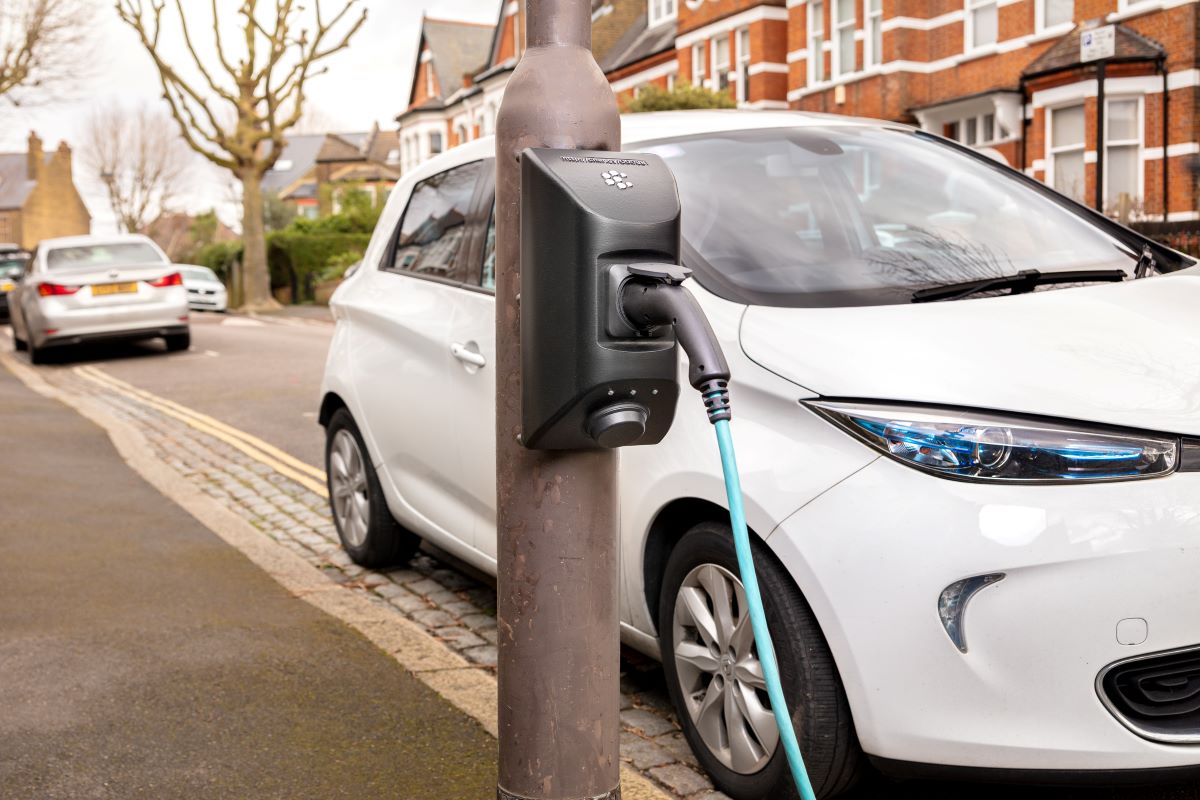
British company char.gy has reached a significant milestone in its mission to democratise electric vehicle (EV) ownership by installing its 3,000th EV charging point. This achievement underscores the company's commitment to making EVs accessible to all, but particularly for the 40% of UK households without off-street parking. Located in the London borough of Lambeth, the new unit highlights char.gy's dedication to facilitating widespread EV adoption. As the government advances its goal of establishing a comprehensive nationwide public EV charging infrastructure by 2030, on-street charging stations such as those offered by char.gy play a crucial role. To achieve this objective, councils are urged to apply for grants from the Local Electric Vehicle Infrastructure (LEVI) fund, established in 2023, which has already allocated more than £185 million towards on-street charging projects in England. With a total funding pool of £381 million, a substantial amount of the allocation (which is yet to be disclosed) will provide support to councils until 2025. On-street chargers not only enhance accessibility to EV ownership but also contribute to cost savings and environmental sustainability. char.gy offers councils an end-to-end partnership service, covering infrastructure planning, installation, and ongoing maintenance. Its range of charge point devices, designed and manufactured in the UK, can be swiftly fitted to existing on-street electricity infrastructure. char.gy users benefit not only from a convenient network of roadside chargers but also from cost-saving opportunities, such as the night saver tariff which offers reduced kWh rates for overnight charging. Since the installation of its first public charge point in Marlow, Buckinghamshire in 2018, char.gy has evolved into a trusted collaborator for UK councils implementing on-street EV charging networks. Capable of deploying 400 charge points monthly, the company aims to facilitate seamless electric vehicle usage for over one million drivers by 2030. John Lewis, char.gy CEO, says, "Our aim is to level the playing field for EV adoption by creating parity between drivers that have access to off-street parking and those that don't. With the installation of our 3,000th charge point and our ambitious growth plans, char.gy is playing an ever more important role in encouraging more people to embrace EVs, and contributing to a greener and more sustainable future."

SELECT continues campaign for greater regulation of the electrical industry
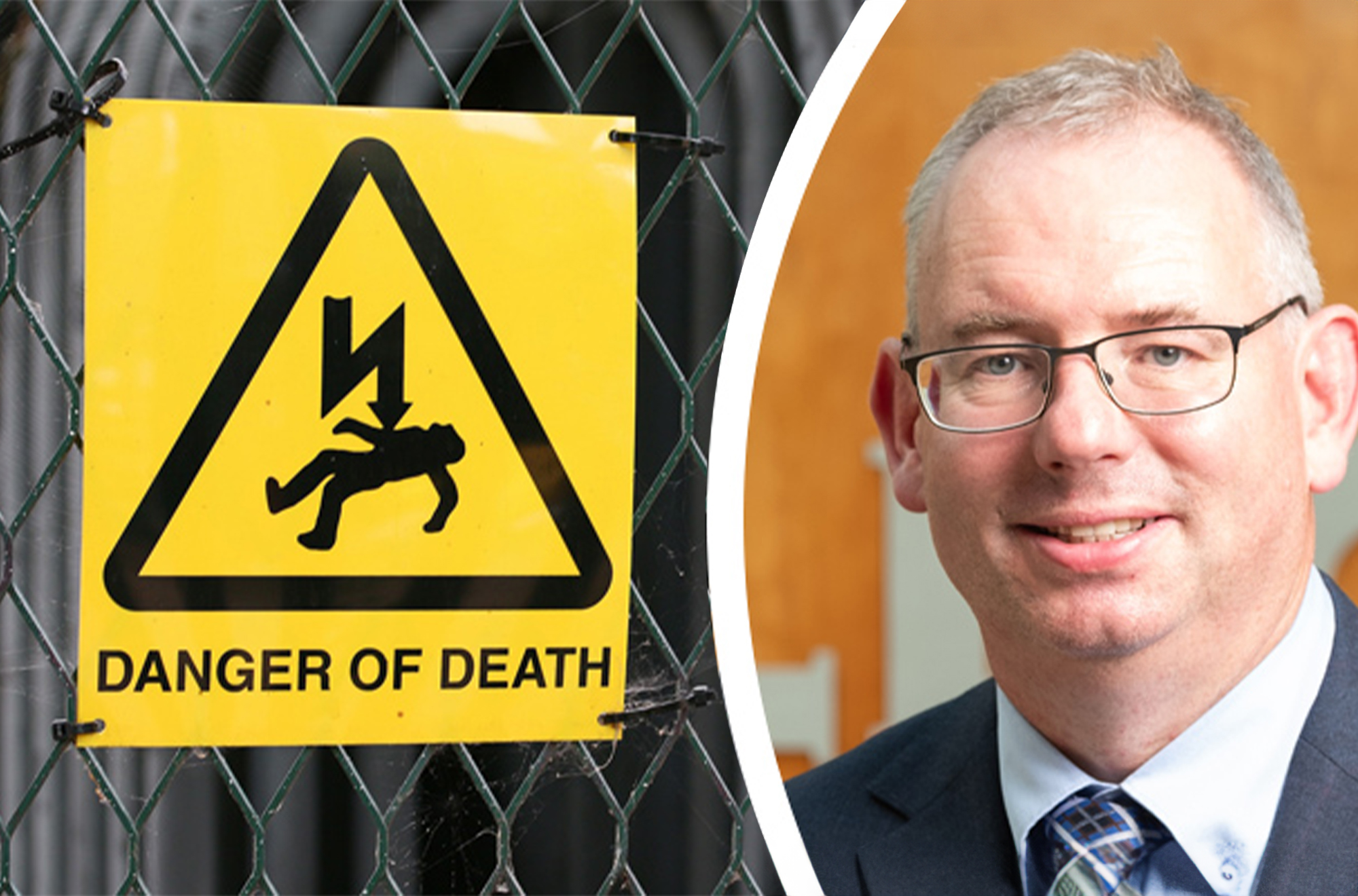
The Managing Director of SELECT - Scotland’s largest construction trade association - has told thousands of podcast listeners that there are “no second chances” with electrical safety – and that it's vital that consumers know that the electricians they use for the ongoing electrification of society are qualified and competent. Speaking on the Independent Minds podcast, MD Alan Wilson stated that regulation of the electrical industry was essential to maintain standards and safety in a society which is increasingly dependent on electricity. Furthermore, in his conversation with Abeceder’s Michael Millward, Alan said the profession was determined to get a bill through the Scottish Parliament and make protection of title for qualified electricians a reality. The SELECT MD explained to listeners: “We used to say that the future is electric, but the fact is that the electrification of society is now a reality – nothing works without it. Electricity powers our offices, factories, homes, hospitals and shops. It provides our heating, hot water, air conditioning, solar panels and EV charge points. “Thirty years ago, if there was an electricity problem, it was merely an inconvenience – its main use was lighting. Now, the impact of any outage is huge and if we don’t have something like the internet it is a major problem, as everyone depends it. “That is why the campaign to make sure that electricians are properly trained and regulated is so important. A lot of people assume that is already the case, as it is with gas fitters, but the fact is that anyone can trade as an electrician without fear of penalty.” Alan stressed that it was more important than ever to continue the drive for protection of title of electricians – a campaign which SELECT has been spearheading for many years. He said: “Some people may have a tacit understanding of ‘plug-and-play’ electrics, using existing circuits, but they don’t understand that every few years the Wiring Regulations are updated and new requirements come into play. “Wiring and installation is safety critical and you can’t take any risks. Electricity can kill – there are no second chances. Also, with electricity, many issues are concern latent defects, which can lie undetected and undisturbed for some time until someone uncovers them and reveals a serious problem. “For most of us, electricity is just light switches and sockets; we don’t see all the cabling and circuits behind it and if we use someone unqualified to work on it, it can have potentially life-threatening consequences.” Alan agreed with host Michael that if something goes wrong with electricity, a spark could cause a fire or someone could be electrocuted, and said he had heard first-hand about electrical fatalities from SELECT members. He said: “The electrical sector is completely safety-focused. SELECT is heavily involved in apprentice training and their first module is all about safety. They cannot go out to work in a home or on a site until their safety assessment has been carried out. However, this loophole still exists. “Politicians are surprised and horrified that anyone can operate as an electrician, but they are not yet horrified enough to do anything about it. We have been working on the campaign for a number of years and we have politicians of all persuasions signed up to it, but for a number of reasons such as the parliamentary schedule, it has not yet passed. “The Scottish Parliament has the competence to enact regulation, but the Internal Market Act means that we will have to draft the Bill to ensure that we are not locking out anyone in the rest of the UK who wants to work in Scotland. We also need Parliamentary space and time.” Alan said the list of regulated professions contained obvious occupations such as teachers, solicitors, doctors, air traffic controllers and nurses, but also included less obvious roles such as dental hygienists, farriers and door supervisors, or nightclub bouncers. And he pointed out that legislative complexity in a mature society such as the UK could sometimes hinder progress, and more modern democracies such as the US, Australia and African countries such as Zambia had introduced regulation of electricians. He said: “Electrical work is now so complex that it is more important than ever to know that systems are safe and that those who work on them are properly trained and qualified. It needs to be a profession.” SELECT has been campaigning for regulation for years alongside the Scottish Electrical Charitable Training Trust (SECTT) and Scottish Joint Industry Board (SJIB) and has created a Wall of Support to show the depth of backing from individuals and organisations. Individuals who wish to show support can visit the campaign page at www.select.org.uk. As well as more than a third of MSPs, other bodies that have contributed a brick to the Wall of Support include Unite the Union, Electrical Safety First, The Royal Institution of Chartered Surveyors, the Scottish Association of Landlords, and the Energy Saving Trust. Alan said that people who want to know that they are using a fully qualified electrician could check with SELECT, the ECA or NICEIC, or ask to see the individual’s Joint Industry Board registration card. You can listen to the podcast in full by clicking here. For more from SELECT, click here.

Kohler launches new KD Series industrial generator
Kohler Power Systems, part of Kohler Energy, has expanded its KD Series line of industrial generators with a new model, KD800, designed for 50hz markets. This generator features a new advanced engine (KD18L06) that can also run on Hydrotreated Vegetable Oil (HVO) as a renewable fuel source. This new model joins a proven series of gensets that continues to provide the highest power density and best fuel consumption at more nodes than competitors between 800-4500 kVa, offering cost savings to users. The new KD unit is designed to power mission-critical applications, including airports, hospitals, and healthcare facilities, water treatment plants and mid-sized data centres. The KD800 joins Kohler’s industrial generators that are engineered to use HVO fuel. HVO provides a more sustainable alternative to conventional diesel and biofuels. No adaptation is needed and both HVO and diesel can be mixed together. HVO is also highly stable, with no sensitivity to oxidation, so it can be stored long-term. It enables to offset carbon emission by up to 90% by using renewable waste products. Kohler’s KD Series is designed to deliver extreme durability and ultimate reliability in a variety of emergency and prime applications. KD Series generators are engineered to last, with better fuel economy and a small footprint. When paired with Kohler’s global sales and support network, the KD Series line-up provides an innovation that secures customers’ critical operations. And when service is needed, Kohler has a global dealer and distribution infrastructure consisting of more than 800 facilities offering 24/7 parts availability. For additional details about the Kohler KD Series range, visit its product catalogue by clicking here. For more from Kohler, click here.

Aico hosts Community Awards 2024 to Celebrate Local Excellence
Aico’s bi-annual Community Awards celebrates excellence within the social housing industry and local community. On Thursday 18 April, 400 guests and finalists took to Birmingham’s International Convention Centre to honour the outstanding work of individuals and organisations across the UK. In support of the Electrical Industries Charity (EIC), this year, Aico curated 13 categories providing entrants with the opportunity to showcase inspirational colleagues, projects and innovations. The categories were judged by Neal Hooper, Managing Director of Aico; Lesley Baird, Participation Expert; James Prestwich, Director of Policy for the Chartered Institute of Housing; and Khadra Ibrahim, Careers and Community Development Lead for RBKC Housing Management. The first award of the evening, Collaborative Partnership, was presented to Jewson Partnership Solutions, for its partnership with YouthBuild Ventures UK to establish YouthBuilders, a construction company aimed at empowering YouthBuild graduates with practical skills, employment, and a living wage. Warrington & Vale Royal College’s Business Centre developed an Employer Engagement Strategy to improve its curriculum offer to align with the skills needed in the sector. The strategy was honoured with the College Initiative of the Year award. Corporate Social Responsibility Initiative was awarded to Equans for its Equans Expert initiative. This initiative delivers informative workshop sessions covering aspects of business such as marketing, design, cyber-security, and HR, giving individuals the confidence and skills to benefit others. Lightning Solutions Electrical Services took the award for Electrical Contractor of the Year. The Welsh company has been trading for over 10 years and is continuously going above and beyond to ensure high standards for its customers. The next award to be presented was Resident Engagement, which celebrated St. Leger Homes and its variety of programmes which educate and create discussions between tenants and residents. Georgina Homer of Wolverhampton Homes, then took to the stage to claim the Woman in Fire Safety award. Georgina’s passion for resident engagement, dedication, and engaging personality are all assets to Wolverhampton Homes. Georgina commented, “I am thrilled to win this award, and incredibly humbled. I’m at a point in my career where I have chosen to make a career change, and this is part of the representation that I’ve made the right choice.” The winner of Neighbourhood Transformation was Bassetlaw District Council, for its outstanding work modernising its Independent Living Scheme portfolio. Bassetlaw aims to improve the overall living experience for residents, improve energy efficiency, and make better use of external spaces. Florentina Dita has exhibited powerful leadership at PiLON. Leading the creation and implementation of their core values, and taking ownership of their social value initiatives has awarded Florentina the Rising Star award. The Community Awards recognised Alexa Scrivener as Inspirational Colleague of the Year, for her commendable achievements as a role model, and her exceptional tenant engagement at Stirling Council. The winner of the Sustainability Project of the Year award was presented to Moat Homes on behalf of its Social Housing Decarbonisation Fund, in which it has leveraged cutting-edge technology to significantly improve the energy efficiency of 613 homes. Professor Paddy Gray of Connswater received the Lifetime Achievement award. Paddy has an abundance of experience in the housing sector, starting in 1981 when he was recruited to the Northern Ireland Housing Executive, and has since led thirty housing action area teams in Belfast. The Best Distributor Community Initiative was awarded to Service Electrical Distributors, who with the Sovini group, is supporting communities with local requirements, women’s refuges, armed forces support, substance recovery and sports clubs. Finally, the new award for 2024, Aico’s Apprentice of the Year was presented to Cole Galligan from Loughborough College and Raylec Electrical, for his professionalism and dedication towards his apprenticeship. The event raised over £9,000 for the EIC, with Aico matching the donation, resulting in a total contribution of £18,000. For more from Aico, please click here.

Ohme encourages van fleets to go electric to reduce costs
With the Commercial Vehicle Show at the NEC Birmingham next week, Ohme is encouraging more fleets to go electric to help reduce their costs. With van sales enjoying bumper sales in March and sales of new electric vans up 14.7% compared to 2023, the choices of electric van on the market are growing ever larger. But those fleet managers thinking of switching their van fleets to electric also need to consider the wider potential benefits of providing their drivers with home chargers too. “Many van fleets have been slower to make the switch across to EVs compared to car fleets. A switch to electric will equal substantial savings for any fleet manager and fitting chargers to the homes of their drivers will increase those still further,” says Ohme Director, Peter McDonald. “Charging at home will always be the cheapest option all round. First, the price per kWh of the current domestic standard variable tariff is less than half a typical rapid charging public charger. Second, if the driver knows they can charge at home, they won’t have to hunt for a public charging station, so it adds valuable time to their day. The savings in employee time alone could potentially be even greater than the charging savings. With the average UK driver covering 6,800 miles a year, smart charging on an off-peak tariff in a typical EV would cost just £170 for a year’s worth of driving with Intelligent Octopus Go at 7.5p/kWh. With the new Standard Variable Tariff of 24.5p/kWh, that same annual mileage would cost £555. By comparison, the same mileage in an equivalent van would cost a driver more than £1,100. Ohme’s dynamic smart chargers can connect with the grid in real time, automatically adjusting to optimise the cost of charging and accessing all the times of the smartest, greenest and lowest cost energy tariffs. Ohme also offers drivers the option to charge their car when renewable energy generation on the National Grid is at its highest, further lowering their CO2 impact.

SPARKS Female Skills Competition 2024 winner announced!
Charlotte Bobbett from Yeovil College has been crowned the winner of the SPARKS Female Skills Competition 2024. The grand final took place on 18 April at Stephenson College, Coalville, where Charlotte showcased her exceptional skills. The runner-up spot was claimed by Anne Greaves from Leicester College. Charlotte expressed her joy upon winning: "It feels like a dream! I didn’t expect to win the regionals, let alone be announced as the winner at the finals. I’ve also made some genuine friends. Friendship and community are the biggest takeaways for me. I’d recommend this competition to anyone considering entering. Just go for it! The sky’s the limit!" The competition kicked off in February, attracting Level 2 and 3 learners in electrical installation from across the UK to three different regional locations. The panel of judges, under the leadership of Head Judge, Darren Oates, from National Electrotechnical Training (NET), meticulously evaluated the competitors' work to select six finalists for the climactic showdown this week. Zoë Tanner, Managing Director at SPARKS, comments, “The remarkable talent showcased at this year’s final was truly inspiring. The dedication and level of skill these women displayed, along with the industry support witnessed at the event, is a testament to the growing inclusivity within our trade. Congratulations to all the contestants, and especially to Charlotte on her incredible win!”  This year’s competition was backed by key industry leaders, including Megger as the Headline Sponsor, alongside Aico, Electric Center, The IET, Milwaukee, Schneider Electric, Prysmian, Snickers Workwear, Fix Radio, and National Electrotechnical Training (NET).

Tradespeople slapped with 3.5 million parking fines costing £177 million
Tradespeople have been issued with an estimated 3.5 million parking fines costing them approximately £177 million in the past year, according to new research from Direct Line. Tradespeople often need to access or unload heavy tools, equipment and materials required for a job onsite but finding a place to legally park or unload close by is not always possible, especially in urban areas where numerous parking and unloading restrictions apply. More than half (55%) of tradespeople say they face a weekly struggle to park at or close to the site (54%) where they are working. Daily parking charges, particularly in city centres, are so expensive that a third of tradespeople (34%) say that it can be cheaper to risk a parking ticket than to pay for parking. Penalty Charge Notices (PCNs), or parking fines, can be anywhere between £50 and £70 each outside London, and up to £160 in the capital, but are normally halved if paid within 14 days. However, parking illegally can be quite a gamble as two-thirds (61%) of tradespeople have been clamped or towed whilst on the job. Many local authorities offer tradespeople discretionary parking permits so that they can avoid unnecessary parking charges, but just 13% of tradespeople find getting trade parking permits through a council a quick and simple process. The options available and application processes vary greatly by council. Some offer annual permits, while others offer a discretionary number of single day permits for specific locations or a set number of hours. The many options can be confusing, particularly for those working across a wide area, needing permits from multiple councils. Where parking restrictions apply, tradespeople will usually expect the client to provide parking permits (39%), pay for their parking (25%), or factor it into their pricing (17%). Alison Traboulsi, Product Manager at Direct Line Business Insurance, says, “Parking is a regular battle for many tradespeople. Navigating a multitude of different parking controls and council permits can be complicated, so it is not surprising that many tradespeople are hit with parking fines, clamping, or being towed. Some will say it’s part and parcel of the trade but with an estimated 3.5 million fines issued in the past year, these parking battles are costing tradespeople across the country millions of pounds.” To help tradespeople deal with the challenges that come with the job, including appealing parking fines, Direct Line Business Insurance policies come with Legal Essentials, a service provided by DAS Legal Expenses Insurance, which provides unlimited access to a team of legal advisors, who are available 24 hours a day, seven days a week, all year round in England and Wales. For uncommon and certain country-specific areas of law, you’ll be referred to specialist advisors available Monday to Friday from 9am-5pm.”

Lease Van offers top five tips for lowering van insurance
As part of their quest to help van drivers lower their insurance as a response to premiums rising by over 15% for commercial van users, experts at Lease Van have come up with five top tips to help drivers reduce their costs with minimal time or effort. The five tips to lower your van insurance are as follows: 1. Review who is on the insurance policy Review who is added to the insurance policy to potentially lower your premiums. Young or inexperienced drivers can increase the insurance as they are deemed more of a risk. Motorists with a poor claims history will also make the policy more expensive. 2. Join a trade federation Some insurance providers will offer a discount to those who are a member of a trade federation. It’s important to check which companies offer this benefit before signing up and getting an insurance quote. 3. Advertise your business Having signwriting on your van advertising your business will deter thieves from stealing the vehicle, as it will be harder to sell on. However, before getting any signwriting, check with your insurance provider and the DVLA to check it isn’t considered a modification, as this could increase the premiums on your policy. 4. Increase van security Insurers will likely lower the costs of your policy if the van has extra security measures which will help to protect the vehicle. Make sure your van is more secure by installing alarms, a steering wheel lock, vehicle trackers and immobilisers. 5. Downsize your van Downsizing your van could decrease the cost of your insurance policy as the vehicle will be classed as lower risk. Check you’re driving the right size van for your business and ensure it is suitable for your needs, and use a smaller vehicle if possible. Tim Alcock from Lease Van says, “Vehicle insurance is rising for everyone right now, so many of us are looking for ways to make the price more affordable. There are several things you can do with little effort to decrease your van insurance costs - such as taking off young or inexperienced drivers from the policy. “Joining a trade federation may also give you a discount when getting an insurance quote, while installing security measures such as alarms, steering wheel locks, immobilisers and vehicle trackers will also help to lower costs. Van drivers should also check their advertising isn’t classed as a modification, and consider downsizing vehicles to be given a cheaper insurance policy.” For more from Lease Van, click here for their top five tips for tool maintenance.

SyncEV reacts to Workplace Charging Scheme changes
Last month, the UK Government announced changes for the Workplace Charging Scheme that will allow for more EV Charging funding for schools and educational institutions. New grants mean that state-funded schools, colleges, nurseries, and academies can now increase their EV charging facilities with up to 40 charging points covered in the scheme. The Department for Transport will be funding the scheme as part of the Workplace Charging Scheme, providing up to 75% of the cost to buy and install charge points. Schools and state-funded educational facilities will be able to claim up to £2,500 per socket, when previously they were only allowed funds up to £350. “This new grant from the Government for educational facilities is a step in the right direction”, comments Cris Chapman, Managing Director for SyncEV. “We should be encouraging the public sector to provide EV charging points for their staff, company, and the wider public so that more people can then feel confident in purchasing an electric vehicle, knowing the infrastructure is available for them. “SyncEV has always been at the forefront of the EV industry and is continuing to innovate EV charger technology to be more sustainable and support the UK on its journey to net zero by 2050.” Packed with smart technology, SyncEV charging stations are small, customisable, and easy to install, the company states. They are compatible with all electric and hybrid plug-in vehicles and can charge faster than a conventional electrical socket, providing enough power for cars, vans and school buses in combination with the UK power grid. Cris continues, “Choosing SyncEV chargers for your educational institution means you are safe in the knowledge that all chargers are fitted by a registered installer, come with fixed setup and comprehensive support, as well as a three-year warranty for peace of mind. Our smart EV charging technology means that our chargers are connected to the internet so the devices can be updated with new firmware and software as new technologies are released into the market. “It factors in the ability to utilise renewable energy sources, integrate with times of use and economy tariffs, and can also balance the power demand with your building supply, ensuring you can charge quickly and safely without interrupting normal building use.” SyncEV chargers are available to purchase from local electrical wholesalers.

Heat pump and battery storage installations lead the charge in 2024
MCS, a standards organisation that creates and maintains standards that allows for the certification of products, installers and their installations, has released its first installation figures of the year via its MCS data dashboard - a service which provides near-real-time dynamic visualisations of the uptake of small-scale renewable technologies across the UK. Commenting on the latest installation figures shared via the data dashboard, which highlights trends for January to March 2024, Ian Rippin, CEO at MCS, states: “The latest data shows the heat pump market continues to go from strength to strength. There were 4,508 certified heat pump installations in March alone, making it the second-best month in the Scheme’s history. Looking at the first quarter as a whole, we’ve seen a 30% increase in average monthly heat pump installations compared with 2023 – which was the best year ever for the technology. “This shows that homeowner confidence in renewable heating is growing, and as more consumers take advantage of government initiatives – such as the Boiler Upgrade Scheme, ECO4, Home Energy Scotland, VAT reduction on battery storage, and many more – expect to keep seeing these high numbers. “The data also shows that battery storage installations are on the rise, with March exceeding 1,000 installations for just the second month ever and marking a 707% increase on the total for March 2023. As consumers become more aware of the benefits of installing battery storage alongside solar PV (both for lowering energy bills and for selling surplus electricity back to the grid), this is a technology that is going to become increasingly commonplace. “Finally, March also saw the Isle of Anglesey become the fourth local authority to exceed a 20% uptake in renewables. It means that one in five households now have an MCS installation on the island, putting it alongside Orkney (28%), Western Isles (25%) and Ceredigion (23%) as the regions with the highest proportion of homegrown energy.” For near-real-time dynamic visualisations of the uptake of small-scale renewable technologies across the UK, view the MCS Data Dashboard here. For more from MCS, click here.