2 November 2026
Product of the Month: Amari Floodlight range by Aurora Lighting
 
10 November 2026
Openreach partners with Allstar to boost EV charging options
 
10 November 2026
VCHRGD appoints Craig Summers as Head of Partnerships
 
9 November 2026
UK Power Networks helps nine veterans secure energy sector jobs
 
9 November 2026
Exclusive: why getting project planning right from the outset matters
 

Latest News


New Part M version of assistance alarm kit
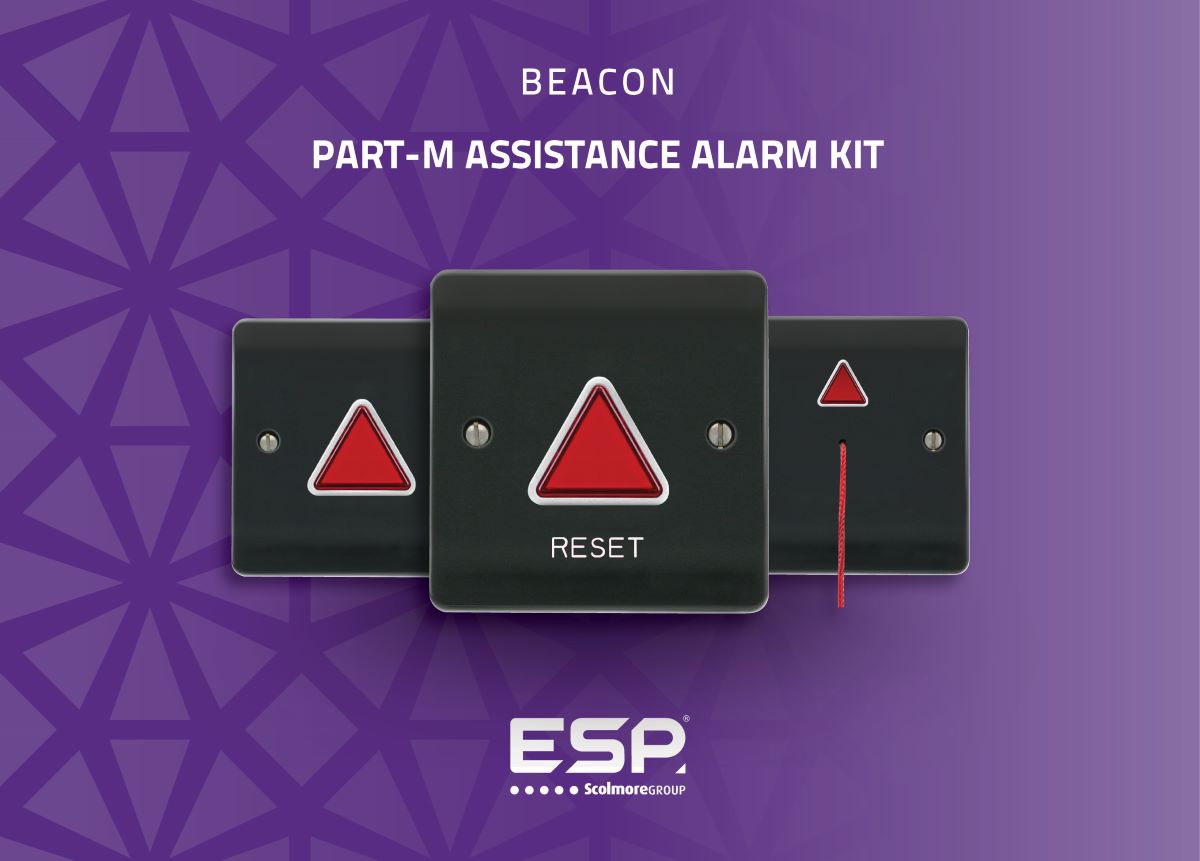
ESP has expanded its Beacon Disabled Refuge and Assistance Alarm product range to include a new Part M version of its assistance alarm kit. The new assistance alarm kit is designed to meet the criteria of care standards that are set out in Part M building regulations BS 8300. BS 8300 is a British Code of Practice that sets out the requirements of how buildings should be designed, constructed and maintained to meet the needs of disabled people. In addition, it outlines how to create an accessible and inclusive environment for them. Designed to enable a person in need to raise an alarm in the event of an emergency, the three-part kit comprises an indication module, pull cord module and reset module, and it also features a battery back-up function (the battery comes included). The Indication Module includes an 80db distinctive tone alert sounder with clear LED alert triangle indication for when the alarm has been triggered. The Pull Cord Module features an anti-ligature mechanism and has a distinctive red pull cord supplied with two handles, including an LED alert triangle. The Reset Module features a clear LED alert triangle indication with internal sounder to reassure the user the alarm has been raised and that assistance is on the way. The alert triangle acts as a push button to reset the alarm and is clearly indicated in tactile lettering on the module. The Beacon assistance alarm range now comprises three kits, with the new Part M grey version joining the existing white and stainless steel finishes. The modules that make up the standard white kit and the new Part M kit are all manufactured to include antimicrobial properties - making them suitable for hygiene-sensitive applications. The modules are also available to purchase as separate items. The compact design makes the products suitable for many interiors, and the system is expandable to include additional indication and pull cord modules if required. All three modules are designed to fit a standard one-gang box.

New Compound Mitre Saw with torque boost technology
HiKOKI Power Tools has added a new C3612DRA 36V 12" Compound Mitre Saw to its range of cordless power tools. Engineered for precise cutting and working, the powerful and versatile Mitre Saw delivers accuracy and heightened productivity for a wide array of woodworking projects. Featuring HiKOKI’s torque boost technology, and compatible with Multi Volt Li-ion batteries, the Mitre Saw offers a good balance of speed, precision and performance, the company tells us. The new motor wiring structure enables automatic switching between high speed and high torque motors to achieve power and speed, delivering 1.7 times faster speeds, which enables smooth cutting and prevents sudden stops under heavy loads. The C3612DRA’s blade speed is up to 45% faster than that of the conventional model C3612DRA, and it can be switched between auto switch mode and high torque mode to match the user’s needs across many applications. The tool is ideal for a diverse range of cutting work, from plywood and delicate panels to hard boards and even aluminium (in window sashes, for instance). The integral XACT CUT LED lighting system uses an LED light to cast a shadow where the blade will cut on the material for precise and efficient cutting. It provides users with unparalleled accuracy and allows for easy adjustment of the blade to the cut line, enhancing precision and efficiency in every cut. Additionally, the metal adjustable scale ensures accuracy, maintaining precise measurements for reliable results over time. The HiKOKI C3612DRA has been engineered with functionality in mind, featuring a front-facing bevel and mitre mechanism for hassle-free adjustments. The bevel lock handle is conveniently located on the operator's side for easy loosening or tightening of bevel lock and improved efficiency. This practical design is especially beneficial on compact worksites. With the convenience of a one touch mitre lock, adjustments are quick and easy – which can be a real time-saver when shifting between various cutting angles. The linear ball bushings enable smooth and precise sliding, while the highly rigid metallic mitre scale has nine positive stops and indications for easy-to-read measurements and quick settings. With advanced torque boost technology and its precision-enhancing features, HiKOKI says that the C3612DRA Compound Mitre Saw delivers 'flawless' cuts while elevating the art of woodworking to peak efficiency. For more from HiKOKI, click here.

Advanced fire protection in the heart of Birmingham
Fire protection products manufacturer, Advanced, has supplied intelligent fire panels and evacuation alert systems to a mixed-use development at the prestigious One Victoria Square, and adjoining One Swallow Street, as part of a major refurbishment to grade A specification. One Victoria Square fronts onto one of Birmingham’s most high profile and iconic squares and the gateway to the Central Business District. A mixed-use development, it has multiple levels containing mainly office space, with a retail unit on the ground floor. Meanwhile, the adjoining One Swallow Street also has multiple levels but offers residential apartments. Advanced’s high-performance, fault-tolerant MxPro 5 analogue addressable panels were chosen to provide protection to all levels at One Victoria Square and the linked building, One Swallow Street. In addition, One Swallow Street also benefits from BS 8629-compliant EvacGo evacuation alert systems which were installed to help keep residents safe. Fire safety specialist, Gem Fire Solutions was involved in the project from design through to commissioning. They installed eight networked MxPro 5 fire panels along with an Advanced graphics system and Apollo devices across both buildings. In One Swallow Street, three EvacGo evacuation alert systems were also installed along with Hyfire sounders. Jamie Dyer of Gem Fire Solutions explains, “As a mixed-used development, it was important to find a solution that would meet the requirements of both the commercial and residential buildings. Advanced’s ability to provide a full package of fire panels, graphics and evacuation alert systems made the choice simple. The MxPro 5 panels were the ideal solution, providing a powerful platform, comprehensive cause and effect options, a fast network and user-friendly controls. Meanwhile, the BS 8629-compliant EvacGo evacuation alert system gives peace of mind that Swallow Street residents can be evacuated safely in an emergency.” Shaun Scott, Emergency Evacuation Systems Application Engineer at Advanced, adds, “We offer our customers an extensive range of fire protection solutions to meet the demands of a wide variety of commercial and high-rise residential settings. Our MxPro 5 panels are designed to make life as easy as possible, delivering robust protection that offers real peace of mind, all backed up by our highly rated technical support. Meanwhile, following the Grenfell Tower enquiry and the increased awareness of the importance of effective fire evacuation, we have seen an increasing number of building owners installing EvacGo systems. While the Building Regulations make evacuation alert systems mandatory in new residential buildings over 18m, building owners of smaller buildings, or those being retrofitted, are also keen to meet best practice and keep their residents safe.” MxPro 5 is a multiprotocol fire panel and is certified by FM Approvals to EN 54 Parts 2 and 4. It offers users a choice of four detector protocols and a completely open installer network, backed up by free training and support. MxPro 5 can be used in single-loop, single-panel format, or easily configured into high-speed networks of up to 200 panels covering huge areas. Ease of installation and configuration, as well as its wide range of peripheral options, makes MxPro 5 customisable to almost any application. The MxPro 5’s stand-out false alarm management capabilities are available as standard. AlarmCalm delivers unprecedented control of verification and investigation delays. By dividing sites up into virtual false alarm ‘building areas’ independent of fire zones, much more precise control of false alarm management and reduction strategies can be achieved that exactly fit the needs of each part of a building. An optional AlarmCalm button allows trained occupants to verify if they believe a local fire signal is a false alarm too – a highly effective way of eliminating unwanted alarms. The MxPro 5 BMS/graphics interface allows BMS systems and graphical control PCs to be easily integrated with the MxPro 5 series of fire control panels and remote terminals using a simple RS232 connection. Multiple interfaces can be connected to the network catering for sites requiring control from a number of graphical PCs. Meanwhile, all Advanced evacuation alert systems are custom-manufactured to reflect each individual building’s evacuation zones, and they have been developed to provide a bespoke solution that allows the fire services to control evacuation floor-by-floor according to the severity and location of the fire. The guidance states that the evacuation alert control system should be installed where a ‘stay put’ policy is in force, so that it can be used to facilitate a timely and ordered evacuation for all residents. An evacuation alert system is vital to help fire and rescue services inform residents of a change in evacuation strategy during an incident and can be used alongside existing methods of evacuation to improve safety for residents. It must be standalone, with its only function being to assist fire and rescue services in the evacuation of the building. Advanced products are specified in locations around the world, from single-panel installations to large, multi-site networks. The company's portfolio includes complete fire detection systems, multiprotocol fire panels, extinguishing control, false alarm management and reduction systems as well as emergency lighting.  

Balfour Beatty to build Scotland’s first net zero prison
Balfour Beatty has been awarded a contract to construct the new £209 million HMP Highland in Inverness, Scotland, on behalf of the Scottish Prison Service. Balfour Beatty was first appointed to deliver the pre-construction phase, including the design of HMP Highland, in 2022. This latest phase, valued at £119 million, will see the company progress with the construction of the new, modern 18,500m² facility comprised of two new interconnected buildings and associated infrastructure. Scheduled for completion in 2026, HMP Highland is designed to run off renewable energy sources such as ground source heat pumps, and the facility will reportedly be the first net zero prison in Scotland to align with the Scottish Government’s low carbon targets for the project. The company will utilise modular construction methods to preassemble the internal wall panels and perimeter walls offsite in a controlled factory environment, significantly reducing carbon emissions by minimising the number of lorry movements and material deliveries to and from site. As part of its commitment to leaving a lasting, positive legacy in the communities in which it operates, Balfour Beatty has also committed to spending £60 million with local supply chain partners and businesses throughout the duration of the project. On completion, HMP Highland will replace Inverness Prison and will accommodate 200 prisoners, becoming the first new prison in the area – serving the Highlands, Islands and Moray – for more than a century. Hector MacAulay MBE, Managing Director of Balfour Beatty’s regional business in Scotland, says, “We are delighted to continue working alongside the Scottish Prison Service as we move into the construction phase of this significant and important project. “We will draw on our extensive expertise in modern methods of construction, and our unrivalled local knowledge, to deliver this groundbreaking, best-in-class facility which will become the first net zero prison in Scotland.” Linda Pollock, Deputy Chief Executive of the Scottish Prison Service, adds, “With the support of the Scottish Government, we are committed to investing in our estate to create better environments for people to live and work. “HMP Highland will not only increase the capacity previously available at HMP Inverness, but also provide space for quality rehabilitative work which we know gives people the greatest possible chance of a successful return to their communities on liberation. “This project has so far seen the creation of new jobs and apprenticeships for the local area, with more to come in future.” At construction peak, Balfour Beatty will employ 250 people with 5% of its workforce made up of apprentices, graduates, and trainees to support its commitment to The 5% Club. For more from Balfour Beatty, click here.

Competition winners receive handyman visits
The lucky winners of Carhartt’s ‘Win a Handyman’ competition have now got their man - and their household jobs sorted. Launched at the end of last year, and aimed at those hard workers who struggle to get on top of their 'to do' list and need some TLC of their own, over 10,000 entrants took part in the online competition by letting Carhartt know which niggles they would like to cross off their list. True to its word, in February, Carhartt’s handyman surprised the first lucky winners in the UK, Netherlands, Germany and Ireland. “We are delighted we could help hardworking people who deserve a bit of support when it comes to those jobs they never have the time for in their own homes,” says Marga Stehmann, Marketing Manager EMEA/PAC for Carhartt. “Armed with his toolbox and a smile, our brilliant handyman got to work. From squeaky cabinets, sealing the shower tray to fitting those last few skirting boards, the Carhartt handyman was well used and well received!” For more from Carhartt, click here.

Bureau Veritas to provide EDGE green building certification
Coinciding with the first Buildings and Climate Global Forum in Paris in March, the International Finance Corporation (IFC) has appointed Bureau Veritas as a Global Certification Provider for EDGE green building certification. EDGE (Excellence in Design for Greater Efficiencies) is an innovation of IFC that empowers emerging markets to scale up efficient buildings in a fast, easy and affordable way. The main objective of EDGE green building certification is to respond to the need for a measurable and credible solution to prove the business case for building green and to unlock financial investment. In its capacity as Global Certification Provider for EDGE certification, Bureau Veritas will ensure strict adherence to the standards set by the EDGE certification. EDGE certification is recognised by major asset managers and requires quantified reduction in operational energy consumption, water use and embodied energy in materials. Bureau Veritas’ Buildings & Infrastructure team combines its expertise with the entirety of BV’s global footprint in 140 countries. It will support the global expansion of the programme, focusing on emerging countries. The primary objective of this collaboration is to drive the development and certification of resource-efficient and zero-carbon buildings worldwide, in alignment with broader environmental sustainability objectives. Beyond fostering sustainability in the built environment, this partnership aims to advocate for responsible construction practices. It also strives to promote the adoption of standards, labels and certifications in the buildings and construction sector in line with the recent March 2024 Building and Climate Global Declaration of Chaillot. This significant development aligns seamlessly with Bureau Veritas' latest strategic plan, LEAP | 28. It emphasises two key growth engines: expanding leadership in buildings and infrastructure, and establishing a new stronghold in sustainability. By working together with IFC, Bureau Veritas aims to accelerate global decarbonisation and inclusive growth. For more from Bureau Veritas, click here.

Electricity project to accelerate decarbonisation of River Thames
An ambitious project is underway which could see a radical new relationship between Thames vessel operators and London’s electricity network. The Electric Thames project, a collaboration between UK Power Networks, LCP Delta, and Marine Zero, is assessing the viability of using electric vessels to feed stored electricity back into the capital’s energy network, accelerating the transition to Net Zero. Using a principle similar to night storage heaters, battery-powered vessels on the Thames could store green energy when it is cheap to do so - such as when the wind is blowing or sun is shining - and feed it back to the grid during peak electricity hours. The approach could help to increase the capital’s flexible energy capacity and reduce peak electricity demand. The project, which is in its initial ‘discovery’ or scoping phase, supports the Port of London Authority’s transition to net zero emissions and London Mayor Sadiq Khan’s pathway for London to be Net Zero Carbon by 2030. The discovery phase of the project, which is funded via the Ofgem Strategic Innovation Fund, will conclude at the end of May 2024. Thames vessel and quay operators will be surveyed over the coming weeks to identify and map out their needs. This will allow power suppliers to plan and complete any works needed to facilitate the move to cleaner vessel and river operations along the River Thames. Andy Hurley, Director at Marine Zero, says, “Electric Thames isn’t just about achieving zero emissions on our capital’s river – it is even more exciting and significant than that. Along with our project partners at LCP Delta and UK Power Networks, we are developing a completely new approach to increasing energy flexibility by developing new income streams and new and flexible solutions for vessel and quay operators. “We are delighted that Marine Zero has been selected to support the discovery phase of the project using our maritime experience and intelligence, and we look forward to engaging with operators along the Thames over the coming weeks.” Luca Grella, Head of Innovation at UK Power Networks, adds, “This is a first-of-its-kind project in the UK, and one that is operating at the forefront of energy innovation. Tapping into this potential will not only help us create a cleaner Thames for everyone, but it will also give us an additional supply of flexible, green energy which will help our transition to a decarbonised energy system. “We’re thrilled to be leading the way in this space and are also looking forward to seeing how this approach could be scaled to other rivers across the country.” Most of the boats, quaysides, and ports operating on the Thames – which supports a busy freight sector as well as 8-million passenger trips per year – currently rely on fossil fuels. This is starting to change, however, as the river's economy decarbonises in response to climate change and net zero ambitions.  But as increasing numbers of Thames vessel and quayside operators move to electric power sources, there is limited understanding about how the shift will affect the capital’s power network and peak power demands. The Electric Thames project team will consult quay owners, vessel operators, and other stakeholders in order to understand the opportunities for investing in electrification and a sustainable route to revenue. Phillip Twiddy, Senior Consultant at LCP Delta, comments, “It’s fantastic to be involved in such a strategic project that could deliver some real benefits. The project aims to help the marine sector lower their emissions yet also have certainty in their energy source. It will also help to accelerate the energy transition.” The outcomes of the project could shape a new whole-system planning framework for the nation’s rivers, canals, and waterways, offering insights for decarbonisation and electrification that could be replicated across the UK. Electric Thames has been supported by the Strategic Innovation Fund (SIF). Delivered in partnership with Innovate UK, the SIF programme taps into the best of UK and international innovation and aims to align with other public innovation funding for the benefit of customers across the UK. For more from UK Power Networks, click here.

New flat pack shelter for photovoltaic installations
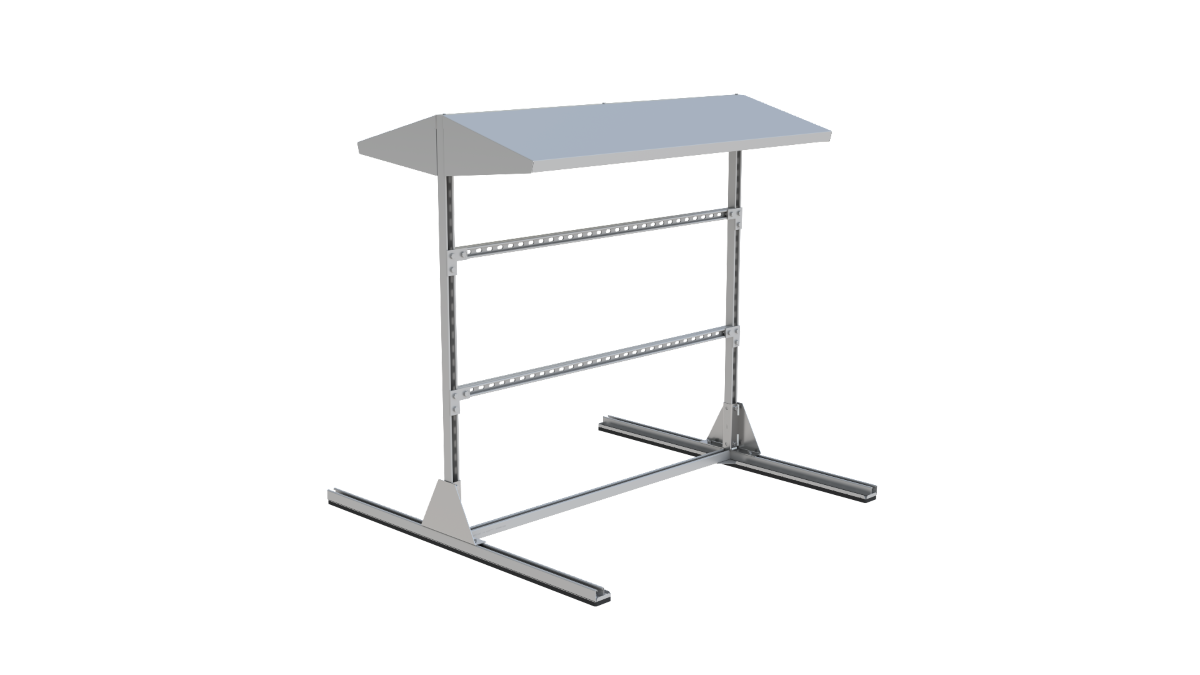
Atkore, a global manufacturer of power and protection products, has launched the PVS Solar Shelter - a new flat pack shelter designed to protect photovoltaic equipment from the elements. The product has been designed to contribute to photovoltaic installations by allowing equipment to be safely installed outside, such as on rooftops or for mounting to external walls. Atkore says that storing PV equipment outdoors offers a plethora of advantages, such as freeing up valuable indoor building footprint, reducing indoor noise pollution, and helping to mitigate the risk of indoor fire hazards. In addition, the company states that with its Atkore Unistrut PVS Solar Shelter, a significant amount of the installation cost can be saved since the infrastructure is easily and rapidly installed - which ultimately makes the shelter an ideal product for solar installations. Atkore believes that ease of installation is a key feature of the PVS. Supplied as a semi-assembled flat pack solution, all parts required to install the shelter are included, and set-up can be achieved in less than seven minutes. Composed and palletised as one complete flat pack solution, the product makes for light and efficient work in even the trickiest of locations. Additionally, should project plans change or needs evolve over time, an array of optional accessories are offered and available to purchase separately. From wire basket and counterweight mounting supports, to connection plates and supports for angular roof alignment, the system becomes modular to suit the user's evolving needs. The PVS Solar Shelter is innovation that can be easily specified and rapidly fitted, while also offering quality reassurances. In Atkore's ongoing effort to lead in technological advancements and deliver high-quality products, the shelter has undergone rigorous testing by the company's R&D team. Utilising an advanced wind tunnel system, extensive tests have been conducted, providing theoretical calculations. The company provides full assurance that its product complies with industry standards, that it operates safely and reliably, and that it is manufactured to the highest quality. Atkore's mission is to power and protect the world. This can be seen throughout the development of Atkore Unistrut’s innovative PV Solar Shelter, utilising the tried-and-trusted Atkore Unistrut profile. As its shelter solution helps to prolong the life of photovoltaic installations, it can subsequently lead to increased return on sustainable solar investments. For more from Atkore, click here.

Johnson Controls recognised for its smart building management platform
Johnson Controls, an expert in smart, healthy and sustainable buildings, has been named the overall leader for its smart building management platform in the 'Smart Building Management Platforms' competitive assessment that was conducted by ABI Research, a global technology intelligence firm. Researchers assessed the Johnson Controls OpenBlue ecosystem of connected technologies and services, scoring it highest in implementation among nine other platform providers. The findings were reconfirmed in ABI Research’s 55 Technology Leaders To Watch In 2024 report. “Buildings contribute nearly 40% of global emissions and new levels of efficiency and sustainability can only be achieved through digitalisation,” says Johnson Controls Chief Technology Officer, Vijay Sankaran. “This recognition that OpenBlue digital technology and services is the overall market leader is a testament to the ongoing dedication and commitment to innovation that we have to creating the smart buildings of the future.” For this competitive assessment, ABI Research compared nine major commercial building platforms capable of digitising, capturing, managing, monitoring, and improving the performance across a broad cross-section of commercial building verticals, applications, and portfolios. Researchers scored Johnson Controls overall highest among the other providers based on the company’s commitment to supporting existing and new clients with its highly functional OpenBlue platform and related services. Researchers noted: • The clear and long-standing commitment of Johnson Controls to serving the smart building management segment. • The comprehensive Johnson Controls OpenBlue suite of offerings that will help drive wide-scale smart building management awareness and adoption. • The company’s commitment to supporting customers with its highly functional OpenBlue platform and related services. “Johnson Controls was the overall leading vendor in ABI Research’s market assessment. The Johnson Controls OpenBlue architecture represents a cohesive and comprehensive suite of offerings to accelerate smart building management, build awareness and increase adoption of smart buildings,” said Rithika Thomas, Industry Analyst at ABI Research. Johnson Controls OpenBlue is an ecosystem of connected technologies, expertise and services. Assessed as part of this research, OpenBlue Enterprise Manager (OBEM) is a suite of software solutions that form a comprehensive building performance management platform to power a new class of smart buildings that are secure, healthy and sustainable. Combining data from across the building’s systems and utility bills, and using advanced digital experiences augmented with AI, OBEM provides more money saving and emission reduction actionable insights than possible with isolated, less connected systems, all while balancing occupant comfort. It also helps customers in simplifying carbon disclosure reporting and regulatory compliance with building performance standards. With deployments across the globe spanning commercial office spaces, healthcare, education, campuses and more, OBEM enables real-time data visibility across assets, people and processes, empowering customers to drive intelligent and proactive operations from a single pane of glass. To learn more about how Johnson Controls OpenBlue is transforming smart buildings, visit johnsoncontrols.com/OpenBlue. For more from Johnson Controls, click here.

Heat Save helping to decarbonise social housing properties
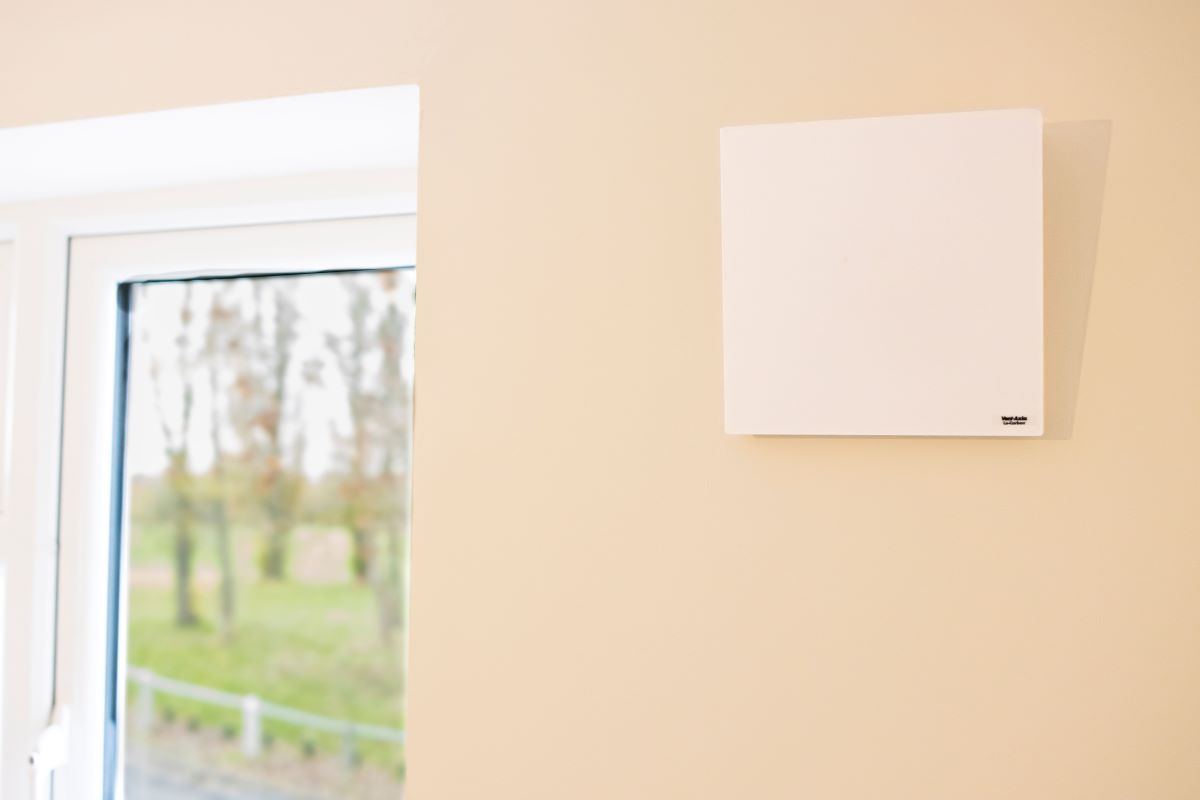
British ventilation manufacturer, Vent-Axia, has helped Hillingdon Council decarbonise its social housing properties by providing energy efficient heat recovery ventilation for residents’ homes. Beginning in February 2022, the first phase of upgrades saw heat recovery ventilation installed in 150 properties. This is part of Hillingdon Council’s refurbishment roll-out through the government’s social housing decarbonisation programme, which targets properties with a lower energy efficiency (EPC) rating and funds a range of improvements to bring them in line with modern standards of Band C or above. Depending on each property, the refurbishment works can include cavity wall insulation, external wall insulation, loft insulation, A+ Double-Glazed window replacement, mechanical ventilation with heat recovery (MVHR), reducing cold bridging, and replacement canopies. To provide the mechanical ventilation with heat recovery, Hillingdon Council opted for two products from Vent-Axia’s Heat Recovery Retrofit Solution - the Lo-Carbon Heat Save and the Lo-Carbon Tempra. The range has been designed to deliver decarbonisation to social housing providers, offering increased ventilation while minimising unnecessary heat loss through heat recovery technology. In addition to providing energy efficient ventilation, it was also crucial to protect the fabric of the properties and Hillingdon Council’s investment in its housing stock. Vent-Axia’s Heat Recovery Retrofit Solution helps with this too by protecting homes from condensation and mould, with the Heat Save single room alternate flow heat recovery units chosen for the habitable living room areas in the homes and the Tempra single room heat recovery units selected for the wet rooms (kitchen and bathroom). As well as the Heat Save and the Tempra, the Lo-Carbon Revive filter-less continuous running extractor fan was installed in single WCs. PFL Electrical is a framework contractor for Hillingdon Council working on the upgrades and has installed the ventilation in the homes. James Higginson, Operations Director at PFL Electrical, explains, “As homes become more airtight, it becomes very important to install heat recovery ventilation. Heat recovery offers greater payback to both tenants and Hillingdon Council through energy savings, as well as protecting properties from condensation and mould. Vent-Axia’s Heat Save 100% does the job and is completely unique. We have installed it in habitable rooms while we installed the Tempra in kitchens and bathrooms. Both single-room heat recovery units work together to provide a well-ventilated and energy efficient solution without the need to retrofit a ducted whole house MVHR system. For retrofitting in existing properties this is ideal, especially since it offers less disruption for tenants as it is quick and easy to install." James continues, “In new build properties, a whole house ducted MVHR system is simple to install, but in retrofit properties it would mean a lot of disruption since ducting would have to be installed through joists and floor boards, making it a much larger job. With the Heat Save you can install an effective solution in two days, as opposed to retrofitting a ducted system which would take significantly longer and multiple trades. It’s perfect for tackling social housing damp and mould properties quickly and efficiently." The UK is committed to meet Net Zero targets by 2050, setting a tough challenge for social housing providers to improve their energy efficiency and so lower the carbon emissions in their properties, without detrimentally affecting the indoor air quality (IAQ) in their homes. Increasing airtightness in homes to improve energy efficiency, without providing adequate ventilation, can create areas where moisture condenses, leading to mould growth which blights many homes across the UK. Social housing providers recognise the challenges and are looking for solutions to protect their housing stock and residents. This is where Vent-Axia can provide the right ventilation solution to support their journey towards Net Zero and healthier homes. The Vent-Axia Lo-Carbon Heat Save is designed to offer either single room heat recovery or form part of a whole house heat recovery ventilation solution for existing homes. Alternate flow heat recovery offers a balanced, modular, customisable ventilation system that can be easily retrofitted, the company says, providing both supply and extract while recovering heat from the air. Achieving up to 84% heat recovery, Heat Save uses the warmth from outgoing air to heat incoming air to avoid heat loss and to reduce energy bills for households. Using two or more fans within a property, the unit uses a reversible fan that alternates between supply and extract every 70 seconds. Meanwhile, Vent-Axia’s Lo-Carbon Tempra single room heat recovery unit is a discreet, low energy, continuously running alternative to traditional extractor fans that offers affordable heat recovery of up to 78% while improving air quality on a room-by-room basis. The through-the-wall mounted unit simultaneously extracts stale air and introduces fresh air – warming the incoming airflow with heat recovered from the exhaust air. Allowing simple installation through a 100mm diameter hole in a wall, the innovative design of the unit enables standard bathroom, kitchen, toilet or utility room fans to be easily changed for a Tempra without the need to make the install hole larger. The unit’s performance, using a low carbon DC motor, brings significant energy savings and will help reduce a home’s carbon footprint. Vent-Axia’s Heat Recovery Retrofit Solution has been specifically designed for easy, lower cost retrofit of heat recovery to save maximum energy and emissions in the social housing sector. The Heat Recovery Retrofit Solution range consists of three different Mechanical Ventilation with Heat Recovery units, which can be used together to help improve IAQ and maximise energy savings by introducing heat recovery to the property. The range comprises: the Lo-Carbon Heat Save and the Lo-Carbon Tempra, which are both wall-mounted through-the-wall units; and the Lo-Carbon Calido, which utilises a simplified ducting system that can run within the home to supply fresh filtered air to a different room. For more from Vent-Axia, click here.