2 November 2026
Product of the Month: Amari Floodlight range by Aurora Lighting
 
11 November 2026
Acrospire to support Green Frog's European expansion
 
10 November 2026
Openreach partners with Allstar to boost EV charging options
 
10 November 2026
VCHRGD appoints Craig Summers as Head of Partnerships
 
9 November 2026
UK Power Networks helps nine veterans secure energy sector jobs
 

Latest News


Fergus releases new electrical contractor video case study
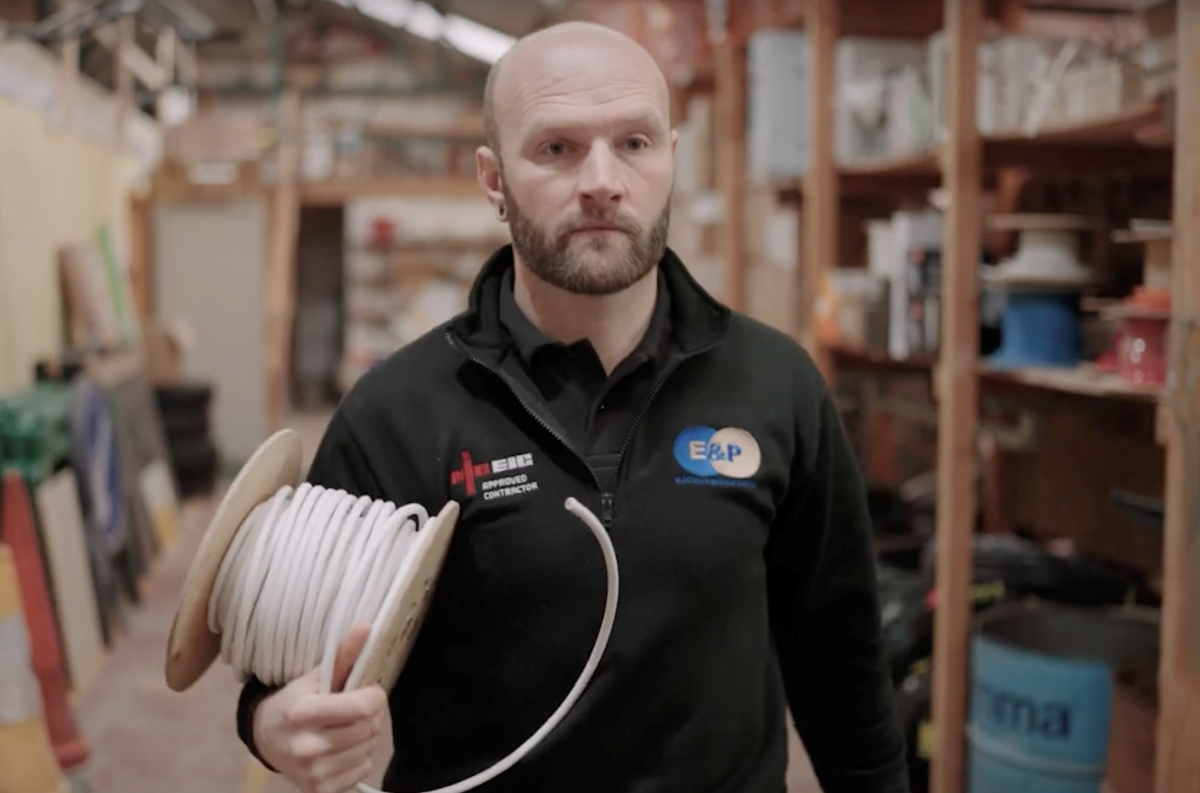
E&P Electrics (Bedale) stars in a new video showing how Fergus's job management software has helped it run its business more efficiently.    Based in the picturesque countryside of North Yorkshire, E&P Electrics (Bedale) is a NICEIC-approved contractor known for its service across the region. The video, available on the Fergus YouTube channel, will help other trade businesses understand the benefit of job management software from a business owner’s perspective.    Lindsay Peacock, a key figure at the company, shares her thoughts on how Fergus has helped the business and says, "Before Fergus, we were drowning in paperwork. Every job was a manual process from sorting to invoicing, a cycle that consumed our evenings and risked important details being lost. It's saved us so much time, we're more proficient in the office, invoices are dispatched quicker and timesheets are completed with ease. It's like we've discovered a new way of working that we never thought possible.”    Fergus says one of the most notable improvements has been the accessibility of job details and customer information, helping Lindsay and the wider team plan, schedule and estimate, increasing transparency and enhancing customer service.   "I can find any job on the system and pull up any necessary information instantaneously. If our team is on-site and needs access details or contact numbers, it's all there at their fingertips," adds Lindsay. This level of efficiency ensures that the company can provide uninterrupted service, improving customer satisfaction and operational agility.   "Everyone received training from Fergus, which set us off on the right foot," Lindsay recalls. "It's not just software; it's a new way of running our business. We're more efficient, more connected, and ultimately, we're able to serve our customers better."   To read more on Fergus, click here.   [embed]https://www.youtube.com/watch?v=Qs0wDo0_XhE[/embed]

Council debuts first low carbon wooden framed Solar Car Park
3ti is installing the first large-scale SCP in Europe to be constructed from sustainable Glulam timber beams and Glass-Glass solar panels. Opening to the public in April, the new SCP at Wiltshire Council's Five Rivers Health and Wellbeing Centre is a significant leap in maximising the lifetime sustainability of solar installations and showcases several advanced technologies that revolutionise the construction, efficiency and visual appeal of SCPs. The new SCP structure is made from Glulam, recyclable wood laminations bonded together to offer a natural alternative to steel or concrete. The engineered timber affords significant advantages over structural steel; it is three times stronger and a third lighter and uses only a tenth of the energy it would take to produce an equivalent steel beam, contributing to a more sustainable building process. The material has minimal environmental impact from its production, is highly repairable, and is an excellent biofuel at the end of its life, further minimising waste. As part of the construction, 3ti has used special Spirafix ground anchors to secure the SCP structure, without using conventional concrete bases or steel piles. This achieves significant carbon savings, speeds up the installation process, is more durable and can be recycled or properly disposed of once the anchors reach the end of their lifecycle. The solar installation at Five Rivers comprises three gullwing solar canopies covering 70 car park spaces, with a combined total capacity of around 220kWp. The leisure centre will use 100% of the solar generation on-site, which will contribute approximately 10% of the overall electricity demand at the site, saving around £50,000 a year on electricity bills. In its first year, the Five Rivers SCP is expected to generate 186MWh of electricity, enough to drive 679,856 miles in a modern EV, saving 36 tonnes of carbon emissions – the equivalent of planting nearly 600 trees and powering 50 homes. The canopies are fitted with transparent Glass-Glass solar panels. The panels offer high efficiency and long-term yields thanks to their bifacial technology, which means solar energy is captured on both sides of the panel increasing total energy generation. The solar cells are embedded in a highly durable Glass-Glass composite, protecting them from challenging environmental and mechanical stress, including snow and hailstorms and are ammonia and salt mist resistant. In addition to its large-scale SCP, Five Rivers recently became the first leisure facility in the UK to install 3ti's Papilio3 pop-up solar car park and EV charging hub. Papilio3 is built around a recycled shipping container and can be installed in under eight hours. It can fast charge 12 EVs at 7, 11 or 22kW simultaneously, ideal for a range of destinations with longer dwell times, removing the reliance on carbon-intense and costly ultra-rapid charge points. Pre-fitted with a range of innovations and safety features, including motion lighting, CCTV, advertising screens and full accessibility for wheelchair users, Papilio3 can be rented monthly from 3ti. Tim Evans, Founder and CEO at 3ti, adds, "Our job is to champion workplace and destination EV charging to promote a 'charge where you stop' mentality across the UK while supporting customers to achieve their sustainability goals. Better EV charging infrastructure at destinations with long dwell times - offices, hospitals and leisure facilities like Five Rivers - will encourage greater EV adoption rates; it's refreshing to see Wiltshire Council adopting such a forward-thinking approach, and we are honoured to play a part in their sustainability vision.'' To read more on 3ti, click here.

Toyota introduces the 2024 Proace and Proace City vans
A year of transformation for the Toyota Professional range of light commercial vehicles has begun with the launch of the new 2024 Proace medium-duty van and its compact sibling, the Proace City. These arrivals herald a programme of new models, delivering Proace Max, Toyota’s first large commercial van. 2024 Toyota Proace The roll-out of the new 2024 Proace range begins with the diesel-powered Proace medium-duty van. Customers have a choice of formats: a van in medium or long body lengths; a Crew Cab with an extra row of seats; and a Platform Cab serving as the basis for bespoke and specialist body types. Power is from Proace’s proven 2l diesel engine with an output of 142bhp (145 DIN hp/106kW) and six-speed manual transmission. The Sport models feature the more powerful 174bhp (177 DIN hp/130kW) unit (badged 180), with eight-speed automatic transmission. Completing the powertrain line-up is the established 1.5l 118bhp/120 DIN hp/88kW engine with a six-speed manual transmission, featured in Active and Icon versions of the Proace van. The Proace van has load-carrying capabilities with a maximum load volume of 6.6m³, up to a best-in-class 1,400kg payload and 2,500kg towing capacity. A compact 1.9m height means Proace can enter standard car parks, while urban manoeuvring is made easier with a 12.4m turning circle between kerbs (for medium/L1-length models). The entry point to the new range is the Active grade. The equipment specification includes a 10in multimedia touchscreen, digital driver’s instrument display, automatic headlights and windscreen wipers, rear parking sensors and a plylining in the loadspace. Advanced safety features include Lane Keep Assist, Driver Attention Assist, Automatic High Beam and automatic emergency braking with forward collision warning. The Icon specification introduces the Smart Cargo loadspace extension system, satellite navigation, a wireless phone charger and 16in wheels with full wheel caps. Moving up to Icon Premium adds automatic air conditioning and 17in alloy wheels. The new Sport grade gives Proace extra style with 17in black alloys, black door handles and body-coloured bumpers, plus keyless entry and LED front fog lights. 2024 Proace City The 2024 Proace City sports the new family Proace frontal design, giving it a more contemporary look and individual character. It retains business-friendly load-carrying qualities, such as its load volume, load length and payload. There are two versions, medium or long body lengths, with respective load volumes of 3.8m3 and 4.4m3 and a one-tonne payload. For 2024, all Proace City will be equipped with Toyota’s Smart Cargo system. Based on the space-extending feature found in the larger Proace models, this uses a folding outer passenger seat and a hatch in the bulkhead to extend load length by 1.3m so longer items such as ladders and piping can be carried. The passenger seatback next to the driver can also be folded to form a desktop. In addition to its interior capacity, Proace City can tow braked loads of up to 1.2t. The core powertrain is the 101bhp (102 DIN hp/75kW) 1.5-diesel (badged 100hp) with six-speed manual transmission. The new Sport versions use a 129bhp (130 DIN hp/96kW) version of the same engine (badged 130hp) with either six-speed manual or eight-speed automatic transmission. The starting point in the 2024 Proace City range is the Active grade. Available exclusively in medium body length, it comes with a 10in multimedia touchscreen and digital driver’s instrument cluster. Safety and assistance features include Automatic Emergency Braking with Forward Collision Warning, Lane Keep Assist, Road Sign Assist, Automatic High Beam and driver attention monitoring. An electric parking brake and rear parking sensors are also part of the standard package. The cargo area comes with a plylining as standard (this can be removed if customers prefer). The Icon models (medium and long) introduce a navigation system, front fog lights, 16in wheels with full covers, rain-sensing windscreen wipers, power-folding mirrors with piano black casings, one-touch power windows, front parking sensors and a rear camera.

No subscription fees with ESP’s Fort Smart Security Doorbell
As the cost of living crisis continues to squeeze household budgets, consumers are making every effort to keep a cap on their outgoings. With recent news reports citing hikes in the subscription fees of some video doorbell providers, ESP is reminding its customers and installers that with its Fort Smart Security Doorbell, there are no subscriptions or additional fees to pay.   The Fort Smart Wi-Fi Doorbell offers a full 1080p (2MP) HD live view, two-way audio, recording and visitor notifications. It is powered by rechargeable batteries, with up to 750 activations on a full charge, and it comes with a plug-in RF chime included.   Additional features include IP54-rated ingress protection, 5m infrared LED illumination, 3m PIR detection range and 130° wide-angle camera view. It offers clear two-way audio and motion-activated video records (storage included).   The smart security video doorbell is part of the comprehensive Fort range of smart security products, including a smart alarm, video security light, sensors and a selection of 1080p cameras. They all operate under a single app, the ‘Click Smart+’ app, which is subscription-free, with no additional fees incurred. By bringing the operation of the Fort range under the Click Smart+ app from the Scolmore Group, users will have control of a raft of connected home and security products, all from one secure and easy-to-access platform.    ESP says that the Fort Smart Security range offers accessibility and simplicity for both the installer and end-user and has been designed to bring simple and smart solutions together for a safer and more comfortable home. The range features contemporary styling and has been designed to be simple to install, maintain and use, providing a hassle-free security solution.   To read more on ESP, click here.

Siemens introduces new circuit protection devices
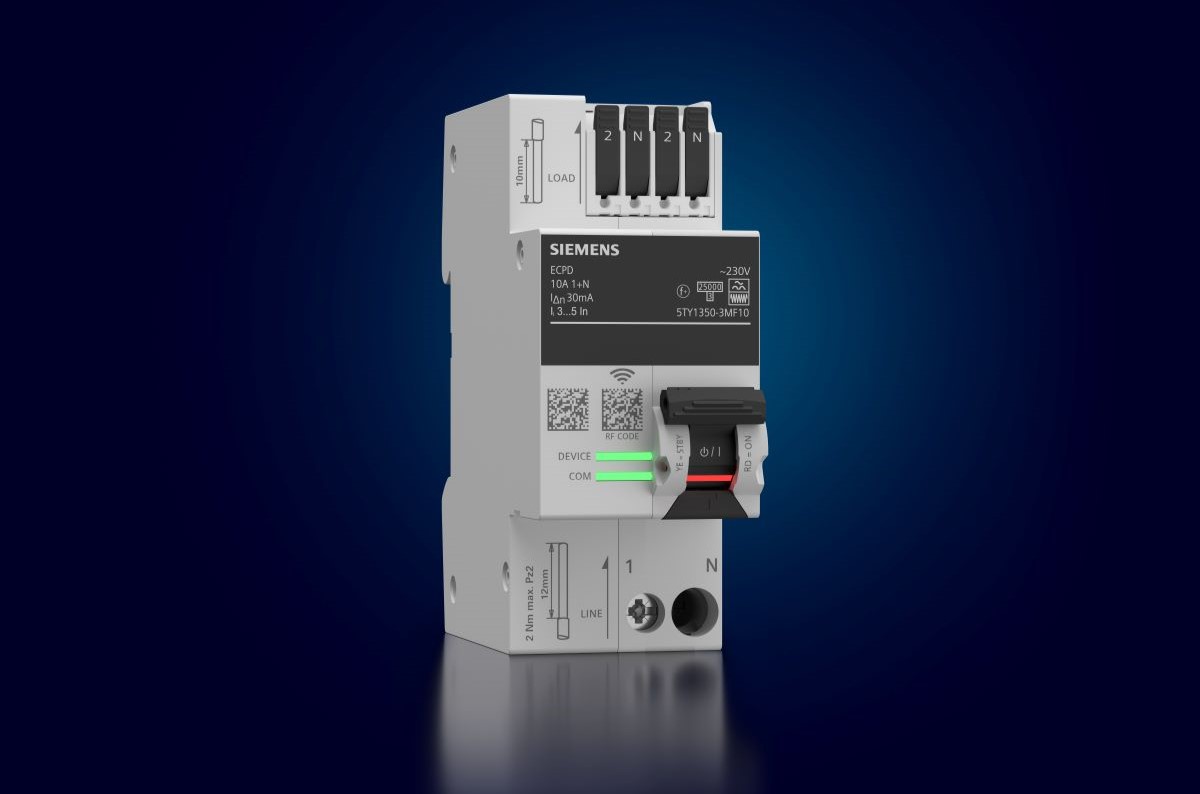
Siemens has developed circuit protection devices with electronic switching technology. SENTRON ECPD (Electronic Circuit Protection Device) electronically switches off circuit faults if errors occur and, if necessary, trips the mechanical isolating contact downstream. Until now, disconnection was handled purely through electro-mechanical elements. “This innovation offers a variety of benefits and has the potential to revolutionise today’s circuit protection world,” says Andreas Matthé, CEO of Electrical Products at Siemens Smart Infrastructure. SENTRON ECPD enables new approaches in electrical planning, maximises safety and flexibility and delivers enormous space and energy savings compared to conventional solutions. “For the first time in the history of circuit protection, it is possible to benefit from several functionalities in one product and to activate them as required by the individual application or adapt them if needed. All of this, combined with the solid-state switching technology, enables up to a thousand times faster, wear-free switching,” adds Andreas. Ultra-fast  Circuit protection devices are central components of every electrical installation. If certain load current limits are exceeded, these devices disconnect the individual loads to protect people and systems from damage. In the event of a short circuit, for example, this type of disconnection occurs in commercially available circuit breakers in two to three milliseconds. In comparison, SENTRON ECPD disconnects up to a thousand times faster, minimising the occurring short-circuit energy. This ensures maximum safety for people, systems and electrical equipment. SENTRON ECPD also offers wear-free switching, which increases the service life of systems and reduces maintenance and repair costs. In addition, the integrated cyclical self-test (including the integrated RCD function) raises safety to an entirely new level not covered by current concepts. Multifunctional and parameterisable The smart SENTRON ECPD offers more functionalities in one compact design, saving space and costs. The range of functions can be customised as required. New functions can be easily activated on the SENTRON ECPD without having to purchase a new device and functionally adapt it into the circuit. The SENTRON powerconfig app makes this task easy and convenient. SENTRON ECPD can be adjusted as required and adapts perfectly to the requirements of the application concerning rated current, tripping limits or behaviour. These properties offer major planning and cost advantages. For example, circuits can be designed based on the rated current of the loads instead of the significantly higher inrush current peaks that occur briefly with certain load types, such as LED lights. This reduces complexity as well as planning and installation efforts and saves on materials such as copper. Reducing operating costs and downtime  SENTRON ECPD offers full transparency on energy consumption in the final circuit through radio-based communication with the SENTRON Powercenter 1000 and 3000 gateways. This enables measures to optimise systems and processes as part of energy management following ISO 50001, which in turn allows for efficient reductions in energy and operating costs. Now, it is possible to perform detailed condition monitoring of the applications at the final circuit level. This substantially increases availability and operational reliability. The large volume of measurement data enables the detection of irregularities and deviations and creates a reliable planning basis for preventive maintenance. SENTRON ECPD can be easily integrated into higher-level systems by using the open Modbus TCP standard. SENTRON ECPD makes it possible to carry out remote diagnostics and remote switching during normal operation as well as in the event of a fault. This offers significant benefits, especially for remote applications without direct on-site support. In addition, it is easier to localise and identify faults by differentiating the cause of the fault. Sustainable  SENTRON ECPD combines multiple product functions in one device. Depending on the application, this allows savings of up to 80% on electronics, 90% on metals and 90% on plastics. Overall, SENTRON ECPD is approximately 90% lighter than the devices otherwise required. Compared to solutions based on today’s conventional technology, SENTRON ECPD also requires up to 80% less space in the distribution board, eliminating the need for costly structural measures. To read more on Siemens, click here.

JTL’s chief executive elected to join the AELP board
JTL has announced that its Chief Executive, Chris Claydon, has been elected to join The Association of Employment and Learning Providers (AELP) board following the organisation’s 2024 Annual General Meeting. Working collaboratively with other board members, JTL’s input will act as a key source of knowledge for apprenticeships in the building services engineering sector and an additional voice to address policymakers and government bodies. With a background in public service aligned to the skills agenda, Chris was previously the Chief Executive of the Engineering Construction Industry Training Board (ECITB), the employer-led skills, standards and qualifications body for Britain’s engineering construction workforce. Chris Claydon, Chief Executive of JTL, says, "I’m naturally delighted to have been selected as a board member of the AELP. “In increasingly challenging times for providers, it has never been more important that we pull together to ensure we meet learners’ needs sustainably. The AELP is instrumental in this, and I look forward to joining them in advocating for those who work tirelessly to deliver quality training and learning. “Through the many opportunities for collaboration, we can ultimately deliver better outcomes for UK skills, employment and the economy.” To read more on JTL, click here.

Stacey Lucas announced as the new President of BCIA
The Building Controls Industry Association (BCIA) has announced Stacey Lucas, Commercial and Marketing Director at Sontay, as its new President. Stacey takes over from Graeme Rees, who has held the role for the past two years, with Jen Vickers stepping into the role of Vice-President. Stacey has been working in the building controls and BEMS sector for over 20 years, starting her career at Sontay in 2001 as a Customer Service Advisor. As she has worked her way up through the ranks, Stacey has built long-lasting relationships with many of Sontay’s customers and made a real impact on the industry. The knowledge and insight learned over the years have given Stacey a brilliant knowledge base and a high level of technical understanding of the building controls sector, which has already served her well in position as Vice-President, a role she took on in November 2022. Reflecting on his two years as President, Graeme says, “These last two years have been extremely rewarding both on a professional and a personal level. I would like to thank everybody who has supported, guided and helped me move the BCIA forward in a number of areas. I have been very proud to serve as President and I am delighted to now hand over to Stacey and wish her the very best of luck in this extremely prestigious role.” Commenting on her appointment, Stacey says, “It is a real honour to be taking over the role of BCIA President from Graeme Rees who has done a fantastic job in increasing member engagement and setting us onto a clear path as an organisation carrying recognition, respect and influence in the building controls industry. Over the next two years, I aim to continue the good work carried out by my predecessors and I am relishing the opportunity.” To read more on BCIA, click here.

Metrel introduces MI 3115 PV Analyser
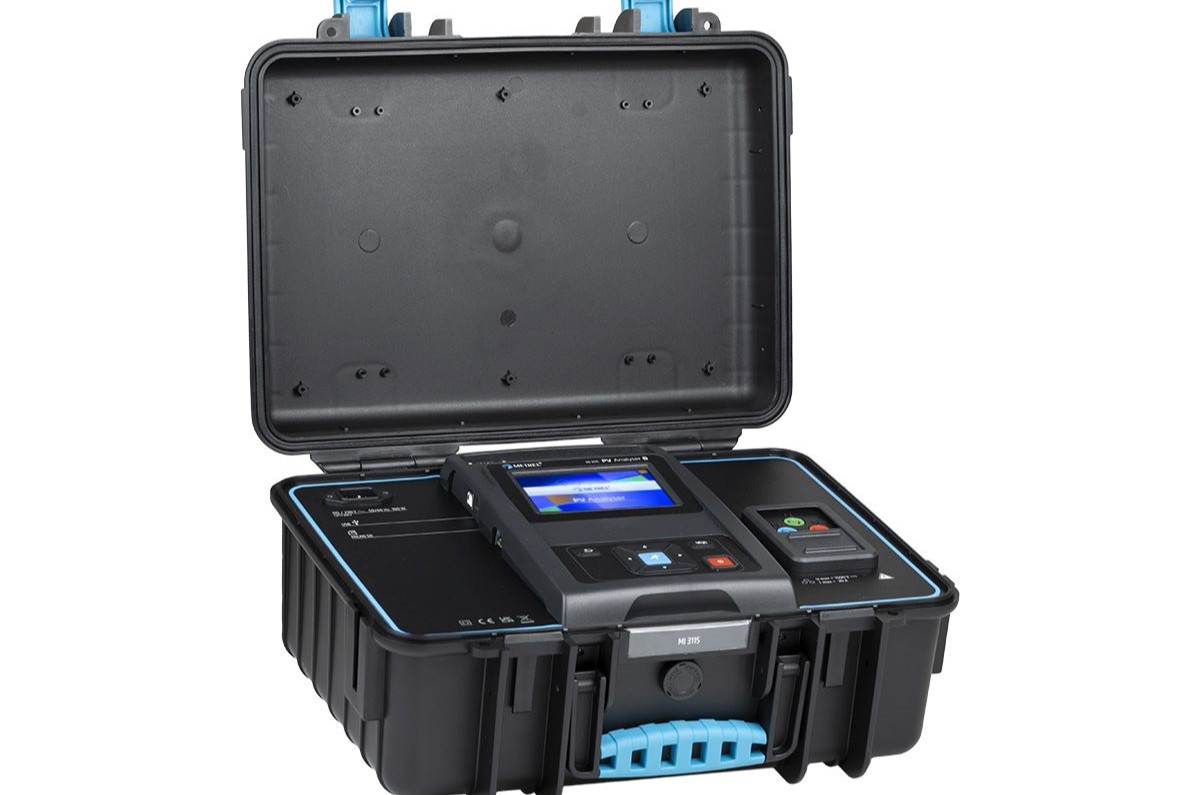
Metrel has launched a new multifunctional electrical installation safety tester for 1500V photovoltaic installations. The MI 3115 PV Analyser comes with an array of versatile accessories for comprehensive testing, including a remote unit for measuring irradiation and cell temperature (of photovoltaic modules). Empowering electrical inspectors to test even the largest 1500V photovoltaic systems with confidence and ease. Key features:  Measurements of insulation and the I/U characteristic in 1500V PV systems in a single instrument An auto-test function for IEC/EN 62446 category one tests Wireless (Wi-Fi) remote unit for measuring (and logging) irradiation and cell temperature of PV modules Calculation of STC values and comparison with nominal data PV modules database handler Correction of previously wrongly entered parameters of an already executed measurement or a group of measurements To read more on Metrel, click here.

EDA wins Innovation of the Year at TAF Awards 2024
The Electrical Distributors’ Association (EDA) has picked up the award for Innovation of the Year at the Trade Association Forum Awards for the EDATA data pool, featuring the ETIM product data standard. Now in its 21st year, the Trade Association Forum (TAF) Awards 2024 are supported by the Department for Business and Trade and recognise excellence, innovation and best practice amongst Trade Associations in the UK. Margaret Fitzsimons, CEO of EDA, says, “This award is a welcome endorsement of the work the EDA is doing to digitalise the UK’s electrotechnical sector. To win it from among 170 leading UK trade associations was a very proud moment for us. “The EDATA data pool was only launched in 2020 and makes it much easier for the supply chain to structure and share the highest quality product information and images between the supply chain partners: manufacturer, wholesaler and electrical contractor. “It has come a long way in a few short years thanks to the drive and determination of the team here at the EDA, in particular Richard Appleton, Head of Digitalisation, Javier Garcia, Data and Onboarding Manager, and Billy Overall, Digitalisation Marketing Manager. There is still a mountain to climb but this Award spurs us on.” Emily Wallace, Chief Executive of the Trade Association Forum and one of the head judges on the panel, says, “Data pooling is at the cutting edge of collaboration driven by associations. The judges were impressed by the EDA’s innovative approach, creating not just one but two services which help members, with the success being clear in the rapid growth of both initiatives.” The Association was also Highly Commended in the Skills Development category for the suite of 12 EDA Product Knowledge Modules. To read more on EDA, click here.

15% increase in construction fatalities in the past year
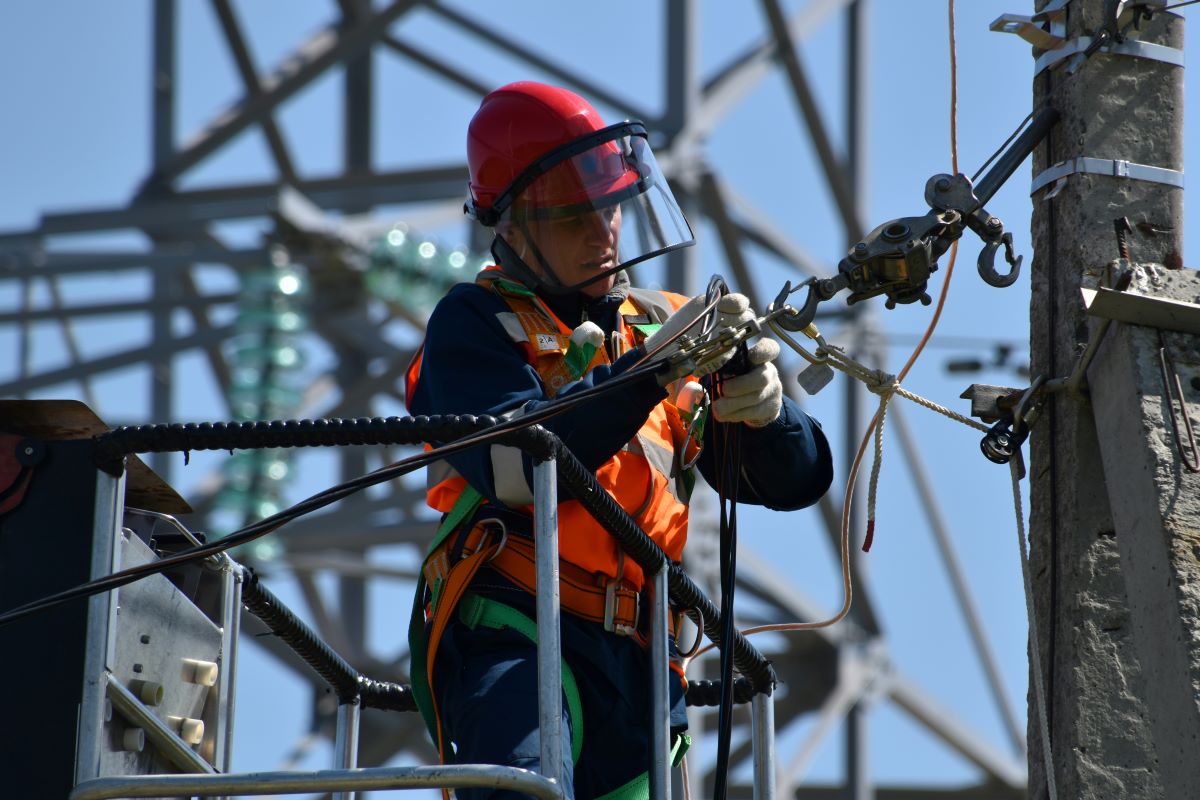
New data has found that fatal accidents in the UK construction industry have risen by almost 20% in the last five years. In 2022/23, 45 fatal injuries were reported, an increase of 15% compared to the previous year. Falling from a height is still the number one cause of fatal and non-fatal incidents in the construction sector. Those working in the industry are three times more likely to experience falling from a height than experiencing an injury through something collapsing or overturning. Being struck by a moving vehicle and a moving object were the second and third most common fatal accidents for workers, respectively. Between them, these accidents account for around two-thirds of fatal injuries to workers in 2022/23. The rate of deaths per 100,000 workers also surged by 22% in 2022, reaching 2.1 per 100,000, compared to 1.72 in 2021. The death rate in the construction sector is three times higher than in the transportation and storage industry. This increases to over seven times higher than those working in the waste and recycling industries. The findings, collated by specialist providers of cherry picker hire in London, Herts Tools, used construction statistics from the Health and Safety Executive reports from 2022 to 2023. The analysis demonstrates the severity of accidents in the construction industry, continuing to rise year after year, and how workers and workplaces are being affected. The data also revealed a significant rise in the number of days lost per construction worker due to injuries, as 6.4 days were recorded in 2022, resulting in an uptick of 23% since 2021. Injuries and ill health in workers in Great Britain cost around £16.2 billion in 2018/19, in comparison to £20.6 billion in 2022/23. Stefano Lobban, Director at Herts Tools, says, “Although there will always be accidents in the construction industry, we can never stop trying to reduce them. These latest findings show just how far we have to go, with fatalities continuing to rise, despite the UK having some of the most thorough health and safety regulations anywhere. “Training is key to protecting workers, whether it’s highlighting dangers or teaching workers to make their own risk assessments on site, and then there’s ensuring workers have all the PPE they need, such as helmets, safety goggles and slip-resistant footwear.”  How can companies prevent accidents on construction sites? Training and education: Provide thorough training on safety protocols and equipment operation. Regulatory compliance: Ensure adherence to safety regulations through regular inspections. Equipment maintenance: Maintain machinery and tools to prevent accidents caused by faults. Clear communication: Use visible signage and encourage reporting of safety concerns. Risk assessment: Conduct thorough assessments and develop mitigation strategies. Safety culture: Promote a culture where safety is prioritised through open communication and regular meetings.