2 November 2026
Product of the Month: Amari Floodlight range by Aurora Lighting
 
11 November 2026
Energy, AI and smart buildings: register now for EMEX 2026
 
11 November 2026
Solar and batteries could cut electricity costs by 40%, data finds
 
11 November 2026
EIC confirmed as ECN Awards 2026 charity partner
 
11 November 2026
Acrospire to support Green Frog's European expansion
 

Latest News


MKM celebrates major milestone with 100th branch opening
MKM is proud to announce the opening of its 100th branch, which officially opened its doors in Bromsgrove on 23 September. The company began life as a start-up business, founded in Hull 27 years ago. From its humble beginnings with just five people in a 5000sq ft shed, MKM now has over 2500 employees, with branches right across the UK, except Northern Ireland. On the day, the cutting of the ribbon to declare MKM Bromsgrove officially open was performed by David Kilburn, the joint founder of MKM and Kate Tinsley, MKM’s CEO. The opening event attracted hundreds of local customers, who were royally entertained by ex-Aston Villa and England footballer Dion Dublin, along with Kevin Ward, Bromsgrove’s Town Crier. Patrons from The Harry Bennett Foundation (HB9 Foundation) - a local charity set up in memory of the life of a Bromsgrove teenager, also attended the event. MKM Bromsgrove has pledged its ongoing support to The HB9 Foundation, with Dion presenting the charity with a cheque for £1500 on behalf of MKM. MKM’s 100th branch opening will be followed shortly with openings in North Walsham, Lincoln North, Bury and Manchester. The current growth of branches will continue at a pace. MKM’s unique business model is a central lever to its expansion. The model gives Branch Directors a stake in their own business, driving extraordinary performance, resulting in MKM being one of the best in the industry. Explaining the fundamental ethos behind MKM, Kate Tinsley, CEO, explains: “It’s about providing the highest levels of customer service by employing local people who have the drive, knowledge, skills and enthusiasm to deliver this from premises built around today’s discerning customer. “As local people serving local people, it provides MKM with the opportunity to play a significant role in the local community,” continues Kate. “The Bromsgrove branch is already working with local charitable organisations to assist in their fundraising activities. As a business. MKM supports many hundreds of charities, local sports teams and community projects across the country.”

Croydon electricity grid protected from flood risk
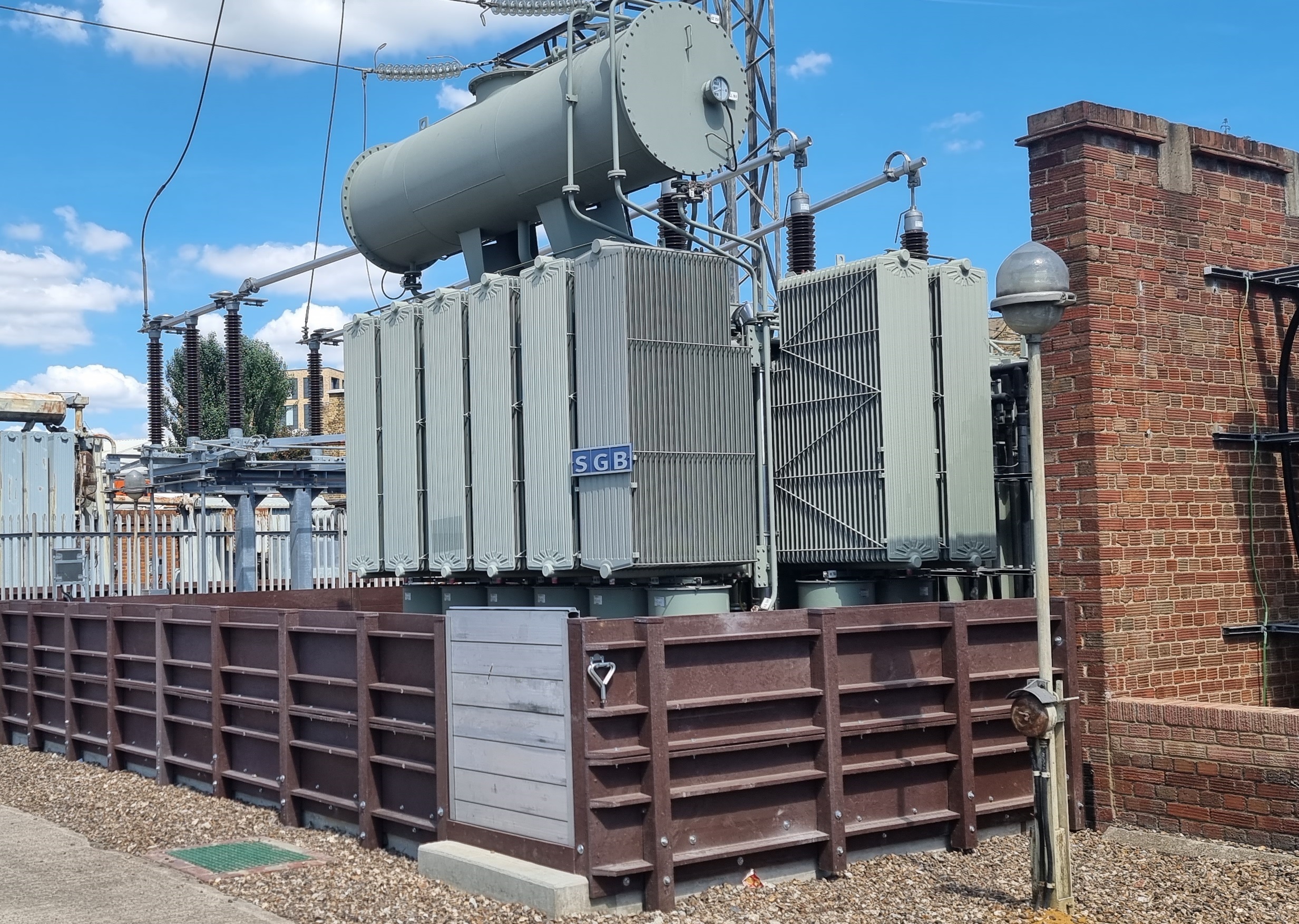
Thousands of homes will benefit from more secure power supplies through a £800,000 flood defence scheme completed by power workers at Croydon Grid. Engineers at UK Power Networks have installed permanent flood barriers to protect the site in the event of a 1-in-1,000-year flood of the River Wandle, a tributary of the River Thames. The project has increased the resilience of electricity supplies to approximately 69,000 homes and businesses across the town. Equipment has either been sealed, raised above estimated flood levels or protected inside flood walls. The flood protection measures cover electrical buildings and four transformers, used to step down voltage to safely deliver power to smaller electricity substations and properties. Anthony Griffin, Project Manager at UK Power Networks, says: “This investment is part of our flood risk mitigation programme, working with partners to assess and mitigate flood risks across our sites. This project will enhance network resilience for thousands of customers across Croydon to help keep electricity supplies flowing.” Through the company’s flood mitigation programme and climate adaptation plan 119 substations have been protected from river, tidal and surface water flooding. UK Power Networks has invested £14 million in flood defences since 2010 to keep power flowing for communities. The Croydon investment is part of £600 million the company will invest this year in its electricity networks. UK Power Networks maintains the network of cables, substations and power supplies that deliver electricity to 8.4 million homes and businesses (a population of about 19 million people) across the South East, London and East of England.

ECA calls for fit-for-purpose vocational system following mini budget
ECA says the Chancellor’s fiscal statement gives a mixed message to business. It praised the announced cut in corporation tax, which should provide a welcome boost to small businesses and stimulate growth in the medium term. However, this summer the sector-wide Building Engineering Business Survey found recruitment and retention of the right calibre of staff was the biggest curb on business growth. The Chancellor’s statement failed to mention support for upskilling and training, which could hinder future growth. ECA Director of Workforce and Public Affairs Andrew Eldred says: “The government is clearly trying its hardest to be as pro-business as possible within a difficult economic context. But the big question is whether these tax cuts will create enough growth to offset an even larger tax bill in a few years’ time. “One important piece of the growth puzzle, which was overlooked in Mr Kwarteng’s statement, is skills and training. “We urgently need a fit-for-purpose vocational educational system to maintain a skilled and competence workforce that will be able to deliver Britain’s future infrastructure and create the high-skill, high-value jobs that will drive real growth for many years to come.” For electrotechnical sector businesses of all sizes, the latest budget measures should help alleviate some of the immediate pressures of rising costs and heavy inflation. But despite these measures, inflation continues to bite hard. ECA members remain very concerned about the long-term outlook for businesses who are struggling to recruit skilled labour. They also question how these measures will be financed, and how reliable the government’s support will be in the future.

Self-generation nation: solar sales soar amid escalating energy costs
As the cost-of-living crisis continues to bite, the number of UK homeowners investing in renewables is rising at a rapid pace. Jordan Brompton, Co-Founder and CMO at myenergi, discusses the widespread benefits of self-generation and explains how households can make the most of their sustainable supply. Over the past decade, the European energy marketplace has continued to experience increasing volatility. Even prior to the catastrophic impact caused by Russia’s invasion of Ukraine, prices were creeping up and unprecedented demand was beginning to put pressure on available supply. Indeed, in 2021 alone, wholesale costs soared by upwards of 250%. Key factors behind this hike included a cold summer, meaning less gas was stored for winter use; fewer pipeline deliveries than predicted; and far lower energy generation across Europe than in previous years. This resulted in significant demand placed on supply channels, just as energy demand peaked, and all while global economies were still bouncing back from the impacts of the COVID-19 pandemic. Rather than short-term pressure, with the market quickly bouncing back, challenging conditions are set to continue. With price caps rising, inflation soaring and the cost of living impacting almost every household, escalating energy prices and the real risk of demand outstripping supply continues to hit the headlines. To tackle the seemingly looming energy crisis, more householders than ever are turning towards renewable energy generation as a solution to safeguard against an unpredictable market. According to Solar Energy UK, more than 3,000 photovoltaic (PV) installations were undertaken every week in July - an increase of almost 200% year-on-year. In addition, installers nationwide have been reporting enquiry surges of more than 1,000%. But while increasing renewable uptake should be commended from an environmental perspective, will self-generation really protect you from escalating energy bills? What’s more, with a hefty associated price tag, is it possible to further maximise efficiencies and reduce the payback on your investment? Does the maths add up when it comes to self-generation? With almost 1.1 million installations across the UK, solar PV deployment provides a combined national energy capacity of approximately 13.6GW. Unlike most renewable generation, an increasing percentage of this capacity is from smaller panels, many of which are found on the roofs of residential homes. But why solar? Well, when it comes to self-generated energy generation, PV is a reliable and efficient solution with a realistic payback time and minimal maintenance requirements. As the technology has continued to evolve and improve, it has become the most popular solution for homeowners looking to take energy into their own hands. While popular, solar is just one solution. Skyrocketing energy prices have been a huge motivator for households investing in self-generation, with all renewable technologies thrust into the spotlight. Whether small-scale wind turbines, solar thermal technology or ground source heat pumps, consumers are quickly moving away from reliance on mains supply and the uncontrollable pressure of market volatility. And yet, despite continued investment, the Achilles heel of renewables remains. While most household energy is used in the evenings, most renewable energy is generated during the day. Unless you have a comprehensive battery set-up, it’s most likely that you’ll export sustainable power at periods of low consumption and buy it back at a more expensive rate when you need it. Self-consumption technologies - beating the system In the past, the challenge of unmanageable generation has proven a barrier too high for most homeowners to overcome. The equation simply doesn’t add up. But fortunately, there’s another way. At myenergi, we help users to harness the true benefits of self-generation through smart technologies, reducing their carbon footprint and helping them to take complete control of their energy spend. We’re best known for designing the market’s first eco-smart electric vehicle charging device - zappi - a future-proofed solution that, alongside operating as a mains-connected charging device that automatically optimises around your energy tariff to enable charging at both cheaper and greener times from the grid, seamlessly integrates with renewable tech to harness self-generated energy. This gives zappi users the opportunity to charge for free - quick, simple, zero emissions motoring. While charging your car through mains supply is still far cheaper and more environmentally friendly than running a petrol or diesel car, doing it with renewable energy can take EV charging completely off grid. Alongside Zappi, we also manufacture a wide range of other devices - such as eddi, which diverts surplus renewable energy to domestic heating systems; and harvi, an energy monitoring wireless sensor that allows the zappi and eddi to be installed without wiring a direct CT clamp. Each of our products help households to consume more of their self-generated energy and minimise reliance on the grid. In result? A smart home with minimal grid demand, autonomously powering your electric car, heating and hot water with completely free renewable energy. An investment up front is obviously required, but with energy bills escalating, it gives you complete control over energy spend and avoids the risk of price cap hikes. What’s more, you’ll be safe in the knowledge that you’re reducing your carbon footprint and contributing towards a more circular economy. The idea of smart, automated systems that use renewable energy to power and warm your home while recharging your zero-emission vehicle is a real game-changer. However, it’s not a vision for the future, it’s available to us today. So, while the Achilles heel remains, our innovations are giving consumers smarter, more innovative, and environmentally friendly alternatives to offset their reliance on the grid. With the cost of grid generation outside the control of homeowners, now is the perfect time to become more independent. With concerns about ongoing price hikes, self-generation, energy independence and smart eco-smart technologies can provide the solution.

Leading apprentice wins 2022 ECA Edmundson Award
Veronica Jennings has been recognised as one of the country’s leading electrotechnical and engineering services apprentices, after winning the coveted 2022 ECA Edmundson Apprentice of the Year Award during a ceremony held at the Royal Society in London. Veronica, who works for ECA member-firm Imtech Engineering Services in Nottingham, was trained by JTL. After overcoming fierce competition from two other finalists, Veronica won prizes including £1,500 and an overseas study tour sponsored by industry manufacturer Thorn Lighting. The two runners-up, who each won £750 and a state-of-the-art toolkit, are: James Stanford of Gilbert & Stamper. Charlie Ewing of The Rosebery Group. Veronica says: “I feel delighted and privileged to be recognised as ECA Edmundson Apprentice of the Year, and I am honoured to represent Imtech Engineering Services. I would especially like to thank my tutor Neil from JTL and my employers, who have been fantastic mentors and provided me with the best start to my career I could have wished for.” ECA Head of Education and Training Carolyn Mason comments: “I’m pleased to offer our congratulations to Veronica Jennings for deservedly winning this year’s ECA Edmundson Apprentice of the Year Award. The quality of the finalists this year is a real indication of the talent that exists in our industry, not to mention the exemplary way in which they have overcome the challenges of the past two years. “Imtech Engineering Services and JTL deserve credit for the support they have given to Veronica during her apprenticeship, which has been a clear success. Congratulations also to Gilbert & Stamper and the Rosebery Group, for presenting such able finalists, and supporting high quality training within our sector.” Managing Director of Edmundson Electrical Mark Felber adds: “Edmundson Electrical is delighted to finally return from hiatus and sponsor the industry leading ECA Edmundson Apprentice of the Year Award once more. We have a long-established policy of developing young people within our sector through both our apprenticeship and graduate schemes. “Many congratulations to Veronica and the other two finalists for making such an impressive start to their careers - and of course for reaching the final stage of the ECA Edmundson Apprentice of the Year Award.”

Electrical professionals must build trust ahead of smart home demand
Over two-thirds (68.5%) of Brits are likely to purchase a smart home product in the next two years, and almost half (45.6%) would be more likely to purchase a home with smart technology installed, research has revealed. In a survey of 1,000 UK consumers by Legrand, smart heating and energy controls, security, and gate/door entry technology are perceived to add most value to a home. Detailed in an industry report - Connecting the UK’s Homes - the survey results show a number of opportunities for those working across the electrical industry. Despite demand increasing - and consumers recognising the value of introducing smart home devices to the home - the research shows that a lack of product knowledge is a key barrier to homeowners purchasing technology. Other barriers outlined in the report include installation costs and ongoing subscriptions, to which the majority of respondents (85.4%) said they would prefer a one-off package with no subscriptions. The survey also revealed that only 10% of homeowners would go to an industry professional for information or advice, indicating an opportunity for contractors and electrical installers to become their customers’ smart home advisor. Ahead of an anticipated connected home boom, Legrand’s report guides electrical professionals and housebuilders through the opportunities open to them. Pascal Stutz, CEO at Legrand UK and Ireland, explains: “There is more pressure than ever on electrical contractors, consultants and housebuilders to produce homes up to the high standards that consumers expect. Our latest research shows there is an opportunity for professionals, which is why we have created this report. We outline the barriers facing installers and housebuilders alike, as well as outline ways to overcome them.” Electrical professionals are also being encouraged to take part in smart home installation training to learn the full capability of the most popular devices and systems. The perceived value that smart home technology brings to a property makes training and development in these installations a practical step for increasing revenue on projects of all sizes. Pascal continues: “We are committed to being a partner to the electrical industry, improving lives by transforming the places we live, work and meet. For those working in the residential sector, we deliver this through our Connected Living products, expertise and training. The report is just one way we’re supporting the industry as we navigate our way to a more efficient and connected future in our homes.”  

World EV day 2022 - City & Guilds driving change to meet 2030 targets
World EV Day is a global movement, driving change, celebrating e-mobility and encouraging transitions to sustainable transport. City & Guilds have made significant strides to support this agenda in the past 12 months by developing a range of new products that will support the need to train tens of thousands of people to fit the new EV charging points required in the years ahead. Kirstie Donnelly MBE, CEO at City & Guilds, says: “At City & Guilds we are committed to supercharging our positive social and environmental impact by developing the skills needed to create a more sustainable world. It is critical that we transform the way we operate and live out our purpose by developing the skills needed to enable climate recovery and sustainable growth. It is a real honour for City & Guilds to be playing an integral part in promoting safe use and installation of EV charging points while also working towards a more sustainable future.” City & Guilds is working with industry associations and companies to develop training to equip more electricians with the skills to install electrical vehicle (EV) chargers. The move is designed to support the effort to help the UK meet its target of 300,000 chargers by 2030. To develop a new portfolio of charging design and installation training courses City & Guilds has been working in collaboration with companies such as Shell UK, to ensure the products truly meet the needs of industry. The shared aim is to set exceptional standards and help train up the net zero generation of the future. The courses include skills to install domestic and small-scale commercial EV chargers, as well as commercial and large-scale design and installations. Roger Hunter, Vice President of E-mobility at Shell, says: “By 2030, we aim for 90% of UK drivers to be within 10 minutes of a Shell fast charger. Installing and maintaining these will involve thousands of hours of highly skilled work, requiring electrical engineers that the UK doesn’t have in vast numbers today. So, this is a great opportunity for us to combine our skills to train up the net zero generation of the future.” In further support of World EV Day City & Guilds is asking people to strengthen the call to professionalise the EV charging market by making their own commitment to drive up standards and promote safety.

Trailblazers ‘lead the way’ at UK Power Networks’ graduation ceremony
In a first for the electricity distribution industry, 10 trailblazers at UK Power Networks have gained qualifications through an innovative new Leadership Academy designed to upskill middle managers. UK Power Networks is the first electricity distribution operator to offer managers the opportunity to study Level 3 Team Leader Supervisor or Level 5 Operations Departmental Manager apprenticeships, whilst also delivering professional Chartered Management Institute qualifications with the potential for Chartered Manager status for its 600 managers. The 10 volunteered to be part of the first cohort, to complete professional qualifications, while providing feedback to help shape the academy for hundreds of future delegates. The academy offers structured training for middle managers, many of whom have achieved promotions through their skills and competencies but had not necessarily studied for professional management and leadership certificates. The qualifications are tailored to suit their roles, in collaboration with Pearson TQ and Gateshead College and made possible through the broader range of opportunities that have opened through the government’s apprenticeship scheme. The graduates, dressed in full hats and gowns, collected their certificates from UK Power Networks’ Chief Executive Basil Scarsella at a ceremony in City Hall, London, with their proud family members in the audience. Lee Faber, field staff supervisor says: “I have grown so much over the past 18 months both as a leader and as a person. My team and my manager have really seen the difference. We’ve really bonded as a group, and I feel so proud.” Linda Mummery, smart metering team leader, says: "There are not many companies that would offer you the opportunity to actually have their own academy and put you through doing such a course. It's amazing, it's part of the company being an employer of choice and I think it gives leaders new skills, which help them excel in their job." There are 130 currently studying in the academy, learning how to enhance their management skills including topics such as diversity and inclusion, so they can apply them consistently for a successful career in management, and find effective solutions to challenges in the workplace. Phil Beach CBE, Chief Executive of Energy and Utility Skills, comments: “It’s fantastic to see UK Power Networks using the apprenticeship levy to increase the capability of their people. One of the key priorities of our membership is to explore how the sector can better use unspent apprenticeship levy funds that it is currently unable to access fully. I support UK Power Networks in their commitment to maximise funds and invest in skills and congratulate this first cohort on their well-deserved success.” Laura Beach, Learning and Development Manager at UK Power Networks, adds: “The academy helps ready our workforce for future challenges, and raises the bar so we can consistently deliver high performance. It’s a career development opportunity few would expect of a utility. “The idea to create an in-house Leadership Academy was born to nurture talent, providing targeted training based on real life scenarios to help managers deliver continuous improvement. Many also gain Maths and English qualifications to set them up for further career advancement.”

SELECT’s campaign for regulation of the electrical industry receives another boost
Former Scottish Government Minister, Fergus Ewing, has thrown his weight behind the growing campaign for the regulation of the electrical industry being spearheaded by SELECT. The prominent SNP politician, who was Cabinet Secretary for Rural Economy and Tourism between 2016 and 2021, has added his name to the body’s Wall of Support alongside fellow politicians and leading names from the construction sector. Fergus, MSP for Inverness and Nairn, says: “Electricians carry out vital work for us all and this work must be done by properly qualified professionals. “Cowboys could put lives at risk, given that there is a very clear danger that faulty electrical systems can cause house fires. Therefore, I am going to support moves in the Scottish Parliament to regulate the profession of electrician to secure proper protection of the public. “There is already protection for gas engineers through the well-known Gas Safe Register, formerly the Corgi scheme, so why not for electricians as well? I am pleased that SELECT is pressing for this regulation and pledge my support to cross-party efforts to deliver it.” Fergus’ digital ‘brick’ on the Wall of Support comes hot on the heels of other recent signatories, including SNP MP, Owen Thompson, Certsure Managing Director, Richard Orton, and 184 individual electricians from across Scotland. Alan Wilson, Managing Director of SELECT, says: “It is highly encouraging that a former Scottish Government minister with substantial business and governmental experience has so fully expressed his support for our regulation campaign. “We warmly thank Fergus and all the other recent signatories to our Wall of Support and our ongoing he campaign, pursued over the course of many years in partnership with the Scottish Joint Industry Board (SJIB), the Scottish Electrical Charitable Training Trust (SECTT) and Unite the Union.” Fergus’ comments come as a Members’ Bill is being prepared for presentation to the Scottish Parliament which, if passed, could enshrine in law the professional status of electricians. The bill is being proposed by Conservative MSP, Jamie Halcro Johnston, who has worked tirelessly in the campaign and has been instrumental in promoting consultations to better inform MSPs and Ministers of the seriousness of the issue. The bill’s primary aim is to make it a statutory offence for someone to call themselves an electrician when they have no, or inadequate, qualifications, and to make sure that those who work in the industry do so in a safe and competent manner. SELECT is also now planning meetings with other MPs and MSPs in the coming months to add further names to the Wall of Support.

How to get your van ready for winter
Is your van ready for winter? The cold weather will put a lot of additional stress on your vehicle and could result in a breakdown that could cost you thousands in repairs and lost business. Sarah Tooze, Consumer Editor at online van marketplace AutoVillage reveals her winter checklist for drivers. Inspect the antifreeze Antifreeze is vital for the health of your van’s engine. It prevents the water from freezing and also raises the coolant’s boiling temperature, which prevents the engine from overheating. Replacement intervals for antifreeze range from three to four years, but your owner’s manual will confirm this as it very much depends on the model of the van and the size of its engine. If you are unsure when your coolant was last changed, ask your local garage to test the strength of the fluid as the properties of the antifreeze will deteriorate over time. Check the battery The 12v battery in your van has a lifespan of five to six years. Some batteries will last much longer than this, but their ability to generate and hold a charge will diminish over time and this increases the risk of a breakdown over the winter months (with the cold weather putting additional strain on the battery). If your van is struggling to start in the mornings or the battery warning symbol is illuminated on the dashboard, then the 12v battery may need to be replaced. Poor headlight strength is another sign of a worn-out battery. Clean the windscreen and wipers regularly It’s important for van drivers to see and be seen during the dark, winter months. Get into the habit of cleaning your van’s headlights and taillights every two weeks with a damp cloth as road dirt and salt will obscure the light housings and make your vehicle more difficult to see at night. Clean the windscreen wipers every two weeks too, as dirt and road salt will quickly build up. And clean the interior of the windscreen with a good quality glass cleaner and wipe dry with a microfibre cloth - as a clean screen will demist quicker than one covered in dirt and dusty fingermarks. Check your lights If you've ever been driving along at night and found yourself with a light out, then you'll know how important lights are - both to see and be seen by other road users. Make sure your lights work on all settings (parking, dipped and main beam). You can also point your van at a garage door when it's dark and check that the beams are not too high or low, and that they are correctly aligned. Check the taillights operate as they should and test the brake lights by reversing against a wall or garage door and checking the reflections. Finally, test your van’s fog lights and indicators. Inspect the tyres As a general rule, you should check your van’s tyres every two weeks and before a long journey. And these inspections are even more important in the winter months, with poorly inflated or heavily worn tyres making driving extremely hazardous in wet or icy conditions. The correct tyre pressures will be listed in the owner’s manual and/or on a plate inside the driver’s door frame. Check the sidewalls for signs of damage (bulges or tears) and inspect the tread depth. By law, you must have 1.6mm of tread across the central three-quarters of the tyre.