2 November 2026
Product of the Month: Amari Floodlight range by Aurora Lighting
 
11 November 2026
Energy, AI and smart buildings: register now for EMEX 2026
 
11 November 2026
Solar and batteries could cut electricity costs by 40%, data finds
 
11 November 2026
EIC confirmed as ECN Awards 2026 charity partner
 
11 November 2026
Acrospire to support Green Frog's European expansion
 

Latest News


Lifestyle changes made during lockdown can help deal with rising cost of living
The BCIA believes some of the adjustments households and companies were forced to make during lockdown can now help us adapt to the increasing cost of living, as fuel and energy prices continue to rise. With roads virtually empty during the early months of COVID, fuel prices plummeted, and people were saving money as they were not allowed to travel anywhere unless it was an essential journey. The adoption of online meeting platforms such as Zoom and Teams meant important discussions could still take place without the need to meet up in person, and Graeme Rees, BCIA President, believes travelling a considerable distance for meetings when they can be held virtually is no longer financially feasible. He says: “Many households are having to scrutinise every penny of their monthly spending and are restricting their car journeys wherever possible because of the huge rise in fuel prices. Online meetings are becoming more common as we are perhaps waking up to the fact that driving to a meeting is neither environmentally friendly nor financially justifiable in many cases.” A well-planned Building Energy Management System (BEMS) can also save energy and money for the end user and the importance of this was emphasised during lockdown as many buildings still had systems running despite being largely empty. Graeme continues: “The biggest reasons for deploying a BEMS are arguably, a) to monitor and subsequently reduce a building’s energy consumption and make it more environmentally friendly, and b) save money! The two for the most part go hand in hand and in the age of net zero the environmental reasons have been heavily promoted in recent years and right now is perhaps a good time to highlight some of the financial benefits of a well thought out, properly planned BEMS and correctly maintained BEMS.” To ensure their BEMS are operating properly in order to deliver maximum savings on energy costs, end users should keep a check on setpoints and time scheduling, being sure any temporary overrides put in place are returned to normal operation and that all sensing devices are kept clean and away from any erroneous influences. In many cases, maintenance and repair jobs will involve call outs for engineers which means more money spent on fuel when travelling to different jobs. The importance of keeping maintenance call outs to a minimum during lockdown was in order to keep human contact to a minimum and reduce the risk of spreading COVID. The same principle can now apply but with the aim of reducing unnecessary journeys, as Graeme explains: “Applying the latest technologies including data analytics via secure remote connectivity, coupled with good forward planning can reduce engineers’ need to carry out maintenance on site unless absolutely necessary and thereby reduce their spending on fuel.” He concludes: “Some of this may be obvious and straightforward to many but quite often it is the easy stuff that is missed or forgotten about, and it is surprising what we can achieve when we adopt a ‘back to basics’ approach to saving money.”

NAPIT introduces new EVCP qualification to bridge skills gap and meet net zero targets
In response to an industry push to bridge the skills gap for electric vehicle charge point (EVCP) installations and assist in meeting the Government's net zero ambitions, NAPIT Training has launched a new EVCP course, Level 3 Award in the Design and Installation of Domestic and Small Commercial Electric Vehicle Charging Installations (City & Guilds 2921-31). The new qualification has been introduced following the UK’s aim to become net zero positive by 2050. The transport sector is one of the biggest emitters of CO2 and a major source of air pollution in cities. Decarbonising transport is therefore essential, and one of the primary drivers enabling this strategy is the adoption of EVs. In addition to the Government's net zero ambitions, consumers in owner-occupier flats and rented properties can access a 75% contribution to the cost of one charge point and its installation through an OZEV (Office for Zero Emission Vehicles) authorised installer. Earlier this year, City & Guilds hosted an industry roundtable which highlighted concerns about the current skills gap of the limited numbers of trained electricians carrying out installation work and a growing number of poorly installed EV charge points. These results prompted City & Guilds to introduce a new suite of EV qualifications. The qualifications are aimed at practicing electricians wishing to reskill in order to safely install and maintain EV charge points. These qualifications are intended for three separate markets, namely design and installation of domestic and small commercial EV charging installations, design and quality assurance of largescale EV charging installations and the installation and maintenance of largescale EV charging installations. NAPIT Training supports these changes in the industry and now offers the domestic and small commercial EV charging installations qualification at all three of its training centres as well as pop-up centres across the UK. Brett Forster, Head of Training at NAPIT, says: “NAPIT welcomes the introduction of the new EV qualifications, which will not only help in the path to net zero, but also provide a refined and focused training programme on EV technology in the relevant locations. We are pleased to have the new course added to our portfolio of training qualifications and encourage electricians to consider reskilling now to help drive positive change for EV installations and environmental goals.” The two-day course will provide you with the technology specific knowledge that is required to install EV charging points with confidence. Upon successful completion, you will receive a City & Guilds 2921-31 Certificate of Competence.

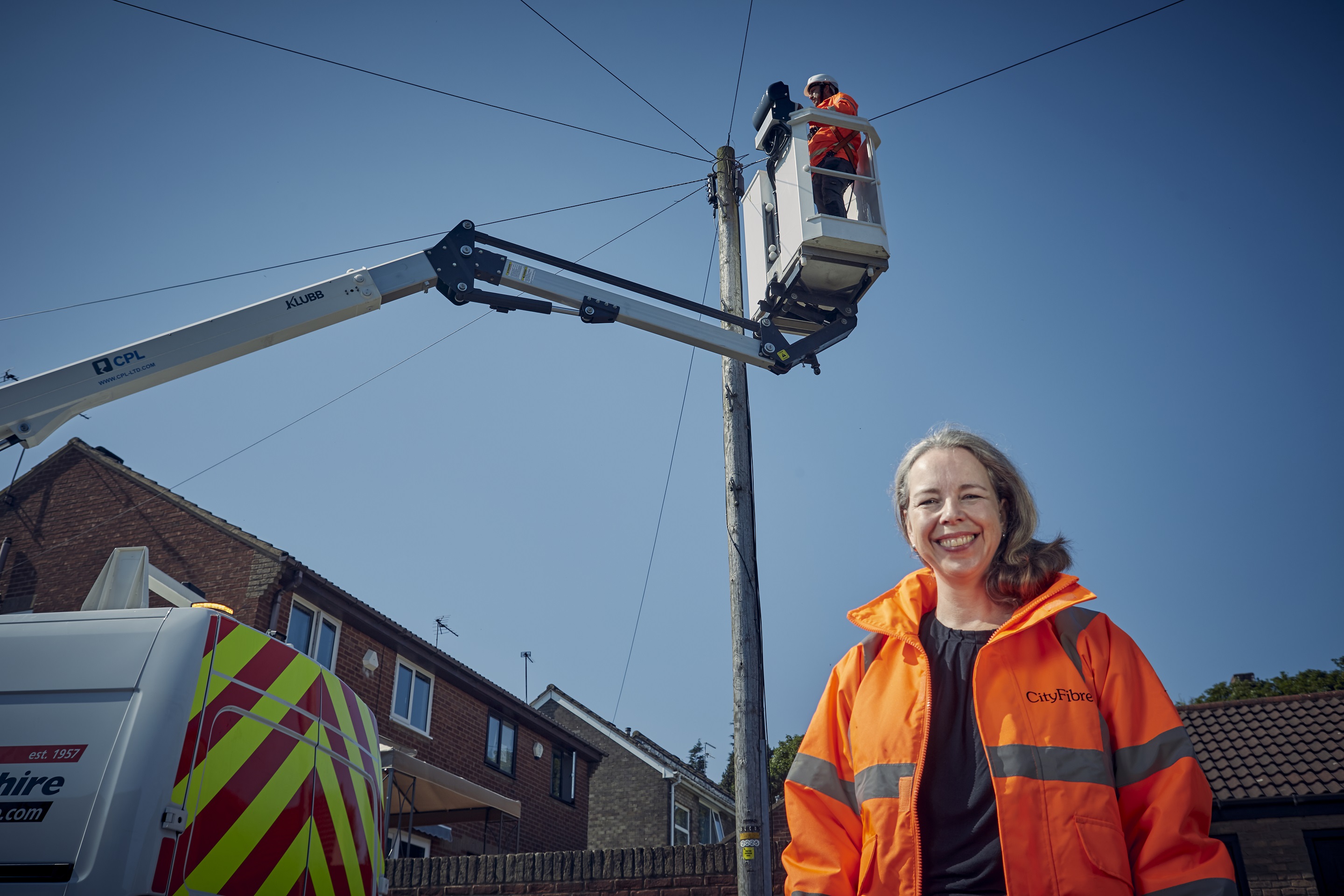
York to enjoy major economic boost from CityFibre’s full fibre rollout
A new report commissioned by CityFibre has identified that York stands to be a huge beneficiary of the rollout of future-proof full fibre infrastructure. The findings come as the rollout continues to accelerate throughout the city, with a choice of internet service providers (Vodafone, TalkTalk, Giganet, IDNET, No One, Hyperfiber) now available and additional providers such as Zen expected to join the network soon. The study by the consultancy Hatch, (Economic Impact of Full Fibre Infrastructure from CityFibre’s Network), estimates that, over a 15-year period, the positive impacts of CityFibre’s multi-million-pound investment in York will include £207m in productivity and innovation gains, £45m from a widened workforce, £7m in local authority efficiency savings and £143m in increased housing value. Technological benefits are also a major focus of the report, which demonstrates that CityFibre’s full fibre network in York will help to unlock £492m in gross added value (GVA) from 5G services, £131m from the Internet of Things and £87m from Smart City initiatives, such as intelligent traffic management systems and street lighting. Kim Johnston, Regional Partnership Director at CityFibre, says: “The report demonstrates just how powerful and essential full fibre is as a catalyst for growth and a platform for innovation and investment. This really is such an exciting time for residents in the city who have a rare opportunity to choose from a range of ISPs and access some of the best broadband packages available. “We’re extremely proud of our rollout in York, which is now one of our most mature builds, and we look forward to seeing how the network will benefit residents and businesses over the decades to come.” Cllr Nigel Ayre, Executive Member for Finance and Performance, City of York Council, says: “In recent years, York has seen significant public and private sector investment in our digital infrastructure, delivering a wide range of benefits to local residents and businesses. The city is more connected than ever before, meaning we have all been able to work from home effectively, carry out day to day tasks online, stream the latest TV and much more. At the same time, this investment has created more jobs, improved council services and made our incredible city an even more attractive place to live, work and invest. “This report is further evidence of the positive impact of being a digital city and that our work with partners is having a significant impact on the lives of residents and businesses. We are proud to have been seen as the UK’s first gigabit city and it is pleasing that this investment continues to be made so that we can deliver gigabit speeds to more of the city and make sure that communities are connected.”

Ellis sets sights on specifiers with senior appointment
Ellis Patents has appointed Chris Davies as its new Project Specification Manager. Davies, who has over 30-years’ experience in the cable management industry, including well over a decade with Legrand Electric, will be responsible for raising the profile of Ellis Patents during the design and specification stages of projects. Kelly Brown, Ellis Patents’ Sales Director, says: “There are various stakeholders involved throughout any project and our aim is to be involved from the earliest stages of planning.” “We want to work alongside the world’s leading electrical design houses to ensure that Ellis Patents solutions are considered right from the outset, and we’re confident that Chris, with his incredible track record, bulging contacts book and level of enthusiasm for the challenge, will play a major role in helping us achieve these goals.” One of the main hurdles facing Chris will be ensuring the consulting engineers and EPC contractors he’ll be targeting take into account the vital importance of cable cleats during the specification process and do so in the knowledge of Ellis Patents’ proven track record. “Ellis Patents has a huge reputation across the globe, and I’m confident I can capitalise on this in order to expand its presence in a section of market that has yet to be explored fully,” says Chris.

HAL makes light work of electrical safety testing at Pacific
Investment in production and testing expertise from Seaward is helping an importer and distributor of domestic lighting ensure products that are supplied to trade customers across the UK work safely. Pacific has been involved in the design and import of a wide range of lighting (among other household products) for over 50 years. This includes contemporary table and floor lamps, walls lights and outdoor lighting. After investing in the HAL LED, the firm has been working closely with Seaward to develop an effective regime to secure optimum electrical test performance, improving both the speed and accuracy of product safety checks carried out by the quality and safety compliance department. The development “reflects the additional benefits Seaward brings to customer service”, says Didi Prakova, Pacific’s Technologist for Electrical Safety Testing. She adds: “Working closely with Seaward, we have been able to implement improved testing processes and understand fully the set-up of HAL and the capabilities it offers. We now have seven trained people across the department, who have been able to take advantage of Seaward’s production expertise to create a safer, far more efficient and, importantly, bespoke process that meets our current and expected future testing needs. “Moreover, it now only takes us 15 seconds on average to complete a full product electrical safety test cycle, which is easily done at the press of a button. This is a major step forward thanks to firm’s input and a significant benefit to our distribution operations, particularly when product demand is high.” Products are fully tested at Pacific’s purpose-built facility using the HAL, verifying the safety of lights imported from South East Asia before they are distributed to trade wholesalers across the UK. This includes batch-testing of current ranges as part of quality control procedures along with 100% checking of all new product introductions. The tester is used to check products for signs of electrical leakage, secure wiring and ensure that internal integrity has been maintained. It can also provide power measurement readings with a resolution of 0.2VA below 1000VA and performs continuity and ground/earth bond tests alongside AC/DC Hipot (FLASH/Dielectric Strength). Function testing is also undertaken to check units effectively switch on/off and perform correctly at required power consumption levels and that any ancillary equipment operates in accordance with technical specifications. Test results are stored automatically by the HAL, providing full traceability, which ensures all products are proven to be quality assured before leaving Pacific’s premises. Didi Prakova and her team can use this data to maintain a test record for all units in the event of any damage during distribution, or to track and trace any product returns - in line with company customer service policies. She adds: “The HAL is a good product that we like to use, offering a good level of feedback and extensive capabilities. It’s easy-to use, delivering more effective testing and providing the reassurance that units leaving our site are 100% safe-to-use and will operate as required.” The HAL delivers better resolution when testing low power products compared to the other safety testers, ensuring improved accuracy of measurement and quality control standards during manufacturing. Companies like Pacific are benefiting from Seaward’s production expertise to complete end-of-line tests with the additional benefit of functionality testing of the operation of the equipment. This ensures that product is not only safe but benefits from consistent quality control throughout the supply chain. The HAL combines the performance of a multi-function production line safety tester with power measurement for product energy consumption. The tester can be integrated into automated manufacturing systems with selectable sensors and can be controlled using a PC, either using Seawards own software solution or by means of a command protocol. A large graphic display presents information either in a numerical or analogue format while a powerful internal memory allows the storage of up to 6,000 test results and up to 50 configurable test routines. The instrument can also be interfaced with a variety of accessories, to improve both safe working and efficiency, including bar code scanners and safety warning beacons.

ECS Registered Electrician status tops 40,000 gold card holders
The Electrotechnical Certification Scheme (ECS) has been encouraging electricians to help raise standards for installation and maintenance electricians by becoming ECS registered. Five years since launch, the ECS takes a look at how this has raised standards for those working as installation or maintenance electricians. Registered Electrician status signifies that not only has the person met the requirements for the industry-approved standard at Level 3 as an installation or maintenance electrician (an ECS gold card), but they have also kept up to date with the latest edition of BS7671 IET Wiring Regulations, have agreed to a code of professional conduct and agree to keep up to date with CPD requirements. ECS Registered Electrician status was introduced in 2017 to raise the bar on new entrants obtaining their ECS gold card, and to recognise the need for undertaking continuing professional development (CPD). This is expected to be further raised by the collaborative work of the industry through Working Group Two: Installers - one of the dozen working groups established to consider competence following the disaster at Grenfell. Sector groups are now working on areas such as CPD, reassessment and ensuring that the competence of an individual can be verified through a digital card scheme such as ECS, who collectively account for more than two million workers in the built environment across all partners. The number of ECS Registered Electricians is increasing every day as more experienced electricians sign up, as well as newly qualified electricians meeting this threshold as the new minimum standard, and now account for more than two-thirds of all qualified electricians holding an ECS gold card. The introduction of updated checking processes, such as the launch of the CSCS Smart Check App in April, mean that more clients and employers are ensuring that those electricians coming onto their projects are qualified and competent to do the role they are undertaking by holding an ECS gold card with the latest edition of the Wiring Regulations. Any necessary CPD qualifications show within the digital ECS card system and on the reverse of the physical card. Kevin Snowdon, Owner of NES Electrical in Bromley, was the first person to achieve Registered Electrician status in 2017. At the time of launch, Kevin explained his hope that ECS Registered Electrician status would mean the industry would benefit from greater insight into the workforce, being up to date with the latest technological developments and a commitment to meeting professional standards. “Registered Electrician status is a well-deserved endorsement for the professionalism and skills of installation and maintenance electricians,” explains Kevin. “At the time Registered Electrician status launched we didn’t know how much the industry would have changed and how much of a focus that competence would have received in the next five years. This was undoubtedly a positive step by the industry to raise the bar. There is still more to do, but to see more than two-thirds of gold card electricians have kept up to date with the 18th Edition and recognise the benefits of further training and skills is a testament to our industry and the positive outlook electricians have on boosting their skills and knowledge. “I promote the skills and knowledge of my workforce to clients and main contractors to help set us apart and take advantage of funding opportunities such as the JIB Skills Development Fund where possible. With a workforce skilled in new technologies and developments, this means my business is more prepared for new opportunities and allows us to grow and continue to support staff. The addition of the ECS CPD recording system in 2020 was also a vital service for quickly and effectively demonstrating this verified level of training, assessment, and competence.”

Home life safety technology leading the way at IoT awards
Aico has recently won two trophies for its HomeLINK Internet of Things (IoT) connected home platform at the EG Tech Awards and the Computing Digital Technology Leaders Awards. At the EG Tech Awards, Aico won the ESG category, which recognises the best use of tech to improve the sustainability of a building and resident wellbeing. Aico’s entry successfully demonstrated how the HomeLINK IoT platform assists landlords in identifying properties for retrofit to increase thermal efficiency, while improving indoor environmental conditions by predicting the risk of damp and mould. Jordan Toulson, Product Manager at HomeLINK, attended the EG Tech Awards and comments, “We had a great time at the EG Tech Awards and being recognised for ‘The best use of tech to improve the sustainability of a building’ as well as for ‘The best wellbeing innovations in property’ in such a strong group of shortlisted nominees for the ESG Award is a real honour.” The innovative HomeLINK IoT platform achieved the accolade for the ‘Big Data / IoT Project of the Year’, in recognition of Aico’s project with Barnet Homes, involving the roll-out of the IoT platform to over 3,000 properties. Aico’s connected home offering met the category criteria by illustrating how Barnet Homes have utilised the system to provide safer homes for residents and deliver social value, while generating a return on investment. This award-winning IoT project has already had a life-saving impact on residents by identifying dangerous levels of carbon monoxide within several properties. The remote data insight enabled Barnet Homes to react quickly, keep residents safe and perform the necessary maintenance duties. Stuart Bishop, Director of Property Services of Barnet Homes, who played an integral role in the Barnet Homes IoT roll-out adds, “Barnet Homes is delighted to have been instrumental in AICO achieving a recent Digital Technical Award recognising their innovative approach to remote monitoring of key fire safety devices in our residents’ homes. This approach should provide added assurance for our residents as it enables us to proactively manage any fire safety device issues and alarms. Ultimately, with the complete roll-out across TBG homes, resource efficiencies will be possible with fewer physical checks required. We are keen to work with AICO to explore extended benefits of these devices including adding environmental sensors which can highlight damp and mould issues early on.” Aico’s HomeLINK IoT platform addresses serious challenges within the housing sector, such as compliance, sustainability and disrepair. When connected to the Ei1000G Gateway, landlords can access information and data from fire and carbon monoxide alarms and environmental sensors. These actionable insights enable the creation of healthier, safer homes for residents through proactive measures and maintenance.

Classic styling meets modern technology with DW Windsor’s Heritage range
DW Windsor has expanded its popular Heritage lighting range to include tunable white technology, warmer colour temperature options, Bluetooth wireless control, and improved LED efficiency. Recognising the demand for greater flexibility and building on its commitment to delivering the right light at the right time, with these upgrades, DW Windsor aims to give designers the tools they need to tackle the ongoing challenges of urban lighting. Tunable white lighting offers a flexible, dynamic solution for night-time illumination. With two transition ranges (3000K to 2200K, or 4000K to 2700K) the technology enables designers to more closely control the colour and intensity of light throughout the night. For example, the system can be programmed to begin illuminating at 3000K when night falls and then transition to a warmer, softer 2200K overnight, when fewer road users and pedestrians are present. Additionally, warmer colour temperatures down to 2200K have been added to the Chip on Board (CoB) light engines, offering a smoother transition from the former sodium bulbs typically associated with Heritage lanterns. Taken together, these new options within the range allow designers to respond to the growing market shift away from the cooler end of the colour spectrum. Expanding the connectivity options in the Heritage range was also a major focus for the upgrade, with the introduction of Bluetooth control. The wireless technology enables one-to-one adjustment or the opportunity for luminaires to communicate in a small, closed network, with no need for specialised central control modules, thus opening up greater levels of controllability for smaller-scale applications. Energy efficiency was another key consideration, and the upgraded luminaires now achieve up to 180 lumens per watt, representing a 20% increase compared to existing options. Finally, the upgraded range also sees the addition of a new product, Windsor Urban, a high-performance, traditionally styled lantern. Inspired by the company’s flagship Heritage luminaires and offering a low whole-life cost, the durable aluminium lantern is ideal for large-scale projects. Alan Grant, Design & Development Director at DW Windsor, comments: “DW Windsor has been a trusted brand for over 45 years. With these improvements, we’re spearheading the industry’s shift towards warmer colour temperatures while also providing flexible connectivity options for greater control. All of these improvements contribute towards a more efficient and sustainable product that will benefit clients and end-users alike.” DW Windsor’s Heritage range spans from traditional Victorian-style lanterns with authentic aesthetics to more contemporary, mid-century luminaires, offering unparalleled efficiency and performance for period applications.

Smart system instantly approves 10,000 electric car chargers
A new smart portal has proved its worth by fast-tracking more than 10,000 electric car chargers to connect with the electricity network in its first year. Smart Connect, the online portal launched by UK Power Networks, has slashed notification time for installers from 10 days to just a few seconds across London, the South East and East of England. Launched in February 2021, Smart Connect has already saved 6,000 working hours for connections staff at UK Power Networks and automatically approved 73% of more than 19,000 applications, allowing installers to install immediately they get the go-ahead. As well as processing EV charger applications, new functionality allows installers to submit applications for other low carbon technologies, including heat pumps, batteries and solar panels. To date, some 5,000 household solar installations, over 900 electric heat pumps and 265 domestic batteries have been approved through Smart Connect. Smart Connect can now accept applications where multiple low carbon technologies are being installed for the same household. Installers have already submitted more than 1,000 applications using this new functionality and about half have been instantly approved. The online portal has recently been expanded to take in applications for commercial premises. Installers who are managing multiple jobs for the customers, can check the status of all their applications at the click of a button. If the property’s electricity supply needs to be upgraded, Smart Connect refers customers to a UK Power Networks expert. If no upgrades are required, the tool moves on to automatic approval. A new Smart Connect tutorial video has also recently been added, making it even easier for installers to apply. Neil Madgwick, Head of Service Delivery at UK Power Networks says: “Millions of electric cars and heat pumps will connect to local electricity networks over the next decade. We want to make sure they can do that quickly and easily. Through tools like Smart Connect we’ll make it possible - whether we’re working with installers or directly with consumers – for them all to connect at pace which will help the UK’s journey to net zero. It’s been amazing to see how much people have used our new portal already and proves we’re on the right track in finding ways to make the process smooth and speedy.” Jodie McPherson, Technical Sales and Compliance at East Green Energy says: “The introduction of Smart Connect has revolutionised the way DNO applications are able to be submitted and brought a much more efficient way of working into our industry. It was more than tripling the amount of applications possible. “After a new update, it then became possible to add multiple devices into one application, which meant you were able to do all applications on one form, increasing efficiency and reducing workload even further! “I also cannot express how brilliant the team who have worked on Smart Connect have been and I have been honoured to have been part of the launch and update this process with them.”

Winners of the JTL Employer Recognition Awards officially announced
JTL has announced the winners of its 2022 Employer Recognition Awards. The awards process, which takes place annually, recognises employers who have shown remarkable levels of support and commitment toward their JTL apprentices. With six award winners this year, it has taken a considerable level of consistency and merit for each winner to stand out amongst JTL’s considerably large employer base. The winning employers are as follows: Northern Ameon (building services engineering)         Western Whitehead Building Services (building services)       Eastern E J Parker Technical Services (technical services)         Southern R S Birch & Partners (electrical contractors) and Gilbert & Stamper (electrical contractors)     National Redrow Homes (construction services)       Judi Wheeler, National Delivery Director at JTL, says: “Our award season is a treasured time here at JTL, and the Employer Recognition Awards are particularly important as they give us the chance to shine a light on our employers as much as our apprentices. Our employers are massively important to us, as without them we simply would not be able to offer apprenticeship opportunities to our learners. We’ve received many glowing nominations for employers nationwide from field staff and after much deliberation, six employers who really stood out were selected for recognition this year. “Every employer who received a nomination should be proud of the way they have welcomed apprentices into their businesses, but we would like to wish a special congratulations to the six winners. With that, we extend our deepest gratitude for their work and their clear and consistent dedication to our apprentices.”