2 November 2026
Product of the Month: Amari Floodlight range by Aurora Lighting
 
11 November 2026
Energy, AI and smart buildings: register now for EMEX 2026
 
11 November 2026
Solar and batteries could cut electricity costs by 40%, data finds
 
11 November 2026
EIC confirmed as ECN Awards 2026 charity partner
 
11 November 2026
Acrospire to support Green Frog's European expansion
 

Latest News


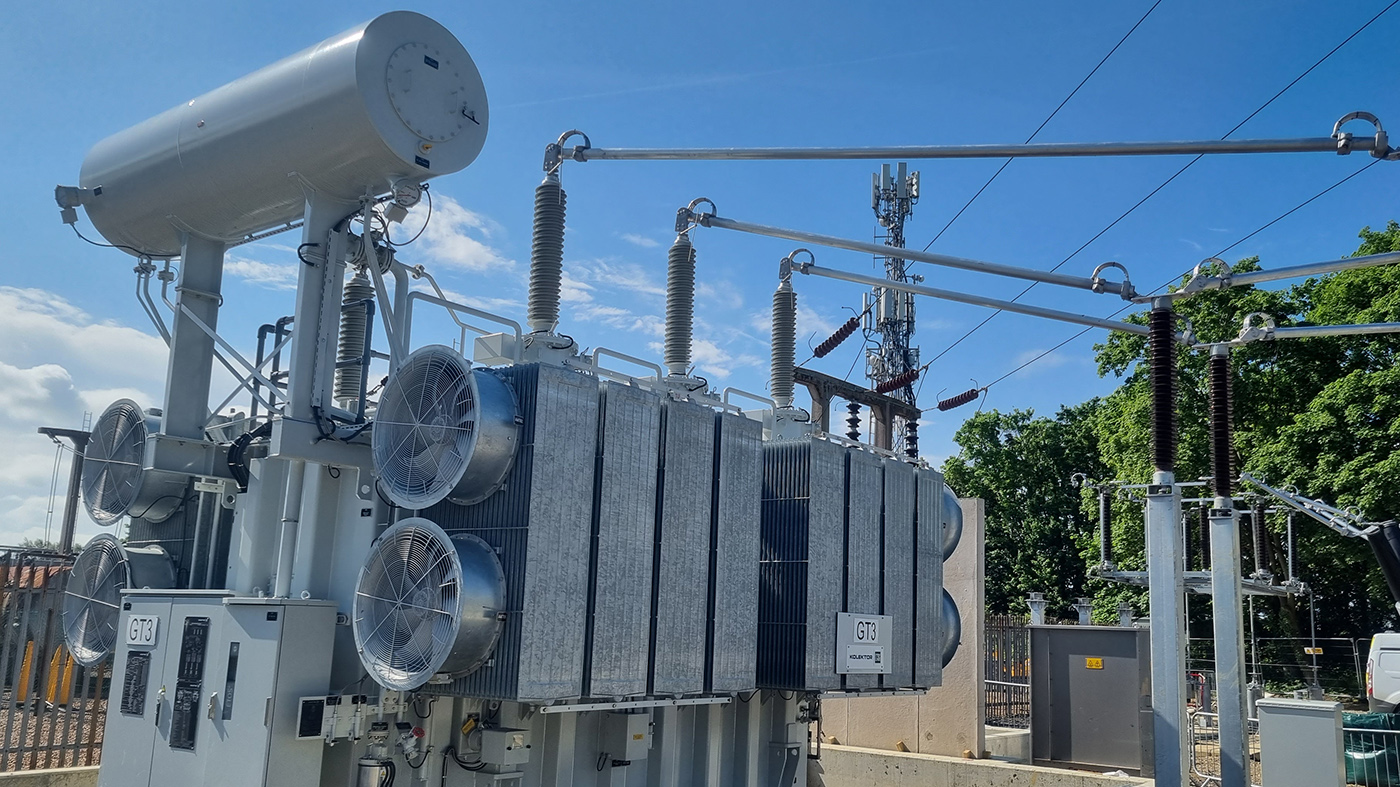
Milestones reached in Histon power project
Work is progressing rapidly in a power project designed to meet the future needs of homes and businesses across the Cambridge area. UK Power Networks, which distributes electricity across London, the South East and East of England, has reached a set of major milestones in the £5 million upgrade. The investment, launched last winter, has already seen new electrical equipment installed in Histon, including a third grid transformer to help boost capacity and ensure reliable supplies in parts of Cambridge and the surrounding area. The project, which completes next year, has also safely introduced new modern switchgear equipment to the site which enables power cuts to be fixed remotely for customers. A video capturing the work done by UK Power Networks on site to date, with partners Morrison Energy Services to date can be seen, here: [embed]http://www.youtube.com/watch?v=q819uc6SWhQ[/embed] Michael Falcone, Project Manager at UK Power Networks, says: “Cambridge is an ever-growing city and with the move towards more electric vehicles in the transition to net zero we recognise the need to cater for future growth by matching that expansion through investment in the network. “The new transformer and switchboard are major new assets for the Histon site and will provide better resilience of power supplies to homes and businesses in and around Cambridge as the project moves towards completion next year.”

Avoid lengthy employment tribunals with early conflict resolution through the JIB
The Joint Industry Board (JIB) has reiterated the importance of early workplace dispute resolution in order to prevent conflicts spiralling out of control and parties becoming ‘entrenched in their views’. The JIB has over 50 years’ experience of dispute resolution through conciliation and mediation. Under its employment terms and conditions, the JIB has its own resolution procedure where disputes relating to the JIB Agreement and dismissals can be resolved at no cost to either the company or the individual. This is a less formal process than going through an employment tribunal and has proven success, with 100% of cases being resolved in the last five years. The JIB has operated a resolution facility since it was set up in 1968 and this free-to-access procedure remains a fundamental aspect of the JIB Agreement, provided to member companies, operatives and registered apprentices. Sheik Khan, Secretary and Head of Industrial Relations for the JIB, says: “As an independent industrial relations body operating on behalf of the industry, we provide a service that is specifically tailored to the JIB Agreement. There is a much greater chance that the issue can be resolved at an early stage, particularly with the involvement and knowledge of people with industry experience. “Since the introduction of Pre-Claim conciliations in 2013, there have been more than 300 claims resolved by the JIB and only four committee hearings. With the average one-day unfair dismissal claim costing over £8,000 where cases reach the employment tribunal, this represents a potential saving to the industry of £2.6 million. Where cases cannot be resolved we aim to complete these within 14 weeks which is a real advantage given that in some areas the current waiting times for an employment tribunal hearing is over a year.” He adds: “We are fortunate to work with very professional and pragmatic people within both the Electrical Contractors’ Association (ECA) and Unite the Union, and a lot of our success is down to the sensible approach taken at both regional and national level. “Although we are incredibly proud of our successes, we cannot stand still, and we are currently reviewing the procedures to simplify and streamline them.” The JIB is pleased that this service continues to be valued and will continue to support good industrial relations in the electrical industry. David Kieft, Owner and Director of RDM Electrical and Mechanical Services, describes how much his company values its JIB membership, saying: “The recognition we gain in other areas of the construction industry by virtue of our JIB and ECA membership is extremely helpful, even if it is hard to quantify its monetary value. With the JIB and ECA, there is always somewhere to turn; always someone there who can help you with any issues. These people are always on top of their game and professional at all levels in their approach!” Further information about the benefits of JIB membership can be found in the membership brochure, here.

Nearly half of construction businesses lack digital marketing skills
A lack of in-house skills is the most common challenge facing construction businesses when it comes to promoting their businesses online, reveals a new poll. Conducted by construction digital marketing agency Koozai, the new survey found that 44% of construction industry professionals believe that their businesses lack the skills needed to properly implement an effective digital marketing strategy. Carried out during a digital marketing webinar for construction websites, the poll quizzed construction marketing and business professionals about the biggest challenges they face in digital marketing. It also found that a third (33%) of construction industry professionals believe that their businesses lack time to oversee digital marketing activity. 17% said that a lack of budget was the biggest obstacle to digital marketing success. Just 6% said that there was a lack of buy-in in digital marketing from senior decision makers. The new poll comes as Google searches for construction goods and online sales of construction products and services continue to rise. According to the latest Office of National Statistics (ONS) figures, online sales in construction have grown by £1.6 billion in the last 10 years. However, the ONS figures also suggest that most construction businesses are yet to fully embrace online marketplaces. Just 5.5% of construction businesses are making e-commerce sales compared to 22.8% of manufacturing businesses, 24.3% of information and communication services businesses, 28.6% of UK businesses overall, 44.1% of wholesale businesses, and 48.3% of retail businesses. Koozai Owner and Director, Sophie Roberts says: “For decades many UK construction businesses have relied on traditional marketing practices and face-to-face relationships between contractors. This obviously still matters; however online demand has grown significantly. The data shows that construction lags behind other industries when it comes to capitalising on ecommerce opportunities. Without a remedy for this, construction businesses risk being left behind as the buying behaviours of industry buyers and consumers continue to change.”

Bolton to enjoy economic boost of over £37m from full fibre rollout
A new report commissioned by CityFibre has identified that Bolton stands to be a huge beneficiary from the rollout of future-proof full fibre infrastructure, which is now well underway across the town. The study by the consultancy Hatch, (Economic Impact of Full Fibre Infrastructure from CityFibre’s Network), estimates that, over a 15-year period, the positive impacts of CityFibre’s £37m investment in Bolton will include £192m in productivity and innovation gains, £42m from a widened workforce, £17m in Local Authority efficiency savings and £128m in increased housing value. Technological benefits are also a major focus of the report, which demonstrates that CityFibre’s network in Bolton will help unlock £456m in GVA from 5G services, £218m from the Internet of Things and £81m from Smart City initiatives, like intelligent traffic management systems and street lighting. The continuing transition to home and flexible working, supported by full fibre access at home and in the office, is also unlocking access to a larger pool of labour for employers. In Bolton this widening of the workforce is expected to unleash £42m in GVA while flexible working productivity uplifts are estimated to exceed £1.2bn nationwide. The direct impact of network construction is also identified as a major contributor of Bolton’s economic growth, creating network construction jobs within CityFibre’s build partners and supply chain. Wherever possible, the new jobs will be recruited locally to support the rollout. The UK stands to benefit from over £38bn in potential economic benefits. Productivity improvements and innovation are responsible for the largest impact, driving more than £22bn in GVA gains nationwide. This is due to the positive effect that far faster and more reliable digital connectivity has been shown to have on business productivity and innovation, increasing turnover and contributing to the formation of new businesses and business models. Steve Thorpe, Area Manager for Bolton at CityFibre, says: “This report demonstrates just how powerful and essential full fibre is as a catalyst for growth and a platform for innovation and investment. We’re extremely proud of our rollout in Bolton, the £37m investment we are making here, and we look forward to seeing how it will benefit residents and businesses over the decades to come.” Martyn Cox, Bolton Metropolitan Borough Council Leader, comments: “When we first outlined Bolton’s regeneration plan in 2020, we knew that its successful delivery depended on the town being a digital hub for businesses and people to thrive. “Since then, seeing the progress made by CityFibre in Bolton gives us such optimism for the future. The town is now more connected than ever before and the report reveals the true extent of the potential benefits of reliable and powerful connectivity in Bolton, which will support our growth for years to come. We are delighted to continue offering our support to CityFibre and have great optimism about what is in store for our collective futures.”

Alarming numbers of neglectful van drivers admit lapse in vehicle security
An alarming number of UK van drivers are neglecting to take the security of their vehicle and its contents seriously, a new study has found, as over three in four (77%) confess they don’t have an alarm or immobiliser installed within their vehicle. A further 45% fail to lock their van when it’s not in use. The research, conducted by the experts at iCompario, surveyed 1,000 UK van drivers who use their vehicle for work purposes about the actions they take to secure both their vehicle and contents when not in use. Three quarters (76%) of those surveyed said they knowingly leave themselves at risk by not taking sufficient care to protect their property and deter thieves. According to the findings, a staggering 64% admitted they fail to remove their tools and other valuable items from their van when it’s not being driven, despite the role these items play in their livelihood. Almost all of the UK van drivers surveyed (95%) are yet to secure the catalytic converter on their vehicle too, despite thefts of this part increasing significantly since the first COVID-19 lockdown began in March 2022. Leaving themselves open to further vulnerability, a substantial eight in 10 (81%) UK van drivers also said they don't park their van in a way that could stop a thief from being able to open or break the lock such as parking against a wall. Furthermore, just a quarter (24%) ensure they park their van somewhere extra secure at night and j just three in 10 (31%) have a dashcam fitted for when they’re out on the road. When quizzed about previous break-ins and theft experiences, a secured compound or workplace car park, a locked garage at home, or the van owner’s driveway were found to be hotspots (32% combined), despite appearing to be some of the most secure options. According to the study, the most likely times for van related crime to take place is between 4am and 8am (22%), or between midday and 4pm (21%). iCompario also sent out FOI requests to police forces across the country to find out how many vans were stolen or broken into between 2018-2022. Of the 21 police authorities that responded to the request for information, Leicestershire was the UK’s number one van break-in or theft hotspot, with 10,494 crimes recorded between 2018 and 2022. Van theft and break-ins: the UK hotspots   Leicestershire – 10,494 Hertfordshire – 9,740 Avon and Somerset – 6,832 Surrey – 5,145 South Wales – 3,919 Derbyshire – 3,724 Northamptonshire – 3,523 Sussex – 3,180 West Midlands – 2,974 Dorset – 2,591 Cheshire – 1,830 Staffordshire – 1,448 Gwent – 1,362 South Yorkshire – 1,226 Nottinghamshire – 1,130 Other areas of the UK that have experienced high numbers of van related crimes included Hertfordshire (9,740), Avon and Somerset (6,832), Surrey (5,145), and South Wales (3,919). Comparatively, the Welsh counties of Carmarthenshire, Ceredigion, Pembrokeshire, and Powys have seen the lowest numbers of van crimes, with just 50 recorded since 2018. UK areas with lowest numbers of van thefts and break-ins  Welsh counties of Carmarthenshire, Ceredigion, Pembrokeshire, and Powys - 50 Cumbria - 86 Cleveland – 550 North Yorkshire – 654 Cambridgeshire – 783 The Ford Transit is the van most targeted make and model by thieves across the whole of the country, according to the FOI findings. In Hertfordshire alone 4,685 were targeted between 2018 and 2022, whilst in the number one area for reported van thefts and break-ins, Leicestershire, a total of 1,874 Ford Transit’s were targeted. Other van makes and models that have proven most popular with thieves include the Mercedes Sprinter, Vauxhall Vivaro, and the Citroen Berlingo. Of all areas compared as part of this study, Leicestershire also boasted the highest number of vans or items that had been stolen from vans that were later recovered, 463 (4.4%). However, when looking at percentages, overall, Cumbria police force are leading the way having recovered a fifth (20%) of the vans or their contents that had previously been stolen in their area. On the opposite end of the table, Sussex Police have the lowest recovery rate - just 3% (46) of the vans or contents stolen here between 2018 and 2022 were returned to their owners. Kerry Fawcett, Digital Director at iCompario says: “As experts in van insurance, whether using your vehicle for work or leisure, we recommend taking plenty of precautions to protect your vehicle. By failing to do so, you risk not only leaving yourself open potential thieves, but you may also invalidate your insurance when having to make a claim. “Much like the regular vehicle maintenance checks that should be made like topping up your oil or checking your tyre pressure, making the time each day to ensure you van is parked safely and securely when not in use should be at the forefront of every van driver’s mind.”

The joy of flex – myenergi invites customers to join EV charging trial
myenergi is inviting owners of its iconic zappi electric vehicle (EV) charger to take part in one of the country’s largest ever energy flexibility trials. As the UK shifts towards an energy system that is more reliant on renewable generation, it will need more flexible capacity in order to respond to peaks and troughs in supply and demand, including when the sun isn’t shining, and the wind isn’t blowing. This flexibility is delivered through technology that can essentially be turned on or off, or dialled up or down. EV drivers with zappi chargers are being invited to sign up for this major new trial, which aims to provide a greater understanding of how demand-side flexibility, through demand-side response services, will work in practice, including what the incentives for customers might be in the future. Drivers taking part will allow myenergi to remotely make small adjustments to how and when they charge, with the aim of reducing stress on the electricity grid and maximising the potential for renewable generation. The beta trial is the next step in enabling myenergi to eventually offer demand-side response services directly to customers, following successful smaller scale technology demonstration trials by the company. Dr Chris Horne, Chief Technology Officer of myenergi, says: “Our customers are already invested in the future of energy. The zappi is one of the most advanced EV chargers on the market and owners are already helping to make the UK energy system work in a smarter way. While flexibility in today’s energy system is provided mostly by fossil fuel generation, customers joining our trial will help us to understand their role in cumulatively helping to replace these high emitters with smarter, cleaner capacity – a crucial step on the UK’s journey to net zero.” EV charging, especially at home, is expected to play a significant role in delivering flexibility for the UK’s future energy system. Today, it has around 6GW of demand side flexibility, but National Grid ESO projects that it will potentially require more than 100GW by 2050. While the latest insights suggest that unmanaged EV charging could add up to 20GW to peak electricity demand by 2050, smart EV charging – including demand side response services – could reduce this peak by up to 15GW. While demand side response capabilities have been mandated in the recent Electric Vehicle Smart Charge Point Regulations, the myenergi zappi is arguably the UK’s original smart charger, having always offered customers market-leading functionality.

Power partnership helps medically-dependent customers
A new partnership between the UK’s biggest electricity distributor and Smart Energy GB is helping ease the stress of a potential power cut for medically-dependent customers. UK Power Networks worked with the national campaign to promote smart meters and explain the benefits of having one installed for customers in vulnerable circumstances. Research conducted by UK Power Networks found that three quarters of medically-dependent customers were unaware of the advantages of having a smart meter during a power cut and how having one could make them less anxious about experiencing an outage. Smart meters tell UK Power Networks if a customer is off-supply without them needing to make any contact and in turn, the company can automatically alert the customer and their support contacts. The information they provide allows UK Power Networks to proactively confirm if a power cut is network-related or an issue with the customer’s or supplier’s equipment, without the customer needing to do anything, alleviating much of the stress a power cut can cause. Smart meters are the next generation of digital gas and electricity meters, providing automatic meter readings and near-real time energy use information for households and small businesses. Smart Energy GB and UK Power Networks co-designed tailored messages explaining this benefit of the technology and as a result more than two thirds of medically-dependent customers said they would now consider installing a smart meter. Most common medical equipment has back-up power to cover short-term outages, which allows enough time to turn off power and complete any smart meter installation. Ian Cameron, Head of Customer Service and Innovation, says: “It is important for us to identify and reach the customers most in need of our targeted support so it is easier for them to receive help. “Customers who are medically-dependent on electricity are amongst those of highest risk during a power cut and it is vital to reduce their potential levels of stress during any outage, an increased take-up of smart meters is helping to achieve that in partnership with Smart Energy GB. “Support has to evolve, and we constantly look at what has changed for our customers so that we can continue to adapt and make a real difference to people’s lives.” Phillippa Brown, Deputy Director of Specialist Audiences at Smart Energy GB, comments: “Smart meters automatically flag disruption to your energy supply to UK Power Networks, meaning there’s one less thing to think about if a situation occurs. This can be extremely helpful for vulnerable or medically-dependent people, alongside other benefits such as automatic meter readings and better visibility of your energy use via a handy in-home display. “The partnership between Smart Energy GB and UK Power Networks continues to help more people to understand the positive impact smart meters can have.”

New guidance helps landlords understand safety requirements in Wales
The Electrical Safety Roundtable (ESR) in the Home group has collaborated to create a useful guidance document to assist landlords in understanding The Renting Homes (Fitness for Human Habitation) (Wales) Regulations 2022. The new Welsh Regulations, which are set to take effect for all new tenancies from 1 December 2022, and all existing tenancies from 1 December 2023, introduce three new legal requirements on landlords of both social and private rented residential properties. These are: To ensure the presence of smoke alarms in proper working order To ensure the presence of carbon monoxide alarms in proper working order To ensure the periodic inspection and testing of electrical installations The Guidance, available to read in English and Welsh, details the requirements of the Regulations and provides answers to frequently asked questions compiled from the experiences of English landlords following the introduction of the Electrical Safety Standards in the Private Rented Sector (England) Regulations 2020. Theresa Wallace, Chair of The Lettings Industry Council comments: "As committed participants of the Electrical Safety Roundtable we are very pleased that the group has published easily accessible, free guidance for landlords with properties in Wales to assist with their understanding and compliance with The Fitness for Human Habitation (Wales) Regulations 2022. There is always a period of adjustment and familiarisation when new Regulations are introduced, and guidance of this kind is an example of the proactive and supportive role the Roundtable plays in enhancing electrical safety standards across the UK." The FAQs cover topics such as understanding an Electrical Installation Condition Report, how to ensure the electrical contractor used is qualified and competent in relation to inspection testing and remedial work and what written confirmation is needed to demonstrate remedial work has been completed.

99% of working electricians believe there are major risks with EV charging work
As the UK gears up to meet its electrical vehicle (EV) charging targets by 2030, and purchases of EVs soar, a lack of appropriate training and skills could be leading to thousands of unsafe installations of EV chargers in homes, streets and commercial locations – with potentially disastrous consequences. That’s according to City & Guilds, the skills development organisation, which is calling on the industry to ensure all those working on EV charging point installations are equipped with the skills they need to install chargers in a way that’s safe for both themselves and consumers. In a survey of 500 UK electricians conducted by Censuswide on behalf of City & Guilds, 99% of respondents understood there to be major risks associated with an electrical vehicle charging work. Despite the dangers, only 28% of respondents said they have so far undertaken specific electrical vehicle charge point training. With the vast majority (73%) of respondents likely to seek work in installing or repairing EV charge points in the next 12 months, this demonstrates a clear risk unless companies ensure their workforce have the necessary training, skills, knowledge and experience to undertake this work safely. This new research is supported by findings from CENEX and OZEV (compiled for the Department for Transport) which reported that nearly a fifth (18%) of new at home charge point installations installed as part of the Electric Vehicle Homecharge Scheme (EVHS) had dangerous or potentially dangerous issues, and only 32% were labelled as satisfactory. David Phillips, Managing Director at City & Guilds, comments: “The transition from petrol and diesel vehicles to EV ownership is a critical part of reducing global carbon emissions. But the speed of this transition is going to place huge pressure on those tasked with developing the new infrastructure that charging points require, particularly with just 28% of the UK’s current electricians trained to deliver it. “With the government setting a new target to increase the number of electric car chargers ten-fold to 300,000 by 2030, electricians will need to rapidly upskill to safely manage the workload – but currently, the training just isn’t available nationally and there isn’t an impetus to undertake it. We need the industry to recognise this safety issue and ensure these EV charging points are installed in a way that is standardised and safe to avoid a potential disaster in the near future.”

Electricians urged to join a new fight back against van crime
Tradespeople, van drivers and businesses who fall victim to crime are being urged to contribute to a new national online database being launched by van security specialist TVL Security and backed by the police. According to recent statistics, more than half (51%) of UK tradespeople have had tools stolen from their vehicles at some point in their careers. The ‘Tell TVL’ initiative asks those who have had their vans stolen or items stolen from their vans to report full details including images at www.tellTVL.co.uk, in addition to reporting the crime to police. By securely recording detailed data, as agreed with the National Business Crime Centre, Tell TVL will create the UK’s first real-time national database capturing the scale and nature of van crime. All data will be collated and shared with police in support of central efforts to crackdown on van crime. In addition, registered users will be able to get free anonymised data reports highlighting crime hotspots and receive targeted crime prevention advice based on trends in entry methods so drivers can be alert to all potential risks. TVL Security’s Managing Director, Laura Moran, says: “Unfortunately, van crime in towns and cities across the UK continues to soar and we are often the first port of call for drivers and fleets looking to increase security after falling victim to theft. That means on a daily basis we see how much these crimes impact hard-working employees, sole traders and business owners. “But because police databases are organised regionally, there isn’t a true national picture of the scale of the problem. And because there isn’t a standard way to capture details of van crime including methods used to gain entry, drivers and owners don’t currently know what to look out for. “We think it’s about time drivers and fleet owners were given a chance to join forces against the criminals who cause them so much damage, financially and emotionally. “That’s why we’ve created Tell TVL. It’s a way for businesses to fight back. Thieves thrive on silence, so we want to make some noise.” Tell TVL is hosted in partnership with the International Security Register (ISR) and guarantees data provided won’t be shared with anyone except the police. Website users - who aren’t obliged to give their contact details - will also be able to access the latest vehicle crime prevention advice from the National Business Crime Centre. Laura says: “Our hope is that by putting the spotlight on this very real issue affecting thousands of British businesses every week, together we will be able to prevent even more from becoming victims. “The more reports we get the stronger our community will become and the more impact we will be able to have.”