2 November 2026
Product of the Month: Amari Floodlight range by Aurora Lighting
 
11 November 2026
Energy, AI and smart buildings: register now for EMEX 2026
 
11 November 2026
Solar and batteries could cut electricity costs by 40%, data finds
 
11 November 2026
EIC confirmed as ECN Awards 2026 charity partner
 
11 November 2026
Acrospire to support Green Frog's European expansion
 

Latest News


myenergi supports upcoming changes to EV charging regulations
myenergi has thrown its full support behind the UK’s impending Electric Vehicles (Smart Charge Points) Regulations 2021. Set to come into force from 30 June, the new rules will play a pivotal role in future-proofing our national energy system. Introduced in-line with the rapid uptake of alternatively fuelled vehicles, the new regulations aim to establish standardisation. Alongside protecting the grid by reducing the impact of simultaneous EV charging, the regulations aim to ensure that EV chargers are interoperable, that customers don’t get locked into services from energy suppliers, that new standards of cyber security are adopted, and that off-peak charging is delivered as standard to reduce ‘rush hour’ periods on the grid. myenergi believes that these changes are not only essential, but will work as a steppingstone to help create the energy system of tomorrow. Dr Chris Horne, Chief Technical Officer (CTO) at myenergi, explains: “With motorists switching from fossil fuels to electric, there is a number of knock-on implications that need to be considered. Overall demand on the national grid has been in decline since 2002 and, even if all internal combustion engine-powered vehicles switched to electric powertrains overnight, we’d only experience an increase in national energy demand of around 10%. Having said this, the transition to electrification has impacts for network inertia and balancing. “The problem we could face in the future is that, if everyone decided to charge their EVs at the same time, the increase in demand would be too quick for the grid to handle. In result, the unnecessary pressure could result in power cuts. “Fortunately, the transition to electrification hasn’t come out of the blue and this situation is no shock to the system. However, to protect energy supply for the future, we need to adopt new regulations to protect our national energy systems – it’s an essential step towards the smart energy grid of the future.” Alongside provisions around cyber security of and management of customer data, the regulations introduce three new requirements: Default off-peak charging A random delay at the start of the charge Steps to promote customers to sign up to Demand Response Services Dr Horne adds: “From July, all new charging points will be automatically set up to charge EVs at the best time for the electricity network. The peak demand happens in the mornings and afternoons so, by default, your EV will only charge overnight or during the middle of the day. “What’s more, every new EV charger sold will be programmed to calculate a random delay of up to 10 minutes every time a charge starts. This might be unnerving the first few times it happens, but it will prevent EV chargers all over the UK from immediately turning on when the low price tariffs kick-in. "Finally, provisions have been included to better enable access to Demand Side Response services; a complex system of variable procurements that operate as a stable, competitive marketplace. This will enable aggregators to dial up and down your charge to manage and maintain grid frequency. It won’t happen continuously – it’ll just kick in when the grid is under strain, much like ramping up a generator or connecting a battery during periods of high demand.” myenergi believes that the regulatory changes are essential to balancing the grid. Dr Horne concludes: “At myenergi, we’re committed to leading the charge when it comes to the future of energy. Our state-of-the-art range of eco-smart technologies have been designed to ensure that customers always receive the best possible experience when it comes to powering their homes and vehicles. Embracing new regulation is essential for the health of the national energy system and our products are future-proofed to make it easy for users to adapt. “Change is important. While it may result in disruptions in the short-term, the long-term benefits are countless. Indeed, these new regulations will allow the UK to transition away from fossil fuels and move towards a cleaner, greener transport network of the future. We should seize this opportunity with both hands, not shy away from progress.”

AM2 testing centre benefits from Scolmore’s specialist products
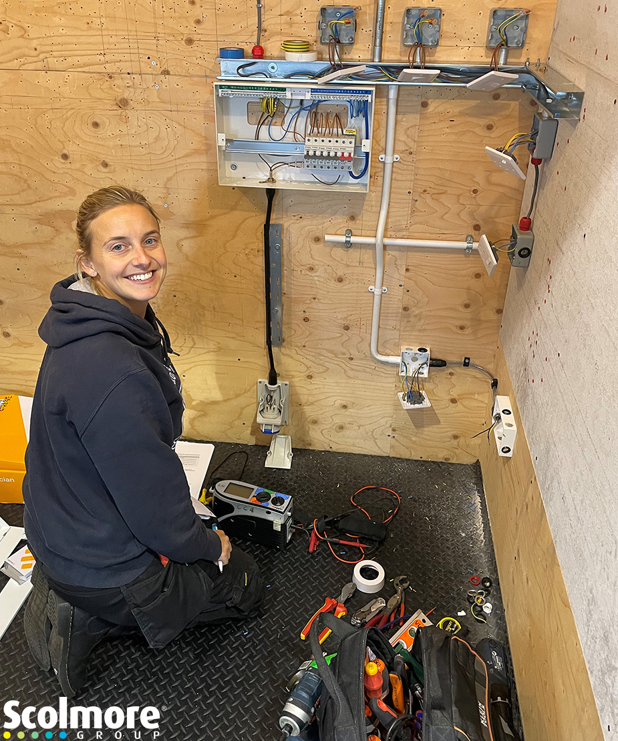
Beau Associates is a independent training provider specialising in the delivery of electrical qualifications for electricians and electrical apprentices. The company was formed by local further education professionals to deliver electrical training based in Ashton-Under-Lyne. The team have been responsible for training numerous electricians in the North West over the last 20 years, many of whom have gone on to form their own companies and are now employing their own apprentices. When Beau Associates opened its new AM2 test centre on the Ashton-Under-Lyne site, the company was keen to ensure that it was kitted out with all the resources necessary to enable the attending candidates to achieve the required AM2 standard. Scolmore Group has long been associated with the Beau Associates and didn’t hesitate to get on board with supplying lighting and wiring accessories products that are used during the AM2 exams. Achievement Measurement 2 is a practical performance skill test administered by the National Electrotechnical Training (NET). It is designed for individuals who wish to work as electricians or as maintenance electricians. By taking the AM2 exam, electricians are demonstrating that they have a level of competence expected by the industry in the following key occupational areas: The interpretation of specifications, drawings and diagrams Health and safety incorporating risk assessments Safe isolation Planning and preparing to install, terminate and connect identified wiring systems Inspection, testing and certification of electrical installations Fault diagnosis and fault correction The understanding and application of industry recognised procedures, working practices and the requirements of statutory and non-statutory regulations. Candidates are required to work on: Lighting and power circuits A three-phase distribution board and sub-circuit A central heating/sustainable energy system A safety services circuit and device A data cabling system. Products from Scolmore’s wiring accessories ranges have been supplied, including a variety of switches and sockets from the Click Essentials Metal Clad and Click Mode moulded white ranges. From the Ovia lighting division, a number of EVO energy-saving LED bulkheads have also been provided. The AM2 candidates will benefit from the products when it comes to their assessment over the course of three days. The equipment and devices will be utilised when the apprentices second fix the electrical installation within their bay exercise. Having new, compliant accessories will help the apprentice complete the installation to the high standard as expected by NET. Consumer Units from Scolmore’s recently launched Elucian range have also been supplied for use in the Apprentice Workshop, where the students carry out all their key learning and training modules. Having the resources from Scolmore has helped to prepare the apprentices for real work activities with quality products that are robust enough to practice with. Carol Iveson, Director at Beau Associates, says: “We have benefitted from a strong relationship with Scolmore and they have supplied us with a range of top quality accessories which have stood the test of time.  Our association with Scolmore was formed through our involvement with the Electrical Apprentice of the Year and has continued over the years and throughout the COVID outbreak. Scolmore was still able to support us during COVID and provided resources to enable us to complete our AM2 Centre. We were able to open on time and provide a service to a backlog of apprentices waiting for AM2 tests. “We are very grateful for the support that we have been given by Scolmore. As a private organisation we do not benefit from additional funding from Government for our apprentices. We will always put our learners first by providing the very best resources, facilities, and training that we can – we thank Scolmore for helping us to achieve this.”

High output and mini products added to Prism Pro range
Ansell Lighting has extended its Prism Pro range of fire rated downlights with two new additions. Fully compliant in all ceiling types, the new Prism Pro High Output Fire Rated Downlight and Prism Pro Mini CCT Fire Rated Downlight are versatile luminaires, ideal for installation in residential and hospitality settings. Essential when downlighting is recessed or semi-recessed, the two new Prism Pro additions have been fully tested, meeting 30, 60 and 90 minute ceiling types of Part B of Building Regulations as well as Part C (moisture), Part E (acoustic) and Part L (energy). Designed to suit almost any interior scheme, both luminaires are also available with either chrome, satin chrome, matt white and matt black trim bezel accessories and can be used with Ansell’s smart lighting system OCTO. Prism Pro high output fire rated downlight Delivering higher output than alternative Prism Pro models, the Prism Pro High Output Fire Rated Downlight offers increased versatility in design and installation. Easy to install, it has a detachable, remote LED driver and two, 1.5mm² + CPC loop-in, loop-out, colour coded push-fit piano terminals for a fast and efficient fix. Ideal for shallow ceiling voids, the Prism Pro High Output has a low-profile design and a robust IP65 rating meaning it is both dust tight and water jet resistant. Dimmable, the luminaire is available in 4000k cool white and 3000k warm white colour temperatures and thanks to its wide 60° beam of light, delivers increased distribution across indoor spaces. Prism Pro mini CCT fire rated downlight Addressing the requirement for a smaller fire rated downlight in the marketplace, the Prism Pro Mini is a smaller diameter alternative to other downlights in the Prism Pro range. Ideal for minimalistic lighting schemes, the dimmable Prism Pro Mini can be used either as a sole light source or as a complimentary product to Prism Pro/Prism Pro Anti-Glare luminaires in lighting schemes. It has a low-profile design and unique arched remote driver, allowing installation into shallow ceiling voids and smaller downlight cut outs. As with other Prism Pro products, the Mini offers easy wiring access for fast and easy installation and is CCT selectable at 2700K, 3000K, 4000K and 6000K delivering a range of colour temperatures.

Swans and geese are safer thanks to power company
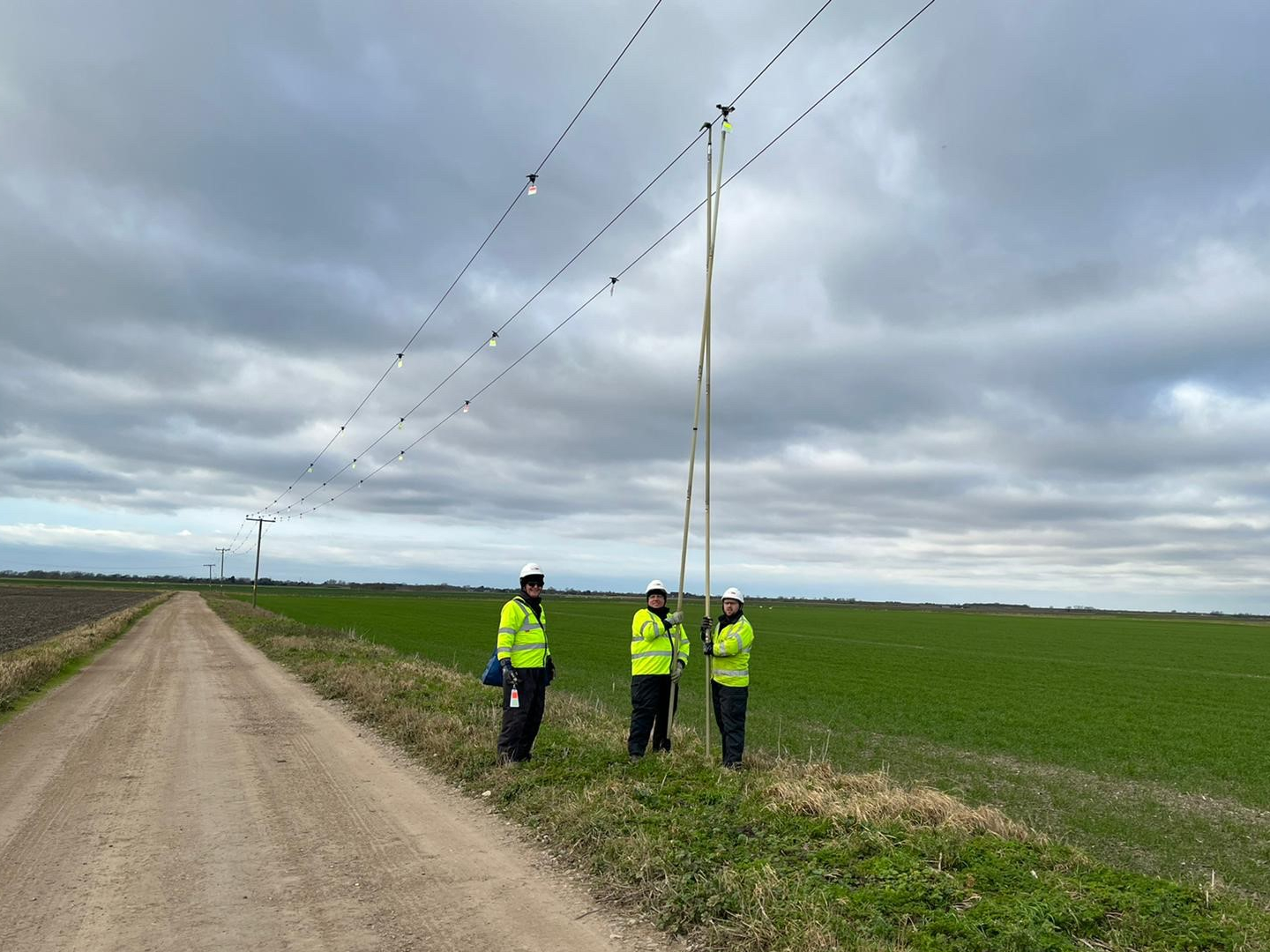
Thousands of swans and geese will be safer when they fly in for their evening feast thanks to a dedicated team that goes out in all weathers to erect bird diverters across countryside power lines. Last year UK Power Networks put up 4,360 diverters on 22km of live overhead lines in the eastern region, with the majority across the Cambridgeshire fenlands, and also some around Mildenhall in Suffolk and Wissington and Hilgay in Norfolk. As a result the birds steer clear of the cables and there will be fewer power cuts caused by their collisions, improving the resilience of the electricity network for local residents. The diverters are small spinning fluorescent discs which hang from the live 11,000 volt cables. Putting them up is a specialist job carried out by trained engineers using a long specially-insulated rod. The diverters are more visible to big birds with poor eyesight that need long take-off and landing paths and cannot suddenly turn away at the last moment. Birds like swans and geese might not see power lines when they venture to new locations or are new to an established landing site. The busy team in the east are currently working at Welney nature reserve and recently finished a job erecting 960 diverters along the overhead wires in Great Fen near Peterborough where the local wildlife trust has been carrying out work on the nature reserves. They are enhancing the site and attracting more birds to the area. Last year around 80 diverters were installed along 500 metres of power cable at Thorney Dyke, near Peterborough, after several swans collided with the power line. Whooper swans fly in low each night to feed in a field before they roost overnight. Since then the birds have been safer and the power supply more resilient. This year the company will be carrying out more work in Manea, Littleport, Chatteris and March in Cambridgeshire. The company often puts the diverters up after being approached by a wildlife enthusiast or member of the public where there have been injured swans and geese and repeated power cuts, often in remote areas. Heather Patrick, UK Power Networks environment advisor, says: “Diverters benefit many birds including our resident mute swans and the smaller migratory swans which fly thousands of miles every year between the UK and their breeding grounds in the north. Swans and geese are not very agile flyers and being able to spot the diverters from a distance helps them to navigate more safely.” The four-person team working in the east are based in Kings Lynn and go out with their all-terrain Unimog vehicle erecting diverters in all weathers and fixing any cables which need repairing. Steve Thurston, Lewis Wells, Adam Mason and Peter Beck enjoy their outdoor work. Steve and Lewis have worked together for 27 years. Steve says: “We are passionate about saving wildlife and we really enjoy being outside doing our work.”

BAFE and NAPIT highlight failures and absence of domestic smoke alarms
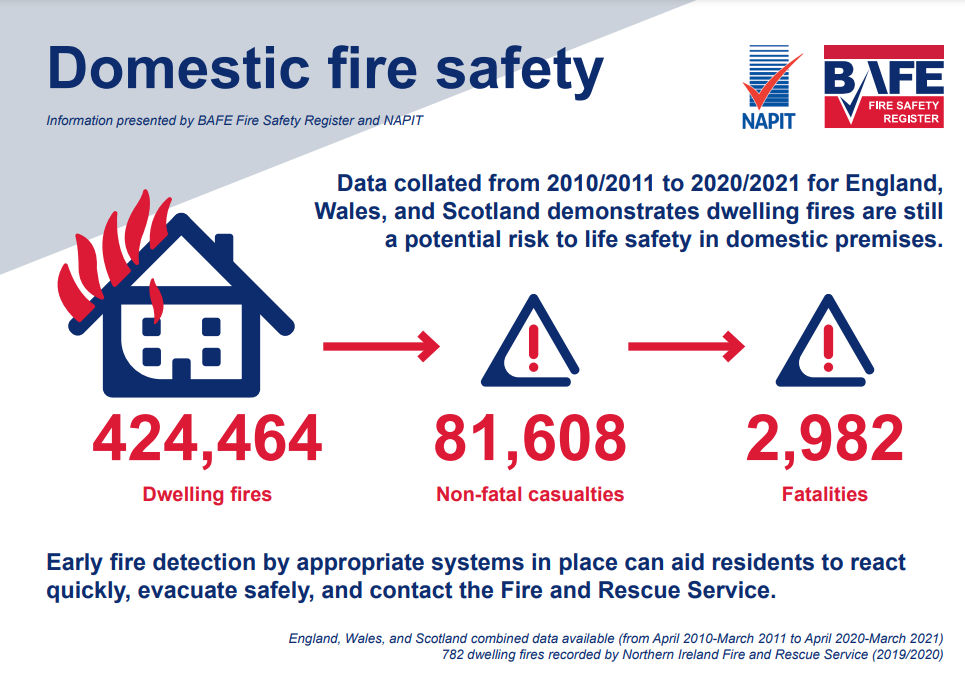
In research presented by BAFE and NAPIT, data collated over the last decade (2010-2021) in England, Wales, and Scotland record an unsettling 424,464 dwelling fires. These fires resulted in almost 82,000 non-fatal casualties and close to 3,000 deaths. In more recent statistics made available by fire and rescue services nationwide, there is clearly an ongoing issue with high failure rates or a complete absence of domestic smoke alarms. In England alone, during 2020/2021, there was a 28% failure rate of smoke alarms (i.e. that failed to operate or were not present). This failure rate rises to 39% in Scotland and increasing even further to half of all fires (50%) in Wales. The widely known Fire Kills campaign from government underlines 'you are around eight times more likely to die from a fire if you don’t have a working smoke alarm in your home.' Both BAFE and NAPIT cannot stress enough the importance of having suitable life safety systems in place. Provisional data from the Department for Levelling Up, Housing & Communities reports close to 176,000 new build dwellings were started in England alone during the previous 12 months from year ending 2021 (July-September). It is of key importance that the housing development sector complies with Building Regulations and relevant Approved Documents when providing appropriate domestic fire detection and alarm systems. These must be installed by competent contractors. In August last year, BAFE launched its latest competency scheme with NAPIT, called DS301. This provides a route for contractors to demonstrate their competence to design, install, commission, and maintain Grade D fire detection and fire alarm systems in domestic premises. This supports appropriate British Standards and working best practice, most notably the latest iteration of BS 5839-6 (Code of practice for the design, installation, commissioning and maintenance of fire detection and fire alarm systems in domestic premises). Justin Maltby-Smith, Managing Director of BAFE, comments “This information clearly outlines that it is extremely important that any work on Grade D fire detection and fire alarm systems is performed in compliance with the appropriate current regulatory and competency documents available. Having suitable systems in place will aid in alerting residents as quickly as possible, allowing for a safer evacuation and providing emergency services more time to mitigate any damage. The housing sector has a great responsibility to use competent contractors, which is why the BAFE DS301 Scheme was developed, and it will clearly help in evidencing this competency. We must not lose focus that these are people’s homes, and they should feel safe and be confident in the systems installed.” Frank Bertie, Chief Technical Officer of NAPIT, adds “These statistics show the risk to life posed by fire is a real threat. NAPIT are proud to be leading the way with the introduction of the new DS301 Scheme with BAFE to provide homeowners, house builders, management companies and specifiers with confidence that the contractor they use is appropriately qualified, competent, and assessed. Registered members on the NAPIT DS301 Scheme have demonstrated their competency to deliver design, installation, commissioning and/or maintenance works for Grade D fire detection and fire alarm systems in domestic premises. Correctly installed fire detection systems help save lives and must be considered a priority in all homes.”

New brand identity for security products supplier, ESP
ESP has been supplying the professional electrical market with a range of security related products for nearly 30 years. The company’s reputation has grown over the years and as part of the ongoing evolution of its brand identity, a new ESP logo has been unveiled. The creative design team was tasked with a brief to create a new brand identity that would help the company maintain its market-leading presence and stand out in what is an increasingly competitive sector. The new visual identity needed to reflect the company’s current standing and its ambitious growth plans, and appeal to a new audience without going too far from the old identity that is recognised and trusted. It also needed to sit well within the overall Scolmore Group branding. The creative design team has utilised the recognisable ESP colour palette and moved away from the layered look of the original design to create a more dynamic, bold and modern logo, that will be more prominent in the fire and security industry. All marketing collateral is being updated to incorporate the new logo, with print and digital material benefiting from the bold new brand identity.

Psychologist advice: how to handle tricky conversations about mates’ rates
At some point in their careers, most tradespeople will probably be asked by a friend or family member to do a job at a discounted rate. In fact, recent research by ElectricalDirect found that UK electricians get asked for mates’ rates five times a year on average, and they typically offer a 40% saving on each job. However, many think that such requests are disrespectful (15%), and they only go along with them because they feel like they can’t say 'no' (23%). This can be costly, with the average electrician losing £625 a year, so it’s important to be able to push back if you don’t feel comfortable. That’s why ElectricalDirect has partnered with Dr Marianne Trent, Clinical Psychologist and founder of Good Thinking Psychological Services, to share advice on how to handle tricky conversations around mates’ rates. Here are five different approaches to handling requests for discounts from friends and family: 1) Firm but fair It’s natural for customers to seek tradespeople they know and trust, so friends and family will inevitably turn to you when they need work doing. This normally isn’t a problem, but if it feels like they’re starting to take advantage, you might need to refuse requests for discounts. Dr Marianne advises mentioning the costs you’ll incur by carrying out the work, to emphasise that any freebies could hit you financially. She suggests a response like: “I’d be happy to work with you but sorry, I’m not able to offer discounts because my costs remain consistent.” 2) Firm and helpful Another possible tactic is to suggest other tradespeople that could potentially carry out the work at a cheaper price. This way, you’re able to say no, but in a polite manner and remain helpful. Dr Marianne recommends a line such as: “Sorry I’m not able to offer discounts but if my rates are outside of your price range, I can recommend X or Y.” 3) Firm and balanced Alternatively, you can explain the reason behind your refusal so that your friend or family member understands your situation. One reason why some people have doubts about offering mates’ rates is the possibility of it affecting your relationship with the person. For example, if something goes wrong or there are disagreements, it could impact on your friendship. Dr Marianne suggests a response like: “I don’t offer discounts because I often find that this can alter the expectations on both sides.” 4) Mention the market Sometimes you just have to back yourself and your professional ability, and that should be enough to persuade someone that your work is worth paying full rate for. It’s also worth mentioning how your prices compare to others in the industry, to reassure the person that your quotes are reasonable. Dr Marianne advises a line such as: “Sorry, I don’t offer discounts because I’m good at what I do and my rates are already competitive.” 5) No explanation needed Finally, it’s worth emphasising that you don’t actually need to provide an explanation if you don’t want to offer a discount. It’s completely your right as a professional to charge what you like, regardless of your relationship with the customer. Dr Marianne says: “You can add a ‘sorry’ if you like, but actually you’re allowed to say no without offering reasons or prettifying it for the other party.”

Leicester Square’s multi-million-pound electricity upgrade almost complete
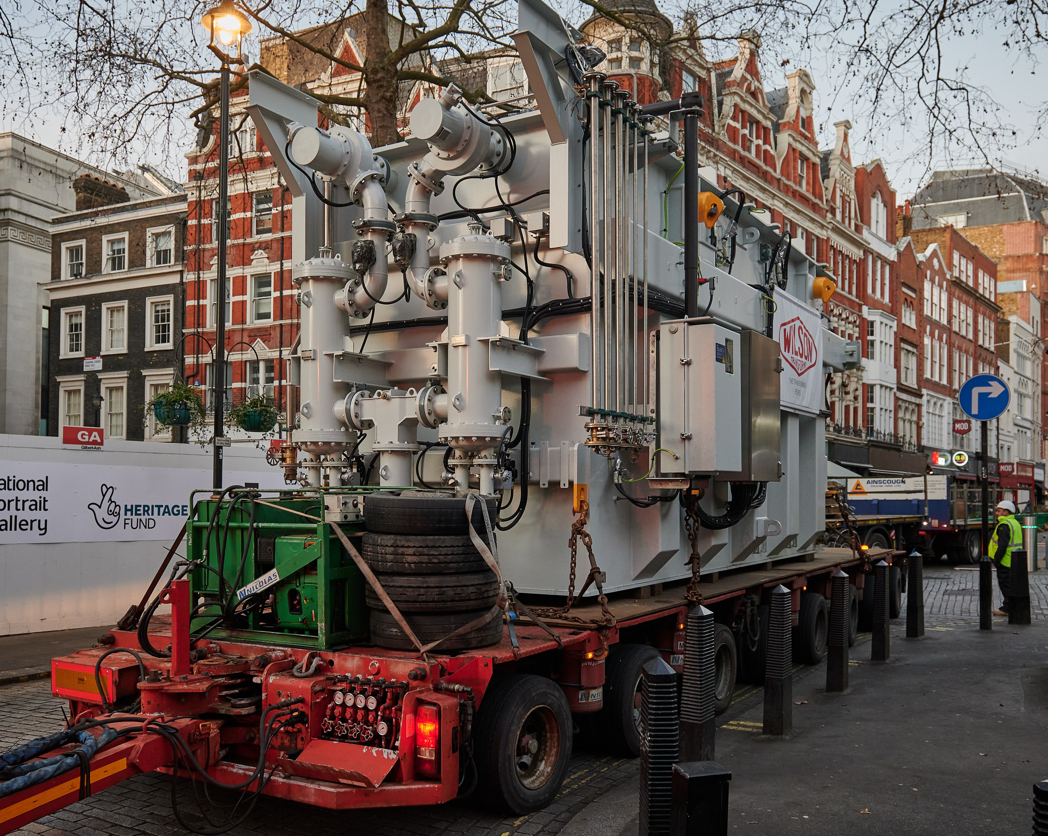
New equipment being installed under London’s entertainment district will ensure safe and reliable power supplies for years to come. Engineers from UK Power Networks are working to finish a £16.2 million upgrade to an electricity substation hidden beneath the gardens and iconic ticket office at the London landmark of Leicester Square. The third of three large transformers (devices which step down the power voltage so electricity can be safely delivered to local properties) recently arrived on site and is being installed to meet greater energy demand in the area. The underground substation was opened by Her Majesty the Queen in 1991 and after regularly maintaining the infrastructure for three decades, UK Power Networks is replacing key equipment with cleaner, greener models so it’s fit to support the local economy for years to come. The team has been working in consultation with stakeholders, local businesses, and community groups, to minimise disruption during the essential work. Project manager Jason Gunning says: “We are committed to running safe and reliable power supplies across London and this work in Leicester Square is essential to preserve the future resilience of local power supplies to help the area thrive. “We started this project in November 2020 and used the unique opportunity during lockdown to press on with the work, and it’s been very important to us to engage in discussions with people who may have been impacted by our work, to agree the best working methods for this busy site. We will continue to work safely to encourage innovation, boost resilience and create a sustainable future.”

Marshall-Tufflex makes ceiling installations easy
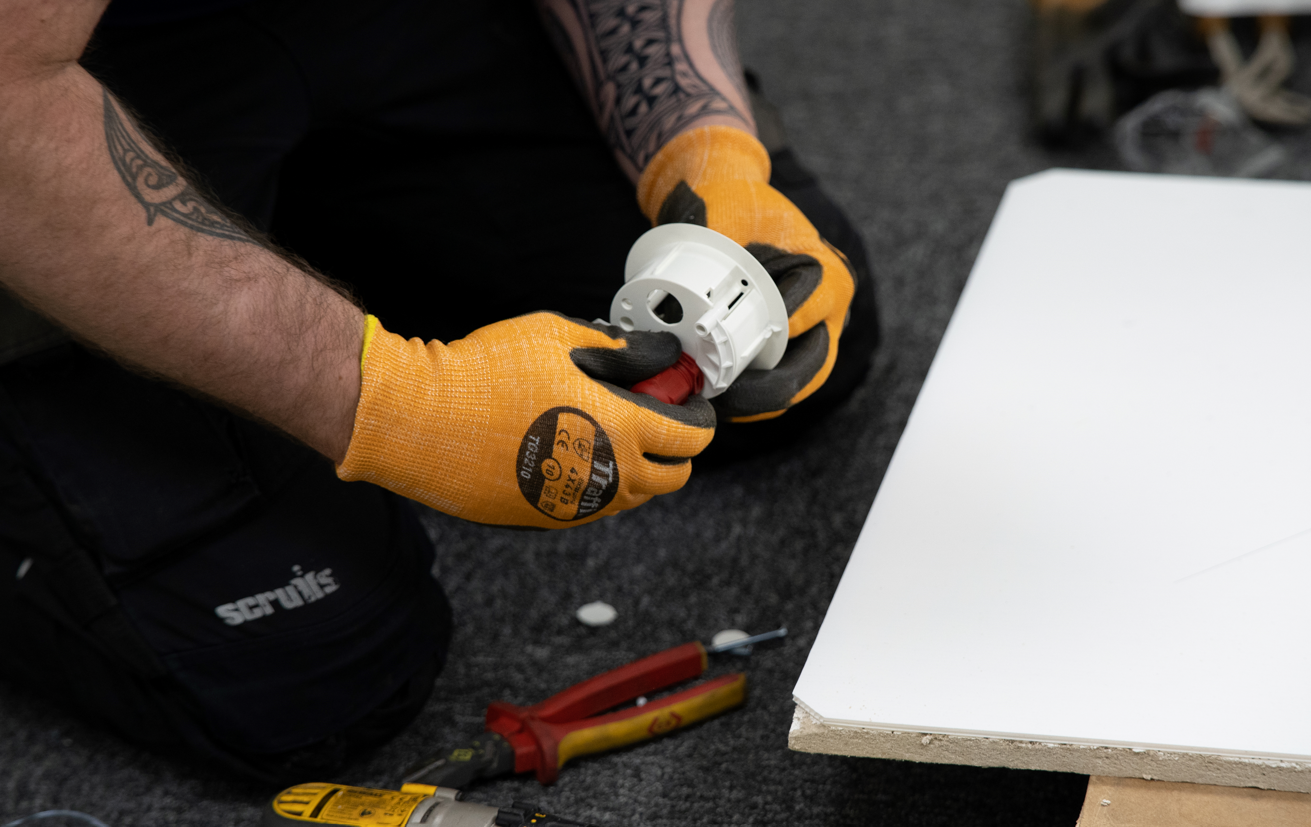
Marshall-Tufflex has launched a new pattress product, the ‘Tufflex Tile’. Underpinning the company’s commitment to offering quality solutions for its customers, the new product has been designed to take the hassle out of pattress installations with a ready to use solution that is suitable for all applications. Developed and launched in response to customer feedback, the new Tufflex Tile has been designed to transform the way installers work on ceiling systems across every sector and application, whether it be installing spotlights, smoke detectors, PIR sensors or speakers. Notably, the new solution is manufactured with Correx instead of traditional plywood or MDF, making it extremely lightweight, yet strong and easy to cut or drill. What’s more, the Tufflex Tile is pre-cut to the standard 595mm2 ceiling tile aperture; not only reducing cutting and sawing time on site, but also the levels of dust that are generated when cutting wood to size. The material is also flame retardant and self-extinguishing, offering further benefits for the end user and removing a key component of the fire triangle. The Hastings based manufacturer has considered every detail for its latest product launch, with pre-chamfered edges for an easy and seamless fit. Thanks to its slimline and lightweight design, the Tufflex Tile is easy to handle, store and transport. Martin Russell, Group Product Manager at Marshall-Tufflex says: “For over 80 years, Marshall-Tufflex has led the way in areas of product research, development and innovation and we are delighted to introduce this new category to our portfolio. By listening to customer feedback, we recognised that using plywood or MDF as a pattress when installing electrical products is not only arduous and time consuming for professionals, but also poses significant fire risk for the end user, so we have worked closely with installers to develop this modern, flame retardant alternative, as a quick and easy pattress solution.”

J S Wright secures £3.5m-plus deal for dock development
J S Wright has secured a contract valued at more than £3.5 million for a new harbourside development in Bristol. The company, which has its headquarters in Birmingham and an office in central London, will design and build the mechanical services for 142 high-quality apartments on a long-derelict site at McArthur's Yard on Gas Ferry Road in the city's historic dock area. The £36 million project led by award-winning housebuilder Hill in association with leading housing provider The Guinness Partnership will deliver a mix of one to three-bedroom homes for market sale, shared ownership, and social rent, as well as ground floor commercial space. J S Wright's contract will involve designing and installing an energy centre with associated pipework to distribute low-temperature hot water heating to radiators in each apartment via direct single plate heat interface units (HIUs). The company will also install a boosted cold-water system for the domestic hot and cold-water supply. In addition, J S Wright will install energy efficient mechanical ventilation heat recovery systems, smoke ventilation and dry risers, as well as water sprinklers within residential areas. The company will also supply and install the sanitary ware for each apartment, an internal rainwater system, and above-ground drainage. The brief will also involve providing a building management system (BMS) incorporating a prepayment billing system for monitoring each apartment's energy use. J S Wright is due to start on site this March, with completion of the contracted work scheduled for May 2023. Phil Leech, Managing Director of J S Wright, comments: "We are thrilled that the successful relationship we have built up with such a major housebuilder in equipping its many developments across London has been extended to Bristol. "We now look forward to employing our specialist M&E expertise in helping to bring new much-needed high-quality energy efficient affordable homes to one of the few remaining brownfield areas of the city."