2 November 2026
Product of the Month: Amari Floodlight range by Aurora Lighting
 
11 November 2026
Energy, AI and smart buildings: register now for EMEX 2026
 
11 November 2026
Solar and batteries could cut electricity costs by 40%, data finds
 
11 November 2026
EIC confirmed as ECN Awards 2026 charity partner
 
11 November 2026
Acrospire to support Green Frog's European expansion
 

Latest News


Kickstart scheme ends, what next?
The first phase of the government’s Kickstart Scheme is to come to an end early for any new employers that may have been interested. The initiative offered funding to create job opportunities for 16 to 24-year-olds and it is believed that up to 300,000 young people have been placed through the scheme since it began in August last year, with hundreds finding placements through Gloucestershire’s Kickstart Support. Kickstart provides six-month job placements for young people who are on Universal Credit and at risk of long-term unemployment. The funding covered the national minimum wage for a 25-hour working week, employer National Insurance payments and automatic enrolment contributions. Cirencester’s Apprenticeship Management Group is behind EDA Apprenticeship Plus and set up Kickstart Support to aid companies it works for in understanding and getting the most from the scheme. AMG director John Henry says: “The jury is out on whether Kickstart was a complete success as there were a number of administration issues at the outset, as well as a lack of candidates due to the job market remaining buoyant when mass redundancies were anticipated, which prevented the government’s target for 600,000 placements being reached. Many young people have however, benefited through this initiative by gaining an employed position, often for the first time in their lives. It is a real boost for the individuals to gain experience and new skills while the employer gets to expand their employment base. Many may go on to permanent positions.” The issue now is how to replace Kickstart as a route to recruit for the employer and begin a fulfilling career for many thousands of young people that have been so disadvantaged over the past two years. With the team in place around the country AMG has experienced a huge increase in apprenticeship vacancies and would urge employers to take advantage of the current incentives to complement their offers of employment. With over a million jobs lost to COVID-19, repatriation to Europe and Brexit, businesses are seeking to fill essential roles in a market where two jobs exist for every applicant. This is a unique environment for all British industry and a challenge to every employer looking to recruit and expand with every sector experiencing serious issues in recruiting and training staff. Apprenticeships Plus is an initiative that has successfully addressed many of these issues and has clearly demonstrated that by attaching government funded training to the job role, recruitment of the best candidates is considerably improved. Indeed, businesses that have struggled to attract any employees have enjoyed the option of the best and most capable individuals looking for a career.

High-performers triumph at EDA Awards
Ten future leaders won an Electrical Distributors’ Association Learning Achievement Award at an annual lunch high above the rooftops at London’s iconic The Shard on Friday 4 March 2022. Now in its eighth year, the Association’s celebration of training excellence brings together talented individuals from EDA wholesaler and manufacturer businesses. Each worthy winner has delivered an outstanding performance in the EDA’s Product Knowledge Programme or in an apprenticeship. The Awards were presented by EDA President, CEF’s Managing Director, Chris Ashworth, and Michelle McCutcheon from event sponsors EDA Apprenticeships Plus, the organisation which operates the Association’s Apprenticeship Service. Margaret Fitzsimons, EDA CEO, says, “Our winners are the cream of the UK’s electrotechnical sector. Travelling from as far afield as Guernsey to the South, Cork in Ireland to the west, and North Yorkshire and from businesses large and small, but they all have one thing in common: each has worked extremely hard to achieve amazing results in their training. “Every year our high-performing winners and their guests tell us how much they enjoy this event. I think it is because they can see the fantastic career potential offered by our sector and I hope when they go back home they will share the inspiring stories they’ve heard today, encouraging others to follow suit.” For an outstanding performance in the EDA Product Knowledge Modules the Learning Achievement Awards went to: Sian Alford, Edmundson Electrical Ltd in Guernsey Joe Sayer, BEW Electrical Distributors Ltd in Peterborough, part of the Fegime UK buying group Gary Dowling, Kellehers Electrical, part of Rexel UK Ltd, in Cork, Republic of Ireland Dean Jones, Alert Electrical Wholesalers in Ilkeston, part of The IBA Buying Group Alex Bright, Termination Technology Ltd in Bristol Richard Banks, Deta Electrical Company Ltd, Charlton, Bedfordshire For an outstanding performance in an apprenticeship the Learning Achievement Awards went to: Shannon Rooney-Sadler, BED (Corby) Ltd, part of the ANEW buying group Finley Maxwell-Hoff, LAMPS – Lighting and Mains Power Solutions Ltd in Aylesbury, part of the AWEBB buying group Joshua Craggs, CEF in Ripon Harvey Small, Stearn Electric Co Ltd in Southampton

CityFibre deploys 100th fibre exchange to power its full fibre rollout
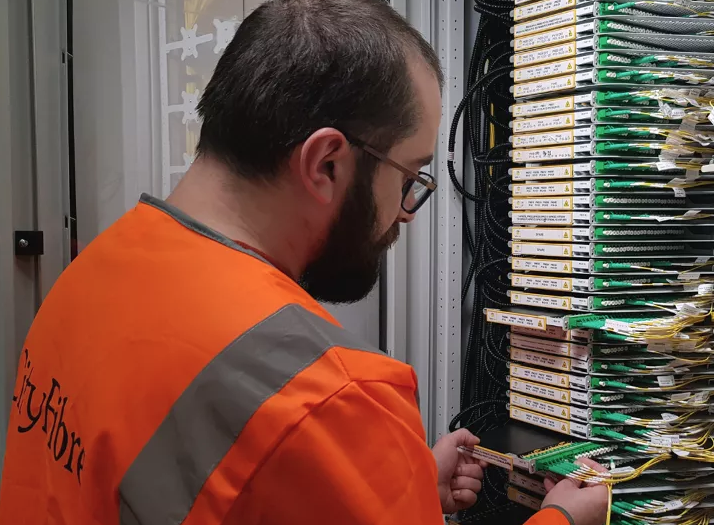
CityFibre has deployed its 100th Fibre Exchange (FEX), providing the capability to serve gigabit speed broadband to the first 4.8 million homes of its 8 million rollout. Located in Glasgow, this latest facility to come online is part of a rapidly growing network of purpose built, power-efficient, micro-edge data centres used by CityFibre to deliver, manage and monitor live services and data across its network. A CityFibre FEX unit is roughly the size of a shipping container and able to serve symmetrical gigabit speed connections to up to 60,000 premises at full capacity. Located in high security environments, these network hubs aggregate local data traffic for transport across CityFibre’s high-capacity national backbone. Alternatively, traffic in each city can be handed over directly to Internet Service Provider (ISP) partners using the extensive CityFibre Dark Fibre services available. To support future network expansion, most FEX sites have enough space and power to support an additional unit to be installed alongside the first. To support growing innovation and investment in edge computing, every FEX acts as a micro-edge data centre. This means, as well as co-locating their own network equipment, CityFibre’s ISP partners, councils and mobile operators can use a FEX to store and process data closer to their customers, enabling higher quality streaming and gaming, ultra-reliable access to the applications hosted in distributed hybrid cloud environments and improved data processing to support real-time decision making. Unlike the legacy telephone exchanges on which the UK’s incumbent networks are reliant, all CityFibre FEXs are aligned to Data Centre Tier 2/3 specifications, ensuring highest levels of network security and reliability to underpin a growing digital economy. Each site is served by two geographically diverse fibre routes for network resilience and is fully protected in the event of power failure by A+B uninterruptible power supplies and standby generators. The interior of a FEX is designed to house the latest energy-efficient routers, switches and servers and can adapt to future advances in core network technology. With environmental impact a major consideration, each FEX uses a combination of free-air cooling systems and intelligent climate controls to minimise electricity consumption, maximise equipment lifespan and reduce waste. Mains electricity is also secured from renewable sources wherever possible. David Tomalin, Group Chief Technology Officer at CityFibre, says: “Fibre Exchanges are the beating heart of our local networks and one of many areas in which CityFibre is setting new standards in our industry through a network that is Better By Design. Only when the optimum location for a FEX has been secured for long term use can the core network designs in each area be locked down ready for build to begin. Once in situ, not only is each FEX a secure, efficient and reliable data centre powering unbeatable broadband, it also empowers our partners to embrace edge computing technology and realise the benefits it offers for their customers.”

Unite, SECTT and SJIB salute employers for ‘nurturing and encouraging’ electrical talent 
With Scottish Apprenticeship Week (SAW) in full swing, union leaders and training providers have praised employers for 'nurturing and encouraging' young electrical talent in a year that saw record numbers return to the classroom. Unite the Union, the Scottish Joint Industry Board (SJIB) and Scottish Electrical Charitable Training Trust (SECTT) have all saluted businesses for 'supporting people, employers and the economy' – the theme of this year’s SAW, which runs until 11 March. Apprentices and adult trainee numbers in Scotland’s electrotechnical sector are at their highest level for 12 years, with nearly 800 new learners enrolling on the Electrical Apprenticeship and Adult Trainee Programmes in 2021. And Scott Foley, Chair of SECTT and Regional Officer at Unite the Union, praised employers for their commitment to building up a highly-skilled talent pool for the future of the industry. He says: “After all the industry has been through in the past two years, it is excellent to see employers taking a long-term view and putting their resources into nurturing and encouraging a new cohort of qualified electricians to take the sector forward. “I’m always greatly impressed when I get to meet electrical apprentices and hear their stories about how working, learning and earning is having a positive impact on their lives.” Tam Kirby, Fair Work Apprenticeship Coordinator at Unite the Union, adds: “Apprenticeships support people, employers and the economy and provide the best way to upskill the next generation and secure the future of our industry. “Unite the Union, SECTT and the SJIB are committed to the ongoing success of apprenticeships and we will continue to do everything we can to give our talented trainees the opportunities they need to succeed.” Last year’s intake of apprentices and adult trainees in Scotland was the highest in Scotland since 2009 – and SECTT and the SJIB say it’s an encouraging sign of the determination to tackle the UK-wide skills shortage . Fiona Harper, Secretary of the SJIB, says: “More and more, the message is clear that the future is electric and young people want to play their part in the transition to net zero. “An apprenticeship in the electrical industry in Scotland is seen not just as a path to a professional and highly-rewarding career, but as a means of making a contribution to a greener and more sustainable society.” Ms Harper, who is also Director of Employment & Skills at SELECT, Scotland’s largest construction trade association, adds: “Diversity is also a key dynamic in powering the future and, for the increasing numbers of young women who are signing up to the profession, comprehensive and tailored training can open many doors and create a rewarding career.” Anne Galbraith, chief executive of SECTT, which manages high-quality training on behalf of the SJIB, says: “The sustained support for training demonstrated by employers of all sizes across Scotland has been extremely encouraging, especially in this crucial recovery period. “There are now a total of 2,669 electrical apprentices and adult trainees training in Scotland, including the 660 apprentices and 110 adult trainees recruited for the 2021 intake, and the outlook for 2022-23 is more positive than it has been for many years.”

Increasing diversity of construction has never been more critical
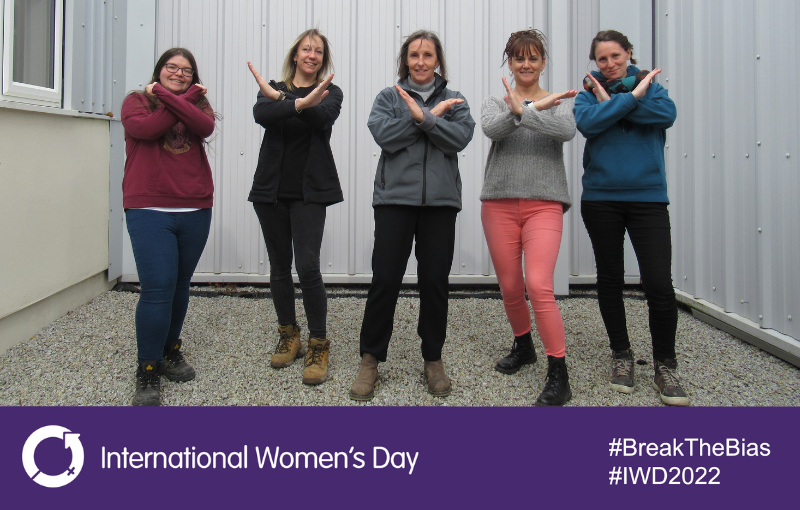
The Scottish Construction Leadership Forum (CLF) is celebrating International Women’s Day by highlighting its work on a National Equity and Inclusion Plan for the construction industry in Scotland which will drive increased inclusivity. Funded by Scottish Government, this latest initiative is part of the wider plan for the industry to develop a more diverse and inclusive workforce, giving the sector access to a wider talent pool to support growth and help to address labour shortages. In the construction industry in Scotland in 2020, 84.6% of workers were men and 15.4% were women. 1.6% of workers in the construction industry were from a minority ethnic background compared with 4.3% of minority ethnic workers in Scotland as a whole. The National Construction Equity and Inclusion Plan seeks to address these imbalances by mainstreaming equity and inclusion within the industry as part of the CLF’s Construction Recovery Plan. The goals of the plan are to assess the current situation, share information on impactful equity and inclusion initiatives and develop actions to drive the realisation of a workforce that is more representative of society. The plan is being delivered in partnership with industry by Construction Scotland Innovation Centre (CSIC) on behalf of the CLF and is funded by the Scottish Government. The project is being supported by a steering group of experts who represent multiple aspects of the industry and have championed the cause of equity and inclusion throughout their careers. The strength of the steering group, combined with industry and government support, will help ensure that the recommendations of the plan are moved to active implementation once it has been published. Emma Dickson, Technical Director at Arcadis and industry co-chair of CLF’s Skills and Workforce sub group issued a challenge to the sector to ‘Celebrate International Women’s Day by taking a meaningful step towards improving gender diversity in your workplace. What will you do?’ She says: “The new Plan will focus on meaningful action, drawing from best practice and experience. It will be critical for industry to embrace and action the recommendations; our strong industry networks and leadership groups must take the lead. Skills shortages alongside the need for new green/digital skills in the industry mean that improving the diversity of our industry has never been so critical.” Minister for Business, Trade, Tourism and Enterprise and CLF chair Ivan McKee says: “It is really encouraging to see much needed progress towards creating a more diverse, equitable and inclusive construction industry that is representative of the world we live in. I am delighted to see this work being promoted on International Women’s Day, when we can celebrate raising awareness against bias and taking action to advance equality.” Lynsey Brydson, Head of Digital Programmes, CSIC says: “The collective objective we are aiming for is building a stronger, fairer and greener economic future for the construction industry and this investment is an important move in that direction. It is anticipated that the plan will be delivered in May”. Peter Reekie, Chief Executive of the Scottish Futures Trust and Chair of the Executive Group of the CLF, says: “The CLF is embarked on a radical overhaul of the industry in Scotland and it is important to maintain momentum as the recovery gathers pace. “The data shows that our track record on diversity is poor. The industry is missing out on the talents of too many people, and too many people who could have rewarding careers in the industry are not seeing it as a place for them. Leaders at all levels must do better and I am proud to support the group putting in place our first National Equity and Inclusion Plan, which will help them to do just that.”

Fuuse set for expansion following £1.7m investment
Miralis Data has secured £1.7m in Seed funding to accelerate the growth of its electric vehicle charging platform Fuuse, creating more than 30 jobs across the business. The investment will support the company’s strategy to become the enterprise level charge point management system of choice for fleets, workplaces, destinations and installers, creating 30-plus further jobs at its Lancaster and Glasgow offices. The funding will enable Fuuse to expand its sales and customer support operations, bolster its innovation programme, accelerate the platform’s product development roadmap and begin its planned international expansion. Michael Gibson, CEO at Miralis says, “Fuuse is making phenomenal progress with charge points live on our platform from the Walkie Talkie building in London to a recycling site on the Isle of Man, and from the workplaces of national retailers, NHS Trusts and manufacturers to over 250 public charging sites from Cumbria to Dorset. “This investment not only gives us the financial means but also access to exceptional people with vast experience in software, energy and infrastructure to help us accelerate our growth and continue to thrive”. Alastair Moore, Investment Manager with Par Equity comments, “We are hugely excited to be partnering with Miralis at this milestone in the growth of Fuuse. The pull from all corners of the market for Fuuse is testament to the quality of the offering that the team has built. “It has already established itself as the leading end-to-end platform for managing EV charge point assets and with 7 million EVs forecast to be on UK roads by 2030, the time for scaling up the infrastructure to serve this is now, with Fuuse perfectly placed to power this. We’re looking forward to the journey ahead”. Thanks to £600,000 grant funding from the Office of Zero Emission Vehicles and Transport Scotland, Fuuse is also about to launch its advanced fleet smart charging and energy management capabilities, and enable charge point booking and blocked bay alerts. Dr Will Maden, Chief Innovation Officer and Co-Founder at Miralis says, “This investment validates not only the success we’ve had with Fuuse so far but also the strategy, potential and pipeline of work we’ve put in place to build on it”.

One in three tradeswomen experience discrimination
New research from Rated People has revealed the biggest challenges faced by women who work in the trades industry, as well as the trades which have the lowest representation of women and the biggest gender pay gaps. The study discovered well over a third of tradeswomen (39%) aren’t taken seriously because of their gender. One in seven (15%) have had personal safety concerns when working, and almost one in 10 (9%) say they’ve had customers who won’t let them work on a job when they see they’re a woman. It’s 2022 and this needs to change The findings are taken from the newly-launched 2022 edition of Rated People’s Home Improvement Trends Report, where researchers spoke to more than 600 tradespeople across the UK about working in the industry, and over 2,000 homeowners about their attitudes to hiring tradeswomen. Positively, there’s growing demand from UK homeowners – nearly half (46%) say they’d definitely hire a tradeswoman, 43% have no preference and only 11% of UK homeowners say they’d prefer a tradesman. Almost one in three (29%) women in the UK also say they would feel safer hiring a tradeswoman to do a home improvement or maintenance job in their home. But the research highlights just how out of balance the industry is. Over half (11) of the 20 professions with the worst levels of representation of women in the UK are within the trades industry. Women make up less than 1% (0.99%) of carpenters and joiners in the UK, and less than 4% of electricians, plumbers, floorers and tilers are women. Across the 10 trades with the lowest representation of women, none of them have more than 5% of women in the workforce. The 10 trades with the lowest representation of women:  Rank Trade Women in workforce - 2021 1 Carpenters and joiners 2,399 (0.99%) 2 Electricians and electrical fitters 4,177 (1.73%) 3 Plumbers and heating and ventilating engineers 3,283 (1.93%) 4 Metal working production and maintenance fitters 3,594 (1.93%) 5 Elementary construction occupations 5,383 (3.03%) 6 Glaziers, window fabricators and fitters 1,472 (3.45%) 7 Floorers and wall tilers 1,111 (3.46%) 8 Electrical and electronics technicians 1,177 (3.61%) 9 Electrical and electronic trades 2,932 (3.91%) 10 Building trades 9,829 (4.01%) Please mind the gap On average, women earn just 72% of what men do across 15 key trades in the industry. But for floorers and wall tilers, this drops to a staggeringly low 41%. The few women who are carpenters earn just shy of £17,000 a year on average, but men in the same trade earn over £31,000 – a difference of almost £15,000 a year, or put another way, an annual carpenter’s salary for a woman is just 53% of a man’s. Women electricians earn 54% of what men do. Women in construction and building trades only earn the equivalent of 57% of a man’s salary, and women plumbers would take home just 61% of what a man would in the same trade. The 10 trades with biggest gender pay gaps:  Rank Occupation Average women's annual pay Average men's annual pay Difference in pay Women's pay as a percentage of men's 1 Floorers and wall tilers £12,514 £30,764 £18,250 41% 2 Metal working production and maintenance fitters £19,814 £38,586 £18,772 51% 3 Electrical and electronic trades £19,814 £38,586 £18,772 51% 4 Glaziers, window fabricators and fitters £13,557 £26,071 £12,514 52% 5 Carpenters and joiners £16,686 £31,286 £14,600 53% 6 Electricians and electrical fitters £20,336 £37,543 £17,207 54% 7 Construction and building trades £18,250 £31,807 £13,557 57% 8 Painters and decorators £16,164 £28,157 £11,993 57% 9 Plumbers and heating and ventilating engineers £21,900 £35,979 £14,079 61% 10 Electrical and electronics technicians £26,593 £33,371 £6,778 80% Opportunities for tradeswomen in the UK There are good indicators that change is starting to happen though – 32% of women in the UK now say they’d consider working in the trades industry. This could be a knock-on effect of the pandemic, people re-evaluating their jobs for example, or perhaps from increasing awareness of the opportunities that are available. According to Access Training, admissions of women on trade courses increased by 27% in 2021. Google data also shows many homeowners are actively trying to find tradeswomen across a variety of trades. People searched for women painters the most in 2021, pulling in 27,500 Google searches over 12 months, and women builders, gardeners, plumbers and electricians also saw between 5,000 and 10,000 Google searches in 2021. When speaking to tradeswomen about the biggest benefits of working in the industry, flexibility is key, with the top three advantages all about having increased autonomy. Almost one in four (22%) said ‘being their own boss’ was one of the biggest benefits for them, 18% said it was the flexible working hours, and 15% said they loved being able to choose how much work they took on. Helping women homeowners feel safe was also a plus-point, with almost one in ten (8%) tradeswomen saying they valued getting to help women who don’t feel comfortable or safe having a tradesman come into their home. The Rated People Empowering Tradeswomen Programme  Following the research, Rated People has launched their new Rated People Empowering Tradeswomen Programme to help more women get into the trades industry and build successful careers. Whether they’re considering a career change, or they’ll soon be leaving school and considering their options, the programme is designed to help women at all stages of their trades careers. The Rated People Empowering Tradeswomen Programme includes discounted skills training with Access Training, discounted business advice and coaching with Business Trades Coach, Alison Warner, and free exposure and discounted job leads on Rated People.

Kensa celebrates International Women’s Day
The Kensa Group, comprising a ground source heat pump manufacturer and networked heat pump installer, is recognising International Women’s Day (IWD) by celebrating colleagues who are leading the field in climate change. In their roles within the business they are creating a sustainable future, in line with the IWD #breakthebias theme, and The United Nations narrative for IWD 2022 promoting gender equality today for a sustainable tomorrow. Kensa recently announced it produced record numbers of ground source heat pumps, doubling its output in the past 18 months and working towards a twofold capacity by 2023. Here the company celebrates some of its colleagues’ roles in this success and its future growth, and explores how women at Kensa are enabling the UK's transition to net zero by 2050. Marie Hand, Kensa Heat Pumps, Production Line Supervisor: ‘Futerra Climate Hero’ and grandmother: “I have been working for Kensa for the past 15 years. I started my career working on the factory floor and now I oversee the production line, helping get heat pumps to new customers and enabling more people to switch to renewable energy. “I have a little granddaughter and I want her to grow up with better air quality, and to not worry about global warming. It’s a privilege to do what I do – helping the climate and helping people to get out of fuel poverty and hopefully give them a better life. I like being part of making the world a better place. “The fossil fuels used in homes for heating, hot water and cooking make up more than a fifth of the UK’s carbon emissions. And, according to the latest figures, there were more than three million households considered to be in fuel poverty in 2019, they are saying this will go up to six million this year. Through my role at Kensa, I can say we can help those families move to low carbon, affordable energy. “People are starting to think about the environment more, what we are doing now is just the start. It is such a genuinely exciting and rewarding place to work.” Lisa Treseder, Kensa Utilities, Senior Project Manager: pioneer and mother: “I did things a little back to front compared to most people working in my industry; I left school young, got married and had four children. However, once my children reached secondary school, I was able to work full time and develop my career. I worked myself up from the bottom with another company and I'd often come up against people that were intimidated by my drive or couldn't see past my lack of a degree. I was often met with comments like, 'you don't have to do that, that's above your grade', hence why I decided to move to Kensa who seemed like a much more equal opportunities organisation. “Before my interview with Kensa I had no idea what a heat pump was! Since then I have become the project manager for a high profile research and development project and secured £6.2m funding for a community heating project in Cornwall. As a Kensa employee I've never been made to feel less valuable than my male counterparts or those with a better education. I bring a different set of skills to the table and the company gets better value out of me through nurturing those skills. “Working for Kensa isn't rewarding just because it's given me a career ladder, it's not even about the carbon reductions attributed to renewable heating, it's the tangible benefits ground source heat pumps (GSHPs) deliver to the people using them that makes it feel like a worthwhile endeavour. Most of the social housing tenants who have a GSHP fitted see their heating bills cut in half. This is so important with the current energy crisis when some are having to decide between eat or heat! “I still have time to be with my family and I even managed to fit in having my daughter who is now two years old. Sunday dinner is always fantastically busy with my sons and their girlfriends all round to catch up and submit to the whims of our toddler. It may have been easier if I had done things in a different order, but I couldn't ask for more in life than having my family around me and work I can be proud of.” Stephanie Gregory, Kensa Group, Marketing Director: leader and creator: “We are all equally responsible for the climate crisis. The planet has no regard for gender when it comes to global warming. However, women are viewed as more vulnerable to the impacts of climate change, as they make up the majority of the world’s poor and are more dependent on the natural resources most threatened by climate change. “Women in industry like that of Kensa are directly driving positive change for the betterment of society and the planet. To play my part in decarbonisation, over the last decade I have helped build a business and industry that is now recognised as the future of low carbon heat. Many women in Kensa have forged innovative products and solutions that are improving the lives of thousands and saved over one million tonnes of carbon emissions to date. “As we transition to a green economy, more women are playing leading roles in the traditionally male dominated building and construction trades and renewables and manufacturing industries. We're making progress, but the balance is still not quite there. “There is an equal challenge and opportunity for us all to tackle climate change and reduce carbon emissions, air pollution and fuel poverty. “Only through embracing change can we make net zero reality, and in parallel, only through enabling and attracting people of equal talent can we provide fair and equal opportunities and deliver the very best outcomes. “Yet much like Kensa’s vision for networked heat pumps; replacing the outdated gas grid that is unsuitable for a sustainable future, change is happening now to promote equality today and a sustainable tomorrow.” Dr Amy Featherstone, Kensa Contracting, Innovation Lead: Climate Scientist and traveller: “I'm very new to the world of renewables. I was a climate scientist before my role with Kensa, working on reconstructing what climate was like in the past so we can more accurately predict the future. After achieving my PhD, I started to get uncomfortable with only predicting what's going to happen and unable to do something major to change the outcome. So, I made the change from academia to industry by working with Kensa Contracting. It was the breath of fresh air that I needed. “Working at Kensa has allowed me to flourish, I now feel so much happier with the work I'm achieving. I feel like I'm making a difference to the planet in a much more active way. I'm in a unique position within Kensa Contracting where I'm helping develop the next steps in achieving net zero and carbon reduction. I get to not only see the benefits through models, data, and design changes, but I also get to speak to residents who are warmer over the winter than they have been before and are saving money on their bills. “Kensa Contracting is a great company to work for. The people have been incredibly supportive of my transition from academia to business: always encouraging and always willing to spend extra time to answer my questions. The renewables sector has been previously touted as a bit of a 'man's world', especially this side of it where it relies heavily on construction. However, not once have I been made to feel uncomfortable or lesser in any way because I'm a woman. “That support has led to a huge boost in both my mental and physical health, which is only bolstered by the time I'm given to spend with my husband planning our next travelling adventure or hiking along the beautiful Cornish coast. These are the small things that I haven't truly been able to appreciate before.” Kensa says it is very proud of both creating an equal opportunity workplace and allowing women to shine in the renewable energy sector, building a path for a better future, for themselves and the rest of the world.

It’s magic! Illusionist Ben Hanlin presents EDA Investor in Training Awards
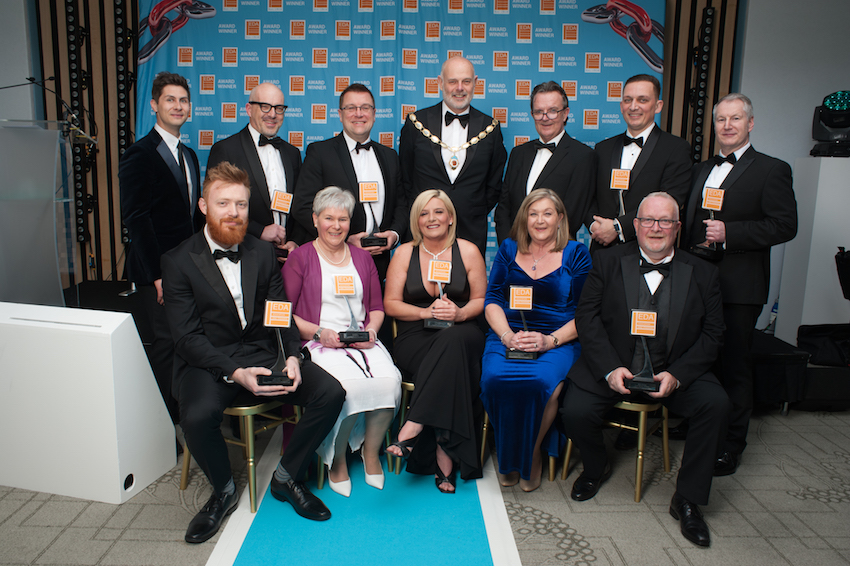
Cheeky magician, Ben Hanlin, hosted the Electrical Distributor's Association (EDA) annual Education & Training Awards in front of over 500 guests at the Association’s Annual Dinner on Thursday 3 March 2022. Nine high performing leaders from EDA wholesalers and manufacturers received Investor in Training trophies. Performing his own brand of mind-bending magic, and a truly amazing envelope trick, Ben presented trophies to nine managers hand-picked from over 350 EDA member businesses. For championing the EDA’s Product Knowledge Modules and/or the EDA Apprenticeship Service within their businesses, this year’s winners are: Simon Thwaite, Commercial Director, T.N. Robinson Ltd in Stockport, part of the ANEW buying group Adrian Harrison, Customer Support Manager, 3 Line Electrical Wholesale in Norwich, part of the AWEBB buying group Andy Procter, Group Manager Redditch, CEF Alec Smith, Profit Centre Manager, Electric Center in Dudley, part of Edmundson Electrical Ltd Simon Pates, Director, AT&T (GB) Ltd, part of the Fegime UK Ltd buying group. This is a posthumous award collected on Simon’s behalf by Denise Hermon Marc Roberts, Manager, Facilities Management National Contact Centre for Rexel UK Ltd in Warrington. Vicky Ordish, Apprenticeship Programme Manager at Rexel UK Ltd collected the Award on Marc’s behalf Nicky Pearce, Centre Manager, Stearn Electric Co Ltd in Leighton Buzzard Tony Hughes, Managing Director, Strike Electrical Distributors Ltd in Walsall, part of The IBA Buying Group Grant Dixon, Managing Director, Securi-Flex Ltd, an EDA Affiliate Manufacturer EDA President, CEF’s Chris Ashworth, who presented the EDA trophies alongside Perry Jones, Head of Partnerships at sponsors EDA Apprenticeships Plus, says: “These Investor in Training trophy winners recognise that when you look after your people they will do great things for your business. Training isn’t a perk, it is the lifeblood of your organisation. At a time when it is challenging to find and recruit new talent for your team, it’s far better to develop the people you already have: in return they will work hard for your business because they are valued and motivated.” Margaret Fitzsimons, CEO at the EDA, adds: “These EDA Awards are proof positive that the UK’s electrotechnical sector invests in the professional development of its people. While the number of Awards we can present each year is limited, there are thousands of inspiring stories of people building their skills and careers through training and making a fantastic contribution to their businesses in return. This is a great story to tell in the drive to attract the best and brightest talent to the UK’s electrotechnical sector. “Our training and apprenticeship service for members is a hugely important part of the Association’s work, and it is gratifying to hear from our winners the positive impact it is delivering in their businesses.”

ERA makes significant strides in sustainable operations
As part of its commitment to becoming carbon neutral by 2030, ERA is currently installing over 2,600 solar panels at its UK headquarters in South Staffordshire. Forecast to achieve an annual energy output of 979,200 kWh, the solar panels are being fitted across the roof of the 135,000 sq. ft purpose built facility, which houses ERA’s design, prototyping, manufacturing, assembly and warehousing operations, plus its UKAS accredited test house. The deployment of renewable energy technologies forms part of ERA’s parent company, Tyman UK & Ireland’s 2030 Sustainability Excellence Roadmap, which also includes dedicated carbon removal projects for hard-to-reduce carbon emissions. Reflecting ERA’s holistic approach to energy efficiency, the installation, which is being led by Sustainability Programme Manager, Kerri Nadel, will enable ERA’s headquarters to procure 100% of its electricity from renewable sources. Speaking of the project, Kerri says: “As one of the UK’s leading hardware manufacturers, we have a responsibility to take action now to support the government in meeting its 2050 net zero targets. Across all areas of the business, we are identifying how we can improve the environmental efficiency of our operations as part of Tyman UK & Ireland’s Focus-Define-Grow strategy. “The transition to renewable energy at our headquarters marks a significant step in our commitment to achieving sustainable operations, whilst building a sustainable culture and delivering more sustainable product and service solutions to our extensive customer base. This is the only beginning for our ambitions.” As part of its 2030 Sustainability Excellence Roadmap, Tyman UK & Ireland has signed up for the Science Based Targets initiative. This will fully quantify its carbon footprint across its value chain and extend its targets to cover reductions across scope 3 emissions, which will also deliver the level of decarbonisation required under the Paris Climate Agreement. ERA is also working in close partnership with its OEM and distribution customers on a ‘minimise, eliminate, replace’ strategy, which includes removing plastic from display packaging, in addition to optimising the use of sustainable materials across all packaging.