2 November 2026
Product of the Month: Amari Floodlight range by Aurora Lighting
 
12 November 2026
Schneider Electric transforms Southampton hospital estate
 
12 November 2026
GTEC Training opens new education facility in North Yorkshire
 
11 November 2026
Energy, AI and smart buildings: register now for EMEX 2026
 
11 November 2026
Solar and batteries could cut electricity costs by 40%, data finds
 

Latest News


Unqualified electricians must be regulated before there’s a tragedy
People’s lives are being put at risk from electrical work carried out by unqualified or incompetent 'electricians' the Managing Director of Scotland’s largest construction trade association, SELECT, has told national radio. Speaking on the popular Thomas Nagy Electrical Show on Fix Radio, Alan Wilson says: Rogue tradespeople “pose dangers not only to themselves and people they might be working beside, but more importantly to the end user”. Lack of regulation currently means anyone can claim to be an electrician and carry out electrical work in Scotland – a situation which SELECT says puts people at risk of injury and death and has led to its ongoing campaign for the title ‘electrician' to be protected. Mr Wilson says: “To call yourself an electrician – to have the word ‘electrician’ on your business card, in an advert in the local paper or on your van – you should have to go through a proper apprenticeship and keep your qualifications up to date, Sadly, this isn’t always the case. “I would rather be on the front foot and be criticised for trying to prevent something happening than explain to somebody’s children or widow, ‘I'm sorry your loved one died. We were thinking of regulating the industry, but we just didn't get around to it’.” During his guest spot on the UK radio station for tradespeople on 2 September, Mr Wilson also said that unqualified individuals practising as electricians was not a good look for an industry trying to attract new recruits. He says: “If you’ve done your four or five years’ of training and you then become a qualified electrician, and yet somebody down the road just puts the title ‘electrician’ on their van and has no qualifications and no training whatsoever, how galling must that be for a newly qualified person?” He also pointed out that are currently around 117 protected titles, all protected by law and whose professionals must be registered to use them. “Nurses, doctors, teachers and even night club bouncers are protected,” Mr Wilson explains. “If you want to shoe a horse, you have to be regulated – it’s a protected title. You can't call yourself a farrier unless you are a member of the scheme and have been through training. “You can’t go off to your local stables and say, ‘Give me a shot of that – I’ll put that shoe on that horse.’ But yet you can come along and wire my house.” SELECT is seeking the introduction of protection of title for the profession of electrician alongside partner bodies, including The Scottish Joint Industry Board, Unite the Union and the Scottish Electrical Charitable Training Trust.

Poor home connectivity risks “jeopardising” switch to hybrid working
This week CityFibre have teamed up with the Chartered Management Institute (CMI) to release some exclusive polling around the UK’s move to hybrid working, and how issues with connectivity among workers could be holding back the long-term move to more home working. A majority of the 1000 managers polled said that their staff had experienced problems resulting directly from unreliable broadband connections while working from home, such as being left unable to use video calls and being forced to drop out of important meetings. Despite this, 58% of managers polled said that no action at all had been taken by their organisation to help their employees improve their broadband connection. It was clear from the polling that businesses recognized that improving connectivity for those working at home would benefit workers, their managers, and also their wider organisation. But with only 42% of managers polled saying that employers should be responsible for ‘fit for work’ connectivity at home, there remains uncertainly around where the onus lies to improve workers’ connectivity. Even among those organisations where help is offered, the level of support varies hugely – from ‘fix it yourself’ payments to staff, to the supply of additional routers, and the use of mobile phones for ‘hot spotting’. Responding to the findings this week, the CEO of CityFibre Greg Mesch said that encouraging and incentivising take-up of these faster and more reliable connections by employees needs to be the focus for the industry, the government, and businesses. The CEO of CMI is also warning that a “once-in-a-generation opportunity” to change working practices for the better could be jeopardized without further action. The poll found that 85% of managers are expecting many of their staff to spend some time working remotely from September. And in this new climate the overwhelming majority of managers – 94% - agreed that improved broadband connectivity would allow the digitally excluded the opportunity to undertake job roles that can be done remotely in the UK. Greg Mesch, CEO at CityFibre says: “In the new age of hybrid working, it’s clear that businesses should care as much about their employees’ digital productivity at home as in the office. Relying on yesterday’s copper-based home broadband services will leave millions of employees struggling to connect and contribute while costing the economy untold millions in lost productivity. “The good news is that with the nationwide full fibre rollout ramping up fast, far superior connectivity will soon be within easy reach of most homes and businesses. Encouraging and even incentivising take-up of these faster and more reliable connections by employees needs to be the focus for the industry, the government, and businesses.” Ann Francke, CEO of the Chartered Management Institute comments: “Despite the disruption of the pandemic, the transition to hybrid working has been positive for the majority of employees and has allowed them to adapt work to their personal circumstances. Because of this flexibility, most people want hybrid working to stay. “Poor connectivity could jeopardise this once-in-a-generation opportunity to change our working practices for the better. If employees are to reap the benefits of dynamic working practices, then stable and reliable connectivity will be essential for business productivity. “Any leader worth their salt knows that supporting employees to work flexibly will encourage diversity and inclusivity across companies. It will enable companies to tap into a wider talent pool from across the UK and empower individuals with more choice and autonomy in their professional lives. “Investing in training to prepare managers and leaders for an increasingly digital and connected world should be a Government priority if the UK is to ‘build back better’.”

Global filtration manufacturer selects C-TEC's CAST ZFP fire system
One of the world’s leading manufacturers of filtration solutions has selected C-TEC’s innovative new CAST ZFP addressable fire system for one of its UK sites. A global expert in the field of filtration, MANN+HUMMEL employs 15,000 people at more than 50 locations worldwide and has a turnover of more than €3bn. In 2014, it acquired Vokes Air manufacturing plant in Burnley to increase its presence in the booming filtration and air purification market. Last year, the company identified the need for a powerful new fire alarm system to protect the site. Further to consultations with Lancashire-based specialist installation company, ADJ Fire and Security, the decision was taken to install one of C-TEC’s new CAST addressable fire systems comprising a network of ZFP 1-loop touchscreen-controlled panels connected to over 250 CAST devices including heat detectors embedded with C-TEC’s unique ‘HEART’ (HEat Analysis and Response Technology) algorithms to ensure each one remains in a high state of readiness for a potential fire alarm situation. Steve Hutchinson, Head of Sales at ADJ, says: “We were delighted to be asked to equip the MANN+HUMMEL Vokes Air site with an L1 fire detection and alarm system developed by one of the UK’s leading manufacturers of life-safety systems. The fact that C-TEC is based in the North-West was important to ourselves and our client as we are both keen to support local manufacturers wherever possible, particularly those which produce such high quality equipment. “Performance-wise, CAST is fast, reliable and incredibly powerful. As a 40V loop driven system, it allows you to put twice as many devices on a loop compared to other manufacturers’ systems. The soft-addressing nature of the system also means it’s simple to install, programme and commission as all the devices can be easily programmed at the panel. “Another key factor as to why we chose CAST is C-TEC’s outstanding free-of-charge technical support service. Terry Gordon, the company’s Technical Support Manager, and his team have been absolutely amazing, offering advice, answering any queries we had and providing phenomenal technical support throughout. I cannot praise them highly enough." Certified to all relevant EN54 product standards, including EN54-13, CAST is C-TEC’s own UK manufactured ‘distributed intelligence’ addressable fire detection and alarm system.

Dunstable Downs project accelerated by state-of-the-art-machinery
A major project to transform the Dunstable Downs skyline has taken advantage of the latest technology to accelerate the work. UK Power Networks has used a state-of-the-art cable plough at the National Trust site as it works to replace overhead lines with underground cables. Views at the highest point in Bedfordshire will be enhanced by the £2 million project supported by the Chilterns Conservation Board. The innovative remote-controlled cable plough means trenches do not have to be dug, and can install up to 1,000 metres of electricity cabling a day. This would take at least a fortnight using traditional open-cut techniques in tough chalk ground conditions. Ivan Churchman, project manager at UK Power Networks, says it was the first time the company has used the new machinery: “We chose to use this to minimise any disruption both to the National Trust visitors and the area’s natural habitat and it has proved to be a fantastic option for us. “As well as being a more sustainable and environmentally-friendly method, it’s also safer as it removes the risk for open excavations in a public area, and workers entering the trench. It also saves money by reducing the time needed on site, which is what we and landowners both want.” The project will also boost power supplies for the local area, for the future. Ben James, operations manager at ATP which supplied the cable plough, comments: “This technology excels in agricultural setting and Areas of Outstanding Natural Beauty such as Dunstable Downs, it’s the most efficient, environmentally friendly and effective way of installing cables below ground. “The cable plough’s low impact on the environment, combined with the increased productivity, makes it an effective choice for all parties and we were very happy to team up with UK Power Networks for the first time on this protected piece of the countryside.”

City Electrical Factors' parent company to acquire The Segen Group
City Electrical Factors (CEF) and The Segen Group (Segen) has announced that CEF’s parent company, Labora Holdings (Labora), and Segen have entered into an agreement under which Labora will acquire 100% of Segen and its subsidiaries in the UK, Germany and South Africa. The transaction is expected to close October 2021 subject to regulatory and other approvals and conditions. Labora and Segen will remain separate and independent companies until closing of the proposed transaction. Segen sells a range of renewable energy solutions, including energy storage systems (ESS) and EV charging equipment, to installers through its proprietary online portal and is a market leader in the UK and South Africa with significant and expanding operations in Europe. It has an impressive financial track record and exciting growth outlook. “We are delighted to announce Labora’s proposed acquisition of Segen. This announcement reflects our confidence in the talented Segen team and our commitment to renewable energy,” says Thomas Hartland-Mackie, President and CEO of Labora. “Segen’s dedication to their customers and strong supplier partnerships is aligned with CEF’s culture and way of doing business. Our business is highly complementary to Segen and we are eager to explore ways to accelerate growth through new capabilities to further deliver on customer needs.” Following the closing of the transaction, Segen will be a subsidiary of Labora, with the benefit of new scope and scale that will increase opportunities for suppliers and customers. “There are many exciting synergies between the Segen and CEF teams,” comments Andy Pegg, founder and CEO of Segen. “I am very pleased that Segen has found such a fantastic new home.”

Fuel poverty to be eradicated by artificial intelligence project
Up to 100,000 people in danger of struggling with their fuel bills will be proactively offered support and guidance, thanks to a new partnership led by UK Power Networks. The UK’s largest electricity Distribution Network Operator (DNO) is working with the Energy Systems Catapult to use sophisticated data software to identify households across London, the East and South East who may need extra support, now and in the future. The project will use artificial intelligence and data science techniques to combine the companies’ information, existing fuel poverty insight, along with smart meter data supplied by households, and geographical and socio-economic statistics. The AI system produced by software firm Urban Tide, will bring these data sets together into one simple dashboard which gives an accurate picture of who may need help, especially in areas where people are less likely to come forward and ask for support. UK Power Networks is aiming to help seven times more customers facing fuel poverty* as it currently does – rising from 14,000 per year to 100,000. Using artificial intelligence is a vital step in a time of significant challenges; research from charity Citizens Advice suggests that up to that 600,000 people are now entering fuel poverty in the UK because of the Covid-19 pandemic. UK Power Networks doesn’t set energy bills but it offers energy efficiency advice to help people reduce their energy use, and tailored advice to help customers access government grants or support from its 223 charity partners. Ian Cameron, head of customer services and innovation, says: “The pandemic has caused extraordinary challenges and meant hundreds of thousands may enter fuel poverty. They might not think to come and ask us for help, and we can’t predict what future challenges might come our way, but what we can do is use new technology to deliver more targeted and higher quality support to those who need it most. That’s exactly what this project is all about.” Dr Rose Chard, Fair Future programme lead at Energy Systems Catapult, comments: “The transition to a smart flexible energy system will provide great opportunities to better understand the trade-offs that households are having to make when struggling to afford adequate energy. By drawing on insight about behaviours, as well as smart data, this project pioneers methods that ensure fuel poor households aren’t left behind - by working with them to design support for them. This project will ensure that all consumers can benefit from the opportunities of the smart flexible energy future.” The project will run until December 2022. Its first steps will be to research and evaluate new data sources, before designing and developing the data science tools to build the dashboard.

Winners announced at JTL National Apprentice Awards
JTL has named Nathan Pryce, Harrie Nixon-Jones and Oliver Parry as its winners in this year’s National Apprentice of the Year awards, which took place at The Victory Services Club in London on 2 September. Blackpool-based Nathan, who recently completed a successful apprenticeship at local firm JET Electrical, was named the overall winner of the JTL National Apprentice of the Year Award for 2021, while Chester-based Harrie and Southampton-based Oliver were named the national winners of the Mechanical Engineering Services (MES) and Electrical Engineering Maintenance awards respectively. After being crowned winners for their academic and practical progress at JTL’s Regional Awards earlier this year, Nathan, Harrie and Oliver went on to compete against seven other regional electrical and MES winners at JTL’s National Apprentice Awards ceremony. As part of the selection process, each finalist was invited to be interviewed via an online platform by JTL’s chief executive Jon Graham, as well as national delivery director Judi Wheeler. Once completed and reviewed, it was agreed that Nathan, Harrie, and Oliver should be named JTL’s national winners at its annual apprentice award ceremony. As the recipient of JTL’s National Apprentice of the Year Award 2021, Nathan was awarded an engraved glass trophy and £1000 cheque from JTL. Harrie, meanwhile, received a voucher from UK Plumbing Supplies Limited, whilst Edmundson Electrical donated a Megger multi-function tester to Oliver. Jon Graham, chief executive at JTL, says: “Our awards are a great opportunity to recognise the excellence of our top apprentices and it’s been a pleasure getting to know Nathan, Harrie and Oliver, as well as the other finalists as part of this process. It was wonderful, too, being able to gather for the first time in over two years to host our annual awards ceremony. Each of our apprentices, employers and JTL staff members have faced unprecedented challenges, both personal and professional, under the pandemic, and so it feels extra special to be able to get together as a group to celebrate the hard work and achievements of each of our finalists.” Nathan, JTL’s National Apprentice of the Year for 2021, says: “To say that it feels amazing to have won the overall National Apprentice of the Year award is an understatement. I have overcome a lot of personal challenges in my life and, to me, this award is a symbol of how far I have come and all that I have achieved.” JTL’s Electrical winner, Oliver, comments on receiving his award: “I really didn’t expect to win anything today, so I am in complete shock. The lockdown period was incredibly challenging for me given the fact that I had to shield due to health reasons, so to be here in London and to have my work recognised by JTL feels like a great outcome to everything.” Harrie, meanwhile, the winner of the MES award, says: “I am completely overwhelmed and delighted to receive such a prestigious award. I have worked hard throughout the whole of my apprenticeship and have really committed myself to becoming the best engineer that I can be, so to have my work recognised like this feels wonderful.” The purpose of JTL’s National Awards is to recognise its highest achieving apprentices in the building services engineering sector and to celebrate their success. Candidates – who are all recently qualified – are nominated based on their outstanding performances throughout the four years of their training.

Enclosures specified to protect the UK's machines
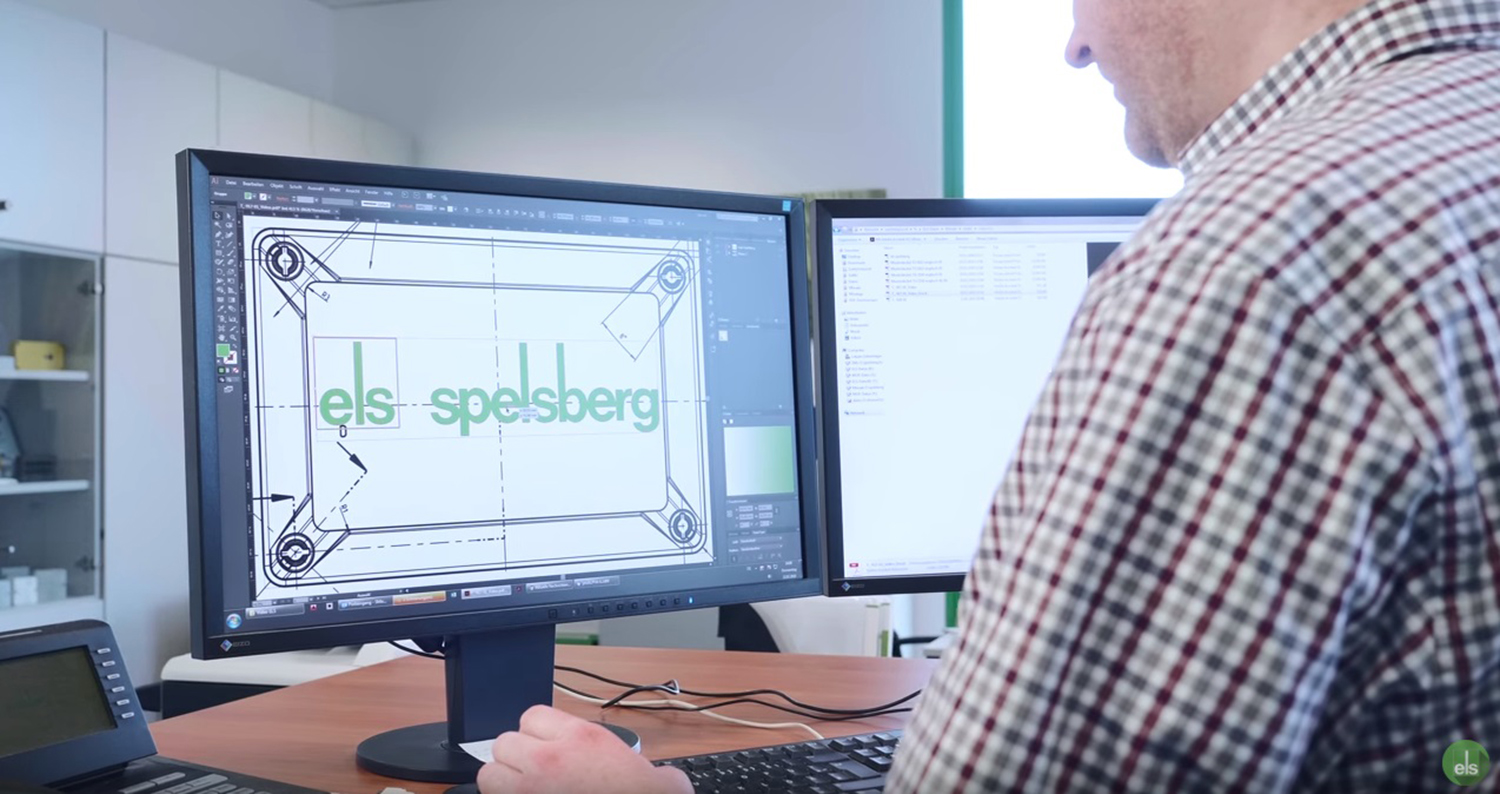
Enclosures provide a safe and secure location for electrical power and control components as well as protecting against environmental conditions. As such, the choices made in selecting enclosures for industrial applications can have a significant effect on the performance and reliability of equipment. Chris Lloyd, Managing Director of Spelsberg UK, explains the key requirements OEMs need to consider when choosing their enclosure manufacturer. For industrial electrical equipment to function, as well as protect machine operators, circuitry must be safely enclosed. As a result, it’s fundamental for original equipment manufacturers (OEMs) to carefully consider requirements before specifying an enclosure. Whatever the application, from a production machine through to a passenger lift, its performance and safety is only as good as the enclosure that protects it and this means achieving the right enclosure design for each situation and the associated conditions. Getting the enclosure specification right More often than not, OEM requirements are specific to purpose. Engineers can provide a set of needs that the enclosure has to fulfil, but often, wider considerations need to be taken into account, requiring the application experience of a capable enclosure manufacturer. The application’s environmental setting is among the first considerations and protection against the elements can be crucial in an outdoor location, whether that’s on a ship at sea or enclosing switchgear at a solar panel farm. The ingress protection (IP) may need to reach the highest IP69 level even for indoor applications, such as the electrical distribution on milking parlour machinery, which must withstand high pressure water jets as part of a wash down. Environmental conditions also take into account the internal area of the enclosure where high humidity and the potential for damaging condensation may require a counteractive specification. In addition to protection against liquid and physical particulates, fire resistance may be a requirement, most typically when used as part of fire detection and sprinkler systems. Resistance to impact, measured with the IK rating, is also a factor that determines not only the form and construction material of the enclosure, but also where it’s located on the machine. In-house enclosure customisation is key for OEMs Customisation of the enclosure may also be required should the OEM’s design incorporate functionality such as displays, touchpads or emergency stop buttons. It’s not just the physical form of the enclosure that requires attention but also labelling and referencing, so a printing service provided by the enclosure manufacturer can be of importance. In addition to printing, enclosures may need to be signified by various colour codes, or they may even demand their own coating for specific purposes. An interesting example for Spelsberg UK included providing a military naval service with a ‘stealth’-coated enclosure for anti-radar purposes. This polymer coating is non-reflective of radar signals and is also self-extinguishing in the event of fire. The crucial advantages of an enclosure manufacturer that can provide customisation services in-house include ensuring design integration, time saving and a single point of accountability. Working with a dedicated enclosure manufacturer that has a comprehensive range of products and services, rather than managing multiple outsourced service providers, the OEM has the confidence that the finished production integrates perfectly. For most projects, speed is of the essence and a single manufacturer can manage customisation at a far faster rate than multiple parties. Finally, an enclosure specialist like Spelsberg that can manage the entire project, from creating samples to full production runs, ensures a high quality product and that all of the OEM’s requirements are achieved. Durable, easy to integrate enclosures for OEMs The enclosures most typically specified for use by OEMs, or as a platform for customisation, include the TK, TG and GEOS ranges from Spelsberg. The TK range of industrial housings can feature knock-outs with pre-stamped membranes for swift onsite installation of cables while maintaining specified IP ratings. Constructed from glass-fibre reinforced polycarbonate, they achieve IK08 impact resistance and IP66 ingress protection. They’re also available with a wide variety of options to provide a highly flexible mounting and installation. The similar TG range features a high gloss finish and smooth sidewalls for flexibility over customisation, as well as recesses in the cover for optional bore hole drilling. The GEOS range meanwhile is ideally suited to outdoor environments, or indoor areas with harsh conditions. UV and weather-proof, GEOS features a ‘Drain Protect’ sealing system that channels liquids away from potential entry points. The enclosure also provides protection in aggressive atmospheres or against oils, greases and mechanical stresses.

112,000 UK trade businesses have been set up since the first lockdown
Since the first coronavirus lockdown was announced on 23 March 2020, over 112,000 trade businesses have been set up in the UK, new research has revealed. The study, conducted by IronmongeryDirect analysed over one million rows of Companies House data and found that more than one in 10 (11%) of all businesses set up during the pandemic (1,019,970) are in the trade industry. Of the 112,047 new companies in the sector, almost a fifth (19%) focus on the ‘development of building products’, with 20,753 start-ups - more than any other trade category. Similar projects also take up the next three spots, with ‘construction of domestic buildings’ and ‘commercial buildings’ both making the top five. Companies specialising in ‘electrical installation’ are not far behind, with 8,194 new businesses, while ‘plumbing, heat and air-conditioning installation’ firms also feature highly. The 10 most common categories for trade businesses established since the first lockdown are: 1) Development of building projects – 20,753 2) Construction of domestic buildings – 16,278 3) Other specialised construction activities – 9,395 4) Construction of commercial buildings - 8,763 5) Electrical installation – 8,194 6) Other building completion and finishing – 8,151 7) Plumbing, heat and air-conditioning installation – 7,299 8) Other construction installation – 6,146 9) Landscape service activities – 3,685 10) Painting – 3,090 Other popular trades, such as roofing (2,612), joinery (2,226) and plastering (1,589) have also seen many new enterprises. These lockdown companies are spread out across the UK, but, while London inevitably has the most new trade businesses (24,977) due to its size - almost eight times as many as the next city, Birmingham (3,175) - Aberdeen has the most per capita. With 163 new companies and a population of just under 230,000, there is one lockdown trade start-up per 1,403 people in the Scottish port city. On this metric, Southend-on-Sea takes second place and top spot for England, followed by Bath. The top five UK hotspots for lockdown trade businesses are: 1) Aberdeen – 163 (one per 1,403 people) 2) Southend-on-Sea – 132 (one per 1,402) 3) Bath – 94 (one per 1,102) 4) Edinburgh – 488 (one per 1,076) 5) Belfast – 273 (one per 1,056) Dominick Sandford, Director and Head of Merchandising & Marketing at IronmongeryDirect, says: “The pandemic has brought many challenges to businesses, but it’s great to see that it has also created some opportunities, with lots of tradespeople starting new companies. “Setting up a business can be tricky at the best of times, so these individuals deserve tremendous credit for making it work during lockdown. “If you’re thinking of following their lead and starting your own trade company, we’ve partnered with Rick Smith, Managing Director at an insolvency and business rescue specialist, to provide expert advice on how to do so.”

SELECT MD Alan Wilson says construction industry needs 'certainty'
The Managing Director of SELECT, Scotland’s largest construction trade association, says “certainty and momentum” are the key ingredients if the industry is to successfully build on the outcome of the upcoming COP26 summit. Alan Wilson says it’s essential for the good work to continue after world leaders have left the UN Climate Change Conference in Glasgow on 12 November. Speaking at this week’s Building to COP26 webinar, hosted by the Construction Scotland Innovation Centre (CSIC), he comments: “As a sector, we’re very excited to move into this next phase of industry development but there are two key words, which we need to hear and embrace: certainty and momentum. “The industry needs to know its clear direction of travel and to be given bite-sized chunks of information to help it stay on course. And it also needs to keep pace with any promises made, so we can’t have COP26, and then say, ‘Wasn’t that jolly good?’ and all go back to our day jobs as if nothing has changed. “The sector has been discussing this kind of work for many, many years and there have been several false dawns. But we’re past that now and need to move forward to the next stage.” Commenting as one of several guest speakers at this week’s event, Mr Wilson also said that the electrical industry will play “an integral part of all our lives” in the future. He told online delegates: “We’ve said for many years that the future is electric, but I think we can say ‘the now is electric’ because electrification is already starting to drive our heat, light and transport demands. “It’s therefore vital that we have investment in the sector; we currently have a good workforce, with a record number of apprentices recruited so far this year, but an element of upskilling is definitely necessary to help make our sector more agile when it comes different kinds of installations. “For example, we’re probably all aware of tried-and-tested innovations like photovoltaic panels, battery storage and electric vehicle (EV) chargers, which the industry is already installing in homes and offices across the country. “But we’re also keen to get involved in ‘prosumer’ activity, where individual houses, groups of houses or even shopping centres etc can effectively come together, take themselves off grid and generate their own electricity, whether that’s wind, solar or a mix of both.” As an example of innovative thinking, Mr Wilson highlighted the work done by Nissan, which is using retired EV batteries to provide back-up power to the Amsterdam Arena in the Netherlands. He comments: “This kind of thing isn’t rocket science per se, but it’s here, it’s now and it’s happening, and we need to grab such opportunities, take advantage of them and make them work for us. “There are lots of similar opportunities in the electrical industry and we are very excited to be part of a sector which is going to be an integral part of the certainty of all our lives going forward.”