2 November 2026
Product of the Month: Amari Floodlight range by Aurora Lighting
 
12 November 2026
Schneider Electric transforms Southampton hospital estate
 
12 November 2026
GTEC Training opens new education facility in North Yorkshire
 
11 November 2026
Energy, AI and smart buildings: register now for EMEX 2026
 
11 November 2026
Solar and batteries could cut electricity costs by 40%, data finds
 

Latest News


Safety in schools is a priority with Smart Technology
With pupils set to go back to school on 8 March, there are a number of safety measures schools need to implement to ensure the health and wellness of staff, students and school communities. The first lockdown and closure of schools brought on by the coronavirus pandemic fired a “warning shot” for education facilities managers, forcing headteachers to re-examine school safety standards. Now that a third lockdown is here and schools have been shut down for a second time, anyone behind the curve with the benefits of smart technology should get on board now before children return to the school environment. And with the ever-changing variants of the COVID-19 virus, schools can’t afford to be “late to class” when it comes to health and safety. Some schools in the US have been using smart technologies for a while to measure utility consumption and efficiency, streamline maintenance and enhance general school safety. Now, these technologies are playing a significant role in keeping school buildings healthy and preventing the spread of disease. So, let’s take a look at how smart technology can help schools to become safer, as well as more energy-efficient and cost-effective. Thermal detection cameras  Smart cameras placed at entry points of a school can remove the manual task of temperature testing. These cameras provide medically-accurate, real-time temperatures of individuals in real-time. If a high temperature is detected, the software sends an instant alert to the relevant party. It can also be set to deny access to those with high temperatures or to people not wearing masks. Safer water  As the coronavirus continues to sweep through the world’s population, healthcare providers should also be on heightened alert for Legionnaires’ disease, another potential cause of pneumonia with similar symptoms. Legionella are potentially deadly bacteria that can infect a school’s water supply and cause an outbreak of Legionnaire’s disease. It’s a school's duty of care to prevent Legionella infection by monitoring the risk of the bacteria proliferating. Particularly as schools reopen and previously stagnant plumbing and cooling systems return to use, additional Legionella cases could rear their ugly head to emergency departments in the coming months. Traces of Legionella were recently found at a Worcestershire school. The school was forced to remain shut while treatment and testing took place. The Health and Safety Executive advises: “If your building was closed or has reduced occupancy during the coronavirus (COVID-19) outbreak, water system stagnation can occur due to lack of use, increasing the risks of Legionnaires’ disease… If the water system is still used regularly, maintain the appropriate measures to prevent legionella growth.” Typically, managing the risk of Legionella includes running all outlets for two minutes, taking and recording the temperature of the water to ensure that it’s not conducive to Legionella growth. This is a time-consuming process, which is why schools are looking to automated water temperature monitoring systems. This smart system with automated flushing and temperature testing reports and records water temperature data in real time. Instant alerts will notify relevant staff if water temperatures fall within “Legionella-friendly” parameters. Cleaner air  Advisers say that improving air filtration and ventilation in schools can help mitigate the potential airborne transmission of COVID-19. Strategies include: - Increasing outdoor air ventilation - Filtering indoor air - Using portable air cleaners with HEPA filters Smart building technologies such as advanced HVAC controls can help facilities managers promote cleaner air with less hassle. For example, smart HVAC systems use sensors to remotely monitor and control variables such as: - Humidity - Temperature - Indoor air quality - The level of carbon dioxide and other pollutants While these solutions may be key to the reopening of schools in the era of COVID-19, they also bring long-term benefits. Although COVID-19 may have accelerated the adoption of smart technology, many of these solutions are focused on health, wellness and security in general; which have been needed in school systems for a long time.

Lighting and Circular Economy announce Recolight's webinar series
Recolight have announced a new Circular Economy webinar series for 2021. It will build on the events held in 2020, and the progress being made by the lighting industry. All webinars will be chaired by Ray Molony who said: “It’s vital that the industry continues this conversation if it’s to address its responsibility to the wider world. For too long the sector has been a rule-taker. These webinars are helping us come up with a strategy that’s built from the bottom up.” The first three webinars are; Luminaire design: The Circular Economy regulations you need to know - 30 March Return of the lamp: How the replaceable revolution will change lighting - 29 April How to go net zero: A lighting manufacturer’s guide to becoming carbon neutral - 27 May The Recolight webinar series in 2020 examined the Circular Economy for lighting. Discussions ranged from new regulations for lighting, through to extending the life of luminaires. A range of Lighting Producers, specifiers, and designers presented positive initiatives being undertaken to reduce the impact on the environment. One of the topics still up for debate is whether the return of replaceable light sources, drivers and other components is the best route to a Circular Economy in the lighting industry. Recolight CEO Nigel Harvey says, “I’m encouraged  to see the lighting industry taking steps to become more sustainable. It is a given that we produce light sources that are very energy efficient. Moving beyond that and adopting circular economy principles in how we manufacture those products will soon be a must do, and not just an ought to do.” More events will be announced for later in the year. All are free to join, head to the Recolight Events page for more information and to register.

CICV Forum welcomes three new members, supporting construction
After nearly a year of practical support and proactive guidance for Scotland’s building sector, the Construction Industry Coronavirus (CICV) Forum continues to attract new members, this week welcoming another three major organisations to its ranks. The campaigning collective, which was established in March last year as COVID-19 struck, has been at the vanguard of the battle to save the construction sector in Scotland during the first enforced shutdown and help it through the difficult conditions which have followed. As widespread interest in its work remains undiminished, the Forum has now welcomed the Association of Brickwork Contractors, the Chartered Institute of Plumbing and Heating Engineering and the National Federation of Demolition Contractors to its ranks. Their arrival means the Forum now has 30 full members from across Scotland and beyond, representing Government agencies, private companies, professional services and training bodies, plus more than 25 further organisations contributing advice to its sub-groups. Forum Chair and SELECT Managing Director Alan Wilson, says: “It is very gratifying that, after nearly a year of intensive campaigning, we are attracting the notice of still more prominent and powerful organisations. “We are delighted to welcome these new organisations and we greatly appreciate the contribution they will make to our ongoing efforts. “The Forum, in its daily activities and in its comprehensive provision of practical information and advice, has performed an unprecedented service to every part of our vital industry and each new member brings new strengths.” The Association of Brickwork Contractors (ABC) represents the largest specialist contractors across the UK and focuses on supporting the role of bricklayers as well as sustaining the influence that the contractor has at the design and build stages. Eve Livett, Chief Executive of ABC, says: “Working together in the common interest has proved to be an unprecedented success for the CICV Forum and our association is keen to contribute to its ongoing service to the industry.” The Chartered Institute of Plumbing and Heating Engineering (CIPHE) has a membership in excess of 7,500, made up of practitioners, consultants, specifiers, designers, public health engineers, lecturers, trainers and trainees. More than 1,600 members reside in Hong Kong. The National Federation of Demolition Contractors (NFDC) has championed the standards and professionalism of its members for more than 80 years. It counts some of the biggest names in the specialist sector among its more than 140 members. Since its creation in March last year, the Forum has drawn on the collective expertise of its members to maintain a steady supply of information and practical advice to the sector as well as carrying out surveys, hosting webinars and making appeals to Government Ministers. The manner in which it has co-ordinated this guidance by encouraging a culture of working together for mutual benefit is being noted across the sector as a model for future collaboration.

J S Wright secures contract for Lambeth housing scheme
Leading building services specialist J S Wright is to equip the first phase of a new housing development in Lambeth, south London. The 131-year-old contractor, which has its headquarters in Birmingham and an office in London, will provide the mechanical services for 16 energy efficient apartments in a new five-storey building at Knight’s Walk in Lambeth. The contract, valued at more than £600,000, with housebuilder Hill also includes one year of planned service maintenance cover provided by J S Wright’s residential maintenance company Wright Maintenance. J S Wright will install a communal heating and hot water system with distribution from a central energy centre to apartment radiators. It will also equip all the apartments with an MVHR heat recovery ventilation system, sanitaryware, and soil and wastewater services, as well as provide the building with above-ground acoustic drainage services and a rainwater harvesting system. In addition. the brief involves providing a pre-payment energy billing system linked into a computer-controlled building management system (BMS) and controls, and plantroom ventilation. Work on site has already started with completion scheduled for August 2021. Phil Leech, Managing Director of J S Wright, comments: “We are delighted to be able to team up again with a leading housebuilder in helping to provide comfortable energy efficient new homes in south London.” Established in Birmingham in 1890, J S Wright designs, manufactures, installs and maintains mechanical and electrical services for the hotel, residential, social housing, student accommodation, leisure and commercial sectors. The company was voted one of the UK's Top Ten Specialist Contractors to Work For in the 2016 Construction Enquirer Awards, was a finalist in three categories in the 2018 H&V News Awards and was named Construction Services Employer of the Year in the 2020 BAME Apprenticeship Awards.

Uni-Therm aids rapid biomed equipment testing at Israel Hospital
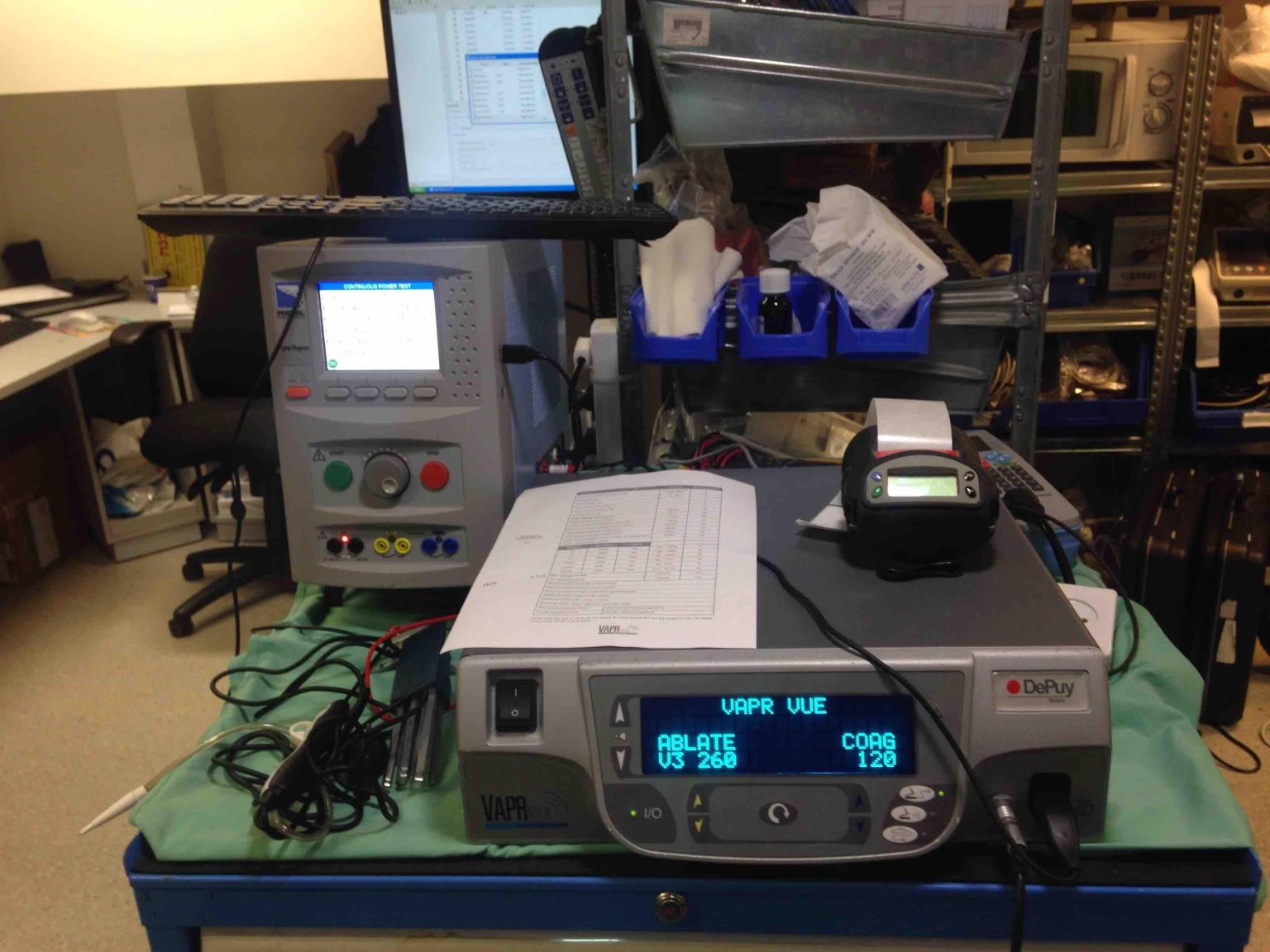
Investment in advanced medical device testing technology from Rigel Medical is reaping benefits at one of a private hospital in Israel. The 110-bed Herzliya Medical Center has been using the Rigel Uni-Therm electrosurgical analyzer for several years as part of a suite of equipment to undertake comprehensive testing and calibration of approximately 70 items of operating rooms and outpatient clinics radio frequency generators. Capable of automating all required tests, the compact analyzer accurately measures the performance of equipment, including high frequency leakage, high current, power output and patient return plate alarm testing. Its ease-of-use and advanced capabilities have simplified performance testing procedures as part of the planned in-service preventative maintenance programmes the hospital undertakes, which are overseen by director of the Biomedical Department, Tameem Jaber. He estimates that the time taken to complete these procedures has been cut by an estimated 40% using the Uni-Therm when compared to the biomed test equipment the hospital previously used. He says: “Uni-Therm continues to contribute to raising test standards and delivering operational efficiencies. It has improved the ease by which our generators can be checked for electrical safety then a performance accuracy while the ability to produce one report covering all test procedures is extremely beneficial, saving even more time and effort. “We can customise our auto-test sequences using the analyzer and can run through all the manufacturer’s recommended tests in under 10 minutes. This is significantly quicker and easier when compared to the biomed test equipment we used to use before turning to Rigel.” Located north of Tel Aviv on the Mediterranean coast, the Herzliya Medical Center was the first facility of its kind in Israel to undertake heart surgery, neurosurgery, and endoscopic procedures among other complex operations. It has also led the way in the development of the country’s CT scanning technology, catheterisation, in vitro fertilisation, cytogenetic laboratory and ICU capabilities. Tameem Jaber explained that the adoption of the Uni-Therm, which connects to the Israel Rigel’s Med-eBase asset management software, meets the medical center’s requirements for the beneficial production of reports and certificates for the device under test, which can be stored on either a local or remote database using a CMMS developed by a local software company. “Using the analyzer makes IEC 60601-2-2 testing less complicated and easier at the hospital. The user-friendly screen on the unit provides step-by-step connection instructions and simple analysis data, which can be interpreted quickly to check the equipment under test is working properly,” he adds. “The ability to enter quickly the medical device manufacturer’s own test specific programmes and print off customised check labels is also beneficial. The Uni-Therm analyzer was designed more specific to biomedical testing environment in addition to the ability to test and calibrate RF generators of wide manufactures using a special test cables or custom made for example for testing MITEK VAPR VUE (JNJ) or MALIS CODMAN  CMC-V or GEN11 ENSEAL Harmonic Scalpel.” The Uni-Therm features onboard memory, test automation, comprehensive data management capabilities and a wide range of in-built resistors. USB technology improves connectivity to other equipment for the rapid downloading of test data and the uploading of the electrosurgical device’s power curves as well as test specific programmes. Output waveforms can be examined through a built-in scope output, which allows for easy confirmation of the desired waveform shape. The Uni-Therm is among several Rigel defibrillator analyzers, infusion pump analyzers and combination vital sign simulators the hospital uses, which contribute effectively towards ensuring compliance with appropriate international test standards, including IEC 60601-2-2. These include the UNI-SIM, UNI-Pulse, Rigel 288+ and Multi Flow to test and calibrate patient monitors, infusion pumps and defibrillators.

Gordon McArthur is chair of the Electrical Engineering Training Foundation
It’s all change at the top as the Electrical Engineering Training Foundation (EETF), the organisation which helps develop the next generation of skills in the electrotechnical sector in Scotland, appoints a new chair and a new board member. The EETF will now be led by Gordon McArthur, Managing Director of WMQ Building Services, based in Netherton, Wishaw. He takes over from Alex Guyan, who has been in the chair for eight years. Mike Stark, Director at Atalian Servest AMK, also joins the board. The changes come at a momentous time for the sector, which is aiming to gain professional recognition for electricians and is vitally aware of the crucial role that training plays in providing the skills and knowledge necessary for it to thrive. The EETF, which was established by SELECT, Scotland’s largest construction trade association, in 1998, provides grants which support training across the industry, funds number of different projects and encourages continuing career progression. Gordon McArthur became MD of family-run WMQ in 2008, taking the reins from his father Jim, who was EETF director and Chairman from 2002 until 2015. The firm, which employs more than 100 people, is one of the leading contractors in Scotland and was recently named by the London Stock Exchange as one of the UK’s most dynamic and fastest-growing firms. He says: “It is a huge privilege to have been asked to take on this important role. The electrical sector becomes more complex and high-tech with each passing year and training must be at the front and centre of everything we do. “The Foundation has played a tremendous role under Alex Guyan’s leadership in encouraging everyone within the sector to develop the skills and knowledge which underpin a lifelong career. I am delighted to be joined by Mike Stark, who will bring a great depth of expertise to the board.” Mike Stark says: “I fully acknowledge the central role that training must play if we are to have the skillsets we need to take us forward in a technologically exciting and fast-changing working environment. “Having mentored employees and apprentices at Arthur McKay, I know that there is a wealth of talent in this country, as well as an enthusiasm for, and understanding of, the potential rewards of a career as an electrician.” Alex Guyan comments: “It is with great confidence that I pass the baton to Gordon. He is a dynamic business personality who is acutely aware of the effort we need to make to keep our skills fit for purpose as the sector advances. “I am very proud of the work the charity has carried out over my term and the projects we have been able to support. I wish Gordon and Mike all success.” In previous years, the EETF had established partnerships with the Construction and Built Environment Challenge (CABEC) and the Prince’s Trust, which helps young people into jobs, education and training.

SGS searches for tradespeople who helped their community during COVID-19
Brits are being encouraged to nominate tradespeople in their area who have gone above and beyond to help out their local community during the COVID-19 pandemic. The ‘local hero’ awards, which have been launched by UK manufacturer and retailer SGS Engineering this week, are designed to celebrate the most generous and thoughtful plumbers, builders, electricians, joiners, gardeners, and mechanics who offered valued help to those in need, as a result of the coronavirus crisis. One national winner will be awarded a £1,000 cash prize and a Kielder Tool Kit worth over £500, while up to five regional winners will each take home cash prizes worth £250. Dave Gordon, General Manager at SGS Engineering explains: “We’ve heard so many stories about tradespeople helping out their communities during COVID-19 – whether that’s doing free MOTs for key workers or even gardening for those who are shielding – and we’ve felt incredibly proud to be part of such a committed and caring industry. “We wanted to recognise those individuals and businesses who really went out of their way to support people in need in their local areas, so we decided to launch these local hero awards. “We look forward to seeing all the entries and reading about all the amazing work that people have been doing.” Nominating someone for a local hero award is free and easy to do via the dedicated entry form. Those making a nomination are encouraged to share information about the tradesperson who helped them (or a friend/family member), what they did, and when they did it during COVID-19. Entry closes at 11:59pm on Sunday 7th March. Expert industry judges from SGS and Kielder will be reviewing all entries personally. A shortlist of finalists will be contacted and then revealed publicly on Monday 15th March. A poll will then be opened, enabling the general public to vote for an overall national winner and up to a further five regional winners, which will be crowned on Wednesday 31st March. Prizes include: Overall national winner: £1,000 cash prize and a Kielder Tool Kit worth over £500 Regional winner (Scotland): £250 cash prize Regional winner (Northern England): £250 cash prize Regional winner (Midlands & Southern England): £250 cash prize Regional winner (Wales): £250 cash prize Regional winner (Northern Ireland): £250 cash prize

Alan Macklin appointed Vice-President of HEVAC
Alan Macklin, Group Technical Director at Elta Group, has been appointed as the new Vice-President of HEVAC, the trade association for heating, ventilation and air conditioning. Chairman of the Fan Manufacturers Association since 2016, Alan is a fan engineer with a 41 year career in the ventilation industry, having broad experience in residential, commercial, industrial, mining and AHU sectors. He is actively involved in standards being a member of MCE/017 (Fans), ISO/TC117 (Fans) and FSH/025-05 (Smoke fan working group). As a member of the Federation of Environmental Trade Associations (FETA), HEVAC seeks to be a pro-active association collaborating with similar industry groups and government departments to strengthen sustainability as an essential component of resource efficiency. With this positive approach to improving product performance, system design and client awareness, the association is in a strong position to influence policies, legislation and standards affecting the air conditioning, ventilation and related heating market. Alan Macklin comments: “I am delighted to be taking on this position. The importance of good quality indoor air is very much in the spotlight and HEVAC will play a crucial part in ensuring our indoor spaces provide a clean and healthy environment. I hope my years of industry experience will help HEVAC’s member companies remain at the heart of shaping industry for the future.” Paul White, HEVAC President, says: “It gives me great pleasure to welcome Alan into the role of HEVAC Vice-President. His track record is exemplary and his in-depth knowledge of the industry will be a valuable resource for HEVAC.”

Chris Lloyd, Spelsberg, explains whats behind UK e-mobility enclosures
In 2020 more than 10% of all UK car registrations comprised of electric vehicles (EV). The gathering pace of EV sales is of little surprise and is set to increase; one reason being the closing proximity of the UK deadline on the ban of combustion engine car sales, brought forward from 2040 to 2035. Concerning public transport, between 2020 and 2024 the electric bus market is expected to grow at a rate of nearly 50%. The e-mobility sector is of course also joined today by e-bicycles. In the Netherlands, albeit with a strong history of participation in cycling, over 50% of all adult bikes sold in 2018 were electric. According to a recent report, it’s predicted that by 2023 the number of e-bikes, including those privately owned and publicly shared, will reach over 300 million, a 50% increase over 2019’s figures. The growth in EVs means a corresponding requirement for growth in charging points. To meet demand, as of January the UK had over 30,000 publicly available electric vehicle charging points across nearly 14,000 locations. Charging points include electrical distribution, the interface between the vehicle and the power grid, which is as crucial to an EV as its battery. To achieve safe, reliable charging whatever the conditions, a robust enclosure has to provide protection to the electrical distribution unit while ensuring safe operation to users and the wider electrical circuit. Working with leading car manufacturers, Spelsberg developed bespoke enclosures to ensure safe, secure and easy to use vehicle charging, from domestic applications through to semi-public installations, such as car parks. Each project is characterised by a unique specification which depends upon the design of the power supply distribution circuit and components, and all meet the required standards, including VDE and UL. Spelsberg enclosures tailored for e-mobility charging are designed to bespoke required dimensions for the location, which could range from a car park charging pillar to a distribution board for a garage or car port. Consideration of the installation’s location and the number of charging points is also combined with climatic conditions, which could require total resistance to heavy rain, snow and freezing temperatures, through to high heat and even fire protection. Spelsberg has been presented with an extremely wide variety of EV charging point requirements from around the world and, as a result, we’ve designed, manufactured, tested and assembled a wide range of enclosures to meet these needs. To safely house and protect EV charging point power supply, the modular GTi low voltage switchgear enclosures can be pre-fabricated and integrated with short switch-off times. The robust, polycarbonate design protects against UV and harsh weather conditions and secures against dust ingress without corrosion. They’re easy to fit which means simple and safe extension of the existing switchgear. Despite their smaller size, chargers supplied with e-bikes are generally for home use where it is assumed they will be less exposed to heavy use or inclement weather. However, there is a growing demand for publicly and commercially located e-bike charging points. The BCS 2.0 e-bike charging station is based on Spelsberg’s GEOS industrial enclosure, designed for outdoor use to provide protection under any weather condition. Able to safely house e-bike charging circuits and components, the BCS 2.0 also includes an LED display and with WLAN connectivity, a web portal provides a range of analytics for easy usage, diagnostics and maintenance information. E-cyclists can also download an app to quickly identify their nearest bike charging station. As the rate of electric vehicle growth continues to increase, so does the dependence on charging points. Safe, secure protection of charging point electrical distribution and components are paramount to support EV growth. Wherever the installation is located, Spelsberg is providing a tailored enclosure.

Electricians’ earnings down in January, as expected
Earnings for self-employed electricians fell last month – in keeping with the traditional slow start to the year. Hudson Contract said average weekly pay was £965 during January, a fall of 10.4% on December. The company said the overall number of tradespeople on its books last month stood at 87% of pre-pandemic levels. The figure was 90% before the festive break when most construction sites shut for a fortnight. Ian Anfield, Managing Director, said it was business as usual for most electrical contractors in spite of the third national lockdown. He says: “We were concerned that COVID-19 would prevent eastern Europeans getting back to Britain after Christmas. We also heard reports from some clients that some tradespeople were using the self-employment income support scheme to take extra paid holiday at the Chancellor’s expense. “While this is most certainly happening in some cases, on the whole the return to work has been at the same level as in previous years.” The best-performing regions for electricians earnings were Wales (up 2.6%), the East Midlands (flat) and Yorkshire and the Humber (down 7.3%). Mr Anfield adds: “There are widespread reports of full order books among our clients. However, all that can change quickly if the housing market slumps and major housebuilders turn off the taps.” The government told the construction industry last month it should continue to operate during the national lockdown and is making a major contribution to the economic recovery.