2 November 2026
Product of the Month: Amari Floodlight range by Aurora Lighting
 
12 November 2026
Schneider Electric transforms Southampton hospital estate
 
12 November 2026
GTEC Training opens new education facility in North Yorkshire
 
11 November 2026
Energy, AI and smart buildings: register now for EMEX 2026
 
11 November 2026
Solar and batteries could cut electricity costs by 40%, data finds
 

Latest News


'Private tenants lose out in safety stakes' reports Electrical Safety First
Recharge - a new report on Northern Ireland’s homes, by leading safety charity Electrical Safety First - found private tenants had less protection from electrical risk than in other parts of the UK. It also suggests how annual savings of almost £9m could be made, if electrical hazards in the housing stock were addressed. Currently, electricity  is the primary cause of fires in Northern Ireland’s homes. Electrical Safety First’s report reviewed the level of electrical risk in Northern Ireland’s housing, with a particular focus on the private rented sector (PRS) and vulnerable groups. In recent years, the  PRS in Northern Ireland has grown considerably, becoming the second largest housing tenure. It houses a diverse range of people, including an increasing number of low-paid families and disabled and vulnerable people. In fact, there are now twice as many families with children living in private rentals than in social housing. In England and Scotland, regular, five-yearly electrical safety checks in the PRS are legally required, with Wales expected to shortly follow suit. But private landlords in Northern Ireland have no such requirement, leaving their tenants at greater risk of an electrical fire. Yet annual gas safety checks of PRS properties are legally demanded, despite electricity causing more fires than gas each year (almost 60% of domestic fires in Northern Ireland arise from electricity). The situation in relation to social housing is also ambiguous. There are no specific legal requirements for regular electrical checks in social rented housing. As best practice, the Housing Executive undertakes five-yearly electrical checks on their properties and after a change of tenant. But it is unclear if housing associations have similar processes in place. “Tenants in Northern Ireland deserve the same level of protection as those in the rest of the UK”, explains Lesley Rudd, Chief Executive of Electrical Safety First. “Electrical fires in people’s homes can not only cause hundreds of thousands of pounds of property damage, the human cost can be incalculable. And, not surprisingly, the impact on older and vulnerable people is much greater. Like the rest of the UK, Northern Ireland has an ageing population, so the incidence of illnesses such as dementia will increase. All those with a disability – whether it’s mental or physical - face unique challenges in a fire.” It’s a view echoed by Janet Hunter, Director at Housing Rights, Northern Ireland’s homelessness and housing charity. "Housing Rights has worked alongside Electrical Safety First for some time in calling for improvements to the housing conditions of people in Northern Ireland. The risk from electrical fires, for those who are vulnerable due to age and health and those who are living in unsafe accommodation, is inevitably increased." Electrical Safety First’s Recharge report offers a series of recommendations to enhance electrical safety for all tenures. However, given that the Department for Communities is planning to introduce legislation to improve the safety, security and quality, of the PRS, the report’s publication is timely. “We are calling for forthcoming legislation to include a requirement for mandatory electrical safety checks, which are a safety essential,” adds Lesley. “This was unanimously supported by various stakeholders – including landlord groups – in previous consultations and our proposals are fair and reasonable. The average cost of an electrical safety inspection is between £150-200. Over a five-year period, this equates to as little as £30 a year. We believe it’s a small price to pay to protect people and properties”.

Pilot Group agrees licensing of Eaton Mains lighting ranges
Pilot Group, a Manchester-based sustainable technology solutions firm, has agreed a deal to license Mains Lighting ranges previously produced by Eaton Electrical System.   The move sees Pilot Group benefit from the intellectual property, manufacturing, and distribution  rights of the historical Eaton Mains Lighting products in the UK following their decision to exit this  business in July 2020. Pilot Group looks forward to selling these products alongside Eaton’s Emergency Lighting offering.   The deal will see Pilot Group benefit from a license of the IP for all Eaton’s Mains Lighting ranges  in the UK, as well as secure the trademarks for the products.   Despite the challenges posed by the coronavirus pandemic, Pilot Group is committed to UK  manufacturing, investing in the North West and the net-zero goal.   Simone Peppi, COO and co-founder of Pilot Group says; “We recognised that Eaton’s exit from the mains lighting business created an opportunity to add products to our portfolio that have a strong reputation in the marketplace. Many of these ranges are widely specified and installed, and we are looking forward to supporting new and existing customers in the future.”   “We are proud to continue our history of investing in the North West, and excited to add to our lighting business, which we entered in 2017 through our acquisition of Hilclare. We see a bright future for the industry and for the region, and we are delighted to play our part in it.”    

Faulty appliances cause 43 fires a week in England, research finds
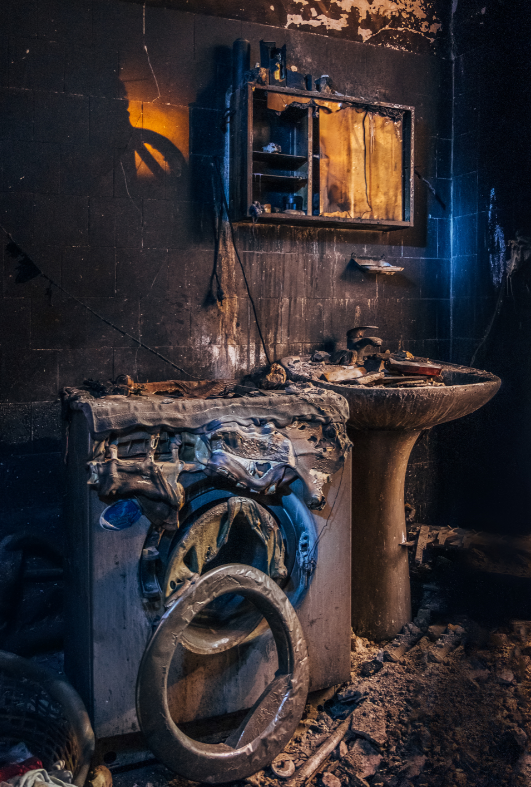
Faulty appliances cause a shocking 43 fires a week in England, and big brand names are responsible. Everyday household appliances caused 15,000 accidental fires in homes across England between April 2019 and March 2020, research by ElectricalDirect found. The study revealed that cookers, toasters, and hobs were the most likely to cause fires. Cookers were responsible for 8,000 accidental fires in 2019/20, 53% of total appliance fires in England. Hot plates and toasters came second and third, causing 11% and 9% of fires respectively. The most common causes for accidental appliance fires were placing household items too close to sources of heat, misuse of appliances and reported faults. The top 10 household appliances most likely to cause an accidental fire Rank Appliance Number of fires caused in 2019/20 % change  1 Cooker incl. oven 8,001 -3.50% 2 Ring/ hot plate (separate appliance) 1,581 -2.95% 3 Grill/ Toaster 1,368 -4.00% 4 Microwave oven 922 -7.80% 5 Tumble dryer 668 4.70% 6 Washing machine 624 6.85% 7 Fridge/ Freezer 215 -6.11% 8 Dishwasher 194 -7.62% 9 Deep fat fryer 186 2.20% 10 Extractor fan 182 -0.55% (Number of household appliances that caused fires in England in 2019/20 and percentage difference in 2019/20 vs 2018/19) Faulty appliances accounted for 15% of appliance fires Of the accidental appliance fires in 2019/20, 2.2k (15%) of them were caused by the appliance being faulty, which is 43 a week. The biggest culprits were washing machines, accountable for nearly a quarter (23%) of the faulty appliance fires. Tumble dryers (20%) and cookers (9%) followed. Appliances that caused the most fires due to being faulty Rank Appliance Type Number of fires due to being faulty (2019/20) 1 Washing machine 520 2 Tumble dryer 459 3 Cooker incl. oven 201 4 Fridge/ Freezer 181 5 Dishwasher 171 6 Extractor fan 118 7 Grill/ Toaster 116 8 Other domestic style appliance 96 9 Microwave oven 74 10 Washer/ Dryer combined 54 (Number of faulty household appliances caused in England in 2019/20) Hotpoint appliances caused the most fault-led fires in 2019/20 The data revealed that Hotpoint appliances caused the most faulty appliance fires last year, with 311 recorded in 2019/20. The majority of which were washing machines (112) and tumble dryers (105). The second brand at fault for these dodgy appliances is Indesit, 183 reported fires. The biggest offenders were tumble dryers (69) and washing machines (67). Beko came third, whose goods caused 150 fires in 2019/20. Of these, the majority were washing machines (52) and tumble dryers (29), although dishwashers (27) and fridge/ freezers (26) weren’t far behind. Brands whose appliances caused the most fires due to being faulty Rank Brand Number of faulty appliance fires (2019/20) 1 Hotpoint 311 2 Indesit 183 3 Beko 150 4 Bosch 100 5 Hoover 93 6 Candy 59 7 Zanussi 47 8 White Knight 39 9 Whirlpool 33 10 Bush 32 (Number of faulty household appliances by the brand that caused in England in 2019/20) ElectricalDirect is urging those that purchase new appliances to ensure they are registering them and to keep an eye on the UK Government’s Product Recall page

Aspire set to transform Newcastle with multi-million-pound full fibre rollout
Newcastle City Council have appointed Aspire Technology Solutions to deliver a next generation full fibre network serving hundreds of public sector sites across the region. The state-of-the-art network will be delivered by Aspire, in partnership with Virgin Media Business Wholesale. The venture is expected to boost business productivity and deliver millions in local economic benefits while providing a platform for a new generation of smart city applications. Newcastle has already been crowned ‘Smart City of the Year 2020’ for its innovative approach in using technology to help transform services and improve the lives of residents. Aspire’s full fibre network will further advance the city’s digital transformation. Aspire is one of the UK’s fastest-growing IT companies and were recently named Company of the Year at the North East Business Awards. The company have set ambitious plans for improving digital innovation across the North East. Supported by Virgin Media Business Wholesale, Aspire launched their own full fibre North East network in 2018 after a £2.5m investment in local infrastructure. Known as Ultrafast Dedicated Connectivity (UDC), they offer North East businesses internet connectivity of up to 100 gigabits per second, some of the fastest speeds and one of the most reliable services available in the UK. As part of the full fibre rollout, Aspire will significantly grow their existing Ultrafast Dedicated Connectivity network. Detailed planning is already underway as the company prepares to expand and enhance their digital infrastructure to serve Newcastle’s demands both now and in the future. The project will see vital public sector sites including hospitals, schools and government buildings benefiting from full fibre 100 gigabit connectivity. A move which will future proof services and enable them to adopt new technologies to improve how services are delivered for local residents. Councillor Joyce McCarty, deputy leader of Newcastle City Council says: “Full fibre connectivity has never been more important as it is now. COVID-19 has shown how vital digital technology is to so many aspects of our lives. At Newcastle City Council, we are committed to maintaining economic competitiveness and achieving social inclusion for our businesses and residents, having widely available, high-speed, affordable and reliable gigabit connectivity is the enabler to helping us achieve this. Aspire have already made great progress towards improving digital innovation across our region. We are excited to be working with their talented team to realise our ambitions of putting digital at the heart of our city.” The full fibre initiative is supported by the government’s Local Full Fibre Network programme. Aspire have been awarded a 20-year contract to install the network by 2022 and provide ongoing support. Newcastle City Council will benefit from access to Aspire’s in-house 24/7/365 IT support and service desk to ensure maximum productivity. Aspire have recently announced plans to move to new headquarters at the Pipewell Quay development, located on the site of the former Baja Beach Club on Gateshead Quays. The move will enable them to increase their 160-strong workforce in the process.

Nearly half of UK population put off COVID vaccine due to media influence
According to a new nationwide survey, as many as 40% of the UK population have been put off taking the COVID-19 vaccine due to what they have read in the media. This figure rises substantially to 62% when considering 16 to 34 year olds, specifically; this is in comparison to 22% in the 55+ age range. The survey studied the attitudes of a thousand Brits and was commissioned by Eskenzi PR, a Queen’s award-winning Tech PR agency and conducted by Censuswide. Yet, despite the scepticism, only 7% have confirmed that they will not take the vaccine as a result. Other sceptics concede that they will nevertheless take the vaccine, with 26% citing that it would be selfish not to do so (10%) or because they recognise it is for the greater good (16%). The remaining 8% of cynics will take the vaccine, though begrudgingly. Remarkably, differences in attitudes are particularly stark between the younger and older generation as well as between Greater London and other regions. Indeed, those in older age groups were less likely to be swayed by the media, with 71% assuring that the media did not put them off the vaccine as opposed to 27% of those aged 16 to 24. Moreover, Greater London leads with the highest proportion of individuals who are put off taking the vaccine at 61%. This is followed only by Wales with 46%, while East of England had the lowest proportion at 29%. These results come at a time, where demand for news is skyrocketing. In fact, this survey has also found that, since the beginning of the pandemic, 60% of respondents have admitted to reading more news. More precisely, nearly a quarter (24%) are reading the news to find out more about Covid-19 and the vaccine. In this way, they are opening themselves up to a bombardment of information, some of which may be misleading. “The media has always played a pivotal role in swaying and forming people’s opinions. Since the pandemic, people have never been more hungry for information. With people digesting so much more news, not only through conventional media but also through unconventional means including social media, there’s going to be an element of misinformation creeping in. It comes as no surprise that they are becoming confused and cynical about having the vaccine when there are so many mixed messages.” says Yvonne Eskenzi, co-founder and director of Eskenzi PR. “It’s very important to keep a clear head and get a balanced viewpoint on everything in life, but especially now with something as important as whether you should take the vaccine. Still, it was good to see that even though many people didn’t really want it, they did it for the greater good of society.”

Exclusive benefits for electricians with the new Rointe Loyalty Club
Electricians and heating installers of Rointe products can now benefit from unique features and rewards, following the launch of the new Rointe Club. The exclusive membership, launched by the international electric heating manufacturer, includes perks such as inclusion in its online and project directories, installation guides, and an annual advertising pack. Members can accumulate 3% of the net amount of all their Rointe purchases via gift cards. Committed to providing sustainable, thermal comfort, Rointe is a  global leader of technologically advanced, energy-efficient heating solutions, with over 35 years’ experience.  Customers choose Rointe for its wide range of radiators, towel rails, underfloor heating and unvented domestic electric hot water solutions. Antonio Dengra, CEO at Rointe says: “We launched the Rointe Club to show how much we value our loyal installers; we want to give them something in return for choosing our products. “Members will have the latest and most up-to-date information about Rointe and its products as well as a number of other fantastic benefits, which will put them ahead of other installers. They’ll also receive Rointe-branded merchandise that acts as a blue tick to show their customers that they’re a trusted Rointe installer.” The membership package includes:  Welcome pack Members will receive an official welcome pack when they sign up, including a hoodie, branded freebies and stickers to identify their business as trusted by Rointe. Website directory Rointe will include members’ businesses in its web locator to make it easy for customers to find them. Annual advertising pack Every year members will receive Rointe’s exclusive advertising pack with catalogues, stickers and leaflets to explain the benefits of its electric heating systems. Projects directory Members get exclusive access to projects from the Rointe team and recommendations for suitable heating installations. Accumulate 3% of your purchases in gift cards Members can accumulate 3% of the net amount of all Rointe purchases in gift cards, up to a maximum of £500. Those who spend more than £15,000 in net purchases by September 2021 will become a Premium Installer with extra benefits, including a Rointe branded jacket, premium website listing so customers know you’re the best in the business and an exclusive Christmas hamper.

Revealed: the UK tradespeople who drink the strongest tea
Tradespeople are famous for their tea breaks, but now new research has revealed which trades have the strongest brews. The study, conducted by IronmongeryDirect, the UK’s largest supplier of specialist ironmongery, asked 500 UK tradespeople to pick out their favourite shade of tea from a colour chart, and it was revealed that bricklayers have the strongest drinks. Plumbers and builders followed closely behind in the rankings, who also prefer their drinks on the darker side. At the other end of the scale plasterers have the weakest tea of all tradespeople, with joiners and landscapers not too far behind. The UK tradespeople which have the strongest brews are: Bricklayers Plumbers Builders Electricians/Carpenters Painter and Decorators/Building Surveyors Landscapers Joiners Plasterers However, it is electricians who drink the most of it. Nearly half (45%) of those in the electrical trade have four or more cups of tea a day. In contrast, builders and landscapers drink the least, with almost two in five (38%) having just one or two tea breaks a day. The average for UK tradespeople is three drinks per shift, totalling 15 cups a week, but this varies by region. Workers in Sheffield and Edinburgh have the most tea breaks, averaging nearly four per day, while those in Belfast have the fewest. Nearly three in five (57%) tradespeople in the Northern Irish capital stop just once or twice for a brew. As well as generally favouring stronger drinks, the research also found that tradespeople tend to like their brews sweet. The most common way to take their tea is with two sugars (28%), with plumbers being the most likely to have a sweet tooth. Nearly two thirds (63%) of them have at least two spoonfuls. Interestingly though, despite the stereotypes, it seems that tea is slowly going out of fashion amongst tradespeople. Each passing generation is drinking fewer cups than the last, with 18-to-24-year-olds having by far the lowest average of all the age groups, and over 65s the highest. The young workers who do drink tea are considerably more likely to have sugar than their older colleagues. While nearly half (46%) of the 18-24s surveyed have two or more spoonfuls, this drops as low as 17% among 55-64s and 19% among over 65s. Dominick Sandford, Director and Head of Merchandising & Marketing at IronmongeryDirect, says: “Most people will offer tradespeople a hot drink as soon as they enter their home, but it’s interesting to see that this long-standing tradition may be dying out, with younger workers drinking far less tea. “Our research has shown that some trades tend to have far stronger brews than others, so if you’re making a drink for a bricklayer, maybe leave the teabag in for longer if you’re unsure! “However, how people have their tea is a really personal thing, so it’s always best to ask for their preferences.”

The top 10 tips for electrical safety in the workplace
Workplace safety is paramount in any industry, however, some workplaces harbour more serious health and safety risks than others. The electrical industry is one of many industries where safety hazards are rife, with electrical accidents often leading to life threatening injuries. Shocks and burns can occur as workers are dealing with electrical machinery, cables, and other hazards day to day. With that in mind, here are 10 tips to encourage safety when working in environments with electrical hazards. Ensure you complete a risk assessment A risk assessment should be completed on site before any workers enter the premises to identify the risks that are present. The risk assessment will highlight all risks to workers and visitors as well as the severity of the injury that could be caused and how to prevent harm. Risk assessments take into consideration the type of electrical equipment used, how it is used and the environment that it is used in. Complete the lockout tagout procedure For all equipment, lockout tagout is a key procedure that ensures the safety of fellow workers when a machine is being turned off and left alone or having maintenance repairs performed upon it. Lockout tagout ensures that re-energisation of a machine does not occur which could cause potential harm to workers in proximity. Equipment that is not correctly locked out can also cause electrical shocks and burns, so performing the lockout procedure is key for electrical safety. A formal lockout/tagout programme should be in place where industrial machinery is used, to ensure that employees are always working in a safe environment. All workers who use machinery should be thoroughly trained on the lockout tagout programme before beginning work, as well as being provided with the correct lock out tag out equipment from Reece Safety. This procedure has since developed into lockout tagout tryout (LOTOTO), with emphasis on trying to restart the equipment which checks that the lockout tagout procedure has been successful. Do not distract other workers Electrical work can be dangerous, even when the correct procedures, training and PPE are in place. With so many dangers and hazards with electrical projects and day to day work, it is vital not to distract other workers when completing any job, as live wires, dangerous equipment, and high voltages may cause life-threatening injury. Do not tamper with or adjust equipment Once a lockout tagout procedure has been performed, equipment will be safe to be left alone or have checks performed on it. This is the only time that is it safe to adjust equipment if it is need of maintenance. By tampering with someone else’s equipment or those which have not had a lockout procedure performed on it, you are at great risk of fatal injury. Do not overload your outlets For any workplace it is vital to not overload any outlets, as this can cause users to experience electric shocks. In a busy and crowded working environment, it can be difficult to know when an outlet has been overloaded. Ensure that the appliances or tools plugged into the outlets do not exceed the maximum current rating stated for the extension lead. If power outlets are overloaded, this could also lead to risk of fire. Ensure you use safety signage Safety signs are needed to help warn people of hazards and prohibit actions. They are very useful in preventing injury and for the benefit of workers and safety of visitors and contractors. There are four types of safety signs that should be included within your workplace’s health and safety programme: prohibition and fire (red), mandatory (blue), caution and safe condition. For electrical hazards and fire hazards, yellow ‘danger’ signs are used to identify electric shock risks, fire risks and hazards. Report issues or hazards immediately It is vital that any issues, malfunctions, or environmental hazards are reported to management immediately so that safety precautions can be put in place to prevent injury. Reporting safety issues saves lives and fixes issues that could exacerbate. Maintain your equipment This is essential for keeping machinery, tools, and equipment healthy for as long as possible without needing repair. Machinery and equipment should always be checked for wear and tear, with regular services and cleans being performed by qualified workers to keep them running smoothly. By checking for signs of wear as a machine is used, you are less likely to suffer any electrical issues and injury to workers without spotting the warning signs first. Wear the required PPE Each electrical job requires different PPE depending on hazards, but most will require a hard hat and insulating gloves and boots. If there is a risk from an arc flash then suitably rated PPE to provide body, hands and face protection must be worn. Follow the rules and regulations Each piece of equipment or machinery will have different regulations to adhere to, so ensure that you are fully trained before working on or with a piece of equipment. Do not use any equipment that you are not fully trained to operate.

Gira UK exhibit at first BSPOKE lighting event 2021
Gira is proud to be 1 of 30 lighting brands to be asked to exhibit at the first-ever BSPOKE Lighting. Part of Clerkenwell Design Week’s programme of events, this specially curated digital platform is invite-only and will connect key decision makers with influential lighting brands covering lighting control systems and architectural, bespoke, decorative, task, urban/rural landscape and exterior lighting. Hotly anticipated as the go-to forum for discovering the latest lighting innovations and a number of exclusive product launches before they hit the market, BSPOKE Lighting will take place on 2nd March 2021 using the platform Swapcard. Invite-only  to ensure that connections made are meaningful and valuable, BSPOKE Lighting‘s live programme will run from 9:30am-4pm, and provide unparalleled networking opportunities, as well as exciting new product launches, brand spotlight videos, topical discussions and editorially-led content in partnership with ICON and OnOffice. Gira will use the event to showcase its new and exclusive range of pioneering system solutions set to inspire the UK market in 2021, which meet the rising demand for intuitive lighting solutions that are user-firendly, enhance the quality of life and create modern, design-oriented living spaces. Free registration for all attendees Once registered, discover more about Gira UK – Take your time to network and arrange meetings as you can set up a 30 minute time slot and virtually talk on a one-to-one basis with a Gira expert Today, the system solutions for networked building control by Gira are setting new benchmarks, including the Gira smart home and Gira building systems, which are user-friendly and secure devices for controlling lighting, climate systems and blinds, door intercoms, multimedia and security technology. Mark Booth, Managing Director at Gira UK Ltd, comments “As the market continues to communicate via a virtual network, we as a company still need to be able to reach key decision makers and showcase our new range of intelligent build systems and solutions. We are therefore thrilled to be showcasing our range of luxury specification products and systems to an exclusive audience of architects, lighting specialists and designers with purchasing authority.” “As greener living becomes a critical part of the design conversation in 2021, we are proud that we can offer integrated, futureproof solutions for architectural, bespoke, decorative, task, urban/rural landscape and exterior lighting. Clean, green technology is fast becoming a pre-requisite for today’s super-premium developments with KNX giving end users endless lighting possibilities and opportunity for customisation“ says Mark.

Pollutive refrigerants pose sustainability risk to heat pump rollout
Heat pump suppliers are being urged to consider balancing an expected surge of installations in 2021 with long-term environmental targets concerning the global warming potential (GWP) of refrigerants used in the technology. Following the announcement from the Heat Pump Association that 67,000 heat pump installations are expected in the UK this year, Vert Technologies is concerned that meeting this surge in demand will mean growing numbers of installations using high global warming potential (GWP) refrigerant working fluid. Specifically, Nicol Low, COO at Vert Technologies, is highlighting the importance of moving away from using high GWP refrigerants as soon as possible, which contribute toward greenhouse gas emissions. He says: “The fact that demand for electrically driven heat pumps is increasing against the gas-burning competition is clearly good news for the environment, but attention should be paid to where there is potential for further pollution. The high GWP potential of refrigerants used in these installations is often overlooked. “The country is currently phasing out hydrofluorocarbons (HFC) used as refrigerants, such as R404A, R410A and R134A, as part of a larger effort to reduce HFC use by 79% by 2030. This is something heat pump manufacturers need to bring into greater focus if they are to futureproof their installations, as this phase-out will have long-term ramifications when it comes to ongoing performance.” The removal of these pollutive HFCs from circulation in favour of natural, low-GWP refrigerants presents new challenges for the traditional compressor models used in heat pumps. Specifically, while better for the environment, these more sustainable alternatives require high pressure ratios and absolute pressures in order to achieve good performance. Technologies such as Vert’s conical rotary compressor (CRC), could offer a solution. A scalable and inherently quiet technology, Vert compressors are able to achieve the high-pressure ratios and absolute pressures needed to get the best from natural refrigerants such as CO2 and ammonia. “Continuing with long-standing solutions such as scroll, screw and reciprocating compressors could potentially leave heat pump manufacturers between a rock and a hard place, needing to compromise on either sustainability or performance,” explains Nicol. “By contrast, the adaptable rotor geometry and optimised pressure ratios of the CRC can be tailored for use with low GWP media, creating performant heat pumps without incurring significant extra OpEx.” He concludes: “Sustainability has gone from a consideration to a necessity in all sectors, including the heating sector, and legislation is constantly moving to reduce emissions wherever possible. As such, while the phasing out of fossil fuel heat sources in favour of heat pumps is an excellent first step, installers and manufacturers must be vigilant of where future improvements can be found. By being aware of issues surrounding low GWP refrigerants and traditional compressor models, for instance, companies can react accordingly and ensure green, practical and futureproofed solutions.”