2 November 2026
Product of the Month: Amari Floodlight range by Aurora Lighting
 
12 November 2026
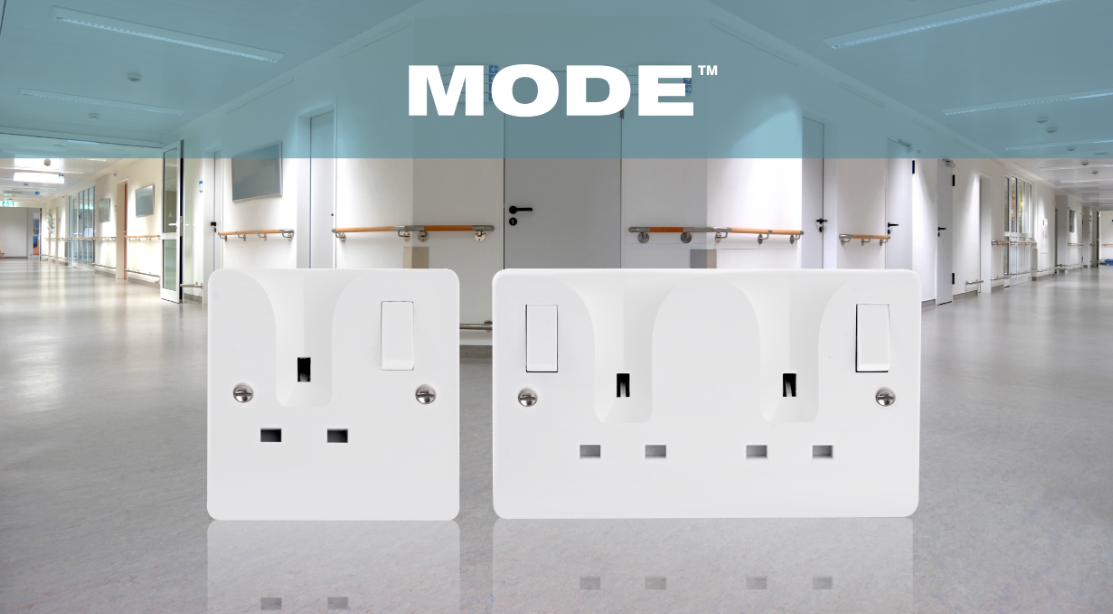
Schneider Electric transforms Southampton hospital estate
 
12 November 2026
GTEC Training opens new education facility in North Yorkshire
 
11 November 2026
Energy, AI and smart buildings: register now for EMEX 2026
 
11 November 2026
Solar and batteries could cut electricity costs by 40%, data finds
 

Latest News


EIC Launches Grand Raffle Ahead Of EIC Day
To celebrate EIC day - a fundraiser held by the Electrical Industries Charity taking place on September 10, 2020 - the charity has launched a Grand Raffle to give you a chance to win fantastic prizes while supporting those in our sector who need it the most. To help raise these funds, the EIC is offering you the chance to win three fabulous mystery prizes: A mystery prize up to the value of £500 A mystery prize up to the value of £250 A mystery prize up to the value of £100 Tickets cost £10 and all proceeds go directly back into our industry. To be in with a chance of winning, all you need to do is purchase a raffle ticket by clicking here. The EIC will announce the winner on October 12, 2020. You can also donate to the EIC Day's official fundraiser by clicking here. For more information on the EIC, visit electricalcharity.org.

CENTIEL UK Grows Sales Team
Leading UPS manufacturer, CENTIEL UK, has appointed Jay Rai as its newest Sales Engineer, as the company continues to expand its UK operations. Jay will now be responsible for key account management and hardware sales for London and the South, reporting to Louis McGarry, Sales and Marketing Director. Louis comments, “CENTIEL’s customer base for our true modular, UPS solution CumulusPower, plus our stand-alone UPS, PremiumTower, continues to grow. We are delighted to welcome Jay to the team as a field-based sales engineer. Jay already has a demonstrable history of working within the electrical and electronic manufacturing industry and he will now provide help with site surveys and customer contact as we generate and respond to new sales enquiries for CENTIEL’s industry leading UPS solutions.” Jay Rai adds, “CENTIEL has shown impressive growth in the past few years and the opportunity to contribute to the future success of the organisation was impossible to turn down. The excellent reputation of the company, plus its leading-edge technology known for its Swiss quality, nine-nines availability, and truly hot-swappable modules, backed by the company’s comprehensive maintenance contracts is a winning concept. I am excited to become part of the team and am looking forward to contributing to the expansion of CENTIEL in the UK in the future.” Jay Rai joins from critical digital infrastructure provider, Vertiv, where he spent a year as part of a graduate recruitment programme, and three years in the commercial and industrial UPS team. His UPS background combined with his experience of sales and marketing skills makes Jay an ideal fit for CENTIEL’s growing sales and marketing department. Jay also has a degree in mechanical engineering with automotive design from Brunel University. CENTIEL is a Swiss-based technology company which designs, manufactures and delivers industry-leading power protection solutions for critical facilities. Its three phase true modular UPS, CumulusPower known for its “9 nines” (99.9999999%) system availability and low total cost of ownership through its Maximum Efficiency Management (MEM) and low losses of energy, has now been installed in data centres and comms rooms in over 60 countries across five continents. More than 50 MW of critical power loads are now protected with CumulusPower in locations across the world including: the UK, Singapore, Australia, Germany, Spain, the Czech Republic and the Channel Islands. For further information, visit www.centiel.co.uk.

Industry Urged To Have Its Say On CLF Recovery Plan
The Scottish construction industry has been urged to have its say in the new draft recovery plan for the sector, launched last week by the Scottish Construction Leadership Forum (CLF). The plan, which has been created collaboratively with the industry, sets out the pathway for joint action in response to the impact of COVID-19 on the construction sector. The CLF is now appealing for feedback on its draft plan, with small and medium enterprises (SMEs) particularly encouraged to make their voices heard before submissions close on September 15. Peter Reekie, Chief Executive of the Scottish Futures Trust and Chair of the Editorial Group of the CLF, says, “This plan is designed to be a living, breathing document that grows and develops in response to industry input, so we would urge everyone to have their say in its evolution. The response so far has been extremely encouraging, but we would welcome more input to enable us to build a rounded picture of the sector and its requirements going forward.” He continues, “This is a unique opportunity for everyone involved in the Scottish construction sector to join the conversation and shape our future in a post-COVID world. “We are particularly keen to hear from SMEs and their experiences and expectations for the long road ahead. Therefore, I would urge all stakeholders with an interest in the construction and related industries in Scotland to feed in their thoughts to make the recovery plan even stronger.” Launched on August 28, the plan was created after extensive consultation with more than 50 organisations across business, Scottish Government, trades unions and other bodies, including the Construction Industry Coronavirus (CICV) Forum. Representing a shared sector view of how to get industry back on its feet, it outlines the immediate and short-term response to COVID-19, setting out a pathway to the longer-term transformation required to build a stronger, fairer and greener economic future for Scotland. Identifying five areas for concerted efforts, with associated sub-groups for each, the plan calls for key actions to respond to immediate needs, including: A clear pipeline of work brought to market quickly and efficiently on fair commercial terms which reflect the reality of the COVID-19 environment. Support of employment, fairness of work and those who may become unemployed through what will be a difficult period. Transformation of working practices to maintain and enhance worker safety whilst enabling productivity in the COVID-19 working environment. Like many other areas, the construction industry in Scotland has been hit hard by COVID-19 and is estimated to have contracted by 28.6% in June compared to the same month a year ago. The recovery plan is available to view on https://www.constructionforum.scot/. Industry is invited to send feedback, comments and questions via the website on enquiries@constructionforum.scot by September 15. CLF will take all feedback on board to help develop the plan further, with regular updates published on the CLF site.

ECA Calls On Industry To Hire New Apprentices
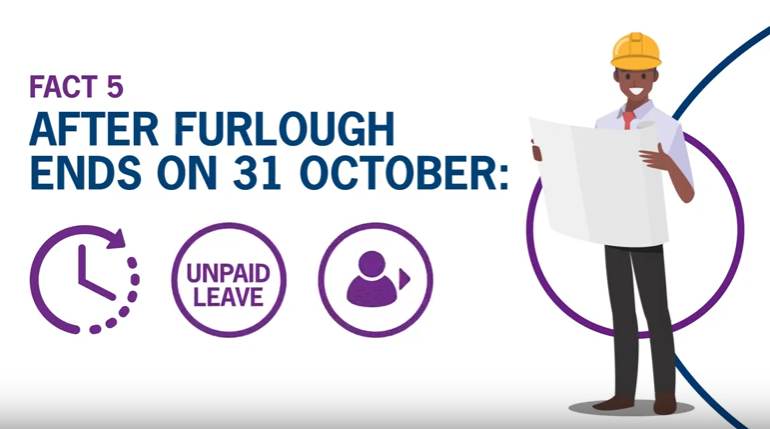
Leading trade association, ECA, is urging engineering services businesses to continue to recruit apprentices. ECA has created an explanatory video, which highlights the array of financial and business benefits to employers from apprentices. These include: • Employers can claim Government incentive payments of up to £3,000 per apprentice hired up until the end of January 2021 • Government training grants mean that in England, for example, non-apprentice levy payers need contribute only 5% of the costs of training an apprentice • Over four years, a business can receive a return on investment of up to £57,000 from each apprentice Furthermore, the video explains a range of ways in which employers can get apprentices back to work after time away on furlough. It also outlines how apprentices can travel to, and undertake, work safely, in line with current social distancing requirements. Andrew Eldred, ECA's Director of Employment, comments, “Apprentices are the bedrock of the electrotechnical and engineering services industry. Those employers able to retain and hire new apprentices can expect a healthy return on their investment, as well as longer-term benefits such as more sustainable business growth and stronger capability in new technologies. “ECA urges employers to watch our new video and consider the benefits of having apprentices in your organisation, as well how you can bring existing apprentices back safely from furlough. We welcome the consistent commitment of ECA Members such as T. Clarke, who recently confirmed recruitment of another tranche of apprentices, and hope other businesses will now follow suit.” The video can be viewed below: https://www.youtube.com/watch?v=e2g23eLiTlI&feature=youtu.be ECA also recently announced an extension of its existing loan labour scheme to allow employers to both loan out apprentices and hire them on a temporary secondment basis, without needing to use agencies. More information on the scheme can be found here. ECA has also produced guidance and flowcharts for businesses on how to keep apprentices employed and travelling and working safely during the current climate, which can be found here.

David Barlow MBE Celebrates Industry Landmarks
David Barlow, Chair of the Electrical Standards and Governance Group which oversees the Electrical Apprenticeships in England and provides routes for young people to further their electrical careers through the IET, celebrated his 70th birthday in August and 54 years in the electrical industry. His passion for the sector, and training the next generation of electricians, is still as strong as when he embarked on his own electrical apprenticeship in 1966. Born in Chester, David was educated at Chester Grammar School and the University of Liverpool and holds an MBA, MSc and MA. In 1966, he began his electrical apprenticeship at West Cheshire College on the Craft B course. Having achieved his electrician certificate, he moved to the technician courses T3, T4, T5 and completed his Full Technological Certificate in 1973 with distinction. During 1972 and 1973 he taught IEE regulations and electrical principles at evening class. He later taught the same subjects at South Kent College of Technology. David returned to the family business in 1980 which he and his brother John have built from five staff to 500 staff in 2020. After working on measures to improve training in the North-West, in 2010 David was invited to join Summit Skills, the Government standards setting organisation for the Building Services Industry that works to develop and maintain standards, qualifications and apprenticeships for the whole of the UK. David continues to promote the advantages of apprentice and graduate opportunities in the North-West and continues to judge the Cheshire and Warrington Apprentice of the Year for the High Sheriff Awards. He also presents the award for Apprentice Company of the Year at the Cheshire Business Awards. David says, “If you’re taking on 16-year-olds, they’re going to need more support. You must really care about the young people you bring in, and be interested in them. Get to know them personally, build a bond and retain that bond all the way through.” David has won over 20 major accolades, including National Awards, and he has been received at Buckingham Palace and 10 Downing Street, championing skills opportunities for young people. He is a three times winner of the National Apprenticeship Awards and has received the High Sheriff of Cheshire Award for Outstanding Contribution to the Economy of Cheshire and the Business Community, presented to him by the Lord-Lieutenant of Cheshire in 2017. He also won the Cheshire Business Person of the Year in 2015 to compliment his Cheshire Business Leaders Award in 2013. In 2015, he was also awarded an Honorary Degree at the University of Chester for his commitment to training and skills across Cheshire and Warrington. David has been awarded an MBE for his contribution to Apprenticeships and his efforts to encourage other businesses to give young people a chance. David is the founder of Clifford College which has nearly 150 apprentices to be trained in electrical engineering and health and safety across several employers. The college is one of the largest in the country for these subjects, which are carried out in six skill centres. He is a supporter of the British Empire Chapel Fund, a friend of Chester Cathedral, a member of Chester Archaeological Society, Whitchurch 41 Club and Cheshire Business Leaders. He is a lifetime member of Kent County Cricket Club, a Shareholder in Everton Football Club and a Trustee of Malpas Jubilee Hall. He is currently assisting Barlows (UK) at their new branch in High Wycombe. Professor Phil Harris, University of Chester, notes, “David has made an outstanding contribution to building and developing skilled technical apprentices for the electrical services industry, which has enabled substantial numbers of young people to build successful careers in the evermore complex and socially essential area.”

Vimpex delivers at new Amazon fulfilment centre 
A huge new Amazon fulfilment centre on the outskirts of Bristol has installed Vimpex Smart+Guard tough polycarbonate hinged protective covers to protect the building’s alarm callpoints from accidental or malicious activation, which could trigger costly building evacuations resulting in lost production and missed logistical connections.Amazon’s new 500,000 sq ft fulfilment centre at Severn Beach is designed to ensure that more people in the Bristol region receive next-day deliveries. When it is fully operational in September the centre will employ around 1,000 people and will be equipped with advanced robotics technology to help lift and move products around the plant.Fire detection specialists AFS, engaged to engineer and install a whole life protection system at the fulfilment centre site, fitted Vimpex Smart+Guard covers to all the relevant manual call points across the site to protect the system from malicious activation.Smart+Guard, manufactured in the UK by Vimpex, is a tough hinged protective cover that can be easily installed over a range of emergency switches and other devices to provide protection from vandalism, accidental damage or misuse that can cause unwanted alarms. Misuse of manual call points or pull stations resulting in false or nuisance alarms is a costly and troublesome interruption to business continuity. BS 5839 – The British Standard for Fire Alarm Installations recommends the use of manual call point covers in vulnerable areas to mitigate against false alarms.Vimpex Limited’s Managing Director, James Jones, comments “When we acquired the SmartGuard range of products and merged production of the range into our operations, we knew there was massive scope for developing the business. This is evidenced by the growing list of high-profile end users now specifying the product for use in their facilities. The recent news that Amazon have installed the product into their newest fulfilment centre in Bristol is testament to our great levels of customer service and our willingness to go that extra mile for our customers.”

Lighting The Way Forward
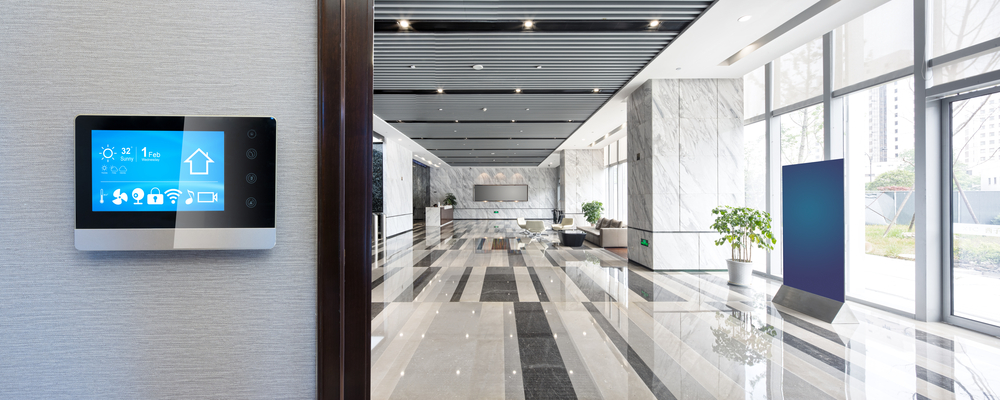
Shahid Khan, ECA Technical Manager, looks at how automated lighting and smart buildings can help to drive energy efficiency. If there were ever a silver lining to the coronavirus crisis, it is the renewed drive from all areas of industry and government to recover from the pandemic as a greener, more energy-efficient society. Add to that the recent advances in green technology and climate change legislation, such as the Net Zero Carbon 2050 target, and energy efficiency becomes a no-brainer for clients looking to build greener, cleaner and smarter assets and facilities managers looking to upgrade their buildings. Is smart lighting here to stay? Lighting in buildings is a major source of global carbon emissions, estimated at 20-40% of a building’s total operational energy consumption – not to mention the embodied carbon costs associated with the manufacturing of lighting products. Efficiency is a broad term on its own, but in the context for lighting, it boils down to keeping the energy expenditure of a building at the lowest possible level without sacrificing user comfort and operational requirements. There is an almost overwhelming number of possible approaches to smart lighting installations for both wired and wireless networks – DMX 512, KNX, Zigbee, Bluetooth, to name a few. But for simple yet functional automated lighting controls, DALI takes the prize. DALI: a history DALI – Digital Addressable Lighting Interface – is an interface protocol for digital communication between electronic lighting equipment (electronic ballasts, etc.). It is not a product, but an open-source protocol: a common set of rules and commands that each device in a network must follow. DALI is supported by most global lighting control systems and component manufacturers. Therefore, a network can be installed using simple five-core LV cabling with no segregation required, and a relatively straightforward commissioning regime making it one of the most cost-effective solutions out there. Each component of an open source DALI network is assigned an ‘address’ which a central computer uses to communicate its pre-programmed instructions. For example, a set of lights can be programmed to come on once the first person enters the office in the morning, switch off when no-one is present in a room or on a floor, brighten or dim throughout the day or cause the actuation of solar blinds in response to the amount of natural light coming from outside. The possibilities are (almost) limitless, so long as the maximum number of nodes (unique addresses) is limited to 64 in a single network and are based on the programming sequence of sensors and actuators which respond to the set points input into the system at the commissioning stage. The added comfort, energy savings and cost savings provided by DALI systems helps them pay for themselves relatively quickly, particularly in larger offices and communal dwellings like university halls of residence, hospitals or care homes. Smarter buildings, smarter FM Smart lighting systems can make life easier for facilities managers. Emergency lighting can be tested without human interaction, so long as the lights have been programmed correctly. Parameters can be set up to automatically test the fittings monthly, six-monthly and annually, as per the requirements of BS EN 5266, and generate electronic reports. These reports can then be held locally on servers, emailed to specific individuals or held in a cloud-based system to provide a robust record of maintenance. As each ballast has a unique address, fault-finding also becomes an easier process. Fault reports can be automatically generated and narrowed down to easily identify a faulty component. A data-informed decision can then be made to dispatch an engineer to fix the problem – saving time and money in the process. New challenges As with any new system, there are risks and challenges that contractors and installers should recognise. Automatic lighting controls can present a steep learning curve for FMs new to smart systems. DALI is a great first step, owing to its simplicity and ease of installation. Initial programming can also be laborious when first installing a system. As with any open source protocol, there is an added risk of cyber-attacks. However, this can be mitigated by using closed networks and having robust security measures in place. Engineers should have a strong knowledge of basic programming and security systems before making smart lighting installations a part of their arsenal. Connecting to HVAC DALI is specific only to lighting controls, but for combined control of lighting and HVAC (which uses a different open source protocol called BACnet), different protocols can be made to work in concert using a ‘gateway’. A gateway will translate one protocol, in this case DALI, into one that BACnet can utilise and which can be controlled using one building management system, via one user interface. The compromise here is that the speed of data transmission is slowed – though it is still largely adequate for building services applications. Although somewhat removed from the world of the electrician, it will become increasingly important for contractors and installers to be aware of HVAC automation systems as demand for these, and for total building automation and control systems, is likely to rise. Lighting the way forward In short, automatic digital lighting controls have been around for a while and are most definitely here to stay. They make for better-performing, energy efficient buildings and can be tailored to an almost limitless range of user needs. Installers should see this as an opportunity to grow and offer much-needed expertise to FM teams across the country. To find out more about smart control systems, and how ECA can support building controls and smart building installations, visit eca.co.uk/routes-to-membership/building-controls-bms-bems. - This article originally appeared in the September 2020 issue of ECN.

How To Choose, Configure And Justify The Right Type Of UPS
Marc Garner, Vice President, Secure Power Division, Schneider Electric UK&I, offers some key guidance for electrical contractors and specifiers on the subject of how to choose, configure and justify the right type of UPS. The need for business continuity and resilient power has never been more important than it is today. As the demand for digital services, data consumption and connectivity increases, more organisations are becoming dependent on critical power systems that support data centres, buildings, industrial factories and healthcare facilities. Applications within these environments demand that power is available and uninterrupted at all times, and in order to avoid costly downtime, customers are looking for ways to protect their businesses from outages that can impact on loss of service, revenue and damage to reputation. Downtime itself has become a key pain point for today’s power-dependent organisations and according to the 2017 Centrica Resilience Report, 39% of businesses experienced unscheduled downtime as a result of an energy-related failure and one in three lost revenue due to power outages. Additionally, 18% of those businesses said that outages have damaged their brand, with 19% citing that relationships with customers have soured as a consequence. Today the electrical industry, like many others, is beginning to experience an endemic skills shortage, and due to the specialist expertise needed within specific applications and environments, many professionals are beginning to move from traditional electrical install work to data centres and other power-intensive critical infrastructure spaces. Depending on the type of application a contractor is working with, the complexity of deploying said technology could be significant, which requires electrical professionals to be expertly trained and prioritise safety on site. As such, new power products and components need to be easy to work with, easy to install, safe to service and maintain. The good news is that as new technologies evolve, manufacturers like Schneider Electric can simplify their designs, make products easy to install and use IoT technologies, alongside data analytics, to help electrical professionals overcome many of these energy-related challenges and bridge the skills gap. With outages increasing and resiliency becoming a growing concern, deploying new power protection solutions, and having the ability to monitor, manage and check the health status of critical infrastructure equipment in real-time, has become a fundamental consideration for resiliency. With the advent of IoT and new developments in UPS, Artificial Intelligence (AI) and machine learning, optimising reliability through data analytics now enables electrical contractors to deliver safer, more simplified maintenance and servicing than ever before. Furthermore, for organisations that regularly experience unplanned outages or have challenges with power stability, such software helps them to ensure business continuity and minimise the risk of downtime from faulty equipment. Here, management software offers instant access to live data and offers visibility into the UPS health and lifecycle from any location, helping electrical professionals to identify issues quickly, enabling them to respond rapidly and mitigate emerging fault conditions. Gaining a better understanding of the operating environment and leveraging analytics to offer greater insight into the power infrastructure can also help electrical contractors to lower costs and improve the lifecycle of the component or system. However, helping customers to deploy uninterruptible power supplies (UPSs) safely and effectively is an important component of an electrical contractor’s expertise. It requires they know the intricate inner workings of a UPS and understand the pivotal role that UPSs play in providing customers with resilient power infrastructure. To aid in that effort, Schneider Electric has created a free e-guide that helps electrical contractors gain a key understanding of UPS products and their design. It helps them learn how to better advise customers when choosing between single and three-phase UPSs and appropriately right size them for the application. Named “UPS Basics for Electrical Contractors & Specifiers: How to Choose, Configure and Cost-Justify,” the guide covers five common UPS configuration options, with increasing levels of redundancy. It details the types of questions contractors need to ask their clients in order to determine their tolerance for risk of downtime, and enables them to more accurately specify the UPS configuration that makes the most sense for the application or environment. The e-book also offers electrical professionals a high-level overview of UPS types, detailing key features and functions available within the latest models, including new operating modes that save energy and cost, before discussing the importance of UPS maintenance and why it remains crucial to reliable UPS operation. The Schneider Electric free e-guide is available immediately to electrical contactors by clicking here. Learn how the right type of UPS, deployed in an effective configuration, can minimise losses and prevent disruption from unexpected power events.

Honesty The Best Policy, Scolmore Says
Marie Parry, Group Marketing Director of Scolmore Group, speaks up on the value of being honest with your customers and explains why the company is renowned for its reliability. They say imitation is the sincerest form of flattery, but when imitation – or misinformation - threatens the reputation of a brand like Scolmore that has been built on the back of many years of investment and innovation, it can be damaging to all parties. At Scolmore, we pride ourselves on many things when it comes to our products - innovative designs, quality materials, rigorous testing. As a business, we believe honesty, transparency and integrity are among the key values that drive our relationship with our customers. That is why we would never make claims about our products - or where they are manufactured - if these claims were not true. We have been working closely with a small number of select overseas factories for many years now and have built up a mutually respectful relationship with them. We have invested in these factories to ensure they have the best equipment, technologies and people in place to manufacture our products to the highest possible standards. All our products are designed in-house in Tamworth by our specialist teams. Our partner factories work closely with the designers to work the designs up to samples and then finished products ready for market. We make regular trips to the premises and have regulated systems and procedures in place to ensure that they operate safely and to our exacting standards. These factories operate on an exclusive basis with Scolmore, only producing products for our group of companies. Anyone who claims that their products are made in the same factory as ours, makes the implication that their products are of the same quality, have been subject to the same rigorous testing and approvals processes, when in fact they may not be, and in that way they are misleading their customers and end users. Wholesalers and contractors need to have the assurance and the proof of the origin of the products that are being supplied to them. People want to do business with companies that are trustworthy, that are impressive, that deliver on what they say, that are innovative thinkers, and that are both genuine and responsible in all their interactions. Scolmore prides itself on adhering to these principles.

Schneider Electric unveils blueprint to transform homes from smart to sustainable
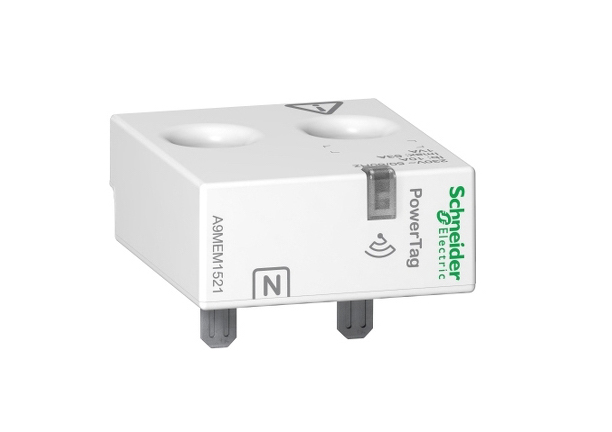
Sustainable smart homes could be a reality for consumers within the next 10 years according to Schneider Electric. Today, the firm has unveiled its blueprint for the Sustainable Home of the Future at IFA 2020 and launches a range of new smart home energy solutions under its Wiser brand. The new products, Power Tag, Acti9 Active and the efficient room-by-room Temperature Control system can be easily and inexpensively fitted into people’s existing homes and controlled via a single app, representing a significant step forward on the path to sustainable houses. Residential housing is set to become the biggest consumer of electricity globally. EV charging, the electrification of heat, and increased occupancy as more people work from home will see consumers’ electricity consumption dramatically increase over the next ten years. Smart efficient energy management will be more important than ever to ensure homes are sustainably powered and intelligent enough to optimise their own energy needs, without compromising on comfort. Smart homes just got sustainable The new additions to Schneider Electric’s Wiser range of smart home products mark a significant step forward in its plans to create affordable, sustainable, energy efficient, safe and personalised homes. The new products promise to increase safety, while giving consumers more insights on their energy usage and the corresponding impact in CO2 emissions. Thanks to AI and Machine Learning based predictions, consumers have the potential to reduce energy consumption and electrical heating costs by up to 50%, as well as predict solar production trends (future release). Be smarter with power The Power Tag sensor is one of three products in the enhanced Wiser ecosystem of smart sustainable products being introduced at IFA 2020. The Power Tag is a simple ‘plug and play’ sensor for your electric panel (suitably designed to retrofit older properties affordably). Alongside the Wiser range, it enables homeowners to track energy consumption room by room and crucially, it tells you how this energy is being used, not just how much is consumed. Occupants can set monthly energy consumption targets, receiving an alert if the Wiser system predicts that target will be exceeded, enabling people to reduce usage and avoid bill-shock. A future product feature will add an extra level of analytics provided by the sensor, which will also help homeowners monitor their consumption in terms of CO2 emissions to better understand their carbon footprint.  For electric vehicle owners, it can advise when the best time to charge your car may be, for example, when the tariff is lowest or excess solar power is available. Consumers with solar panels can also maximise their use by monitoring their own solar energy production levels. Solar users can maximise their use of renewable energy and ensure their panels are working effectively, improving their carbon footprint even further. The second innovation is the Acti9 Active, bringing improved safety and power reliability into homes. Does your TV or internet connection cut out when there’s a storm? Are there too many loads on the electrical outlet behind the TV when your children are playing video games? Or are you living in one of the many aging properties across Europe with outdated electrical infrastructure? The Acti9 Active will notify you when faults such as overloading or corrosion or detected, allowing you to fix any issues before they become major problems. This form of active prevention brings much needed peace of mind to homeowners. The third piece of the smart ecosystem revealed today is the efficient Temperature Control system that controls room temperature so accurately, powered by AI and machine learning, helping reduce energy bills by up to 50% without compromising on comfort. Its unique room-by-room control feature allows you to manage your heating systems more efficiently by accurately estimating the heating characteristics per room, rather than for the whole home. A second feature that will soon be added is ‘open window detection’. If a window is left open, the heating will be paused, a notification sent to the user, and it will wait to resume heating until the window is shut. The benefits of both these features are two-fold; make significant savings on your electricity bill and reduce your climate impact.