2 November 2026
Product of the Month: Amari Floodlight range by Aurora Lighting
 
12 November 2026
Schneider Electric transforms Southampton hospital estate
 
12 November 2026
GTEC Training opens new education facility in North Yorkshire
 
11 November 2026
Energy, AI and smart buildings: register now for EMEX 2026
 
11 November 2026
Solar and batteries could cut electricity costs by 40%, data finds
 

Latest News


JTL celebrates 30 years of training people
JTL, the national training provider for electrical and heating and plumbing apprenticeships, is celebrating its 30-year anniversary. Established in 1990 by the Electrical Contractors’ Association and what is now known as Unite the Union, JTL became a registered charity in 2000. Two years on, JTL started offering apprenticeships in plumbing, as well as maintaining its electrical opportunities, with professional short courses being introduced across the country in 2011. Over the years, JTL has also introduced a number of initiatives including a free tool kit scheme, celebrated the achievements of JTL apprentices at its annual Apprentice of the Year awards, as well as supporting and giving back to the building services engineering sector by offering free, bite-size digital courses through its new resource, Power Up. Today, JTL proudly works with over 3,800 businesses, training more apprentices than anyone else in the building services engineering sector, and supporting 8,000 young people across four apprenticeship disciplines (electrical, plumbing, heating and ventilating and engineering maintenance). JTL is an OFSTED recognised ‘good’ provider and, as a registered charity, every penny is reinvested back into the training it offers. Jon Graham, Chief Executive of JTL, said: “We have seen many changes in the industry over the last three decades, and 2020 has certainly been the most challenging to date with the outbreak of COVID-19. JTL recognises that this is a worrying and unpredictable time, so we are continuing to raise the profile and appeal of apprenticeships, as well as supporting both learners and employers, to ensure the pipeline of skilled tradespeople continues. “This year marks a truly special anniversary for everybody involved with JTL as we celebrate 30 years of training people, and continue our vision of supporting our learners with opportunities to build futures and change their lives. I would like to take this opportunity to thank everyone who has supported JTL over the years, from apprentices and staff to employers and industry bodies, plus all those working behind the scenes to help establish JTL as the leading training provider it is today.” JTL now offers apprenticeships in over 100 colleges, partnerships and its own centres in England and Wales. For more information, visit

Mandate electrical checks in social housing, urges ECA
Regular electrical safety checks by competent businesses should be mandated at least every five years across the social housing sector, according to leading engineering services body ECA. In addition, ECA is calling for both mandatory electrical checks and portable appliance testing in all higher risk buildings – which include high rise tower blocks – regardless of the type of tenancy or ownership. ECA adds that only competent enterprises should do electrical or fire systems installation work in higher risk premises and this means 'competent enterprises, employing fully qualified and competent individuals'. The proposals are part of ECA’s response to a consultation on the new draft Building Safety Bill, and they expand on recently introduced requirements for five-yearly electrical checks in the private rented sector. ECA director of technical Mike Smith commented: “ECA and the Fire & Security Association welcome the Draft Building Safety Bill, including new regulatory powers for the Health and Safety Executive and greater accountability for ensuring building safety. “Regular electrical safety checks are essential for ensuring that residential buildings are safe for tenants and homeowners. This includes preventing the risk of electrical fires from any source. “Any new regulatory regime, including the need for electrical installation and portable appliance checks, also needs to be backed by effective enforcement.” ECA has responded to the HCLG parliamentary committee, which is conducting a review of the Government’s Draft Building Safety Bill. The Building Safety Bill, alongside the Fire Safety Bill, aims to substantially improve building safety standards in the aftermath of the Grenfell Tower tragedy of 2017.

2020 weather data proves humidity concern for electrical contractors
Data showing spiking humidity levels on construction sites are a growing concern for electrical contractors working in the sector, according to a new report from temporary power company, Aggreko. The report reviews data from World Weather Online to compare mean relative humidity levels in the UK’s construction hotspots, showing an average of around 76% – well above the recommended levels of between 40-60% on a construction site. With a rise in humidity comes a rise in moisture which is infamously known for causing issues on electrical installations. With this pressing concern in mind, Aggreko’s new campaign, ‘The Hidden Cost of Humidity on Site,’ is aiming to generate awareness of issues surrounding temperature and moisture control. Those managing electrical risk during refurbishment work are being alerted to the fact that if the atmosphere on site is not controlled effectively, moisture, in the form of water vapor, can find its way into the smallest areas and spaces of any components. This in turn can leave corrosive deposits behind that continue to cause damage after drying. Over recent months the business has seen a sharp increase in enquiries to help solve humidity issues in construction, particularly for luxury residential developments and historical buildings. However, Ryan Stanley, a moisture control expert at Aggreko who is spearheading the campaign, is concerned that a number of misconceptions and incorrect information exists across the market that are causing further damage to sites. Stanley explains: “Moisture is inevitable in buildings and on construction sites, and its correct removal is a serious challenge. However, many companies that are tasked with the drying of a site do not make all of the necessary considerations to remove the moisture problem entirely. These incorrect processes can result in irreparable damage and huge costs for all stakeholders, not to mention risking reputations for years to come. “What may seem the quickest and easiest solution at the time could cause changes to the composition of materials within a building, resulting in longer term damage and large delays for reparation work. “As we know, 2020 has completely turned the industry on its head, which has resulted in pressure mounting for contractors to get back on schedule, minimise risk and reduce overheads. This is why I’m really keen to work with industry to help inform and educate so that we can expose and solve the hidden costs of humidity.”

Select Releases First-Ever Digital Annual Report
Select has released its first-ever digital annual report, outlining how its values of cooperation, collaboration and commitment have guided the organisation through one of the most challenging years in its 120-year history. Scotland’s largest trade association has used the online publication to reveal how it redoubled its efforts to provide support, guidance and information to help its 1,243 member companies and their workforces navigate the effects of the COVID-19 pandemic. Throughout the shutdown of the sector, the influential trade body reported that it had not only maintained a “business as usual” approach but had also introduced swathes of new services, including online training and new processes for dealing with membership applications. Alan Wilson, Managing Director of Select, says, “The past year has essentially been divided in two, with the first part dealing with life before COVID-19 and the second dealing with the response to the coronavirus crisis and the industry’s steps towards recovery. “As our first-ever digital annual report shows, we have dealt with both halves with equal determination, putting our members first every step of the way. We didn’t close our doors or ­reduce our services – instead we demonstrated the true value of trade associations by working harder than ever to offer a wealth of advice and information around the clock. “This association was established in 1900 by individuals who wanted to cooperate and collaborate in what was then a very new industry, and as our report shows, these values remain key to how we shape our actions today.” Replacing the usual printed publication, the 2019/20 Annual Report is the organisation’s first-ever purely digital round-up of the year’s activities, and was produced for its AGM on September 2 which was also its first virtual event, held via a Zoom webinar. Among the COVID milestones, the report reveals that, during the first six months of the pandemic, Select issued £329,405 in membership subscription refunds, fielded 600 calls to its employment and technical hotlines and issued 36 new employment guidance documents. In addition, it delivered 42 online training courses to 253 delegates, saw 1,062 calls handled by the Scottish Joint Industry Board (SJIB) and created 143 ECS electronic Health, Safety and Environmental Assessments Select's increased communication activity resulted in nearly 42,000 website visits to its dedicated COVID hub during the first six months of the pandemic, and also attracted 1,798 new social media followers to its social media channels – a rise of 202%. As well as issuing 141 updates via its own hub, the organisation also worked with the Construction Industry Coronavirus (CICV) Forum to produce 68 pieces of essential guidance between March 23 and August 31. Iain Mason, Director of Membership and Communications at Select, adds, “The COVID-19 crisis has been the biggest challenge Select and its members have ever faced but, thanks to our amazing people, we have been able to function efficiently throughout. “By making communication a key part of our strategy, we’ve provided members with essential information and advice as it happens, helping them to keep up with the latest developments to help them work safely and efficiently.” The report also reveals that Select helped distribute £525,000 in Electrical Engineering Training Foundation grants and disbursed 225,000 welfare credits. It has also launched videos aimed at women apprentices, designed and delivered new training courses and had new installation and modern apprenticeship frameworks approved, as well as driving numerous initiatives in technical, communication and employment areas. Income from membership subscriptions and application fees rose over the year, as did sales of products and services, which produced a profit of £466,371, up from £284,649 last year. - The 2019/20 SELECT Annual Report can be downloaded here.

NAPIT Responds To Release Of Amendment 2 BS 7671 2018 DPC
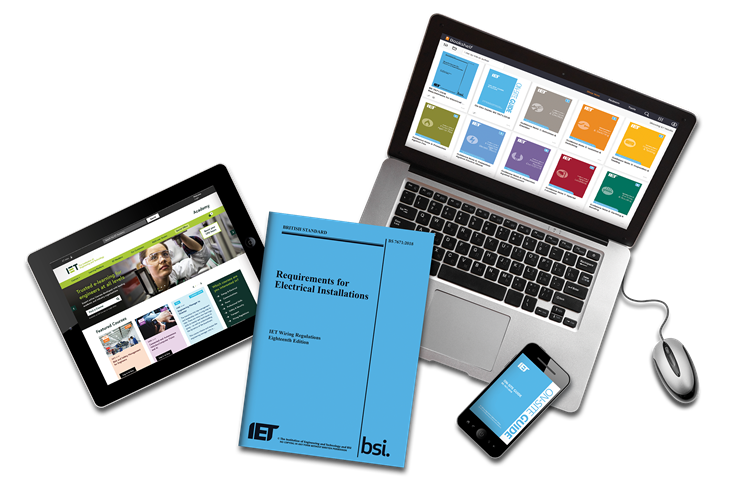
The IET and BSI (British Standards Institution), which co-publish BS 7671, have now issued the Draft for Public Comment (DPC) for Amendment 2, giving the electrical industry the opportunity to read through the proposed changes and provide feedback ahead of publication. The DPC period runs from September 21 to December 11, 2020. BS 7671:2018+A2:2022, which is expected to be published in spring 2022, will be the first, full, consolidated amendment to the 18th Edition of the Wiring Regulations, which was published in 2018. It will also include Amendment 1:2020, which was published as a standalone PDF in February 2020. What are the proposed changes? New Part 8 – Functional Requirements. This includes Chapter 82: Prosumer’s Low-Voltage Electrical Installations. Important changes to fire safety requirements are proposed in Chapter 4, covering the design of electrical installations in industrial, commercial and multiple-occupancy homes, as well as new information for ‘protected escape routes’. Additional changes are also proposed to the following areas: • Regulation 421.1.7 – further information on the use of Arc Fault Detection Devices (AFDDs) • Regulation 443.4 – further information on Overvoltages • A new Normative Annex (542) on Earthing Arrangements • Multiple changes within Section 7: Special Locations An overview of all of the changes proposed is included in the ‘Introduction to Amendment 2’ at the beginning of the DPC document. NAPIT will be hosting a live webinar on September 28 at 6pm, giving members a week to digest the information within the DPC. The webinar will go through the proposed changes and allow members with the opportunity to engage in Q&A with JPEL Committee representatives Frank Bertie, Paul Chaffers and Richard Townsend. Frank Bertie, Chief Technical Officer, (JPEL/64 member and deputy chair of Sub Committee A) at NAPIT, says, “This Amendment is the result of years of work by the JPEL/64 committee, the committee responsible for BS 7671, with which NAPIT have had strong representation on for over 20 years. It’s important that our electrical members keep up to date with the ever-changing technologies and ways of working to ensure they are working to the safest standards. I urge NAPIT members, likewise the rest of the industry, to read and comment where they feel appropriate on the new DPC”. To register your interest for the webinar, click here:https://buff.ly/32UlqGJ

NICEIC and Elecsa To Host Webinar On Amendment 2 DPC
Hot off the heels of the release of the DPC relating to Amendment 2 of BS 7671: 2018, which was published on September 21, NICEIC and Elecsa are set to provide guidance to registrants via an in-depth webinar dedicated to the topic. Taking place on Wednesday, September 23 at 8pm, the live broadcast will cover the main points of the DPC looking at the detail and assessing the potential impact for contractors should the changes come to fruition. To sign up for free, NICEIC and Elecsa contractors should visit the NICEIC website or click here. “The release of the DPC marks an important milestone as we edge towards the introduction of Amendment 2 of BS 7671: 2018,” says Jon Elliott, NICEIC and Elecsa Senior Technical Author. “This is the first step and our chance to shape the standards to which we will be bound to. It is vital that all contractors are up to speed on the detail and that they understand how to engage with the process. In this session, technical presenter Jake Green and I will guide registrants through the proposal and outline the process for submitting views. “I urge all NICEIC and Elecsa contractors to make the most of this opportunity; this DPC includes some significant updates which, if implemented, will impact us all. Make sure you know the facts." A recording of the broadcast will also be made available 24 hours after the live session. NICEIC and Elecsa customers can access this via their customer portals.

Major Changes To 18th Edition Open For Public Comment
A raft of updates are being proposed to the 18th Edition of the Wiring Regulations, with a consultation opened today to engage with industry on the potential for a second amendment. The changes, led by IET and BSI, have been proposed following ongoing discussions at committee level, which involve stakeholders including ECA. To help ECA Members and the wider electrotechnical industry respond to the draft for public comment, ECA has created a set of resources and guidance, available now at www.eca.co.uk/amd2. Gary Parker, ECA's Technical Manager, says, “With the ever-increasing pace of technological developments, it’s vital that the Wiring Regulations keep up-to-speed with new industry technology and methodologies. However, this must be balanced with a practical engineering approach. “The proposed changes could impact all ECA Members. Therefore it is vital that Members submit comments to BSI if they feel these changes could be overly onerous, lacking clarity or simply require refining.” Some of the key potential changes in AMD 2 include: • The mandating of AFDDs on circuits less than 32A • Removal of the risk assessment method for omitting additional RCD protection on socket outlets • Less paperwork for EICs • New cut-off date for complying with the 18th Edition • New energy efficiency and prosumer requirements • New SPD requirements • New foundation earthing requirements • New protected area requirements The DPC will remain open for comment until December 11, 2020. It is available via the BSI Standards development portal: https://standardsdevelopment.bsigroup.com/. In previous years, ECA Member comments have been directly responsible for improving the Regulations and ensuring that BS 7671 remains a practical and workable document, to the benefit of both customers and contractors.

Third Recolight Webinar Leads To More Questions
On September 15th, the third webinar in the Recolight Lighting & the Circular Economy series was held. It continued the conversation by discussing the next steps required for the lighting industry to move towards a Circular Economy. Introducing the session, Ray Molony said,  “Over the past decade, the lighting industry has rolled out LEDs and we have all patted ourselves on the back that we have done our bit for sustainability, but in some ways we’ve gone backwards - the most obvious of which is the separability of our products. It was easier to separate and recycle a fluorescent luminaire than an LED downlight. In general, the lighting industry has been a rule taker and it appears we are waiting for the European eco-design regulations to drive the changes we need to see in the market”. Ray added: “In terms of products, one major issue is that there isn’t yet an agreed industry-wide metric or standard about what actually is a circular economy luminaire. Hopefully, a planned Cenelec standard will address this deficiency. “Most importantly, the industry needs to have a meaningful dialogue about the extra costs associated with circular economy measures, and we need to address these honestly.” Owain Griffiths, Head of Circular Economy Strategy at Oakdene Hollins, outlined the size, barriers, and opportunities to deploying a Circular Economy model. He explained that the Circular Economy seeks to save raw materials, carbon, and energy. He added, “We need good quality recycled raw materials to compete favourably with virgin raw materials. To enable this, we need a review of waste shipment regulations, advanced recycling technologies, and new technologies to reveal critical raw material values.” William Skeates, Senior Compliance and Sustainability Manager at Sky, described how the company planned to achieve its goal of being net carbon zero by 2030. Key to this was a move from sales to a service model which means all products are owned by Sky, giving them control over the lifecycle of product. He explained that key processes to achieve carbon net zero include: Reduced product size, meaning reduced costs for packaging and logistics Refurbishment programme for returned set top boxes Durable and upgradeable products Products have a second life at end of first use. Helen Loomes, Business Development Director at Trilux Lighting, shared the results of Repro-light,  an EU funded research project to assess the sustainability and circular economy of luminaires. The project undertook a full lifecycle assessment of the luminaires, including production, use, and disposal. This analysis showed that the use phase of a luminaire accounts for some 99% of the total energy used. She presented data to show that the new requirement for replaceable light sources within eco-design legislation may not always produce the best environmental outcome Michael Grubb, Creative Director of Michael Grubb Studios, talked through the success of his studio’s Re:lit project. A project that since 2014 has taken lighting equipment that would be sent for recycling and instead put them into service in new projects. The studio uses superseded product lines, old samples, ex-demonstration equipment, and products that contain outdated LED lamps. They ensure that the final lighting solution is at least 50% more efficient than the existing scheme it replaces. The webinar concluded with a panel discussion addressing the end user; their expectations, requirements, and how the lighting industry should position themselves with a Circular Economy model. Ray Molony was joined by Peter Fordham, Electrical Engineering Design Manager, Sainsbury’s, and Marcus Steffan of MS Lighting Design. The webinar posed more topics to discuss. Replaceable LED modules as mandated by the Eco-design regulations, a takeback service, a network for reuse of luminaires. and a sustainable business model for Circular Economy luminaires. Recolight will announce a series of follow up roundtable discussions in the next two to four weeks. They will again be available online, and free to join.

Pumps, Water and RCDs In the Spotlight
By Chaz Andrews, Technical Manager of Doepke UK Applications for inverter speed controlled water pumps associated with RCD protection can be challenging, even for companies and staff with specialist design experience and knowledge. Site Survey First / BS7671 Using general purpose inverters for variable flow rates in irrigation, aeration, drainage, level control etc may not require 30 mA protection. Carry out a site risk assessment and check if the application is covered by Section 702? For example, fountains and ornamental ponds require the use of specifically designed pump sets meeting BSEN60335-2-41. If you are planning to use RCDs - ref Reg. 702.410.3.4.2  (ii) as a protective measure, check that the pump and controls are suitable for use with a 30 mA RCD and the Type of RCD required - see Regs 415.1 and 531.3.2. The individual items of equipment and the installation layout impact on the levels of operational leakage current and, consequently, the selection of the appropriate RCD sensitivity to prevent unwanted tripping. If it is an existing installation containing an RCD and you intend taking the supply from this device, the Type of RCD must be compatible with inverter manufacturers RCD recommendations. For example, if the main RCD is supplying a farmhouse or domestic premises with a 300 mA limit (see Reg. 532), and the inverter requires a 25A 300 mA Type B RCD. It may be cost effective to consider a separate feeder circuit,  as compared to replacing the main incoming RCD with a Type B – see Fig 1. Running the pump on a separate circuit reduces the chances of problems with the existing PE circuit and the addition of leakage currents associated with the main installation. Note: Standalone inverters used with separate pump sets may not be suitable for use with 30 mA RCDs. Operational leakage current Leakage currents flow to earth as a result of capacitors  in the EMC filters , DC link, output filters and the parasitic capacitance associated with cabling and the pump motor – see Fig 2.  The RCD will be subjected to the arithmetic sum of the operational leakage currents and must be rated taking this into account. Check the Inverter Manufacture’s installation instructions or ask them to confirm the minimum RCD sensitivity and type, before finalising the installation design, costings and purchasing any equipment. Note: To avoid unwanted tripping see Reg. 531.3.2: The sum of the PE currents should not exceed 30% of the RCD sensitivity. Inverter Cables / Filters / Switching frequency Manufacturers perform EMC tests with a specified cable length between the inverter, filter and motor - see Figure 3. This gives three examples for different kW ratings based on the manufacturer’s test data. Increasing the cable length increases the leakage current, impacts on the performance of the EMC filter, life of the motor and for lower kW ratings, an allowance must be made for the cable losses. Check with the manufacturer on the maximum recommended cable length, associated leakage currents and any requirements for output (Sine) filters. Changing the inverter switching frequency setting will change the leakage current. External EMC filters must be correctly matched to the inverter, its switching frequency and motor cable lengths. Use the inverter manufacturer’s recommended filters or filters from a specialist filter manufacturer who has completed tests with their own filters and the inverter manufacturer’s products. The resonant frequency of the filter must not be equal to or close to the inverter switching frequency, as high leakage currents can flow in the resonant circuit created between the inverter and an external EMC filter. Currents circulating in a resonant circuit, created downstream of the RCD, do not pass through the RCD and can also result in dangerous levels of touch voltage - see Fig 4. Note: To save energy, inverters may automatically reduce switching frequency to a lower level at low speed. If this feature  is included in the control function, it must be taken into account with regard to filter selection. Equipment characteristics and installation design Standalone inverter drives and pumps require appropriate planning at the quotation stage. This saves time and unforeseen expenses on site at a later date. The installation design, equipment to be connected and any RCD requirements including the 'Type' and 'Sensitivity' must be considered together, not in isolation. Inverter based equipment connected to three-phase supplies, that does not include an isolating transformer (see Manufacture’s information),  can only be used with type B RCDs see BS 7671 531.3.3. This is explained in detail in Doepke Techpub-17 – http://doepke.co.uk/download/download.html For further information, visit www.doepke.co.uk or email sales@doepke.co.uk.

ElectricalDirect and Lightwave Make It Simple To Be Smart
In honour of Smart Home Week, ElectricalDirect is partnering with smart home technology developer, Lightwave, to demonstrate the simplicity of smart technology, and where installers will see the most demand. The connected home shows no sign of slowing, according to recent survey findings from ElectricalDirect. The online supplier of specialist electrical products found over 60% of its customers are either considering or intending to purchase smart home products in the near future. Although there is strong demand, there are still many misconceptions surrounding smart home technology. As such, ElectricalDirect is collaborating with Lightwave, a pioneer of smart lighting, heating and security, to demonstrate the ease of installation and benefits of these products. During Smart Home Week, which starts on September 21, ElectricalDirect will share valuable content on its website with advice and information for installers about this popular technology. This will include detail on the various products and solutions for a connected home and how these are best suited to homeowner requirements, as well as advice on specifying products that minimise disruption during installation. “There’s a myth amongst homeowners that smart technology is very invasive and difficult to install – and this isn’t the case at all,” says Greig Silvester, Channel Marketing Manager at Lightwave. “Products offered within the Lightwave range are designed so that they are easy to retrofit to existing wiring whilst integrating seamlessly with other leading smart home products. Plus, their sleek design means they blend in and look good in the home. “For example, many Lightwave devices, such as the plug-in socket and Lightwave Link are ‘plug and play’ products, so installation couldn’t be simpler. The Link Plus – Generation 2 is a small, smart hub device that enables total control of Lightwave smart decides easily via the end user’s smartphone.” Katrina Adamczyk, Manager of Category and Merchandising at ElectricalDirect, says, “As a modular system, Lightwave can start with just a single device, or control a whole household, such as dimming lights turning devices on and off, or controlling the heating with the Lightwave Thermostat. “The Mini Relay Smart Series wirelessly controls motorised blinds, gates, or garage doors, for total security control as well. We’re delighted to be partnering with one of the experts in the field to make it simple to be smart.”