2 November 2026
Product of the Month: Amari Floodlight range by Aurora Lighting
 
12 November 2026
Schneider Electric transforms Southampton hospital estate
 
12 November 2026
GTEC Training opens new education facility in North Yorkshire
 
11 November 2026
Energy, AI and smart buildings: register now for EMEX 2026
 
11 November 2026
Solar and batteries could cut electricity costs by 40%, data finds
 

Latest News


BASEC launches cable testing and certification to the data communication market
BASEC has extended its cable testing and certification offering by investing in new service capabilities for data communications market. The new service is designed to support the growing transformation of the data communication global market. The new data communications (datacoms) capability features industry standard state-of-the-art testing equipment which will be able to test the performance of the full range of datacoms cables including: CAT 5e, 6, 6A, 7, 7A, and CAT 8. In combining data transmission testing with nearly 50 years of cable testing and certification expertise, BASEC continue to deliver testing of electrical, mechanical, material, chemical and fire performance. End users, manufacturers and re branders of approved cables benefit from the added value that cable certification encompasses rigorous process auditing alongside physically cable testing, to deliver a holistic cable assessment. Tony Lioveri, BASEC’s CEO states, “BASEC has been working in partnership with cable manufacturers for nearly 50 years, and has a strong brand and heritage of being the mark of quality and safety, to be able to leverage this cable expertise to the datacoms market is an exciting proposition for BASEC. The BASEC brand is established worldwide and is delivered through our regional offices of dedicated teams of technical experts and superior customer care. Our goal is to give confidence to end users, manufacturers and rebranders that by using the BASEC mark that they can be assured of guaranteed quality and safety throughout the supply chain.” As the demand for data is forever increasing and technological advances continue to evolve. Investing in high performance networks that can accommodate the digitalisation of operations now and in the future is more important than ever. Three overarching transmission cable standards have been developed by industry to enable manufactures to comply with application requirements and work to ensure suitable cables are installed. ISO/IEC 11801 is designed for use within commercial premises in office spaces between 50-50,000 people ANSI/TIA 568 is designed to provide recommended design and installation criteria for cabling systems that will support existing and future services EN 50173 is consistent with the above, covering the entire channel whilst adopting additional cable specific requirements Tony Lioveri goes on to say, “We are excited to be expanding into the datacoms market. The enhancement of our facilities demonstrates our long-term commitment to deliver exceptional testing and certification to all customers across multiple markets.” The datacoms scheme has been developed to offer: An in-house capability covering the full depth of testing and certification services for a wide range of cables Simplification of the certification process, combining fire testing approvals Enable BASEC to extend the superior customer care to the datacoms market

FSA calls for mandatory use of competent fire professionals
A legal requirement to mandate the use of competent fire safety professionals should be introduced, according to a submission from the Fire & Security Association (FSA) to the Government. FSA argues that only competent fire risk assessors and fire professionals (engaged by Responsible Persons) should be able to undertake fire risk assessments. FSA contends that individual competency should include holding a robust, relevant qualification. Furthermore, FSA believes that the recording of all fire risk assessments should become mandatory, and that as part of plans to strengthen the legal basis of the Fire Safety Order the introduction of an ‘approved code of practice’ would set the requirements. FSA technical director Mike Smith says: “It’s absolutely vital that urgent steps are taken to give householders confidence that buildings and installations are safe and protected against the risks of fire and electric shock. “Mandating the use of competent fire professionals who hold robust qualifications is fundamental to this approach, and FSA strongly urges the Government to legislate on this critical issue.” FSA has also outlined how the role and responsibilities of the Responsible Person for a building should be enhanced, as well as what information should be readily available to tenants and homeowners. Due to the additional risks associated with higher risk buildings, FSA believes that three additional fire precaution requirements should apply to these buildings, specifically: provision and maintenance of means of escape, provision and maintenance of firefighting systems, and record keeping demonstrating the specific requirements. Furthermore, FSA believes that a tough sanctions regime should apply, including unlimited fines for certain breaches of the regulations, such as impersonation of an inspector.

Act now to make the most of £1bn energy efficiency fund, says Priva
Time is of the essence if public sector institutions are to take full advantage of the UK Government’s £1bn funding pot for improving energy efficiency, says Priva UK. A manufacturer of intelligent building control technology, Priva is urging local authorities to move quickly to apply for a share of £1bn fund - the detail of which was published by BEIS this week. Building management systems - specifically BEMs systems which are either bureau managed, remotely managed or not managed, are listed as eligible technologies. Applications are open to eligible organisations from 30 September; closing dates depend on the type of eligible organisation - ranging from 12 October 2020, to 11 January 2021. The Public Sector Decarbonisation Scheme, which will be administered and delivered by Salix Finance, will help councils install energy efficiency and low carbon heating measures, reducing energy bills and carbon emissions. The scheme is also expected to create up to 30,000 low-carbon jobs. This scheme is designed to enable new projects and those projects already started or completed are not eligible as they do not meet the additional criteria. However, if a project is currently underway and that project can be expanded with additional scope, an application for grant funding for that expansion can be made. Business and energy secretary, Alok Sharma, says: "Our plan to upgrade the nation’s buildings and help build back better is good news for jobs, the environment and people’s back pockets, as we reduce emissions and help cut energy bills." Gavin Holvey, General Manager, UK & Ireland, believes that the £1bn funding mechanism will not only stimulate the low carbon economy, it will catalyse essential change to in the pathway to net zero by 2050. “This is a very significant pot of money,” he says. “But, the opportunity must not be squandered. We have very ambitious targets to reach net zero - and our existing built infrastructure needs a great deal of investment to bring it up to standard. We - and our network of partners - stand ready and willing to work with the public sector act swiftly and reap the rewards of modern building management technologies.” This energy efficiency plan forms part of the government’s wider efforts to ensure the UK meets its legally binding target to reach net zero emissions by 2050 and build back greener from coronavirus.

Aico releases Fifth Edition of Electrical Contractors Handybook
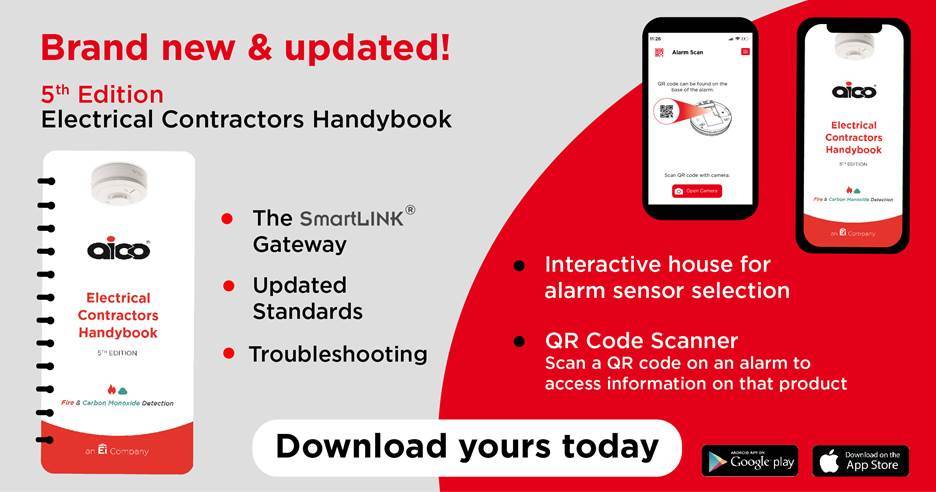
Aico has launched the fifth edition of its highly sought-after Electrical Contractors Handybook. Following on from the previous edition being designed with the customer in mind, the fifth edition compliments the new design with a wealth of extra features. The new edition has all the essential information you need to help you choose, site, install and maintain domestic Fire and Carbon Monoxide (CO) alarms and systems, along with new updates on the Ei1000G SmartLINK Gateway.The Handybook will keep you up to date with the latest standards and legislation, including the new updates in Scotland. It covers the different types of sensor available across Aico’s extensive range of fire and carbon monoxide products. It will also assist with the installation of the new Ei1000G SmartLINK Gateway, Aico’s new asset management tool that utilises their next generation of wireless technology to enable real-time notifications of fire and CO events. The fifth edition is completely free of charge and will provide extra information on the importance of testing and Aico’s wide range of accessories. Along with the physical copies, a handy PDF version is also being made available, with the Aico Handbook App also being updated. The previous version of the Handybook App was used by thousands of installers and gained great feedback. Aico has looked to go one step further with the updates, adding a QR code scanner, updated information on the Ei1000G SmartLINK Gateway, an interactive house for alarm selection and much more.

Vaillant TV campaign outlines investment in a sustainable tomorrow
With central heating making up 31% of all household emissions, Vaillant has launched its latest multimillion-pound marketing campaign, including a brand-new TV advert, to highlight the individual impact UK homeowners can make by having an efficient heating system. With its long-term strategy focused on sustainability, Vaillant will also be using its ‘Why Wait’ campaign, which began on 5 October, as an important milestone for the  industry as it becomes the first of the UK’s most popular boiler manufacturers to include renewables in TV advertising. With a strategic objective to bring low carbon technologies into mainstream consumer consciousness, the ‘Why Wait’ homeowner awareness campaign aims to educate millions of homeowners across the UK, why upgrading to a more efficient home heating system, such as heat pump or energy efficient boiler, can have a big impact on the climate and encourages them to turn to their local Vaillant installer to help them make a positive change for the future of the planet. Underpinned by extensive digital and social media advertising campaign,  aimed at homeowners who are looking for a new heating system, this latest campaign cements Vaillant’s commitment to delivering valuable support and homeowner leads to maximise the businesses of its installers and continue Vaillant’s Business Support strategy for its loyal installers. It comes after Vaillant’s entire range of domestic boilers was named the top-ranked gas boiler brand in the UK by the Which? Best Buy report 2020. This latest accolade, together with the TV ad campaign, means installers now have increased choice when it comes to specifying an efficient heating solution to their customers. Alice Woolley, marketing director at Vaillant, says: “As a business it’s important we look to the future. With the recent launch of the Green Homes Grant, together with the upcoming Future Homes Standard, the direction for our industry is clear. At Vaillant we have always had a longstanding commitment when it comes to developing innovative technology to deliver efficient and sustainable heating solutions for everyone. “Yet, while we continue to work towards a more sustainable tomorrow, we’re also focused on the ways we can continue to support our loyal installers. Our latest TV ad really brings to life how by investing in sustainability, we’re also investing in them. With a clear call to homeowners, and our recent Which? accreditation, we’re confident that the Why Wait campaign will deliver valuable leads to their businesses.” Vaillant is also offering a host of training courses specifically designed to cover low carbon heating technologies such as heat pumps and energy efficient boiler systems.

New structure sets the bar high for network infrastructure industry
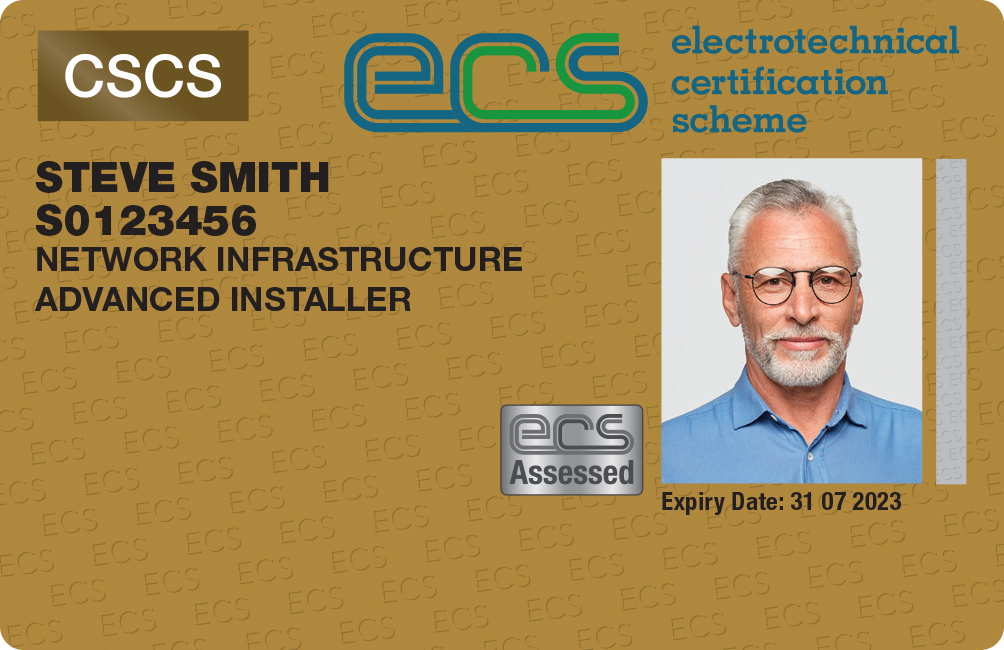
The Network Infrastructure industry has developed a new Occupational Qualification Structure leading to Electrotechnical Certification Scheme (ECS) Card recognition, which aligns with the future of the industry and addresses the need to bring together the wide-ranging skills which exist in the current workforce. Developed by an industry wide  group formed of the ECA, JIB, SELECT, CNet Training and a large group of employers, the new Occupational Qualification Structure follows the launch of the Network Cable Installer Apprenticeship Standard. It sets the benchmark for new entrants to the market at Level 3 but also crucially addresses the need to recognise professionals currently in the workforce that already benefit from hands-on experience, previous education and training and industry recognised qualifications. Formerly known as datacomms, the Network Infrastructure Industry covers the installation of data cabling, hardware  and other devices which enable computing and communication between users, services and other networked applications. This new pathway serves two important purposes, it clarifies the differences in education, training and experience for those already in the industry, and sets out a route for those entering the network cabling infrastructure industry. Jay Parmar, Chief Executive of the JIB says: “The introduction of the new Occupational Qualification Structure for the Network Infrastructure Industry is an exciting  step forward  as we strive to upskill the industry to deliver an infrastructure for a ‘Digital Britain’ by setting a  a benchmark for new entrants and recognition of the skills and qualifications of those already working in the industry. “A key strength of ECS and its partnership with CSCS is that it provides assurance and proof that cardholders working across sites in the UK have a high level of skills and experience and the appropriate  qualifications. We are delighted to be working alongside the Network Infrastructure Industry as they work to promote a higher degree of professionalism in the industry and, in keeping with the Construction Leadership Council’s target, ensure that all ECS cards are issued against an industry recognised qualification standard by the end of 2020.” Following the introduction of the new structure the following suite of ECS cards is now available which recognise a range of Network Infrastructure Industry occupations: Network Infrastructure Installer Apprentice Network Infrastructure Installer Trainee Network Infrastructure Assistant Network Infrastructure Installer (Level 3) Network Infrastructure Installer Gold Card Advanced Network Infrastructure Installer Network Infrastructure Supervisor Network Infrastructure Manager Network Infrastructure Designer From 1 January 2021 all new (initial) applications must comply with the Structure which includes the requirement for a Network Infrastructure Assessment for those applying for the Network Infrastructure Assistant card. From 1 July 2021 all card renewals will also need to meet the requirements of the new Occupational Qualification Structure.

NAPIT supportive of Setting the Bar report
The Final Report of the Competence Steering Group for Building a Safer Future, ‘Setting the Bar- A New Competence Regime for Building a Safer Future’ has been published. The report has been written following engagement with more than 300 organisations and through 13 working groups, with a unified vision to improve the competence of those who work in or on higher-risk buildings (HRB), be that design, construction, inspection or management as well as focusing on the safety and compliance of products used during the build and future renovations. The report focuses explicitly on the competence of installers working on and in HRB’s and how best to ensure their competence and identify them. Michael Andrews, NAPIT’s Chief Executive Officer comments: “It’s great to see a focus on ensuring the accredited third-party certification of companies alongside the verification of individual competence and supervision playing a key role within the recommendations set out in this report. Accredited company certification allows for insurance and consumer protection requirements to be mandatory and provides a route for monitoring the competence of individuals working for those companies. We fully support the proposal to require all installers working within HRB’s to have a core knowledge of fire safety within buildings and agree that requiring individuals to demonstrate their ability to work within HRBs, through regular third party assessments and CPD is a positive step forward for the industry- especially if authentication is digitalised. "We fully support the recommendation for constructive dialogue to continue between the Constructive Leadership Council, Working Group 2, the Competence Steering Group and Competent Person Schemes to ensure that competent individuals employed by a registered company are not having to jump through costly hoops to get additional cards with a particular logo on. Government Approved Schemes, namely Competent Person Schemes and TrustMark, should not be overlooked within this review as they are integral to the industry ambition of defining and identifying competence.” Following the publication of the final report from the Competence Steering Group, it is now up to industry to continue to work together on the implementation phase and ensure the recommendations within the report are put into practice. This work will be closely monitored by the new Building Safety Regulator, being set up within the Health and Safety Executive. NAPIT played an active role in the Installer Working Group which fed into this report, and will continue to work with industry to ensure that the recommendations within this report are realised in a way which enhances the existing system. To read the report in full please see below: Setting the Bar- Final Report http://cic.org.uk/setting-the-bar-annexes.php Setting the Bar- Executive Summary http://cic.org.uk/setting-the-bar-annexes.php

Select offers its members new professional indemnity insurance scheme
In the latest addition to its portfolio of services, Select, Scotland’s largest trade association, has joined with one of the UK’s largest independent professional indemnity (PI) insurance brokers to offer its members essential business protection. Along with Bristol-based industry expert, Brunel, Select will provide advantageous deals for member companies and individuals, insulating them from the potentially crippling costs of legal action. The campaigning body for the electrotechnical sector in Scotland will offer a scheme exclusive to member companies with competitive premiums and easy instalment payment options. The attractive opportunity is part of a comprehensive package of benefits and service available to Select members, including technical support, health, safety and employment advice, free risk assessments, welfare, pensions and legal advice and private medical insurance. Iain Mason, Select's Director of Membership and Communications, says: “We are very pleased to be able to add this exclusive offer to our members, especially at a time when everyone is looking for best value as we try to emerge from the industry shutdown and into recovery. “Brunel’s specially-tailored cover is designed to protect businesses and individuals who provide advice, design or expertise to third parties, and can protect them if a customer alleges that they provided faulty or inadequate advice and services. “PI Insurance should be considered an essential for any company in this position.” PI, also known as professional liability or errors and omissions insurance, covers the cost of legal defence, along with compensation which may need to be paid out to a third party following a claim made against the firm or an individual within the firm. It generally applies to costs incurred if a client claims to have suffered a loss - financial or reputational - as a consequence of the policyholder’s activities.

Aico partners with SECTT for training
Aico has announced its partnership with the Scottish Electrical Charitable Training Trust (SECTT). This collaboration will see Aico deliver Fire Industry Association accredited CPD training to apprentices throughout Scotland. After participating in an Aico Expert Installer training session delivered to Motherwell college, SECTT Training and Development Manager, Barrie Mckay, impressed with the content, felt the training would be of great benefit to the first and second year electrical apprenticeship students that SECTT manage, Scotland wide. He comments, “Aico have been fantastic with us and are always keeping us up to date; some of the technology coming through now is ground breaking and exciting for the future so it’s great that the apprentices will learn all about standards, legislation and all of these new technologies coming through. We are delighted to be working in partnership with the market leader in fire and carbon monoxide protection.” Aico Regional Specification Manager for Central Scotland, Tony Boyle, says of the collaboration, “I can’t speak highly enough of the work that SECTT do and it’s exciting to be working in partnership with them. Having been through the SECTT apprenticeship training scheme myself, I know first-hand how important it is that apprentices are working with the right products to do the job properly. I’m also looking forward to delivering the training together with my colleagues in Scotland to over 700 students annually knowing that the apprentices attending are the future of the industry.” As Aico is an Electrical Industries Charity (EIC) Champion, it will also facilitate mental health awareness sessions for students, delivered by the EIC. This new strategic approach to training will see Aico have invaluable contact with colleges and students that was not possible before. The partnership will provide first and second year electrical apprentices with training on alarm selection, siting, installation, standards and legislation and new technologies. Aico alarms have been distributed to SECTT’s assessment centres in Edinburgh, Glasgow, and Aberdeen to give practical, hands-on training to students. David Henderson, Assessment Centre Manager at SECTT, comments, “I have used Aico alarms for a number of years. The quality of the alarms is second to none and they really have to be in these test centre environments where they are being installed repeatedly by the students, they hold up well and are extremely robust. I can’t thank Aico enough as these alarms will improve the experience for anyone coming to do their assessments here or at the other centres.”

SP Energy Networks invests in safety and efficiency for Scotland EV charging project
Schneider Electric will supply a total of 44 NS Feeder Pillars across the Lanarkshire region as part of the Project PACE initiative with SP Energy Networks and Transport Scotland. Project PACE intends to meet the Scottish and UK governments’ net zero and carbon reduction targets by delivering a strategic network of public electric vehicle (EV) charging points across Scotland. The project will also pilot an innovative electricity Distribution Network Operator (DNO) led delivery model which is expected to improve efficiency. SP Energy Network’s (SPEN) long standing relationship with Schneider Electric provided an ideal partnership to provide high-performance electrical equipment to connect the EV chargers to the electricity network. The solution needed to be configurable depending on the specific requirements of each site. Schneider Electric developed a scaled design, containing multiple outgoing breakers and where necessary utilising multiple enclosures. Schneider Electric collaborated with SP Energy Networks throughout the project to create a cable termination arrangement that suited their needs and practices, reducing site installation time. Schneider Electric conducted factory demonstrations of cabling and jointing to ensure speedy on-site installations prior to delivery. The NS feeder pillar developed for Project PACE incorporates DNO cut out and COP metering to reduce the lifetime cost of ownership and physical size of overall solution, which was delivered as an integrated single unit to SP Energy Networks. This will allow dual ownership of infrastructure once management of charge points is handed over to local councils, following completion of pilot. Schneider Electric delivered the first four NS Feeder Pillars in May 2020 and one has already been installed at Strathclyde Country Park and another at Carnwath Road which has already delivered over 950 charging sessions. Despite the logistical challenges of the COVID-19 lockdown restrictions, the units were delivered on time, thanks to adaptations made to the Schneider Electric manufacturing facility in Scarborough. The factory strictly followed Government Covid-19 guidelines and Schneider Electric policy to ensure the LVPD plant remained operational throughout the pandemic, with employees provided with a safe and inclusive environment to continue production. Matt Speight, Commercial Manager at Schneider Electric, adds: “As we look for ways to support a green recovery, the electrification of transport will be a key driver in helping us to reduce our carbon footprint while stimulating ‘green’ industries. “Having a long-standing relationship with SP Energy Networks has allowed us to work collaboratively on the design of the low voltage feeder pillars and we are delighted to play a part in delivering this key demonstrator project. As an organisation, Schneider Electric is fully committed to both achieving our own Net Zero carbon targets and helping our customers reduce emissions through innovative offers and solutions.” The NS Feeder Pillar range builds on Schneider Electric’s extensive experience and expertise in low and medium voltage solutions that help manage and distribute power supplies to end users. The outdoor switchboard solution comes fully assembled to customer specification for easy installation reducing costly site time.