2 November 2026
Product of the Month: Amari Floodlight range by Aurora Lighting
 
12 November 2026
Schneider Electric transforms Southampton hospital estate
 
12 November 2026
GTEC Training opens new education facility in North Yorkshire
 
11 November 2026
Energy, AI and smart buildings: register now for EMEX 2026
 
11 November 2026
Solar and batteries could cut electricity costs by 40%, data finds
 

Latest News


Shining a light for Irish construction workers
The Lighthouse Construction Industry Charity is partnering with the Construction Industry Federation to promote better mental health and wellbeing within the Irish construction industry. The charity launched its 24/7 Construction Industry Helpline and app in Ireland in June and it is the only charity providing free and confidential financial, physical and mental wellbeing support dedicated to the construction workforce and their families. The CIF’s recent ‘Mental Health Report’ called  for a number of actions to help support the mental health of workers, including ensuring resources are available to develop a positive mental health and wellbeing culture on construction sites. The report also found that only 13% of micro-enterprises have a formal reporting policy. This is despite half of all companies saying mental health issues affected absenteeism in the industry. 94% of companies believe it is critically important the industry improves management of employees’ mental wellbeing. The partnership will ensure that organisations are aware of all the free resources available to them including the 24/7 Construction Industry Helpline and app and a huge variety of mental health and wellbeing training. Bill Hill, CEO of the Lighthouse Construction Industry Charity said: “We are delighted to be appointed as the CIF’s charity partner and ensuring that our construction workforce get the support they deserve and need. Our mission is to ensure that no construction worker or their family is alone in a crisis and by joining forces we are able to deliver a clear and strong message to the industry that it’s time to talk and seek help. He added: “A large proportion of construction workers are sole-traders, micro-enterprises and SMEs. They do not have access to an employee assistance programme (EAP) for support so when things go wrong, the situation can quickly spiral out of control. By making all the services free, confidential and easily accessible, we aim to remove the key barriers to people reaching out for support” Dermot Carey, Director of Safety and Training at the CIF said: ”Mental health is now considered a safety issue amongst CIF members. It’s on a par with physical safety concerns on site. However, the industry has decades of learning and collaboration in developing a world class safety culture on Irish site in terms of physical safety. We are still on our journey to promote mental health and wellbeing in our industry but we are making great progress. Our partnership with the Lighthouse Charity indicates how important this is to the industry’s leadership. "From my interactions in the industry, I understand the Lighthouse Charity helpline has been warmly welcomed as a useful resource by CIF members and I have no doubt many workers will benefit over the coming years for this. When you start a partnership like this you’ll never know the true impact of having the resource, you can only hope that it helps someone at a difficult time and maybe influence them away from drastic harmful actions. That hope, that you show one person facing the dark, a light and a way to shore is enough.”

Recolight celebrates recycling third of a billion lamps
Recolight, the UK’s leading lighting WEEE compliance scheme, has announced a major milestone, having funded the recycling of a third of a billion fluorescent and LED lamps and luminaires since the WEEE regulations were implemented in 2007. This is enough waste to fill the Royal Albert Hall 12 times. This milestone has been made possible with the commitment and support of Recolight Lighting Producers Members, together with collection and recycling partners. Operating as a not-for-profit compliance scheme, Recolight’s funds are used to finance a free lamp collection and recycling service for all  business end users. A free luminaire recycling service is provided for Recolight’s Producer Members. This way of operating goes above and beyond the strict legal requirements of the WEEE regulations. Nigel Harvey, Chief Executive of Recolight said, “Our Members and collection partners can be very proud that they have achieved this milestone. Their role is integral in making sure we meet the Recolight recycling targets and it is a testament to their dedication to improve lighting recycling in the UK.” For Recolight, as for so many organisations, there has been no year like 2020. The critical task for the Recolight team as lockdown started was to maintain its service for the lighting producer members of its WEEE scheme, and for our collection partners. The company is proud to say that its waste lamp collection service continued almost uninterrupted – although clearly the number of collection requests received dropped significantly. That is particularly pleasing because it materially reduced the risk of any waste lamps being sent to landfill during lockdown.

IET increases match funding scheme for scholarships, bursaries and education programmes
The Institution of Engineering and Technology (IET) has increased its match funding scheme to £2 million in order to support and inspire more future engineers. The original target of £1 million, set as part of its 150th anniversary, has been met and the IET has agreed to continue matching donations for its Diamond Jubilee Scholarships, Engineering Horizons Bursaries and Education 4-19 programmes up to the value of £2 million.The match funding applies to donations from any source, including individuals, foundations, and corporate donors. It’s no secret that there is a skills gap in engineering. This is attributable to a number of factors, including the way in which engineering is perceived by young people, accessibility and routes to entry, as well as how well-resourced teachers are in the classroom and beyond. The IET’s STEM programmes address all these factors and its Awards support aspiring engineers and technicians at a crucial time in their education. Bhavini Bhatt, IET Fundraising and Campaign Development Manager, said: “Thousands more children and young people have been able to take part in the IET’s programmes thanks to generous donors. This is a wonderful opportunity for individuals and organisations to get behind the initiatives as any donation they make will be doubled by the IET.” The scheme first launched in 2018 with the IET receiving pledges and donations in support of its flagship programmes.

Waning grid supply emphasises need for decentralised energy
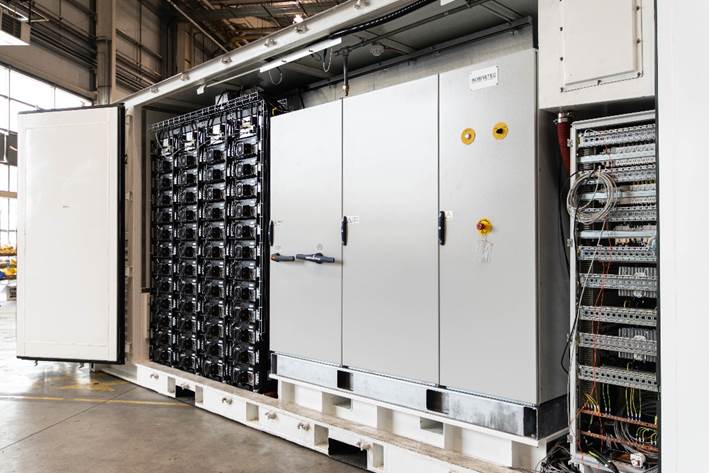
This week, National Grid explained that unplanned power outages and unusually low wind speeds have been major contributors in low levels of electricity. It is the second warning of its kind in the last month in the UK, highlighting the growing risk industry faces when relying on the local grid infrastructure. Following a warning of short supplies of electricity over the next few days from National Grid, Aggreko is advising industry still reliant on grid supply to look towards decentralised energy solutions. Decentralised energy solutions may offer an answer, according to Aggreko. Enabling users to generate energy on-site and lessen overreliance on the national grid, technologies such as solar power, combined heat and power (CHP) and battery storage, offer security of supply while lowering overall carbon emissions. Chris Rason, Managing Director, Aggreko Northern Europe, says: “We understand the challenges facing the industry when it comes to reliance on grid supply. As recently as August 2020, we found that grid limitations were a key cause of power outages in the data centres. Last year, in our report on decentralised energy, 82% of key energy decision makers told us that power continuity was a major or significant concern to their business. “Decentralised energy solutions offer a solution to remove reliance on the grid, freeing up the stretched energy supply. However, one challenge to overcome is the cost. We would encourage UK industry to consider long-term hire as a solution, ensuring that any plans to implement on-site generation are both successful and cost-effective.” The latest news follows the government’s pledge for a clean-energy revolution, which aims to power every UK home by wind within 10 years. According to Aggreko, the latest electricity shortages highlight the need for more ‘bridging gap’ solutions, as Rason explains: “October appears to be the month for wind power: highlighting both the benefits and risk of overreliance. If the UK is to successfully implement a wind energy strategy to its national electricity supply, bridging gap solutions will be critical. “One example could be battery technology. While it is not a new concept, it is still costly for many companies to purchase on an industrial scale. However, the good news is that it is more accessible now, when compared to three years ago, thanks to progress made in the rental space.” Battery solutions can help alleviate technical difficulties associated with early-stage decentralised energy schemes, mitigating issues such as low and transient loads, alongside voltage and frequency fluctuations.

Electrical installations expert named Midlands Engine Export Champion for third year
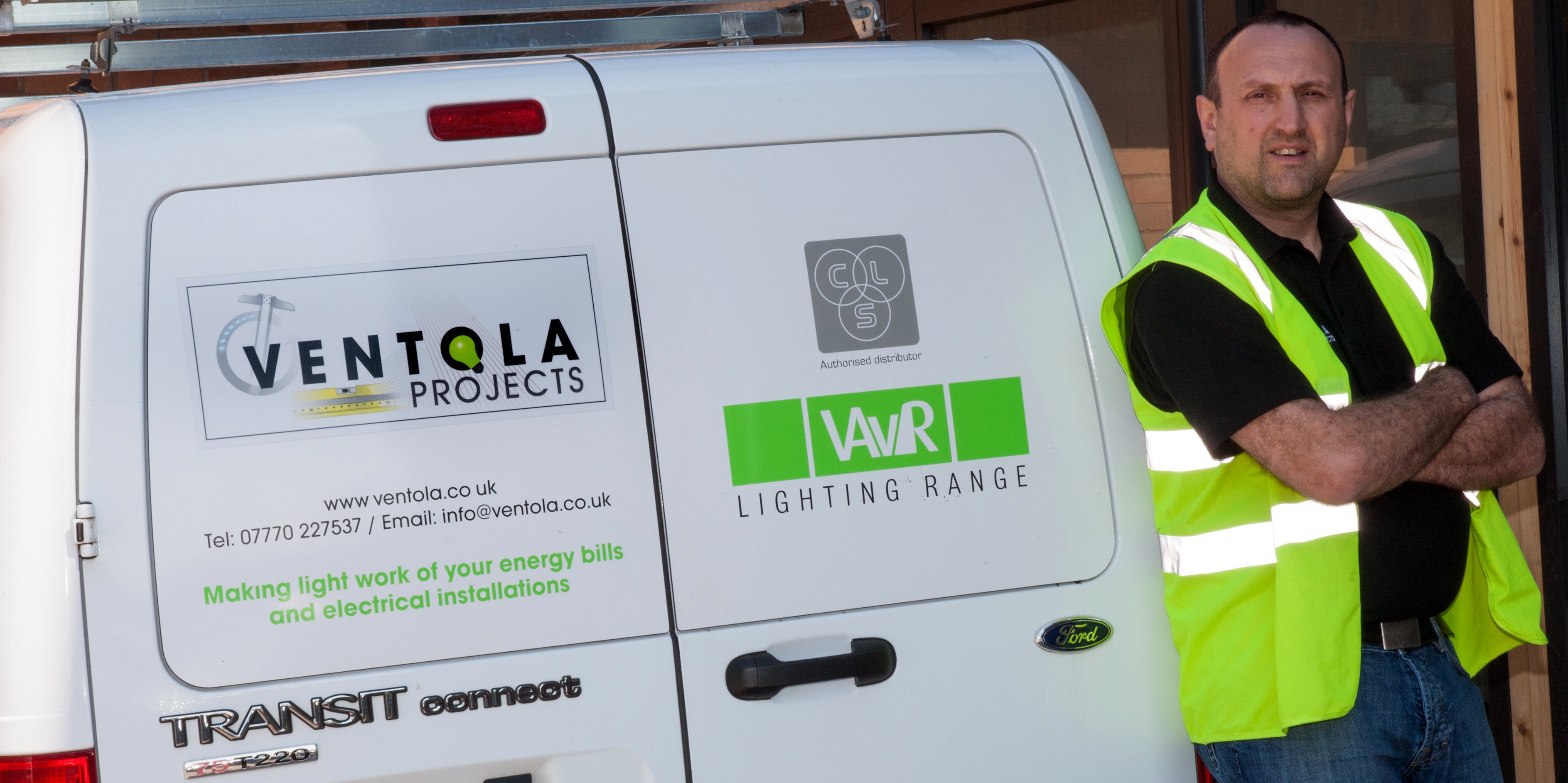
Mick Ventola, founder and managing director of Ventola Projects, a Leicestershire specialist in electrical and lighting installations, has been confirmed as one of the Department for International Trade’s (DIT) Midlands Engine Export Champions for the third successive year. The appointment is further recognition of his continued delivery of lighting projects in the US, the UAE, Germany and Saudi Arabia. First brought in as an Export Champion in 2018, Ventola has travelled the world flying the flag for British Exports at conferences, conventions and summits. He has also spoken to scores of Midlands businesses explaining the global opportunities available to businesses considering exporting their goods and services. Ventola lighting installations appear across the East Midlands, having worked with The Curve Theatre in Leicester and Loughborough University to name but a few, but also throughout the UK, for example, at Ten Entertainment Group venues. However, Ventola’s role as a successful exporter has seen him achieve and retain champion status. Despite the pandemic, he has continued to complete projects in the US, where he has forged a network of distribution and installation partners. Much of his work this year has seen Ventola assist businesses in a hospitality and entertainment industry looking to bounce back from pandemic shutdowns worldwide. Just last month, for instance, the ribbon was cut on Thunder Road, a new 30,000 square foot facility in Sioux Falls, South Dakota, where Ventola’s VAvR range of multifunction LED systems are the centrepiece of a 21st century bowling experience. Ventola described the weight of responsibility he feels at retaining the Export Champion role at this critical point in time. “We have two very big things going on at the moment in Brexit and COVID-19. The pandemic saw UK exports shrink by almost 20% between February and April. So, as the UK mounts an economic recovery and forges new trading partnerships around the world, it is vital we get exports moving again. “My role, then, is to share some of my knowledge and experience and inspire British businesses. There is an enormous world of opportunity out there. It’s no secret that the UK is among the most advanced countries in terms of skills and ingenuity but I’ll do my best to reimpress that on the people I interact with in different environments. “Obviously, this year is a little different. I won’t be collecting as many air miles as in previous years for understandable reasons but the DIT are lining up a number of virtual online events at which my colleagues and I can really start championing UK exports. “I’m looking forward to the release of the government’s new export strategy scheduled for later this year. That should breathe fresh momentum into the ongoing efforts of both the government and UK exporters and set out ways in which the DIT can help companies looking to establish an international presence.”

14% of the UK's electricians are more motivated to work amid second wave concerns
As we fast approach the winter months, millions of people across the country are hoping to get their homes in the best condition possible to prepare for the colder weather. Electrical problems, in particular, are unwarranted during this time of year and it is important that the wiring of houses is in the best possible condition - especially with concerns of a second wave of the virus. With millions of people continuing to remain in their homes as a result of the pandemic, many are finding issues with the current state of their homes, resulting in a home improvement boom. This is hugely beneficial, as the restoration of confidence has been pivotal for the recovery of consumers and tradespeople alike. In light of this, new nationally representative research from Powered Now, a mobile-based billing, invoicing and quotation application which specialises in trades, has unveiled the sentiment that Britons have towards ensuring the wiring of their houses is in the best possible condition post-lockdown and pre-winter. Key statistics: 16% of tradespeople agree that the threat of a second wave of COVID has influenced them to commence work on home improvements sooner rather than later 14%  of electricians agree 15% of tradespeople have seen their client demand increase post-COVID 17% of electricians agree 17% of tradespeople regularly work over 10 hours a day 18% of electricians agree 18% of tradespeople don’t have the time or motivation for new business development due to the sheer backlog of work they have 16% of electricians agree Ben Dyer, CEO of Powered Now - a mobile-based billing, invoicing and quotation application which specialises in trades - has offered insight into the increase in trade for electricians. "As the weather turns colder, Brits will need to make preparations to ensure that their homes will withstand the colder months. As the days become darker and shorter, more people will be using their lights and electrical appliances more, and ensuring these are in the best condition will guarantee a comfortable living environment during these months. In light of this, we are expecting one final push of trade in the coming month in the electrical sector. "The whole industry is still in catch up mode and projects delayed by the lockdown are taking priority. This has helped to spike demand and we expect it to continue in the short term. Our research has very much confirmed that Brits were eager to have home improvement jobs completed post-lockdown and pre-winter, treating themselves to a little home-based TLC. "Our SME customers are also talking about the pressure to complete jobs as people worry about a second wave. As we have seen from the sentiments established in this research, this could in fact help the trades bounce back even quicker as people will rush to hire a tradesperson for their desired work before the cooler months set in."

How can electricians earn themselves a five-star review? 
Electricians that are tidy, professional, punctual, friendly and courteous have the best chance of earning themselves a five-star customer review, new research shows. Electrical wholesaler ERF Electrical analysed 1,000 five-star Checkatrade reviews to discover the factors that make up an ‘excellent’ review. One in five customers (21%) gave top marks to those that cleaned up after themselves, with those living in Bristol valuing cleanliness above anything else. In Liverpool, Glasgow and Leeds, residents are more likely than anywhere else to praise those that are ‘on-time’; in Liverpool, punctuality was mentioned in 25% of top reviews. The research took into account 100 reviews across 10 major cities, which also included Birmingham, Edinburgh, Leicester, London, Nottingham and Sheffield. Tidiness and friendliness were among the top qualities mentioned in nine of the 10 cities. The highest-ranked qualities, according to the percentage of reviews they appeared in, were: Tidy/clean (21%) Professional (20%) Polite/courteous (20%) On-time (18%) Friendly (16%) Reliable (10%) Efficient (10%) Helpful (7%) The research also reveals that Leicester residents are most likely than anywhere else to praise those with good manners, with one in five (22%) of reviews mentioning the friendliness of an electrician. Dave Haywood, business manager at ERF Electrical comments: “This research really highlights the service levels that customer expect from electrical installers. Those working in the industry can use this analysis to their advantage; are you doing any of these things, which you can be proud of, or is there anything you can improve? “By focusing on these qualities and striving for the best possible customer service, electricians can give themselves the best chance of a glowing, five-star review.” Other five-star reviews gave credit to electricians they deemed to be knowledgeable, trustworthy and respectful.

JTL signs charter as a commitment to further improve health, safety and wellbeing
JTL, the national training provider for electrical and heating and plumbing apprenticeships, has signed the Civil Engineering Contractors Association’s (CECA) Health and Wellbeing Charter as part of its Stop. Make a Change campaign (10-23 October). The signing of the charter demonstrates JTL’s continued commitment to improving all aspects of health, safety and wellbeing. JTL will continue to illustrate what good health, safety and wellbeing activities are and utilise the CECA’s ‘conversation starter’ resources to engage JTL training officers in the campaign, as well as using them as part of the regular health and safety checks with JTL leaners. Stop. Make a Change is a national event that allows leading UK contractors, customers and suppliers the opportunity to speak directly to employees and suppliers about health, safety and wellbeing issues, and to make commitments to actions targeting improved performance in these areas. Steve Smith, Head of Health & Safety at JTL, says: “JTL recognises that mental health issues, such as stress, anxiety and depression, are more apparent in the construction industry than in others sectors, with an estimated one in six workers suffering from a mental health issue. “JTL is already partnered with the Electrical Industries Charity (EIC) to offer a range of welfare support services to all of our learners and employers working within the electrical sector and the wider building services industries. As part of Stop. Make a Change, we are now looking forward to utilising the ‘conversation starter’ resources including respiratory, electrical installations, hand injuries and working at height to further support the health and safety of both staff and learners.” Stop. Make a Change will be held between 10-23 October and the European Week for Safety & Health runs from 19-23 October. To learn more, visit www.stopmakeachange.co.uk.

Amendment 2 to the 18th Edition: what could change?
Gary Parker, ECA technical manager, highlights some of the proposed changes to the 18th Edition of the Wiring Regulations. A brief history of the 18th Edition The IET Wiring Regulations, the essential publication for all professionals in the electrotechnical and engineering services sector, underwent an overhaul when the 18th Edition (BS 7671:2018) came into full effect in 2019. Amendment 1, which concerns electric vehicle charge points, came into effect on 1 February 2020. Now, BSI is seeking views on a new set of changes to the 18th Edition – Amendment 2 (AMD 2) – which could represent the biggest set of revisions to the Regulations yet. AMD2: why now? The rationale for Amendment 2 is similar to that behind the original 18th Edition: given the way our industry operates, the roles electrical engineers serve, and the increasing speed of technological change, the Regulations must reflect these changes to ensure installations are safe, efficient, useful, and able to meet evolving standards. The key potential changes are: Mandating of AFDDs on circuits with a rated current not exceeding 32 A The proposal: Regulation 421.1.7 proposes that arc fault detection devices (AFDDs) be required on all single-phase final circuits supplying socket-outlets and fixed current-using equipment. Some exceptions to this are listed. The impact: This proposal would effectively mandate the use of AFDDs across all small, single phase circuits, whether in a domestic, commercial or industrial installation, increasing the potential for safety but also the prospect of greatly increasing cost and complexity of installations. Risk assessment for sockets The proposal: Regulation 411.3.3 would be altered to remove the option for omitting RCDs on socket outlets not exceeding 32 A in installations other than dwellings. The impact: This proposal would leave designers with no option but to install RCDs on all socket outlets - unless they raise a departure against BS 7671. However, this is something the client may not be content with. Less paperwork for EICs The proposal: To reduce the number of items on the schedule of inspections for an electrical installation certificate. The impact: The number of boxes would be reduced to 13 items, greatly reducing the time needed to complete an EIC. A list of items that should be inspected (where relevant) is available, but this does not need to be completed. New cut-off date for complying with the 18th Edition The proposal: To state a date that, after which, all installations should be installed to the 18th Edition AMD 2 - regardless of when the design took place. The impact: If an installation is undertaken after 28th March 2023 then this would need to conform to the requirements of the 18th Edition AMD 2 regardless of when it was designed. This could impact contractors working on contracts which take some years to come to fruition. Energy efficiency and prosumers The proposal: A new Part 8 would be added for ‘Prosumer’s’ low-voltage electrical installations. The impact: This proposal highlights some of the additional requirements designers and installers should be aware of when working on newer installations that can generate their own energy supply. SPD requirements The proposal: To re-write the wording in section 443, Transient overvoltages due to the effects of indirect lightning strokes, to make this element easier to read. The impact: Potentially reducing the number of mandatory SPDs required in installations, however the wording should be closely read to ensure compliance. Foundation earthing The proposal: Regulation 542.1.2.202 would require that for new premises, additional earthing, such as foundation earthing, shall be provided. The impact: Every new build would need to be provided with a means of embedding electrodes to supplement the earthing system. This will require the use of electrodes or foundation earthing, in many cases at times when electrical contractors are not on site. Protected areas The proposal: The requirements of Section 422 would be dramatically re-written to introduce the phrase, ‘protected escape route’. The impact: Removing the conditions BD2, BD3 and BD4 and using the term ‘protected escape route’ would introduce requirements for designers and installers to consider how they install circuits in areas of escape and what types of equipment can be installed. How to share your views The 2nd Amendment to the 18th Edition of the Wiring Regulations (BS 7671:2018) opened as a Draft for Public Comment (DPC) on 21 September 2020. This will remain open for comment until 11 December 2020. The DPC is available via the BSI Standards development portal: https://standardsdevelopment.bsigroup.com/ In previous years, ECA Member comments have been directly responsible for improving the Regulations and ensuring that BS 7671 remains a practical and workable document, to the benefit of both customers and contractors. Please note, this article highlights some of the proposed changes in AMD 2. There are many others in the DPC, and ECAtoday readers are advised to pay close attention to the draft. To make sure your comments are worded and presented correctly, ECA has produced a handy guide to help Members complete the DPC – this can be found at www.eca.co.uk/amd2.

Critical financial wellbeing support launched
 The Lighthouse Construction Industry Charity’s free app has been upgraded with nudge, the financial wellbeing platform, in response to feedback from the industry and findings of its latest Impact Report. One of the key findings of the recently published report was that 62% of emergency financial grants were to help pay for daily living costs including buying food, paying utility bills, and clearing rent arrears and debt. Over 50% of our construction workforce are either self-employed, agency workers or on zero hour contracts, so when things go wrong financially, issues can quickly spiral out of control. In the current climate, the app’s new feature is yet another lifeline to the industry and focuses on the need for more preventative tools and building resilience in the areas of mental, physical, and financial wellbeing. Working in partnership with nudge, the charity is now able to offer even more support to the construction community, just when it is needed the most. Information and advice around money can be complex, overwhelming and conflicting, but nudge resolves this by providing personalised and unbiased financial education in a simple way. With timely prompts (nudges) to take action and the tools to help people manage their money, this latest development will help people to understand and manage their money more effectively, boost their financial wellbeing and, in turn, their overall wellbeing. The new feature offers: nudges: When there’s something people need to know, or a financial action they ought to take, users are sent a personal, timely nudge to remind them. Education: Bite size personalised content – boosts financial knowledge, skills and confidence. Tools: Money management tools help with tasks such as budgeting or saving for goals easier. The charity’s mission is that ‘no construction worker or their family is alone in a crisis’ and this latest addition to the app certainly responds to the needs of the industry. The free app complements the 24/7 Construction Industry Helpline. The charity has also recently announced free wellbeing training to the industry for the remainder of 2020 and this includes financial wellbeing sessions. In addition to this, the fallout of Covid-19 means an increasing number of redundancies and their free wellbeing programme now also includes two sessions aimed at improving employability. Bill Hill, CEO of the Lighthouse Construction Industry Charity said, “With financial stress at an all time high, it’s vital to address money worries quickly. By making all of our proactive and reactive wellbeing support services free, we hope to remove any barriers to access so that our construction workers get the help they need quickly.”