2 November 2026
Product of the Month: Amari Floodlight range by Aurora Lighting
 
12 November 2026
Schneider Electric transforms Southampton hospital estate
 
12 November 2026
GTEC Training opens new education facility in North Yorkshire
 
11 November 2026
Energy, AI and smart buildings: register now for EMEX 2026
 
11 November 2026
Solar and batteries could cut electricity costs by 40%, data finds
 

Latest News


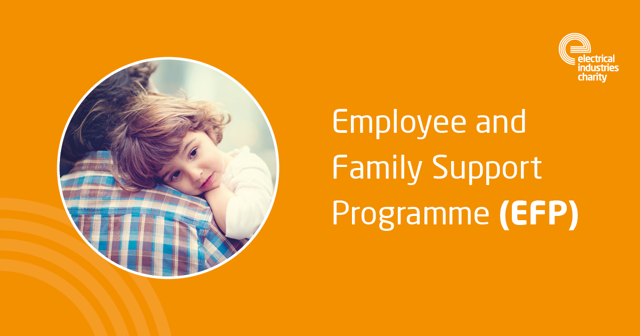
Electrical Industries Charity Urges Industry To Support Employees & Families
The Electrical Industries Charity (EIC) launched the Employee and Family Support Programme (EFP) to give a helping hand to employees and their families in their time of need. The charity is encouraging the industry to sign up to the programme and give hope to thousands of people within the electrical sector. The EFP is solely funded by powerLottery and is part of the Employee Assistance Programme (EAP). Through the EFP, EIC is able to provide financial relief and practical support services to people and their immediate families who have worked or are working in electrical and energy-related industries. The support services that EIC offers include debt advice, telephone counselling, carer support network, career advice and financial assistance and grants which helps to address issues such as family or relationship problems, mental health issues, ill health and disability. EIC has supported thousands of employees and their families and given them an opportunity to move forward with their lives. The industry can make a huge difference in someone’s life and help EIC to not only give vital support to those who are struggling but also to turn their dreams into reality and give hope for the future. EFP has been proven to facilitate timely intervention that better manages outcomes for individuals, families and businesses. Once signed up to the programme, all of the services that EIC provides are completely free of charge, which means the sooner you sign up to EFP, the sooner EIC will be able to look out for your employees and their loved ones.

Hamilton Joins Electrical Distributors’ Association
Hamilton Litestat has joined the Electrical Distributors’ Association (EDA) as an Affiliate Member. Effective as of November 1 2018, Hamilton’s partnership with the EDA will facilitate closer collaboration with electrical wholesalers and distributors. Through is EDA Affiliate Membership, Hamilton aims to increase its support of the distribution network by providing customer training, support on business forums and improved educational opportunities around key industry topics, such as smart controls. Margaret Fitzsimons, CEO at the EDA, said, “On behalf of the EDA Board may I extend a warm welcome to our latest affiliated member, Hamilton Litestat. Its well-respected name in the UK’s electro-technical sector means it is exactly the calibre of business the Association courts and welcomes. We are all the stronger for its involvement. The team and I look forward to working with Hamilton as it engages its EDA benefits.” “The EDA is a long-established organisation that supports a close working community throughout the supply chain: it’s a privilege to become a member,” added Gavin Williams, Hamilton’s Head of Marketing. “Working hand-in-hand with the EDA will support improved communications and help Hamilton increase awareness of our solutions and their benefits. We’re also very keen to improve the industry’s knowledge of smart controls and our collaboration with the EDA will assist us in this.”  

Eucolight Highlights Dangers Of Non-Compliant Products At Workshop
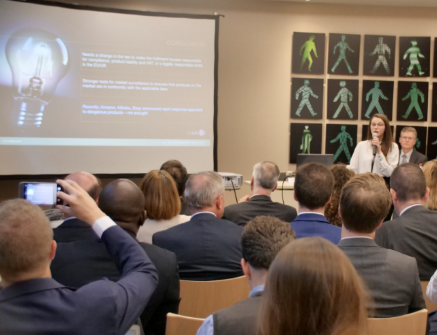
A workshop hosted by Eucolight, the European association for lighting WEEE compliance schemes, gathered over 100 experts last month to discuss online sales of non-compliant products. The workshop concluded that solutions must be implemented to make online marketplaces responsible for products sold through their portals. The workshop, held in Brussels on October 17, discussed the widespread availability of products through online marketplaces that do not comply with consumer safety standards, VAT requirements, and environmental obligations. High level speakers discussed who should be legally responsible for the non-conformity of products, and how this can be introduced into European and national legislation. Leva Vardanyan, market compliance manager of the Lighting Industry Association (LIA), reported on a retail mystery shopper testing study. The initial findings of the survey revealed that a high proportion of lighting products sold through online marketplaces have serious electrical safety risks. According to Vardanyan, just removing the individual products detected from the market cannot be the solution – changes in the law and stronger tools for market surveillance are needed. Richard Allen, lobbyist from Retailers Against VAT Abuse Schemes (RAVAS), described the large scale of VAT avoidance through online platforms. He argued that marketplaces have a great responsibility here. Through amendments to VAT legislation, the EU and and some Member States are supporting this approach and making marketplaces responsible. Germany, where there are new VAT obligations for online marketplaces if the seller is not compliant, is a good example. Nigel Harvey, chief executive of Recolight, described a study undertaken by the WEEE Scheme Forum, to check the WEEE compliance of products sold through online marketplaces. This showed that 54% of power tools, 76% of LED lightbulbs, and 88% of fitness watches did not comply. Commenting on the study, Harvey said, “Evidence shows there is large scale WEEE non-compliance sales through online marketplaces. High street retailers have, for many years, checked the compliance of equipment producers. Online marketplace operators could – and should - do the same. There can be no excuse for knowingly aiding the sale of products that break the law.” Monika Romenska, regulatory and public affairs manager, of EXPRA (Extended Producer Responsibility Alliance for Packaging and Packaging Waste) added, “Distance sales already represent up to 20-30% of the market across various waste streams in certain Member States. By avoiding paying for their collection and reprocessing costs, these sales distort the market: they impose an unfair cost on compliant producers, thus rendering these – mostly local companies – less competitive.” The importance of greater consumer education was also mentioned. Triin Saag, of the European eCommerce and Omni-Channel Trade Association (EMOTA) argued, for example, that 'product safety is a two way street where consumers should also be educated.' Hans Ingels of DG Growth, speaking about the Goods Package, highlighted three principles for Member States to counteract an over-extended presence of non-compliant products on the market: “One – working with businesses to prevent non-compliances instead of only policing the market; two – fit-for purpose tools to check online sales of products and follow-up; and three – improved cooperation between authorities across the EU.” Bettina Lorz, of DG Environment, supported coordinate enforcement actions at supra national/ national level. She argued that customs, tax and enforcement officials should work in a joined-up fashion with the environmental authorities on product regulation and enforcement: The Goods Package could be a good opportunity for implement this kind of synergy. Summarising the discussions, Marc Guiraud, secretary general of EucoLight, concluded, "It is urgent for policy makers and online marketplaces to take action to address non-compliance of products sold online. Member States are already starting to implement this at a national level.”

NICEIC & ELECSA Return To Aintree Racecourse For Live North
NICEIC and ELECSA are making their way back to Liverpool for this year’s Live North. The live event gives contractors across the north of England the chance to catch up with vital industry information. Held on Thursday November 22 at Aintree Racecourse, the winning event will feature a packed seminar programme and exhibition hall. NICEIC and ELECSA’s technical experts will provide an overview of the recent changes to come out of the 18th Edition with an additional focus on arc fault detection (AFD) and surge Protection devices (SPD) Mark Smith, marketing and communications director at NICEIC and ELECSA, said, “We are looking forward to going back to Liverpool at this important time for the industry. The 18th Edition regulations will be coming into operation just over a month after Live North, so for many it will be a last chance to find out all the information they need to know. “It will be a chance for attendees to quiz our experts and discuss some of the changes. We will also have a good mix of other business and technical seminars from some of the industry’s biggest names.” Attendees will also be able to chat with some of the industry’s biggest names in a packed exhibition area. Delegates will be able to access discounts from suppliers including Bosh, ESP, Scolmore, Brother and many more. Tickets cost just £29 plus VAT for NICEIC, ELECSA and ECA contractors, and £49 plus VAT for non-registered persons. Apprentice passes are available free of charge. For more information, visit niceic-elecsalive.com.

Small Businesses Receive Boost From Budget Plans
ECA and BESA’s call to protect SMEs from employment red tape and to increase support for engineering skills has been reflected in the Budget announcement made by Chancellor Philip Hammond on Monday October 29. The Chancellor plans to change the way self-employed people working for companies are taxed, by extending the public sector IR35 system to the private sector. The government move is aimed at ensuring that individuals who work through their own companies, but operate like employees, are classified as employees for taxation and national insurance purposes. This change only applies to private firms with more than 50 employees or a turnover of more than £10 million, in order to protect small businesses from red tape. These medium and large businesses will be responsible for checking contractors’ status from April 6 2020, allowing employers time to prepare. The Chancellor also acknowledged the vital importance of investing in technical skills, by announcing that the 10% contribution rate that SMEs must pay when they take on apprentices will be halved to 5%, although the exact date this will come into effect remains to be confirmed. While the change applies principally to SMEs, it could also benefit Apprenticeship Levy payers who have used up their levy pot, and wish to take on more apprentices. Andrew Eldred, ECA director of employment and skills, commented, “The decision to reduce co-investment rates for apprenticeships, and apply IR35 changes in the private sector to medium and large employers, show that the government has taken on board representations from ECA. “These measures will mean that small businesses won’t be burdened with the changes to taxation, while employers will be able to offer more apprenticeships and narrow the skills gap.” “We will continue to work closely with government and industry decision makers to ensure the details of the implementation of these budget provisions are in its members’, and the industry’s, best interests.” Alexi Ozioro, BESA public affairs and policy manager, added, “Overall we are pleased with this budget. Changes to investment allowances, plant and machinery tax breaks, the Apprenticeship Levy and relaxing the rules around repurposing commercial buildings to be demolished and replaced with homes are all welcome.” “We hoped the Chancellor would have referred back to his Spring Statement promise to 'tackle the scourge of late payment,' although other Ministers have made good commitments on this recently.” A further consultation on the detailed operation of the IR35 reform will be published in the coming months. This consultation will inform the draft Finance Bill legislation, which is expected to be published in summer 2019. Ahead of the Budget, ECA and BESA issued a five point plan to Chancellor Philip Hammond, including proposals on IR35, technical skills, fair payment, cash retentions and low-carbon investment for buildings and infrastructure.

Jail Sentence For Fraudulent Online Card Manufacturer
A man who manufactured and sold fake construction industry skill cards, including ECS cards, has been jailed for more than three years. Online trader Andrew Weeks was sentenced on Friday October 19 at Warwick Crown Court. Weeks was charged under Section 9 of the Fraud Act 2006, for the production and sale of fake documents. Weeks was caught following an investigation by Warwickshire County Council Trading Standards. Over the course of the investigation, officers discovered that Weeks was manufacturing construction industry skill cards at his printing firm (Nuneaton Print) and selling them via his website. Weeks was sentenced to three years and eight months after pleading guilty to the manufacture of fake documents. The investigation was supported with information from the Construction Industry Training Board (CITB) and a number of card schemes, including the Construction Skills Certification Scheme (CSCS) and the Electrotechnical Certification Scheme (ECS). To help individuals and employers verify ECS cardholder details, the ECS Check service is now available and ranges from the simple look up of an individual cardholder, to more comprehensive auditing and reporting systems for clients and contractors. Steve Brawley, chief executive at ECS said, “We hope that this case will serve as a message to would-be fraudsters that their actions will not be accepted. Fraudsters on construction sites present a danger to themselves and others and we need to work together to stamp this activity out.” Graham Wren, chief executive at CSCS said, “This is another example of the industry working together to tackle card fraud. CSCS will always support the authorities to identify and act against those attempting to deceive construction employers. This case also highlights the need for thorough card checks, ideally electronically, to ensure construction workers are who they say they are and have the correct qualifications for the job they do on site.” Weeks was also sued by CSCS for copyright infringement and ordered to pay damages of £6,000. Ian Sidney, fraud manager at CITB added, “This sentence shows just how serious construction card fraud is and the lengths that CITB and the whole industry will go to in order to stamp it out. The use of fake cards could easily lead to accidents, injuries or even fatalities where contractors do not have the required skills, training or qualifications. Employers must remain vigilant when checking workers’ documentation and keep an eye out for any suspicious activity.” If you suspect a fraudulent ECS card, you can verify the card details at ecscard.org.uk/check-card. If the card appears to be a forgery please contact ECS on 01322 661622 to report it.

Recolight Publishes A Definitive Guide On Weee Open Scope For Lighting Industry
The WEEE Regulations have applied to a range of products since 2007. A specific exclusion meant that household luminaires were also of scope – from 2019, the Regulations move to an open scope. The household luminaire exclusion has been removed for 2019, bringing them into scope. Other lighting related products coming into scope include wiring accessories such as switches, dimmers, plugs, and sockets. Companies that sell these products in the UK, termed producers, will need to comply with the UK’s WEEE Regulations and report their UK sales data. To help companies that are impacted, Recolight has published The definitive guide to WEEE open scope for the lighting industry. The guide provides advice covering the new products coming into scope, and how to comply. A summary of changes to the scope of WEEE: • Household luminaires, wiring accessories and other equipment come into scope of the UK’s WEEE Regulations from January 2019. • Producers of equipment coming into scope must join a Producer Compliance Scheme by November 15 2018, and start reporting the weight of the product they sell from January 2019. (Very small producers supplying less than five tonnes per year may register directly with the Environment Agency). • Although many EU countries will move to six categories in 2019, reporting in the UK will remain with the current 14 categories. • Certain lighting products, such as furniture with integral LED lighting, remain out of scope.

JTL & Electrical Industries Charity Highlight Negative Impact Of Stress
JTL is working alongside the Electrical Industries Charity (EIC) to highlight the negative impact of stress. The joint campaign aims to help people working in the electrical sector to address stressful situations and seek help. It includes a dedicated Apprentice Support Programme, designed to help apprentices with any challenges they may face early on in their career. The assistance available through the EIC covers a wide range of issues – from caring for a sick or elderly relative to dealing with redundancy. The EIC’s team of trained advisors can offer free financial, legal, emotional or health-related advice. Thousands of people in the electrical sector are faced with a wide range of difficult situations in their lives, which often lead to mental health issues. Some of those affected reach out for help, but others have no one to turn to and often bury their struggles in alcohol or drug abuse. Addictions such as alcohol or drug abuse often not only have a dramatic effect on physical health but also has significant consequences on mental health which often leads to problems such as depression, anxiety, and many other issues. Recent statistics released by the NHS showed that in the UK in 2015/16 there were 8,621 hospital admissions with a primary diagnosis of drug-related mental health and behavioural disorders. It was also recorded that each year there were 2,479 registered deaths due to drug misuse. The National Institute on Drug Abuse (NIH) also stated that compared with the general population, people addicted to drugs are twice as likely to suffer from mood and anxiety disorders. To help to reduce these statistics and to give crucial access to support services to those who are affected by mental health problems, the Electrical Industries Charity has created the Employee Assistance Programme which offers all of the vital support needed to help people in the electrical sector to get back on their feet and create a life they deserve. Recently, the charity helped an experienced electrician Rhys Lynch to create a better quality of life for him and his daughter. Rhys first contacted the Electrical Industries Charity in 2012 when his partner left him and his two-year-old daughter. Rhys applied for sole custody of his daughter, leaving his job as an electrician to become a full-time parent. On gaining full custody, the council re-housed Rhys and his daughter into a one-bedroom property, and the charity provided a £1,000 grant for household items. In 2013, they were moved to a bigger, two-bedroom property, which better met their needs and once again the charity helped, providing a £1,000 grant for flooring. Despite starting a new life, Rhys’ problems were far from over. Over the years, Rhys was faced with numerous financial struggles which sadly resulted in him turning to alcohol and drugs and in 2015, Rhys lost not only his home but also custody of his daughter. With nowhere left to turn, Rhys resorted to theft to feed his addiction, and following many incidences, was sent to prison for 14 weeks. After serving his sentence, Rhys suffered a further relapse and nearly lost his life. Since then he has sought counselling and support for underlying issues which dated back many years. The charity once more offered support to help with his debts, and he was granted a debt relief order (DRO). Since September 2015, Rhys has been free from drugs and alcohol and can now see a brighter future ahead. But the road to recovery is never easy, and for people suffering from mental health issues, ongoing support is vital which is why Rhys contacted the charity once more in January 2017. The charity helped with the cost of updating his qualifications through Able Skills and as a result he has now passed his 2394/95 City & Guilds Testing & Inspection course. He has secured a maintenance contract with a local estate agent and has been offered a contract with a local construction company. Thanks to the support and financial assistance provided by the Electrical Industries Charity, he is once again living with his daughter and is well on his way to building a better life. Rhys’s story highlights that seeking help and having access to support services can remarkably change someone’s quality of life and this is why the charity always ensures that people in the electrical sector get the support they need when they need it. If you would like to contact one of the EIC’s team, go to jtltraining.com/free-support/ or just call 0800 652 1618.

NICEIC Bursary Helps More Women In To Electrical Industry
NICEIC is supporting women in the electrical industry through its Jobs for the Girls Bursary Scheme. The scheme offers grants to women already working in the industry or looking to get a helping hand at the start of their career. It is open to women of all ages and designed to cover training or other associated costs, up to a maximum of £500. In the six months since launching the bursary, NICEIC has provided £5,000 of funding to more than 20 women. The youngest applicant was a 17-year-old just staring out at college and the oldest was a 55-year-old who wanted to get back on the tools after a career break. The average age of all applicants was 29, perhaps an indicator of the later age that women traditionally come into the electrical industry. Emma Clancy, CEO of NICEIC, commented, “Over the last seven years, we have seen a marked increase in the number of women who come to us looking for help and assistance. Employers have also been in touch to see how they can attract more female candidates. “Where possible we have provided access to training, technical information and opportunities with our registered contractors, but it has not always been possible to assist those who just need a helping hand along the way. “Through this bursary, we have been able to offer practical and financial support and hopefully create a smoother route into the industry. “If we can help out those women who are just starting out or inspire others who might be thinking about a career in the electrical industry, then we will be well on the way to addressing the gender imbalance directly.”

Asbestos Awareness Training For Electrical Contractors
NICEIC and ELECSA have launched a partnership with Central Compliance UK (CCUK) to provide training on the dangers of working with asbestos. Figures from the Health and Safety Executive suggest that 14 people will die prematurely every day as a result of being exposed to asbestos – this equates to around 5,000 deaths a year. It is the single greatest cause to work related deaths in the UK and is considered a major factor to many types of health complications. Although receiving a total ban in 1999, there are an estimated 12.5m households that could still potentially contain asbestos. Working with CCUK, NICEIC and ELECSA contractors can take online or face-to-face training in asbestos awareness courses, fully certified by the UK Asbestos Training Association (UKATA). Mark Smith, marketing director for NICEIC and ELECSA said, “Tradespeople need to know they are working in a safe environment. These figures are a startling reminder of the work that needs to be done to protect those who are at greater risk of being exposed to asbestos. “These courses will highlight what to look out for if they believe asbestos to be present in their vicinity and what immediate action they need to take to prevent themselves and others around them from being exposed to this harmful material.” Billy Quinn, managing director for CCUK, added, “We are delighted to be working with NICEIC and ELECSA, who share the same passion to help standards and improve knowledge amongst construction workers. “There are potentially thousands of contractors who are still not aware of the dangers surrounding asbestos. At CCUK, we strive to get the message across that professional training can change the way today’s workers operate so they don’t put their lives at unnecessary risk.” The partnership means NICEIC and ELECSA contractors can take online training at a special discounted rate. Anyone looking to take the course should visit centralcompliance.uk/certsure.