2 November 2026
Product of the Month: Amari Floodlight range by Aurora Lighting
 
12 November 2026
Schneider Electric transforms Southampton hospital estate
 
12 November 2026
GTEC Training opens new education facility in North Yorkshire
 
11 November 2026
Energy, AI and smart buildings: register now for EMEX 2026
 
11 November 2026
Solar and batteries could cut electricity costs by 40%, data finds
 

Latest News


SELECT Provides 18th Edition Guidance
SELECT, the campaigning body for the electro-technical trade in Scotland, has been updating its members on key points from the newly launched 18th Edition of the IET Wiring Regulations. SELECT’s technical standards adviser, Bob Cairney, prepared the guide, which is available in an online format, to assist members in understanding the changes contained in these important regulations. The guide will also feature in the next issue of SELECT’s CableTalk magazine. Cairney said, “BS: 7671:2018 (The 18th Edition of the IET Wiring Regulations) contains a number of significant changes which reflect industry best practice. “We have recently been out on the road to highlight the changes during our recent very successful Scotland-wide Toolbox Talks. These were held a few weeks ago and the presentations were well received by the members who attended”. A central theme of the regulations concerns improvements to the level of safety provided in new electrical installations and in particular with regard to fire safety. The 18th Edition introduces new devices called arc fault detection devices (AFDD) and these, where installed, can provide an additional level of electrical safety from faults which other protective devices cannot detect specifically arcing faults. These are expected to be widely adopted by the industry. There is also new guidance on types of RCD and arrangement of devices to achieve selectivity between protective devices. Also of interest is informative guidance on energy efficiency. Darrell Mathews, managing director of SELECT, added,  “These regulations incorporate the latest in technological developments across our sector and, while they do not come into force until 1 January 2019, we want SELECT members, as ever, to be in pole position.”

Huddersfield MP & CEF Tackle Electrical Waste Through Education
On Friday 20 July, Barry Sheerman, MP for Huddersfield, visited electrical wholesaler CEF’s electrical waste site to find out how together they can increase awareness of the importance of recycling. The MP came to the site in Kirkheaton following a recent visit by local schoolchildren who came to learn about why recycling waste electrical equipment (WEEE) matters. Sheerman, who is also chairman of environmental charity Urban Mines, visited the Kirkheaton site with his environmental adviser James Horne. The MP believes that educating young people regarding WEEE is crucial to improving how we manage waste as a society. Sheerman commented, “We will only make real strides forward in reusing waste when we give it value. There is more gold in a tonne of electrical waste than a tonne of raw gold ore – it is long overdue that we start to see the waste from our cities and towns not as waste, but as a valuable resource. “There’s also an issue of geographical disparity that we must overcome. Some areas are innovative in their waste recycling, while others have a long way to go to catch up. “I absolutely feel that education holds the key to addressing both issues. By encouraging school children and students to visit sites like this one and see the process for themselves, the next generation will be aware not only of the significant environmental impact of their electrical waste, but of its potential value.” CEF offers its own recycling facility, run by Electrical Waste Recycling Group (EWRG). Rather than simply fulfilling their duties to store, transport and dispose of their electrical waste as set out by the WEEE Directive 2007, CEF and EWRG wanted to tackle the issue head on, offering recycling to their customers as an in-house service. When a group of year six pupils visited the site, CEF and EWRG discovered there’s a significant gap in the public’s knowledge about why electrical recycling is so important. Jane Richardson, compliance manager, Electrical Waste, commented, “The recent visit by year six children from Kirkheaton Primary School was a great opportunity to show the next generation the importance of recycling electrical items in a real environment. Both staff and pupils were given a new awareness of not only how recycling prevents waste, but how much of an impact to the planet a lack of recycling can make. “Feedback from the school was extremely positive, with pupils eager to educate their peers and parents about what they had learnt. We’d like to help educate more people about this issue, with the help of the local community.” Following Barry Sheerman MP’s visit to the site, CEF and EWRG plan to work with local government to do more to raise awareness of the importance of electrical recycling to both the environment and the economy. Shaun Donaghey, director of operations, Electrical Waste, added, “We’re so pleased to have had Barry visit our site here in Kirkheaton. The recycling sector has a vital role to play in our local and national economy. We’ve created an urban mine here, collecting finite materials that we extract from our planet and that once would have simply been thrown in a hole in the ground. I hope that, following his visit to us, Barry can support our sector through great governance and leadership.”

J S Wright Secures £6M Deal For London Apartment Scheme
J S Wright, mechanical and electrical services provider, has secured a £6 million contract for a new residential-led development in East London. The company has been commissioned by housing association L&Q to install and maintain the mechanical services for the 202-home scheme – 30% of which will be affordable housing – at Bream Street Wharf in Fish Island, Tower Hamlets. J S Wright, which has its headquarters in Birmingham, offices in Bristol and London, say they will install an energy saving and carbon reducing communal heat network for all seven of the two to six-storey buildings. The company say it will be equipping each apartment in the canal-side scheme with an underfloor heating system; which, connected through a low pressure hot water feed to a centralised basement-level gas-fired energy centre, produces combined heat and power. The company will also install heat interface units within each property to provide instant domestic hot water on demand and hot water to the underfloor heating system at low return temperatures. A cold-water booster set and tank room with connected piping for cold water distribution, an internal rainwater system, dry risers and a domestic sprinkler system will also be fitted by J S Wright. In addition, the company say it will deliver a mechanical ventilation heat recovery system – designed to extract stale air from each apartment and replace it with fresh incoming air heated by the outgoing air – as well as smoke and environmental ventilation in all areas including basement car parks. Above ground drainage and building management system controls will also be included in the installation schedule, for which work will begin on site in November 2018 with completion set for April 2020. Having expanded into the maintenance market this year, J S Wright say it will also provide planned and reactive maintenance for all the mechanical systems on an initial 12-month basis as part of the contract. Marcus Aniol, managing director of J S Wright, says, “We are delighted that such a major residential owner and developer as L&Q has awarded us one of our first combined installation and maintenance contracts for such an exciting regeneration initiative.”

McCann Keeps The Midlands Moving
McCann, a Nottingham-based civil and electrical engineering firm is playing a key part in the upgrade of a major midlands route through the implementation of essential works as part of the M1 junction 23a - 25 smart motorway scheme. The project to upgrade the 7.5 mile stretch of one of England’s busiest routes started in September 2017 and is scheduled to be completed late 2018. Highways England set out the scope for the project which includes the conversion of the hard shoulder to create a fourth lane between junctions 24 and 25 as well as alterations to junctions 24 and 25 to accommodate the new fourth lane. It also includes the implementation of variable speed limits and associated smart motorway systems, new CCTV systems and electronic signage, a hardened central reservation and a queue detection system to control congestion. As part of the project, McCann says it is responsible for the installation of street lighting and communication systems as well as any associated civils work. This includes 500 lighting columns, 100,000 metres of lighting cable, 12,000 metres of lighting duct infrastructure, 40,000 metres of communication cable and 230 communication cabinets. McCann is also installing relevant technology to 27 new gantries as well as 13 existing gantries which span the width of the motorway along the 7.5 mile stretch. Working alongside Costain and Galliford Try for client Highways England, McCann has taken on the role of subcontractor on the project and was awarded the work based on its successful track record of delivery on previous smart motorway schemes for Costain - namely improvements between M1 junction 32 to 35a and M1 junction 19 to 16. Speaking about the M1 junction 23a to 25 project, operations director Carl Lancaster says, “As a key subcontractor, we bring a wealth of smart motorway experience to this project - something which was recognised by Costain when we tendered for the work,”. He continues, “The aim of the M1 junction 23a to 25 smart motorway scheme is to reduce congestion and smooth the flow of traffic to improve travel times for drivers. The finished project will also help to minimise environmental impacts and maximise the capacity of the motorway while ensuring continued driver safety.”

Peugeot Partner Wins Motor Transport Award
The Peugeot Partner has been awarded ‘Fleet Van of the Year’ by Motor Transport magazine. The Partner beat off competition from the Fiat Ducato, Iveco Daily, Nissan NV200 and Vauxhall Vivaro to take the award. In reaching their decision, the judges took into consideration productivity (including reliability and vehicle uptime), fuel efficiency, driver acceptance, Dealer support and total cost of ownership. Other factors that were taken into account included customer service, warranty, finance packages and after sales support. In presenting the award, the judges’ comments included, “Peugeot continues to make in-roads into Fleet and Businesses with its range of competitively priced products that enjoy a reputation for reliability.” “The Partner van is at the forefront of the brand’s growth, and despite operating in a fiercely competitive segment, continues to grow market share.” “PEUGEOT has invested heavily in its Dealer network, which has impressed our panel – particularly with parts supply and delivery. The greatly improved electric model is winning customers across fleets and with its small footprint makes it ideal for inner city operators.” The judges also commented on the build quality of the vehicle and also the increasing driver acceptance of both diesel and electric vans: “As the market sector migrates down the GVW range, this is the strongest product available in the sector.” Staged at the Grosvenor House Hotel in London’s West End, the Motor Transport Awards reward high standards of professionalism in all areas of fleet transport operations. The 50-strong judging panel includes some of the best known and respected people in the transport sector. The Fleet Van of the Year Award was collected by Louise Neilson, head of business sales at Peugeot Motor Company.

Trade Bodies Respond To Government Sector Deal
The government’s newly announced Construction Sector Deal has been broadly backed by ECA, the electrotechnical and engineering services trade body, and the Building Engineering Services Association (BESA). Both bodies support the focus on more highly skilled apprenticeships, digital processes, and whole life value. The attention given to SMEs, productivity and supply chain collaboration is also welcome. However, both bodies agree with the June 2018 FSB report, Chain Reaction, that more decisive and speedy action by government is needed to ensure SMEs are onboard and protected before the industry can deliver any real productivity gains. Rob Driscoll, ECA deputy director of business policy and practice, commented, “Our sector is ready to play an important role in apprenticeships, digitalisation and securing whole life value. In light of the devastating wider impacts of insolvencies like Carillion’s on industry’s capacity to deliver, fast and effective action is required to help the supply chain. “Specifically, we need to see government ensure that new, fairer approaches to contract and payment practices will ensure the 99% of industry that are SMEs are not unfairly disadvantaged, carry reduced risk and experience collaborative supply chains. We are here to help the Construction Leadership Council and government make that happen.” Alexi Ozioro, public affairs and policy manager for BESA, added, “The whole industry eagerly anticipated the sector deal and what exactly it was going to say. Now we have it, we are broadly pleased. It is good to see government note the current business model is unsustainable and acknowledge that unfair payment is damaging the industry. Without question, the industry needs monumental reform in a post-Grenfell and post-Carillion environment; not to mention in the midst of the housing crisis. “I am fascinated to see what the new, ‘fairer approach to contracts’ and payment practice will be. Government knows SMEs are unfairly disadvantaged, and with ready-made solutions like the Aldous Bill and other options like abolition on the table, I hope government will act sooner rather than later.” The Construction Sector Deal looks to form ambitious partnerships between government and industry, to transform the sector’s productivity through innovation, development, and a more highly skilled workforce. Worth £420 million, the deal aims to increase the digitalisation of the construction industry, and build new homes quicker, cheaper and with less disruption. The government hopes that this will boost its ambitions to build 1.5 million new homes by 2022, and support the Clean Growth Grand Challenge to reduce the energy consumption of new builds by half.

OECD Report Indicates WEEE Non-compliance Through Online Marketplaces
EucoLight has welcomed the OECD report, Extended Producer Responsibility (EPR) and the impact of online sales, to which EucoLight members contributed. Recognition of the online WEEE non-compliance challenge (free-riding) faced by Producer Compliance Schemes is a vital first step to addressing the problem. EucoLight endorses the recommendation to define multi seller online platforms as ‘producers’ of the products that they list from non-registered companies, and that transit through their fulfilment houses. The report indicates that online WEEE non-compliance is hindering the efficiency of WEEE systems, affecting around 5 to 10% of the total OECD Electric and Electronic Equipment (EEE) market. This issue affects especially small devices, such as LED lamps. EucoLight has been promoting policy responses to tackle WEEE non-compliance and is actively facilitating the debate among stakeholders and institutions, and to identify possible solutions. EucoLight secretary general, Marc Guiraud explains, "WEEE schemes, which aim to make producers responsible for the environmental impact of the products they sell, have been key in increasing recycling and collection rates. When producers selling online avoid their obligations, they impose an unfair burden in the rest of the system and on compliant producers. Non-declared products prevent correct calculation of collection rates, and therefore achievement of the collection targets." Nigel Harvey, EucoLight vice president and Recolight CEO aded, “The OECD report confirms the large scale of WEEE non-compliance through online marketplaces and fulfilment houses. There is an urgent need for regulatory change. The VAT system has been amended to make online fulfilment houses jointly liable for VAT payments for any product they hold in stock in the UK. A similar approach is now needed for WEEE.”

Hamilton Supports Electrical Installation Training For Apprentices
Hamilton Litestat is providing electrical installation training aids to apprentices at the Kings Langley Campus at West Herts College, Hertfordshire, in an attempt to curb the current industry skills shortage and support the next generation of qualified electricians. Through its relationship with local wholesaler Grant & Stone Hemel Hempstead, Hamilton is supplying West Herts College with purpose-built smart control wiring boards for use during their electrical training courses. These interactive demonstration boards allow the apprentices – typically aged 16-18 – to learn how to wire Hamilton’s Smart Lighting Control and Multi-Room Audio systems and help them gain experience and confidence in wiring smart control solutions. The Hamilton training boards feature a mock-layout of a house with LED lamps positioned in various rooms. Attached to the board is a four-channel smart dimmer pack as well as a two-channel audio pack. The apprentices can wire up various circuits in the house as requested and control the system using a push-button or touchscreen control plate. There is also the option to download the iOS/Android app and control the system with a swipe of their finger. “Working with manufacturers, such as Hamilton, gives our students a great insight into their future careers and helps them better understand the industry,” explains Gordon Clarke, Head of School, Engineering at West Herts College. “Smart technology is now mainstream, and students should be encouraged to work with it. Receiving the hands-on experience that has been facilitated by Hamilton’s support is a really valuable learning tool for our students.” Hamilton’s marketing manager, Gavin Williams, added: “We want to support in training our next wave of qualified electricians to ensure they are educated on smart controls and not daunted by them. These trainees have been brought up in the age of the Internet, so technology is less intimidating and less of a barrier, but we want to make sure they have the latest skills and can utilise them as they progress within the industry. Hamilton is investing in programmes like this, along with our own free training courses, to help try and bridge the industry’s skills gap.”  

Scottish Wholesaler Helps Local People Back Into Work
Unemployed people in Glasgow are being helped back into work thanks to an ongoing partnership between a local electrical wholesale and trade supplier, and a national support organisation. The Stax Trade Centres warehouse branch on the Queenslie Industrial Estate now employs four full time workers who have all been able to find their way back into employment, thanks to the joint efforts of Stax Trade Centres and Working Links. “We have been involved with Working Links for over two years now and the partnership has brought benefits for everyone involved,” explained Gary Anderson of Stax Trade Centres. “We have been able to provide work experience for a number of people via Working Links, and four of them have gone on to gain permanent roles working in our packing and administration departments. “Working Links does a great job in helping unemployed local people find their way back to the world of work, and we’re delighted to play our part in that process. The vast majority of our 89 employees live within three miles of the store, so we feel it’s especially important that we do our bit to help the local community. Through Working Links, we’ve really benefitted by finding local people who are ready to work and keen to take the opportunities we can offer them.” Working Links is a leading provider of tailored services which help people maximise their potential. The organisation has helped many people improve their lives, and their involvement with companies such as Stax Trade Centres is an essential element in their work. “We really value the opportunities which a company like Stax Trade Centres can offer to our clients,” added Bob Taylor of Working Links. “By working together in this way, we can make a real contribution and help create positive outcomes for people in the Glasgow area.”

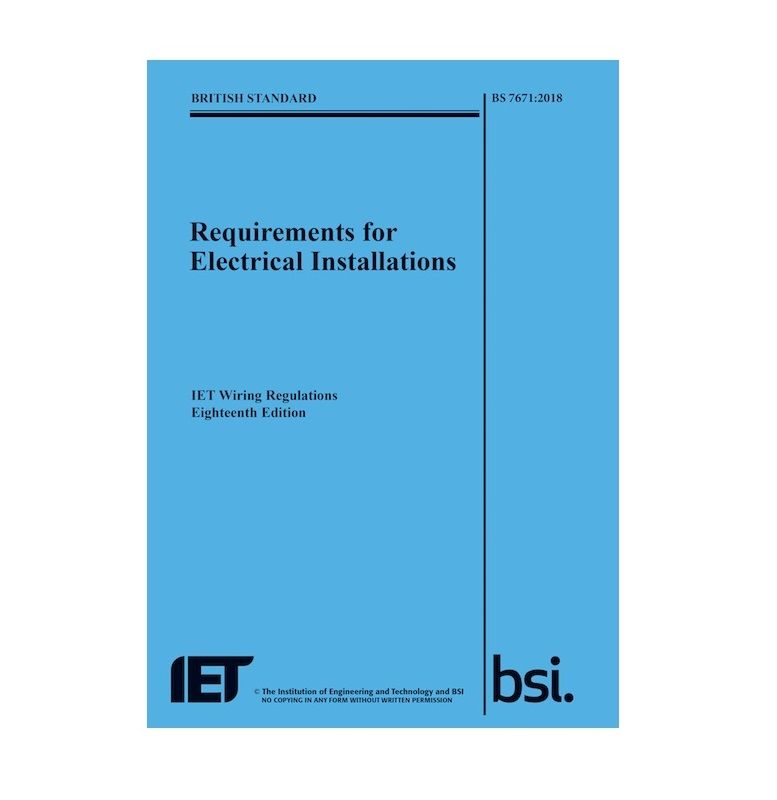
IET & BSI Publish 18th Edition IET Wiring Regulations
The 18th Edition of the IET Wiring Regulations has published. The essential publication for all professionals working in the electrical industry forms the national standard to which all new and amended electrical installations in the UK are to comply. The IET urges all electrical professionals to ensure they are familiar with the changes before the new requirements come into effect from January 2019. Significant changes include: recommendations for Arc Fault Detection Devices (AFDDs) in AC final circuits, requirements for devices for protection against overvoltage, a change to the requirement for the methods of supporting wiring systems within buildings against their premature collapse in the event of a fire and a new Appendix focusing on energy efficiency. Changes have also been made to the requirements for electric vehicle charging installations with PME supplies (the most common form of earthing in new installations) as well as new guidance for the design and erection of electrical installations that have local production and storage of energy for optimising efficiency. The changes to BS 7671 come from to the revision of international and European standards, of which the UK is obliged to take on the technical intent. JPEL/64 members represent the UK on many of these international committees and the content to be included is discussed in terms of the impact on UK industry, before a new update to BS 7671 is agreed and published. Mark Coles, head of technical Regulations at the IET, said, “The IET is the authority for electrical installation in the UK and ensures that JPEL/64, the national Wiring Regulations committee, carefully considers all necessary updates to the Regulations to ensure they best meet the needs of the industry. “The 18th Edition of the IET Wiring Regulations contains some significant changes to the way all electrical professionals are required to carry out their work in order to safeguard themselves and the public. With this in mind, it is essential that all electrical professionals ensure that they are up to speed with the new requirements.” BS 7671:2018 and the IET’s suite of guidance are available from www.theiet.org/wiringbooks. To accompany the 18th Edition, the IET is launching online training for the City & Guilds 2382:18 qualification. The only online training to be endorsed by City & Guilds for this qualification, the Full and Update courses both offer flexible learning. Accessible via an app, the training also includes three full practice exams. More information can be found at www.theiet.org/academy-regs-pr.