2 November 2026
Product of the Month: Amari Floodlight range by Aurora Lighting
 
12 November 2026
Schneider Electric transforms Southampton hospital estate
 
12 November 2026
GTEC Training opens new education facility in North Yorkshire
 
11 November 2026
Energy, AI and smart buildings: register now for EMEX 2026
 
11 November 2026
Solar and batteries could cut electricity costs by 40%, data finds
 

Latest News


RCDs And The 18th Edition
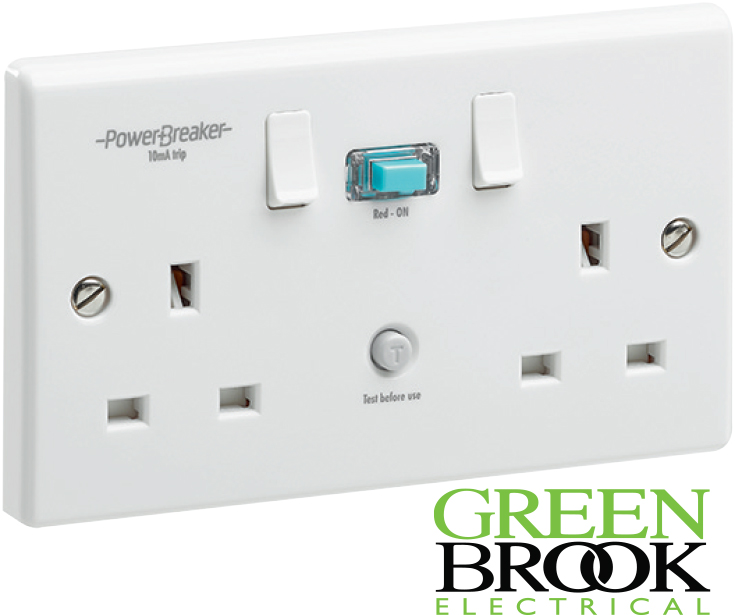
So let’s talk about the basics. Residual Current Devices are electrical devices which, when incorporated into an electrical installation, will provide the highest degree of protection against the risks of electrocution and fire caused by electrical earth faults. PowerBreaker were the first to create the RCD back in 1975. The 17th Edition of Building Regulations recommends the use of RCDs for sockets as well as for inside consumer units. The new 18th Edition recommends that RCDs be used for all public spaces and for retrofitting sockets that are not already RCD protected. Despite this recommendation, there are still approximately 13 million dwellings in the UK that have no RCD protection at all. Approximately 10% of all fires are caused by electrical faults, and many of these could be prevented by using RCDs. RCDs are available in different variants, namely Passive or Active, and can be used for different applications. Many people are unaware of the differences between these two products and do not understand where best to use what. For Passive RCDs, a typical application would be a refrigerator or freezer that would return to its regular mode of operation as soon as the power supply resumes normal operation. Passive RCDs are also useful to use for for sockets in hard to reach places, where having to gain access to re-set an RCD would be tricky, but where protection is still required. An active RCD is better used for electrical equipment such as hedge trimmers, machinery or power tools, where unexpected restarting of the equipment could present a danger to the user in a power cut situation. PowerBreaker 10mA RCDs are the latest products to hit the market. These RCDs trip earlier, as they are more sensitive to a fault current flowing, breaking the circuit before the trip occurs further upstream in the consumer unit – often then cutting out other faultless items. These RCDs have been deemed safer for use in areas with young children, such as nurseries and schools, but also for use in places with more vulnerable people like hospitals or old people’s homes, where a chance of electric shock could be fatal. As detailed earlier, the 18th Edition now deems that all public access areas would be advised to use RCDs (we would suggest 10mA) as all types of people can pass through these areas. PowerBreaker offers both a 30mA RCD as standard plus a 10mA option. The PowerBreaker 30mA RCDs trip at least 10 milliseconds faster than the BSEN standards require. PowerBreaker socket RCDs also offer MFBL (make first break last) technology, which is critical to avoid upstream RCD nuisance tripping at the consumer unit.

BCA Updates CPR Guidance
Specifiers looking for the latest Construction Products Regulation (CPR) guidance can now download the British Cables Association’s paper Construction Products Regulation and Cables – UK position from its newly updated website. The paper, as well as the BCA’s Guidance for Specifiers document, has been updated to reflect concerns and questions raised by specifiers over Reaction to Fire cables and which Class should be achieved for each installation. Construction Products Regulation for cables came into effect last year, and over the past nine months the BCA has received numerous enquiries from specifiers looking for clarification on this issue. Unlike many other EU countries, the Ministry of Housing, Communities and Local Government (MHCLG), charged with responsibility here, has said that the UK has no legislation to determine the level of performance required for Reaction to Fire cable. Although amendments to The Building Regulations 2010, and especially to Approved Document B, may happen in the light of Dame Judith Hackitt’s report, it is most unlikely to lead to any prescriptive legal requirement on Reaction to Fire for cables. The choice of performance level, which is expressed in terms of Classes, is therefore a matter for designers and specifiers who are free to make their own decisions if it reflects the demands of other applicable regulations. The BCA’s guide explains the general nature of the range available so that specifiers have an awareness of the types and their terminology. From July 1 2017, it became compulsory for cables, with a Reaction to Fire performance and intended for permanent installation in buildings and constructions works, to be accompanied by a Declaration of Performance (DoP) and have CE marking. The updated guide can be downloaded on the BCA website.

Contractor Gets Hands Dirty For BBC Garden Rescue
An NICEIC approved contractor has been featured in an upcoming episode of BBC’s Garden Rescue. Gavin Jones of Gavin Jones Electrical was invited to take part in the filming after NICEIC was contacted by producers of the show. He said, “It’s a little out of the ordinary to get a call on a Tuesday morning asking to be part of a television programme for the BBC, but after giving it some thought (only a couple of seconds) it didn’t take long to see what it could do for me and my business. “The job was simple; to run a steel wire cable from the customer’s garage, underground, to a water feature in the garden. It was like any other job, apart from having to repeat a few parts of it so the cameraman could get the shot he was after. “The producer was really interested in the process of digging out a trench for the cable to go in, securing the cable with electrical warning tape, backfilling the trench halfway, placing another piece of warning tape as a precautionary measure, and finally filling the trench. “It’s really refreshing to see someone who’s not in the industry show real interest in the work that every electrician would see as best practice and an industry standard.” NICEIC’s technical expert Darren Staniforth was also invited along to the recording of the show. He provided general advice for anyone considering electrical work in the garden. Gavin Jones Electrical are NICEIC Approved Contractors based in Northampton but also service Wellingborough, Kettering, Corby, Towcester, Silverstone, Milton Keynes and the surrounding areas. They carry out a wide range of electrical service in domestic commercial and industrial sectors. The new series of Garden Rescue will air on BBC 1 at the end of May. NICEIC has also been asked to help out with the next series of Love Your Garden on ITV. The producers of the show contacted NICEIC to help find reliable contractors for a series of shows to be filmed across the UK.

CEF Raises Money To Fund Macmillan Nurse
[caption id="attachment_14340" align="aligncenter" width="640"] Photographer: Derek Harper, www.geograph.org.uk/photo/4646220[/caption] CEF staff have set a goal to raise enough money to fund a Macmillan nurse for a year by walking the Macmillan Way. The total cost to fund a nurse is £54,000, and the walk will be taking place between June 1 and June 17 this year. Macmillan Cancer Support is CEF’s nominated corporate charity. The Macmillan Way is a 290-mile footpath in England that links Boston, Lincolnshire to Abbotsbury in Dorset and follows footpaths, bridleways and byways. Andrew Moseley, along with a number of CEF general managers and members of the procurement team, will be taking part in the charity walk. To donate, visit Andrew's JustGiving page. More information about the Macmillan Way walk can be found on the website. For more information about the charity event, email cefcaresmacmillan@cef.co.uk.

Shortlist for ECA Industry Awards Announced
A shortlist of 26 leading businesses from across the electrotechnical and engineering services sector have been chosen by judges for this year’s ECA Industry Awards. This year’s award winners were drawn from a highly competitive pool of entries. The successful organisations have been recognised for their outstanding performance and achievements in the last year, with awards including ‘Contractor of the Year’, ‘Best Health and Safety Initiative’, ‘Excellence in Training and Development’, and a number of new specialist engineering categories.  The independent panel of judges, including Certsure marketing director Mark Smith, Electrical Safety First chief executive Philip Buckle and Electrical Industries Charity managing director Tessa Ogle, convened on April 10, 2018 to consider all entries and compile the shortlist. Adjudicator and ECA director of member services Helen Atkinson commented, “The number and quality of entries this year was impressive; whittling down the shortlist was no easy task. I would like to congratulate all the nominees, and also thank this year’s entrants for the significant time and effort they put into their award entries. I’m very much looking forward to meeting many of these organisations at our industry-leading Awards Dinner ceremony in June, where the winners will be announced.” The ECA Industry Awards Dinner, which is headline sponsored by Electrium and LEDVANCE, is being held on June 8 at the Hilton Bankside in London. On the night, guests will be treated to entertainment from award-winning comedian Alastair McGowan, as well as live music, magicians, and more. The ECA Industry Awards Dinner will also offer the opportunity to network with colleagues and make new contacts with industry contractors, specifiers, manufacturers and distributors, and other key figures from the electrotechnical and engineering services sector. 

Contractors Warned Over Medium Voltage Cables
AEI Cables has issued a warning to make sure that Medium Voltage (MV) cables coming onto the market are independently approved and certified as compliant as the pressure mounts on the installation of quality products in modern building developments. As the incidence of non-approved cables continues, the company is warning the supply chain to be particularly careful around the application of these cables into high-risk environments including hospitals, industrial sites and sub-stations serving infrastructure sites. Stuart Dover, commercial manager for AEI Cables, said, “We are advising contractors to be careful, especially with new building design and development for modern complex buildings. If these cables are not approved, just question why not and check them out. To follow best practice and all compliance, we also advise that these cables are independently tested and certified by a third-party such as BASEC. “There have been many instances in the recent past of non-approved cables coming onto the market, but in these environments it is crucial to get it right. “Take all due precautions. Look for the British Standard, European or international standard number, the manufacturer’s mark and third-party approval markings. Even if there are markings, it is worth checking because some labels and stamps have been used fraudulently. “Cables which are unmarked but not checked can become untraceable, so it is important at the point of receipt for contractors to check every time. Also keep records of purchases and deliveries to ensure that what is being installed is what was specified originally.” He added, “It is well worth the small amount of time to make these checks, especially by the nature of the new designs of buildings these are going into and how they will be relied on to provide continuous power supply.” Of the 29,312 accidental electrical fires in England during 2016-17, 5,241 (18 per cent) were attributed to wiring, cabling or plugs and of these 2,693 (51 per cent) were down to faulty electrical supplies and 1,728 (33 per cent) were caused by faulty appliances and leads.

Aldous Bill Petition To Be Presented To 10 Downing Street
A petition on fair payment and retentions will be delivered to Prime Minister Theresa May later this month by Peter Aldous MP and a delegation of industry leaders. The group will take the petition to 10 Downing Street on Monday April 23 at around 1.30pm.  The group of industry leaders presenting the petition includes FSB National Chair Mike Cherry, FMB chief executive Brian Berry, director general of the Institute of Directors Stephen Martin, ECA CEO Steve Bratt and BESA CEO David Frise. BESA and ECA, who are coordinating the presentation on April 23, are urging the industry to support the petition, which comes four days before the second reading of the ‘Aldous Bill’ (Friday 27 April), which proposes cash retentions owed to suppliers are held in trust accounts. ECA CEO Steve Bratt commented, “Putting retentions in trust is a vital first step in helping to protect the supply chain from future upstream insolvency, and it will also help to prevent the abuse of retention monies owed to the supply chain. “Our petition aims to raise awareness of this critical issue with the Prime Minister in advance of the Aldous Bill being heard in Parliament. We urge the entire construction industry to back the bill and show support for immediate retentions reform.” BESA CEO David Frise added, “This represents a tremendous show of support from industry and MPs. At its best, the industry can deliver a first-class built environment, but cash retentions impact every one of the 330,000 SMEs and sole traders represented in this petition. We need reform now and the proposal to hold cash retentions in trust will be a start to demonstrate lessons have been learned from Carillion.” Reform of unfair payment practices, including excessive withholding of retentions, is already supported by over 75 industry trade bodies, representing over 330,000 companies and self-employed professionals. Support has been given from across the entire construction supply chain, including house building, roofing, scaffolding, electrical, heating, plumbing, interiors and demolition. Payment abuse has climbed up the political agenda since construction giant Carillion collapsed just six days after the first reading of the Aldous Bill, leaving many SMEs owed huge sums of money. Had retentions owed by Carillion to suppliers been held in trust, this money could have been recovered.  

Mr Electric Becomes Government-Approved Installer Of Electric Car Charging Points
Mr Electric has announced that it has been recognised as a Government-approved installer of electric car charging points, enabling its network of franchised electrical businesses to now install and manage electrical vehicle car charging points for homes, workplaces and public areas throughout the UK.  As an authorised installer under the Government’s Office for Low Emission Vehicles (OLEV), Mr Electric can now help domestic and commercial customers apply for grants towards the cost of installation, which will help reduce the outlays of installing charging points.  The Government grants are designed to support the wider use of electric and hybrid vehicles, but work can only be carried out by approved installers using products from approved suppliers. For domestic properties, the Electric Vehicle Homecharge Scheme provides up to 75% of the installation cost (up to a total of £500) for charging points, while the Workplace Charging Scheme offers up to £300 per socket (up to a maximum of 20 sockets) for commercial properties.  Mr Electric is working with the NICEIC to provide an electric vehicle charging training course for all its electricians. This qualification will then provide the required accreditation for trained electricians to be able to install the electrical vehicle charging points for customers, as well as offering a free site survey, design, installation, registration, monitoring, billing, smart control and maintenance.  Pierre Jeannes, VP of operations for Mr Electric, said, “Electric vehicles are becoming increasingly popular as both consumers and businesses are looking for new ways to reduce rising fuel bills. "As a result of this, the demand for electric vehicle charging points is also growing and this has opened up a lucrative new business opportunity for our franchisees – more than 47,000 plug-in cars were registered in 2017, taking the total on the road to 137,000, which is an increase of 94% since 2013.  "We also have a corporate social responsibility towards the environment, and as we move into the future, we fully support the growing demand for sustainable green transport technology and aim to be at the forefront of this sector. Electric vehicles need charging stations and this where we can help."

Recolight Criticises Environment Agency WEEE Charging Announcement
Recolight has criticised a decision by the Environment Agency (EA) to significantly increase WEEE (waste electrical and electronic equipment) charges. Following a consultation, the EA has announced that some annual WEEE charges they levy on producers would more than triple in 2019. Current EA fees are £210 for companies with a turnover below £1 million, and £445 for companies with a turnover above £1 million. The EA announcement revealed that they will increase both these charges to £750 from January 2019. Commenting on the news, Recolight CEO Nigel Harvey said, “It is disappointing that the EA did not take on board comments made during the consultation process. This increase will be particularly difficult for small and medium sized lighting companies.” He added, “The EA were presented with alternative, fully costed funding options that would have limited the impact on lighting businesses with a turnover below £1 million. These alternatives would have spread the increase more fairly across the range of operators in the WEEE system. However, they were ignored, in favour of this excessively costly solution.” The higher fees will only apply to producers based in England. Fees for those businesses registered in Scotland, Wales and Northern Ireland remain unchanged.

How Do Changes To BS 7671 Come About?
BS 7671 has always been about improving the safety of electrical installations, minimising the risk of fires resulting from unsafe wiring, and a way of standardising electrical installation design. JPEL/64 (the national Wiring Regulations committee) has a responsibility for keeping these standards up to date in-line with new and emerging technologies and industry developments, which are vast and fast moving. When the original ‘first edition’ was published in 1882, no-one dreamed of the uses for generating and using electricity in the ways that we do today. Solar power and electric vehicles would have been within the realms of science fiction, yet these are now part of our everyday lives. JPEL/64 members also represent the UK on international electrotechnical committees, ensuring that the UK’s requirements are considered in the IEC Standards and CENELEC documents, the technical intent of which, the UK (as a CENELEC member) is obliged to take on. BS 7671:2018 has been a major undertaking for JPEL/64. A number of new Regulations, or changes to existing Regulations, have been carefully considered, put out for public consultation, and debated within the committee. Examples of both a UK-based, safety-focused change and a change resulting from IEC and CENELEC requirements are as follows: A new Regulation 521.10.202 is a UK-based change to improve upon the previous Regulation (521.11.201), requiring methods of support of wiring systems to be adequately supported against their premature collapse in the event of a fire. This applies throughout the installation and not just in escape routes, as was previously the case. A new Regulation 421.1.7, based on IEC and CENELEC requirements, has been introduced recommending the installation of arc fault detection devices (AFDDs) to mitigate the risk of fire in AC final circuits of a fixed installation due to the effects of arc fault currents. Arc faults can result from series arcs or parallel arcs. Whilst RCDs can offer protection against earth faults, RCDs cannot detect a series arc fault because there is no leakage current to earth. Mark Coles, head of technical regulations at the IET, explains further, “JPEL/64, the national Wiring Regulations committee, carefully considers all necessary updates to the Regulations to ensure they best meet the needs of the industry. “The 18th Edition of the IET Wiring Regulations contains some significant changes to the way all electrical professionals are required to carry out their work in order to safeguard themselves and the public. With this in mind, it is essential that all electrical professionals ensure that they are up to speed with the new requirements.” "Requirements are constantly changing, and in such a fast-moving industry, the IET Wiring Regulations will need to constantly evolve as technological and environmental factors increase in importance to the way that we live our lives. The IET is providing everything needed to ensure that you are up to date with the new requirements, offering BS 7671 guidance, online training and digital subscriptions to the Regulations to help industry get prepared for the 18th Edition. Find out more on the IET website.