


As of October, electricians working for scheme-registered businesses may need to demonstrate individual Level 3 qualifications in several areas, with electrical distributor CEF highlighting the need for accessible training to help contractors meet the new requirements
Changes to the Electrotechnical Assessment Specification (EAS) could leave some electrical contractors facing additional training and qualification requirements, as the industry adjusts to a greater emphasis on individual competency.
Since October 2026, individuals working for companies registered with scheme providers, including NICEIC, NAPIT, ECA and SELECT, are required to demonstrate formal individual Level 3 qualifications in Solar PV, Electrical Energy Storage (EES), Electric Vehicle Charging (EVC), Micro Wind and Periodic Inspection and Testing.
The changes represent a shift away from relying solely on the Qualified Supervisor model, towards more formal recognition of individual competency.
However, while the move is intended to strengthen standards across the sector, awareness of the requirements has been inconsistent, leaving some businesses facing challenges in securing the necessary qualifications while maintaining their existing workloads.
Electricians and contractors face training challenges
Some businesses have taken steps to prepare for the changes, while others are only now becoming aware of the requirements through conversations on site, industry events and electrical wholesalers. For contractors already working to full capacity, finding the time to undertake additional training can be difficult.
Taking electricians away from site can mean lost earnings, disrupted schedules and additional costs for travel and accommodation. For larger businesses, the challenge is multiplied across teams, with employers needing to balance operational demands against the need to upskill their workforce.
Sole traders can face an even greater challenge, with training potentially requiring them to step away from their business entirely. For many electricians, the issue is not necessarily a lack of practical experience, but the need to formally demonstrate competency through the required qualifications.
Finding training that accommodates existing workloads, while providing the necessary practical experience and assessment, is therefore becoming increasingly important.
CEF expands access to Level 3 training
CEF is highlighting its TechTraining programme as a way for electricians to access City & Guilds-approved Level 3 qualifications across the UK. The programme includes Wiring Regulations, Inspection and Testing, Solar PV installations, Electrical Energy Storage and Electric Vehicle Charge Points.
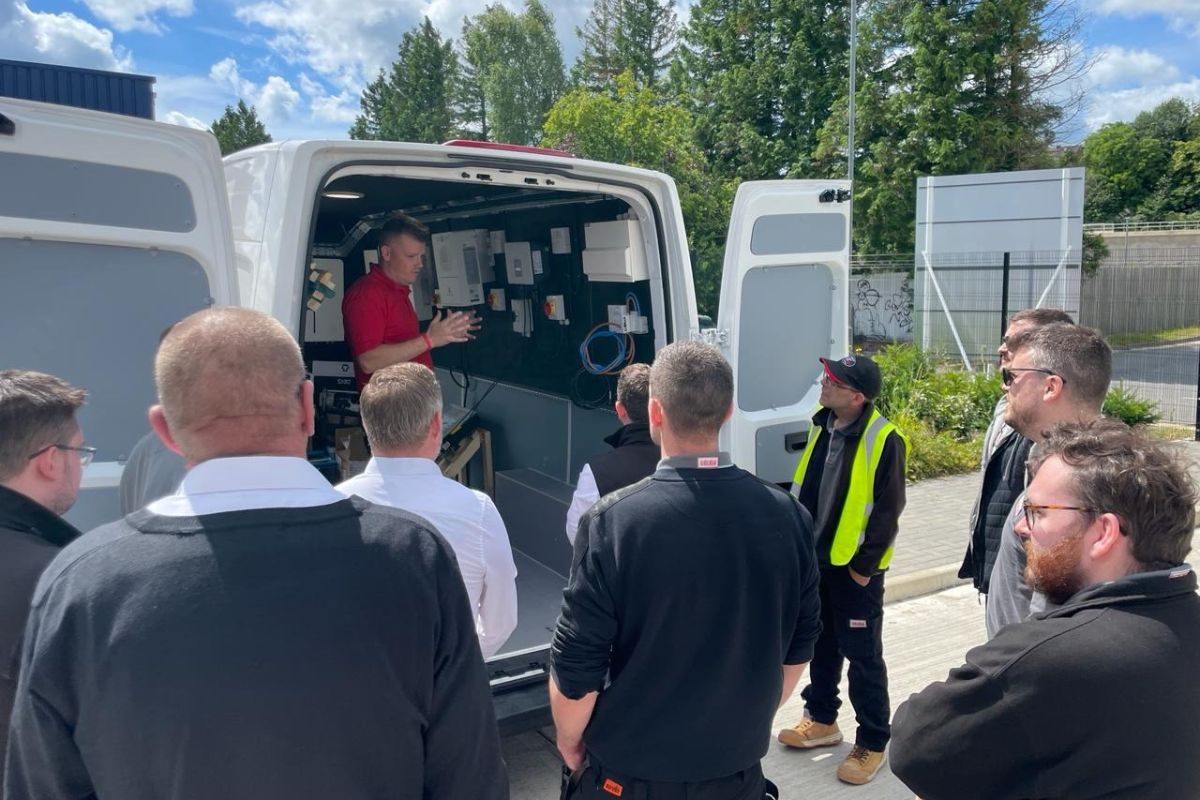
To reduce the need for long-distance travel, CEF offers online learning and remote examinations for theory-based courses, including Wiring Regulations and EV charging. For practical disciplines, the company’s mobile renewables workshop travels nationwide, providing an equipped training environment featuring a roof rig, inverters and batteries.
Candidates can design, install and commission systems as part of their training, providing practical experience alongside the theoretical knowledge required for qualification.
Darren Staniforth, Head of Technical Solutions at CEF, says, “We know it’s not easy for electricians to take time out for training, especially when they’re already busy. What we’ve focused on is making that process more convenient by making training more local, keeping it practical where it needs to be, and giving people flexibility where we can.
“If we can make it easier for someone to access the training they need, that’s what matters.”
Growing demand for CPD and qualifications
The increased demand for training extends beyond the latest EAS changes, with new technologies, updated regulations and expectations around standards and safety contributing to the need for ongoing professional development.
CEF says it has delivered more than 1,100 CPD-accredited sessions over the past year through its wider CPD programme, including CEF Live and TechTalks.
For more from CEF, click here.
