


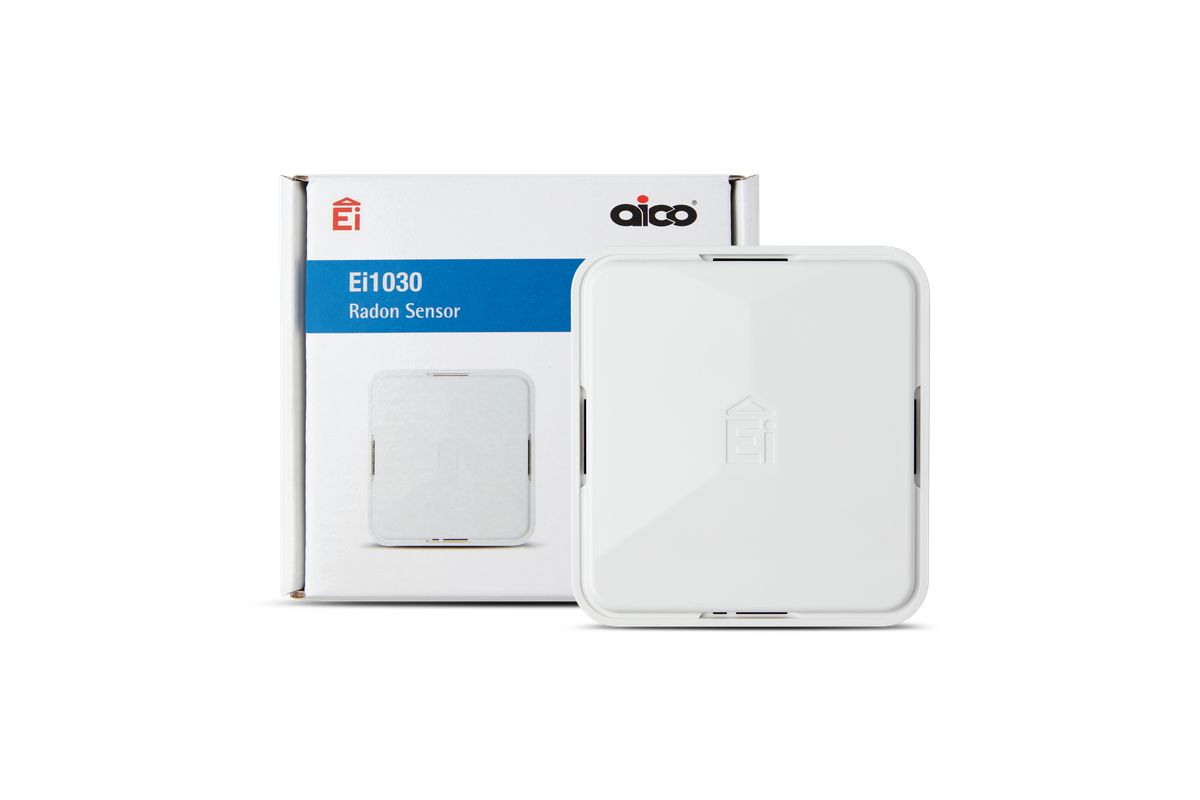
Aico is proud to announce the launch of its Ei1030 Radon Sensor, which provides a new way for housing providers to identify potential radon risks and levels within homes to support targeted mitigation techniques
Radon is a naturally occurring radioactive gas created when deposits of uranium in the ground decay. Radon can be drawn into properties due to negative air pressure within homes, where it accumulates and gets trapped.
As radon is colourless, odourless and tasteless, residents may be unknowingly exposed to high concentrations. Over time, prolonged exposure increases the risk of lung cancer, with radon linked to over 1,100 lung cancer deaths each year in the UK.
While radon levels outdoors are typically low and harmless due to quick dilution, indoor concentrations can vary depending on internal temperature, ventilation and weather conditions. Regulatory frameworks, including the Housing Act 2004 and the Housing Health and Safety Rating System (HHSRS) highlight the importance of assessing and managing indoor environmental hazards.
Radon is also being brought into the scope of Awaab’s Law within England in 2027, meaning social landlords will have a legal obligation to investigate and take remedial action within defined timeframes.
Traditionally, radon detection has been conducted using passive detectors placed in properties for a set monitoring period. While these methods have a long history of use, property managers increasingly look toward continuous monitoring solutions to better understand daily and seasonal fluctuations and streamline compliance tracking.
New Aico Ei1030 offers continuous indoor tracking
The Ei1030 offers a continuous approach to tracking indoor conditions. Enabling housing providers to take a proactive, data-driven approach to protecting assets and safeguarding tenant wellbeing, while maintaining compliance with evolving legislation.
• Comprehensive Monitoring: The sensor monitors radon, temperature, and humidity, recording data every 15 minutes for accurate tracking and real-time insights.
• Seamless Connectivity: The sensor connects via RF to the Ei1000G Gateway, providing secure access to data via the HomeLINK Dashboard.
• Long-Term Reliability: Designed with a 6-year operational battery life, minimising maintenance requirements and supporting long-term property management.
• Actionable Insights: Data helps housing providers decide which homes to investigate, categorise risk levels, track conditions after remedial work and manage cases efficiently.
Alan Ramage, Building Maintenance Manager at Midlothian Council, says, “We are excited for the launch of the new Ei1030 Radon Sensor. Through this investment, Midlothian Council has been able to proactively assess and identify radon risks across its housing stock, enhancing tenant safety and enabling data-driven decision-making to support future housing investment and maintenance programmes.
“It has been great to work in partnership with Aico, building on the success of our decades-long relationship and shared commitment to improving resident safety through innovative technology.”
Luke Norcross-Evans, Product Development Executive at Aico adds, “Our work with RSLs helps connect measurement with action. Better information can help landlords understand radon levels across their housing stock, identify where further investigation may be needed and make informed decisions about next steps. The experience and feedback from these partnerships help us develop products around the needs of the people who use them and the homes they serve.”
This article is sponsored by Aico.
For more from Aico, click here.
