


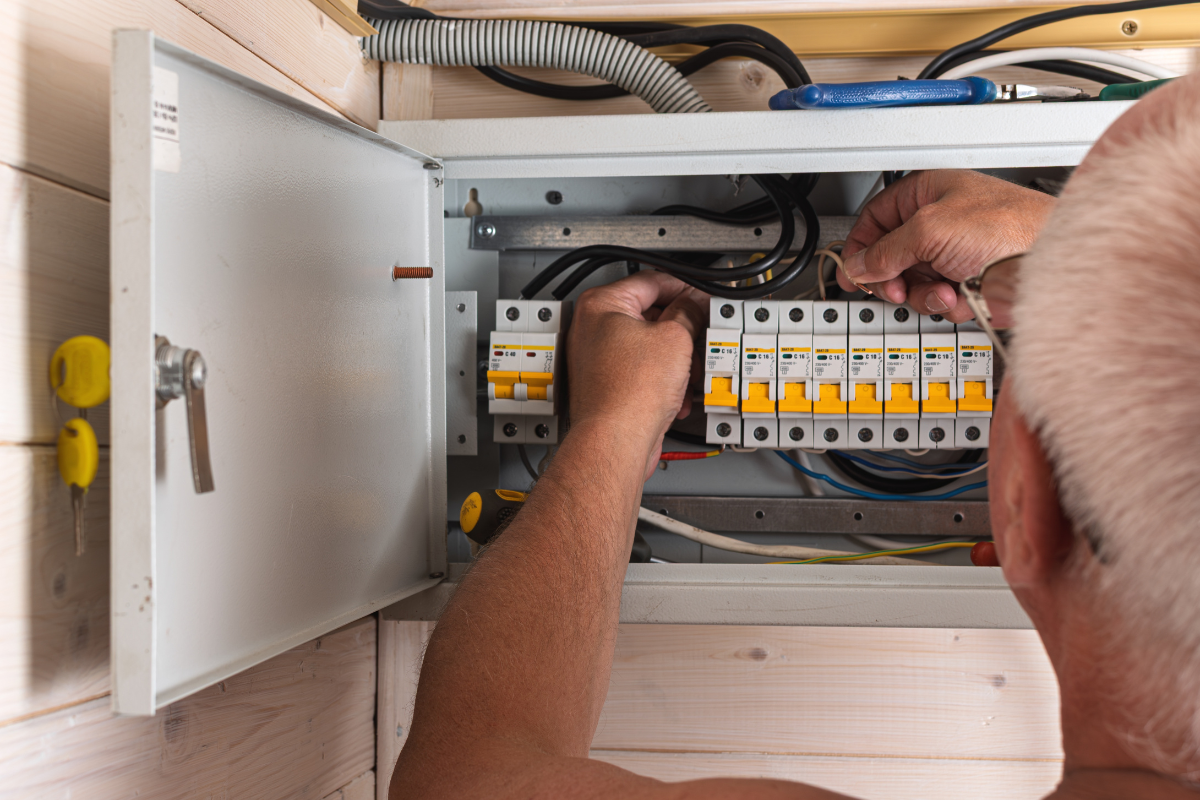
Electrical contractors working in social housing in England could find that what they report from site starts a legal countdown for their clients, under changes due to take effect on 30 November
Phase 2 of Awaab’s Law extends the fixed response times that apply to damp and mould to seven more hazard categories: excess cold, excess heat, falls, structural collapse, fire and explosions, electrical hazards and domestic hygiene.
Landlords must investigate potential emergency hazards within 24 hours and complete any necessary safety work in that time. Significant hazards must be investigated within 10 working days, with safety work to follow within five working days of the investigation concluding.
A hazard counts as significant if a reasonable landlord with the relevant knowledge would make it safe within 15 working days, judged against the household’s actual circumstances.
The clock starts when the landlord becomes aware of a potential hazard. Guidance says a report from a third party will usually count from the date the landlord is told, and that a managing agent’s awareness is also likely to count. Whether a contractor’s own awareness counts may depend on whether they act as the landlord’s agent, and landlords are advised to take legal advice.
The guidance says landlords should ensure contractors report hazards they spot beyond the job in hand, and advises them to review existing contractor agreements. It also says an electrical hazard should be investigated and remedied by a qualified and competent electrician. Exposed wiring is one of its examples of a possible emergency hazard.
What it means for contractors
Landlords keep legal responsibility when they use contractors, so any pressure on the supply chain is likely to come through contract terms and reporting procedures.
That raises questions the industry has yet to answer: how much contractors should report, how landlords will triage a rise in reports, and where liability sits when a hazard is missed.
A landlord’s defence is that it used all reasonable endeavours, so records of reports, access attempts and decisions matter as much as the repair.
The law does not cover fire hazards in communal areas already governed by the Fire Safety Order. It does cover those inside individual homes, such as broken smoke alarms.
Why it exists
Awaab’s Law is named after two-year-old Awaab Ishak, who died in 2020 from a respiratory condition caused by prolonged exposure to mould in his family’s home in Rochdale. His parents had complained to their landlord for three years.
It came in through the Social Housing (Regulation) Act 2023. Phase 1 took effect on 27 October 2025, covering emergency hazards and damp and mould. Phase 3, expected in 2027, will extend it to the remaining hazards in the Housing Health and Safety Rating System, except overcrowding.
Tenants can take landlords to court for breach of contract if deadlines are missed, and can complain to the Housing Ombudsman.
Thomas Hoyle, director of Waking Watch at Triton Security, says: “Phase 2 asks providers to treat fire, electrical and structural risks with the same urgency as damp and mould, and the first month of the new duty fall in the coldest part of the year, when reports tend to rise. Policies on paper rarely show where a report stalls.
“The providers best placed for the changes to come on 30th November will be those who have rehearsed the process: taking a realistic case through triage, investigation, repair and rehousing against the clock, and fixing the weak points while there is still time.”