2 November 2026
Product of the Month: Amari Floodlight range by Aurora Lighting
 
26 November 2026
Thorn scores second Highland football lighting installation
 
26 November 2026
Segen pens exclusive distribution contract with M-Rack
 
25 November 2026
Scolmore helps rejuvenate Tamworth Cancer Support Centre
 
25 November 2026
Leicester apprentice crowned 2026 SkillELECTRIC champion
 

Latest News


Scolmore launches online training
With the second national lockdown in place, Scolmore wants to reassure our wholesale customers and contractors that the company is fully operational and working within the current guidelines to continue to supply its full range of products to the professional electrical market. The company’s ability to always hold vast stock levels means that it is able to fulfil orders from across the group, with its extensive range of wiring accessories, lighting and lighting control products, security and fire protection products, and cable accessory products all currently available. For many industries and individuals, the first lockdown created a new way of working, interacting and learning. Scolmore has been working hard behind the scenes to enhance the support offered and now, with technical expert Darren Staniforth on board, will be offering a range of online training resources to help contractors get the most out of its products and solutions and understand some of the key industry issues. A mixture of live videos streamed over Scolmore's social media platforms, and training sessions hosted over zoom will commence on Tuesday, 10th November. Notifications for all live sessions and links for the zoom training will be regularly posted in the run up to each event, and they will be taking place outside of working hours to ensure everyone has the opportunity to take part. The very first live video session will be with Darren Staniforth and will be broadcast across social media at 19.30 on Tuesday, 10th November and will cover the topic of Insulation Resistance Testing of USB outlets.  This will be followed by a live session with Darren on the subject of antimicrobial wiring accessories helping in the fight against the coronavirus. This will take place on Friday, 13th November at 10.00am. The Zoom training sessions will also commence this week with the following programmes scheduled: Wednesday, 11th November 12.00 to 13.00 – an introduction to BS5266 Emergency Lighting with David Robbins Friday, 13th November 12.00 to 13.00 – an introduction to BS5839 and Fire Systems with Scolmore’s group technical trainer Gavin Reid.

Schneider Electric; Data Centre Sustainability, improving resilience and Reducing Costs
Schneider Electric, announced a new White Paper, “How Microgrids for Data Centres Increase Resilience, Optimise Costs, and Improve Sustainability,”. It provides a guide on how technological developments in analytics, sensors and systems management can help data centre operators harness local energy sources to improve the resilience of their facilities. Additional benefits include the ability to implement cost-savings, reduce demands on power supply and boost sustainability efforts, which are a concern for data centre end-users, operators and governments. “With data centre technologies evolving and becoming more available, operators can utilise microgrids to improve resilience, energy efficiency and drive sustainable operations,” says Marc Garner, VP, Secure Power Division, Schneider Electric UK&I. “With this technology, providers can integrate on-site renewables, and generate revenue by storing electricity and selling it back to the grid.” A microgrid provides power to consumers, comprising of a entity such as a data centre, or a cluster of facilities. The energy resources may include: diesel generators, used as backup power sources to the mains utility; combined cooling, heat and power systems where gas engines or turbines generate electricity; and storage systems. The white paper details how a microgrid based on a three-layer architecture can be used to improve operational resilience. The first layer, comprising smart sensors based on Internet of Things technology, provides monitoring and control capability to distributed energy assets. The second layer comprises a microgrid controller and associated software to allow local Edge control to take place in real time. At the top layer, applications, analytics and services, typically hosted in the cloud, help decision makers to optimise how and when to produce, consume and store energy. This helps to manage a multi-layered approach to system resilience, ensuring that there is sufficient battery and generation capacity in place to withstand any outages from the mains. Microgrids can help optimise energy costs and maximise the use of sustainable energy. Generation of solar or wind energy can be integrated into the energy using control systems now available at cost-effective prices. Combined with analytic software that can predict weather conditions likely to be conducive to renewable energy generation, operators can reduce demand on mains power or even sell energy back, thereby reducing costs and boosting the viability of environmentally friendly energy production. A report by Schneider Electric reveals the importance of sustainability and efficiency for multi-tenant data centre operators. Driven by customer demands, the report finds 80% of colocation service providers have major sustainability programs in place to improve the way they operate their data centres. Moreover, 57% of respondents believe that sustainability will be highly important competitive differentiators in the future, and 97% say that some or all of their customers are looking for commitments to sustainable practices.

Flipping the switch
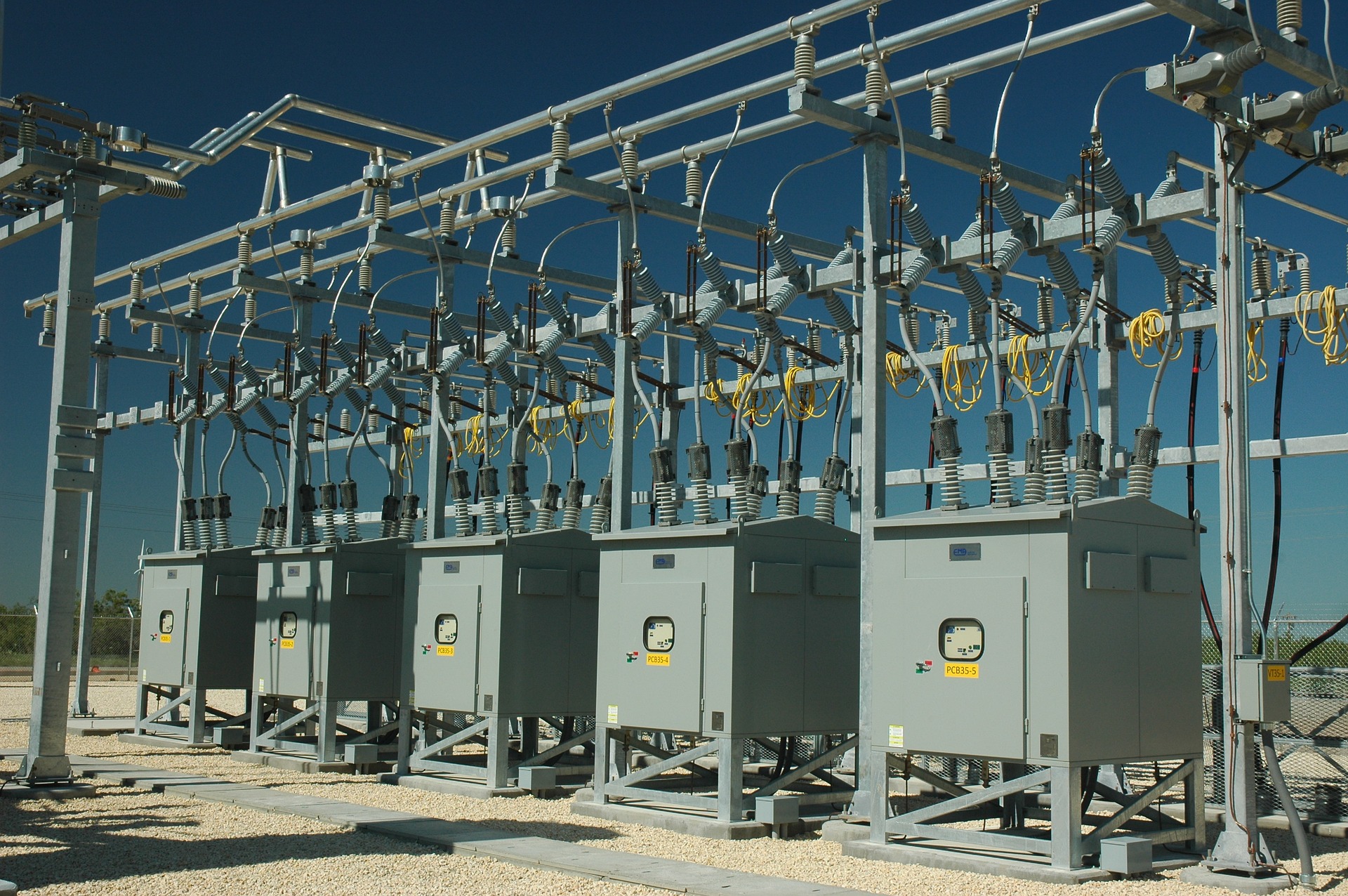
The Natref petrol refinery, has been at the cutting edge of refining technology ever since its inception. Because the local market for heavy fuel oil is limited, Natref is designed to get the most out of crude oil. Optimising its use of the bottoms upgrading refining process, Natref can produce 70% more white product than refineries which rely on heavy fuel oil. Automatic circuit breakers are used to protect circuits from damage in the event of a system overload. They do this by interrupting current flow if a fault is detected. Unlike a fuse, circuit breakers are reset to resume normal operation. However, they have a finite operating life and can only be reset a certain number of times. Monitoring circuit breakers at substations is a problem for engineers since they traditionally had no way of knowing if one went off and had automatically reset. Existing on-site alarms showed the current state of the circuit breakers so, if reset, they would present as normal. Engineers were unaware of underlying issues at the substations because all circuit breakers were showing as normal, and incidents went undetected. Being unable to detect and record faults in the system led to increased maintenance costs. To overcome problems, the plant managers at Natref engaged Omniflex to provide a way of monitoring breaker activity. Omniflex implemented alarm annunciators monitoring circuit breaker operations, logging recorded events to 1 millisecond. The data is recorded on a built-in SD card to produce an electronic data repository for auditing purposes, improving fault finding performance. From each monitored switch, the signal is split so it goes to the annunciator and the sequence of events record in parallel. The contact from the circuit breaker is monitored, open or close, and the annunciator traps the momentary alarm caused by the circuit breaker tripping and maps it to the alarm status. This enables engineers to see if there has been an incident, even if the circuit breaker has automatically reset. Each substation has a GPS time synchronisation module, updating and synchronising time across the system, allowing comparisons to be made across the plant on a unified time-base. By adopting this technology, plant managers can reduce maintenance, implement a predictive programme, replacing circuit breakers and minimising downtime. By tracking all circuit breaker trips, problem areas in the system can be identified by looking at repeated circuit breaker.

CICV with Construction Scotland Innovation Centre launch 'Be Covid Smart' digital toolkit
In its latest initiative to help Scotland’s building sector, the Construction Industry Coronavirus Forum has used technology, creating a digital learning toolkit to promote best practice. Working with Construction Scotland Innovation Centre, linking business', university experts and public sector providers, the Forum launched the Be Covid Smart learning programme. Using a series of digital scenarios, this training programme aims to raise awareness of COVID-19 safety by: educating encouraging empowering Recognising that the safe return of workers to site is a challenge, Be Covid Smart provides a fun, quiz-based toolkit that can be accessed via mobile, or laptop, hosted on the CSIC website. Iain McCaskey, Head of Devolved Nations at the Building Engineering Services Association and Head of the CICV Forum Skills Group, who is leading the programme, says: “The Forum identified the need for a safe return to work, also for reassurance for apprentices, their families and employers. “This learning solution will not only raise awareness of safety, but identify the user’s knowledge of the steps to protect themselves and others. “Be Covid Smart will be available to everyone within Scottish construction. However, initial targets will be small site operators and companies employing apprentices, as this is where support is needed.” The toolkit will start supporting domestic work and apprentices and their colleges, exploring the health and safety aspects of working within a college workshop, around the building and how to get to and from work or college. Lisa Deane, Lead Future Skills Manager at CSIC, states: “We're launching the platform with place of learning and domestic work modules, followed closely by On-Site modules. “We’ve worked with the Glasgow School of Art to bring a fun way to learn COVID-19 safety practices, which will give the workforce, businesses and customers confidence in the industries high safety standards. “This is a new approach within the construction industry, which can be updated as circumstances change and which could support markets outside of Scotland interested in the ways we’re dealing with a return to work.” The project was funded by CSIC’s i-Con Challenge Fund, to support the construction industry. It's just one in a string of forum initiatives, including travel advice, underpinning operating guidance and a series of commercial and employment webinars to give advice on redundancy, payments and conflict avoidance. Made up of more than 70 trade associations, the Forum has maintained a supply of information and advice to the sector, as well as carrying out surveys, producing animations and posters, hosting webinars and making appeals to Government.    

BT hits 100% renewable electricity and helps the UK with tech campaign
At a Digital Impact briefing, BT announced its network, offices and shops are powered with 100% renewable electricity. Furthermore, that its top tips on tech campaign helped 5.7 million people to stay connected during Covid-19. Whilst challenges remain, collaboration with the RE100 initiative is helping to make improvements. BT’s transition supports development of local renewable markets, with 16% of its electricity supplied through corporate Power Purchase Agreements and green tariffs. Making the switch will help BT reduce its carbon emissions by 54,000 tonnes. Cyril Pourrat, Chief Procurement Officer at BT, says: "With consuming 1% of the UK’s electricity, green recovery is important to BT, securing renewable electricity contracts.” Sam Kimmins, Head of RE100, states: “We congratulate BT. They’re pioneers in setting a 100% goal and making impressive progress. Sharing their successes and challenges, BT is helping unlock clean energy worldwide.” In April, BT teamed up with the nation’s talent to teach digital skills including WhatsApp, home schooling, business and physical/mental wellbeing. The campaign saw Marcus Rashford and David Walliams, amongst others in lessons during ad’s. 64% of adults saw one, 68% saw an average of four ads. 5.7 million did something new as a result. Andy Wales, Chief Digital Impact and Sustainability Officer at BT comments: “Connectivity is like never before; working from home, entertaining your kids or staying in touch. It’s amazing that people have been embracing technology.” To drive emissions down, Openreach is replacing a third of its 27,000 engine vehicles to electric. In June, BT and Openreach joined forces launching the UK electric fleets coalition. 27 companies have been communicating benefits of switching to electric, calling for policies targeting 100% electric car sales by 2030 and speeding up the rollout of charge-points. BT has led climate action for 28 years, being the first company to link its goals to the level of reductions in emissions, limiting harmful impacts on the climate. They pledge to become a zero carbon emissions business by 2045 and set targets with the ambitious aim of the Paris Agreement - to limit global warming to 1.5°C. Last year, they helped customers save 13m tonnes of carbon – achieving its 3:1 target early. Every tonne emitted by BT – three tonnes of customer emissions were saved. BT’s commitment will help the Government meet its target of zero emissions by 2050.  

JIB’s ‘one-stop-shop’ helps to enable a healthy and secure industry
With another lockdown announced in response to the rising Coronavirus infections, the Joint Industry Board (JIB) has issued a reminder of the benefits a JIB membership can bring. During the first lockdown period in March the JIB worked swiftly to implement flexible and supportive measures to ensure jobs and businesses were fully protected. The JIB, however, carries out ongoing work in a number of areas to assist in enabling a secure and healthy industry for the longer term. The JIB’s membership comprises the UK's largest electrical contractors to the SMEs who make up the bulk of its members. Together, they benefit from a ‘one-stop-shop’, which takes care of employment matters, a comprehensive health and benefits scheme, and unique access to markets other contractors cannot reach. Popular membership benefits include: Dispute Resolution. Skills Development Fund. JIB Benefits Scheme. Nick Woollacott, Labour Manager for Boulting, a JIB member, says: “JIB membership helps us to stand out as a quality employer and the JIB benefits package demonstrates to our people and the outside world that we value them. The JIB brings stability to the industry by implementing good work practices and setting standards. It sets benchmarks to assess competencies that ensures the workforce is suitably skilled, it also promotes personal professional development that encourages all members to adopt and learn new skills and practices. Furthermore the JIB team are always at the end of a phone providing support when we need it.” Jay Parmar, JIB Chief Executive, states: “Our members range from companies with one qualified electrician (often the business owner) and one apprentice, setting their employment arrangements on a sound footing, through to some of the largest players in the industry, who benefit from recognised Gold Standard employment practices. Whatever your company’s size, JIB membership offers electrical contractors not only an industry recognised employment package but also a range of cost savings and other benefits designed to support your business.”

NG Bailey completes installation at UK's first battery industrialisation centre
NG Bailey has completed an installation of mechanical and electrical services at the UK’s prestigious new battery development facility, the £130m UK Battery Industrialisation Centre (UKBIC). Acting as Principal contractor, NG Bailey completed the £14.6m installation in eight months. With commissioning and handover of the facility now complete, NG Bailey has been retained as Principal contractor to support UKBIC during the ongoing installation phase of specialist equipment. The publicly funded facility, which combines manufacturing, experimentation and innovation, covers the whole production process from electrodes to cell, module and pack assembly. Its clients span sectors including electric vehicles, rail, aerospace, industrial and domestic equipment and static energy storage. Most mechanical and electrical equipment - including 6km of pipework and 140 heavy duty service modules – was manufactured at NG Bailey’s offsite manufacture facility in Bradford. Other solutions delivered using offsite construction techniques include production of horizontal multi-service modules which enabled rapid installation and innovative space-saving solutions including a multi-service bridge structure which reduced the amount of space needed to house essential services and maximised production areas. Duncan Smith, NG Bailey’s Operations Director, Midlands explains: “By being involved in the early stages of the project we were able to develop solutions for rapid delivery. It only took six weeks from the initial concept to delivering the first module. “By using our offsite manufacture and building information modelling (BIM) expertise we were also able to deliver other benefits, in particular positioning our services to sit above the facility’s own plant and equipment. “This approach also reduced the time needed to deliver the project by shifting 17,500 hours of work away from site – it creates safer working environments, reducing on-site congestion.” Jeff Pratt, Managing Director of UKBIC, states: “We’re delighted with the progress made, and look forward to UKBIC being operational. “Complete, our facility will be accessed by any organisation with existing or new battery technology – that technology will bring green jobs to the UK.” Councillor Jim O’Boyle, Cabinet member for Jobs and Regeneration at Coventry City Council and board director at the Coventry and Warwickshire Local Enterprise Partnership, says:, “UKBIC is a vital element of Coventry’s drive to lead the green industrial revolution “UKBIC will be the centre of battery development in the UK and we have all the skills to help support the move to electric vehicles.”

Ideal Networks appoints new chairman
Neil Gaydon has been appointed Chairman of Ideal Networks, the global provider of innovative, simple to use cloud connected copper and fibre network test equipment. Neil joins Ideal Networks with 40 years’ experience in the technology sector and board-level leadership. He has previously held notable roles at Pace, leading it to become the global number one in its sector with revenues of $2.3 billion, and North American company Smart Technologies, which was reinvented with a new vision, strategy and value proposition, ultimately leading to its acquisition by Foxconn Technology Group. He attended Harvard Business School and has been the recipient of numerous business awards during his time spent living and working in the UK and North America. “Ideal Networks is committed to continued innovation and transforming the way that our global customers work with exceptional solutions and products,” says Paul Walsh, CEO of Ideal Networks. “We know that Neil’s passion and expertise will support this, and our whole team is delighted to welcome him as our Chairman.” “I am delighted to be joining ideal Networks at a time of expansion where my experience can support the management team’s exciting vision for the company,” says Neil Gaydon, who is also Chairman of two Private Equity owned companies, Adare International and Adare SEC. “Neil has a reputation for working strategically with management teams to create great companies with strong financial performance, that teams are proud to be part of. We are confident that he will be a great asset to Ideal Networks,” says Matthew Hutchinson, Partner at CBPE Capital, which acquired a majority ownership position in Ideal Networks in December 2018.

ESP zooms in to provide fire and security solutions
The pandemic has caused widespread disruption across the industry, with materials often being in short supply and tradespeople unable to carry out their work. This was the situation with the UK’s leading funeral-related services provider when it found that the badly needed renovation of one of its largest premises was suddenly put on hold due to the unavailability of products and staff. ESP was able to come to the rescue to provide the fire protection and emergency lighting products required to complete the project. ESP was initially called on to provide a quote for a range of products that had already been specified for the project. However, having looked at the plans and identifying some issues due to the nature of the concrete building, the ESP design team were able to work with the installer to come up with some alternative products and solutions that would work better. The MAGfire addressable 16-zone fire panels, smoke detectors, sounders and call points, as well as the Duceri emergency twin spots and bulkheads, were all recommended. Whilst competitive pricing and speed of delivery were significant factors in helping ESP to secure the project, a key element was ESP’s ability to offer the requisite fire training. Unable to do this face to face due to lockdown restrictions, a fire training session was set up and conducted over Zoom. This allowed the contractor to access the key elements of the training that are normally conducted in person at ESP’s headquarters. The session covered  the best practice method for installing, setting up and final commissioning of the MAGfire addressable range. Karl Welch, from Bayliss Group Electrics, was responsible for overseeing the project and installing the products. He comments: “We have been working with ESP and the company’s products for around seven years, mainly on the security side with CCTV and ccess control. We haven’t used their fire protection range before, and this particular project was a much larger and more complex one than any we have worked on and required a lot of input from ESP’s design and training teams. From the plans we submitted they were able to turn around a design in just a few days – much quicker than any other suppliers we have worked with - providing us with direct contact with the design team along the way.  Due to its complexity and size, the project required an addressable fire alarm system and having not previously worked with addressable systems, the training they offered via zoom was vital and really well delivered. “The service from everyone at ESP was second to none. They are able to cover all aspects of the project from design, specification, training and technical support, and all at an extremely competitive price.” It was the commitment from the ESP design and the training teams that not only secured this project but has subsequently led to ESP winning the business for another funeral home in the same national chain, working with the same contractor.

Marshall-Tufflex achieves UK business hero award
Marshall-Tufflex, has been recognised by the British Chambers of Commerce as a ‘UK Business Hero’ for its immediate response to meet demand for its antimicrobial trunking for the emergency NHS Nightingale Hospitals. Launched in early October, the UK Business Heroes campaign recognises the incredible work that UK businesses have undertaken to combat the challenges presented by COVID-19. Marshall-Tufflex was nominated by Ana Christie, CEO of Sussex Chamber of Commerce, for its work on the emergency NHS Nightingale Hospitals. The Hastings-based manufacturer was approached to supply its anti-microbial cable trunking for the facilities, which uses a silver ion solution that disrupts key cell functions of bacteria and prevents them from reproducing – 99.9% of harmful bacteria will not survive. To meet the immense volumes and urgency, Marshall-Tufflex changed its manufacturing and distribution operation, with the factory running 24 hours a day, seven days a week, and factory teams working additional hours and over weekends to deliver the required quantities. To put demand in perspective, use of the bio ingredient was around three tonnes every year. During a three-week period, over 40 tonnes was used. The logistics team transformed its procedures, with multiple drops required per day to meet demand for flexible and urgent deliveries, as well as a delivery to one site at 2am following the order just 12 hours earlier. Due to this undertaking to make this urgent delivery possible, the British Chambers of Commerce has named Marshall-Tufflex a UK Business Hero 2020 for its incredible contributions. Paul Mitchell, Managing Director at Marshall-Tufflex, states, "I'm extremely proud of the team at Marshall-Tufflex and key suppliers involved with meeting demand for such an exceptional project. “In these unprecedented times, the emergency NHS Nightingale Hospitals required an extraordinary volume of our antimicrobial trunking to be manufactured and delivered in a very short amount of time. To be recognised as a Business Hero for our teams outstanding work and innovative new processes is brilliant, and we are honoured." Christie says:, “It has been amazing to see Marshall-Tufflex completely change their production schedules to respond rapidly to the Nightingale projects with an extremely smart solution, introduced to prevent harmful bacteria from surviving. It is a huge credit to the company, their suppliers and the whole team.”