2 November 2026
Product of the Month: Amari Floodlight range by Aurora Lighting
 
26 November 2026
Thorn scores second Highland football lighting installation
 
26 November 2026
Segen pens exclusive distribution contract with M-Rack
 
25 November 2026
Scolmore helps rejuvenate Tamworth Cancer Support Centre
 
25 November 2026
Leicester apprentice crowned 2026 SkillELECTRIC champion
 

Latest News


Vimpex delivers at new Amazon fulfilment centre 
A huge new Amazon fulfilment centre on the outskirts of Bristol has installed Vimpex Smart+Guard tough polycarbonate hinged protective covers to protect the building’s alarm callpoints from accidental or malicious activation, which could trigger costly building evacuations resulting in lost production and missed logistical connections.Amazon’s new 500,000 sq ft fulfilment centre at Severn Beach is designed to ensure that more people in the Bristol region receive next-day deliveries. When it is fully operational in September the centre will employ around 1,000 people and will be equipped with advanced robotics technology to help lift and move products around the plant.Fire detection specialists AFS, engaged to engineer and install a whole life protection system at the fulfilment centre site, fitted Vimpex Smart+Guard covers to all the relevant manual call points across the site to protect the system from malicious activation.Smart+Guard, manufactured in the UK by Vimpex, is a tough hinged protective cover that can be easily installed over a range of emergency switches and other devices to provide protection from vandalism, accidental damage or misuse that can cause unwanted alarms. Misuse of manual call points or pull stations resulting in false or nuisance alarms is a costly and troublesome interruption to business continuity. BS 5839 – The British Standard for Fire Alarm Installations recommends the use of manual call point covers in vulnerable areas to mitigate against false alarms.Vimpex Limited’s Managing Director, James Jones, comments “When we acquired the SmartGuard range of products and merged production of the range into our operations, we knew there was massive scope for developing the business. This is evidenced by the growing list of high-profile end users now specifying the product for use in their facilities. The recent news that Amazon have installed the product into their newest fulfilment centre in Bristol is testament to our great levels of customer service and our willingness to go that extra mile for our customers.”

Lighting The Way Forward
Shahid Khan, ECA Technical Manager, looks at how automated lighting and smart buildings can help to drive energy efficiency. If there were ever a silver lining to the coronavirus crisis, it is the renewed drive from all areas of industry and government to recover from the pandemic as a greener, more energy-efficient society. Add to that the recent advances in green technology and climate change legislation, such as the Net Zero Carbon 2050 target, and energy efficiency becomes a no-brainer for clients looking to build greener, cleaner and smarter assets and facilities managers looking to upgrade their buildings. Is smart lighting here to stay? Lighting in buildings is a major source of global carbon emissions, estimated at 20-40% of a building’s total operational energy consumption – not to mention the embodied carbon costs associated with the manufacturing of lighting products. Efficiency is a broad term on its own, but in the context for lighting, it boils down to keeping the energy expenditure of a building at the lowest possible level without sacrificing user comfort and operational requirements. There is an almost overwhelming number of possible approaches to smart lighting installations for both wired and wireless networks – DMX 512, KNX, Zigbee, Bluetooth, to name a few. But for simple yet functional automated lighting controls, DALI takes the prize. DALI: a history DALI – Digital Addressable Lighting Interface – is an interface protocol for digital communication between electronic lighting equipment (electronic ballasts, etc.). It is not a product, but an open-source protocol: a common set of rules and commands that each device in a network must follow. DALI is supported by most global lighting control systems and component manufacturers. Therefore, a network can be installed using simple five-core LV cabling with no segregation required, and a relatively straightforward commissioning regime making it one of the most cost-effective solutions out there. Each component of an open source DALI network is assigned an ‘address’ which a central computer uses to communicate its pre-programmed instructions. For example, a set of lights can be programmed to come on once the first person enters the office in the morning, switch off when no-one is present in a room or on a floor, brighten or dim throughout the day or cause the actuation of solar blinds in response to the amount of natural light coming from outside. The possibilities are (almost) limitless, so long as the maximum number of nodes (unique addresses) is limited to 64 in a single network and are based on the programming sequence of sensors and actuators which respond to the set points input into the system at the commissioning stage. The added comfort, energy savings and cost savings provided by DALI systems helps them pay for themselves relatively quickly, particularly in larger offices and communal dwellings like university halls of residence, hospitals or care homes. Smarter buildings, smarter FM Smart lighting systems can make life easier for facilities managers. Emergency lighting can be tested without human interaction, so long as the lights have been programmed correctly. Parameters can be set up to automatically test the fittings monthly, six-monthly and annually, as per the requirements of BS EN 5266, and generate electronic reports. These reports can then be held locally on servers, emailed to specific individuals or held in a cloud-based system to provide a robust record of maintenance. As each ballast has a unique address, fault-finding also becomes an easier process. Fault reports can be automatically generated and narrowed down to easily identify a faulty component. A data-informed decision can then be made to dispatch an engineer to fix the problem – saving time and money in the process. New challenges As with any new system, there are risks and challenges that contractors and installers should recognise. Automatic lighting controls can present a steep learning curve for FMs new to smart systems. DALI is a great first step, owing to its simplicity and ease of installation. Initial programming can also be laborious when first installing a system. As with any open source protocol, there is an added risk of cyber-attacks. However, this can be mitigated by using closed networks and having robust security measures in place. Engineers should have a strong knowledge of basic programming and security systems before making smart lighting installations a part of their arsenal. Connecting to HVAC DALI is specific only to lighting controls, but for combined control of lighting and HVAC (which uses a different open source protocol called BACnet), different protocols can be made to work in concert using a ‘gateway’. A gateway will translate one protocol, in this case DALI, into one that BACnet can utilise and which can be controlled using one building management system, via one user interface. The compromise here is that the speed of data transmission is slowed – though it is still largely adequate for building services applications. Although somewhat removed from the world of the electrician, it will become increasingly important for contractors and installers to be aware of HVAC automation systems as demand for these, and for total building automation and control systems, is likely to rise. Lighting the way forward In short, automatic digital lighting controls have been around for a while and are most definitely here to stay. They make for better-performing, energy efficient buildings and can be tailored to an almost limitless range of user needs. Installers should see this as an opportunity to grow and offer much-needed expertise to FM teams across the country. To find out more about smart control systems, and how ECA can support building controls and smart building installations, visit eca.co.uk/routes-to-membership/building-controls-bms-bems. - This article originally appeared in the September 2020 issue of ECN.

How To Choose, Configure And Justify The Right Type Of UPS
Marc Garner, Vice President, Secure Power Division, Schneider Electric UK&I, offers some key guidance for electrical contractors and specifiers on the subject of how to choose, configure and justify the right type of UPS. The need for business continuity and resilient power has never been more important than it is today. As the demand for digital services, data consumption and connectivity increases, more organisations are becoming dependent on critical power systems that support data centres, buildings, industrial factories and healthcare facilities. Applications within these environments demand that power is available and uninterrupted at all times, and in order to avoid costly downtime, customers are looking for ways to protect their businesses from outages that can impact on loss of service, revenue and damage to reputation. Downtime itself has become a key pain point for today’s power-dependent organisations and according to the 2017 Centrica Resilience Report, 39% of businesses experienced unscheduled downtime as a result of an energy-related failure and one in three lost revenue due to power outages. Additionally, 18% of those businesses said that outages have damaged their brand, with 19% citing that relationships with customers have soured as a consequence. Today the electrical industry, like many others, is beginning to experience an endemic skills shortage, and due to the specialist expertise needed within specific applications and environments, many professionals are beginning to move from traditional electrical install work to data centres and other power-intensive critical infrastructure spaces. Depending on the type of application a contractor is working with, the complexity of deploying said technology could be significant, which requires electrical professionals to be expertly trained and prioritise safety on site. As such, new power products and components need to be easy to work with, easy to install, safe to service and maintain. The good news is that as new technologies evolve, manufacturers like Schneider Electric can simplify their designs, make products easy to install and use IoT technologies, alongside data analytics, to help electrical professionals overcome many of these energy-related challenges and bridge the skills gap. With outages increasing and resiliency becoming a growing concern, deploying new power protection solutions, and having the ability to monitor, manage and check the health status of critical infrastructure equipment in real-time, has become a fundamental consideration for resiliency. With the advent of IoT and new developments in UPS, Artificial Intelligence (AI) and machine learning, optimising reliability through data analytics now enables electrical contractors to deliver safer, more simplified maintenance and servicing than ever before. Furthermore, for organisations that regularly experience unplanned outages or have challenges with power stability, such software helps them to ensure business continuity and minimise the risk of downtime from faulty equipment. Here, management software offers instant access to live data and offers visibility into the UPS health and lifecycle from any location, helping electrical professionals to identify issues quickly, enabling them to respond rapidly and mitigate emerging fault conditions. Gaining a better understanding of the operating environment and leveraging analytics to offer greater insight into the power infrastructure can also help electrical contractors to lower costs and improve the lifecycle of the component or system. However, helping customers to deploy uninterruptible power supplies (UPSs) safely and effectively is an important component of an electrical contractor’s expertise. It requires they know the intricate inner workings of a UPS and understand the pivotal role that UPSs play in providing customers with resilient power infrastructure. To aid in that effort, Schneider Electric has created a free e-guide that helps electrical contractors gain a key understanding of UPS products and their design. It helps them learn how to better advise customers when choosing between single and three-phase UPSs and appropriately right size them for the application. Named “UPS Basics for Electrical Contractors & Specifiers: How to Choose, Configure and Cost-Justify,” the guide covers five common UPS configuration options, with increasing levels of redundancy. It details the types of questions contractors need to ask their clients in order to determine their tolerance for risk of downtime, and enables them to more accurately specify the UPS configuration that makes the most sense for the application or environment. The e-book also offers electrical professionals a high-level overview of UPS types, detailing key features and functions available within the latest models, including new operating modes that save energy and cost, before discussing the importance of UPS maintenance and why it remains crucial to reliable UPS operation. The Schneider Electric free e-guide is available immediately to electrical contactors by clicking here. Learn how the right type of UPS, deployed in an effective configuration, can minimise losses and prevent disruption from unexpected power events.

Honesty The Best Policy, Scolmore Says
Marie Parry, Group Marketing Director of Scolmore Group, speaks up on the value of being honest with your customers and explains why the company is renowned for its reliability. They say imitation is the sincerest form of flattery, but when imitation – or misinformation - threatens the reputation of a brand like Scolmore that has been built on the back of many years of investment and innovation, it can be damaging to all parties. At Scolmore, we pride ourselves on many things when it comes to our products - innovative designs, quality materials, rigorous testing. As a business, we believe honesty, transparency and integrity are among the key values that drive our relationship with our customers. That is why we would never make claims about our products - or where they are manufactured - if these claims were not true. We have been working closely with a small number of select overseas factories for many years now and have built up a mutually respectful relationship with them. We have invested in these factories to ensure they have the best equipment, technologies and people in place to manufacture our products to the highest possible standards. All our products are designed in-house in Tamworth by our specialist teams. Our partner factories work closely with the designers to work the designs up to samples and then finished products ready for market. We make regular trips to the premises and have regulated systems and procedures in place to ensure that they operate safely and to our exacting standards. These factories operate on an exclusive basis with Scolmore, only producing products for our group of companies. Anyone who claims that their products are made in the same factory as ours, makes the implication that their products are of the same quality, have been subject to the same rigorous testing and approvals processes, when in fact they may not be, and in that way they are misleading their customers and end users. Wholesalers and contractors need to have the assurance and the proof of the origin of the products that are being supplied to them. People want to do business with companies that are trustworthy, that are impressive, that deliver on what they say, that are innovative thinkers, and that are both genuine and responsible in all their interactions. Scolmore prides itself on adhering to these principles.

Schneider Electric unveils blueprint to transform homes from smart to sustainable
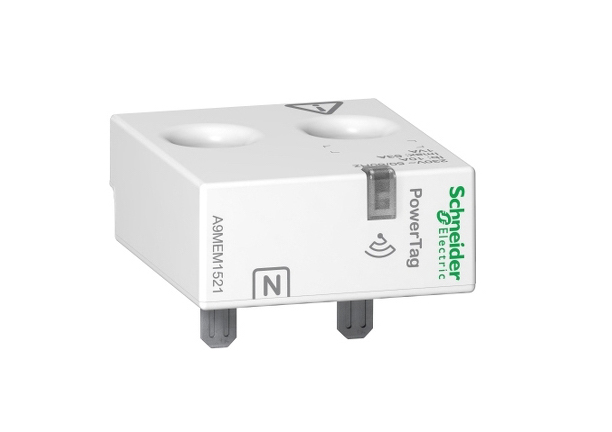
Sustainable smart homes could be a reality for consumers within the next 10 years according to Schneider Electric. Today, the firm has unveiled its blueprint for the Sustainable Home of the Future at IFA 2020 and launches a range of new smart home energy solutions under its Wiser brand. The new products, Power Tag, Acti9 Active and the efficient room-by-room Temperature Control system can be easily and inexpensively fitted into people’s existing homes and controlled via a single app, representing a significant step forward on the path to sustainable houses. Residential housing is set to become the biggest consumer of electricity globally. EV charging, the electrification of heat, and increased occupancy as more people work from home will see consumers’ electricity consumption dramatically increase over the next ten years. Smart efficient energy management will be more important than ever to ensure homes are sustainably powered and intelligent enough to optimise their own energy needs, without compromising on comfort. Smart homes just got sustainable The new additions to Schneider Electric’s Wiser range of smart home products mark a significant step forward in its plans to create affordable, sustainable, energy efficient, safe and personalised homes. The new products promise to increase safety, while giving consumers more insights on their energy usage and the corresponding impact in CO2 emissions. Thanks to AI and Machine Learning based predictions, consumers have the potential to reduce energy consumption and electrical heating costs by up to 50%, as well as predict solar production trends (future release). Be smarter with power The Power Tag sensor is one of three products in the enhanced Wiser ecosystem of smart sustainable products being introduced at IFA 2020. The Power Tag is a simple ‘plug and play’ sensor for your electric panel (suitably designed to retrofit older properties affordably). Alongside the Wiser range, it enables homeowners to track energy consumption room by room and crucially, it tells you how this energy is being used, not just how much is consumed. Occupants can set monthly energy consumption targets, receiving an alert if the Wiser system predicts that target will be exceeded, enabling people to reduce usage and avoid bill-shock. A future product feature will add an extra level of analytics provided by the sensor, which will also help homeowners monitor their consumption in terms of CO2 emissions to better understand their carbon footprint.  For electric vehicle owners, it can advise when the best time to charge your car may be, for example, when the tariff is lowest or excess solar power is available. Consumers with solar panels can also maximise their use by monitoring their own solar energy production levels. Solar users can maximise their use of renewable energy and ensure their panels are working effectively, improving their carbon footprint even further. The second innovation is the Acti9 Active, bringing improved safety and power reliability into homes. Does your TV or internet connection cut out when there’s a storm? Are there too many loads on the electrical outlet behind the TV when your children are playing video games? Or are you living in one of the many aging properties across Europe with outdated electrical infrastructure? The Acti9 Active will notify you when faults such as overloading or corrosion or detected, allowing you to fix any issues before they become major problems. This form of active prevention brings much needed peace of mind to homeowners. The third piece of the smart ecosystem revealed today is the efficient Temperature Control system that controls room temperature so accurately, powered by AI and machine learning, helping reduce energy bills by up to 50% without compromising on comfort. Its unique room-by-room control feature allows you to manage your heating systems more efficiently by accurately estimating the heating characteristics per room, rather than for the whole home. A second feature that will soon be added is ‘open window detection’. If a window is left open, the heating will be paused, a notification sent to the user, and it will wait to resume heating until the window is shut. The benefits of both these features are two-fold; make significant savings on your electricity bill and reduce your climate impact.

Donald W Orr Becomes New Select President
Donald W Orr has been elected as the new President of Select, the trade association for the electrotechnical industry in Scotland. As Managing Director of Unitech Services in Carluke, Lanarkshire, Donald has been a long-standing Select member and serves on a number of committees as well as representing the association externally. He comments, “It is a great honour to be elected as the new President of Select and I am privileged to follow in the footsteps of my distinguished colleagues. “We are all living and working in unprecedented times, but Select has risen to the challenge over the past six months and through its work to assist Members and the wider construction sector, it has led the way in industry cooperation, collaboration and commitment. “I look forward to continuing the association’s excellent work and helping Select and its members successfully navigate the many challenges that lie ahead.” Donald replaces Kevin Griffin, who had been Select President for three years and now becomes Immediate Past-President, replacing Eric Rae. Kevin notes, “My time as President of Select has been eventful to say the least, but throughout it has been a privilege and a pleasure to hold the position. “I wish Donald all the very best in his new role and I know he will help the association to grow and develop further. I feel that I leave Select in good shape, bearing in mind the ground-shaking developments of the past year in particular.” The association also has a new Vice-President in Alistair Grant, who is based in Elgin and is the current chair of its Inverness and North of Scotland Branch. The new appointments were confirmed during Select’s annual general meeting, which this year was held online via Zoom on September 2. Some 30 Members and staff attended the virtual meeting, which also featured a technical presentation on EICR coding by Select’s Director of Technical Services, Dave Forrester. The association also produced an online annual report instead of the usual printed version. Select Managing Director, Alan Wilson, remarks, “I am delighted to welcome Donald and Alistair to their new roles and know they bring invaluable experience and input. There are plenty of challenges ahead for all of us, but with the new presidential team now in place, Select will continue be there to help our members in any way we can.”

CICV Forum To Highlight Key Investment Areas For Wider Economy
In its latest efforts to stimulate and develop Scotland’s building sector, the Construction Industry Coronavirus (CICV) Forum has secured significant grant funding to help it explore the most fruitful avenues for expansion. The unique collective has successfully applied for £40,000 of funding from the Construction Scotland Innovation Centre (CSIC), one of Scotland’s unique innovation centres which links business, university experts and public sector providers to create transformational change in the construction sector. The funding will be used to engage with the renowned Fraser of Allander Institute, which focuses on economic research in Scotland. CSIC’s funding – which was awarded through its i-Con Challenge Fund, set up to help the construction sector develop novel approaches to dealing with the challenges brought on by COVID-19 – will allow the Forum to investigate where public bodies can most effectively invest to create the maximum benefit by creating an economic multiplier effect. It will also research the potential impact of a VAT rebate as a market stimulus. Securing dedicated and focused funding is a new route for the CICV Forum, which has fostered a range of initiatives since it was established in March with the aim of bringing the construction sector in Scotland back to full health after the nationwide lockdown. Hew Edgar, Chair of the Futures sub-group of the Forum and Head of UK Government Relations and City Strategy at the Royal Institution of Chartered Surveyors (RICS), says, “This is an important development for the CICV Forum. Funding of this nature considerably increases our range of options and allows us to identify and highlight the investment areas which will return the greatest social and economic benefits, allowing public bodies to target their limited funds. “Capital spending has a huge knock-on effect on the wider economy and, at £2.94, the construction sector’s multiplier effect is one of the highest in the country. It means that, for every £1 spent on construction output, an additional £2.94 of additional economic activity is generated. “We will also now look at the potential impact of a VAT rebate, and how this could generate revenue for HMRC through increased corporation tax and increased general economic activity.” Douglas Morrison, Director of Operations and Future Skills at Construction Scotland Innovation Centre, notes, “Our role is to drive cultural and transformational change across the construction industry. “Bodies such as the CICV Forum share that vision and, in the short space of time in which it has been operating, it has proved itself to be innovative, focused and determined in its mission to improve the long-term prospects of the sector. “We hope this funding will assist its efforts to identify new opportunities for the industry and to drive change through both commercial and publicly-funded initiatives.” Mairi Spowage, Deputy Director of the Fraser of Allander Institute, adds, “The FoA works closely with various partners, including those in business, the public and the third sector and we are pleased to be able to help facilitate the CICV Forum’s important research. “The Forum has assembled a formidable pool of industry expertise since it was established at the onset of the pandemic shutdown and we are confident that this funding will allow it to carry on and expand its valuable work.” The latest funding initiative reinforces the Forum’s reputation for proactive innovation, which has seen it at the forefront of clear and concise information distribution throughout the COVID-19 crisis. Made up of more than 70 trade associations, professional services bodies and companies, the Forum has maintained a steady supply of information and practical advice to the sector as well as carrying out surveys, producing animations and posters, hosting webinars and making appeals to Government Ministers. In the last month, it has launched a new rebuilding campaign, released its 50th piece of guidance, issued seven health and safety advice documents, updated its operating guidance and reminded construction workers to observe physical distancing in their social lives too.

Research Reveals Extent of Vehicle Theft and Misuse
Vimcar, the fleet management software for small and medium-sized companies, has released new research into vehicle theft and misuse in the electrical services sector. The survey of more than 1,000 UK firms identified a clear need in the sector to have greater control over its fleet, with vehicle misuse costing the industry thousands each year. At a time when businesses across the sector are seeking to control costs in order to bounce back from lockdown, it’s reassuring to see that 75% of the employers we spoke to in the electrical services sector have measures in place to restrict vehicle use. This safety-first approach could be due to the fact that one in three businesses admitted to having had a vehicle stolen in the past, with 32% of electrical services businesses now restricting company vehicle use to business purposes only. Despite this air of caution, it’s surprising to learn that more than half (51%) of the respondents did not have a system in place to track whether their vehicles were being used properly - although 62% said that they would like one. Ronald Clancy, UK Country Manager, Vimcar comments, “SMEs in the UK are currently facing numerous economic and market challenges, and vehicle misuse threatens to add to these. This issue is costing the electrical services industry thousands in terms of extra fuel, HMRC fines, and unnecessary maintenance expenses. In addition to this, across all UK industries vehicle theft costs businesses more than £16,000 per year. For the two out of three participants who would consider buying or have bought a telematics system, a GPS fleet management system that includes features such as live tracking, geofencing and data exportation would be the best way to curve vehicle theft and misuse.” - Vimcar surveyed more than 1,000 electrical services businesses in July 2020.

Drayton Launches Search For UK's Most Sustainable Installer
As part of its ongoing commitment to a more sustainable future, Drayton has launched its search for the Drayton Eco Installer 2020. Throughout ‘Sustainable September’, Drayton is looking for heating engineers and electricians to share their sustainability picture diaries to show how they’re making small changes to tackle the climate crisis.  The more eco-actions an installer shares, the better the chances of being crowned the Drayton Eco Installer 2020 in October and winning the £5K prize bundle – including an all-expenses paid eco-friendly holiday in the UK. Remi Volpe, Managing Director at Drayton, comments, “Earth Overshoot Day marks the date when humanity’s demand for ecological resources and services in a given year exceeds what Earth can regenerate in that year. Each year people are encouraged to make small changes to make a difference and #MoveTheDate. “This September we want installers to share photos of their sustainable actions in both their work and personal lives. It could be driving your electric van to work, recycling the packaging from controls you fit or installing an energy saving heating system. Or it could be taking the kids camping, recycling your plastics at home or using compostable rubbish bags. We want to see it all, and the more you post, the greater your chance of winning this coveted title.” As part of the prize, the winner will also get Eco Installer branded workwear and a VIP visit to the Drayton factory in Plymouth to learn more about what sustainable changes Drayton are making and walk away with a bundle of personalised products. To take part, installers must simply share their photo diaries of actions they are taking to help pave the way to a more sustainable future and #movethedate – no matter how big or small, Drayton want you to share it all. Installers can enter by posting on either The Drayton Community Facebook group or on Twitter, making sure to tag in @DraytonHeating and use the hashtag #MoveTheDate. To take part in the competition and for the full T&Cs, join The Drayton Community Facebook Group here www.facebook.com/groups/TheDraytonCommunity/ or follow @DraytonHeating on Twitter.

Recolight To Host Third Online Webinar
The third Recolight webinar in the Lighting and the Circular Economy series is scheduled for 15 September at 11am. It will look at the next steps the lighting industry needs to take to move towards a Circular Economy. This will follow on from the presentations and discussions during the first two webinars. In the first webinar, Defra, Lighting Europe and Recolight presented new regulations and standards for lighting. In the second, presenters challenged lighting producers to be more sustainable and presented solutions to enable this. Introducing and chairing the webinar series is Ray Molony, Online Editor for LuxReview. Ray, a strong advocate of moving towards a sustainable industry. He says, “It’s vital that the industry has a meaningful dialogue with its customers and other stakeholders about how we play our role in fixing our wounded planet. Inevitably, there will be extra costs associated with sustainable and circular economy measures, and we need to address these honestly and holistically.” Helen Loomes, Business Development Director at Trilux Lighting, will present Repro-light - a European research project that aims to support the European lighting industry in moving towards a more sustainable and competitive future. She comments, “As part of the global community, we all have to look very seriously at our legacy and adjust how we live now. We aim to inform ourselves of the very best way to a sustainable future, so research is a key factor here. When we truly investigate, without prejudice or assumptions, the results can be surprising. We want to share this information and work with the whole community to jointly make a difference.” Michael Grubb, Creative Director, will share the success of his studio’s Re:lit project. A project that since 2014 has taken second-hand lighting equipment that would be sent to landfill and put them in a new environment to be used. Owain Griffiths is Head of Circular Economy Strategy at Oakdene Hollins. They support organisations and policy makers transitioning to a circular economy. He will discuss the size, barriers, and opportunities to deploying a Circular Economy model. William Skeates, Senior Compliance and Sustainability Manager at Sky will share their sustainability governance and objectives. The Circular Economy model is just one enabler of Sky’s business goal to be carbon zero by 2030. Nigel Harvey, Recolight CEO, says, “Recolight had originally planned to run a one day Circular Economy workshop in London. But lockdown meant that had to change, and we took the decision to run webinars instead. More people have been able to attend. Lower costs meant we could make attendance free of charge. And no delegate or speaker travel significantly reduced our carbon footprint – so vital in the current climate crisis. The result has been excellent – thanks both to our speakers, and particularly to the direction provided by Ray Molony.” The Webinar concludes with a panel discussion addressing the end user; their expectations, requirements, and how the lighting industry should position themselves with a Circular Economy model. The webinar is free to join. To register, click here.