2 November 2026
Product of the Month: Amari Floodlight range by Aurora Lighting
 
26 November 2026
Thorn scores second Highland football lighting installation
 
26 November 2026
Segen pens exclusive distribution contract with M-Rack
 
25 November 2026
Scolmore helps rejuvenate Tamworth Cancer Support Centre
 
25 November 2026
Leicester apprentice crowned 2026 SkillELECTRIC champion
 

Latest News


Electrical Safety Roundtable launch 12 Steps to Safe Isolation Infographic
The Electrical Safety Roundtable (ESR) in the workplace met for the first time at the beginning of 2018, with the overarching aim of improving Electrical Safety in places of work. Representatives of the electrical industry who are responsible for electrical safety within a workplace convened to thrash out what the biggest causes of concern regarding electrical safety in the industry were and decided to initially focus on ‘safe isolation’. Worrying statistics shows that one in five installers do not carry a lock out kit in their van or tool bag, and 25% of electricians rarely or never use a lock out kit to isolate the electrical supply they are working on. In response to the evident need to raise awareness of safe isolation within the workplace, the group created a 12 Easy steps to Safe Isolation infographic. We see ourselves in unprecedented times right now, and although there is uncertainty surrounding COVID-19, electrical work is still going ahead, and therefore electrical safety is still very much an essential priority. This new guidance aims to provide support to ensure that workers on site are not exposed to the potentially fatal danger of live electricity. Safe isolation is a necessary process undertaken by competent electrical installers which safely isolates electrical circuits or equipment, prior to completing electrical work. The ESR created the safe isolation infographic with the assistance of Louise Taggart. Louise sadly lost her brother Michael in 2005 as a result of an electrical incident at work, which should and could have been prevented if safe isolation measures were used. Michael's story has had a massive impact throughout the sector and ESR's goal is to promote this infographic extensively and make safe isolation common practice to avoid devastating accidents like this happening in the future. Paul Meenan, chair of the ESR’s in the Workplace group said “It has been an honour to work with everyone to create the 12 steps to safe isolation infographic. Many accidents are due to the lack of awareness around safe isolation procedures, or the process not being carried out correctly. 33% of electricians who don’t use a voltage tester think they are experienced enough not to make a mistake; it is imperative that we change this outlook going forward. This was an obvious place for our group to start and make a difference and I would like to thank all the members of the committee for their first-hand knowledge and technical expertise throughout the process of creating this.”

Schneider Electric launch mySchneider Panel Builder program
Schneider Electric has announced the launch of the mySchneider Panel builder Program, a new platform to encourage transformative projects within Schneider Electric’s energy management ecosystem. With the mySchneider Panel Builder program, Schneider Electric is empowering its panel builder network to drive profit and growth by staying ahead of the competition, simplify their life and develop its internal teams through digital interaction and innovations. The mySchneider Panel Builder program will provide partners with: A best-in-class digital ecosystem enabling today’s panel builders to stay ahead of the curve Providing dedicated partners with exclusive access to a range of business insights and solutions can help them gain market share and expand business opportunities. Most importantly, Schneider partners can be solution providers, bringing the combined knowledge of the ecosystem to projects. Upskill their workforce with our curated learning path The agile and intelligent platform provides Schneider partners with the essential skills needed to keep their business and employees fully updated in the global marketplace - including the latest in ramping up business and preparing for new normal, managing projects, IoT-enabled products and more. Stay updated and future-ready with the latest industry trends The program delivers the latest and most relevant industry developments - both from a global and local perspective. Access Schneider’s deep and relevant industry-specific knowledge base through a certified partner program invested in a project’s lifecycle.

Emergency lighting is now more important than ever
Now that many businesses have re-opened their shops and buildings after a long period of inactivity, it is time to keep on top of the vital emergency lighting maintenance, re-charging the batteries for all types of emergency luminaires, whether an emergency bulkhead, an emergency exit sign or a simple fire exit sign. Integral LED offers emergency lighting solutions that re-charge pretty quickly and so will help with speeding up getting exit lights and escape route lighting back fit for purpose again. No business owner wants to slow down re-opening their premises after the lockdown period, by having to spend a substantial amount of time on a building's maintenance but is worth being aware that when properties are left empty or unoccupied for a long period of time, the correct functioning of the emergency lighting fittings may be compromised. Many of the UK’s offices and shops have been suddenly left empty for months due to the Covid-19 outbreak. Some have been permanently moth-balled and some temporarily vacant. As the economy gets back to normal, and people get back to work, it is important to make sure that the emergency lighting and battery supply alike are working properly to protect staff and customers in the case of fire or another reason. If the mains power of the buildings has been turned off or it has experienced a power failure, maybe a power cut, it is possible that the emergency lighting batteries or battery backup will have discharged themselves, so it is vital that all battery-powered LED emergency lights are checked, re-charged and inspected to confirm compliance. Many different battery technologies exist and are used in emergency lighting products such as Ni-Cd (which can take 24 hours to re-charge), LiFePo4 or Lithium-Ion which are more modern and take minimum 12 hours to charge. Integral LED recommends a full discharge test is completed and batteries re-energised again to be fully compliant and ensure the buildings are in A1 condition for re-occupation. The company's emergency lighting solutions take a minimum 12 hours to energise, minimising the timings for making a building compliant.

Schneider Electric and RS Components launch initiative to drive industrial digital transformation
Schneider Electric has launched a joint initiative with RS Components (RS), the global industrial and electronic products and solutions provider. The partnership extension sees the introduction of the latest Schneider Electric automation and IIoT (Industrial Internet of Things) innovations and technical knowledge to RS, including the Modicon M262. A PLC and motion controller, the M262 brings together factory control, monitoring and cloud computing, without peripheral equipment and complex programming, securely and cost-effectively. In total, RS will be adding more than 3,000 Schneider Electric solutions to its platform as part of the ongoing initiative. Products include robotics, motor control, and safety devices from across the Schneider Electric IIoT range. Whilst the company will provide engineers with access to Schneider Electric’s broad industrial technology range, stocked in-depth and available for 24-hour delivery across the EMEA region, the partnership will also enable RS to extend its knowledge of key IIoT innovations and pass on its benefits to customers. With the initiative, Schneider Electric is broadening its customer base, bringing its new launched IIoT innovations to a wider field. While increasing its reach, the extension also enables the company to ensure the highest level of service is provided to users. By taking a more active role with RS, Schneider is effectively up-skilling the industry to improve decision-making and specification. “We want to be the first choice for every customer requiring industrial control devices, whatever their demands. That means we have to have the ability to specify and support, as well as execute,” said Kristian Olsson, Vice President of Industrial Automation and Control at RS. “Having Schneider Electric’s expertise directly embedded into our company, effectively allows us to provide the best possible technical advice and help customers make the best possible decisions.” “Working together for 30 years and across 25 countries, RS is a valued and trusted industrial partner. Investing in them effectively expands industry knowledge and raises the level of its solutions,” said Martin Walder, VP of Industrial Automation at Schneider Electric. “With our suite of products and service experience, we are uniquely positioned to help the end user choose and maintain their industrial solutions. We hope the initiative will help grow the RS offering and enable us to bring our expertise to customers.”

Megaman launches new full lighting range catalogue
Megaman has launched a new lighting catalogue to showcase its range of low energy fixtures, integrated luminaires, LED lamps and smart lighting technology. With products suitable for retail, office, residential, hospitality and even farm environments, Megaman’s diverse portfolio of products can accommodate a wide range of applications. The catalogue includes details of Megaman’s integrated LED battens, bulkheads, ultra slim panels, louvres, fire-rated downlights, floodlights and dual beam track lights. Its INGENIUM ZB smart lighting and home automation solution is featured as well as its extensive range of LEDs. Megaman also introduces the new TEMPUS range of emergency lighting solutions within the catalogue. This new series includes ultra-discreet recessed LED downlights and spotlights, high quality IP65 LED operated emergency exit signs, as well as LED light box and bulkhead solutions with optional pictogram exit signs. Also available are lightweight, self-contained emergency packs suitable for use with LED light panels, Megaman’s GU10 LEDs and TEGO fire-rated downlights. The catalogue offers insight into another of Megaman’s new spotlight products, the RENZO integrated modular LED bulkhead. Available in three different sizes, RENZO comes with built-in dual colour change technology (CCT), meaning it can be easily switched between 3000K and 4000K colour temperature to suit the requirement. Easy to install with a plug-and-play modular design, RENZO offers an average lifetime of up to 50,000 hours and comes with a five-year warranty. Micaela Abbott, National Sales Manager at Megaman UK commented: “With a number of new products due for release over the coming months it was an ideal time for us to launch a new user friendly, comprehensive lighting catalogue. Whatever you are looking for, at Megaman we have a solution and we are now better placed to demonstrate that as the catalogue contains everything needed by contractors, wholesalers and specifiers alike to make an informed product selection.” To request a copy of the new lighting catalogue please email sales@megamanuk.com or contact your local Megaman business development manager.

Don’t miss out! BCIA Schoolz Out competition closes on 31 August 2020
The Building Controls Industry Association (BCIA) is issuing a reminder to school pupils not to miss out on the chance to win an exciting prize. The BCIA’s Schoolz Out competition challenges school pupils to design an energy saving product or initiative for their school which uses an element of control to save energy, and the 31 August 2020 entry deadline is now looming. Terry Sharp, BCIA President, said: “We have had some really good entries so far and I’m delighted to see how engaged and motivated young people are to improve the environment they are growing up in. You never know, some of the entrants might already be thinking about a career in building design - the judging panel has got a tough job ahead in deciding on the winning entries.” The Schoolz Out competition is open to two age categories; age 10 and under, and age 11-16, with a prize to be awarded to the winner in each category. There is still time to enter - the closing date for entries is Monday 31 August 2020 and the winning entries will be revealed on 17 September 2020. Full details and an entry form are available at https://bcia.co.uk/awards/schoolz-out-2020/

Fire, emergency and security systems industry unite to promote sector skills
The Fire, Emergency and Security Systems (FESS) industry has introduced a new Occupational Qualification Structure leading to Electrotechnical Certification Scheme (ECS) Card recognition, aimed at promoting high standards and skills. The new structure has been developed by an industry-wide working group formed by leading trade associations and employer representatives including British Security Industry Association (BSIA), FESS Employer Group, Fire Industry Association (FIA), Fire & Security Association (FSA), SELECT, Security Systems and Alarm Inspection Board (SSAIB) and the Joint Industry Board (JIB). Uniquely recognising the introduction of the Fire, Emergency and Security Systems (FESS) Trailblazer, the new structure sets the standard for new entrants to the market at Level 3 whilst also addressing the need to recognise the training, experience and qualifications of the current workforce. This new pathway recognises the differences in training, experience and qualifications for those already in the industry, which critically identifies a minimum standard for those who install and maintain fire, emergency and security systems. Jay Parmar, Chief Executive of the JIB says: “I’m delighted to have worked alongside the Fire, Emergency and Security Systems industry who collectively represent over 3,000 companies with over 80,000 employees who will benefit from the introduction of the new Occupational Qualification Structure and the new suite of ECS cards which recognise the skills of the entire FESS workforce. A key strength of ECS and its partnership with CSCS is that it provides assurance that cardholders working across sites in the UK have a high level of skills and experience.” There are now four sector disciplines recognised by the Electrotechnical Certification Scheme (ECS) in the Fire, Emergency and Security Systems (FESS) industry which include Fire; Fire and Emergency Lighting; Security (Including Access Control, Intruder and CCTV systems), and Fire and Security. Each sector recognises three disciplines which include Systems Operative, Systems Technician and Technical Manager. In addition, the occupations of Labourer, Trainee and Apprentice are recognised by ECS. These FESS ECS occupations replace the existing Fire Detection & Alarm Systems and the Emergency & Security Systems cards. From 1 January 2021 the FESS requirements will become compulsory for all new (initial) card applications meaning that all new applicants will be required to hold a pathway specific FESS assessment for the ECS occupation being applied for. From 1 July 2021 all card renewals will also need to meet the FESS requirements and hold a pathway specific FESS assessment. Parmar concludes: “This historical change has been introduced as a result of the desire by the FESS industry to professionalise and enhance standards in the sector. This key development ensures all ECS cards will be issued against an industry recognised qualification standard by the end of 2020 in keeping with the target set by the Construction Leadership Council. We look forward to building on this positive development and continuing to work with the Fire, Emergency and Security Systems industry in helping them to meet their aspirations whilst at the same time upskilling the industry in which they operate.” 

NICEIC and ELECSA issue updated guidance to registered contractors on government green home grant scheme
NICEIC and ELECSA have issued updated guidance to registered contractors following confirmation from the Department for Business, Energy & Industrial Strategy (BEIS) that all home energy saving improvements carried out under the government’s new Green Homes Grant scheme, must be completed by a TrustMark Registered contractor. In a move designed to uphold standards and provide householders with quality assurance, the scheme also requires contractors to be certified on technology-specific schemes such as MCS for renewable technologies and PAS2030 for insulation. When discussing the incentive, Energy Secretary, Alok Sharma, said: “Green home improvements will save people money on their energy bills, help to cut carbon emissions, and create new work for many thousands of builders, plumbers and other tradespeople. “Our TrustMark scheme will guarantee that building work is completed to a high standard by accredited tradespeople, ensuring consumers are fully protected.” NICEIC’s and ELECSA’s Technical Services Manager, Paul Collins, commented: “This is an excellent opportunity for our registered contractors, some of whom are already certified to install renewable and low carbon technologies such as air and ground source heat pumps and solar thermal systems. “Our MCS scheme is well established, and we are seeing more and more applicants wishing to start working in this area every day. The Green Grant Home Scheme is a great incentive for continued growth in this area, and we would encourage all contractors to consider the benefits of broadening their business to include these services. “The NICEIC is committed to delivering technical excellence, and we will continue to work with the government and all parties to maximise the potential of this incentive ensuring standards are upheld, and customer satisfaction is assured.” Coming into effect on 1 September 2020, the Green Home Grant Scheme will see households in England gaining access to grants to support a range of green home improvements, including the provision of insulation and low carbon heating. Under the scheme, homeowners will be able to apply for up to £5,000 towards these improvements, with the grant covering up to 65% of the total cost. For low income households, the allocation increases to £10,000, which can cover 100% of the costs. More details are expected in the coming weeks, but to date, it has been confirmed the following improvements will be covered: Primary improvements:  Vouchers can be used to undertake one or more of the following enhancements: Solid wall, underfloor, cavity wall or roof insulation Installation of air source or ground source heat pump Installation of solar thermal systems Once a primary improvement application has been approved, the consumer can also apply to use their voucher allocation to undertake additional energy saving measures. These include: Secondary improvements:  Double or triple glazing/secondary glazing, when replacing single glazing Upgrading to energy efficient doors Heating controls

Modern, intelligent LED lighting on the stairs
With the development of LED technology, new possibilities in lighting of stairs have appeared, according to Magic Stair Lighting. A new trend in stair lighting is multi-point, low-voltage LED 12VDC or 24VDC lighting with intelligent control, allowing for safe, effective, comfortable and energy-saving lighting of the stairs. LED stair lighting looks particularly decorative if it is mounted in the central risers of the stairs, illuminating the plane of the step below. These can be special staircase luminaires or custom-made LED strips, mounted or glued under the toe of the stairs. If the structure of the stairs is attached to the wall, LED fixtures can be installed in the wall, usually 15cm above the surface of the steps, illuminating each of them separately. Surprising effects are produced by the lamps built into the plane of the step by the wall or by the balustrade, because when they shine upwards they bring out the texture of the wall or decorative elements of the railing. Some people also choose to illuminate the balustrade or the landing of the stairs near the floor. The standard is white lighting (warm, cold or neutral) due to the greater usability and better lighting of the stairs. However, in interior decoration, there is sometimes a need to use coloured lighting and single-colour LED strips (e.g. blue, green, yellow, red) can be easily used. Such multi-point lighting is very decorative. In addition, it allows for better lighting of individual stair steps than in the case of traditional overhead lighting, thanks to which the stairs are safer for people walking on them. Stair LED lighting controllers To control multi-point LED lighting of the stairs, special digital LED drivers are used, called intelligent LED stair controllers. Due to the properties of LED technology, staircase controllers can use the PWM (Pulse Width Modulation) method to control the brightness of individual LED lamps. The use of LED stair controllers introduces new decorative possibilities to the lighting of the stairs, such as smooth lighting, gentle backlight after dusk and effective animations, turning the sometimes sad staircase into a real showcase of the house. By controlling the brightness of LED lighting using the PWM method, you can achieve various degrees of smoothness of switching on and off the lamps, from sharp to very gentle. Moreover, lamps can light up simultaneously or sequentially, step by step, creating an effective, flowing wave of LED light with varying degrees of its forehead and tail brightness. Stair controllers also introduce other, new functionalities, e.g. turning on the lighting only for a specified period of time, which gives the comfort of forgetting to turn off the lighting and saves energy, showing warning when lights are about to switch off, or controlling the illumination of the handrail. LED stair lighting control systems Stair controllers can work autonomously or be part of a smart home/building system. As stand-alone solutions they can be activated in a traditional way by buttons, but the best functionality is obtained in cooperation with specialised stair motion sensors and dusk sensors, with which they can create intelligent, automated systems controlling the lighting of stairs. As a part of a smart home system they are activated by potential-free outputs of the system. The stair controller reads signals from the control inputs and controls the lighting according to the program stored in its memory. Usually, motion sensors, buttons, smart building system outputs, a twilight sensor, or a programmable astronomical clock are connected to the control inputs of the controller, thus ensuring various control methods depending on the movement and time of day (evening, night, day). The operation of staircase controllers can be influenced by changing the values ​​of configuration parameters. Intelligent stair controllers usually allow to adjust the parameters of the controller to the implemented installation (the minimum is to set the number of lamps / steps) and to adjust the basic operating parameters to the user's preferences (e.g. times of switching on, lights on and switching off phases; lighting on/off smoothness; brightness, backlight brightness, etc.) in different parts of the day. Most of the stair controllers on the market can be configured with the help of simple or more advanced configurators built into the controller, but the most convenient way - unfortunately available in only a few controller models - is the configuration using a mobile application that communicates with the staircase controller using Bluetooth Low Energy standard. Stair motion sensors Stair motion sensors are an important element of the stair lighting system. Good stair sensors should have a narrow detection angle and a well-defined, adjustable range so that they do not turn on the lighting when people pass by the stairs. For this reason, PIR sensors with an indefinite range, popular in alarm systems, should not be used to detect movement on the stairs. The function of stair sensors is very well fulfilled by optical reflection sensors, which, due to their one-element structure and well-defined, adjustable range, can also be used without any problems for the recently very popular open stairs, e.g. carpet stairs. Smart stairs with a smartphone application Smart stairs with a smartphone application is the most advanced system of modern stair lighting control, using advanced LED stair controllers and sensors as well as appropriate light sources, functioning independently or as part of a larger smart home system. A truly intelligent staircase communicates with the user via a smartphone/tablet application, ensuring convenient operation, intuitive installation configuration, adjustment to user preferences and access to diagnostic service functions. The purpose of intelligent control is to provide the user with decorative effects in line with his preferences and appropriate utility benefits, such as the right level of lighting on the stairs, safety, comfort, energy efficiency and durability. Planning the installation of lighting for the stairs It is best to plan the electrical lighting of the stairs before finishing the stairs. First, collect the necessary elements, including the appropriate model of the stair controller, LED strips or LED luminaires, stair motion sensors, then select good quality LED power supply, equipped with the necessary protection circuits, and then plan the arrangement of all installation elements and the location of the cables. When making cable connections between the controller and lamps, pay attention to how the individual lamps in the lighting system of the stairs will be controlled: each lamp separately or all lamps together. Summary Intelligent LED stair lighting control is a hit with many houses and apartments. In the past, stair lighting used to be almost exclusively functional, but with the development of LED technology and the emergence of new possibilities, also in the field of LED lighting control, the decorative function of stair lighting becomes increasingly important. It is more and more appreciated by decorators and interior designers. Properly selected multi-point stair lighting significantly affects the final visual effect of stairs, can emphasise the shape of stairs and bring out the beauty of materials used in their construction.

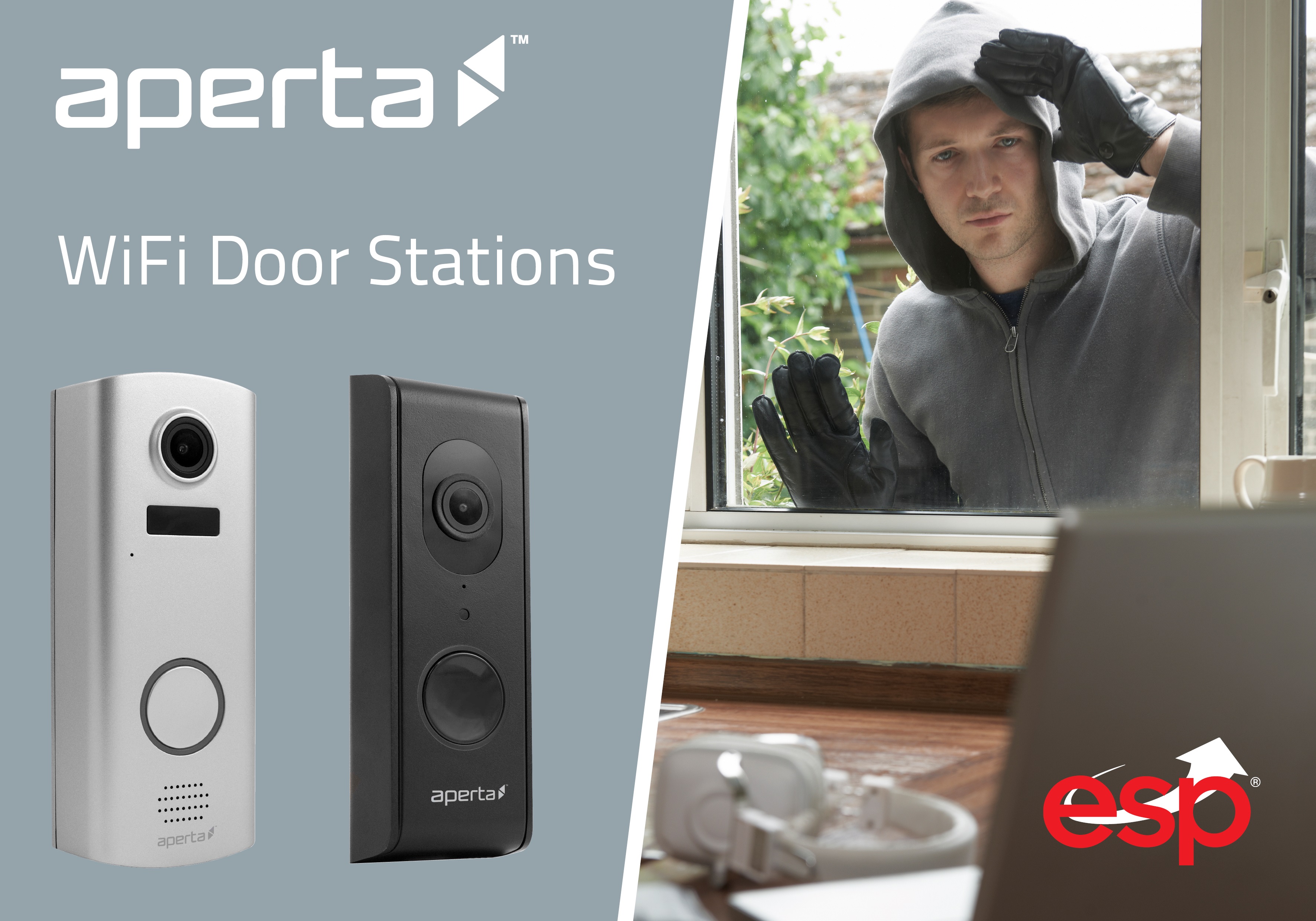
Ease of lockdown risks a rise in burglaries warns ESP
According to the police, crime fell by 28% when Britain went into lockdown to battle the coronavirus at the height of the pandemic. While many have been spending more time at home in lockdown, burglaries have been significantly reduced - but this could all change as restrictions are lifted. Now with the easing of lockdown and people returning to work and going out more, experts are warning of the return of the burglars taking advantage of empty homes. Among the top tips that are recommended to keep homes and gardens safe is good security, and this is where smart technology can come into play. ESP is advising installers to talk to their customers about the need to be vigilant during this vulnerable period, which will extend through to the dark evenings of winter when historically most burglaries tend to take place. Being able to advise their customers about a range of security solutions that are available to protect their homes puts installers in a position of trust. It will allow them to make recommendations based on the householder’s requirements, whether for a whole new system approach or the upgrade of tired and worn out equipment. Many householders are already embracing technology to enhance various aspects of life and will be keen to embrace smart security as a measure to protect their premises. Smart doorbells are an increasingly popular security option, allowing users to see who is at the door before answering it. A Wi-Fi door station connects directly to a smart phone, offering instant front door security and convenience to users. ESP’s latest Aperta Wi-Fi Door Stations cater for a wide range of applications and offer a host of features and benefits to make them an ideal choice for providing superior protection. They come in a kit form containing everything required for the installer to quickly and simply get the system up and running. For a quick and straight forward installation with primary functions, there is a rechargeable battery version available. For installs which require lock release, a low voltage wired version is available. As well as Wi-Fi function, the wired version also provides an alternative Ethernet connection if Wi-Fi is unavailable. 1080p live view, visitor recording, automatic motion detection, and clear two-way audio are some of the key features available via the subscription-free ESP Smart APP. Both the wired and battery powered models feature expandable storage capacity – up to 128GB (8GB supplied). The battery powered model now includes a system hub which sits between the door station and the router. The hub facilitates power demanding features such as Wi-Fi connectivity, video record and remote door chime function. This means that the door station’s battery is dedicated to activations only, thus improving battery performance and efficiency. The new models are offered in two colours – black and silver - and are complete with internal RF door chimes.