2 November 2026
Product of the Month: Amari Floodlight range by Aurora Lighting
 
26 November 2026
Thorn scores second Highland football lighting installation
 
26 November 2026
Segen pens exclusive distribution contract with M-Rack
 
25 November 2026
Scolmore helps rejuvenate Tamworth Cancer Support Centre
 
25 November 2026
Leicester apprentice crowned 2026 SkillELECTRIC champion
 

Latest News


Schneider Electric And Rexel Launch Wise Guy Challenge
Schneider Electric has teamed up with Rexel to offer electricians the opportunity to win up to £3,000 worth of Schneider Electric products in the Wise Guy Challenge. The challenge invites industry professionals to test their electrical knowledge against the clock to win various prizes. Players must answer 10 timed multiple choice questions, and every correct answer gets an entry into prize draws to win a £50 Amazon voucher, £100 Rexel voucher or a £3,000 product hamper. “We are delighted to offer electricians the chance to win some amazing prizes. The Wise Guy challenge will test industry professionals and hopefully educate them on the benefits and features of the new technology available. Good luck to all that enter!” says Tim Barber, Distribution Programme Marketing Manager at Schneider Electric. To enter, please click here.  

LEDVANCE Gets Full Marks With First VDE HCL Certificate
LEDVANCE has become the first to be awarded the HCL certificate with the best possible quality award (3/3 stars) from the independent VDE Testing and Certification Institute. The award was made for its new and advanced BIOLUX HCL system and it is the first time that a company has qualitatively fulfilled all existing requirements, norms and standards for an HCL system. “Previously, there was no qualitative testing of HCL systems by an independent authority,” explains LEDVANCE Head of R&D and Strategic Portfolio Management Dr. Ulrich Weiss. “We therefore very much welcome VDE's initiative to establish standardised HCL test-criteria based on norms and standards and incorporating measurement techniques. This is unique worldwide. We are very proud that our BIOLUX HCL system has received the best possible quality award from VDE and fulfils all requirements to positively support the human biological rhythm, showing activity and performance during the day, supporting good sleep at night and increased well-being.” “The collaboration with the technical experts from LEDVANCE has been excellent,” says Dragana Zdravkovic-Stojanovic, technical expert for luminaires at VDE Institute. “Our criteria for being awarded with three stars were by no means easy to implement. I am looking forward very much to further joint projects.” LEDVANCE’s HCL system is designed to positively support the human biological day-night-rhythm, increase well-being and performance during the day and improve the quality of sleep at night. The evaluation by the VDE Institute was based on various criteria regarding light quality, correct simulation of the course of daylight, energy and cost efficiency, safety, ease of installation and commissioning, usability and compliance with national, EU and global norms and standards. The VDE mark is synonymous with safety and quality in electrical devices, components and systems. The independent test engineers carry out product, quality and safety tests on more than 100,000 devices per year before the VDE Institute awards the test mark. The VDE Institute has now developed a new standardised catalogue of test-criteria to evaluate HCL systems with regard to quality, safety, performance and usability. Compliance with these criteria is confirmed by a three-stage certificate. The LEDVANCE BIOLUX HCL system consists of wirelessly connected components. The intelligent BIOLUX control unit ensures - as the heart of the system - that the corresponding BIOLUX LED luminaires simulate the natural course of daylight in terms of light colour and intensity. Unique to the BIOLUX HCL system is the possibility of manually adjusting light to different situations using five predefined light modes. While the NATURAL mode simulates the natural course of daylight, the BOOST and FOCUS modes support concentration and productivity. RELAX provides relaxing light during breaks and with CREATE brainstorming sessions are encouraged. The built-in safety mechanism has been particularly positively evaluated by the VDE Institute: The five different light modes always follow the curve of natural daylight and thus ensure that the effects on the biorhythm are positive at all times. This makes the BIOLUX HCL system particularly suitable for offices, meeting rooms, hospitals, doctors’ surgeries as well as elder care and nursing homes.  After connection to the power grid, the LEDVANCE BIOLUX HCL system can be installed and commissioned in five to 10 minutes in an uncomplicated, fast and wireless manner using a smartphone app. The system automatically determines the time of sun rise and sunset based on the geographical location and autonomously configures all settings based on the course of daylight. As the system works independently and configures itself, no complicated programming or integration into existing lighting management systems is necessary. This keeps costs low and contributes to a particularly economical use. A total of up to 20 luminaires can communicate with the intelligent control unit, which can be added to the system simply by scanning the QR code. The complete communication of control unit and luminaires is securely encrypted and no user data is transferred. The user can set the five lighting modes in no time at all via the control unit.  

The Lighting Designer Software Launches
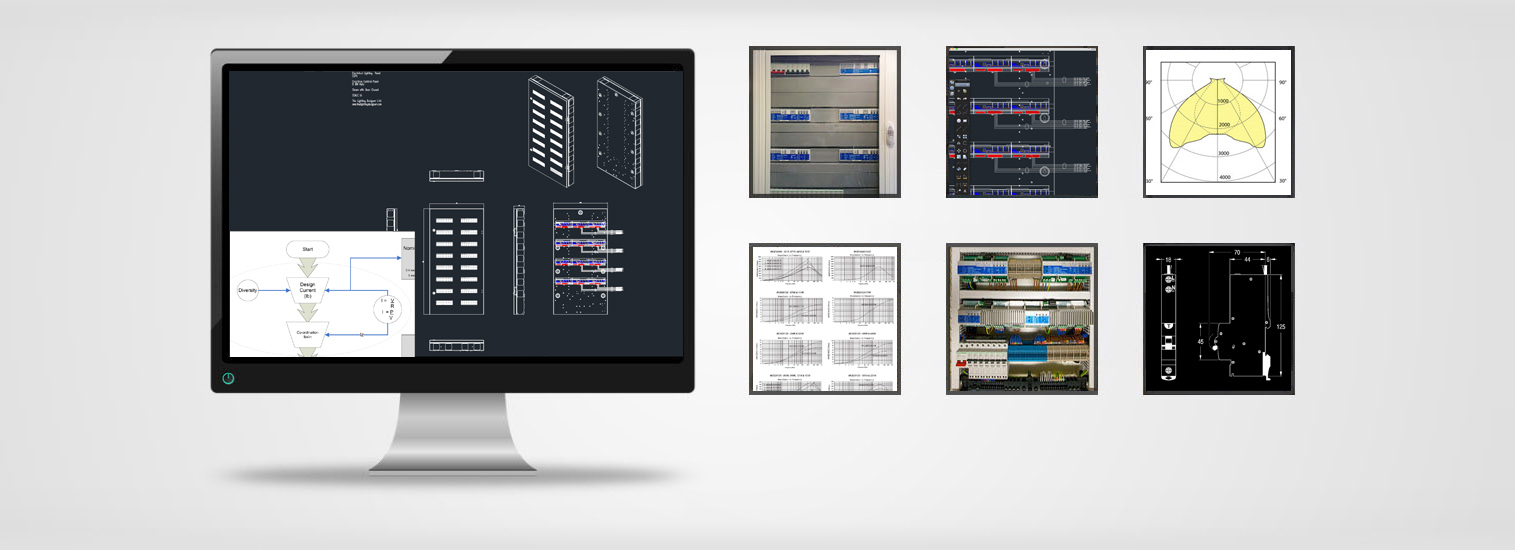
The Lighting Designer (TLD) software has launched – a new cloud-based design and specification tool that aims to revolutionise the lighting design industry and increase business profitability by producing technically correct and compliant designs in a matter of minutes. Created by the team behind The CEDIA Designer software (formerly known as The Cinema Designer), TLD brings together electrical design, lighting control systems and lighting fixture specification. This is to allow professionals from different fields to create detailed technical designs and ensure a smooth collaborative approach on projects. “The industry is seeing that end users are putting great emphasis on lighting design, meaning that this segment of the market provides a great opportunity for integrators,” says TLD inventor, Guy Singleton. “Knowing how long it takes to design a lighting scheme inspired me to develop TLD. I’ve been working on the software for three years and am now excited to launch it and see it change the way in which integrators work.” Lighting design tends to require input from designers, electrical contractors, M&E engineers and technology integrators. While lighting designers focus on fixtures, colour temperature and colour rendering indexes, electrical contractors and M&E engineers understand the mathematics and the requirements for electrically correct and safe electrical systems. Meanwhile, technology integrators deal with lighting control systems, installation and specific lighting control systems. TLD has been created to pull these three disciplines together, reportedly making it the only software available that covers every element of a lighting design. To start a new project, users have the option of importing their lighting system programmes or manually inputting the information into the software. From here, the user works through an easy step-by-step process of selecting fixtures, drivers and cable lengths. TLD has developed a large catalogue of fixtures, however, there is the opportunity for users to build their own library of fixtures by adding new additions to the software. Once all information has been entered, TLD works out how many modules are required and the panel locations, and automatically designs CAD drawings. TLD’s PDF output includes everything from load schedules to photometric data, specification cut sheets to CAD drawings, a bill of materials and much more. It pulls in the manufacturer information of the panels, drivers, ballasts, interfaces and modules – creating a presentable document that’s full of data and panel diagrams in only a few seconds. The pdf can be shared with the lighting designer, electrical contractor and M&E engineer so that everyone working on the lighting project has access to the same information. Interoperability and compatibility issues are also taken care of. TLD eliminates the possibility of lighting design mistakes by specifying incompatible drivers and fixtures, incorrect IP ratings and inaccurate load calculations. Using TLD is said to ensure that professionals know exactly what is required of them when designing, installing, testing and inspecting any project and provides confidence that the system is both electrically correct and compliant.

Misleading Government NDRHI Extension Causes Damaging Market Confusion
A press release from Government announcing a tariff extension to the Non Domestic Renewable Heat Incentive (RHI) has brought market confusion and threatened the financial support for thousands of shovel ready low carbon schemes, as the true nature of the announcement has been revealed by industry.   Described as a ‘boost for renewable heat projects as government confirms tariff extension’, the reality of the extension is only applicable to those in receipt of tariff guarantees or to those that apply for a tariff guarantee and are able to provide evidence of Stage 2 Financial Close before March 2021, earning the applicant one extra year – until March 31 2022 – in which to get the installation work completed. The deadline of March 2021 however remains for all other applicants to the Non Domestic RHI.  Experts at the Kensa Group, a ground source heat pump manufacturer and installer partner, have been quick to identify the announcement has been widely misreported as an extension to the Non Domestic RHI scheme (which remains due to close in March 2021), leading to widespread confusion, as David Broom, Sales Director of Kensa Contracting comments, “Misinterpretation of the Government’s announcement has understandably led to clients wrongly assuming the Non Domestic RHI has been extended, and thus taking the pressure off applications. The truth is the Non Domestic RHI has not been extended – the extension only applies to tariff guarantees, which will not be applicable to the majority of our clients due to tariff guarantees eligibility criteria for projects in excess of 100kW capacity; many social housing schemes will fall below this threshold. “With the Non Domestic RHI on course to end in March 2021, the confusion surrounding the tariff guarantee extension could be significantly damaging to pipeline schemes in the renewables industry, which would otherwise bring immediate carbon savings, vital if we are to achieve our 2050 objectives. Any delay now could be financially and environmentally damaging.” Presently there is a hiatus between the end of the Non Domestic RHI on March 31 2021 and any future scheme of at least one year. In two recent Consultations with industry the Department for Business, Energy & Industrial Strategy (BEIS) has proposed a narrow range of options for low carbon heat support beyond the Renewable Heat Incentive and it is seeking views on its proposals in a consultation that is due to close on July 7 2020.  The Future Support for Low Carbon Heat, proposes a £2.2bn Green Gas Support Scheme (GGSS) and a £100m Clean Heat Grant to support the installation of Heat Pumps. Parallel to this Government is seeking opinions on a series of reforms to the NDRHI scheme, prior to its closing in March 2021, ‘in order to deliver ongoing value for money to the taxpayer’.  Karl Drage, Director of Business Development at the Kensa Group comments, “A follow-on scheme to the RHI is an opportunity to ensure that the transition to renewable heat is appropriate, cost effective and achieves the aims of getting closer to net zero across the building stock.  Government led schemes, to date, have failed to make significant progress, and this is a critical time on the path to 2050. “All stakeholders in the heat sector are looking towards the transition to low carbon, renewable heat.  Which will entail the large-scale replacement of fossil fuel burning boilers by heat pumps powered by an electricity grid with a low carbon factor.”

Construction Talent Retention Scheme Announced
The Government has moved to secure vital talent needed to build the UK's recovery from COVID-19, protecting employment for thousands of people working in the construction sector. The Chancellor of the Exchequer, Rishi Sunak, today announced the launch of the Construction Talent Retention Scheme, a partnership between the Government and industry to secure essential talent in the UK construction sector. The Construction Talent Retention Scheme, to formally launch later this month, will be an online portal that supports redeployment of staff at risk of redundancy across the sector, while also enabling temporary employee loans between businesses. The scheme gives displaced workers from other sectors a route to find new employment in construction. ECA CEO Steve Bratt, who is a member of the CLC coronavirus taskforce, comments, “ECA supports the construction talent retention scheme as a further mechanism for keeping people employed and retaining valuable skills within the industry. The key to ensuring this works for employers will be in the detail, which we look forward to contributing to. Engineering and electrotechnical skills are vital for delivering housing and infrastructure, as well as decarbonising and digitalising the economy. It is therefore key that as many skilled workers as possible are retained in employment or active work within the industry.” Construction Leadership Council (CLC) Co-Chair, Andy Mitchell, adds, “This is a great example of what we can achieve when we work collaboratively with Government and we look forward to continuing in this spirit when the proposals and recommendations of our broader Roadmap to Recovery are published. In the meantime, we will work with our members and industry stakeholders to encourage the scheme’s use and success.” Association for Consultancy & Engineering (ACE) Chief Executive, Hannah Vickers, says, “This is a proven solution with a strong track-record in other sectors, cross-industry support and pledges from our leading employers. It is vital we keep the skills in our sector to avoid a talent drain and is the only way we will be able to ramp-up activity to lead the recovery of the wider economy and deliver growth through new buildings and infrastructure.” Group Chief Executive of Mace, and Skills Workstream Lead at the Construction Leadership Council, Mark Reynolds, adds, “The CLC’s Construction Talent Retention Scheme will offer a critical lifeline for the construction industry, and it will help the industry retain and share our exceptional talent needed to deliver vital infrastructure and support the country’s recovery plan. The scheme is a great example of Government and industry collaboration during these challenging times for the construction sector. We are delighted to support the initiative as a real solution to protecting employment for thousands in our industry, continuing to build a better future.” The not-for-profit programme now has funding secured until the end of the financial year, providing a free online platform for any organisation looking to hire, while ensuring that candidates’ skills and experience are given a prominent platform within the industry. Businesses can register their interest in the scheme at: www.trs-system.co.uk/construction.

VIDEO - Scolmore's Type C USB Sockets Available In All Ranges
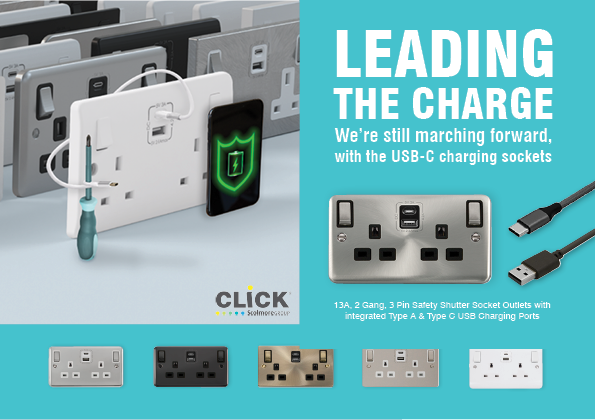
Last month, Scolmore expanded its wiring accessories range to include 13A two-gang socket outlets with integrated Type A and Type C USB charging ports, to meet growing demand and developments in the market for charging solutions. Originally available in the popular Click Mode range, the new socket outlets are now available in all wiring accessories ranges – Polar, Metal Clad, Part M, Deco, Deco+, Define and Definity. By integrating both Type A and Type C on the same socket, the range will have broader functionality and cover charging options for the widest possible range of devices that now use different sized ports. Used independently, the Type C USB has a charging output of 5V DC, 3A, while the Type A USB has a charging output of 5V DC, 2.4A (independent charge). When both USB ports are in use, the 4.2A charge is shared, with Type C given priority to output its full 3A, with Type A reduced to an output of 1.2A. The charging ports have a new location - moved from above each independent socket outlet to a central position above one another, allowing the rocker switches to be moved to an ‘outboard position.’ Type C USB is the connector of the future. Already available on a number of devices, it is likely to eventually replace USB Types A, B and Micro USB on all new products and systems. Smaller and thinner than its predecessors, Type C USB is reversible and can be plugged in either way with no risk of damage. As with all Scolmore Group products, the new USB sockets have been independently tested, and they are fully compliant with the most up-to-date set of USB test standards. Typical applications will include education and training settings, offices, domestic dwellings, hotels, hospitals and healthcare settings. https://youtu.be/OUDKwzN6WMg For further information, call Scolmore on 01827 63454 or visit www.scolmore.com.

Lithium-Ion Batteries: The Future of Data Centre UPS Systems
By Rob Mather, Director at Power Control. It is strange to think that battery structure has not really changed for over 50 years. However, with the market shifting and demand for greater lifespan, efficiency and reduced footprint becoming more prevalent, battery manufacturers have upped their game with lithium-ion battery solutions. The data centre sector in particular is welcoming lithium-ion battery solutions with open arms. When paired with an uninterruptible power supply (UPS) a far more efficient energy storage system can be achieved - reducing power consumption and maintenance costs. Whilst initially the outlay for a lithium-ion batteries may be more than standard VRLA, the lifespan is far greater so requires fewer battery replacements. However, this cost is slowly being driven down by the increased Li-ion manufacturing capacity. Over the past ten years a wave of new factories across the globe have already caused an 85% drop in price. As the market grows more comfortable with lithium-ion, a further 603.8GWh is expected to be achieved in the next five years, encouraging the development of the technology, rather than adopting something else. Why is lithium-ion used in a battery? Without going too much into the chemistry of a battery, lithium is a very small element, the third smallest in fact after hydrogen and helium. This gives lithium-ion batteries a much better energy density than incumbent technologies such as VRLA. It is also a highly reactive element and rechargeable, making it an ideal material to get a current running through a battery. Advantages of Lithium-ion batteries in UPS: Longevity – A lithium-ion battery lasts up to 10 years under normal circumstances, which is twice as long as a typical VRLA battery. They hold their charge much better and can handle hundreds of charge/discharge cycles. The longevity ensures a return on your investment on the technology. Low Maintenance – Lithium-ion batteries have a longer service life and can go longer intervals between servicing. Although they do still require maintenance, the servicing methods are simpler. Size/weight ratio – When compared to VRLA batteries, lithium-ion batteries have a 50% smaller footprint for the same power output. Recharge time – Where VRLA batteries typically take 6-12 hours, a lithium ion battery takes 30 minutes to one hour. They also hold their charge much better. Temperature tolerance – Due to their molecular structure, a lithium ion battery can work reliably at wider temperature ranges than other rechargeable batteries. What does this mean for data centres? As the cost barrier for lithium-ion technologies is eroded and new technologies flood the data centre market, data centre owners look to ways of making their infrastructures more advanced, more efficient and more environmentally friendly. The adoption of lithium-ion technology falls alongside other 2020 industry trends such as that of innovative cooling technology, intuitive monitoring software and the drive for data centres to provide their customers with infrastructure resources that would have been unthinkable in previous decades. Firstly, the amount technologies now being squeezed into modern data centres leaves little room for the necessary critical infrastructure. The overall footprint of a data centre is already vast and in cities where land is at a premium, batteries that occupy large areas affect the economic benefits. The smaller, lighter and more temperature tolerant lithium-ion UPS solutions are an ideal innovation for reducing the amount of space required for power protection. Secondly, peak shaving is key for keeping grid connection fees to a minimum, lithium-ion batteries provide an ideal solution for reducing this overall spend and therefore produce economic benefits. Finally, with the initial cost of lithium-ion batteries decreasing, the integration of this technology is becoming more attainable. This coupled with the longer battery lifespan, reduced maintenance costs and refined recharge time make them an ever more appealing integration for the data centre sector battery market.

LuxLive 2020 Postponed Until November 2021
Clarion Events, owner of Revo Media, has announced that due to the ongoing COVID-19 pandemic and its impact on large scale events, the LuxLive 2020 trade exhibition will be postponed until November 2021. The organisers of LuxLive believe that even if a green light is provided to run trade shows this year, there is not enough time remaining to deliver the high-quality event that the industry expects and deserves. However, the organisers are pleased to announce that in the absence of a physical LuxLive trade event, it is launching two exciting new digital events, scheduled to take place in September and November. Taking place on September 22 will be a special LuxLive Digital Kicker Conference on the timely and urgent topic of UV-C lighting and its role in helping building managers ensure the highest levels of safety and wellbeing. Taking place during the original LuxLive dates of November 11-12 will be the LuxLive Digital Festival, representing the most ambitious and comprehensive digital education programme ever seen in the industry. The festival will have a central theme of health and wellbeing. Stressing that the lighting industry has a huge opportunity to be seen as a major facilitator of health and wellbeing to communities and societies, the organisers of the LuxLive Digital Festival have announced four strands to the event – Emergency Lighting, Smart Lighting, Workplace and the Lightspace Festival, focusing on lighting in architecture. Each strand will take centre stage at certain times throughout the two-day festival and will deliver compelling educational headline content. In addition to the headline acts, the festival will also offer sponsored keynote presentations as well as case studies and interactive learning. The event will also allow one-to-one meeting facilities, roundtable discussions, video presentations, live polling and Q&A sessions throughout. The Lux Awards will close the festival as it makes its digital debut edition in the award’s celebrated history. James Samuel, Portfolio Director of Clarion Events, states, "It is obviously disappointing that running LuxLive in it physical state will not be possible this year. Having seen so many events in the sector cancelled or postponed there was a real sense of excitement about bringing the industry together in November. "Unfortunately, the Government’s current position where no restart date has been given to large events means that running the physical event is not going to be possible. However, in preparation for this scenario, the team has been working hard to ensure that the industry can still come together. "I am delighted that LuxLive will still bring the great and the good of the lighting industry to share, connect, learn and motivate each other through the LuxLive Digital Festival in November and, prior to that, via the very topical LuxLive Digital Kicker conference on UV-C Lighting." On the announcement of the event’s themes, Samuel adds, "The topic of health and wellbeing is so important now more so than ever. I am really looking forward to sharing with the industry our headline speakers, and other compelling initiatives that will allow the LuxLive Digital Festival to play a significant part in the lighting industry calendar. "In addition, I cannot think of a better way to finish the festival with the iconic Lux Awards where the industry can take time to celebrate outstanding achievement in what has been a very challenging year. LuxLive will be different this year but what remains is our commitment to provide unparalleled learning, discovery and connections. "We invite everyone to be part of our digital gathering to really promote how the lighting industry will take the lead in providing health, wellbeing and safety to our communities and societies at large." For further information on how to be involved as a sponsor or contributor, please click here.

Electric Vehicle Takeup Expected To Increase Demand For Power
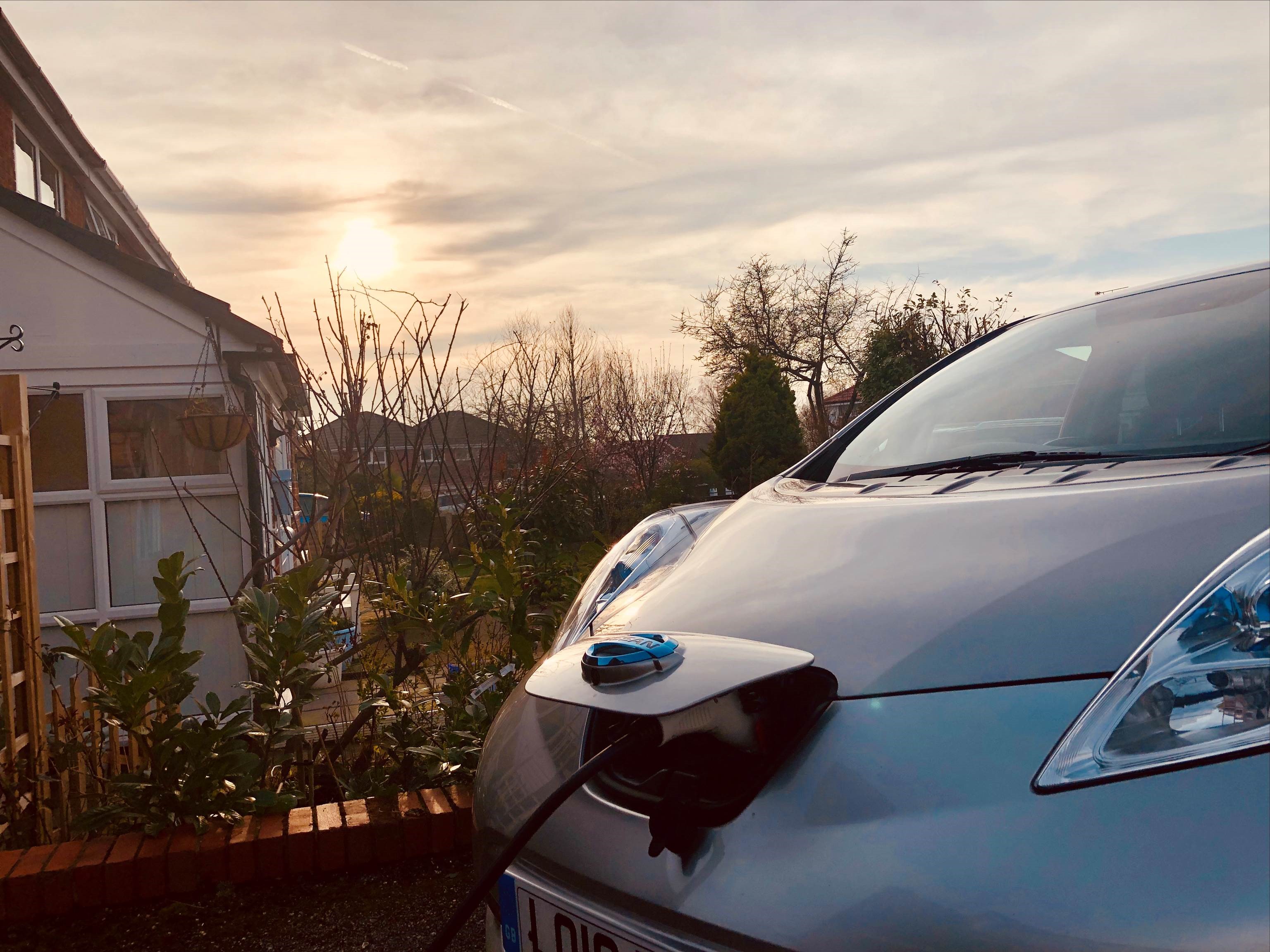
Working with Western Power Distribution, EA Technology is modelling the network impact of the Electric Nation Vehicle to Grid (V2G) trial.  The growing number of people using electric vehicles (EVs) is expected to increase the demand for power, especially if households have more than one vehicle. The V2G trial will show how this technology can resolve any potential issues with electric grid capacity.  Of the 200 applicants wanting to take part in the trial, 21% already have two or more EVs at their property. Furthermore, 48% of applicants are likely to purchase a second EV. These figures show that the applicants are particularly knowledgeable and enthusiastic about EVs.  On the one hand this is encouraging, but also illustrates the scale of challenges ahead for electricity network operators: charging each additional electric vehicle at home is similar to connecting an extra house to the electricity network (in terms of power and energy required).  Already, this data shows that the clustering of EVs (i.e. more than one per household) is more prevalent than previously assumed. It appears that many drivers liked their first EV so much that they either already have a second EV or are considering getting one in the near future. Such clustering will place further load on the local electricity network. However, by using V2G technology, EVs can return energy back into the grid at peak times, reducing the need for extra electricity generation or expensive network reinforcement.  The Electric Nation Vehicle to Grid trial is a coordinated initiative between four project partners. Western Power Distribution (WPD) is the project Distribution Network Operator, CrowdCharge is leading the project and DriveElectric is helping with recruitment of trial participants. EA Technology is modelling the network impact, using its powerful software platform to understand and optimise V2G operation for Distribution Network Operators.  Dave Roberts, Technical Director at EA Technology comments,“As a key partner in this project, we will be able to deploy and test our cutting-edge research and in a practical setting. The data we are gathering is vital to understanding how EVs will deliver benefits not only to drivers, but also to all energy users by reducing electricity network costs. The success of the project will raise the profile of EVs nationally, and hopefully encourage more drivers to take advantage of V2G charging.” EA Technology helps its clients understand this constantly evolving energy landscape by defining business strategy and establishing the benefits of adopting novel approaches. It shapes trials and pilot projects on the distribution network, and takes outcomes from innovative projects, to develop business-as-usual practices for instant adoption in the everyday world.

Ventilation Key In Preventing COVID-19 Spread In Hospitality Sector
Experts have said that ventilation is a key factor in preventing the spread of COVID-19 in the hospitality sector, following UK pubs and restaurants opening Saturday July 4. As pubs and restaurants around the UK prepare to open for the first time since lockdown on Saturday, trade association BEAMA has today issued clear ventilation guidance for the hospitality sector to help prevent the spread of COVID-19. The guidance, which stresses the need for effective ventilation alongside social distancing measures inside UK pubs and restaurants, provides six key recommendations to help keep premises COVID-secure. It considers optimal settings for mechanical ventilation systems, effective toilet ventilation, centralised systems, ventilation maintenance and ventilating without a mechanical system. Ever since the Government announced plans to ease off restrictions to allow pubs and restaurants to reopen, businesses have been doing all they can to minimise the risks of COVID-19 transmission. Guidance from the Health and Safety Executive and CIBSE has stressed the need for good ventilation, but there is a need for easy-to-follow direction for the hospitality industry, many of which are small, independent businesses who urgently need to re-open but are conscious of avoiding the spread of COVID-19. With businesses opening to sell food and drink, the need to manage the risks of COVID-19 to both workers and customers is top of the agenda. Given the risk of transmission is considerably higher indoors, it is essential that hospitality venues are well ventilated to prevent airborne transmission of the virus.  Sneezing, coughing and even talking can emit virus particles which can soon spread throughout a building where ventilation and indoor air quality is poor. It is in response to this considerable risk that BEAMA has issued the guidance to assist the hospitality sector in minimising the risk of COVID-19 transmission.  Commenting on the new guidance, Colin Timmins, Director of Member Services says, “With these guidelines, BEAMA aims to assist the hospitality industry in getting back to business. We recognise the significant risk posed by COVID-19 indoors and the concerns many pubs and restaurants will have for their employees and customers as they open their doors for the first time since lockdown. This guidance seeks to alleviate those fears by providing clear and key recommendations for good ventilation to help minimise the risk of virus transmission.” To view the guidance in full, please download the infographic by clicking here.