2 November 2026
Product of the Month: Amari Floodlight range by Aurora Lighting
 
24 November 2026
JTL celebrates opening of new Tyneside training centre
 
24 November 2026
LiGHT 26 welcomes record number of visitors to fifth event
 
23 November 2026
Advanced acquires communications specialist Baldwin Boxall
 
23 November 2026
Trades face 'skills squeeze' as apprenticeship demand soars
 

Latest News


Heat pumps recommended by 85% of consumers
It has been revealed that 85% of participants in the Electrification of Heat Demonstration Project were likely to recommend a heat pump to a friend or family member - or had already - citing their reliability, easy-to-use nature, and low levels of noise. Funded by the Department for Energy Security and Net Zero (DESNZ) and led by Energy Systems Catapult with support from LCP Delta and Oxford Computer Consultants, the Electrification of Heat Demonstration Project sought to understand the technical and practical feasibility, and constraints of a mass rollout of heat pumps into British homes. A total of 742 heat pumps were installed by the delivery contractors – Warmworks (Scotland), E.ON (north-east England), and OVO Energy (south-east England, excluding London) – into a broad spectrum of housing types (41% detached, 43% semi-detached, 11% mid-terrace, and 6% flats) and ages (68% built pre-1980). Heat pumps were installed in homes with varying Energy Performance Certificate (EPC) ratings from A down to G. At least 53% of homes involved in the demonstration project had an energy efficiency rating of C or D before the heat pump installation. Four different heat pump types were installed: Low Temperature Air Source (LT ASHP) 41%, High Temperature Air Source (HT ASHP) 33%, Ground Source (GSHP) 5%, and Hybrid 20%. These heat pumps were monitored throughout the trial to assess their performance. The majority of heat pumps performed well, with efficiencies comparable to three times that of modern gas boilers. On the coldest days, when temperatures fell to as low as -6°C, only a marginal decline in system performance was observed. Energy Systems Catapult states that the project has demonstrated that the large-scale rollout of heat pumps is possible within the UK. The company believes that it has shown that heat pumps can be successfully installed in all the types of property which were tested by the project, and that it has also shown that they can operate with good efficiencies and provide positive consumer heating experiences. Richard Halsey, Innovation Director at Energy Systems Catapult, says, “The findings of the Electrification of Heat Demonstration Project are clear: when designed and installed well, heat pumps can be an effective low carbon heating solution, providing good consumer outcomes regardless of the property type or age. It is time to do away with the idea that they do not work in UK homes. This is simply untrue.” Energy Systems Catapult’s recently published Innovating to Net Zero 2024 report found that the electrification of heat could represent over 70% of total heat supply in 2050. To achieve such a rate of electrification, the barriers identified by the Demonstration Project will need to be overcome. Four common blockers and barriers to the mass rollout of heat pumps were identified by the project: Perceived impact of disruption Compared to the installation of a traditional gas boiler, the heat pump installation journey may be more complex for consumers. Physical and practical disruption was cited by some participants as being one of the main drawbacks of having a heat pump installed. Heat pump specifiers and installers need to develop innovative solutions to help customers navigate the heat pump installation journey and reduce the impact on householders. 2. Hard to decarbonise homes Several property types were identified as posing more of a challenge for the installation of a heat pump. Mid-terrace homes were impacted by space constraints, pre-1919 homes faced challenges owing to building fabric efficiency and heating capacity required, and post-2001 properties needed solutions that worked with microbore pipework. However, the project did install heat pumps across all property types and ages, indicating that such issues were not insurmountable. 3. Space and noise constraints A lack of external space and the perceived risk of noise pollution did pose a barrier to the installation of a heat pump. Permitted development rights required heat pumps to be installed one metre away from the property boundary or a neighbouring property to minimise the potential impact of noise on neighbours. This rule does not allow for the actual noise output of the heat pump. This could pose a challenge to installing heat pumps in densely populated areas. The Demonstration Project findings support the ongoing revision of such planning requirements. 4. Slow grid connection times There is a need to inform the Distribution Network Operator (DNO) of the intent to connect a heat pump to the electricity network. The time taken to process applications to connect a heat pump can vary and cause significant delays impacting the customer journey and time taken for installation. These delays may mean the difference between installing a heat pump and opting for an alternative heating technology. Richard Halsey continues, “The barriers to installing a heat pump are not insurmountable. The project points to a need for a bold reimagining of home heating market design to make it easier for consumers to make the switch to low carbon heating solutions. Barriers such as the ‘one metre rule’ are not based on tangible noise outputs, and so do little else but discourage some homeowners from making the switch to a heat pump. If we’re to transition away from natural gas boilers we need to be doing more to remove the barriers to uptake. “Innovation in heat pump technology has come a long way over the last decade. Heat pumps are more efficient than they’ve ever been, they’re reliable, they work in cold weather and are suitable for most housing types and ages. Where barriers remain, innovation can help tear these down to help make solutions accessible, desirable, and affordable.” The installation of a heat pump provided an incentive for some participants to make additional ‘green’ upgrades to their homes, including installing insulation and other energy efficiency measures such as installing solar panels and battery storage. To read the summary reports and access the datasets, click here. For more from Energy Systems Catapult, click here.

New apprentice pay rates come into effect
To address the impact of recent national minimum wage changes on apprentice rates of pay, ECA, SELECT and Unite the Union have collaborated to implement new apprentice rates of pay, coming into effect from 6 January 2025. This measure aims to ensure fairness and stability for apprentices throughout their apprenticeships and ECA, SELECT, and Unite the Union have collaborated to implement this solution. The electrical industry is facing a pressing need for skilled workers to support the low carbon transition, with an estimated requirement for 15,000 newly qualified electricians over the next five years. To meet this demand, the recruitment of at least 12,000 electrical apprentices annually is crucial, significantly higher than the current average of 8,000 per year. Ensuring fair pay is a critical element in attracting and retaining this talent pipeline. The agreed updated rates of pay for 2025 are as follows: National Standard Rates 2025: Stage 1: At Work Current, £6.44 | At Work New, £8.16 Stage 2: At Work Current, £9.09 | At Work New, £10.60 Stage 3: At Work Current, £13.02 | At Work New, £13.05 Stage 4: At Work Current, £13.99 | At Work New, £14.03 London Rates 2025 Stage 1: At Work Current, £7.21 | At Work New, £9.14 Stage 2: At Work Current, £10.21 | At Work New, £11.88 Stage 3: At Work Current, £14.58 | At Work New, £14.62 Stage 4: At Work Current, £15.69 | At Work New, £15.72 Part of this updated agreement is to remove the ‘At College’ rate of pay for England, Wales and Northern Ireland. This means there is one rate of pay which applies to all hours of work or as part of off the job learning during an apprenticeship. For clarity, this does not affect those apprentices employed in Scotland under the SJIB National Working Rules for whom the ‘At College’ rate remains for Stage 3 and 4. SJIB Rates and Differentials Stage 1: At Work New and At College New are both £8.16 Stage 2: At Work New and At College New are both £10.60 Stage 3: At Work New, £11.42 | At College New, £10.60 Stage 4: At Work New, £13.05 | At College New, £12.23 The agreement between ECA, SELECT, and Unite takes effect from Monday 6 January 2025 and retains the benefits of grading by encouraging apprenticeship completion and progression to electrician status, and the obtainment of a gold card in a structured way. This is set against the backdrop of upcoming pay negotiations for 2026 onwards, which will commence in in 2025. The updated JIB Handbook, which contains all updated rates for 2025, is being finalised and will be shared soon. For more from ECA, click here.

Tradespeople more knowledgeable on energy efficiency than ever
A new survey by Screwfix has found that UK tradespeople feel more confident in their energy efficiency knowledge than ever, helped by an 8% rise in training courses being completed in the last year. The survey also revealed that two thirds (66%) of all jobs conducted by the nation’s tradespeople over the past year have had an energy saving focus. Up from just over half (54%) in 2023 as more homeowners are motivated to make the switch to energy saving products, to help them save money on energy bills. With rising consumer demand for energy saving solutions, tradespeople are committing to further training so they can offer customers the best-informed advice and product choice. More than 600 tradespeople took part in the survey, with 25% of those completing in-person training and a further 15% completing training online that was focused on installing energy efficient products or renewable energy technology. As a result, 90% of tradespeople say they now feel ‘very knowledgeable/somewhat knowledgeable’ when it comes to advising customers on energy efficiency – compared to 84% in 2023. Earlier this year, Screwfix launched its Voice of the Trade report – which revealed that more than 75% of tradespeople felt upskilling would have a positive impact on their business. However, almost 40% were unable to upskill due to lack of time. The survey also revealed that tradespeople are being asked to undertake a range of energy saving jobs. Lighting continues to top the list at 54%, followed by the installation of new radiators (37%). In 2024, smart thermostat installation (33%) and central heating maintenance (29%) have overtaken loft insulation (23%) as the next most popular job. When asked which potential government-led incentives would encourage more homeowners to invest in energy efficient measures, 61% of tradespeople said energy efficiency grants for home improvements – the same as in 2023. The removal of VAT on labour also remained a popular choice, rising to 35% this year from 33% in 2023. To support tradespeople, Screwfix added the Green Star mark, making it easier to identify products that offer at least one sustainable feature. Green Star products, from energy saving lighting to smart thermostats, taps and TRVs, can all help to lower impact on the environment. This can range from being manufactured from recycled materials or designed to help homeowners reduce their energy bills. Jack Wallace, Marketing Director at Screwfix, says, “As energy price concerns continue to worry consumers across the UK, increasing numbers of tradespeople are responding by arming themselves with the training and knowledge needed to deliver an informed service for their customers. “With two-thirds of tradespeople saying that the jobs they take on are now focused on energy saving – a figure that has almost doubled in the past two years – it is clear that energy efficient solutions are fundamental to build business and deliver added value. “These findings also align to the findings of our Voice of the Trade report, which revealed that whilst tradespeople overwhelmingly saw the benefits of upskilling – they were being held back by lack of time and support. This is why we’re calling on the UK government to consider policy changes that support tradespeople upskilling, particularly in areas of sustainability and low carbon technology. “Screwfix has an important role to play in ensuring we offer unbeatable value for the innovative product solutions that tradespeople need, to help them get their energy efficiency jobs done quickly, affordably, and right first time. To help them, we’ve also invested in the number of products we offer with a Green Star badge, which has doubled to 3,000, making it easier than ever to choose a product that can make a difference.” For more from Screwfix, click here.

Product of the Month: The smart choice for modern comfort
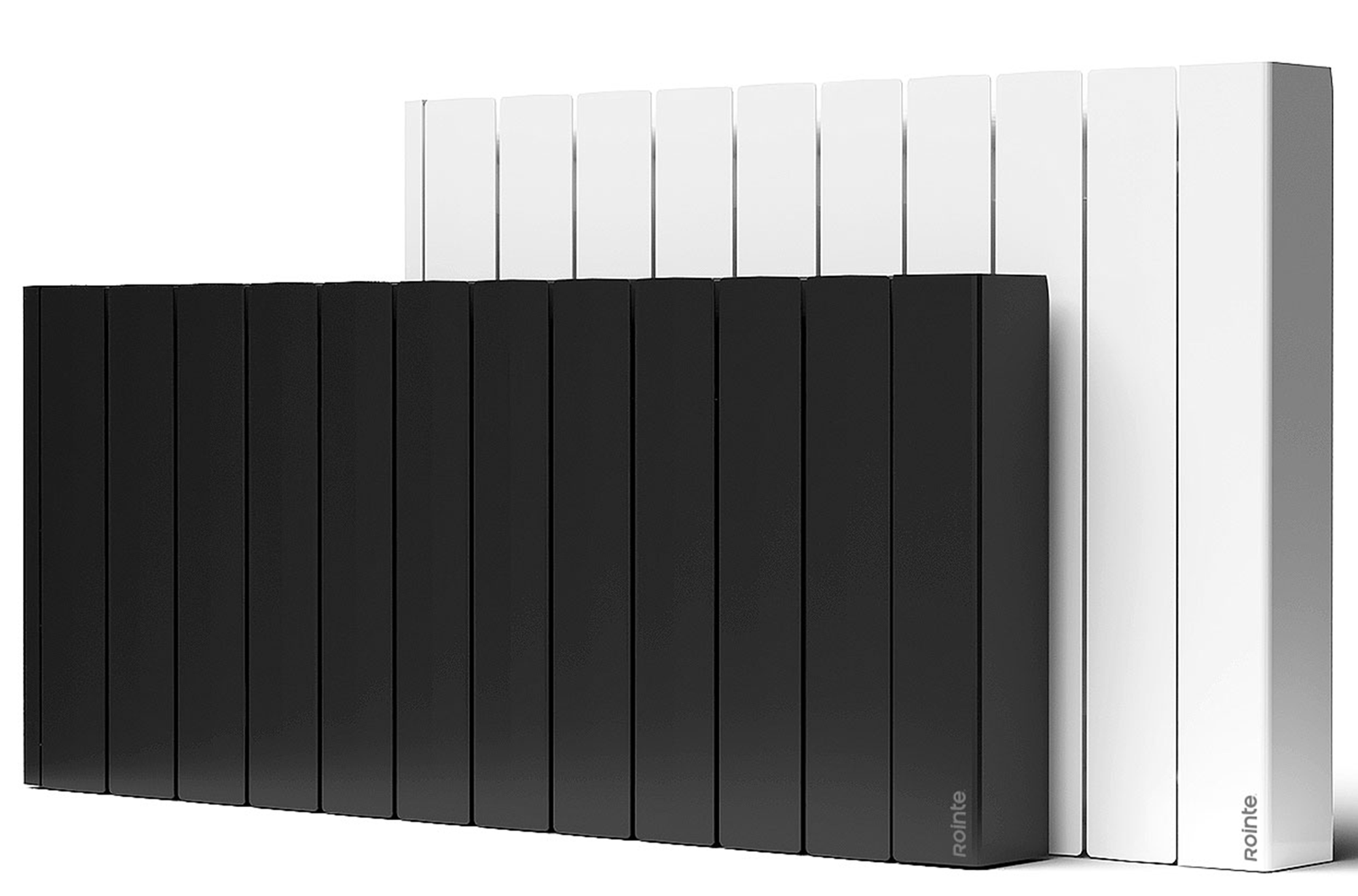
In today’s age of technological innovation and sustainability, the Belize WiFi Electric Radiator stands out as a revolutionary product for electrical installers and homeowners alike. Seamlessly blending efficiency, connectivity and style, this cutting-edge radiator offers a glimpse into the future of smart heating solutions. Designed to deliver optimal comfort with minimal energy consumption, the Belize radiator boasts Fuzzy Logic Energy Control, a groundbreaking technology that maintains a stable temperature of 21°C while reducing energy use by up to 62%. This advanced system, tested in independent laboratories, ensures warmth without compromising on efficiency. Paired with Thermal Fluid Tech, which guarantees high thermal transfer and stable performance, Belize sets a new standard in energy-saving innovation. The radiator’s WiFi Direct Technology eliminates the need for additional gateways, enabling direct, seamless connection to the Rointe Connect app. From this platform, users can program 24/7 operations, monitor real-time energy consumption, and activate energy-saving modes - all from their smartphone. With integrated voice control compatibility for Alexa and Google Assistant, managing home heating has never been easier. Aesthetically, the Belize range impresses with sleek designs and sustainable craftsmanship, including a 100% recycled aluminium alloy body. It is available in two heights: the Belize (575mm) and the Belize Short (420mm). The Belize comes in classic white, while the Belize Short offers a choice of white or a striking black finish, ensuring a perfect match for modern interiors. What truly sets Belize apart is its AI Heating System, which learns from user habits to provide personalised comfort recommendations. This intelligent feature ensures not just a warm home, but a smarter, more efficient one. For electrical installers, the Belize radiator is more than a heating solution - it’s an opportunity to deliver cutting-edge technology that transforms spaces into havens of comfort and sustainability.

Staff at CMP Products complete charity cycle challenge
Staff at CMP Products, a manufacturer of cable glands, cleats and accessories, have got on their bikes and pedalled for mental health charity, Anxious Minds this week – raising £4,359 during a non-stop 36-hour cycle challenge. The static bike challenge took place in the main reception of the company's Cramlington-based headquarters and saw approximately 100 members of staff take part in the challenge, with some employees choosing to take part in more than one time slot. Leanne Branfoot, CMP Products’ Human Resources Advisor and Culture Champion, says, “We support a local charity every year, and for 2024/25 there was an overwhelming desire to support a mental health charity that is really making a difference in the region.” “The work Anxious Minds has done with individuals in the north-east over the last 10 years has been truly astonishing, and we hope the £25,000 we’re aiming to raise over the course of 12 months will provide much needed support to ensure they continue delivering support when and where it’s needed.” Anxious Minds was founded in 2015 stemming from the CEO’s personal experiences with PTSD, anxiety and depression. Since then, it has delivered 107,899 counselling and support group sessions supporting children, adults and veterans. Its services include support groups, therapy sessions, helplines, workshops and recovery centres, as well as online resources for anyone with anxiety disorders or other mental health conditions. Edward Dean, Anxious Minds’ CEO, comments, “I would like to give a huge thank you to all the wonderful staff and managers at CMP who have taken part in the bike ride challenge and to all the friends and families who have helped in supporting Anxious Minds by sponsoring the event. I popped along to CMP on day one and it was heart-warming to meet a few of those who were taking part, all armed with enthusiasm, energy and goodwill; and all of whom are a credit to your organisation. “Every pound raised by CMP for Anxious Minds is a step toward brighter futures and stronger mental health in the north-east. Together, we’re changing lives, one contribution at a time." To date, CMP Products has raised £14,173 of its £25,000 target and has already set its sights on planning its next fundraiser for Anxious Minds. To support the cause, click here. For more from CMP Products, click here.

Celebrating 25 years of WISKA UK
WISKA UK is proudly celebrating 25 years of delivering industry-leading electrical products to the UK market. Since 17 January 2000, WISKA UK has grown into a thriving enterprise with over 50 employees, a cutting-edge 20,000ft2 facility, and an annual turnover exceeding £23 million.  Established by Will and Maxine Rich, WISKA UK began operations in a 100ft2 space in Wadebridge, Cornwall. With a focus on innovative solutions and exceptional service, the company quickly gained the trust of electrical wholesalers and contractors. Today, it stands as a beacon of excellence in the electrical industry, representing the rich heritage of its German parent company, WISKA Hoppmann, which has been a leader in cable management and maritime solutions since 1919.  WISKA UK has carried forward the innovative spirit of its German roots, continuously adapting products to meet the needs of the UK market. Signature products, including the COMBI junction box, VentGLAND for condensation prevention, and the TKS 32 consumer unit tail kit, have made WISKA a trusted name across the electrical and electrical contracting sector.  At WISKA UK, people are the foundation of success. With 38% of employees starting as apprentices and an average team age of 34, the company is deeply committed to fostering young talent and professional growth. "Our business is all about people," says Rhiannon Rich, Commercial Manager. This commitment is reflected in WISKA UK’s values, known as The PATH - Positivity, Approachable, Team, and Humble.  Sustainability is another cornerstone of WISKA’s mission. The revolutionary TriShot Cable Gland exemplifies this dedication, boasting a 55% reduction in carbon footprint alongside outstanding performance and efficiency. The TriShot has garnered industry accolades, including ECN's Cable Management Product of the Year 2024.  Additionally, WISKA UK has achieved a 'Committed' rating from EcoVadis, underlining its dedication to environmental responsibility. From product design to operations, sustainability remains a guiding principle for WISKA.  In addition to serving electrical wholesalers and contractors, WISKA UK has contributed to high-profile projects, including the Queen Elizabeth Aircraft Carriers and Astute-class submarines. These achievements showcase the precision, durability and versatility of WISKA products, built on a maritime legacy that dates back over a century.  As WISKA UK celebrates this milestone, the company is poised for continued success. Plans for a new warehouse reflect its confidence in sustained growth, while a pipeline of innovative products ensures it remains at the forefront of the industry.  “We’re proud of our journey over the past 25 years,” says Will Rich, Managing Director. “Our success is built on innovation, quality, and the incredible people who make it all happen. Here’s to the next 25 years of excellence.” 

Immediate recall of Sangamo Powersaver heating control products
ESP is issuing a voluntary recall of a number of its Sangamo Powersaver heating control products, due to the identification of a potential safety hazard. A total of three individual products in three finishes are being recalled. These are: Sangamo Powersaver Selectable 7 Day Timer & Fused Spur in white, black and silver finishes - PSPSF247; PSPSF247B; PSPSFS. Sangamo Powersaver Selectable 24 hour Timer and Fused Spur in white, black and silver finishes - PSPSF24; PSPSF24B; PSPSF24S. Sangamo Powersaver Boost Timer & Fuser Spur in white, black and silver finishes -PSPBF; PSPBFB; PSPSFS. ESP would like to reiterate its commitment to ensuring customer safety whilst delivering a first class service. During routine market surveillance checks, the company identified a possible safety issue with these products. Following thorough and stringent investigations into the matter, ESP has concluded that a potential manufacturing defect may cause these products to overheat, particularly where used in high load and high ambient temperature applications. The decision has been made to immediately recall the products to prevent further use and to eliminate any potential risk. The company can report that no damage or injuries have been reported at this time. ESP has written to all customers to inform them of the recall. Anyone who has purchased and installed one of the products in question has been advised to isolate and replace it immediately. The company also offers the advice, as per IET guidance, that 13A loads in high ambient temperature environments (such as airing cupboards) are not suitable to be supplied by standard 13A fused spur products. A 20A double pole switched unit should be used in such case. Neil Baldwin, ESP Managing Director, says, “The trust and safety of our customers have always been our highest priorities. It is with this commitment in mind that we have taken the steps to recall the products in question. We believe it is our responsibility to take proactive measures to protect our customers and maintain the highest standards of quality. Anyone needing assistance in this matter is advised to contact the ESP Customer Service Team on +44 (0) 1527 515150 or email sales@espuk.com.  

Heat pumps are more efficient than boilers, research shows
Kensa, a ground source heat pump manufacturer and provider of networked heat pump solutions, has welcomed new government-backed research confirming ground source heat pumps are the most efficient form of heating, and significantly more efficient than gas boilers. The In-Situ Heat Pump Performance report, which examined heat pump performance, shows that ground source heat pumps are, on average, 324% efficient; while air source heat pumps are, on average, 265% efficient. Meanwhile, the Energy System’s Catapult has recently published its Electrification of Heat Report, which shows that air source heat pumps are, on average, 281% efficient. These efficiencies compare with an average 82.5% efficiency of gas boilers found by a previous government-backed study. Kensa says that this new data highlights the superior efficiencies of heat pumps and demonstrates the major energy and carbon savings they offer over other heating technologies. Even with major disparities between electricity and gas prices, the efficiencies of heat pumps detailed in the reports also mean ground source heat pumps can provide notable energy bill savings when switching from gas and other traditional heating technologies. The Electrification of Heat Report also highlights the high-performance levels of ground source heat pumps even at sub-zero temperatures in the depths of winter. This illustrates the important role ground source can play in managing grid capacity issues as heat pumps are installed in millions of homes across the UK. Tamsin Lishman, Kensa CEO, comments, “This new research shows beyond doubt that heat pumps are the most efficient way of heating homes - three to four times more efficient than gas boilers. As a manufacturer and installer of ground source heat pumps, it’s pleasing to see real-world data confirming the technology is the most efficient heating technology available; and 40% more efficient than even air source heat pumps. “Importantly, the report shows ground source heat pumps perform well even when temperatures drop below zero, meaning reduced electricity demand and less pressure on the grid. This is a critical finding for how we achieve the mass roll-out of heat pumps, with millions of homes poised to switch to electrified heating. “However, even with these efficiencies, today’s energy prices still mean it’s only slightly cheaper to run a heat pump than a gas boiler in a typical British home. At a time when we need to be weening ourselves off fossil fuels, it doesn’t make sense that electricity is still four times the price of gas. It’s critical the government acts now to remove the levies artificially pushing up the price of electricity. “Combine the continually improving efficiencies of heat pumps with lower power prices, and we’ll see the significant real-world savings consumers can make by switching to low-carbon heating. With this, and ending the installation of gas boilers in new homes, the government can normalise heat pumps in UK homes and kick start the transition to clean affordable heat.” For more from Kensa, click here.

Engineering firm donates to foodbank to tackle food poverty
BGEN, one of the UK’s largest engineering companies specialising in mechanical, electrical, instrumentation, control and automation, has donated much-needed food to boost supplies at the Barrow Foodbank. The business, which has just opened a second office at Trinity Enterprise Centre in Barrow, gathered dozens of tins and packets of food – the equivalent of 550 meals – before delivering them to the foodbank at Abbey Road Baptist Church. It is the first local community programme that the firm has supported since opening its second office in the town last month. BGEN’s new office is dedicated to engineering, design and project management and complements the skills set of the existing office, which specialises in electrical, installation and instrumentation works. Matthew Burden, Project Manager at Barrow Foodbank, says, “A sharp rise in the price of food and bills has led to increasing demand for our services, with our warehouse food stocks dropping from 35 to just five tonnes as a result of the cost-of-living crisis. “That’s why our work here is so important – every item donated to our foodbank makes a big difference to those facing food poverty. As the weather gets colder, the food we are able to provide to people becomes even more important, and this contribution from BGEN is vital and much appreciated.” Glyn Shawcross, Engineering and Design Director at BGEN, adds, “We’re very keen to support the community that we are a part of and to make a positive contribution to local people who need help through these difficult times. This donation of food has had an immediate and meaningful impact on those most in need in our community.” As it expands its operations in Barrow-in-Furness, BGEN has committed to recruit locally and build links with sports teams, charities and community initiatives. This business also plans to engage with local schools and colleges to help youngsters to understand the importance of engineering and inspire future talent into a career in the profession. For more from BGEN, click here.  

NICEIC looks back on 2024 highlights of The Wire
NICEIC, the certification and training body for the electrical industry, is reflecting on a successful year for its webinar series, The Wire. The Wire, which is free to NICEIC-certified businesses and their employees, has provided technical insights and continuing professional development (CPD) opportunities to industry professionals throughout 2024. Webinars have covered a diverse range of topics, from regulatory updates to practical technical advice, led by NICEIC experts, with a number of episodes featuring contributions from industry partners including Electrical Safety First (ESF) and Electrical Contractors’ Association (ECA). This year, The Wire has delivered over 17 hours of high-quality CPD content, reaching over 59,000 viewers, live and on demand. This year’s most watched live broadcasts included: • Top tips for completing certificates and reports: electrical installation condition reports (EICR) and Top tips for completing certificates and reports: electrical installations and minor works • Best Practice Guide 10 explained: electrical safety standards in the private rented sector hosted with ESF • Safe isolation hosted with ESF and ECA • Electrical fundamentals: understanding the adiabatic equation. Meanwhile, the most popular webinars on demand were: • Amendment 3 (2024) BS 7671:2018 Wiring regulations • Safe isolation hosted with ESF and ECA • Electrical Installation Condition Report coding clinic hosted with ESF • Best Practice Guide 10 explained: electrical safety standards in the private rented sector hosted with ESF. Sam Donaghy, NICEIC Head of Technical Advice and Practice, comments, “The Wire has once again proven to be a valuable resource for NICEIC-certified businesses and the wider electrical industry. We are pleased to have shared over 17 hours of technical CPD content this year via The Wire alongside the other forms of learning we provide. “We are delighted that this series has connected with the audience so well and look forward to delivering more informative and engaging webinars in 2025.” For more from NICEIC, click here.