2 November 2026
Product of the Month: Amari Floodlight range by Aurora Lighting
 
24 November 2026
JTL celebrates opening of new Tyneside training centre
 
24 November 2026
LiGHT 26 welcomes record number of visitors to fifth event
 
23 November 2026
Advanced acquires communications specialist Baldwin Boxall
 
23 November 2026
Trades face 'skills squeeze' as apprenticeship demand soars
 

Latest News


Building energy management firm celebrates 25-year milestone
One of the UK’s leading independent building and energy management solutions companies is celebrating its 25th anniversary in business with a reflection of its success to date, as well as confirmation of its growth pathway for its next chapter. South Yorkshire headquartered BGES Group was founded in 1998 as BG Controls and has evolved to become one of the largest and fastest growing businesses in its sector. The group is formed of four separate specialist entities; BG Projects, BG Service, BG Net Zero and BG Enterprise.  Between them, these business units deliver a wide range of building technologies and solutions, including building energy management systems (BEMS) smart remote services, energy management, carbon reduction strategies and complex IT infrastructure solutions.  Strength in numbers  Employing 65 staff, BGES has marked its 25th year with the opening of new offices in London as well as confirmation that it has delivered nearly 10,000 projects to customers across the UK since its foundation. The company has also calculated that in the last 25 years, its staff have spent over one million project hours on customer sites, and has built over 7,400 control panels.  BGES Group says that it is proud that its anniversary milestone coincides with a review of its charitable efforts over the last three years - which is calculated to be to the value of £8,000. The main beneficiary of the company’s charity contributions is Sheffield Children’s Hospital, which is an organisation that is close to the hearts of many of the company’s staff.  Supporting young people  Supporting and nurturing young talent has always been a core value of the BGES senior leadership team, and this is evidenced by a recent scheme to enrol three school leavers from Dinnington High School onto a pioneering apprenticeship aimed at delivering smart, low-carbon buildings. The BEMS Controls Engineer Apprenticeship was launched in 2020, borne out of a need to address the industry-wide shortage of specialists in the sector. Buildings account for 23% of the UK’s carbon emissions, and 41% of the global energy demand, so there is huge, untapped potential to drive this number down through efficient control of buildings’ plant and equipment. Post-apprenticeship, there is a clear route for these young people to progress at BGES Group.  Growth plans  BGES Group’s Managing Director, Gareth Barber, says, “From our earliest years and right up to the present day, BGES has benefited from a hardworking and dedicated team that has always put the needs of our customers first. This has helped us to gain a reputation for excellence which has meant we have enjoyed significant - and often rapid - growth. It is extremely pleasing to think that so many of our almost 10,000 completed projects are the result of repeat business and a steady stream of referrals and recommendations. “Our new business pipeline looks extremely promising and we have plenty of exciting and ambitious plans for the next stage in our growth journey. We are very proud of what has been achieved so far - but, the best is yet to come.”

GSHP connects to the world’s first in-road retrofit of ground array infrastructure 
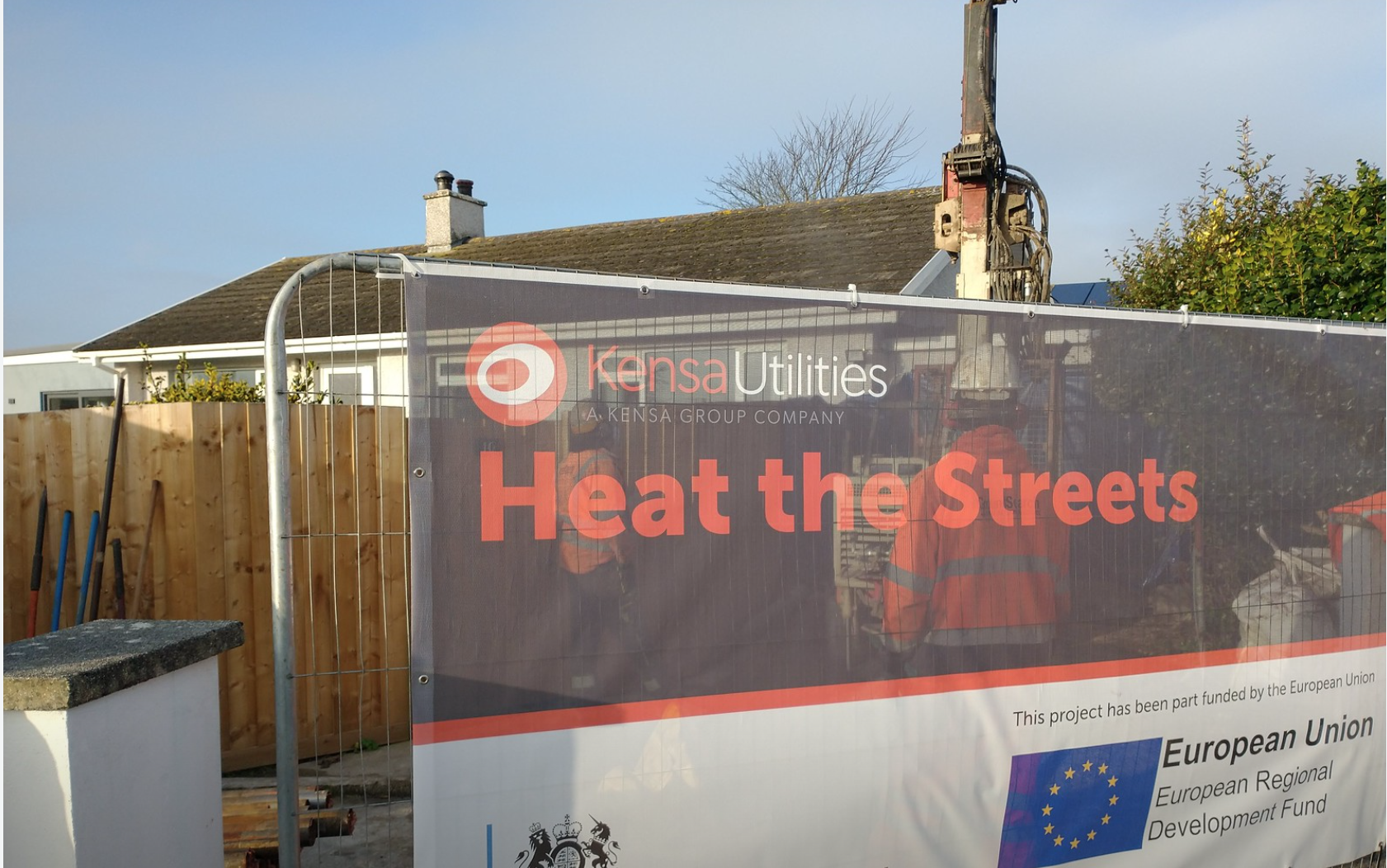
The first resident in the Cornish village of Stithians has had their ground source heat pump (GSHP) connected to an ambient heat network that will draw energy from under the street.  It’s thought to be a world first shared ground array being retrospectively installed in a public highway. The pioneering project, Heat the Streets, is run by Kensa Utilities and part funded by the European Regional Development Fund (ERDF), and represents a significant investment in the future of sustainable energy. Each home involved in Heat the Streets will swap either carbon intensive oil or LPG fossil fuels for its own low carbon Kensa ground source heat pump that will provide 100% of the property's heating and hot water year round. Homeowners will pay a monthly standing charge to access the heat network, much like the existing gas connection fee.  The in-road ground source heat pump network, also known as Networked Heat Pumps, in Collins Parc, Stithians, will consist of 42 boreholes, drilled to an average depth of 106m. It allows homeowners to utilise the heat from the ground to keep their houses warm and reduce carbon emissions. The infrastructure emulates the existing gas grid and has been designed to accommodate future connections, allowing households who were not ready to change their heating system to connect at a later date. Unlike traditional district heating, there is no need for a central plant, no heat loss around the network, and customers can still change their energy provider at will, promoting energy independence. Heating accounts for around 30% of the UK's carbon emissions and The Committee on Climate Change estimates 80% of the buildings that will be here in 2050 have already been built. As ground source heat pumps are electrically powered, non-combustion devices that emit no local emissions or air pollution, they will reduce the carbon output associated with heating each home by around 70%.  Wouter Thijssen, Managing Director of Kensa Utilities, comments, “It’s fantastic to have the first heat pump up and running on this landmark project which provides a blueprint for the decarbonisation of heating in the UK. Our model replicates the gas network with a pipe in the ground, a flat rate standing charge to consumers and a little white box in the house. “Just as Burton Upon Trent was the first UK town to convert to natural gas in 1968 – at the time a cheaper, better, cleaner fuel than towns gas – we believe Stithians is the first UK town to convert to the 21st Century equivalent: networked heat pumps. Residents will have access to a network that will provide cheaper and cleaner heat for 100 years to come”.  Some locals have already been connected to a parallel scheme in Stithians which involves drilling a borehole into their front drive. They’re delighted with the results from their Kensa ground source heat pumps. Caroline Bolitho, resident of Stithians who’s heat pump was switched on, comments, “As a grandma I feel that I’m doing my bit for future generations and reducing my carbon footprint by having a ground source heat pump system which is important. I have been using oil heating before this and I feel really privileged and excited to have the system up and running."  Kensa believes that street-by-street deployment of this infrastructure is the most efficient way for the country to reduce the carbon output associated with heating for the lowest overall system cost and that in order to make projects like Heat The Streets easily replicable across the country, effective zoning and the granting of statutory rights for heat networks are crucial.

Fuuse enables confident EV rollout with launch of new FuuseEnergy suite
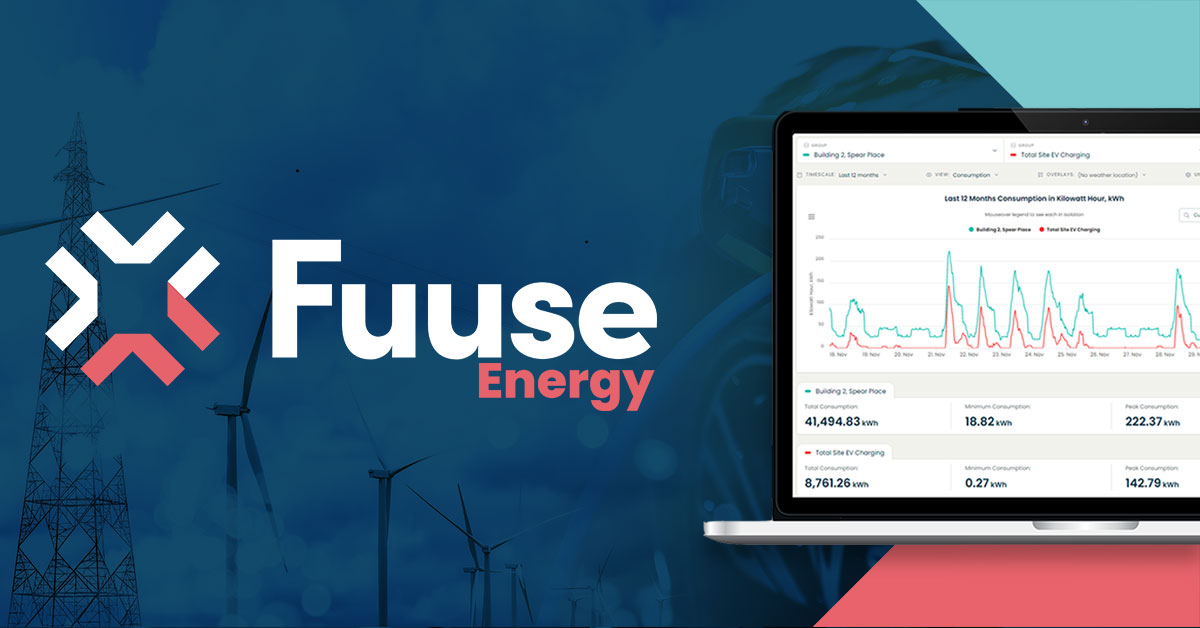
Fuuse has announced the launch of a full suite of energy products to enable organisations to confidently install and manage EV charging infrastructure, whilst balancing the impact on their site’s energy supply and overall grid demand. FuuseEnergy is a new suite, complementing the core Fuuse charge point management platform, allowing businesses to effectively monitor and manage their EV charging infrastructure, pre and post installation. The launch comes 10 months after the charging software innovators acquired energy management consultancy Envisij, from which many of the latest tools have been developed. “FuuseEnergy is a set of energy solutions for EV charging sites," says Gary Highton, Fuuse Head of Energy. "It provides the link between your EVs, buildings and the energy grid. With increasingly limited electrical capacity in local and on-site grids, there is a greater need to optimise how energy is used. "As EV adoption accelerates, we have released a unique arsenal of tools to help inform site infrastructure and provide more control over how energy is distributed across your sites. We’re enabling organisations to plan, monitor and react to energy consumption and demand.” Amongst the latest tools being launched, Fuuse EnergyMap offers organisations a comprehensive audit of energy usage, to inform infrastructure decisions. Using half-hourly metered consumption data, businesses can now understand site baseline demand and the forecasted affect EV charging will place on that demand. Organisations will have a clear view on their capacity needs when chargers are in operation and make informed decisions to request efficient DNO upgrades where necessary. Fuuse Energy Monitoring is a cloud-based enterprise monitoring solution with options to observe real-time energy usage across a site. Integrating with the Fuuse core platform, Energy Monitoring enables the efficient deployment of Fuuse’s Multi Level Dynamic Load Balancing to protect sites from capacity spikes and prevent contracted capacity tariff penalties, whilst maximising power to EV chargers as needed. Tom Arapura, Head of Product Strategy at Fuuse, explains more, “At Fuuse we’re using technology and innovative software to continually break down barriers for organisations to make the switch to EVs.  Our latest suite, FuuseEnergy, empowers businesses to make educated decisions about their electrical infrastructure. "We’re putting control back in the hands of organisations when it comes to the ‘how’ and ‘when’ of energy usage at their sites. We want customers to transition positively and efficiently, with the information they need to ensure they are not blindsided by any unexpected costs or unconsidered energy constraints. FuuseEnergy is a real game changer for enterprise organisations looking to make a smooth transition to a more sustainable future.” Amongst the early adopters piloting Fuuse’s new Energy products is Islington County Council. Seeking to electrify their fleet of vehicles, Islington is preparing to install EV chargers across multiple sites.  Fuuse EnergyMap has provided Islington with the insights to show how it can best optimise its contracted capacity, for a more efficient infrastructure plan, and make significant savings on contracted capacity costs. The Fuuse innovation team continues to evolve the Energy suite alongside Fuuse’s core platform capabilities, with ground-breaking implications for fleets and EV charging sites revealed later this year.

myenergi partners with record breakers McMurtry Automotive to showcase technology and reach new fans
myenergi and McMurtry Automotive have announced a strategic collaboration to share knowledge and showcase their industry-leading technologies. The agreement will see both companies unite across a series of ground-breaking initiatives, with myenergi branding set to appear on the world-famous and record-breaking Spéirling fan car. Having pioneered an extensive portfolio of eco-smart home energy technologies, myenergi has already sold more than 500,000 zappi EV chargers worldwide and was recently recognised as one of the UK’s top 10 fastest growing companies. McMurtry Automotive is recognised all over the world for its Spéirling fan car. The 1,000bhp electric single seater, piloted by former F1 driver Max Chilton, set a new hill climb record at the 2022 Goodwood Festival of Speed and has since demonstrated a world beating 0-60mph time of just 1.40 seconds. Together, the two companies are entering into an agreement to share knowledge, expertise and engineering prowess, in a bid to further accelerate the transition to electrification. While myenergi branding will appear on the Spéirling fan car, the engineering teams will also collaborate across a number of game-changing initiatives. Jordan Brompton, co-founder and CMO of myenergi, comments, ”Our mission is to pioneer a simple transition to renewable energy, so we are incredibly excited to be partnering with a fellow pioneer that is working on that same transition with what is arguably the world’s most exciting electric car. We are very clear that, to reach mass adoption, our message needs to reach beyond early adopters and to a new audience. The partnership with McMurtry Automotive gives us that reach to a whole new legion of future fans.” Thomas Yates, Managing Director of McMurtry Automotive, adds, “The collaboration was born after the two companies met in 2022. It was clear we both shared a desire to showcase the best of British-engineered EV products on the world stage. We’re very excited for myenergi joining us for the challenge to break more four-wheeled records with the McMurtry Spéirling. "Over the coming months, myenergi branding will start to appear on the Spéirling fan car as we travel across the UK and worldwide to showcase the pinnacle of electric capability. We’ve also got a few surprises up our sleeves in terms of secret projects and activations. Keep your ears to the ground – you really won’t want to miss a second!” The Spéirling fan car first appeared with myenergi branding at an exclusive VIP event in Dubai on 1 March. Over the next two years, the car will be showcased at events and exhibitions around the world, making appearances in the UK, Germany, the US and further afield.

WiTricity and ABT e-Line to bring wireless EV charging to Europe
ABT e-Line, a technology driver and one of the leading companies in aftermarket automotive solutions, and WiTricity, a leader in wireless electric vehicle charging, has announced plans to deliver aftermarket wireless EV charging in Europe. With extensive experience working with the Volkswagen Group (VW), ABT e-Line will initially upgrade the VW ID.4 to support wireless charging from WiTricity, with availability targeted for early 2024. The company plans to expand to additional EV models thereafter. “ABT e-Line’s strong track record in customising vehicles to meet the stringent demands of discerning customers fits perfectly with the leading wireless charging technology from WiTricity,” says Eric Plekkepoel, CEO of ABT e-Line. ABT e-Line plans to extend wireless charging capability to additional vehicles, including the Audi e-Tron GT and Porsche Taycan as well as the Volkswagen ID. Buzz – an iconic lifestyle vehicle that fits perfectly to the ABT brand. The added feature of wireless charging will not only appeal to their tech-savvy customer bases, but also provide further differentiation in their respective classes. “We’re thrilled to see the simplicity and convenience of wireless charging expand to vehicles in Europe through this partnership with one of the leading companies in automotive upgrade and aftermarket solutions,” says Alex Gruzen, CEO, WiTricity. “Our proven, automotive-grade charging solutions will help address many of the electrification challenges by making charging as easy as parking.” WiTricity’s magnetic resonance technology allows drivers to charge their EV simply by parking over a charging pad – all with the same speed and efficiency as plugging into Level 2 equipment. The global automotive standard for wireless charging for EVs was ratified by the Society of Automotive Engineers in 2020, based in large part on WiTricity’s designs, and ensures that both the ABT e-Line vehicles and WiTricity’s chargers will interoperate with other manufacturers. Consumers have indicated a strong desire for wireless EV charging. In several studies, 96% of EV consumers have expressed an interest in wireless charging, ranking it significantly higher in desirability than such other options as assisted parking or autonomous driving features. ABT e-Line plans to meet this demand with new EVs that are equally desirable to promote the convenience, safety and accessibility of wireless charging across Europe. “EV owners tend to count charging as the key drawback to ownership, and potential owners may see it as a reason to delay purchase. Charging with a cord or cable is inconvenient, as they can be heavy, bulky or trip hazards,” explains Alex. “And that’s before you add arms full of kids or backpacks, rainy weather or snowbanks. Wireless charging removes those inconveniences, so owners can simply park and charge.”

75% of UK electricians wouldn’t know what to do in event of a fire
75% of UK electricians wouldn’t know what to do in event of a fire, according to new research, despite 10% having witnessed a fire while on a job. The study, conducted by IronmongeryDirect, the UK's largest supplier of specialist Ironmongery, surveyed 500 UK tradespeople to reveal how prepared workers are for emergencies. Across all trades, a third (33%) of respondents have witnessed a fire while on a job, however, fewer than one in eight (12%) say they always have access to an extinguisher, and 85% say they don’t have one in their vehicle. It appears that some trades are more likely to come across fires than others. Locksmiths encounter incidents the most often (56%), followed by joiners and plasterers (both 50%). The UK trades most likely to encounter fires at work are: Locksmith (56%) Joiner (50%) Plasterer (50%) Building Surveyor (48%) Electrician (39%) Builder (34%) Plumber (28%) Carpenter (28%) Window Fabricator (27%) Landscaper (23%) The level of fire safety knowledge also varies by trade, with landscapers and joiners the least prepared for such emergencies. More than nine in 10 (94% and 92% respectively) admit that they wouldn’t know how to respond. The correct way to handle a situation depends on whether the fire is electrical, gas or chemical. However, almost seven in eight (86%) tradespeople say they are unaware of the differences between them. With this in mind, IronmongeryDirect has partnered with Edgaras Zilinskas, Director at Fire Immunity, to share the safest ways to treat each type of fire. 1) Electrical fires “Electrical fires should be dealt with by cutting the power, and then spraying the area with a dry powder or water mist fire extinguisher.” 2) Gas fires “For gas fires, turn off the gas supply, cover the flames using a fire blanket and utilise the appropriate fire extinguisher, such as dry powder.” 3) Chemical fires “Chemical fires can be dangerous to tackle, but try to remove any sources of fuel, heat and oxygen by using carbon dioxide, foam or dry powder fire extinguishers.” Dominick Sandford, Managing Director at IronmongeryDirect, says, "It's clear from our research that many tradespeople are unprepared when it comes to fire safety, with worrying numbers not knowing what to do in the event of a fire or how to advise their customers on fire safety." “We hope that by highlighting these issues, we can help to raise awareness and encourage tradespeople to take steps to improve their fire safety knowledge and preparedness."

Knightsbridge shines on in the worst of weathers
Designed especially for coastal, exposed and other challenging locations, the new collection of outdoor lights from Knightsbridge is warrantied to stand the harshest of weathers thanks to its robust, corrosion-resistant and low maintenance polycarbonate construction. Four ranges are included in the polycarbonate collection: Eamon, Alana, Toro and Dura. They are ideal for residential and light commercial applications where the environment demands that fitting material is as important as any IP rating, the new outdoor lights are warrantied for three years and come in a range of contemporary styles and finishes to suit most requirements. Offering a compact and contemporary design, Eamon comprises adjustable single and up or down wall lights, PIR downlights and spike lights. The wall lights are IP54 rated, take GU10 LED lamps and come in four finishes – anthracite, brushed brass, black and white. The PIR lights – available in black – are IP44 rated and come in single or up/down versions. They have a detection zone up to 12m at 110o and a ‘hold time’ between 10 seconds to five minutes. The operational ambient light threshold is 10 lux to daylight. The spike lights are available in the same four finishes as the wall lights, are IP65 rated and, depending on lamp choice, are dimmable. The Alana wall lights come in curved or square versions which both offer a forceful, solid aesthetic in black compact or elongated options that, thanks to their design and polycarbonate construction, offer the highest IP rating in the collection at IP65. Depending on the LED lamp, the Alana wall lights are also dimmable. Toro comprises two IP44 coach-style lanterns in black, bringing a contemporary twist to a very traditional style. They are available in up or down configurations and can be adjusted to one of three LED colour temperatures: 3000K (warm white), 4000K (cool white) and 6000K (daylight). Finally, impact-resistant Dura is available either as an IP65 IK10 LED bollard in moulded, toughened polycarbonate or a robust IP65 IK08 wall light. Both iterations of Dura are in black and come with adjustable CCTs in three colours – warm white, cool white and daylight. The new polycarbonate outdoor collection from Knightsbridge provides tough, durable lighting solutions to the challenges presented by bad weather or harsh environments, while delivering high aesthetics and quality performance.

Leeds helps residents access affordable green home upgrades
Hundreds more households will enjoy cheaper energy bills thanks to green upgrades after Leeds City Council secured £16.8 million to progress its plans to deliver climate-friendly housing across the city. The funding will enable the council to kick-start the delivery of its new Net Zero Homes Plan, which sets out actions the local authority will take to install low carbon heating and tackle heat loss from Leeds’ residential buildings. Last week, senior councillors approved the document, which sets out blueprints for how the council can work with the private sector, community groups, and government to enable every Leeds household to access property improvements that make homes healthier, more environmentally friendly, and cheaper to live in. Studies have shown that British homes are among the least energy efficient in Europe, making them harder to keep at a comfortable temperature and more expensive to heat or cool. One-in-six (17.6%) Leeds households were classed as living in fuel poverty in 2020, officially defined as living in a relatively inefficient home and having an income below the poverty line once energy bills are paid for. Better insulating Leeds’ buildings to tackle heat loss - alongside other measures to improve energy efficiency - will help to reduce fuel poverty and carbon emissions simultaneously. Councillor Helen Hayden, Executive Member for Infrastructure and Climate, says, “The Net Zero Homes plan is our blueprint to help end Leeds’ contribution to climate change by making our homes better. Meaning they are more affordable, healthier, greener, and more comfortable to live in. “From Holbeck to Holt Park, high-rise to homeowner, our actions have shown that helping Leeds’ households save money and energy has long been a priority for this council. “I am proud that this ambitious new plan goes further and thinks bigger - setting out how the council can work with partners locally, regionally, and nationally to help every household in Leeds enjoy the benefits of living in a climate-friendly home.” New advice service and innovative financing offer for green home upgrades A key commitment within the Net Zero Homes Plan is to establish a simple one-stop-shop hub with council partners for homeowners and landlords to get trusted, tailored advice on the benefits of installing different green upgrades. As well as educating residents, the service will also be able to recommend trusted contractors and will eventually offer property-linked finance options from private sector partners. Development of the new service will be accelerated thanks to a range of grants recently secured by the council, including £100,000 from the West Yorkshire Combined Authority, to support customer engagement and product research, as well as £50,000 from the MCS Charitable Foundation to create additional capacity within the council. As part of its Net Zero Homes Plan, the council will continue building the case for additional funding to support Leeds’ homeowners that are least able to afford money-saving green upgrades. The council has now secured up to £15.5 million to deliver a new scheme to upgrade properties not connected to the gas grid. Eligible residents will be able to apply for free installations of insulation products, solar panels, or low carbon heating technologies. Landlords of eligible properties will also be able to apply for heavily subsidised installations of the same improvements.

Supporting construction workers through peak operational periods
Like every industry, construction has its peaks and troughs throughout the year. The winter period is commonly seen as prime time for businesses and contractors to source new projects for the year ahead and get a head start on their plans, working with designers and co-workers to outline project timelines and requirements. With winter coming to an end, the industry is now about to enter its operational phase. April is the most common month for both interior and exterior construction projects to begin, as it often provides the start of a long period of construction-friendly weather, with drier ground and more hours of daylight to get things done. With the UK construction industry hitting its highest growth rate in nine months according to the S&P Global/Cips UK construction purchasing managers’ index, it is essential for workers to prepare for what is expected to be a very busy spring and summer period. Project management is extremely important for tradespeople. Throughout the busy trading period most workers will be juggling several projects at once, so organisation is key to help clearly identify different solutions for different tasks. Through ManoManoPro, trade professionals have the ability to manage multiple projects remotely at the same time through a personalised platform that provides simple invoice management and step-by-step order tracking catered to each task at hand. Accessibility is another big focus throughout spring and summer. Due to the ramped-up demand for construction, many tradespeople are working five extra hours a week, according to a 2022 survey from ManoManoPro, offering them little time to pick up the tools and accessories they require on a day-to-day basis. By having access to an online platform such as ManoManoPro instead of a bricks and mortar store, professionals gain access to an unrivalled choice of over 1.5 million products from trade-quality brands that can be delivered straight to the projects or renovation sites they are currently working on. The one-stop-shop is available anytime, anywhere via the online catalogue with 24 hour delivery on key items. A final prioritisation for tradespeople over the next few months is simplicity. Throughout any busy period of work, there are always a few stumbling blocks along the way, which can lead to stressful situations. Having access to quick and simple solutions can ensure there is no delay to a project end date and help keep a positive working environment intact. ManoManoPro offers a dedicated team at the service of every customer, providing a personalised experience and expert advice through a team of specialists available by telephone, email, or online chat who can help make decisions and provide information on products according to each project or challenge they face.

Fluke release new all-in-one testing equipment
Industrial-grade equipment for measurement, testing and diagnostics available from one supplier. The Conrad Sourcing Platform is expanding its already sizeable range of electrical testers by adding Fluke’s latest all-in-one solution. Fluke recently released the SMFT-1000, a brand new multimeter combining a PV tester, a performance analyser and an IV curve tracer. The SMFT-1000 is a perfect choice for all electrical contractors who want to carry out safety and performance tests of 1,000 VDC-rated solar energy systems in a more efficient way. Simplified workflows, faster job completion Solar engineers contracted to install, commission and repair photovoltaics need fast, accurate and safe tools to make sure that solar energy systems work in a highly efficient way without experiencing too much downtime, if any. They are now able to carry out the entire range of DC testing associated with residential, commercial, industrial and utility-scale photovoltaic systems using one single piece of equipment that combines accuracy, safety and reliability. Since the product helps simplify the workflows in the photovoltaic sector, engineers spend 20% less time on site and are able to speed up the documentation process that is part of each job by about 50%. IV curves are a common way to assess the performance of both individual solar panels and entire arrays of PV modules across different performance levels. The versatile SMFT-1000 allows comparing data collected on site with the respective IV curve, displaying any issues in real time on a high-resolution colour screen. This allows fast troubleshooting that does not require a laptop or tablet. The product also reads open-circuit voltage (VOC), short circuit and running current, and is suitable for insulation, diode, polarity and ground testing. Moreover, the device enables performance assessments of AC-DC inverters, to improve the energy conversion efficiency. A proper multifunction tester for solar energy systems “There is considerable demand in the market for a versatile high-precision multifunction tester,” explains Hans-Dieter Schüssele, Application & Technology Expert at Fluke. “Our new all-in-one PV tester plus performance analyser plus IV curve tracker is an advanced piece of equipment that has been thoroughly tested and comes with all the latest safety features and functions using state-of the- art technology. These include extensive auto-diagnostics options that allow a safe quality testing of solar energy systems while simplifying the workflows and, thus, speeding up the testing process significantly.” IEC/EN-62446-1-compliant testing  Fluke’s patented Keep-the-Leads feature means that you need to connect the product to a solar energy system just once to carry out all necessary testing. This saves time since user-friendly automatic measurement routines display the results in real time. The product is suitable for CAT 1 and 2 as well as type A and B insulation testing. The device comes with clearly labelled control buttons that make it easy to view earth resistance, polarity, voltage and current readings, AC/DC power curves, insulation resistance, IV curves and the outcome of diode tests. All readings taken on site are stored on the device and can be transferred to and downloaded from a PC using Fluke’s TruTest Data Management and Reporting software which makes data analysis and job documentation so much easier. PV specialists can make use of this extended set of features by opting for the SMFT- 1000/PRO. Easy integration enabling advanced testing  PV specialists choosing the product get both the analyser and a comprehensive set of accessories: to collect an exhaustive set of data, the SMFT-1000 multifunction PV tester allows you to use Fluke’s i1000 AC/DC clamp meter and the IRR2-BT solar irradiance meter that comes with a high-contrast LCD as peripherals – with the latter two pieces of equipment, among others, being part of the package. The clamp meter enables assessing the performance of the inverter while the IRR2-BT measures the intensity of the incoming sunlight and the temperature. The IRR2-BT uses Bluetooth to communicate with the SMFT-1000, to ensure accurate IV referencing. If, for some reason, the Bluetooth connection fails, the IRR2-BT keeps recording data for up to 17 hours, to be matched to SMFT-1000 readings at a later time.