2 November 2026
Product of the Month: Amari Floodlight range by Aurora Lighting
 
23 November 2026
Advanced acquires communications specialist Baldwin Boxall
 
23 November 2026
Trades face 'skills squeeze' as apprenticeship demand soars
 
20 November 2026
Ovia: Delivering performance and flexibility across every sector
 
20 November 2026
Exclusive: how to prepare a building for future technology
 

Latest News


Siemens and BASF collaborate on driving circular economy
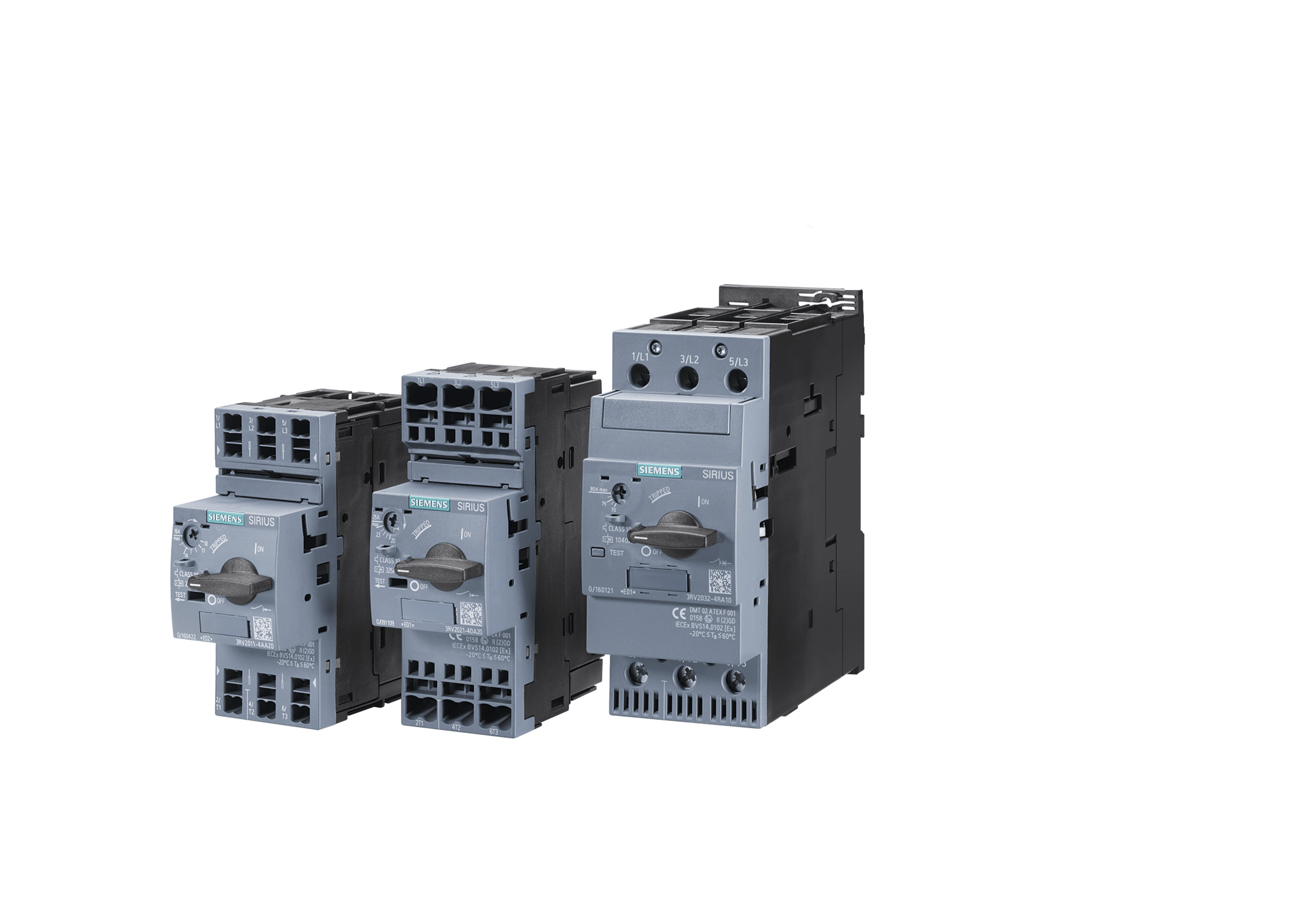
Siemens Smart Infrastructure and BASF have announced the first electrical safety product to include components made from biomass-balanced plastics. Used across industrial and infrastructure applications, Siemens' SIRIUS 3RV2 circuit breaker is now being manufactured using Ultramid BMBcert and Ultradur BMBcert from BASF, where fossil feedstock at the beginning of the value chain is replaced by biomethane derived from renewable sources such as agricultural waste. Both materials offer the same quality and performance as conventional plastics. The material changeover in the SIRIUS 3RV2 circuit breaker production will reduce the emission of carbon dioxide equivalents by approximately 270 tonnes per year. Customers using these products contribute to a circular economy towards a more sustainable future. Siemens says the move supports its sustainability goals in the areas of decarbonisation and resource efficiency, outlined within its DEGREE framework, with the company following a 1.5°C science-based decarbonisation target - including a 90% reduction target for scope 1 and 2 until 2030, and the application of a Robust Eco Design for 100% of relevant product families by 2030. In the coming months, Siemens plans to expand the use of sustainable materials across the broader SIRIUS industrial controls portfolio. In addition to product design and features, as well as manufacturing and supply processes, the choice of materials plays a major role in further reducing carbon emissions and conserving natural resources. The SIRIUS 3RV2 circuit breaker meets the strict criteria of the recently introduced Siemens EcoTech label, designed to give customers a comprehensive insight into product performance across selected environmental criteria. In addition to most of the product housing and functional parts being made from biomass-balanced plastic, the product also offers lower power consumption over its lifetime compared to its predecessor. Andreas Matthé, CEO of Electrical Products at Siemens Smart Infrastructure, says, “With our products, we help customers to improve asset performance, availability, and reliability, through resource-efficient and circular products which optimise energy use, production, and supply chains throughout their entire lifecycle. In BASF, we have found a strong partner that supports us with its innovations in the field of sustainable plastics.” By increasingly relying on renewable and recycled raw materials for the manufacture of its products, BASF is committed to make its contribution to the circular economy and defossilisation. This is achieved through a process that gradually replaces fossil raw materials with bio-based and recycled feedstock. According to the mass balance approach, renewable or recycled raw materials are introduced into production at the beginning of the complex BASF value chains. If customers decide in favour of a certified product from such a value chain, BASF feeds sustainable raw materials into ongoing BASF Verbund production. Martin Jung, President BASF Performance Materials, comments, "The mass balance approach is a game-changing solution that enables the gradual replacement of fossil raw materials in sometimes complex production processes. The advantages of this approach are obvious, and the greater the demand for alternative products, the higher the proportion of alternative raw materials in the production network. This aligns with our goal of achieving a circular economy and net zero operations as soon as possible.” “In addition, the special thing about this project is that the SIRIUS 3RV2 circuit breaker is also used in our BASF production plants. This circuit breaker not only protects the motors but also increases their efficiency and reliability, making a double contribution to our sustainability objectives.” With the mass balance approach, various alternative raw materials, such as biomethane, bio-naphtha or pyrolysis oil, can be integrated into the value chain. The bio-naphtha and biomethane used by BASF are certified as sustainable according to established systems such as ISCC PLUS and REDcert. The SIRIUS 3RV2 circuit breaker is a proof for resource-efficient plastics production and a milestone on BASF’s #ourplasticsjourney. “The use of such an innovative material in an important safety component, without compromising its safety functionality and performance, is a unique achievement for Siemens,” Andreas adds. Circuit breakers are used in factories and buildings around the world and protect machines or electrical cables in the event of faults such as short circuits. They help prevent major damage, for example from fires. - The SIRIUS 3RV2 circuit breaker, using sustainable plastic components, will be presented for the first time on Booth E3, Hall 11 at the ACHEMA trade fair in Frankfurt on 10-14 June. For more from Siemens, click here.

Hanwha Vision launches AI wall mount camera
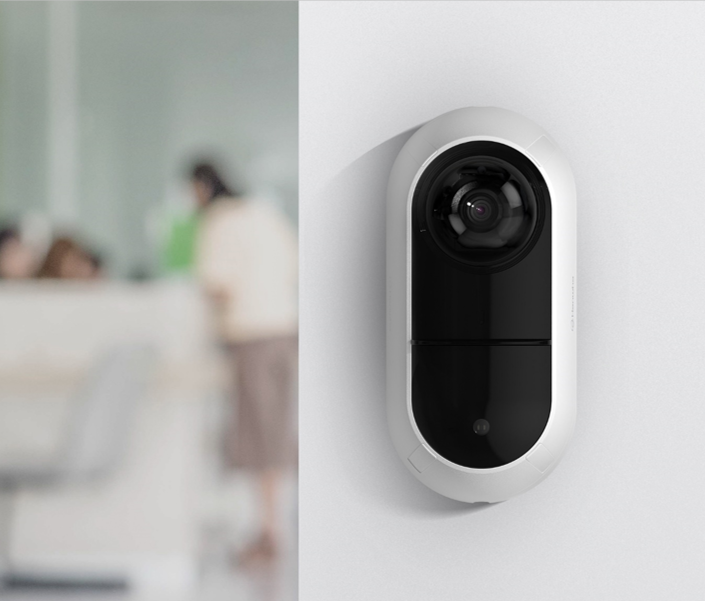
Hanwha Vision has launched the TNV-C8011RW - a 5MP AI IR Wall Mount camera ideal for entrances and exits, retail outlets, drive-throughs, self-checkout areas, and other areas where a clear view of faces is essential for identification purposes. Unlike cameras mounted high on walls, which typically provide a top-down view, the TNV-C8011RW is designed to be installed at eye level, so clear views of faces are possible, even when individuals are wearing hats or using umbrellas. A panoramic lens provides a nearly 180-degree field of view, with an adjustable tilt lens of 土25 degrees, resulting in no blind spots. Meanwhile, a 5MP resolution captures all the detail required to identify persons of interest - enhancing security and customer experience. Infrared (IR) functionality at distances of up to 15 metres also helps deliver clear images in varying lighting conditions. In addition to optimum mounting for identification purposes, the TNV-C8011RW uses AI to support the accurate detection and classification of people and other objects, improving operator efficiency and reducing false alarms. This frees teams to focus on higher-value tasks, as the intelligent solution only alerts them to events requiring their attention. Forensic search via metadata generated by the camera reduces the time operators must spend searching for specific events, while AI analytics are carried out ‘at the edge’ – in camera – eliminating the cost of maintaining separate computing infrastructure. Meanwhile compression technology, WiseStream Ⅲ, significantly reduces data size and bandwidth while maintaining a high image quality, for an efficient and cost-effective offering. The camera also includes valuable business intelligence features such as people counting, vehicle counting, queue management, and heatmapping. These are ideal for use in entrances and exits, lobby spaces, retail locations and drive-throughs to predict busy periods, inform staffing schedules and improve the customer experience. For example, operators can open additional checkouts when queues begin to form, while heatmap insights can highlight busy areas to influence store layouts, advertising, and more. While designed for mounting at eye level on walls, the TNV-C8011RW’s anti-ligature, rounded design and compact 167 x 80 x 57mm form enable it to remain discreet in day-to-day use. A white body colour can be replaced by an optional black skin cover (SBC-140WB), helping the camera blend into a range of interiors; while the camera can be installed on a wall or pole, and using a separate tilt mount accessory (SBV-140TBW), it can be tilted down to 20 degrees. As with all Hanwha Vision products, the camera features cybersecurity with Secure Storage, User and Network Authentication, OS/Firmware Protect, Data Protect, and Device ID (Hanwha Private Root CA). For more from Hanwha Vision, click here.

Leonardo signs Light as a Service deal with Signify
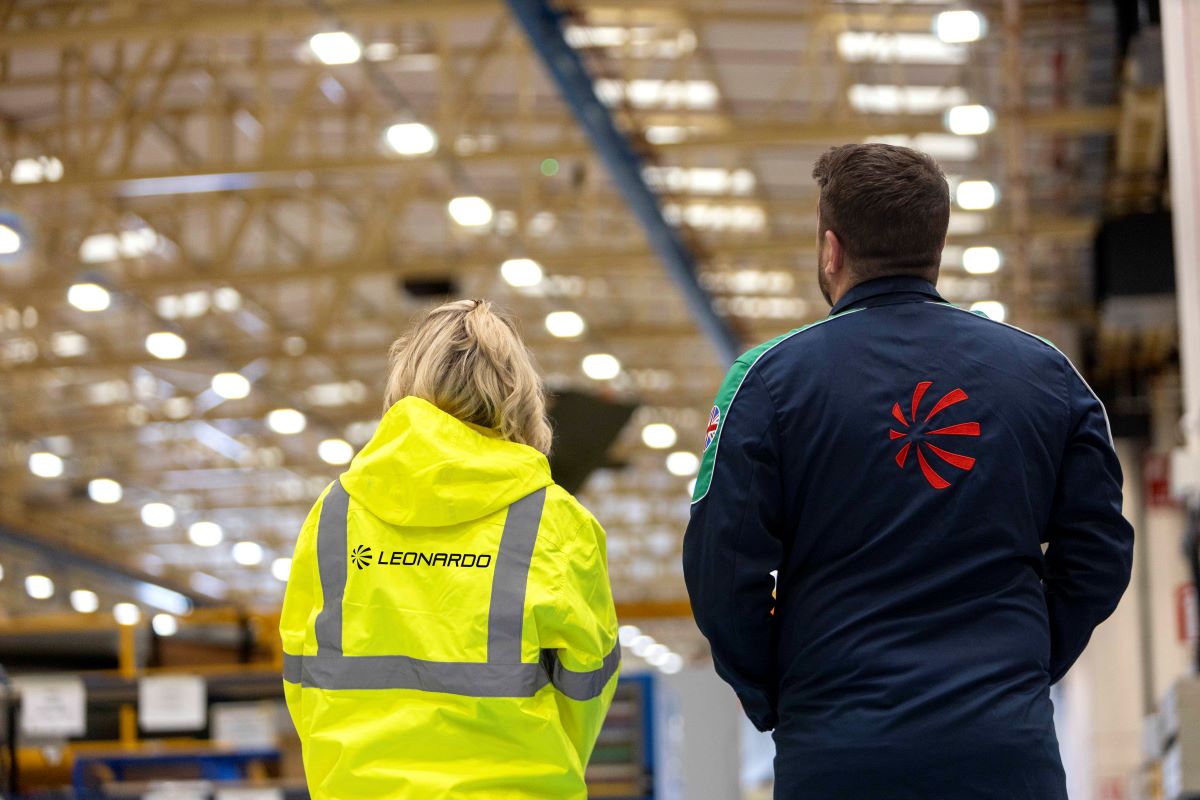
Lighting expert, Signify, has been appointed by Leonardo UK, a global Aerospace, Defence and Security (AD&S) company, to help accelerate its carbon reduction as part of the company’s ambitious sustainability strategy. In support of Leonardo's sustainability strategy – including a recently approved Science Based Target – and drive to Net Zero in the UK, Signify has signed a 10-year Light as a Service (LaaS) agreement that includes the full turnkey installation of LED lighting with Interact lighting management software, across 14 buildings at the Yeovil site. The lighting in each building has been carefully designed to ensure a safe and productive work environment for the 3,300 highly skilled personnel across the site. Signify’s LaaS model is a performance-based contract that guarantees light-level performance for the full duration of the contract. Crucially, the execution of the new lighting system does not require upfront capital investment – instead, Leonardo pays Signify an annual operating fee. This LaaS model enables Leonardo to realise cash-positive savings from the first year. Once completed, the programme is expected to reduce Leonardo's location-based CO2 emissions by an estimated 725 tons per year, supporting Somerset Council’s Climate Emergency Strategy. Leonardo is one of the UK's leading aerospace companies and one of the biggest suppliers of defence and security equipment to the UK MOD, making a significant contribution to the UK economy. Leonardo’s Yeovil site is the Home of British Helicopters – offering end-to-end helicopter manufacturing, training, and lifecycle services to operators worldwide. As part of the redesign, the buildings will also see the deployment of Signify’s lighting management system, Interact. The connected lighting system combines energy-efficient Philips LED fixtures with advanced sensors and Interact software. The system will ensure that the LED fixtures are only turned on when an area is occupied. When there is sufficient natural daylight, the LED fixtures will automatically dim to compensate. This maximises lighting energy savings while ensuring a safe working environment. Interact provides Leonardo with the ability to make changes to lighting groups and zones, as well as adjust sensor settings in order to further optimise or react to operational changes. In the future, Leonardo can connect the lighting management system to the cloud using wireless gateways. This enables data-based insights into lighting energy performance, space occupancy, and lighting asset management for all the connected LED fixtures and buildings. Data is presented in Interacts’ simple-to-use configurable dashboards, enabling Leonardo stakeholders to review historical and real-time data, and easily implement changes from any location with an internet connection. “We believe that choosing Signify as our partner for lighting will have a significantly positive impact on our sustainability goals,” says Paul Coombs, VP of Facilities, Real Estate and Infrastructure Projects - Leonardo Helicopters UK. “Saving energy and minimising waste are two ways we manage our environmental footprint to help preserve our planet for future generations. The LaaS model provided by Signify gave us the option to do both in an innovative way with no capital outlay. “Also, with Interact, we have a connected lighting system that provides more than just light. With the reduction in carbon emissions and the energy savings, Leonardo will continue its commitment to become a more sustainable organisation and lead the defence industry by example.” Derk Bots, Commercial leader for Europe Office & Industry - Signify, adds, “In the traditional method of lighting procurement, organisations get their lighting by purchasing and maintaining their lighting equipment. Light as a Service turns this around and encourages organisations to take a step towards a more sustainable future by making the switch to LED lighting or upgrading their systems to connected lighting and reap the benefits of data and IoT, so they can create spaces that adapt to their needs, making them more efficient, connected, and sustainable. “Light as a Service projects have an important contribution to the objectives set out in our Brighter Lives, Better World sustainability programme and contribute to the rapid growth of our systems and services business.” For more from Signify, click here.

Ed Miliband visits Kensa's Cornwall factory
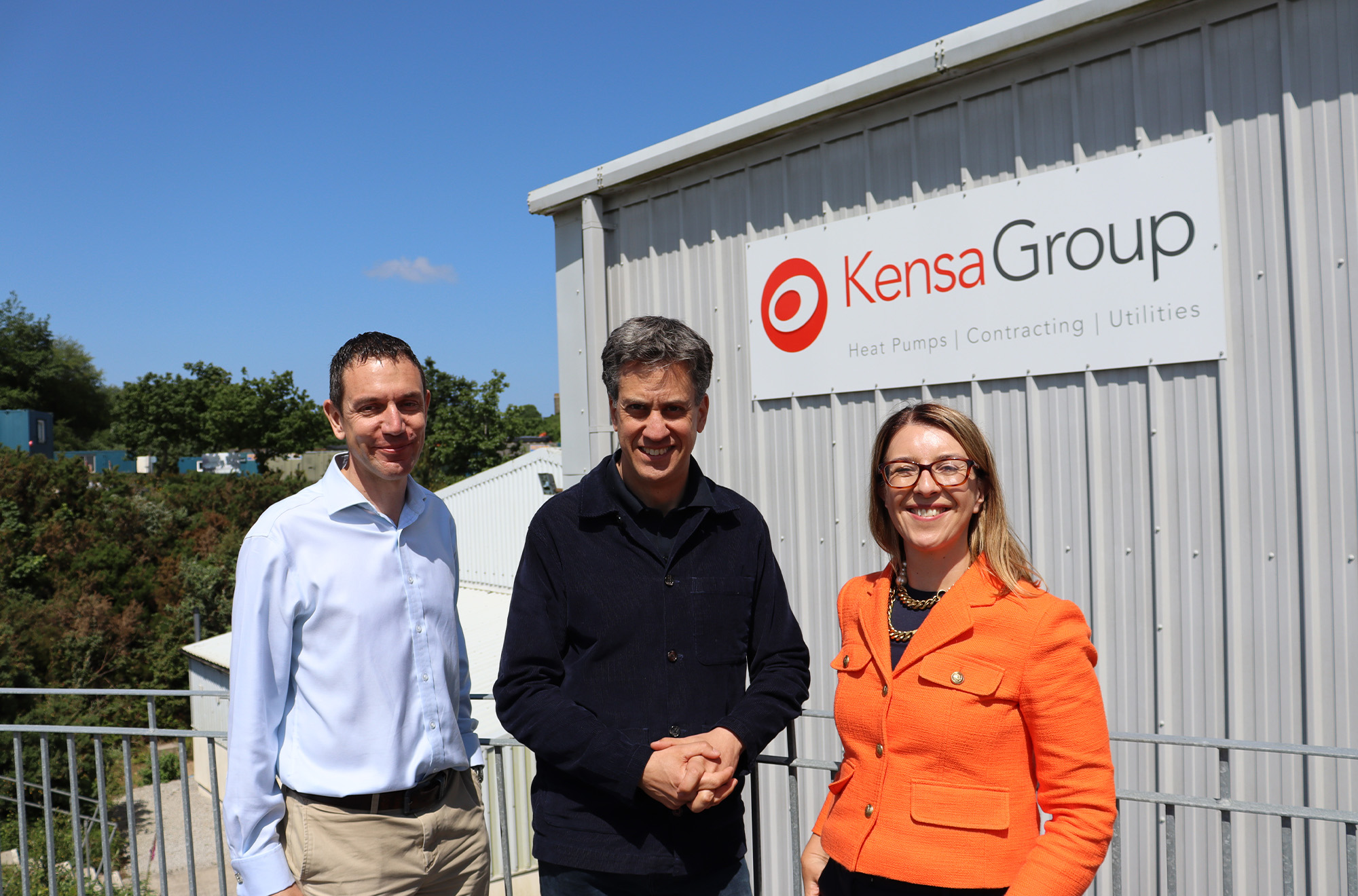
Ed Miliband, the Shadow Secretary for Energy and Net Zero, has toured Kensa's Cornwall factory to see how some of the UK’s ground source heat pump solutions are being developed. Joined by local Labour candidates Perran Moon and Jayne Kirkham, Mr Miliband met with Kensa’s CEO, Tamsin Lishman, and other employees to discuss the British company’s plans to decarbonise heat and hear more about their vision to deliver affordable, renewable heating and cooling to millions of people across the UK. On the back of £70m in investment from Legal & General and Octopus Energy, Kensa is working with communities and businesses across the UK to deliver its heat decarbonisation solution – Networked Heat Pumps. Networked Heat Pumps consist of ground source heat pumps installed in individual properties, whether that’s flats, terraced streets or newbuild homes, connected to a shared network of underground pipework, providing each property with low-cost, renewable heating, hot water and cooling. This solution has already been implemented for thousands of properties across the UK, including 273 high-rise social housing flats in Thurrock, lowering residents' bills by up to 66%. It’s also heating new-build properties in Bristol and has been rolled out under the streets for medium-density housing in Stithians, Cornwall. The Government has an ambition to install 600,000 heat pumps a year by 2028. Powered by the wider adoption of Networked Heat Pumps, Kensa expects to contribute significantly to this figure, ramping up heat pump production to 70,000 a year by the end of the decade and creating over 7,000 green UK manufacturing jobs in the process. Mr Miliband, told Kensa’s Tamsin Lishman, “I’m incredibly impressed by everything I’ve seen here. The workforce, the vision, the commitment to tackling fuel poverty, I think Kensa’s got a really important role to play. “It (ground source heat pumps) is an innovative technology, it’s a crucial technology, it’s absolutely part of the mix if I’m concerned, and If Labour’s in Government and I’m the Secretary of State after July 4th, I look forward to working with Kensa to tackle the shared goals we have, to tackle fuel poverty and decarbonise our country. “It’s not just about decarbonisation, and clean energy and tackling fuel poverty, it’s about good jobs for people, it’s about good wages which is really important to Cornwall and really important across the country. Talking to people on your (Kensa’s) shop floor, they’re really enjoying what they’re doing, but we need more people to know about these opportunities.” For more from Kensa, click here.

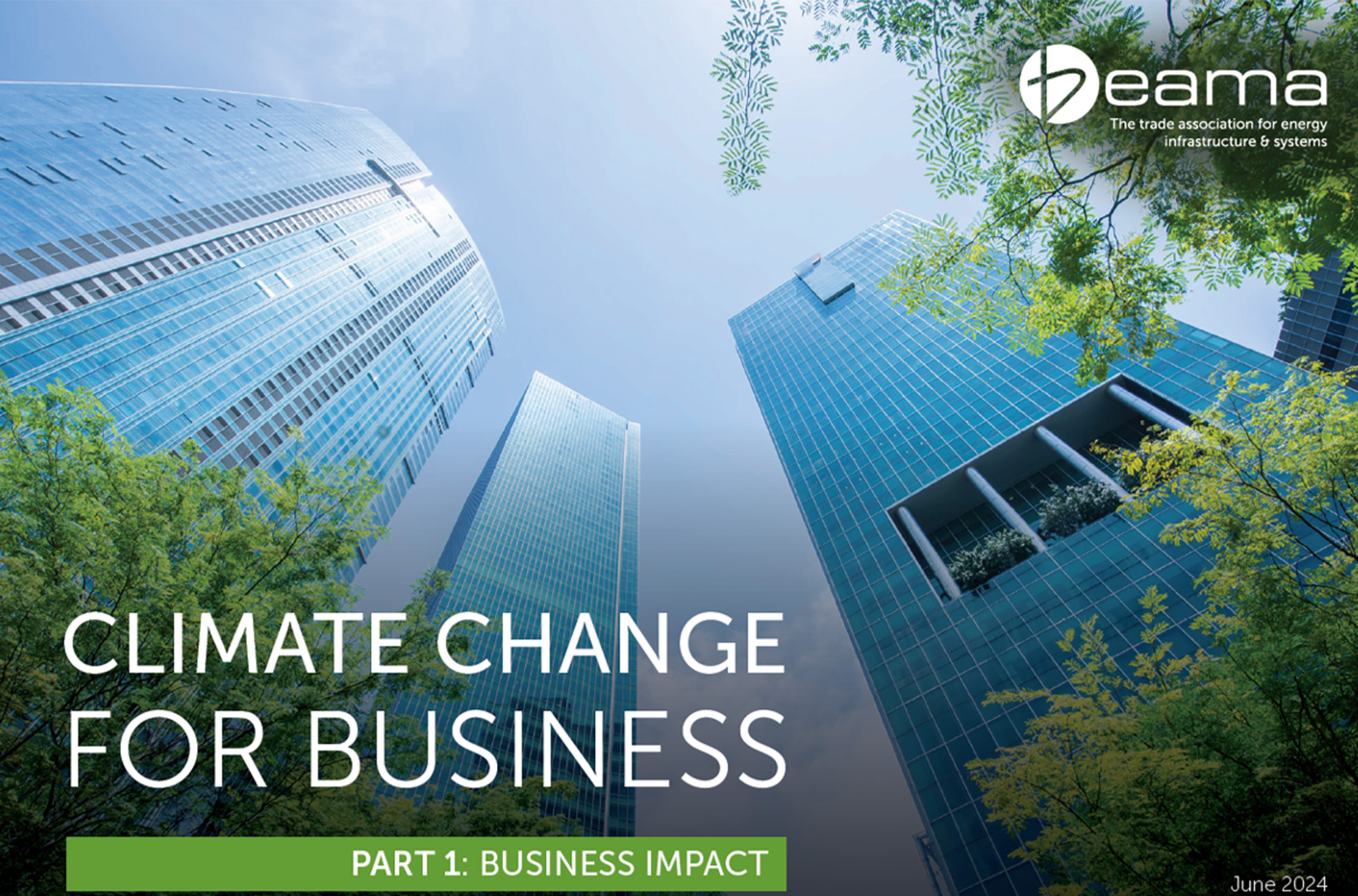
BEAMA launches climate change report
As the world navigates the critical journey to net zero, manufacturing businesses are at the forefront of a profound shift in the political, economic and environmental landscape. In response, BEAMA, the trade association for energy infrastructure and systems, has launched its comprehensive climate change report, providing a roadmap for businesses to effectively mitigate their impact on the environment. The report, Climate Change: A Guide for Manufacturing Businesses on the Journey to Net Zero, offers a comprehensive analysis of the intricate web of factors shaping the impact of climate change on manufacturing businesses. It highlights the urgent need to limit global temperature increases, the downstream market pressures driving change, and the imperative for sustainability. The report underscores the importance of climate adaptation planning, setting greenhouse gas emissions reduction targets, and formulating credible transition plans. By providing a foundation for informed decision-making and scientific action, the report offers top-level steps to help businesses start their net zero journey. "We recognise that climate change is a pressing issue that requires immediate attention," says Yselkla Farmer, CEO of BEAMA. "Our report is designed to provide guidance and support to manufacturing businesses as they navigate this critical period. By adopting a proactive approach to climate change, we can ensure a sustainable future for our industry and the wider economy." The report is not an endpoint, but rather a starting point for businesses to take action. It encourages companies to ask themselves not whether to act, but rather how swiftly and effectively they will adapt to the changing climate landscape. The report's key findings and recommendations include: The importance of setting science-based emissions reduction targets and developing credible transition plans The need for climate adaptation planning to mitigate the risks associated with climate change The role of circular economy principles in reducing waste and emissions The importance of engaging stakeholders and communicating climate action plans to employees, customers and investors To download the full report, visit the BEAMA website. 

LED enclosure light SL 025 – the all-in-one solution from STEGO
STEGO Elektrotechnik has expanded its portfolio with a new LED enclosure light, SL 025, which is specifically designed for use in enclosures and cabinets with high component density. In addition to providing optimal illumination and easy handling, it also offers benefits for efficient sourcing through its all-in-one approach. The SL 025 has a compact design and flexible mounting options, and the light is equipped with an on/off switch and a motion sensor, making an additional door contact switch unnecessary. Thanks to the wide voltage range of AC 100-240 V, 50/60 Hz, the SL 025 can be used anywhere in the world. The integrated socket allows for the simple operation of additional electrical devices such as laptops or diagnostic equipment. There are seven socket variants available, meeting the requirements of European and international standards, including those of the USA and Australia. The all-in-one approach of the SL 025 light brings efficiency gains for companies that build enclosures. The combination of a wide voltage range, integrated motion sensor, and a broad selection of sockets makes the SL 025 a favourite among purchasers. With fewer device variants, a wider range of applications can be covered, creating synergies in procurement and inventory management. The SL 025 is equipped with LED technology that ensures homogeneous illumination inside the enclosure. With a power consumption of 4W and a luminous flux of 560 lumens, the light provides glare-free, daylight-white lighting with a colour temperature of 6,000 to 7,000K. This ensures accurate colour rendering and enhances user safety through natural vision. The robust and flat plastic housing of the SL 025, made in light grey according to UL94 V-0, is designed for durability. The light offers IP20 protection and Class I safety and can operate within a temperature range of -40 to +60°C. With a long lifespan of 60,000 operating hours, the LED light is virtually maintenance-free. The light can be mounted with screws either on its narrow or wide side, or it can be attached in enclosures using magnetic mounting without additional installation effort. This flexibility facilitates integration into existing systems and allows for practical application. The LED enclosure light SL 025 is globally certified, offering safety through approvals from VDE and UL, with EAC and CCC certifications to follow shortly. This ensures reliable and safe operation in a wide range of applications.

Schneider Electric announces Sustainability Impact Award winners 
Schneider Electric has announced that Tottenham Hotspur Football Club has been recognised as a European winner in its annual Sustainability Impact Awards.   Port of Dover and Platinum Electrical Engineering for its work with Brilliant Planet have also been announced as UK winners.   The awards are designed to recognise organisations that are making a positive impact on sustainability, showing leadership and innovation as the world looks to reduce its carbon emissions.   Tottenham Hotspur  – transforming to become the most technologically advanced stadium in the world  Tottenham Hotspur Football Club is on a journey to operate and maintain the most technologically advanced stadium in the world whilst supporting its journey to net zero.  The club is driving innovation and technology initiatives to ensure the stadium operations are as energy efficient as possible, using only 100% renewable energy to power all electrical equipment on site. Its award-winning stadium is regarded as a global benchmark for design and innovation and the club has been named as the Premier League’s greenest club for four successive years.   In September 2021, the stadium was home to the world’s first net zero football match, #GameZero, raising awareness of the impact of major sporting events on our climate amongst millions of football fans around the world   Port of Dover – taking an ecosystem-wide approach to decarbonisation  Port of Dover plays a critical role in the supply of essential goods to the UK with 33% of all UK trade with the EU passing through the port. Its ecosystem accounts for 8% of all UK maritime emissions and Port of Dover is on a mission to reduce this, setting itself challenging targets on the road to decarbonisation.  Through investment and innovation, Port of Dover has reduced its own emissions by 95% since 2007. The introduction of smart lighting design/management, the electrification of heating systems, a move to Hydrotreated Vegetable Oil (HVO) for plant, machinery and vehicles, and the use of building management systems are just some of the initiatives that have helped it make huge strides to decarbonise operations and become more energy efficient.  Port of Dover plans to decarbonise its remaining ecosystem emissions through electrification and is embarking on an ambitious project to become one of the first high volume Green Corridors in the UK. It is exploring the possibility of shore power as ships transition to become fully electric, transforming from a transport hub to an energy provider through onsite energy generation and microgrids.  Platinum Electrical Engineering – creative approach to industrial automation  Gateshead-based Platinum Electrical Engineering, an award-winning systems integrator, delivered a software-centric industrial automation project for Brilliant Planet.  London-based Brilliant Planet is a pioneer in low-cost, carbon capture which is crucial in our efforts to tackle climate change. It grows vast quantities of algae which can sequester up to 30 times more carbon from the atmosphere than the same area of forest. After several years of research, development, and trials, Brilliant Planet is now ready to scale up and build its presence worldwide.  The carbon capture process requires a highly flexible and efficient control system that can easily scale as needed. Platinum Electrical Engineering’s approach to the project showed great creativity and depth of knowledge in its use of Schneider Electric’s EcoStruxure Automation Expert. As a result, it was able to easily troubleshoot and adapt industrial processes to meet Brilliant Planet’s specific needs and deliver a completely bespoke and scalable system.  It means Brilliant Planet can reduce the time spent integrating and testing control software at each of its sites, getting up and running much more quickly in new locations as it builds its global presence.  Kelly Becker, President UK&I at Schneider Electric says, "Each of our Impact Award winners is leading the way to sustainability. They went above and beyond in terms of our judging criteria when it comes to innovation, inspiration, and leadership. The focus of our next edition of these awards remains on decarbonization efforts to electrify, reduce, and replace, and we’re looking forward to learning about those projects in due course.”  For more from Schneider Electric, click here.

Recolight announces new series of lighting workshops
A new series of workshops to help lighting producers access the growing market for the remanufacture of lighting has been announced by Recolight. The intensive training workshops will give attendees the information they need to be able to set up a remanufacturing service in the UK – or to procure one from a subcontractor. An increasing number of specifiers and major purchasers are now prioritising the remanufacture of luminaires. But the large number of lighting manufacturers currently unable to provide such a service cannot take advantage of this fundamental market change. Designed and hosted by lighting product designer, Simon Fisher of F Mark, topics will include: • A deep dive into BS8887:221 (the BSI standard for remanufacturing lighting products) • Assessing suitability of used luminaires for remanufacture • Upgrading fluorescent fittings to LED • Onsite upgrades versus in-facility upgrades • Managing compliance of the finished luminaires • Liabilities, warranties, and managing customer expectations • Carbon footprint versus carbon handprint • Case studies and common pitfalls. The workshops are intended for technical managers, design and engineering managers, quality managers, compliance engineers, sustainability managers, marketing managers, product managers, and any others that influence product manufacture and design. They are a roundtable environment with a maximum of 12 delegates, giving the opportunity for full interaction, feedback, and questions for each topic. Places are available for Thursday 27 June, in London, with more dates to be announced. For more information, visit recolight.co.uk/training-workshops. For more from Recolight, click here.

Baxi expands its commercial heat pump offering
Leading heating and hot water solutions provider, Baxi, has announced the arrival of its new Auriga mid-temperature monobloc commercial heat pump series with compatible cascade and hybrid controls. The company's expanded commercial heat pump offering, now backed with a design guidance service from its technical solutions team, will be supported by a high temperature R290 (propane) heat pump range later this year. Baxi’s new air to water Auriga Air Source Heat Pump (ASHP) series can achieve temperatures of up to 60°C with reduced global warming potential (GWP) due to the R32 refrigerant. Available in single outputs of 20kw, 26kW, 33kW and 40kW, with cascade options of up to 320kW, the new Auriga series offers design flexibility for commercial buildings of all sizes. As part of the new Auriga range, Baxi has launched a series of Auriga-compatible cascade and hybrid controls to maximise system efficiency. The new Baxi Commercial HVAC (CHVAC) Manager offers modular and flexible control of hybrid heating systems, with the option to cascade up to eight heat generators (either eight ASHPs or a combination of ASHPs and boilers). The new Auriga indoor controller is designed for simple ASHP cascade system control. The new Baxi VM-T controller can be used as an extension to increase the number of secondary zones controlled. The CHVAC Manager also enables connection to a BMS through Modbus or 0-10V for full remote monitoring and system optimisation. James Matthews, Director of Building Solutions at Baxi, says, “Our new Baxi Auriga ASHP has been designed with efficiency, occupant comfort and design flexibility in mind. Its excellent seasonal coefficient of performance (SCOP) of up to 4.83 at W35 is combined with quiet operation and sound power of less than 65 dBA. “To help tackle the decarbonisation challenge and ensure optimal whole-life benefit from ASHPs, we have evolved our commercial customer support service as well as our heat pump range. At the outset, our technical sales team work collaboratively with our customers to understand their project goals, scoping out potential solutions and feasibility studies. “Following this initial assessment, our newly formed technical solutions team supports our customers with system design, system sizing and simulation testing to assess solution suitability against the project requirements. “By partnering with customers at the early stages, we can not only supply the required ASHP system components, but the precise, validated advice, backed with predicted energy and carbon savings and capital expenditure modelling, that will help make the switch to ASHPs more seamless.” Designed, manufactured and tested at Baxi’s dedicated commercial heat pump facility in Vilafranca, Spain, Baxi’s new Auriga series comes with full Environmental Product Declaration (EPD) to help customers assess the embodied carbon of their projects. The Auriga is backed with a parts and labour warranty of up to five years when commissioned by Baxi or a Baxi-authorised engineer. The Auriga is available to quote now, for delivery in July. For more from Baxi, click here.

Zumtobel awarded third consecutive EcoVadis gold medal
For the third time in a row, the Zumtobel Group has been awarded a gold medal by the independent sustainability rating platform, EcoVadis. In an industry comparison, the lighting group is ranked among the top 1% of all companies assessed by the platform. The successive recognition with the gold medal underlines the Zumtobel Group's consistent and continuous development and sustainability activities. Sebastian Gann, Sustainability Director at the Zumtobel Group, comments, "Evaluations by independent and globally acting rating agencies such as EcoVadis are highly relevant for our company, as they confirm the path we have taken with all the measures we have implemented so far and the goals we have set for ourselves. "Together with our specialist departments, the Sustainability Team makes the best possible contribution to the Zumtobel Group's sustainable development. This benefits the environment, our customers, and our partners." While the Zumtobel Group particularly distinguished itself in the area of sustainable procurement last year, this year, an improvement of 10 points was achieved in the area of labour and human rights. This was mainly due to the numerous measures implemented regarding employee health in the past financial year and the fact that ISO 45001 certifications (management systems for occupational health and safety) were obtained for all European plants. With a total score of 78 points, the lighting group was able to maintain its solid rating foundation while at the same time further improving it. EcoVadis, an independent platform for sustainability ratings, was founded in 2007 and assesses the performance of companies in the categories Environment, Labour and Human Rights, Sustainable Procurement, and Ethics. The rating is based on international sustainability standards such as the Global Reporting Initiative, the United Nations Global Compact, and ISO 26000. More than 130,000 companies from over 180 countries and 220 industries regularly have their value chain evaluated by EcoVadis. For more from the Zumtobel Group, click here.