2 November 2026
Product of the Month: Amari Floodlight range by Aurora Lighting
 
25 November 2026
Scolmore helps rejuvenate Tamworth Cancer Support Centre
 
25 November 2026
Leicester apprentice crowned 2026 SkillELECTRIC champion
 
24 November 2026
JTL celebrates opening of new Tyneside training centre
 
24 November 2026
LiGHT 26 welcomes record number of visitors to fifth event
 

Latest News


Morgan Sindall Infrastructure secures position on National Grid
Morgan Sindall Infrastructure has secured a place on National Grid’s RIIO-2 electricity construction Engineer, Procure and Construct (EPC) framework. The initial term of the framework is five years, with a further option for a two year extension. The framework is effective from April 2021 and will involve the construction, refurbishment and decommissioning of both overhead line (OHL) and underground cable systems operating between 33kV to 400kV across National Grid’s transmission network. Morgan Sindall Infrastructure is one of three companies to have been appointed for the overhead line works and one of four companies to have been appointed for the underground works. It is estimated that over the lifetime of the framework approximately £1bn to £1.5bn will be invested in delivering these works. Simon Smith, managing director of Morgan Sindall Infrastructure, says: “We are extremely pleased to have secured a position on this framework. We are looking forward to continuing to build on our long-term relationship with National Grid, working collaboratively with them to deliver a clean and efficient electricity transmission network and supporting the UK’s transition to greener energy to achieve net zero by 2050.”

The countdown is on to ECN Interactive Week
ECN Interactive Week is the new online industry initiative brought to you by ECN, taking place 22-26 March. This online event offers participating companies the opportunity to showcase their products and services to a live audience. Each exhibitor will be given a 30-minute time slot during the Interactive Week, which will give them the opportunity to promote their products and services to a live audience. The exhibiting company will also receive a video recording of the live presentation for their own marketing promotion. Additional benefits include: the facility to hand out brochures/literature live to all attendees during the session; the full list of attendees registered for their session for follow up marketing; and all invites and registration confirmations will be branded to each exhibitor and will be promoted across all ATM print, online and social media. There is still time to book your slot for this must-attend event – please contact Kelly Byne for more information at kelly@allthingsmedialtd.com. Please see below for the exhibitors already confirmed, along with the link to book your slot to attend the sessions free of charge. ECA 9am Tuesday 23 March Electric Vehicles and the key considerations for electrical installers. Luke Osborne, ECA Energy Solutions Advisor will be covering the advancing adoption of Electric Vehicles and key considerations for electrical installers when installing EV charge points. Register FREE here. Savant 3pm Tuesday 23 March Why being a Savant Integrator will increase your business potential. By combining intuitive user interfaces with beautiful hardware, the Savant home automation platform is considered amongst the most technologically advanced in the industry. With a wide range of options covering every facet of the automated home, Savant integrators have been powering luxury homes all over the world. With the recent introduction of our soundbars with on-board hosts, becoming a Savant integrator has never been simpler. Join the Savant team as they run through the basic technology and skills required to join one of the most exciting home automation integrator communities in the world. Register FREE here. Scolmore 6pm Tuesday 23 March 2021 During Scolmore's Interactive Week session the company will be discussing the design considerations of Smart product installations - Darren Staniforth and Jake Green will be looking at all types of Smart installation and confirming which forms of communication work best with Smart Technology. They will explain how open protocols work with your installations, whilst discussing what aspects need to be considered when designing a Smart system. Register FREE here. NAPIT 3pm Wednesday 24 March 2021 NAPIT’s EICR Codebreaker webinar presented by Frank Bertie, Chief Technical Officer and Paul Chaffers, Technical Events Manager, addresses the possible dangers of electrical installations, and considers some real-life findings and observations to consider when carrying out Electrical Installation Condition Reports. You will be able to interact during the session and have your say on possible codes as well as engage in Q&A with presenters at the end of the webinar. Register FREE here. The Lighthouse Construction Industry Charity 9am Wednesday 24 March 2021 Learn more about The Lighthouse Construction Industry Charity, which is the only charity that provides mental, physical and financial wellbeing support to the construction community and their families. Bill Hill, the charity's CEO, will tell you how during ECN Interactive week 22 - 25 March. Register FREE here. Recolight 9am Thursday 25 March 2021 The WEEE Regulations - An essential update for electrical contractors. Recolight explains how the WEEE Regulations work, what you need to do as a contractor to stay compliant, and how you can use the regulations to your advantage. Join Lyndsey Tweddle, Elaine O’Keeffe, Charlotte Durling and Suzanne Castine for the do's and don'ts on this important subject. Register FREE here. CENTIEL 2pm Thursday 25 March 2021 Louis McGarry, Sales & Marketing Director CENTIEL UK, will explain why CENTIEL's Distributed Decision Making (DDM) technology is a real differentiator for Modular UPS systems. This will include how CENTIEL achieves such high levels of availability, and how an agile approach to UPS implementation, combined with a careful calculation of actual load requirements from day one, means it is possible to reduce costs but be flexible to accommodate future growth. He will also be joined by Sales Engineer, Aaron Oddy, CENTIEL UK, who’s expertise in implementing this technology into smarter configurations can help reduce your systems TCO, creating a compelling argument to help you win the battle of the budgets. Register FREE here.

Signify and Innovative Bioanalysis validate Signify's UV-C lighting
Signify together with Innovative Bioanalysis have conducted research that validates the effectiveness of UV-C disinfection upper air luminaires on the inactivation of SARS-CoV-2, the virus that causes COVID-19. The UV-C disinfection upper air luminaires inactivated 99.99% of SARS-CoV-2 in the air of a room within 10 minutes, and the virus was below detectable levels at 20 minutes. “Based on the understood method by which UV-C exposure deactivates pathogens, we would expect UV-C disinfection lighting to have a similar impact on the various genetic mutations of (SARS-CoV2),” says Sam Kabbani, Chief Scientific Officer at Innovative Bioanalysis. “These test results illustrate the effectiveness of our UV-C disinfection upper air luminaires and the important contribution they can make towards fighting the coronavirus and future viruses,” says Harsh Chitale, Division Leader Digital Solutions at Signify. “It shows how UV-C lighting for upper air applications can be a successful preventive measure for organizations as they seek ways to provide their guests, customers and employees virus-free environments.” Signify in 2020 increased the production of its UV-C light sources eight-fold in support of the fight against the coronavirus and acquired GLA to complement its portfolio with luminaires for upper-room air disinfection. Since then the company has installed UV-C disinfection upper air luminaires in several locations, including retailers EDEKA Clausen in Germany, dm in Slovakia, and Rugby Union Club Harlequins in the UK. The height at which the luminaires are installed, in combination with the luminaires’ design, allows the system to disinfect air as it circulates a space, even when there are people present. Mechanical ventilation and/or natural convection moves the disinfected air back into the lower part of a space. Additionally, shielding and optics in the luminaires are designed to prevent accidental exposure to UV-C radiation for the people underneath them. For more than 35 years, Signify has been at the forefront of UV technology, and has a proven track record of innovation and strong application expertise in UV-C lighting. Signify’s UV-C lighting is designed, installed, and used according to the product-specific safety instructions, and manufactured using well-controlled industrial processes. UV-C light should always be used by professionals in accordance with the safety requirements and instructions.

Smart City Protocol Standard continues expansion
The TALQ Consortium continues to enhance its software protocol. With the release of the Specification Version 2.3.0 several new functions have been added. It’s significant that most of the new requests address smart city applications other than street lighting. All protocol updates aim to improve the interoperability of different systems and so to ease investment decisions for cities and other operators. To respond best to all new requirements of users and system manufacturers, the Smart City Protocol is regularly reviewed and updated. TALQ members and partners, such as cities and consultants, can propose new functions and other changes. All requests are reviewed by the Requirements Work Group before being passed on to the Technical Work Group for approval and integration. With the newly released Version 2.3.0, completely new functions have been added in the form of a Waste Management profile, including a description of a waste container, a weight sensor, an accelerometer, a pH sensor and a gas sensor. This particular profile was requested by many members, demonstrating the momentum that has developed in the waste management sector in smart cities. Important savings can be realized, in both costs and CO2 emissions, as soon as waste collection is based on real data gathered live from waste containers. Additionally, in the latest version a few minor bugs have been fixed, and some descriptions have been clarified with the inclusion of several real examples. More convenience for software developers As a result of the API changes, new releases of the specification, data model files and TALQ Certification Tool (TCT) have been created. From now on, the technical capability to run the TCT with Docker is provided by the installation documentation file, thus allowing developers to use the tool without worrying about Java configuration and dependencies. Furthermore, the TCT now includes the possibility of running selected test cases only without waiting for the whole test session to finish, and pausing and resuming a test session have been made very much simpler: every software specialist can use the TCT in a much more comfortable and efficient way. “As with all the existing functions already defined, the challenge is to describe new functions in a way which best balances interoperability, implementation complexity and feature value. To successfully manage this goal, the collaboration between members is fundamental. Releasing Version 2.3.0 proves again the engagement, trust and openness among all parties.” highlights Simon Dunkley, Secretary General, TALQ Consortium. Version 2.3.0 is fully compatible with all existing certified TALQ-compliant products certified against Version 2.x

Scolmore promotes Jim Hutchison to group commercial director
Scolmore is delighted to announce that following his 18-month tenure as commercial manager for the company, Jim Hutchison has been promoted to group commercial director. He will now oversee all commercial procedures across the Scolmore group of companies which includes Click wiring accessories, Ovia lighting, ESP security and fire protection, and Unicrimp cable accessories. A well-known figure in the electrical industry, Jim has amassed more than 30 years’ experience and has a wealth of knowledge and expertise to call upon, having worked primarily within customer facing roles, across a broad spectrum of well-known businesses and predominantly premium brands. When he joined Scolmore in 2019, Jim was looking to develop what he described as a cradle to grave approach for the business. Working closely with other departments, he will continue to play a pivotal role in bringing synergies across the Scolmore Group, and with his extensive knowledge of the industry he will help to create new opportunities via the customer base. Having a joined-up thought process will ensure a solution selling approach from the various categories that the group represents – wiring accessories, lighting, emergency lighting, CCTV, fire protection, access control, heating controls and cable accessories. Commenting on his promotion, Jim says: “It's a privilege to have been given the opportunity to further develop my career within the Scolmore Group and to be a member of a highly experienced and committed senior management team. We have exciting plans in place for 2021 and beyond and I’m thoroughly looking forward to playing my part in executing key initiatives to develop further opportunities for our customers.”

Expert calls for more women to enter the energy industry
A leading energy expert has called for more women to get involved in the sector after research from 2019 shows that just 14% of the energy workforce are women. Maria Bastian, who heads up two of the industry's leading energy businesses, chooses to challenge the status quo, encouraging more women to join what is currently a male-dominated sector. As managing director for both Fischer Future Heat, a business known for bringing electric and sustainable heating to the UK, and for energy provider Outfox The Market, who recently finished at the top of the Which? annual energy survey for customer satisfaction, Maria is quite literally the leading lady. Ahead of International Women’s Day on 8 March, Maria is keen to spread the message that the world of energy does not always have to be one that is dominated by men. “It’s difficult to convey and demonstrate to women and young girls that energy isn’t a viable option for them when they are simply unaware of the variety of the opportunities available to them. “But when you dig that little bit deeper, there are a whole host of rewarding and exciting careers for women who choose to work in the energy industry,” she says. As part of a husband-and-wife duo, Maria was, and continues to be, passionate about creating an equal and diverse business. “It was crucial to both Keith and I to work as part of an equal partnership, where gender doesn’t come into play at all, as that isn’t what’s important – getting the job done is.” In her approach to diversity and inclusivity, Maria has always advocated closing the prevailing gender pay gap and is proud that Outfox the Market remains an equitable place of work for either gender, and more importantly, is pleased that she has no gender pay gap within her organisation. Priding herself on researching the industries newest improvements, and leading on business strategy, Maria does see more women getting involved in specific roles within research, sales, and engineering, as well as managerial and directorial positions. “In order for this to happen, I believe that we need to be teaching girls (and boys) from a younger age that a job isn’t defined by gender. “People within the industry should be visiting schools and hosting talks to educate the next generation about the opportunities and possibilities within industries that they may not have otherwise considered,” explains Maria. With both businesses and homeowners looking to reduce waste and act more sustainably, Fischer Future Heat are empowering customers to choose the right heating system for them, whilst having a positive impact on the environment. “As a business owner, it is important for us that we do our part to educate the energy sector and the future visionists behind it,” comments Maria. “It is incredible to work in an industry that is helping to reduce the UK’s carbon footprint, and with a Future Homes Standard being introduced in the UK by 2025, the energy sector is becoming even more exciting, as we look to improve homes and reduce our individual environmental impact longer term.” With that in mind, combined with a constant and busy development for the industry as a whole, there is a need for more people to help and contribute than ever before. “Although women are currently a minority in the energy sector, I encourage everybody, irrespective of gender, to consider a career in energy. “And together, let’s choose to challenge, close the skills gap and break down gender barriers within the workplace,” concludes Maria.

Jamie Hepburn marks Scottish Apprenticeship week by saluting employers
Minister Jamie Hepburn has joined influential training providers the Scottish Electrical Charitable Training Trust (SECTT) and the Scottish Joint Industry Board (SJIB) in saluting Scottish employers for continuing to support young talent during COVID-19. The industry bodies have applauded businesses for recruiting, training and nurturing trainees during the pandemic and say their dedication is the perfect example of “business backing talent” – the theme of Scottish Apprenticeship Week, which runs from March 1-5. Anne Galbraith, chief executive of SECTT, which manages high-quality training on behalf of the SJIB, said: “As the industry prepares to celebrate Scottish Apprenticeship Week, employers have once again demonstrated their ongoing commitment to apprentices, stepping up when it really matters and helping to power the industry of tomorrow by investing in the talent of the future. “In the past 12 months, the sustained support for training shown by employers of all sizes across Scotland has been a great example of ‘business backing talent’. Apprenticeships are more valuable than ever – the future is electric, and we need the talent to ensure we have qualified professionals to make it thrive safely and responsibly.” Fiona Harper, The Secretary of the SJIB, says: “At a time when we are focused more than ever on health and safety, apprenticeships ensure the talent of tomorrow is being trained the right way, both on and off-site, following the correct guidance and giving employers and customers confidence that work undertaken is of the highest standard. “Their resilience shows that, even without additional support at this difficult time, employers have still been there, continuing to nurture the talent of tomorrow.” This ongoing commitment to skills and training was also acknowledged by Mr Hepburn, Scottish Government Minister for Business, Fair Work and Skills. The Minister comments: “It has been highly encouraging to witness the determination of employers throughout Scotland’s electrical industry to keep investing in the future by training and supporting tomorrow’s highly-skilled electricians. “Apprenticeships are a core part of our skills system in Scotland, enabling employers to invest in their workforce and provide the skills that we need both now and in the future. The Scottish Government has already invested an additional £25 million in response to COVID-19 to maximise apprenticeship uptake across Scotland and ensure that young people have opportunities to build their confidence, gain industry insight and develop valuable skills that employers require. “The Scottish Government will continue to do all we can to support our young people and encourage employers to take on apprentices through our Young Person’s Guarantee, of which apprenticeships are an integral part.” Ms Galbraith adds: “While the intake of apprentices may have understandably dropped during the pandemic, the numbers are still better than expected, with 500 electrical apprentices recruited during lockdown. “This demonstrates both the dedication of employers and the recognition of the younger generation that it pays to choose a solid and rewarding career in a sector that will be more important to all of us in the coming years.” SECTT was established in 1990 by campaigning electrotechnical trade body SELECT and Unite the Union, and currently manages apprentices from their first day at college to becoming a qualified electrician. And Ms Harper adds: “SELECT Members should also be saluted for the way they have stepped in and offered to help with much-needed offers of work to the 80-plus apprentices who have been made redundant as a result of the lockdown; they have supported us to give would-be electricians hope for the future.” SECTT manages the SJIB Apprentice and Adult Training Schemes and runs the only industry-approved training schemes for electrical apprenticeships in Scotland. The SJIB Schemes are designed to regulate the entry, conditions of service, training and education of all people in the electrical contracting industry, with a particular focus on apprenticeships.

Seaward's Apollo rockets improved PAT testing at local council
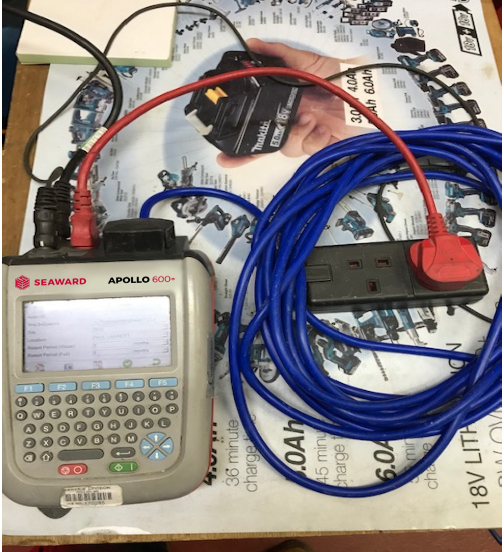
Oxfordshire City Council’s property maintenance and support services company is ensuring it meets its portable appliance testing (PAT) responsibilities with electrical safety testers from Seaward. ODS (Oxford Direct Services) is responsible for maintaining the council's property portfolio, which includes 7,000 residential homes across the county, parks and streets, and employs a 200-strong team of builders, plumbers, electricians and other skilled tradesmen to carry out repair and maintenance work. As part of the company’s preventative maintenance programme, the plant management department based at the Horspath Road Depot in Oxford, is responsible for checking the safety of all electrical power tools and equipment the workforce uses, which includes dozens of drills, portable lighting equipment, vacuum cleaners, heaters, compressors and batteries. Indeed, an estimated 9,000 individual items used by the workforce need to be regularly inspected and safety checked by appliance tester/plant room assistant, Philip Collender. This broad testing responsibility requires a rigorous safety management approach that links test schedules with appliance identification systems and maintaining comprehensive test records for all items tested. To meet this need, ODS has been a long-term user of Seaward PAT testing equipment, including the popular hand-held Apollo 600+ PAT testers and PATGuard 3 testing software.   The Apollo 600+ is a compact and lightweight unit, which incorporates all the recommended safety tests for portable electrical appliances in line with the IET 5th Edition Code of Practice. These include point-to-point testing of fixed equipment and the testing of extension leads, power cords and RCDs. The tester’s battery powered test capability also makes it suitable for completing testing at a range of locations, boasting practicality for organisations like ODS. In addition, by simply scanning barcodes of individual appliances, previously tested equipment is recognised immediately, automatically setting the required test sequences for that item and speeding up the whole process of asset recognition and testing. The incorporation of a large internal memory supports data handling needs, allowing Philip Collender to quickly upload test records and transfer them directly to a central database on a weekly basis to his PC. The use of these features is completed with the production of important test certificates and test reports to demonstrate full compliance with in-house safety management protocols. Philip Collender is also using the Seaward PAT testers as part of a wider asset management programme, currently recording inspections and checks carried out on the hundreds of ladders used by the ODS workforce on the Apollo 600+ before uploading the data to his PC. Indeed, he anticipates extending this activity to cover other health and safety kit such as fire extinguishers and first aid equipment He says: “Safety is always of paramount importance. Across our organisation, we use an array of electrical equipment and as part of our health and safety and equipment maintenance commitment, portable appliance testing is undertaken regularly and systematically. “The testers are simple-to-use, which with such a large workload, makes the integration of testing with asset identification a lot quicker and easier to complete. The ability to maintain formal test records, which is essential in enabling us to work efficiently and effectively, is also much improved. “We also benefit from good product support from Seaward, who are responsive to our needs, ensuring that any technical queries and issues we might have are resolved quickly.” The Apollo 600+ and PATGuard 3 test results management software forms part of a comprehensive range of Seaward PAT instruments, accessories and software that have been specifically designed to meet the needs of electrical safety duty holders in all workplaces.

Schneider Electric commits to converting its fleet to electric by 2025
Schneider Electric has announced today that it will electrify 1200 vehicles by 2025 for its own fleet. The commitment marks a significant step towards making the world’s most sustainable company even closer to carbon neutrality. “Electric mobility, coupled with decarbonization, decentralisation and digitalisation of energy, is key to achieving the target to reduce global CO2 emissions by 45% by 2030 and put a halt to climate change. The core of our strategy is providing energy and automation digital solutions for efficiency and sustainability and we’re already enabling many businesses on their mission to achieve a greener future,’ said Kelly Becker, Zone President for Schneider Electric UK and Ireland. This will enable Schneider to directly reduce its climate impact by preventing the creation of 64,400 metric tons of CO2 emissions per year by the end of the transition. David Hall, Vice President, Power Systems comments, "Schneider Electric’s commitment reflects our commitment to carbon neutrality, and our goal to achieve net-zero emissions by 2030. Sustainability is at the heart of everything we do and everyday our employees have a crucial role to play in positively impacting climate.  This is another way in which we are enabling them to contribute to a more sustainable future by reducing emissions and our dependence on fossil fuels by 2025.” It is also a vote of confidence in deploying a fully electric fleet complete with investment in AC and DC charging across its sites around the UK&I, with medium voltage and low voltage electrical distribution equipment. This will ensure supply, PV to generate energy, battery storage to store and a microgrid to monitor all sites’ power needs and usage which helps to develop and evolve Schneider Electric’s Sustainability strategy. The scheme has been designed by a dedicated project team that includes a driver focus group, tax and treasury, fleet, Indirect Procurement, HR, rewards, payroll and communications. In the UK, Schneider Electric is already helping a range of companies install EV chargers and power infrastructure – including the Electrical Utilities, fleet providers, forecourt owners, hospital trusts, airports, universities, city councils, like Nottingham City Council, Berkeley group, Environmental agency, Elexent and Arriva.

Missed opportunity to correct new ecodesign and labelling rules
The Ecodesign and Energy Labelling Regulations adopted in December 2019 have been revised. An updated version has been published in the Official Journal of the EU today and enters into force in 3 days. LightingEurope members are disappointed that important changes requested by its association have not been included. Most of the new Ecodesign and the Energy Labelling rules start to apply on 1 September 2021. LightingEurope experts suggested important changes to the regulations to allow private and professional users of light sources sustained access to the quality and safe light sources they need. The updated Ecodesign Regulation contains stroboscopic effect requirements with relevant consequences on the market. Products need to be redesigned to comply to the new strict requirements which may limit the availability of lamps to consumers, such as LED full glass lamps. The timeline published is very challenging for companies to adapt, this occurring in an already very difficult time for the industry due to the COVID-19 crisis. We expect Member States authorities to make additional efforts to ensure full compliance of products placed on the market, which are imported from outside the EU. The Ecodesign regulation can be downloaded here, the Energy Labelling regulation here. LightingEurope has published guidelines to help companies understand and apply the complex rules and to help market surveillance authorities enforce them. Updated versions are in preparation and will be made available by mid-March 2021. LightingEurope will inform those that have registered here about the availability of new guidelines.